US Adventures USA

Mount Baker Climb

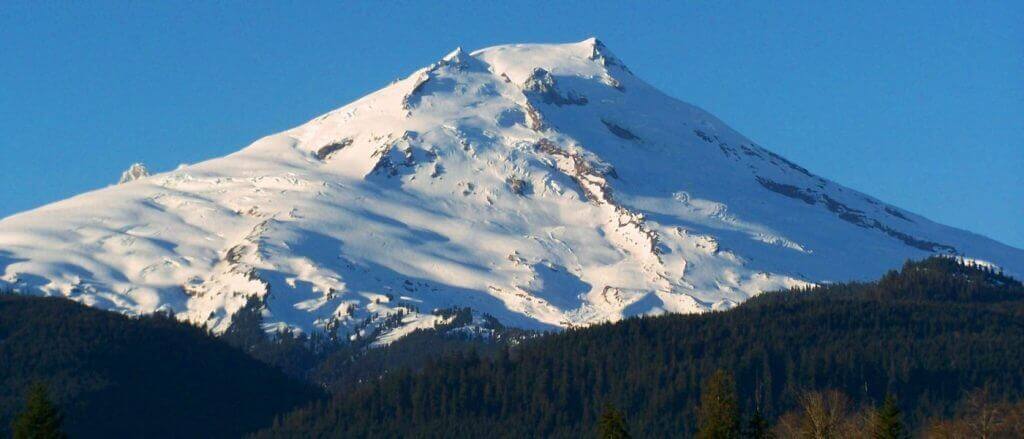
Mount Baker — 10,781 ft, North Cascades, Washington

3 days Group: 3 climbers per guide on glacier routes · 2 per guide on the North Ridge $1,400 per person (glacier routes) · $2,000 per person (North Ridge)

The Trip

Mount Baker Climb · Mount Baker, Washington

Three days to find out whether you’re a glacier climber.

Mount Baker carries more glacial ice than almost any peak in the lower 48—real crevasses, real route-finding, glaciation at a scale you’d otherwise fly to another continent for—on a mountain you can climb over a long weekend.

Duration3 days
Group3 climbers per guide on glacier routes · 2 per guide on the North Ridge
Price$1,400 per person (glacier routes) · $2,000 per person (North Ridge)
ExperienceNone needed on glacier routes · North Ridge requires mountaineering experience
SeasonMay–August
WhereMount Baker, Washington

That’s why it works. Before you commit a month and a great deal of money to Denali or the Andes, three days here tells you whether glaciated mountaineering is something you want more of.

You don’t need previous glacier experience for two of the three routes. You’ll have it by the time you come down, because Baker isn’t just a climb—it’s three days of learning the systems every glaciated peak will ask of you.

And if you already have that experience, the North Ridge is waiting: sustained steep snow and ice, real exposure, and a route that rewards moving well.

Quick facts

Length 3 days, 2 nights at high camp
Summit 10,781 ft / 3,286 m
Routes Easton Glacier · Coleman–Deming · North Ridge
Ratio 3 climbers per guide on glacier routes · 2 per guide on the North Ridge
Experience None needed on glacier routes · North Ridge requires mountaineering experience
Season May–August
2027 dates Glacier routes July 3–5 and July 17–19 · North Ridge July 7–9 and July 21–23 · or custom dates
Rate $1,400 per person (glacier routes) · $2,000 per person (North Ridge)

Choose your route

All three run over three days from a high camp, and all three teach the same core skills. What changes is the ground under you.

Easton Glacier—the most accessible

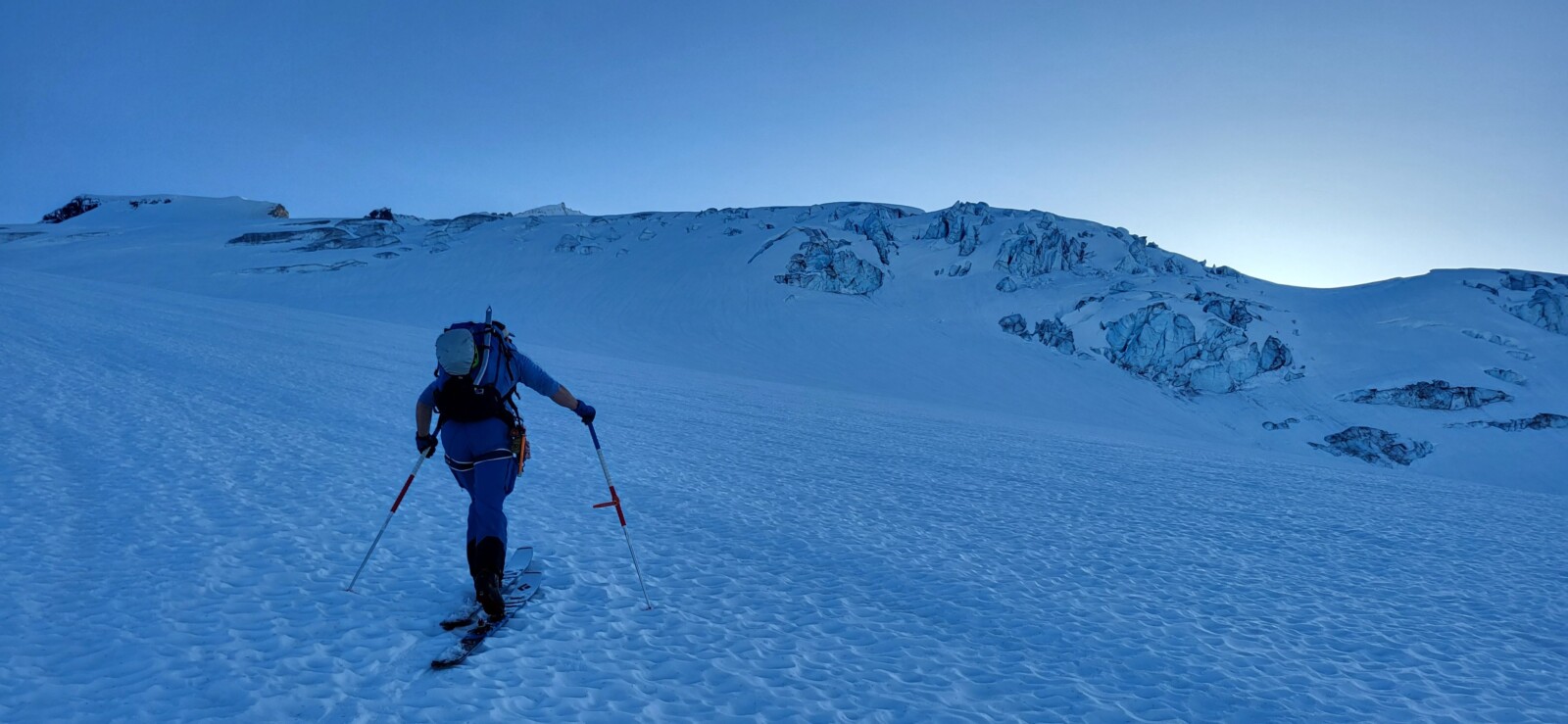
A steady, moderate glacier climb on the mountain’s south side, with a long but straightforward summit day. The route we most often recommend for a first mountaineering objective.

Coleman–Deming—the classic

The north-side ascent: the Coleman Glacier, Pumice Ridge, then the Roman Wall to the summit plateau. More crevasse navigation, more route-finding, more to learn—and the best balance of challenge and instruction on the mountain.

North Ridge—the technical line

Sustained steep snow and ice, with sections approaching 70 degrees, real exposure, and a requirement to move efficiently. Descent via Coleman–Deming. Previous mountaineering experience is required.

What you’ll learn

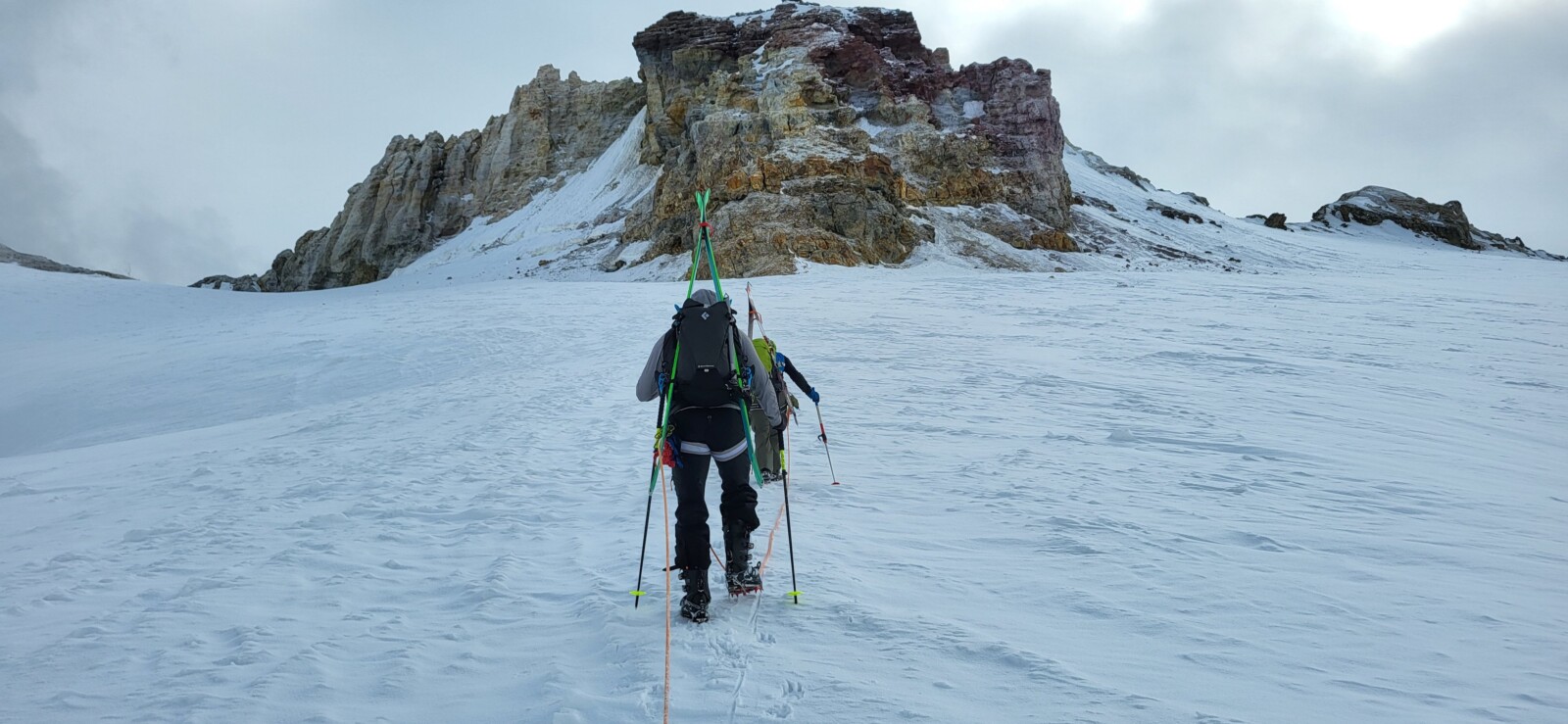
Glacier travel and rope-team movement—how a team moves as one unit, and why

Crampon technique—efficient footwork on snow and ice

Ice axe use and self-arrest, practiced until it’s reflex

Crevasse hazard recognition and rescue fundamentals

Route-finding and decision-making on glaciated terrain

Alpine camp systems—staying comfortable, dry, and fast at camp

These are the skills every glaciated peak asks for. Learn them properly here, and Aconcagua, Ecuador, and Alaska become conversations you can actually have.

Small teams

Three climbers per guide on the glacier routes—up to six with two guides. Two per guide on the North Ridge. On glaciated terrain, ratio isn’t a comfort question. It’s how quickly a rope team can respond when something happens.

Where this leads

Baker is one of the clearest stepping stones we run. Climbers go from here to Aconcagua, Ecuador, and Alaska.

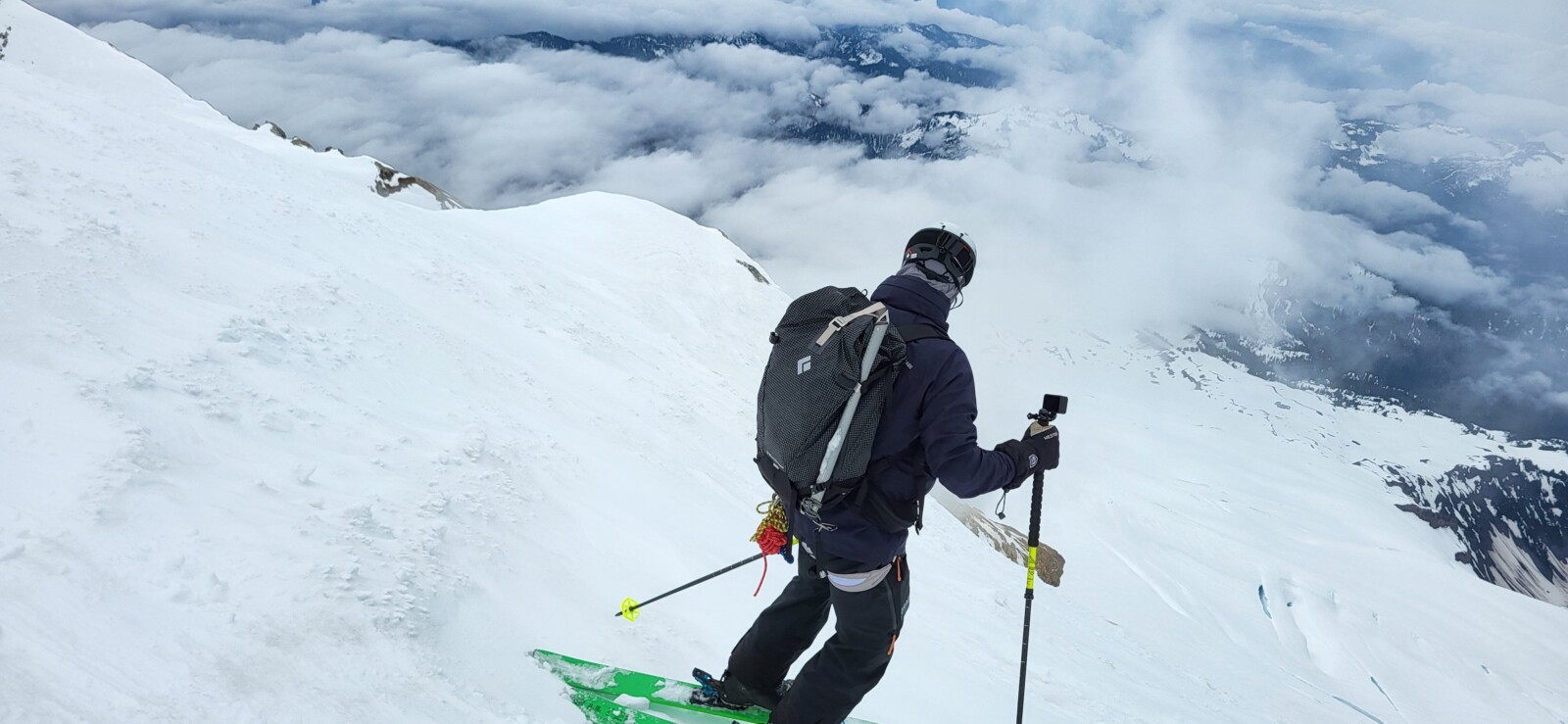
Prefer to ski it? See the Mount Baker Ski Descent—three days in late-spring conditions.

This is a BBE program. We set the standards, choose the guides and decide how it runs. On the ground it’s operated by Wasatch Mountain Guides, our Utah-based operation, co-owned by Willie Benegas — so registration and payment are completed directly with WMG, and we’ll send you the link when you’re ready.

Questions before you book?

We answer every inquiry personally.
Ask a guide

Day by Day

Three days, one high camp

Walk in and set up camp, spend a full day building skills, then climb through the night to the summit.

Weather and conditions decide the details. Your guides will change the plan when the mountain gives them a reason to.

Meet your guides at the trailhead for a full gear check and a briefing on the route, the conditions, and the plan.

Then carry in to high camp, between 5,500 and 6,000 feet, on moderate terrain. It’s a real carry with a heavy pack, and it’s the first honest read your guides get on how the team moves.

At camp, coaching starts right away: siting a tent, keeping your kit dry, organizing a pack so you can find things in the dark.

Night at high camp.

A full working day on the snow:

Crampon technique and movement

Ice axe use and self-arrest

Rope systems and glacier travel as a team

Crevasse rescue fundamentals

Route planning, hazard awareness, and the reasoning behind tomorrow’s decisions

In the afternoon, summit preparation—kit laid out, layering settled, and an honest conversation about pace and turnaround times.

North Ridge teams may move higher or begin positioning on this day, depending on conditions.

Early night. Summit day starts in the dark.

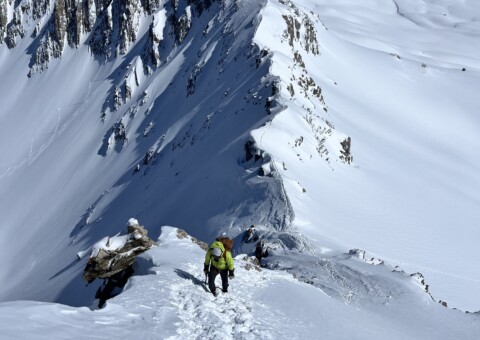
An alpine start, usually between midnight and 4:00 AM. You climb through the glaciated terrain you studied yesterday, working steadily toward the upper mountain. On the glacier routes, the final push is the Roman Wall onto the summit plateau. On the North Ridge, it’s sustained steep ground, with the descent via Coleman–Deming.

Then down to camp, pack up, and hike out. It’s a long day—plan on being tired, and don’t book a flight for that evening.

A note on turning around

Not every team summits, and the ones that don’t haven’t failed. Your guides make the call based on weather, snowpack, the pace of the team, and the time. If they turn you around, they’ll explain why.

That judgment is most of what you’re paying for.

Is This For Me?

Is this for you?

Two of the three routes assume no previous glacier experience. What they do assume is fitness and a willingness to carry a real pack.

Fitness—the honest requirement

Strong fitness, and the ability to carry a 35 to 50 pound pack uphill for several hours. The climbing isn’t technically difficult on the glacier routes; the carry to high camp is what catches people out.

If you can hike for four hours with a heavy pack and still function at the end, you’ll be fine. If you haven’t done that recently, it’s the specific thing to train.

Experience

Easton and Coleman–Deming: no prior glacier or mountaineering experience required. Comfort on steep hiking terrain helps.

North Ridge: prior mountaineering experience, genuine comfort on steep snow and ice, and familiarity with rope systems and exposure. Not a first alpine climb.

Who this is really for

Hikers and scramblers who want to find out what mountaineering actually is

Climbers with a bigger objective ahead—Aconcagua, Ecuador, Alaska—who need a real glacier first

Experienced alpinists after a good three-day route: the North Ridge

Who this isn’t for

Anyone unable to carry a heavy pack. That’s the hard requirement.

Anyone who needs a guaranteed summit. Baker has a good success rate, but weather closes it regularly.

Altitude

At 10,781 feet, Baker isn’t a high-altitude peak. Most people feel the elevation mildly on summit day and no more.

Age

16 and over. Anyone under 18 needs a parent or guardian to sign the registration documents.

Not sure which route?

Tell us what you’ve done and what you’re building toward. We’ll recommend a route rather than let you guess.

Before You Go

Five things matter most.

1. Train with a pack

Long hikes with elevation gain, carrying 35 to 50 pounds. Descend on rough ground too.

2. Break in your boots

Mountaineering boots that take a crampon, worn on real hikes before the trip. New boots are how people get blisters on day one.

3. Sort rentals early

If you need crampons, an ice axe, a harness, or a helmet, reserve them at REI ahead of time. See Gear and Equipment.

4. Buy your parking pass

You’ll need a Northwest Forest Pass (an Interagency or America the Beautiful pass also works) to park at the trailhead. It isn’t included.

5. Tell us about yourself

Your fitness and recent big days with a pack

Any mountaineering, glacier, or steep snow experience

Which route you’re interested in

Injuries, medical conditions, or medication

Where and when you’ll meet

At the trailhead on the morning of day one. The trailhead depends on your route—north side for Coleman–Deming and the North Ridge, south side for Easton. Your guide confirms the time and place before the trip.

Travel Planning

Travel planning

Getting here

Mount Baker sits in the North Cascades of northwest Washington.

Bellingham (BLI) is the closest airport, roughly an hour and a half from the trailheads. Seattle–Tacoma (SEA) has far more flights and is about three hours’ drive.

You’ll need a car. There’s no practical public transport to the trailheads, and transport isn’t included.

Where to stay

The night before: Bellingham, or near the trailhead for your route. Bellingham has the most choice.

The night after: book somewhere. You’ll come off the mountain tired and late, and driving to an airport that evening is a poor plan.

Fitting it around a long weekend

Our July 3–5 departure runs over the Independence Day weekend, so the climb costs most people only one or two days of leave.

Insurance

Not required, but strongly recommended. Rescue and evacuation costs are your responsibility, and cancelling fewer than 14 days out forfeits the trip fee. Check that your policy covers mountaineering and glacier travel.

Gear and Equipment

Gear and equipment

A full kit list goes out on registration. These are the essentials.

What we provide

Ropes, anchors, and glacier travel and rescue equipment

Tents and group camp gear

Group cooking equipment

What you bring

Boots. Mountaineering boots that take a crampon, and that you’ve walked in.

Crampons, ice axe, harness, and helmet. Bring your own, or rent them (see below).

A pack that carries 35–50 lb comfortably, about 60–70 liters, that you’ve loaded and walked with.

Layering system for cold, wet, glaciated conditions: base layers, warm midlayer, insulated jacket, waterproof shell jacket and pants, warm gloves and mittens, warm hat, sun hat.

Glacier glasses and sunscreen. Sun on a glacier is intense.

Sleeping bag and pad rated for camping at 6,000 feet.

Your food for three days, including two dinners and breakfasts at camp, and snacks you can eat on the move. We’ll send guidance on quantities.

Human-waste bags. All human waste is packed out on Mount Baker—nothing is left on the mountain. Bring the bags on the kit list; your guide will show you how they work.

Headlamp, water bottles or bladder, personal first aid, and toiletries.

Renting gear

REI rents mountaineering equipment—crampons, ice axes, and more—if you don’t own it. Reserve ahead, especially for July weekends, and tell the store your boot model so crampons fit. Ask us if you’re not sure what to rent.

A note on Cascade weather

This range is wetter than most American climbers expect. Rain at camp is common, and being wet at 6,000 feet is miserable and consequential. Take the waterproofs seriously, and keep your sleeping bag dry in a waterproof stuff sack or liner, not just under a pack cover.

Daily Life on the Mountain

“Take care of the mountain, and the mountain will take care of you.” It is the Benegas Brothers’ motto, and the rule we climb by.

Daily life on the mountain

High camp

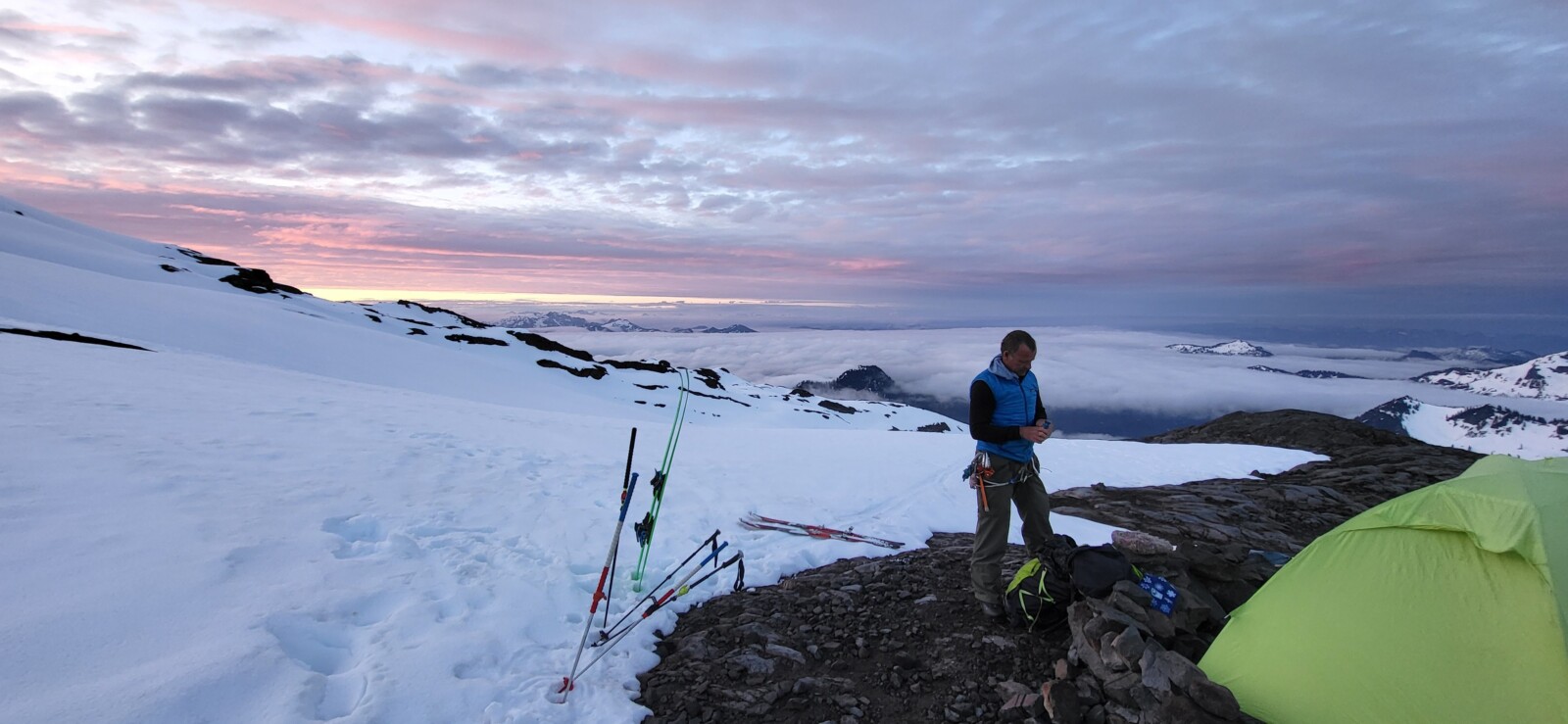
Between 5,500 and 6,000 feet, on snow or rock depending on the route and the season. You’ll share a tent and help set up and run camp—part of what you’re here to learn.

Food and water

You bring your own food; we provide group cooking equipment. Water comes from melting snow or from streams, treated. Drink more than you think you need.

Toilets and Leave No Trace

There are no facilities at high camp. All human waste is packed out in waste bags—it’s on your gear list—and your guides will show you how. We leave camp as we found it.

Staying dry and warm

Cascade weather changes fast. Keep your sleeping bag and a dry set of base layers protected at all times, and put on insulation before you get cold.

Sleep

The night before summit day is short. Lie down early, eat something before bed, and lay out your kit so you can find it in the dark.

When it gets hard

It will, at some point—usually on the carry or the descent. Your guides are watching the whole team and will adjust the pace and plan.

What to Budget For

What to budget for

The climb

Route Ratio Rate per person
Easton Glacier 3 climbers per guide $1,400
Coleman–Deming 3 climbers per guide $1,400
North Ridge 2 climbers per guide $2,000

What’s included — and what isn’t

Included

  • Professional guides for three days
  • Ropes, anchors, and glacier travel and rescue equipment
  • Tents, group camp gear, and group cooking equipment
  • Instruction throughout
  • Climbing under Wasatch Mountain Guides’ permit

Not included

  • Trailhead parking pass — A Northwest Forest Pass, or an Interagency / America the Beautiful pass
  • Food — Three days, including camp dinners and breakfasts
  • Personal climbing gear — Boots, crampons, ice axe, harness, helmet—rent at REI if needed
  • Personal camping gear — Pack, sleeping bag, pad, clothing
  • Transport — A rental car or your own vehicle
  • Lodging — The night before and the night after
  • Flights — Into Seattle or Bellingham
  • Gratuities — Customary — 15–25% is standard. Cash is always appreciated, and every WMG guide also accepts Venmo.
  • Trip insurance — Not required, strongly recommended
The realistic total

For a climber flying in: the climb, flights, a rental car for three or four days, two nights of lodging, three days of food, the parking pass, and any rentals.

The honest note: if you don’t own mountaineering boots, a pack, and a sleeping system, gear is the second-largest line after the climb. Ask us before you buy anything.

Payment and cancellation

Full payment is due when you register with WMG. Cancel more than 30 days out and you can take full credit toward a later date, or a refund less a 5% fee. Between 14 and 30 days you can move dates but not get a refund. Inside 14 days the fee is not refundable, for any reason. Full terms are on Dates and Prices.

Your Questions

More questions? Booking, payment, cancellation, insurance and tipping are answered in the General FAQ — US Adventures.

Not for Easton or Coleman–Deming—they’re built to teach glaciated climbing to people who haven’t done it. The North Ridge requires prior mountaineering experience and genuine comfort on steep snow and ice.

For a first glacier, Easton is the most forgiving and Coleman–Deming teaches more. Tell us what you’ve done and what you’re building toward, and we’ll recommend one.

July 3–5 and July 17–19 run a glacier route—Easton or Coleman–Deming, chosen for conditions and the team. July 7–9 and July 21–23 are North Ridge departures. Custom dates are available for any route.

Three climbers per guide on the glacier routes, up to six with two guides. Two per guide on the North Ridge.

Fit enough to carry a 35 to 50 pound pack uphill for several hours and still function. That catches more people out than the climbing does.

10,781 feet. Not a high-altitude peak—most people feel it mildly on summit day.

Good, but not guaranteed. Weather closes this mountain regularly, and your guides will turn a team around when the conditions or the pace call for it.

Boots that fit and that you’ve walked in—that one matters. Crampons, ice axe, harness, and helmet can be rented at REI.

No. Bring your own for three days; we provide group cooking equipment and send guidance on quantities.

Everything is packed out. Waste bags are on your gear list, and your guides will show you how they work.

We climb under Wasatch Mountain Guides’ permit. You’ll need a Northwest Forest Pass to park at the trailhead (an Interagency or America the Beautiful pass also works).

Wetter and less predictable than most American climbers expect. Rain at camp is normal.

There’s real risk that can be managed but not removed: crevasses, falling ice, weather, and the consequences of a fall on steep snow. What manages it is rope-team discipline, route choice, timing, and guides reading the mountain the whole time—judgment, not certainty.

Please don’t. Day three is long and finishes late, a few hours’ drive from an airport. Stay the night.

Yes—see the Mount Baker Ski Descent, three days, April through June.

Aconcagua is the natural high-altitude next step. Ecuador is a good bridge if you want more glaciated peaks first. Alaska if the technical side appealed more than the altitude.

Dates & Prices

Dates and prices

Rates

Route Ratio Rate per person
Easton Glacier or Coleman–Deming 3 climbers per guide $1,400
North Ridge 2 climbers per guide $2,000

2027 departures

Saturday July 3 – Monday July 5, 2027Glacier route

Up to 6 climbers, 2 guides

Wednesday July 7 – Friday July 9, 2027North Ridge

2 climbers per guide

Saturday July 17 – Monday July 19, 2027Glacier route

Up to 6 climbers, 2 guides

Wednesday July 21 – Friday July 23, 2027North Ridge

2 climbers per guide

The July 3–5 departure runs over the Independence Day weekend. Each North Ridge departure follows a glacier trip, so the same guides arrive already working on the mountain and current on conditions.

Custom dates

The season runs May through August. Private teams, partners, or a date that suits you—call or email us and we’ll build a departure around you.

What’s included — and what isn’t

Included

  • Professional guides for three days
  • Ropes, anchors, and glacier equipment
  • Tents, group camp gear, and group cooking equipment
  • Instruction throughout
  • Climbing under Wasatch Mountain Guides’ permit

Not included

  • The trailhead parking pass
  • Food
  • Personal gear and rentals
  • Transport
  • Lodging
  • Flights
  • Gratuities
  • Insurance

See What to Budget For.

How to book

Contact us with your dates, group size, and route.

We talk through your experience and confirm the route fits—especially for the North Ridge.

We confirm your place and send you the registration link.

You register directly with Wasatch Mountain Guides. The link is WMG-branded; that’s expected. You’ll complete the application, sign the acceptance of risk, and pay in full there.

You receive a kit list, travel guidance, and your guide’s contact details.

Payment and cancellation

Payment. Full payment is due when you register with Wasatch Mountain Guides — card, PayPal, check or wire.

If you cancel

If we cancel

Before the climb, for weather, hazard or conditions: move to a later date, or take a credit that never expires.

Before the climb, for low enrollment: WMG will contact you as early as possible. You choose a full refund, a credit or a later date, or running it as a private climb at a reduced rate.

Partway through: partial credit, based on the time you spent in the field.

Once the climb starts, there are no refunds for weather or conditions. Your guide will change, shorten or turn the day around when the mountain calls for it. That is the job, and it’s the judgment you’re paying for.

Guides may remove anyone whose ability or conduct puts themselves or the team at risk. There is no refund in that case, and any cost of leaving is yours.

Rescue and evacuation costs are your responsibility. We strongly recommend trip insurance that covers both cancellation and backcountry rescue and evacuation. Many standard travel and health policies cover neither.

Full terms: Wasatch Mountain Guides Reservation, Cancellation and Refund Policy.

This is a BBE program. We set the standards, choose the guides and decide how it runs. On the ground it’s operated by Wasatch Mountain Guides, our Utah-based operation, co-owned by Willie Benegas — so registration and payment are completed directly with WMG, and we’ll send you the link when you’re ready.

When you cancel What happens
More than 30 days before Full credit toward a later date, or a refund less a 5% fee
14 to 30 days before Move to a later date, subject to availability. No refund.
Fewer than 14 days before No refund or reschedule — for any reason, including injury, illness, weather or travel delays
Three days to find out whether you’re a glacier climber.

Mount Baker carries more glacial ice than almost any peak in the lower 48—real crevasses, real route-finding, glaciation at a scale you’d otherwise fly to another continent for—on a mountain you can climb over a long weekend.

Price$1,400 per person (glacier routes) · $2,000 per person (North Ridge)
Private & Custom Your dates. Your team.

This trip can run privately, on the dates that work for you.

Scheduled departures
  • Saturday July 3 – Monday July 5, 2027Glacier route
  • Wednesday July 7 – Friday July 9, 2027North Ridge
  • Saturday July 17 – Monday July 19, 2027Glacier route
  • Wednesday July 21 – Friday July 23, 2027North Ridge

Questions first? Ask a guide

Location:
Mount Baker, Washington
Group:
3 climbers per guide on glacier routes · 2 per guide on the North Ridge
Duration:
3 days
Skill:
None needed on glacier routes · North Ridge requires mountaineering experience
Pricing

All prices are in US dollars.

Three days to find out whether you’re a glacier climber.

Mount Baker carries more glacial ice than almost any peak in the lower 48—real crevasses, real route-finding, glaciation at a scale you’d otherwise fly to another continent for—on a mountain you can climb over a long weekend.

Book now

Private & Custom

Make Mount Baker Climb your own expedition

Every trip we run can also run privately: on your dates, with your people, built around your goal. Same guides, same safety standard as our scheduled departures.

Your dates

We set the departure around your calendar, not the other way round.

Your people

Family, friends, a company team, or just you and a guide.

Your goal

Training for a bigger peak, a winter or speed attempt, a film, or a route that runs from summit to ocean.

Your price

Private trips are quoted for your group size, dates and plan.

A Partner you can trust

View our certifications

AMGA — American Mountain Guides Association logo
IFMGA / UIAGM — International Federation of Mountain Guides Associations logo

Related Trips