Schools / Courses Ecuador South America

Ecuador Mountaineering School

Ecuador · Cayambe, Cotopaxi & Chimborazo · 8 Days + Optional Extension · Max 6 Climbers

8 Days · Optional 7-Day Extension Group: Maximum 6 climbers $4,100 per person · Extension +$3,500

The Program

Ecuador Mountaineering School · Core Program 8 Days · Optional Extension to 15 Days · Maximum Six Climbers

There’s no shortcut to becoming a competent mountaineer. You learn on real terrain, at real altitude, with guides who know how to teach. That’s what the Ecuador Mountaineering School is built to do.

5,790mCayambe summit · 18,996 ft
8Days, Core Program
15Days with the extension · three summits
6Climbers, maximum
1:2One guide for every two climbers
NonePrior mountaineering experience required

The School at a Glance

Core Program8 days
  • One major glaciated summit: Cayambe, 18,996 ft / 5,790 m
  • No mountaineering experience required
  • Maximum six climbers, one guide for every two
Core Program plus optional extension15 days
  • Three glaciated summits: Cayambe, Cotopaxi (19,347 ft / 5,897 m) and Chimborazo (20,564 ft / 6,268 m)
  • No mountaineering experience required
  • Maximum six climbers, one guide for every two

Prices and departures are on Dates & Prices.
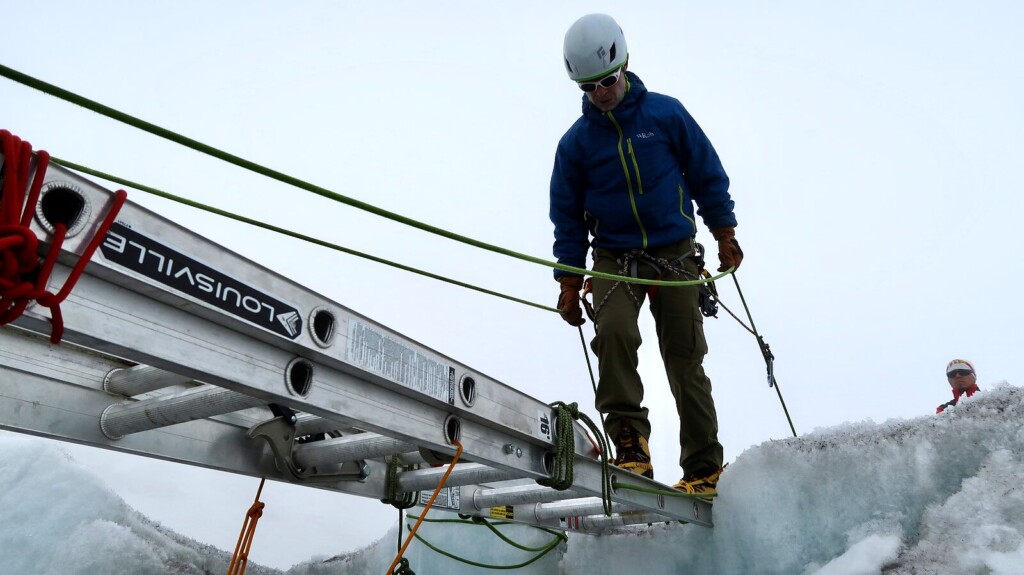
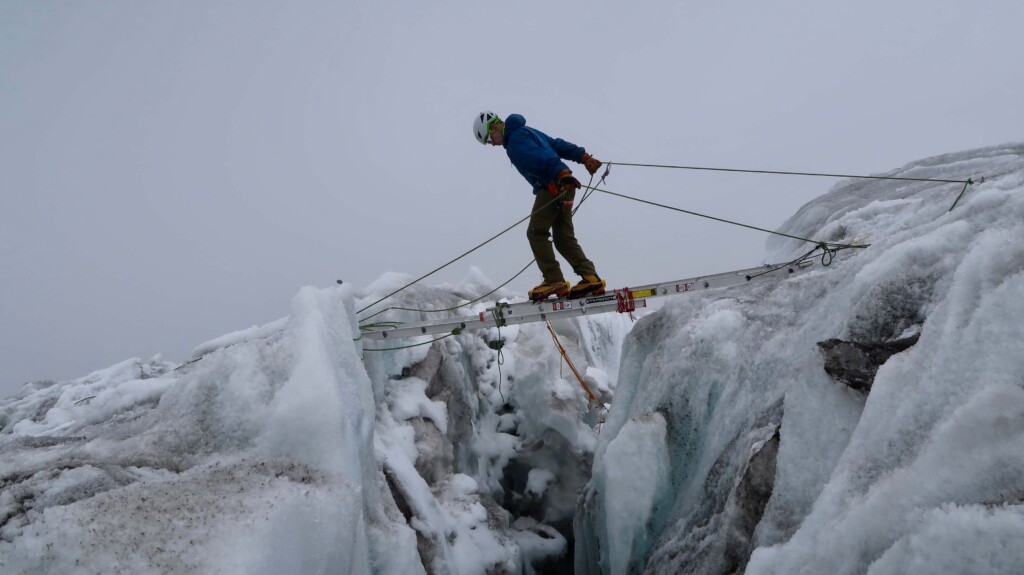
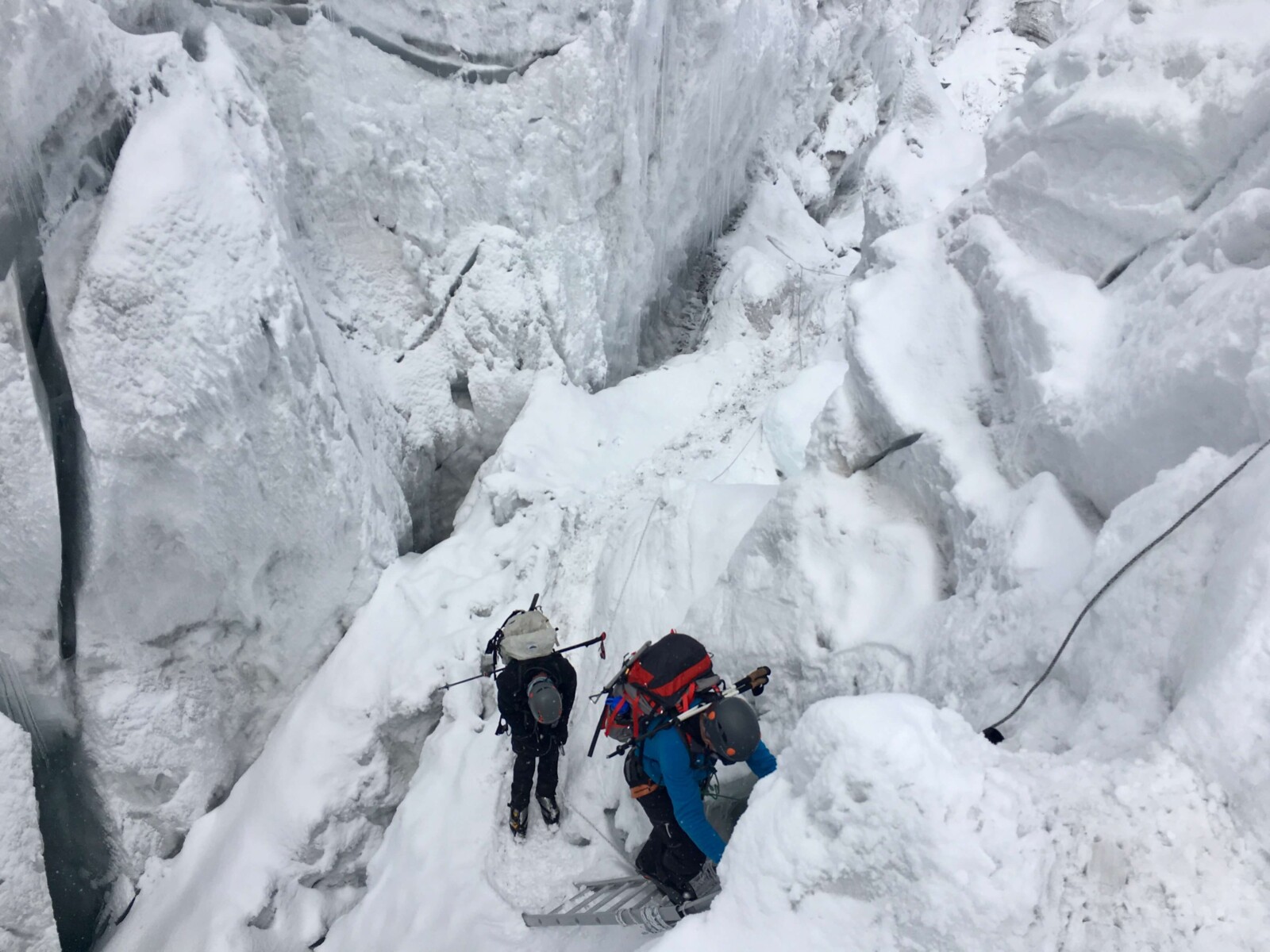
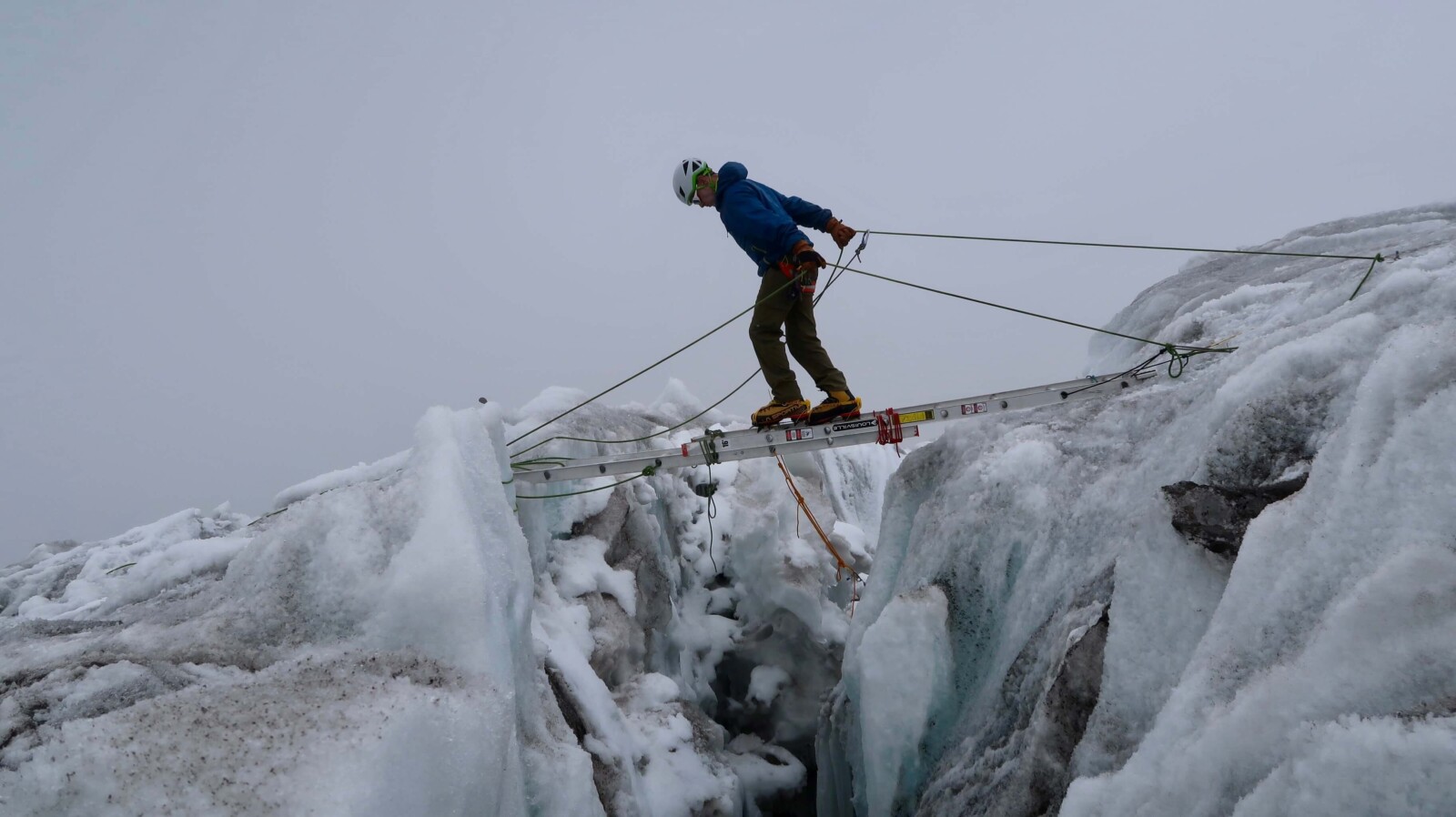
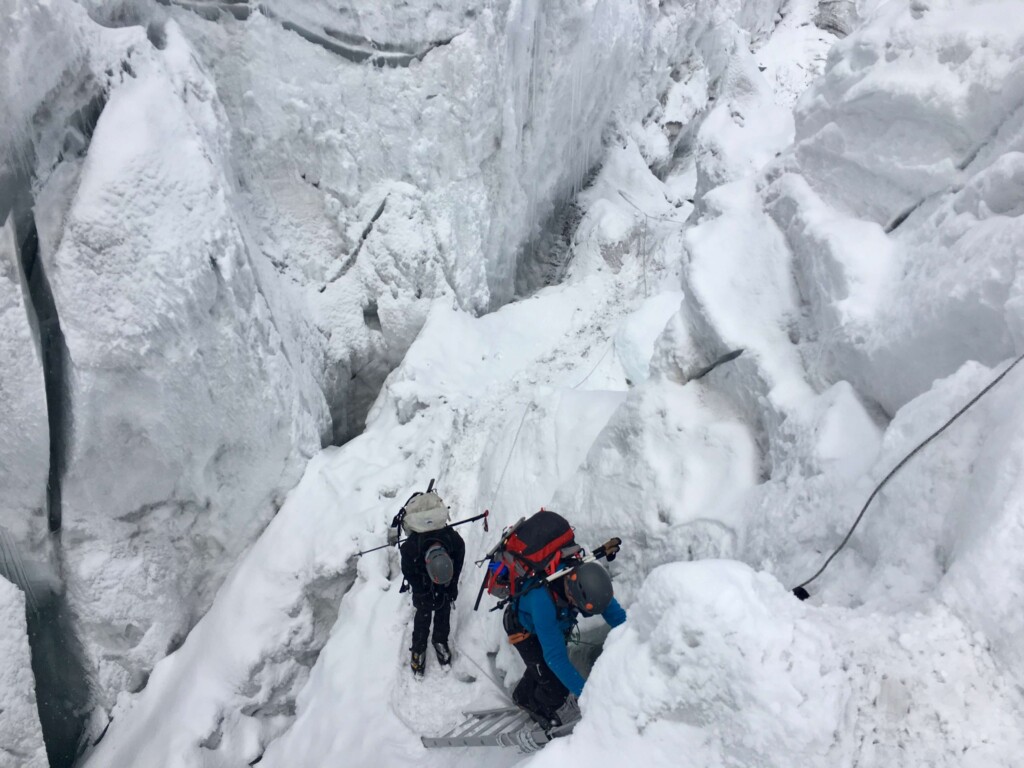
Climber practicing a ladder crossing on a glacier in Ecuador

The Core Program

Eight days take you from your first crampon step to the summit of Cayambe. Cayambe is Ecuador’s third-highest mountain, and the equator crosses its southern slopes.

This is where you learn to move on a glacier, and where you build skills that stay with you for the rest of your climbing life.

What You Learn

The School is a progressive curriculum. Each day builds on the last, and every skill is practiced on real terrain before it’s tested higher up.
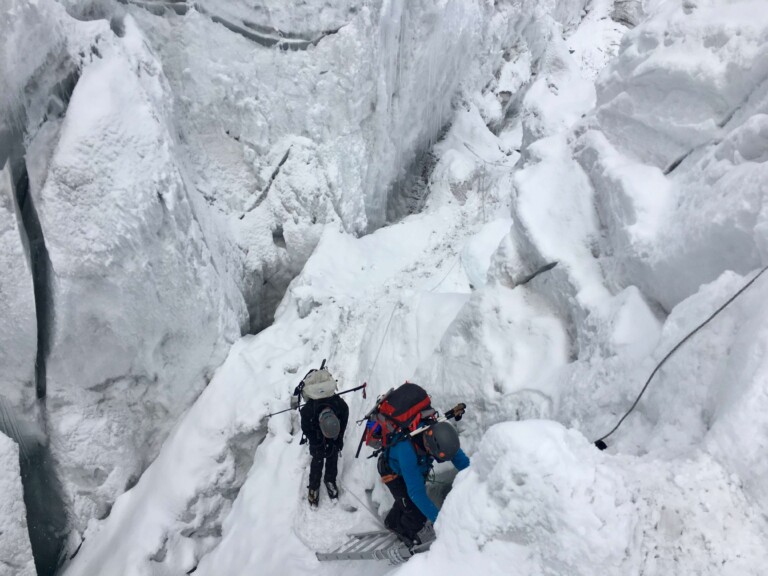
A rope team climbing through glacier ice on an Ecuador volcano
  • Glacier movement. Crampon footwork, balance and rhythm on steep and varied ice. Moving efficiently is the foundation, so we start there.
  • Ice axe technique. Balance, braking and self-arrest with the tool every alpine climber carries.
  • Rope-team travel. How a team moves, communicates and decides together: spacing, pace and coiling.
  • Crevasse awareness. Reading glaciated terrain, recognizing hidden hazards, and the rope systems used for rescue. Ecuador’s glaciers are active, and we treat them that way.
  • Snow anchors. Reliable protection on snow and ice, several systems, and the judgment of when to use each.
  • Altitude management. Hydration, pacing, layering and reading your own body: the habits that decide a summit day above 17,000 feet.

The Summit: Cayambe, 18,996 ft / 5,790 m

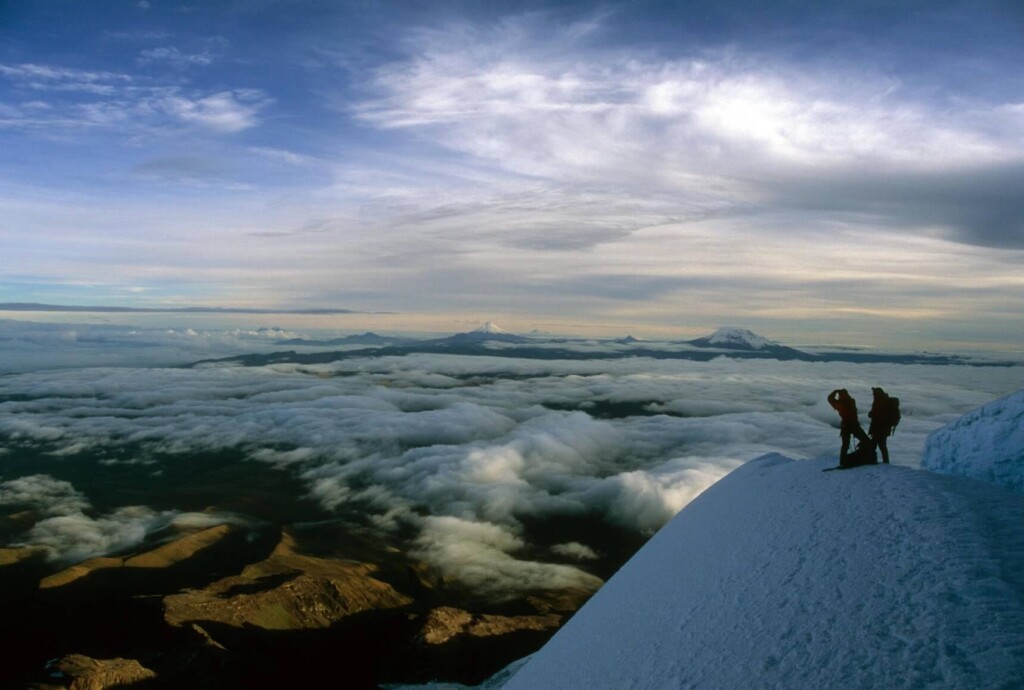
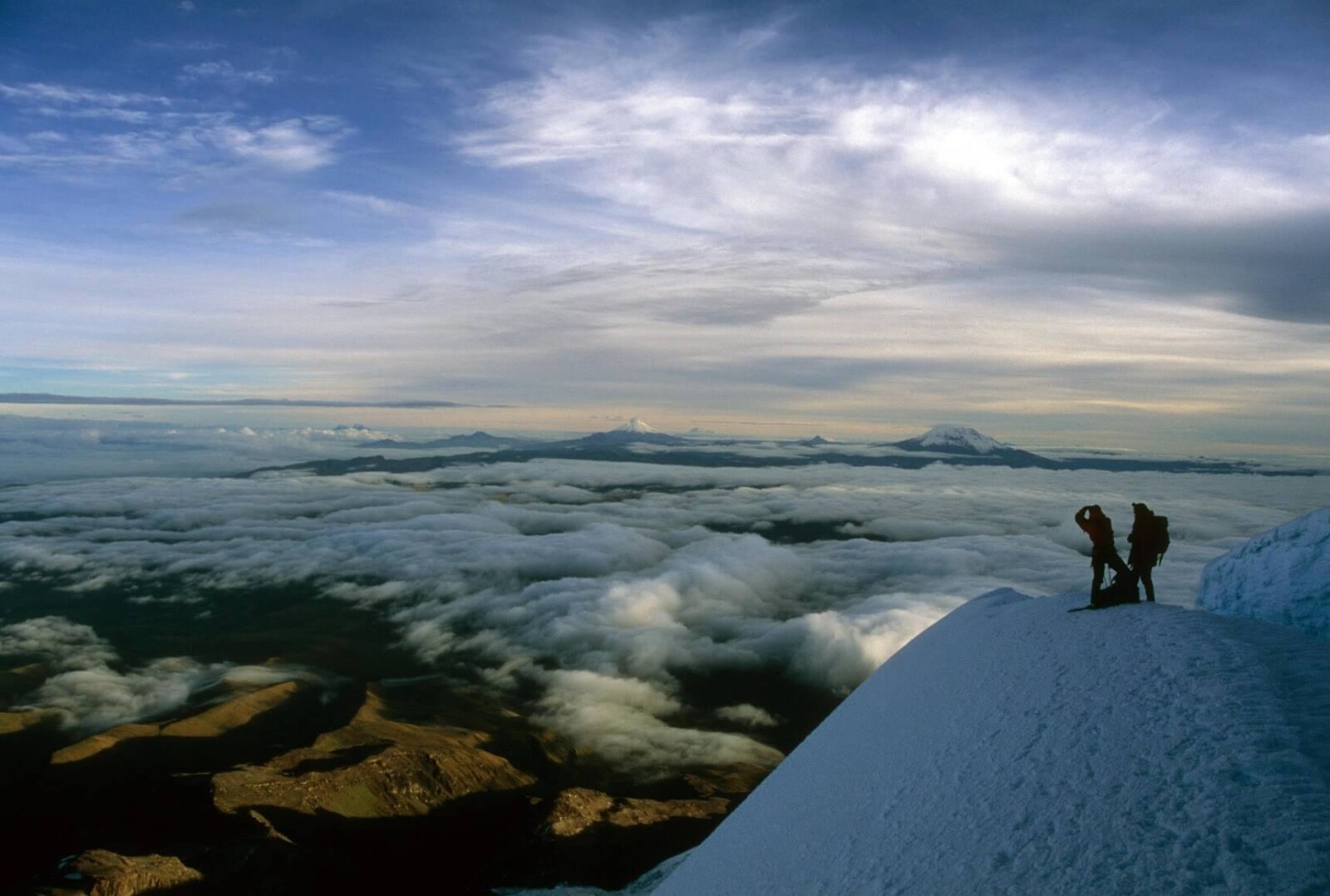
Everything builds toward one objective. The summit push begins at midnight by headlamp: a glaciated, crevassed route at serious altitude, where you apply everything you learned in the days before. Cayambe is a real alpine ascent, not a school exercise. On a clear morning, Cotopaxi, Antisana and Chimborazo rise across the Andes. For most climbers, this is the day the training becomes instinct.

The Optional Extension: Three Volcanoes in 15 Days

If you finish Cayambe and want more, the optional extension continues without a break: Cayambe, then Cotopaxi at 19,347 ft / 5,897 m, then Chimborazo at 20,564 ft / 6,268 m. Chimborazo is Ecuador’s highest summit and, because of the Earth’s equatorial bulge, the farthest point from the center of the Earth. You get continuous acclimatization, three summits, and an education no single peak can give you.
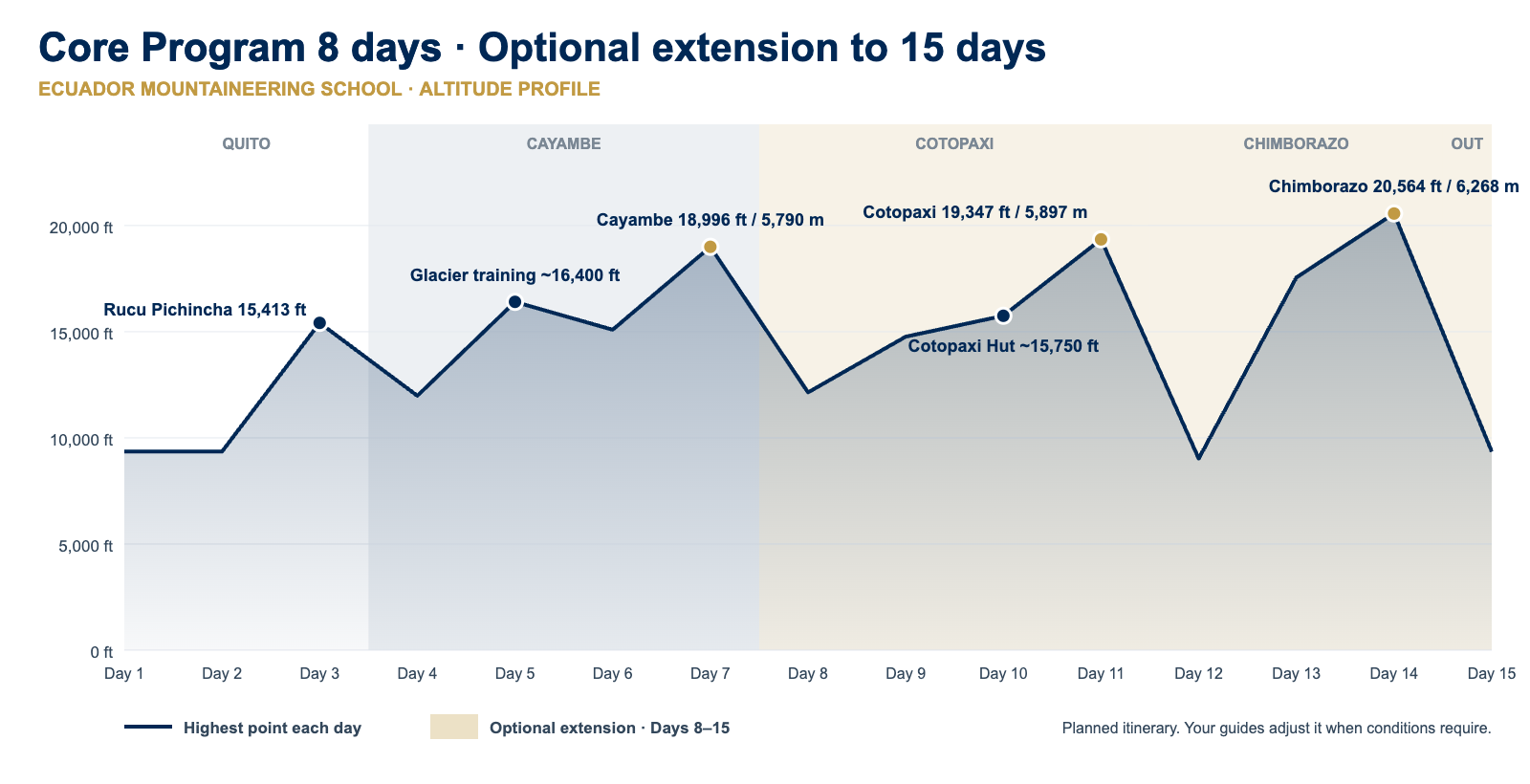
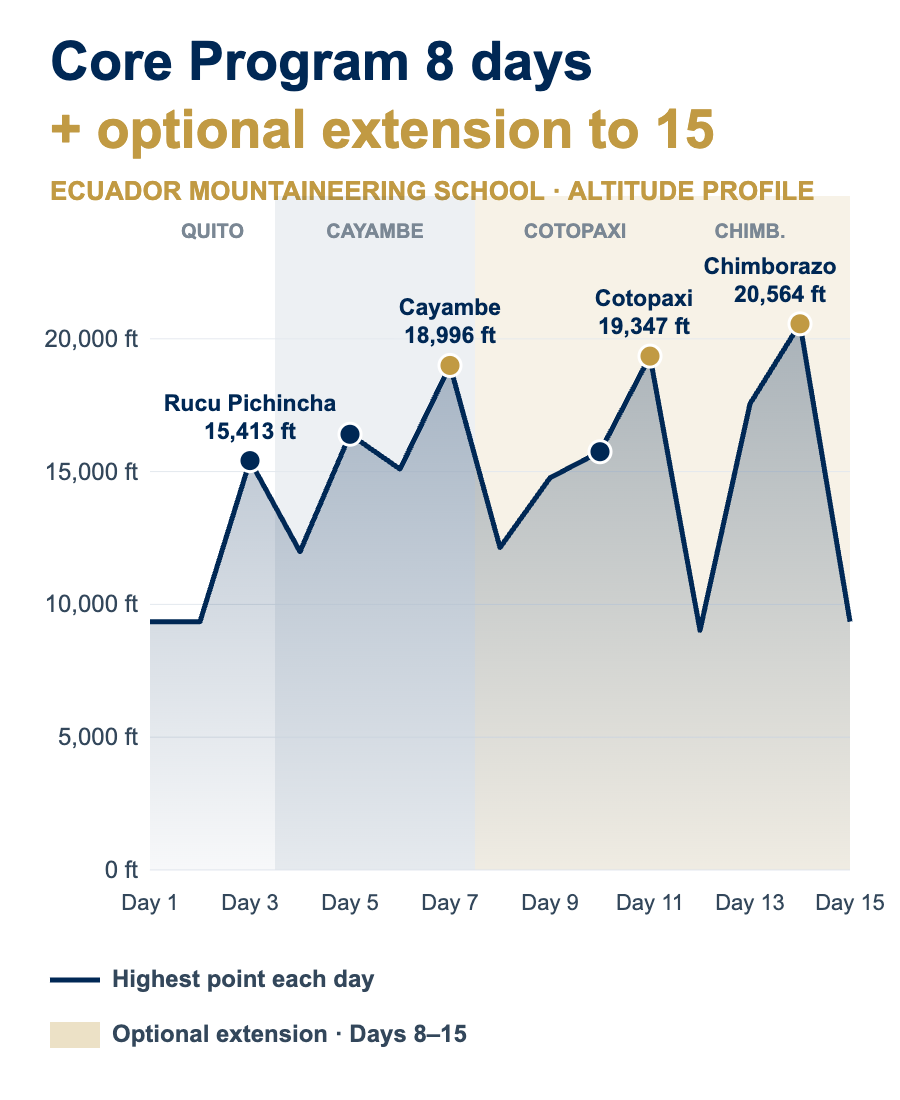
Altitude profile of the Ecuador Mountaineering School: Quito 9,350 ft, Rucu Pichincha 15,413 ft, glacier training on Cayambe, Cayambe summit 18,996 ft, and with the optional extension Cotopaxi 19,347 ft and Chimborazo 20,564 ftAltitude profile of the Ecuador Mountaineering School, 8 or 15 days
Highest point reached each day. The Core Program ends on Day 8 after the Cayambe summit; the optional extension continues to Cotopaxi and Chimborazo. See the full itinerary, day by day.

Acclimatization: Climb High, Sleep Low

Your body adapts while it rests, not while it works. The itinerary builds that in:

  • Three nights in Quito at 9,350 ft / 2,850 m, with an acclimatization climb of Rucu Pichincha (15,413 ft / 4,698 m) before you sleep higher
  • Two nights at Yanacocha Lodge (11,982 ft / 3,652 m) during glacier training on Cayambe
  • One night at the Cayambe Hut (15,100 ft / 4,600 m) before the summit
  • With the extension, Cayambe acclimatizes you for Cotopaxi, and Cotopaxi for Chimborazo

A School, Not a Summit Tour

Many guided climbs in Ecuador are short summit tours: drive to the hut, sleep a few hours and push for the top, with little time to acclimatize or learn. The School is built differently. You acclimatize properly, train on real glacier terrain, then climb Cayambe with skills you actually own. You leave with a summit and an education.

A short summit tour

  • Drive to the hut, sleep a few hours and push for the top
  • Little time to acclimatize or learn

The Ecuador Mountaineering School

  • Acclimatize properly
  • Train on real glacier terrain
  • Climb Cayambe with skills you actually own
  • Leave with a summit and an education

Small Teams

Teams are capped at six climbers, with one guide for every two, so a full team travels with three guides. That ratio is how real coaching works: constant feedback, real supervision on the glacier, and a guide who knows exactly how you move before summit day. You will never disappear into the group.

The Guide Team

The School runs on the systems Benegas Brothers Expeditions has built since 1992 for turning motivated beginners into competent climbers. Every departure is led by an IFMGA- or ASEGUIM-certified guide, working with experienced BBE guides to the same standard. A private School departure can be personally led by Willie or Damian on request, confirmed in writing.
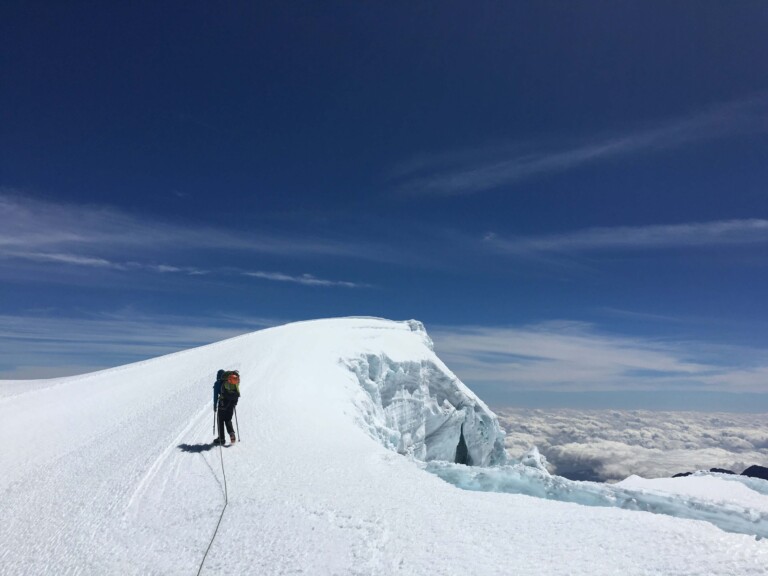
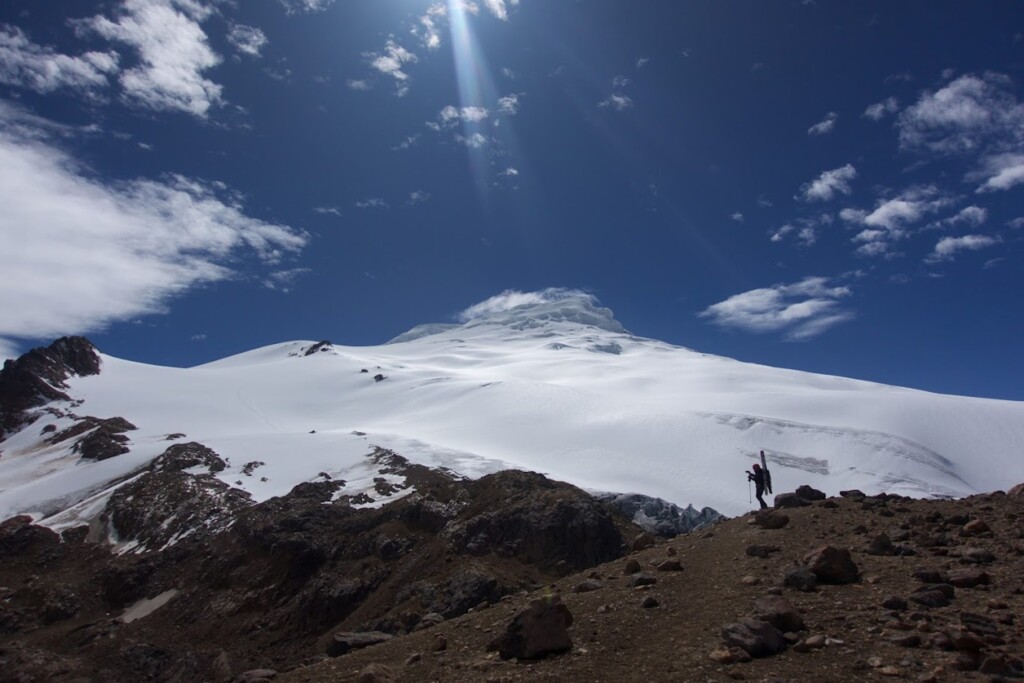
A climber on the glacier below the summit of an Ecuador volcano

Safety

  • One guide for every two climbers on the glacier
  • Radio and satellite communication on every climbing day
  • A comprehensive group medical kit on every climbing day
  • Daily monitoring of every climber’s pace, hydration, appetite and response to altitude
  • Starlink satellite internet, set up by BBE when needed: a limited connection, enough to message home

Turning around is sometimes the right decision. When it is, your guide makes it early and clearly.

Where the School Leads

The School is a natural first step in a progression we’ve guided since 1992: Ecuador, then Aconcagua, then Denali or the Himalaya. You leave with the skills our Aconcagua expedition assumes on Day 1: crampon technique, rope-team travel, self-arrest, and a summit above 18,000 feet. We’ll tell you honestly when you’re ready for the next step. If Everest is the long-term goal, The Road to Everest shows every step.

Already have glacier skills? The Cotopaxi Express and the Ecuador Volcanoes Expedition take you higher.

Who the School Is For

No prior mountaineering experience is required, because building it is what the School is for. What you do need is real fitness, a willingness to learn, and the commitment to follow through on a midnight summit push above 18,000 feet. For the honest standard, read Is This for Me?

Ready to Talk It Through?

Tell us what you’ve done and what you want to learn. Every climber speaks with us before booking, and we’ll tell you honestly whether the School fits. We don’t simply guide expeditions. We help people build a lifetime in the mountains. See dates & prices.
Ask a guide

Day by Day

Ecuador Mountaineering School · Core Program 8 Days · Optional Extension to 15 Days

This itinerary is a plan, not a contract. Acclimatization, weather and team readiness drive the final decisions. Our job is to build your skills step by step and put you in the best position to summit, and that takes flexibility.

Meals: All meals are included throughout the program. Alcohol and personal snacks are on you.

Altitude profile of the Ecuador Mountaineering School: Quito 9,350 ft, Rucu Pichincha 15,413 ft, glacier training on Cayambe, Cayambe summit 18,996 ft, and with the optional extension Cotopaxi 19,347 ft and Chimborazo 20,564 ftAltitude profile of the Ecuador Mountaineering School, 8 or 15 days
Highest point reached each day, Core Program plus extension (15 days). The Core Program ends on Day 8. Every altitude is a planning estimate.

The 15 Days at a Glance

Each bar shows where you sleep that night. ▲ marks the day’s high point. Tap a day to open it.

In each day below, altitude reads start → high point → where you sleep. Distances and hiking times are estimates.

Climb high, sleep low

Some days climb well above where you sleep. The gap between the day’s high point and the night’s camp is how your body adapts.

Times are estimates

Hiking times change with the team and the conditions. A slow, steady pace is the plan, not a problem.

The plan can flex

Weather, how the team is acclimatizing and your guides’ judgment can change the daily plan. That flexibility is part of the plan.

Why the Progression Works

Quito sits at 9,350 feet, so acclimatization starts the moment you land. Next comes Rucu Pichincha at 15,413 feet. Then you spend two full days living and training at altitude on Cayambe before the summit push. Each day builds the adaptation and skills you need for the next.

With the extension, the logic compounds. Cayambe acclimatizes you for Cotopaxi, and Cotopaxi acclimatizes you for Chimborazo. By the time you stand below Ecuador’s highest mountain, you have two glaciated summits and nearly two weeks at altitude behind you.

Altitude: 9,350 ft / 2,850 m

Fly into Mariscal Sucre International Airport (UIO). Our team meets you at arrivals and takes you to your hotel. After you settle in, we go over the program and what to expect as your body starts adapting. The evening is for rest, fluids and a good meal.

Sleep: Hotel Quito

Altitude: 9,350 ft / 2,850 m

Quito’s colonial center is a UNESCO World Heritage Site, and the morning is worth a walk. In the afternoon, your guides take you through equipment organization and run a full gear check. We cover altitude physiology, what happens to your body above 10,000 feet, and set the hydration and recovery habits that pay off on summit day.

Sleep: Hotel Quito

Altitude: up to 15,413 ft / 4,698 m

Active acclimatization begins on Rucu Pichincha, directly above Quito. A cable car takes care of the early elevation gain, then we climb on foot to the summit. Today covers moving efficiently uphill, pacing, breathing, basic rope skills, and an introduction to mountain decision-making.

Sleep: Hotel Quito

Altitude: 11,982 ft / 3,652 m

We drive north through the Andes toward Cayambe, about two hours, climbing through high páramo grassland to Yanacocha Lodge on the mountain’s lower slopes. The afternoon is for rest, acclimatization and a final equipment check.

Sleep: Yanacocha Lodge

Altitude: about 16,400 ft / 5,000 m

Today is your first full mountaineering training day, on Cayambe’s glacier with your guides beside you. You’ll work on:

  • Ice axe technique and self-arrest
  • Crampon footwork on flat and angled terrain
  • Moving on steep snow
  • Recognizing crevasse terrain
  • Rope-team travel
  • Snow anchor basics

By the end of the day, you’ll have moved on a real glacier.

Sleep: Yanacocha Lodge

Altitude: 15,100 ft / 4,600 m

We move up to the Cayambe Hut, the high camp before the summit push. Gear check, early dinner, rest. The alarm goes off at midnight. Sleep if you can.

Sleep: Cayambe Hut

Altitude: 18,996 ft / 5,790 m

Midnight start, headlamps on. The glacier route climbs steadily through crevassed terrain to the summit, and you use every skill from the past two days on a real high-altitude ascent. If conditions hold, you’re on top around sunrise. Then we descend and drive back toward Quito, to a real bed.

Climbing time: plan on 8–12 hours round trip.

Sleep: San José de Puembo, near the airport

Altitude: Extension: about 12,100 ft / 3,700 m

Core Program: airport transfers and departure from UIO. The Core Program ends here.

With the extension: you continue straight to Cotopaxi, with no flight home and no break in acclimatization. We drive south along the Avenue of the Volcanoes to Tambopaxi Lodge, below Cotopaxi’s glacier.

Sleep: Tambopaxi Lodge (extension)

Altitude: up to about 14,760 ft / 4,500 m

Time at elevation without overexertion. Your body is still building on the adaptation from Cayambe. We scout the route, review conditions and rest early.

Sleep: Tambopaxi Lodge

Altitude: about 15,750 ft / 4,800 m

We move up to high camp for an early dinner, gear review and lights out. The summit push begins around midnight.

Sleep: Cotopaxi Hut

Altitude: 19,347 ft / 5,897 m

A midnight start on one of the most recognizable volcanoes in the Americas. The route climbs steadily through crevassed glacier to the crater rim. Everything from Cayambe gets applied on a bigger, higher mountain. Then we descend, recover, and drive south to Baños.

Sleep: Sangay Spa Hotel, Baños

A deliberate recovery day in Baños, a mountain town with hot springs. In the afternoon we drive to Riobamba and check in at Abraspungo.

Sleep: Abraspungo, Riobamba

Altitude: about 17,500 ft / 5,350 m

We drive to the Chimborazo trailhead and climb to El Castillo Camp, the high camp on the western ridge. This is the only tent night of the program, and a deliberate one: sleeping high shortens summit day. Early dinner, gear check, rest. The alarm goes off around midnight.

Sleep: tents at El Castillo Camp (BBE provides tents and sleeping pads)

Altitude: 20,564 ft / 6,268 m

A midnight start on Ecuador’s highest summit. The route climbs the western ridge toward the Castillo saddle and on through steep, crevassed terrain exposed to serious cold and wind. Altitude discipline, pacing and mental strength get tested at an elevation you’ve never reached before. After the summit we descend to the trailhead and return to Riobamba for a real bed.

Sleep: Abraspungo, Riobamba

We drive back to Quito for airport transfers and departure from UIO. You leave Ecuador with glacier skills, three major summits, and a foundation for every serious climb ahead.

Good to Know

Every altitude and time above is a planning estimate, not a promise. Your guides adjust the schedule when conditions require it, and that flexibility is part of the design. Lodging may occasionally be replaced with a comparable property for availability or operational reasons. No summit is ever guaranteed.

Questions About the Itinerary?

Is This for Me?

Ecuador Mountaineering School · An Honest Answer, Not a Sales Pitch

This isn’t a beginner hiking trip. The School involves glaciated high-altitude terrain, crampon and ice axe work, and summit pushes above 18,000 feet. You don’t need glacier experience, because building it is what the School is for. You do need to arrive physically prepared and mentally committed.

The Core Program (8 Days)

You’re probably ready if:

  • You can hike 5–6 hours on steep terrain with a day pack without stopping to recover
  • You can keep moving when exertion gets hard: a slower pace and heavier breathing, but still going
  • You’re motivated to learn technical skills from the ground up: crampons, ice axe, rope travel
  • You understand that summit day on Cayambe starts at midnight and takes 8–12 hours of sustained effort

Think carefully if:

  • You have a current injury affecting your legs, back or heart and lungs
  • You’ve never exerted yourself above 10,000 feet and have no sense of how you respond to altitude
  • You expect a relaxed pace throughout. This program is structured and purposeful.

Adding the Optional Extension (15 Days)

Everything above, plus:

  • You can sustain effort over several days of climbing in a row without breaking down
  • You’re committed to reaching Chimborazo, Ecuador’s highest summit at 20,564 ft / 6,268 m, including a tent night at high camp and sustained effort above 19,500 feet
  • You recover well. Rest days are built in, but two weeks asks a lot

Before You Book: Altitude

Altitude illness is a real risk on this program, and no level of fitness prevents it.

No one can fully predict how they’ll respond to altitude before experiencing it. What we can tell you is that the program is built for acclimatization. You won’t go high too fast. The progression from Rucu Pichincha (15,413 ft) to Cayambe (18,996 ft), and with the extension on to Cotopaxi (19,347 ft) and Chimborazo (20,564 ft), gives your body time to adapt.

That said, if you arrive exhausted, dehydrated, unfit or with a respiratory illness, no schedule will save you. Arrive healthy and fit.

Your guides may require you to stop climbing or to descend if your symptoms or performance show it’s unsafe to continue. That decision is about your safety, and it’s final.

If you’ve had altitude illness before, or have a medical condition that hasn’t been assessed for high-altitude activity, tell us when you register. Talk to your physician about altitude and altitude medication before you travel.

Technical Experience

None required. You don’t need to have worn crampons, used an ice axe or traveled on a rope team. Two days of glacier instruction on Cayambe are built into the program to teach those skills. What matters is that you can take direction, stay focused and trust your guide.

The Fitness Standard, and How to Train

The honest benchmark: you should be able to hike 5–6 hours uphill on steep terrain with a loaded pack, without needing long rests.

Plan on 8–12 weeks of structured training before departure. Focus on:

  • Sustained cardio endurance: long hikes or runs
  • Leg strength: weighted step-ups and lunges
  • Core stability
  • Time at altitude, if you can get it

Contact us early, and we’ll help you focus your preparation.

Weather and Risk

Ecuador sits on the equator, which creates its own weather: afternoon cloud and rain at mid-elevations, and fast-changing conditions at the high camps. Summit windows are chosen in real time, not set in advance, and some attempts get turned around. Patience with the weather is part of every climb.

These are real alpine objectives with real hazards: crevasses, rockfall, altitude and changing weather. The guide team manages risk professionally, with one guide for every two climbers, radio and satellite communication, and a comprehensive medical kit on every climbing day. Your job is to trust the process and follow instructions on the mountain.

Who Should Reconsider

The School may not be right for you if:

  • You can’t comfortably complete a full day of steep hiking
  • You’re unwilling to train consistently before you arrive
  • You want a guaranteed summit
  • You’re unwilling to turn around when your guide says so
  • You have a medical condition that hasn’t been evaluated for high-altitude activity

The minimum age is set by Ecuador’s regulations and by insurance: climbers under 18 climb with a parent or guardian, and each climber’s insurance must cover their age. Families are welcome: younger climbers can join a scheduled team with a parent or guardian, or come on a private family expedition built around your family, and if a special permit is needed, we’ll help you apply.

Already Have Glacier Experience?

If you’ve already learned the basics, the School may not be your best next step. The Cotopaxi Express and the Ecuador Volcanoes Expedition assume glacier skills and take you higher. Ask us which fits.

Where the School Can Lead

There’s no required ladder. But what you learn here, including crampon technique, rope-team travel, self-arrest and how you perform above 18,000 feet, carries straight into the next objective: Aconcagua, then Denali or the Himalaya. If Everest is the long-term goal, The Road to Everest shows every step.

Not Sure If You’re Ready?

Ask us, and we’ll tell you straight. Every climber speaks with us before booking. Read the itinerary.

Ask a guide

Before You Go

Ecuador Mountaineering School · Before You Go

Preparing for the Ecuador Mountaineering School: Start Here

The climbers who arrive in Quito relaxed are the ones who handled the paperwork weeks earlier, not the night before. This page puts your preparation in order: what to do, when to do it, and where to find the details. Handle it early, and you can spend your energy in the final weeks on training, not logistics.

Three Things to Know Now

Rescue and evacuation insurance is required.Required

Your policy must cover mountaineering above 14,000 ft, up to your program’s highest summit: Cayambe, 18,996 ft / 5,790 m, on the Core Program, or Chimborazo, 20,564 ft / 6,268 m, if you add the extension. Send us proof as soon as possible after you register.

No visa needed for most climbers.Visa-free

US, Canadian, UK and most European passport holders enter Ecuador visa-free for up to 90 days. Your passport needs six months of validity beyond your entry date.

Ecuador uses the US dollar.US dollars

There’s no currency exchange. Bring small bills ($5, $10 and $20), because change for large notes is hard to find.

Your Seven Preparation Guides

Your Preparation Timeline

When you book

  • Through the registration link we email you, complete the reservation form, then pay your deposit by the invoice we send. Then complete the Registration Form (your profile, emergency contacts, medical history and climbing experience), upload your passport, and accept the Terms & Conditions and the Release.
  • Check your passport: six months of validity beyond your entry date.
  • Buy rescue and evacuation cover and email us proof. Consider trip insurance too: pre-existing-condition waivers often depend on buying soon after your first payment.
  • Start your 8–12 week training program. See Is This for Me?
  • Read the gear list now, so big purchases like boots and layers have time to be tested.

120 days before departure

  • Your balance is due. If you book within 120 days of departure, full payment is due at booking.

Once you’ve paid in full

  • Book your flights into Quito (UIO), then email your itinerary to climbing@benegasbrothers.com.
  • Talk to your physician about altitude, altitude medication and vaccinations.

At least 3 weeks before

  • Tell us which technical items you want to rent in Quito: crampons, ice axe, harness, helmet.
  • Break in your boots and test your layers on real training days.

The final 2 weeks

  • Complete Ecuador’s digital customs form (FRA) up to three days before you fly.
  • Do a full pack-out using the gear list.
  • Get small US bills for tips and personal spending.
  • Save copies of your passport and insurance to your phone and the cloud.
  • Ease off your training. Arrive rested, not worn out.

Arrival Day

A member of our team meets you at Mariscal Sucre International Airport (UIO) and takes you to your hotel in Quito, which sits at 9,350 feet, so acclimatization has already begun. From then on, the logistics are our job. Yours is learning to climb.

Still Deciding?

This section assumes you’re going. If you’re still deciding, start with Is This for Me? and Your Questions. For different dates or your own team, see Private & Custom Expeditions.

Questions While You Prepare?

Ask early

Gear choices, training doubts, insurance fine print, flight timing: ask early. Small questions are easiest to solve months out. See dates & prices. · climbing@benegasbrothers.com

Ask a guide

Your Expedition Checklist

There’s no climbing permit for you to arrange. BBE handles all park fees and climbing registrations. What you’re responsible for is your paperwork, your insurance, your health checks and your documents. Here’s everything, in the order you’ll do it.

Your Paperwork at a Glance

Everything BBE needs from you, in the order you’ll do it. Tick items off as you go; your ticks are saved on this device. The details for each item are below.

Step 1At booking, in the registration formDone together with your deposit

Step 2Buy, then send to BBEEmail climbing@benegasbrothers.com

Step 3Arrange and carryNeeded on the trip

1. Register Online

When you inquire, we reply with program information and a link to our online registration form. Everything is completed there, in this order:

  1. Reservation form: full name, email, date of birth, address and any notes for the program staff. It includes the link to pay your deposit.
  2. Registration Form: your personal profile, including emergency contacts; your medical history; and your climbing and hiking background.
  3. Passport: a clear copy of your passport’s photo page.
  4. Terms & Conditions: read them before you accept.
  5. Release: our liability release and assumption of risk for high-altitude glacier climbing. Read it carefully.

Be complete and honest on your medical history. Include conditions, medications, allergies, past injuries and any past altitude illness. It protects you, and it lets your guides help you properly.

2. Send Us by Email

Send these to climbing@benegasbrothers.com:

  • Insurance certificate: proof of rescue and evacuation cover, as soon as possible after you register. See Trip Insurance & Evacuation Coverage.
  • Flight itinerary: once you’ve paid in full and booked, with all flight numbers. See Flights & Getting to Quito.
  • Rental request: crampons, ice axe, harness and helmet, with your sizes, at least three weeks before departure. Rentals come from shops in Quito and are paid directly to the shop.

Tell us right away if your health, medications, insurance or flights change.

3. Health Steps

  • Talk to your physician about high-altitude travel, altitude medication and any conditions you have. Never take prescription altitude medication on another climber’s advice.
  • See a travel medicine clinic 4–6 weeks before departure. Routine vaccinations should be current. Hepatitis A and typhoid are commonly recommended for Ecuador. Your clinic will advise on anything else.
  • Pack enough prescription medication for the whole program plus a few extra days, in your carry-on, with copies of your prescriptions.
  • Put together a small personal kit: blister care, sunscreen, lip balm, and any medicines your doctor advises. Your guides carry a comprehensive group medical kit on every climbing day, but it doesn’t replace your own supplies.
  • If you get sick, injured or change medication before departure, tell us right away.

4. Documents to Carry

  • Passport valid at least six months beyond your entry date. A passport card isn’t accepted for international flights.
  • Your return or onward ticket, and your first night’s hotel details for immigration
  • The QR code from Ecuador’s digital customs form (FRA), completed online up to three days before you fly
  • Your insurance policy number and 24-hour emergency number, saved offline
  • Two payment cards, kept separately, and small US bills
  • Paper copies of key documents stored apart from the originals, plus photos you can reach without signal

5. Final Check Before You Fly

  • Registration complete: reservation, Registration Form, passport, Terms & Conditions, Release
  • Insurance proof emailed (as soon as possible after registering)
  • Balance paid (120 days before departure)
  • Flight itinerary emailed
  • Rentals requested (at least three weeks before)
  • FRA customs form completed and QR code saved
  • Boots broken in and every layer tested

If anything here is unclear, ask us before the deadline, not after.

Trip Insurance & Evacuation Coverage

This program has two kinds of insurance, and they do different jobs. One is required. The other is strongly recommended. Sort them out early, because insurance is the part of preparation climbers most often get wrong.

Required by BBERescue and evacuation coverage

Required on every BBE international expedition. It pays to get you off the mountain and to proper medical care. The coverage it must include for this trip is listed below.

Strongly recommendedTrip insurance

Protects the money you’ve spent if illness, a family emergency or a travel disruption stops or cuts short your trip.

1. Rescue and Medical Evacuation Coverage: Required

Rescue and evacuation cover is required on this expedition. You can’t start the program without it.

Your policy must explicitly cover:

  • Mountaineering above 14,000 ft / 4,270 m, up to your program’s highest summit, with no altitude cap or activity exclusion below it. Core Program: Cayambe, 18,996 ft / 5,790 m. With the extension: Chimborazo, 20,564 ft / 6,268 m.
  • Glacier travel and the use of crampons, ice axe and rope
  • Helicopter or other emergency evacuation when medically necessary
  • Emergency medical treatment in Ecuador
  • International medical transport and repatriation

Many standard travel and health policies exclude mountaineering, or stop well below these altitudes. Read the exclusions before you buy.

Providers. We recommend Global Rescue or Ripcord. With Global Rescue, add the High-Altitude Evacuation Package, because standard membership covers field rescue only to 15,000 ft / 4,600 m, and every high camp and summit on this program is above that. With Ripcord, check the plan’s altitude limit. Whichever you choose, confirm it covers helicopter evacuation up to your program’s highest summit.

2. Trip Cancellation and Interruption Insurance: Strongly Recommended

This is a separate product, and it’s strongly recommended, not required. It protects the money you’ve spent if you have to cancel or leave early, and it covers travel problems along the way:

  • Cancellation and interruption
  • Flight delays and missed connections
  • Lost or delayed baggage
  • Medical costs while traveling

Expedition payments are refunded only under BBE’s cancellation terms, and there are no refunds for illness, injury, altitude illness, weather, missed flights or leaving early. See Dates & Prices for the full terms. Buy it soon after you register, because some benefits, such as pre-existing-condition waivers, are only available for a limited time after your first payment.

What Evacuation Really Looks Like

It’s never guaranteed. Helicopter flights depend on weather, wind, altitude, aircraft availability and authorization. When a helicopter can’t fly, the team coordinates the best alternative, which may mean descending on foot with a guide and then a vehicle to medical care.

It’s expensive, and you pay for it. Evacuation and early-departure costs are yours, even if you plan to claim them back. You may have to pay when the service is provided. Keep every receipt and medical document for your claim.

What to Confirm With Your Insurer, in Writing

  • Does the policy cover mountaineering above 14,000 ft, up to 18,996 ft (Core) or 20,564 ft (with the extension), in Ecuador?
  • Does it cover helicopter evacuation from high altitude?
  • Does it cover emergency treatment, international medical transport and repatriation?
  • Are there exclusions for guided climbing, glacier travel, altitude or pre-existing conditions that apply to you?
  • How do you reach them in an emergency, and do they pay providers directly or reimburse you?

What to Send BBE

Email climbing@benegasbrothers.com with your provider’s name, your policy or member number, and the provider’s 24-hour emergency number. Send it as soon as possible after you register. Without it, you can’t start the program.

Questions about coverage? Ask us before you buy. We see these policies every season.

Flights & Getting to Quito

Getting to this program is the easy part. Quito is one of South America’s most accessible capitals. Fly into Mariscal Sucre International Airport (UIO), and we take it from there.

When to Book

Book your flights once you’ve paid in full: 120 days before departure, or at booking if you register inside that window. A departure is confirmed when we tell you so in writing. Please buy nonrefundable flights only after your departure is confirmed. Where you can, choose a changeable fare.

Book with your full legal name exactly as it appears in your passport.

Getting to Quito

Direct flights to Quito run from several US hubs, including Miami, Houston, Atlanta and New York, mostly in the 4.5–6 hour range. If you’re not near a direct route, common connections run through Panama City or Bogotá. From Europe, there’s direct service from Madrid. Routes and airlines change, so check current schedules when you book.

Arrival: Day 1

Arrive on Day 1. Many flights from North America land in Quito in the evening, and that works fine, because Day 2 is a full preparation day in the city. If you’ll land late at night, tell us, and we’ll adjust your pickup and move your program briefing to the next morning.

The airport is about an hour outside the city, so factor that into your energy on arrival night.

Arriving early? Extra nights in Quito aren’t included, but we’re happy to help arrange them.

Departure

  • Core Program: book your flight home for Day 8. The team spends Night 7 near the airport, after the Cayambe summit.
  • With the extension: book for Day 15, after the team drives back to Quito from Riobamba.

Choose an evening or overnight flight where you can. It gives comfortable margin for the final transfers. Many climbers take the late flights that leave Quito at night and land in the US the next morning.

Airport Transfers

A member of our team meets you at UIO on arrival, and the departure transfer is included too. We coordinate timing around your flights.

Send Us Your Flight Details

Once you’ve booked, email your full itinerary, with every flight number, to climbing@benegasbrothers.com. Tell us right away if the airline changes your schedule.

Entering Ecuador

  • Visa: US, Canadian, UK and most European citizens don’t need a visa for stays up to 90 days. You get a tourist stamp on arrival, with no application and no fee. Other nationalities should check with an Ecuadorian consulate before booking.
  • Passport: It must be valid for at least six months beyond your entry date. A passport card isn’t accepted for international air travel.
  • Immigration: Have your passport, your return or onward ticket, and your first night’s hotel details ready. Most nationalities use automated kiosks.
  • Digital customs form (FRA): Complete the Formulario de Registro Aduanero online up to three days before you travel. You get a QR code; have it on your phone when you land. It takes about five minutes.
  • Climbing gear: Ropes, crampons, ice axes, helmets, harnesses, boots and technical clothing count as personal sporting equipment. No permit or advance declaration is needed. Use the green channel if you’re carrying only personal items within the standard limits.

Baggage

One large duffel plus a carry-on covers most climbers. Your mountaineering boots and critical fitted gear travel in your carry-on, because boots that fit can’t be replaced on short notice. Put an AirTag or similar tracker in your checked duffel. If a bag is delayed, Day 2 in Quito is your buffer, and rental gear can cover a gap.

If Something Goes Wrong

Flight canceled, connection missed, bag delayed: email climbing@benegasbrothers.com right away, ideally before you rebook. Travel problems are solvable. Late information is what makes them expensive.

Where You'll Stay

The School moves through four kinds of lodging: city hotels, mountain lodges, climbers’ huts, and with the extension, one high-camp tent night. Each is chosen for what it does: recovery where recovery matters, altitude where altitude matters. Here’s where you’ll sleep, night by night.

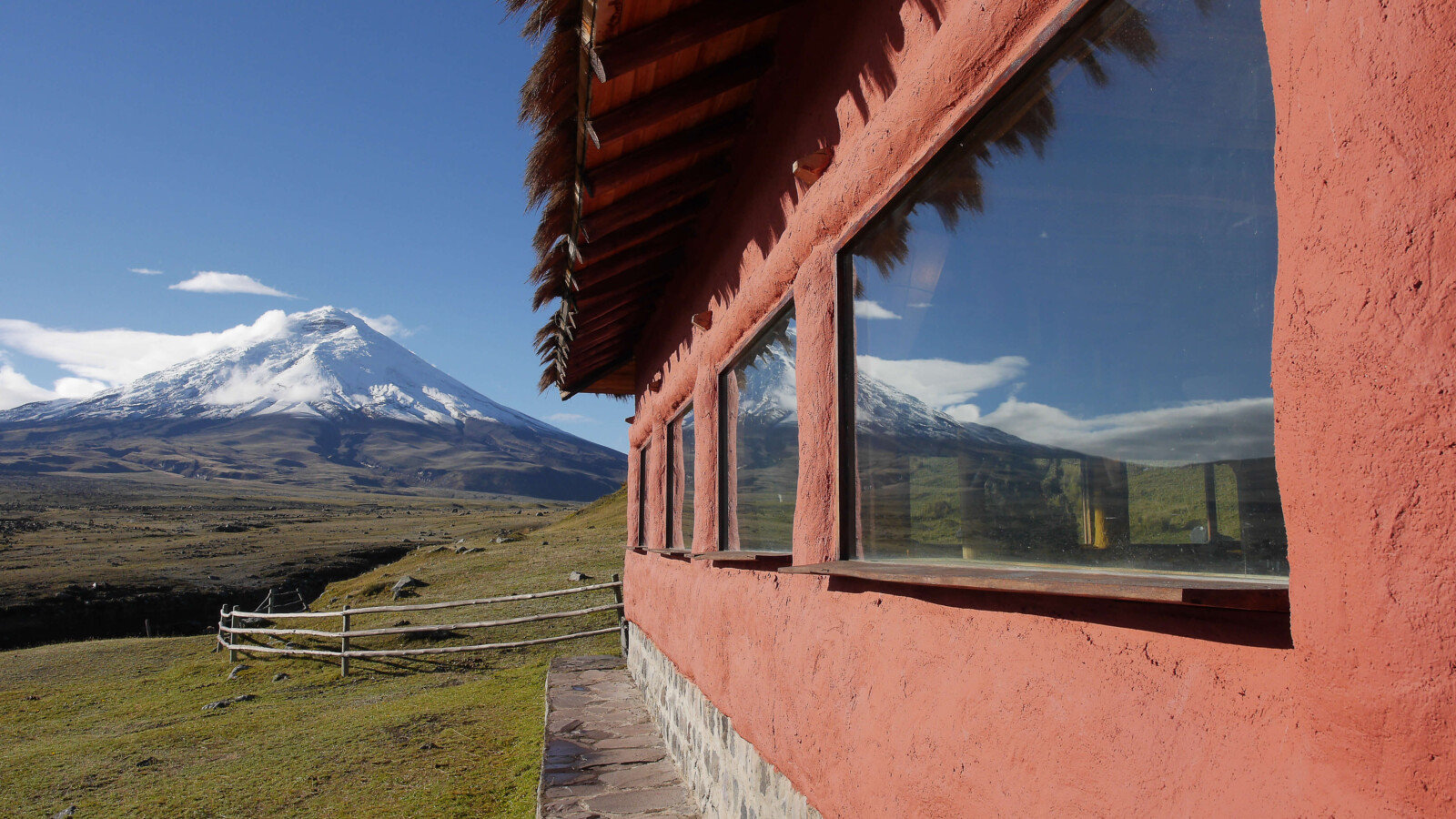
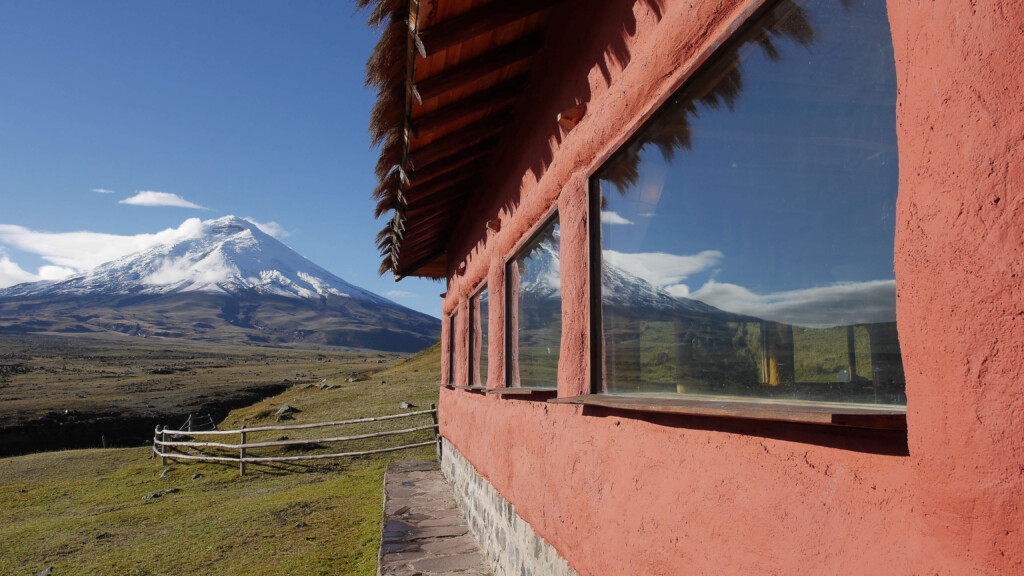
The José F. Ribas Refuge, the climbers' hut on Cotopaxi

Room sharing: Hotels and lodges are double occupancy. A single room is available on request in the hotels and lodges, and we’ll quote the cost when you ask. Huts and high camp are shared by nature; nobody gets a private bunk at 15,000 feet.

Changes: Lodging may occasionally be replaced with a comparable property for availability or operational reasons.

Core Program

Nights 1–3 — Hotel Quito · 9,350 ft / 2,850 m

Your base for arrival, preparation and the Rucu Pichincha acclimatization day. Rooms are comfortable, the food is good, and at 9,350 feet even your hotel nights are quietly acclimatizing you.

Nights 4–5 — Yanacocha Lodge, Cayambe · 11,982 ft / 3,652 m

On Cayambe’s lower slopes, surrounded by páramo grassland, Yanacocha Lodge is your home during glacier training: warm beds, hot meals and direct access to the mountain. It’s a working mountain lodge, not a resort, and after a full day of crampon work, it’s exactly what you want.

Night 6 — Cayambe Hut · 15,100 ft / 4,600 m

The night before the summit push, the team moves to the climbers’ hut high on Cayambe. It’s simple: shared bunk rooms and a communal dining area. You’re here to eat early, sleep a few hours and wake at midnight ready to climb.

Night 7 — San José de Puembo, near Quito’s airport

A comfortable landing after the midnight summit push, close to the airport for Core Program departures the next day.

Optional Extension: Nights 8–14

Nights 8–9 — Tambopaxi Lodge, Cotopaxi · about 12,100 ft / 3,700 m

A mountain lodge below Cotopaxi’s glacier, with views straight up the mountain you’re about to climb. Two nights for acclimatization and the approach.

Night 10 — Cotopaxi Hut · about 15,750 ft / 4,800 m

Same formula as Cayambe: a shared climbers’ hut, early dinner, lights out, midnight start.

Night 11 — Sangay Spa Hotel, Baños

After the Cotopaxi summit, the team drops down to Baños, a mountain town known for its hot springs. This night is deliberate recovery: soak, eat well, sleep long.

Nights 12 and 14 — Abraspungo, Riobamba

A comfortable hostería near Chimborazo, your base before and after the final climb.

Night 13 — El Castillo Camp, Chimborazo · about 17,500 ft / 5,350 m

The one tent night. Before the Chimborazo summit, the team sleeps in expedition tents at El Castillo Camp, the high camp on the western ridge. Sleeping high shortens summit day, and the night itself is part of your education, because high-camp routines are a skill every bigger mountain will demand. BBE provides the tents and sleeping pads. Your guides manage food and water; your job is to eat, drink and rest.

What’s Included

  • All lodging on the itinerary
  • All meals throughout the program, including at the huts and high camp
  • Tents and sleeping pads at El Castillo Camp

Not included: extra nights before or after the program, single rooms, and personal drinks.

Toilets, Showers and Power

  • Showers are available at the hotels and lodges, not at the huts or high camp.
  • At the huts and camp, facilities are basic. Bring toilet paper, wet wipes and hand sanitizer. At El Castillo Camp, your guides explain what must be packed out.
  • Charging is available at the hotels and lodges. Bring a power bank for the huts and summit days, and keep it warm.

Life on the Mountain

“Take care of the mountain, and the mountain will take care of you.” It is the Benegas Brothers’ motto, and the rule we climb by.

Summit day is one day. The School is eight, or fifteen.

Students practising crevasse travel on a glacier in Ecuador

Fitness alone isn’t what separates climbers who thrive from those who just get through. It’s how they handle the daily realities: eating when their appetite fades, sleeping poorly at altitude, keeping themselves organized, and waiting patiently for the weather to clear. Here’s what life on Ecuador’s volcanoes actually looks like, and how to prepare for it.

The Rhythm of the Program

No two days are the same, but the structure is consistent: move, eat, recover, prepare. The program alternates travel days, acclimatization days, instruction days and summit pushes. Your guide sets the pace and manages the schedule. Your job is to show up ready each day.

Food and Water

All meals are included throughout the program, from the city hotels to the mountain lodges, huts and high camp. Alcohol and personal snacks are on you. A proper dinner after a summit day is one of the better parts of the experience.

  • Summit days: you eat a full meal at the hut before the push and carry your own snacks and water. Bring snacks you already rely on when working hard: bars, gels, electrolytes. Don’t experiment on summit day.
  • Hydration: it’s your most important job at altitude. Drink consistently from the moment you land in Quito. On summit pushes, carry at least 2 liters in insulated bottles so they don’t freeze.

Sleep

Sleep at altitude is lighter and more broken than at home. That’s normal, and it improves as you acclimatize. Rest lying down even when sleep doesn’t come. Hut nights are basic: bunks, shared spaces, cold. Bring earplugs and a warm layer to sleep in.

Summit nights aren’t sleep nights. You reach the hut, eat, rest a few hours, and go. Treat that rest as recovery, not a full night.

Acclimatization: What to Report and When

Common and manageable above 10,000 feet: headache, reduced appetite, broken sleep and mild fatigue. Report them anyway.

Tell your guide immediately about:

  • A headache that keeps getting worse or won’t go away
  • Nausea or vomiting
  • Loss of coordination
  • Confusion
  • Shortness of breath at rest

Descent is the right call when symptoms escalate, and your guides make it without hesitation. Never hide symptoms to protect your summit. Talk to your physician about altitude medication before you travel.

Summit Days

Pushes begin at midnight or shortly after: wake up, eat a hot meal, gear up, and move into the dark. The first hours are cold, your headlamp lights only the next few steps, and altitude makes everything feel harder than it should. That’s normal. Follow your guide, control your pace, and keep moving steadily.

We aim to be on top and heading down early in the morning, before the sun softens the glacier. Then comes the descent, food, rest, and travel to the next stop. Summit days are long, so plan for them.

Weather and Conditions

Ecuador sits on the equator, so traditional seasons don’t apply. The main climbing windows are generally June through September and December through February. Afternoons often bring cloud and rain at mid-elevations; above the clouds it can be clear and cold.

UV at altitude near the equator is extreme. Put high-SPF sunscreen on all exposed skin, including under your nose and chin, before every glacier day. Category 4 glacier glasses are essential.

Safety and Staying in Touch

The guide team carries radio and satellite communication and a comprehensive medical kit on every climbing day, and checks on every climber daily: pace, hydration, appetite and response to altitude.

There’s cell coverage in the cities and at some lodges. BBE sets up Starlink satellite internet when needed: a limited connection, but enough to message home. Expect little or nothing during the climbs, and tell your family beforehand that silence on summit days is normal. We set up a WhatsApp group for each team.

Health and Hygiene

There are no showers at the huts or high camp. Bring wet wipes, hand sanitizer and a compact hygiene kit. Wash your hands before every meal; clean hands are the best defense against the stomach bugs that end more mountain trips than altitude does. Drink only treated water. Feel unwell? Tell your guide early.

What the Team Needs From You

Each evening:

  • Prepare your clothing
  • Refill your water
  • Organize your snacks
  • Charge your electronics
  • Check your headlamp
  • Confirm the next start time

With a maximum of six climbers, you get real attention from your guides. It also means your preparation and attitude matter to everyone.

Ecuador Mountaineering School Gear List

For many climbers, this is the first time buying real mountaineering equipment. Gear chosen once and chosen well can serve you for a decade of climbing. The wrong gear costs money twice, and comfort every day. Here’s how to think about it. The full item-by-item list is in the PDF.

Why Gear Matters Here

Equatorial glaciers test gear in their own way. The cold is wet, not just deep: freezing rain and rime at 17,000 feet soak systems that dry cold never tests. The sun on an equatorial glacier is intense. And summit pushes start at midnight, when everything you own is working at once: headlamp, layers, gloves, boots. Gaps show up fast, and at 18,000 feet there’s no shop.

Systems, Not Items

Think in systems:

  • A layering system you can adjust without stopping: base layers, a fleece mid-layer, a synthetic jacket, a softshell, a waterproof hard shell, and an 800-fill down parka for summit day
  • A glove system with a backup: lightweight, midweight and heavyweight gloves, plus a spare pair you can climb in
  • A sleep system: a sleeping bag rated to 0°F / −18°C and an insulated inflatable pad
  • Sun protection you reapply without being reminded: SPF 50+, lip balm, dark glacier glasses and goggles

Test every critical item at home first. Break boots in on real trails and wear your layers on real training days. Nothing should be worn for the first time on a glacier.

Buying Your First Kit: Where to Invest

Don’t buy everything. Invest in what touches your body and stays with you for every future climb: mountaineering boots, base layers, a real shell and good gloves. Your boots must be insulated, rated for 5,000–6,000 m, and accept a step-in crampon.

Technical hardware is where first-time climbers waste the most money. Crampons, ice axe, harness and helmet can be rented in Quito while you’re still learning what you like. Rentals come from shops in Quito and are paid directly to the shop. Request them at least three weeks before departure, because popular sizes go early.

Whatever you’re thinking of buying, send us a photo or a link first. Two minutes of email beats an expensive mistake.

We Check Everything

Every climber’s equipment is reviewed before departure, and your guides run a full gear check in Quito on Day 2, with time to fix problems before the mountain phase begins. Nothing goes onto the glacier unchecked.

Packing

Pack your gear in a large, durable duffel, and keep your boots and critical fitted gear in your carry-on. Put an AirTag or similar tracker in your checked bag.

Unsure About an Item?

That’s what we’re here for. This is a school, and the education starts before you pack.

What to Budget For

A good budget covers more than the program price. This page explains what’s included, what isn’t, and how much to plan for, so you understand the total before you commit, not after.

Beyond the price — Core$700–1,500

Plus tips. Insurance and personal spending.

Beyond the price — with extension$1,000–1,900

Plus tips.

Tips7–10%

Of the program price.

Your Budget at a Glance

RequiredCosts every climber pays
  • InsuranceRescue coverage is required$300–800
  • Flights and personal gearYou book and bring theseVaries
  • TipsOf the program price7–10%
Personal spending
  • Core Program8 days$400–700
  • With the extension15 days$700–1,100

The program price, payment schedule and cancellation terms are on Dates & Prices.

Tips: How They Work

Tips aren’t included in the program price. Your guides work long days in demanding conditions, and tips are a meaningful part of how they’re paid. The usual guideline is 7–10% of the program price, for the whole team including support staff. Give it to your lead guide at the end of the program, and they’ll distribute it.

Bring small bills: $5, $10 and $20 notes are far more useful than $50s or $100s.

Cash and Cards

Ecuador uses the US dollar, so there’s no exchange and no conversion math.

  • Change is the common problem. Breaking $50 and $100 bills is hard, even in Quito. Bring plenty of $5, $10 and $20 bills.
  • ATMs: use bank ATMs in Quito, not standalone machines. Withdraw what you need before leaving the city, because there are no ATMs at the lodges or huts.
  • Cards: Visa and Mastercard are accepted at most Quito hotels and larger restaurants; American Express is less reliable. Tell your bank you’re traveling.
  • Cash only on the mountain, at lodges, in small towns, and for anything outside the program.
More cost details for this trip

What the Price Already Covers

The program price covers more than most:

  • All lodging on the itinerary
  • Every meal of the program: city hotels, lodges, huts and camp
  • All ground transport, including airport transfers both ways
  • Park fees and climbing registrations
  • Group climbing equipment
  • Full guide support, at one guide for every two climbers

Alcohol and personal snacks are the only food costs on you.

Required Costs

International flightsVaries

You book your own round trip to Quito (UIO). Fares depend on where you fly from and when, so we don’t publish a figure. See Flights & Getting to Quito.

Rescue and evacuation insurance$300–$800

It’s required. Combined with trip-cancellation insurance, plan roughly $300–$800, depending on the provider, your age and your coverage. Get a current quote directly. See Trip Insurance & Evacuation Coverage.

Personal gearVaries

What you spend depends on what you already own, so we don’t publish a figure. Renting technical hardware in Quito is often the right answer for a first glaciated climb, and rentals are paid directly to the shop. See the Gear List.

Personal Spending

On top of tips, plan for drinks, snacks, souvenirs and a reasonable buffer:

Core Program (8 days)$400–$700
With the extension (15 days)$700–$1,100
Extra nights in QuitoAbout $80–$180 per night

if you arrive early or stay on: about $80–$180 per night.

Single roomOn request

available on request in the hotels and lodges; we’ll quote the cost when you ask.

Estimated Additional Budget

Beyond the program price, your flights and your gear:

Core Program (8 days)$700–$1,500 + tips

Insurance: $300–$800 · Personal spending: $400–$700 · Tips: 7–10% of the program price

With the extension (15 days)$1,000–$1,900 + tips

Insurance: $300–$800 · Personal spending: $700–$1,100 · Tips: 7–10% of the program price

Plan on roughly $700–$1,500 (Core) or $1,000–$1,900 (with the extension), plus tips.

If Plans Change

If you leave the program early for any reason, the resulting costs are yours: evacuation, medical care, private transport, extra hotel nights and flight changes. Insurance may reimburse covered costs. The price pays for the whole program, not a guaranteed summit, and there’s no refund for a missed summit or an unused day.

If a cost is unclear, ask before booking. You’ll get a direct answer.

Private & Custom Expeditions

Ecuador · Your Dates · Your Team · Your Objectives

Private expeditions aren’t an add-on at Benegas Brothers. Many of our clients travel with us this way.

It’s the same mountains, the same program structure and the same standard of guiding. The difference is that the trip is built around you: your schedule, your group, your pace and your objectives. You’re not joining someone else’s departure. The team is yours.

What a Private Ecuador Program Can Be

  • The School, privately: the 8-day Core Program, with or without the optional extension, on your dates
  • A custom combination: add a peak, adjust the itinerary, or extend the glacier instruction
  • Extra instruction days: for climbers who want more time on technical skills before a bigger objective
  • Preparation for what’s next: longer acclimatization and more technical emphasis for climbers using Ecuador to prepare for Aconcagua, Denali or the Himalaya

Ecuador offers more than the standard program, and we know how to build around it.

Who Private Trips Suit

  • Couples, families and small groups who want to climb together on their own schedule
  • Climbers with fixed dates around work or family
  • Teams who want a customized itinerary beyond the standard program
  • Clubs, organizations and corporate groups who want a serious shared mountain experience

Led by Willie or Damian

Willie and Damian Benegas have guided major expeditions around the world since 1992, including Everest, Aconcagua, Denali and the Himalaya, with the same philosophy that runs through every BBE program.

A private expedition can be personally led by Willie or Damian on request. A founder takes part only when it’s confirmed in your written trip terms.

Corporate and Group Programs

The mountains are a powerful setting for leadership and teamwork. We design private programs for groups that want more than a conference room: real decisions at altitude, a shared challenge, and a summit that means something. These are real mountain programs, built around the group’s actual experience.

Climbers Under 18

The minimum age is set by Ecuador’s regulations and by insurance: climbers under 18 climb with a parent or guardian, and each climber’s insurance must cover their age. Families are welcome: younger climbers can join a scheduled team with a parent or guardian, or come on a private family expedition built around your family, and if a special permit is needed, we’ll help you apply.

What Private Doesn’t Change

A private expedition doesn’t guarantee a summit, good weather, particular glacier conditions or successful acclimatization. Safety standards and guide decisions are the same on private and scheduled trips.

Building Your Program

Tell us:

  • Your preferred dates
  • How many people are coming, and the ages of anyone under 18
  • Your mountain and altitude experience
  • Your fitness and technical skills
  • Your objectives
  • Whether you’d like Willie or Damian to lead

We’ll tell you honestly what’s realistic and prepare an itinerary and price. Every private program is priced individually.

Dates & Prices

Ecuador Mountaineering School · Core Program 8 Days · Optional Extension to 15 Days · Maximum Six Climbers

Everything you need to book: departures, prices, what’s included, and the terms. If you’re still deciding, start with Is This for Me? or talk to a guide first. Every climber speaks with us before booking.

Expedition price$4,100

USD per climber.

Deposit to book20%

Of the expedition price. Includes a $350 non-refundable booking fee.

Balance120 days

Due 120 days before departure. Inside 120 days, you pay in full at booking.

Core Program8 days
With extension15 days
Climbers6 max
Guide ratio1:2

Optional extension (Days 8–15): +$3,500 USD per person, on top of the Core Program. Maximum six climbers per departure, one guide for every two.

How Departures Work

Every departure starts on a Sunday with the Core Program. Core climbers fly home on Day 8. Climbers who add the optional extension continue to Cotopaxi and Chimborazo and fly home on Day 15.

2027 Departures

Sunday, June 20, 2027Scheduled departure

Core Program: June 20 – 27, 2027 · With the extension: June 20 – July 4, 2027

Sunday, November 28, 2027Scheduled departure

Core Program: November 28 – December 5, 2027 · With the extension: November 28 – December 12, 2027

Sunday, December 19, 2027Scheduled departure

Core Program: December 19 – 26, 2027 · With the extension: December 19, 2027 – January 2, 2028

Each departure takes a maximum of six climbers. A departure is confirmed when we tell you so in writing. When it’s full, it closes. Day 1 is arrival in Quito. The full itinerary is on Day by Day.

When to Climb

The main climbing windows in Ecuador are generally June through September and December through February. Our scheduled departures run in June and from late November into the new year. No month guarantees good weather. Private departures can be arranged in either window.

What’s Included — and What Isn’t

Included in the price

Before you go
  • Preparation guidance and an equipment review
In Ecuador
  • Airport transfers on arrival and departure
  • All lodging on the itinerary, double occupancy: city hotels, mountain lodges, climbers’ huts, and with the extension, tents and sleeping pads at El Castillo Camp
  • All meals throughout the program
  • All ground transport on the itinerary
  • Park fees and climbing registrations
On the mountain
  • A lead guide certified by IFMGA or ASEGUIM, working with experienced BBE guides
  • One guide for every two climbers
  • Two days of glacier instruction on Cayambe
  • Group climbing equipment: ropes, snow protection and rescue gear
  • Radio and satellite communication, and a comprehensive group medical kit
  • Starlink satellite internet, set up when needed

Not included

  • International flights to and from Quito
  • Rescue and evacuation insurance (required) and trip insurance (strongly recommended)
  • Personal climbing gear and clothing, and any rentals
  • Tips for guides and staff
  • Alcohol and personal snacks
  • A single room (available on request; we’ll quote the cost)
  • Extra nights in Quito before or after the program
  • Personal expenses

What each of these typically costs is on What to Budget For.

Your Total Trip Cost

The expedition price is the biggest number, not the only one. Typical ranges per climber, in U.S. dollars:

Core Program price$4,100
Insurance and personal spending (Core)$700–1,500
Tips7–10% of the program price
Typical total, before flights and gearabout $4,800–5,600, plus tips

With the extension: $7,600 plus $1,000–1,900, plus tips. Not included: flights and personal gear. The full breakdown is on What to Budget For.

Payment & Cancellation

Deposit: $820 (Core Program) or $1,520 (with extension) (20% of the trip price), due at booking. $350 of it is a nonrefundable booking fee.

Balance: $3,280 (Core Program) or $6,080 (with extension), due 120 days before the start date. Booking within 120 days? Full payment is due at booking.

How to pay: bank transfer/ACH (no fee), wire transfer (you pay the bank fees) or credit card (3% surcharge). All prices are in U.S. dollars.

If you cancel:

  • 121 days or more before the start date: full refund, less the $350 booking fee
  • 90 to 120 days: 50% refund, after the $350 booking fee
  • 89 days or fewer: no refund

Can’t make it? Send a qualified climber in your place at no BBE fee.

Insurance: medical and rescue/evacuation coverage required. Trip cancellation insurance strongly recommended.

Once the trip begins, payments are nonrefundable.

Read the full Payment & Cancellation Policy →

Insurance

Rescue and evacuation insurance is required on this expedition. Your policy must cover mountaineering above 14,000 ft, up to 18,996 ft / 5,790 m (Core) or 20,564 ft / 6,268 m (with the extension), including helicopter evacuation, emergency treatment and international medical transport. Send proof as soon as possible after you register. Trip insurance is strongly recommended. See Trip Insurance & Evacuation Coverage.

What the Price Represents

Two-day summit tours compete on price, and they’re a different product. This price reflects a maximum of six climbers, one guide for every two, a real training curriculum on glacier terrain, all lodging and meals, and park fees.

Private Departures

A private program runs on your dates, for your group, with a customized itinerary. It can be personally led by Willie or Damian on request, confirmed in your written trip terms. Every private program is priced individually. See Private & Custom Expeditions.

Ready to Book?

Questions first? Ask a guide. · climbing@benegasbrothers.com

Register now

Your Questions

Ecuador Mountaineering School · Straight Answers

If your question isn’t here, ask us. We’d rather answer it before you book than have you find out on the mountain.

Jump to: About the Program · The Mountains · Team and Safety · Logistics · Booking

No. The School builds glacier skills from the ground up: crampon technique, ice axe use, self-arrest, rope-team travel and snow anchors, during two days of instruction on Cayambe. What you need is fitness, a willingness to learn, and the commitment to follow through.

Harder than most people expect. Summit days start at midnight and take 8–12 hours of sustained effort at altitude. You should be able to hike 5–6 hours on steep terrain with a loaded day pack before you arrive. See Is This for Me?

Maybe not. The Cotopaxi Express and the Ecuador Volcanoes Expedition assume glacier skills and take you higher. Tell us what you’ve done and we’ll point you to the right one.

Yes. Ecuador is a natural first step in the progression we’ve guided since 1992: Ecuador, then Aconcagua, then Denali or the Himalaya. You leave with the skills our Aconcagua expedition assumes on Day 1: crampons, rope travel, self-arrest and a summit above 18,000 feet.

The minimum age is set by Ecuador’s regulations and by insurance: climbers under 18 climb with a parent or guardian, and each climber’s insurance must cover their age. Families are welcome: younger climbers can join a scheduled team with a parent or guardian, or come on a private family expedition built around your family, and if a special permit is needed, we’ll help you apply.

No. You’ll complete a medical history in our Registration Form. Talk to your physician about altitude before you travel.

If this is your first glaciated mountain and your goal is to build technical skills and summit a serious high-altitude peak, start with the 8-day Core Program, which ends on Cayambe. If you want the full progression, with three glaciated volcanoes and Ecuador’s highest summit, add the optional extension for 15 days in total. If you’re unsure, ask us and we’ll tell you directly.

No. No responsible guide can guarantee a summit. Weather, conditions, altitude and health all play a part. What we’re responsible for is good preparation, sound acclimatization, experienced guides and safe decisions.

Weather is part of mountaineering. We build flexibility into the itinerary and decide go or no-go in real time. Every decision is made with your safety first.

Cayambe is an 18,996 ft / 5,790 m glaciated volcano, and the equator crosses its southern slopes. It’s technically serious, the acclimatization lines up well, and the terrain is ideal for teaching glacier skills with real consequences.

Cotopaxi is higher, at 19,347 ft / 5,897 m, and the terrain above 17,000 feet is bigger. Everything you learned on Cayambe gets applied on a larger scale.

Chimborazo reaches 20,564 ft / 6,268 m. It’s Ecuador’s highest summit and, because of the Earth’s equatorial bulge, the farthest point from the center of the Earth. Up high, the terrain is steep, crevassed and exposed to serious cold and wind. It’s a hard mountain, and we won’t pretend otherwise.

On Cayambe and Cotopaxi, expect about 23°F to 5°F / −5°C to −15°C at the summit with wind chill. On Chimborazo, expect about 14°F to −4°F / −10°C to −20°C, or colder. The gear list is built around these conditions.

The main windows are generally June through September and December through February. Afternoons often bring cloud and rain at mid-elevations, while it can be clear and cold above.

A maximum of six climbers, with one guide for every two. A full team of six travels with three guides.

Every scheduled departure is led by an IFMGA- or ASEGUIM-certified guide, working with experienced BBE guides. A private program can be personally led by Willie or Damian on request, confirmed in your written trip terms.

Yes. Most of our climbers sign up solo and become a team on the program.

Short tours usually drive to the hut, sleep a few hours and push for the top, with little time to acclimatize or learn. The School acclimatizes you properly, trains you on real glacier terrain for two days, and then climbs, with one guide for every two climbers. You come home with skills you own, not just a summit attempt.

Yes. Rescue and evacuation cover is required on this expedition, for mountaineering above 14,000 ft up to your program’s highest summit. Trip insurance is strongly recommended. We recommend Global Rescue (with the High-Altitude Evacuation Package) or Ripcord. See Trip Insurance & Evacuation Coverage.

Ask a guide first. Then we send a link to our online registration form. You complete the reservation form and pay your deposit by the invoice we send, followed by the Registration Form, your passport copy, the Terms & Conditions and the Release.

Yes. A departure is confirmed when we tell you so in writing. Please buy nonrefundable flights only after your departure is confirmed.

All cancellations must be in writing, and refunds depend on how much notice you give. The full schedule is on Dates & Prices. Our terms apply whatever the reason you can’t travel, which is why we recommend trip insurance.

Yes, on your dates, for your group, with a customized itinerary. See Private & Custom Expeditions.

Not if you hold a US, Canadian, UK or most European passport. You get a tourist stamp on arrival for stays up to 90 days. Other nationalities should check with an Ecuadorian consulate.

Yes, in Quito. Crampons, ice axe, harness and helmet can be rented from shops there and paid directly to the shop. Request them at least three weeks before departure. See the Gear List.

At the hotels and lodges, yes. BBE sets up Starlink when needed for a limited connection. Expect little or nothing during climbs.

Learn on the glacier. Then climb it.

Eight days from your first crampon step to the summit of Cayambe — then, if you want more, an optional extension to Cotopaxi and Chimborazo. Six climbers maximum, one guide for every two.

Price$4,100 per person · Extension +$3,500
Private & Custom Your dates. Your team.

This trip can run privately, on the dates that work for you.

Scheduled departures
  • Sunday, Jun 20 - Sunday, Jun 27, 2027Scheduled departure · Optional extension through Sunday, Jul 4, 2027
  • Sunday, Nov 28 - Sunday, Dec 5, 2027Scheduled departure · Optional extension through Sunday, Dec 12, 2027
  • Sunday, Dec 19 - Sunday, Dec 26, 2027Scheduled departure · Optional extension through Sunday, Jan 2, 2028

Questions first? Ask a guide

Location:
Ecuador
Group:
Maximum 6 climbers
Duration:
8 Days · Optional 7-Day Extension
Skill:
Beginner, no experience required — real fitness essential
Activities:
Expeditions
Pricing

All prices are in US dollars.

Learn on the glacier. Then climb it.

Eight days from your first crampon step to the summit of Cayambe — then, if you want more, an optional extension to Cotopaxi and Chimborazo. Six climbers maximum, one guide for every two.

Book now

Private & Custom

Make Ecuador Mountaineering School your own expedition

Every trip we run can also run privately: on your dates, with your people, built around your goal. Same guides, same safety standard as our scheduled departures.

Your dates

We set the departure around your calendar, not the other way round.

Your people

Family, friends, a company team, or just you and a guide.

Your goal

Training for a bigger peak, a winter or speed attempt, a film, or a route that runs from summit to ocean.

Your price

Private trips are quoted for your group size, dates and plan.

Ecuador Mountaineering School

Scheduled Departure

Maximum 6 climbers · 1 guide per 2 climbers · Optional extension
Core Program · 8 days $4,100
Optional extension · Days 8–15 +$3,500

This price reflects a maximum of six climbers, one guide for every two, a real training curriculum on glacier terrain, all lodging and meals, and park fees.

Private & Custom

Your dates · Your group · Your objectives

A private program runs on your dates, for your group, with a customized itinerary. It can be personally led by Willie or Damian on request, confirmed in your written trip terms. Every private program is priced individually.

The BBE Advantage

Ecuador Mountaineering School — Ecuador

A School, Not a Summit Tour

You acclimatize properly, train on real glacier terrain, then climb Cayambe with skills you actually own. You leave with a summit and an education.

Cotopaxi Express — Ecuador

Six Climbers, One Guide per Two

Teams are capped at six climbers, with one guide for every two, so a full team travels with three guides. That ratio is how real coaching works: constant feedback and real supervision on the glacier.

Ecuador Mountaineering School — Ecuador

Where the School Leads

A natural first step in a progression we've guided since 1992: Ecuador, then Aconcagua, then Denali or the Himalaya. You leave with the skills our Aconcagua expedition assumes on Day 1.

Professional Mountain Standards

Our guide team includes internationally and nationally certified mountain professionals.

AMGA — American Mountain Guides Association logo
IFMGA / UIAGM — International Federation of Mountain Guides Associations logo
AAGM — Asociación Argentina de Guías de Montaña logo

Related Trips