The Climb
Mount Everest Expedition · South Col Route, Nepal · Spring 2028 · 35 Days · Maximum Four Climbers · Led by Willie and Damian Benegas
Everest is not a trip you add to a season. It’s a trip you build a plan around.
This expedition climbs the South Col route from Nepal in 35 days, April 21 to May 25, 2028. It is the result of decades of Benegas Brothers Expeditions’ own high-altitude guiding, applied to the one mountain where the margin for error is smallest. Every part of it, from the acclimatization strategy to the team size, the logistics and the medical plan, exists because it improves your chance of climbing well and coming home well.
The team is four climbers at most. Willie and Damian Benegas lead every departure in person, and each climber climbs with two dedicated Climbing Sherpas.
Everest, Built by Benegas Brothers Expeditions
Our mission has never been to get you to a summit. It’s to help you build a real, lasting relationship with the mountains, one honest step at a time. On Everest, that mission matters more than anywhere else we guide.
Every choice on this page comes from the same place: the small team, the extra Sherpa, the months of preparation before you board a flight. It is judgment built since 1992, deciding when to push and when to turn around, applied without exception to the highest mountain on Earth.
The Mountain
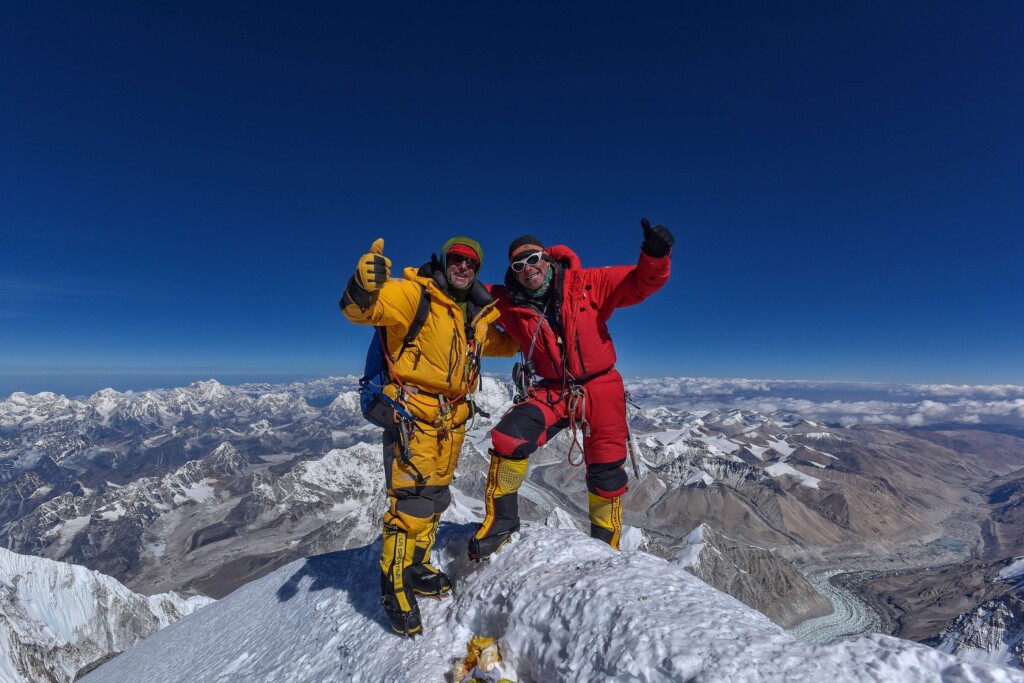
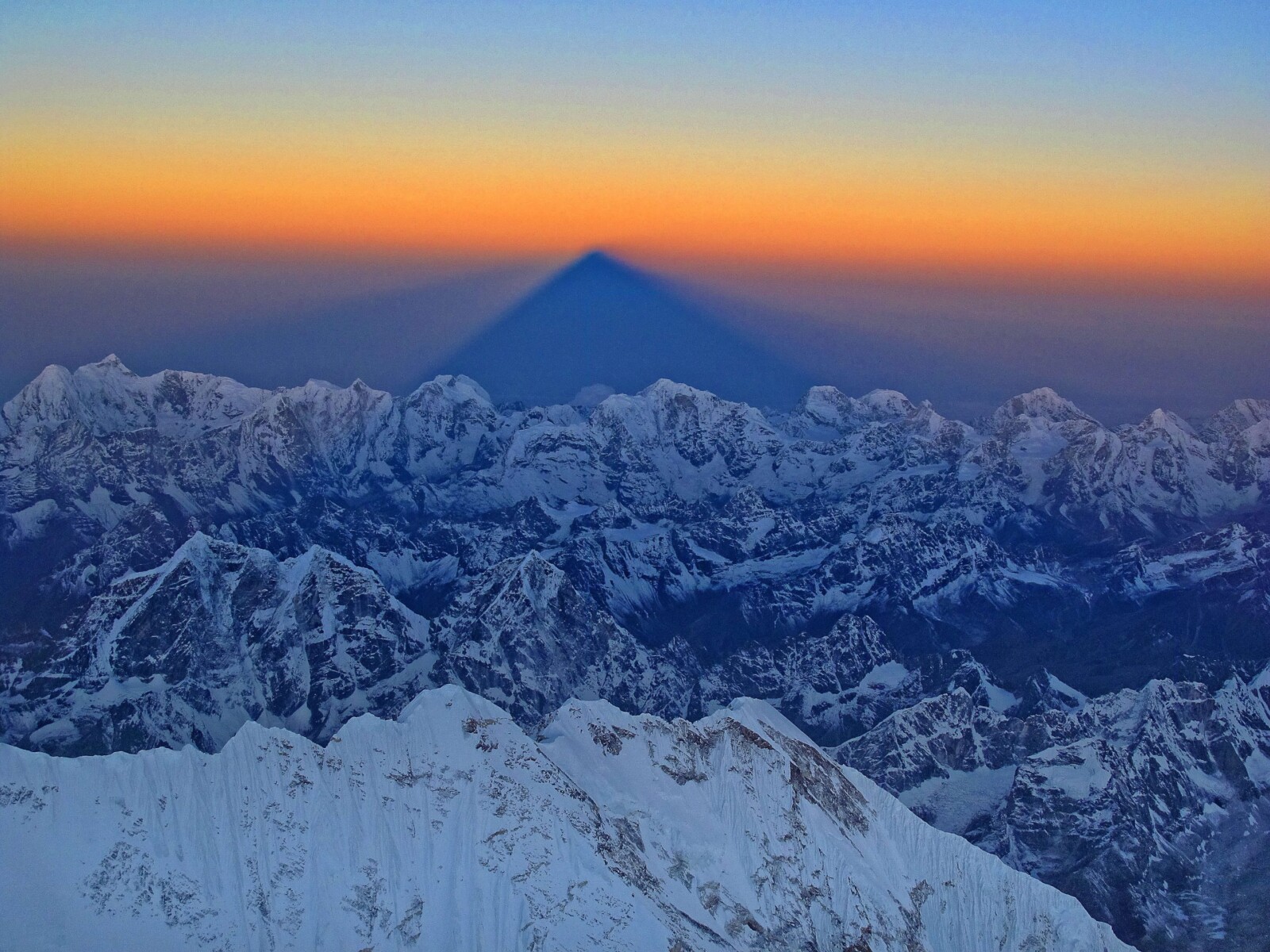
Climbed from Nepal by the South Col route.
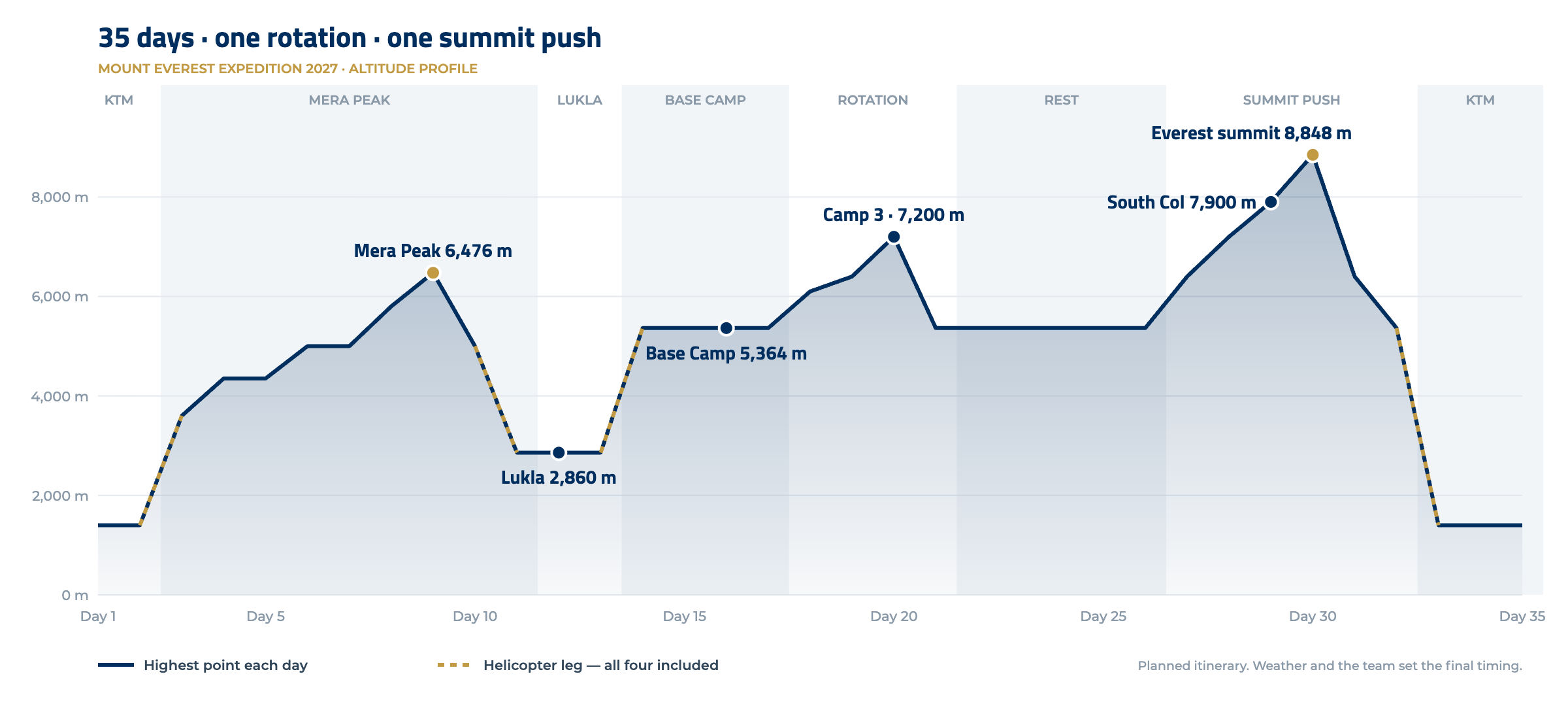
Our pre-acclimatization summit, climbed on Day 9.
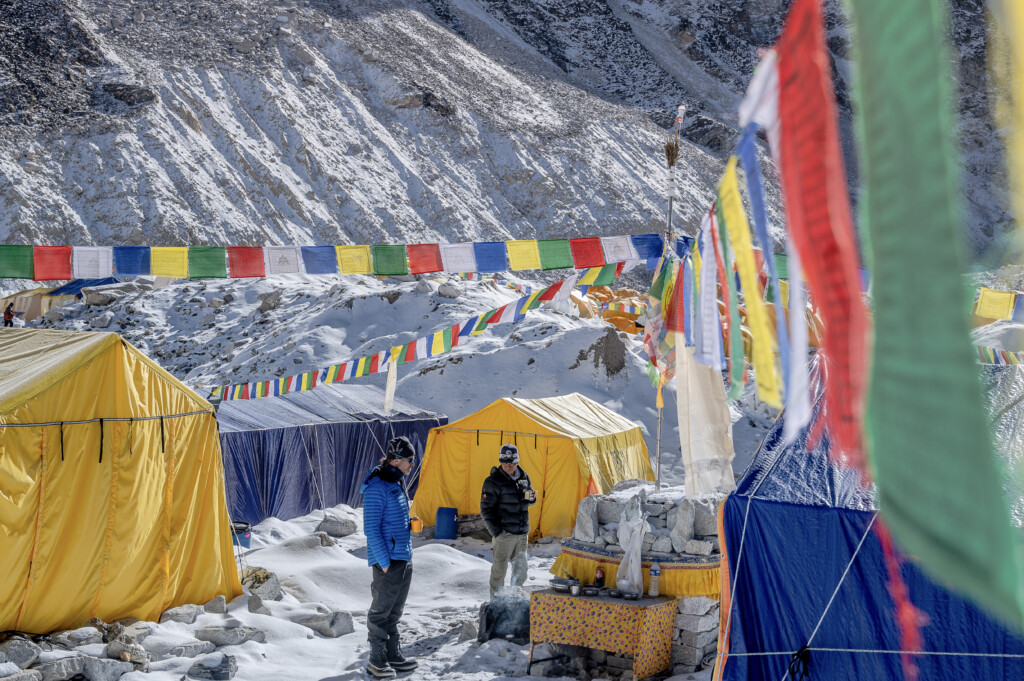
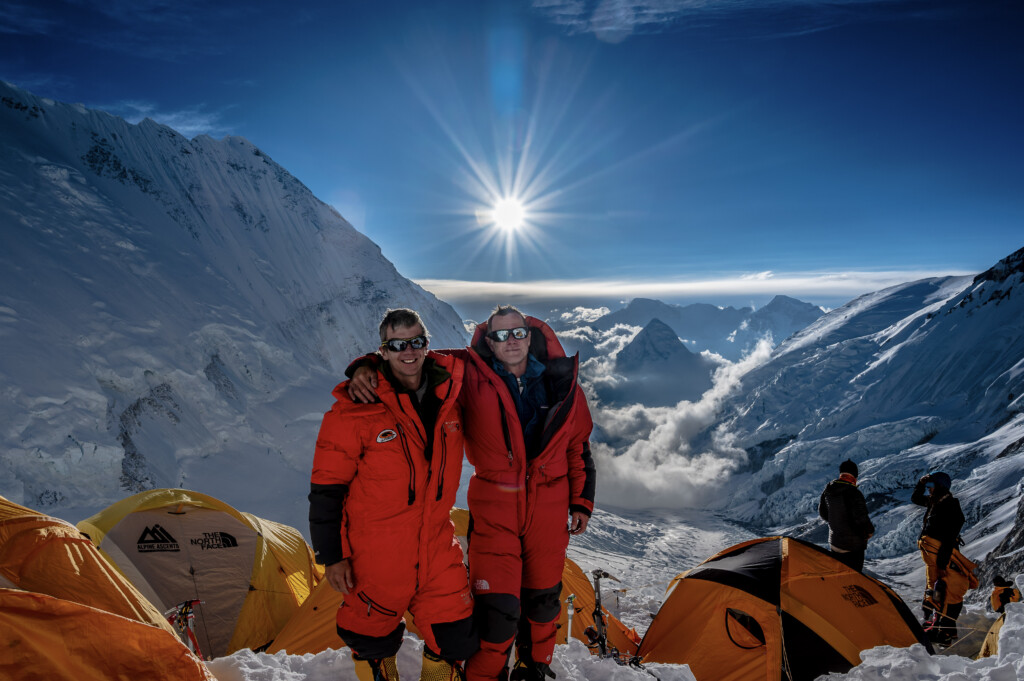
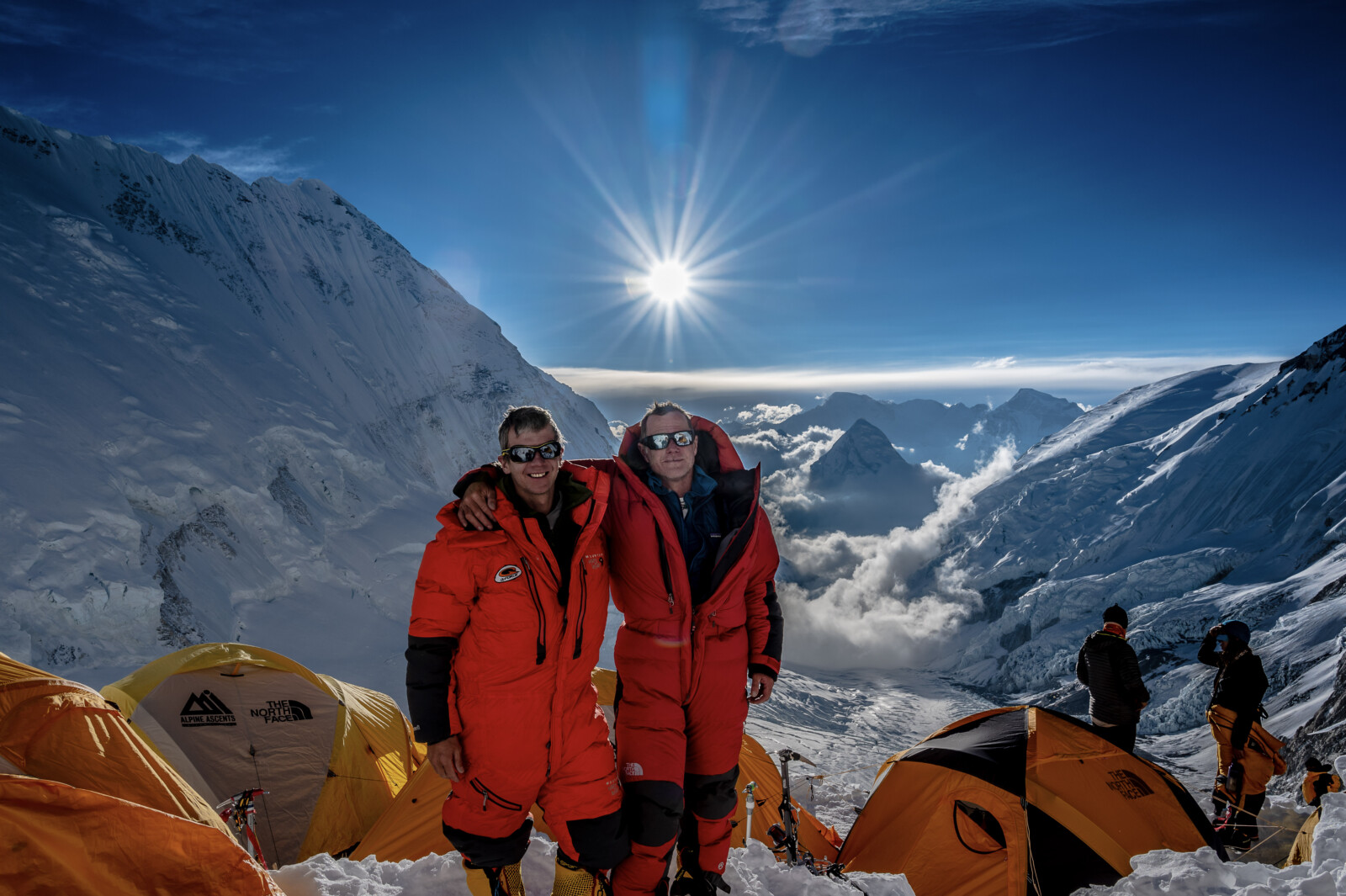
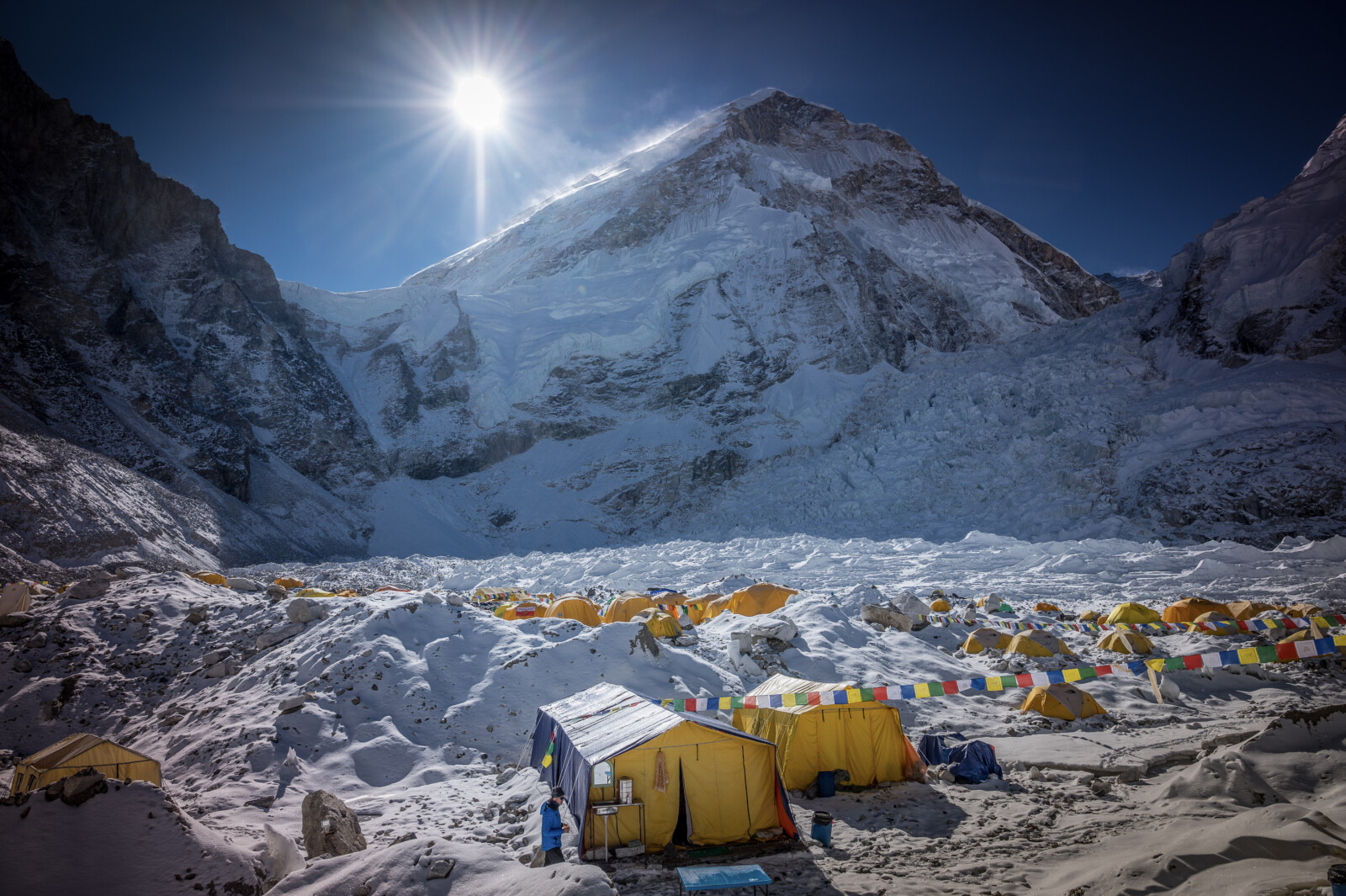
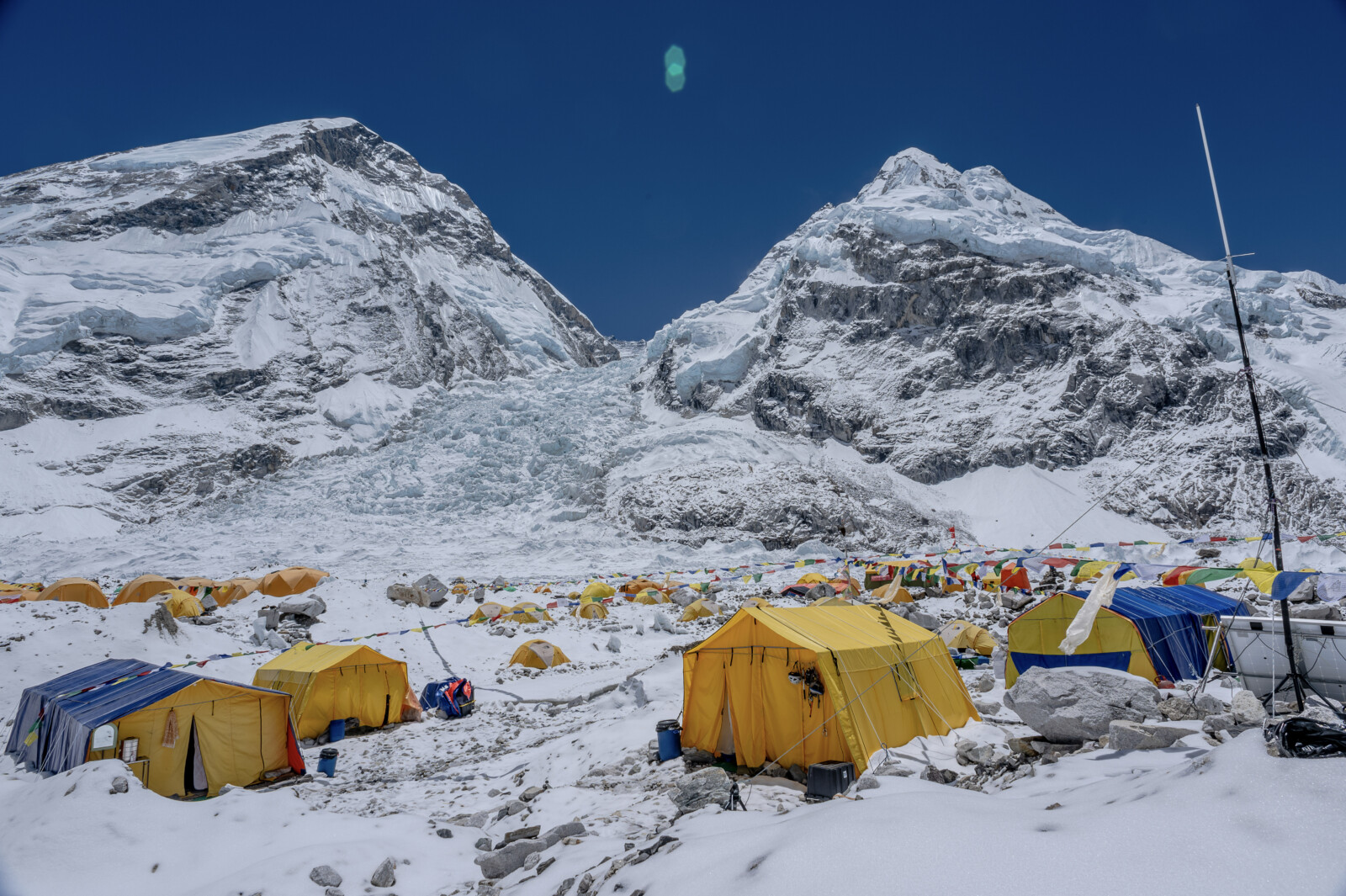
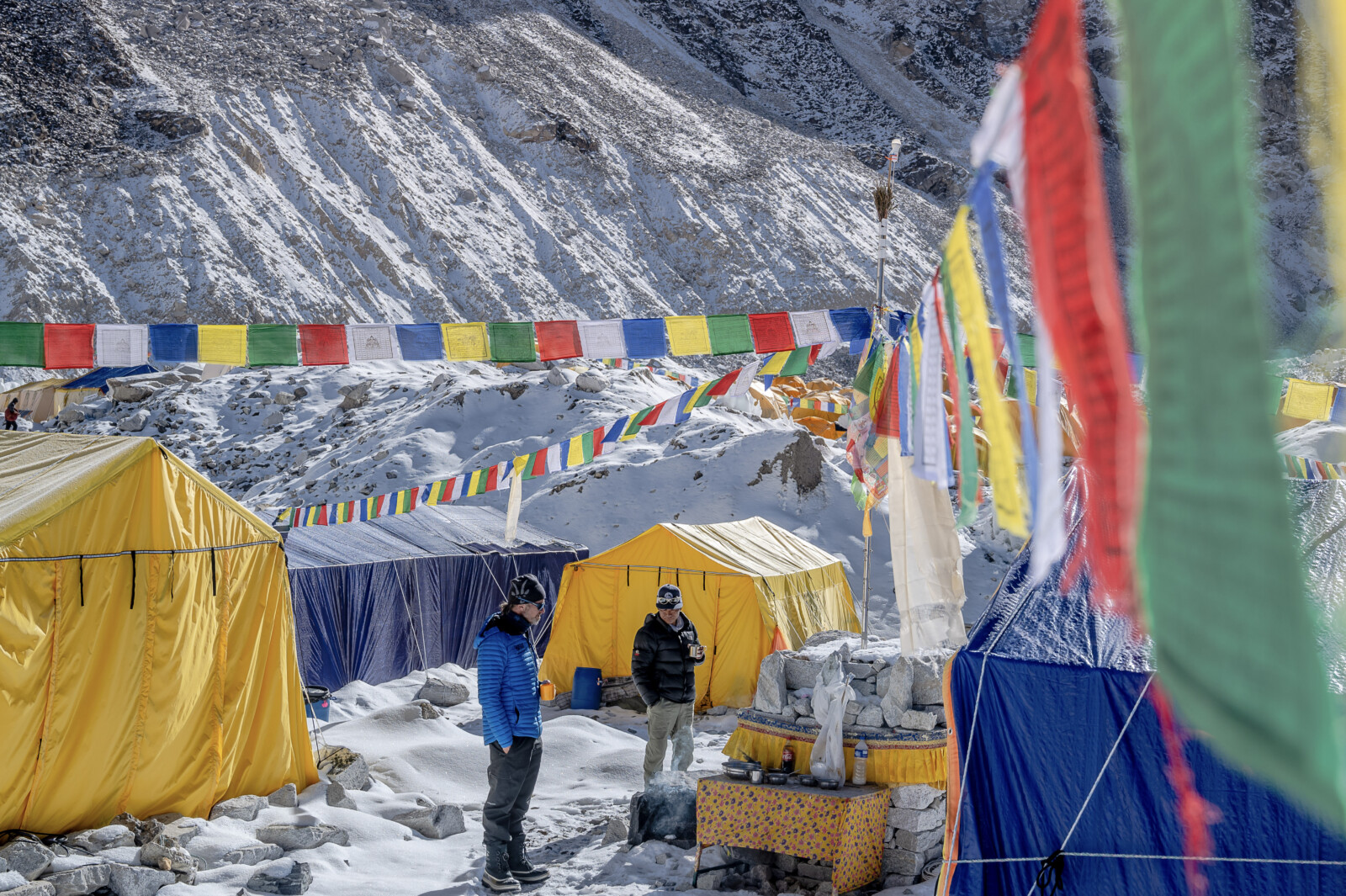
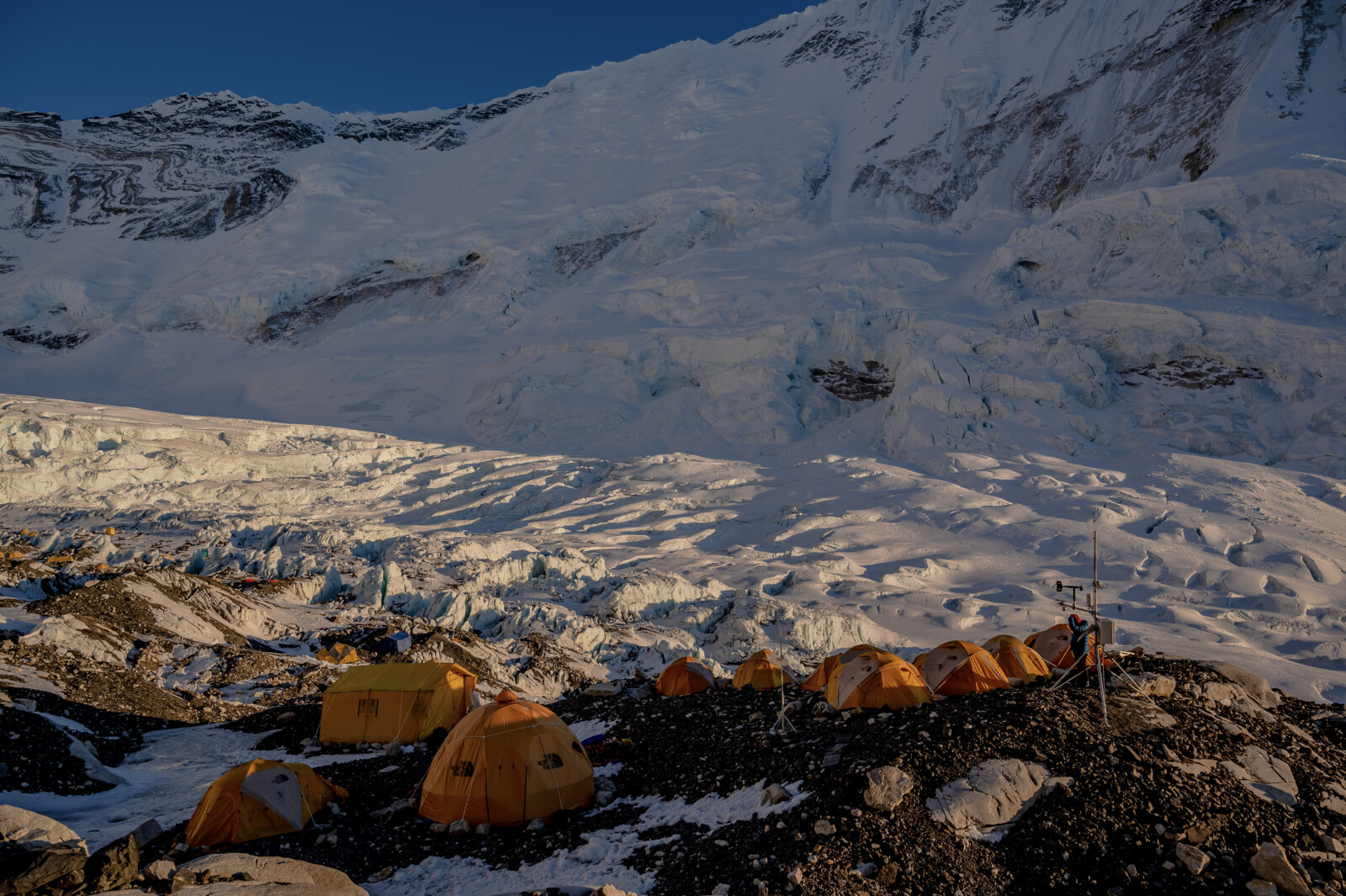
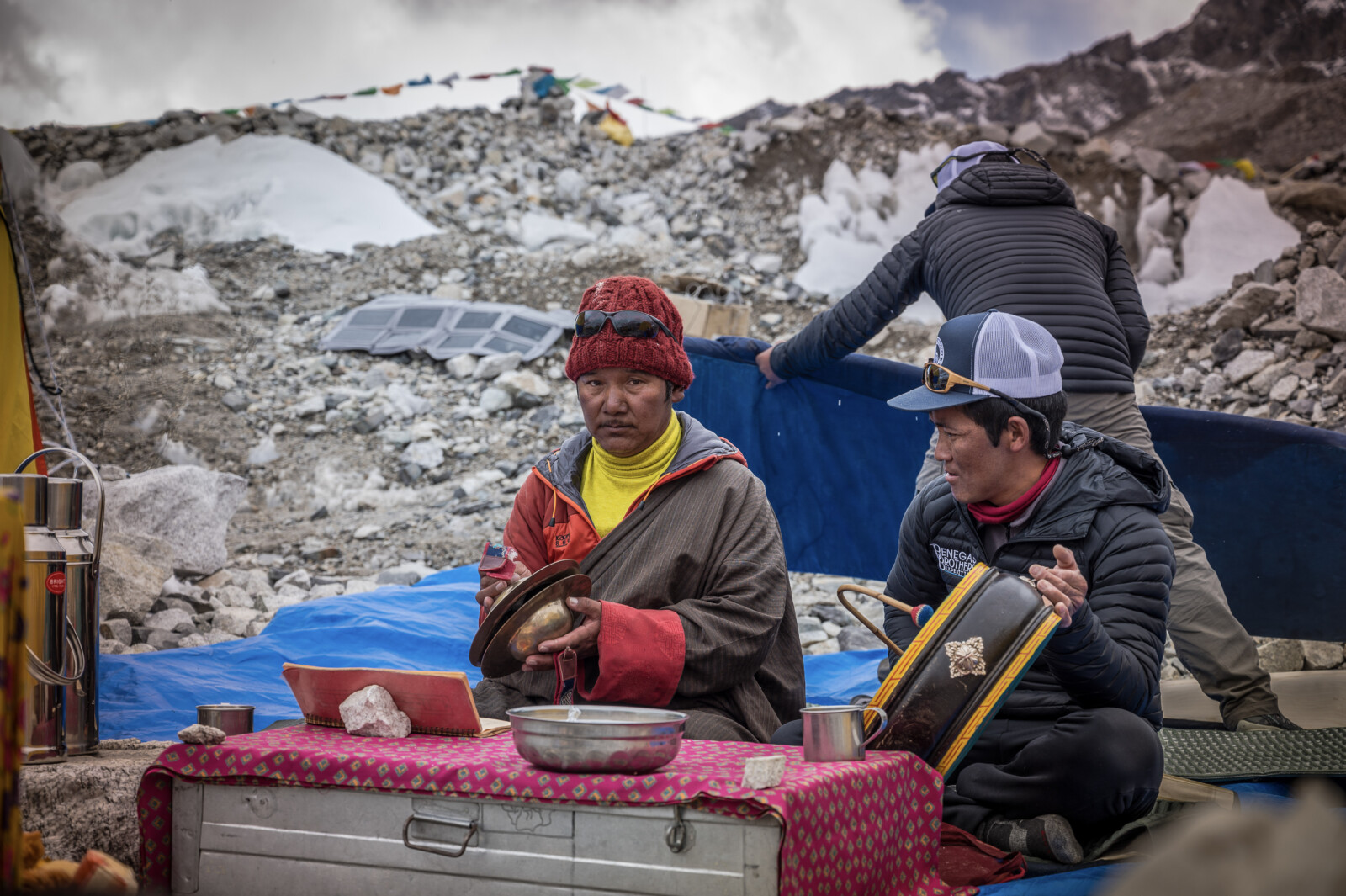
Our own private camp, home from Day 14.
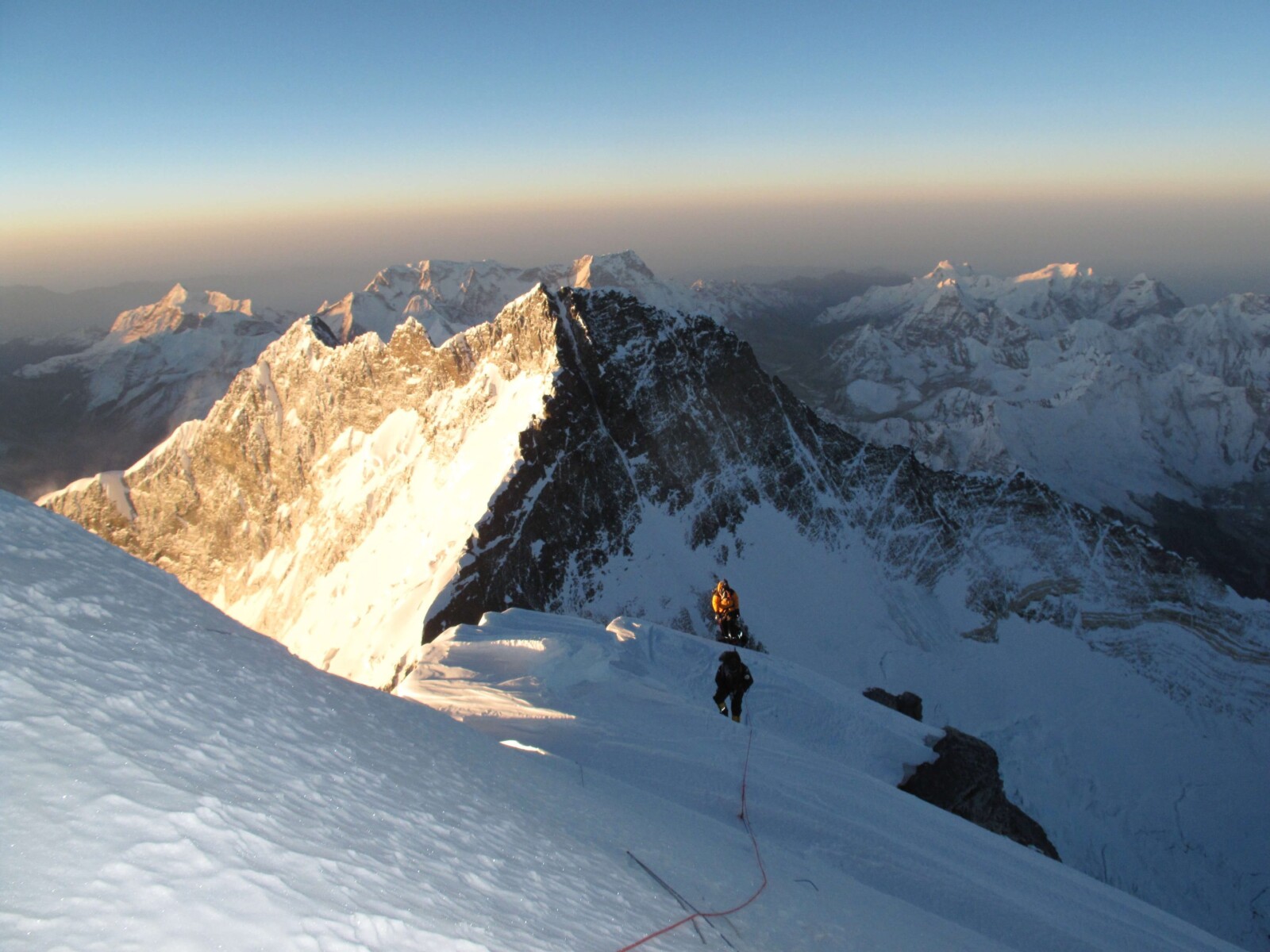
Camp 4, the South Col. Your highest night, on supplemental oxygen.
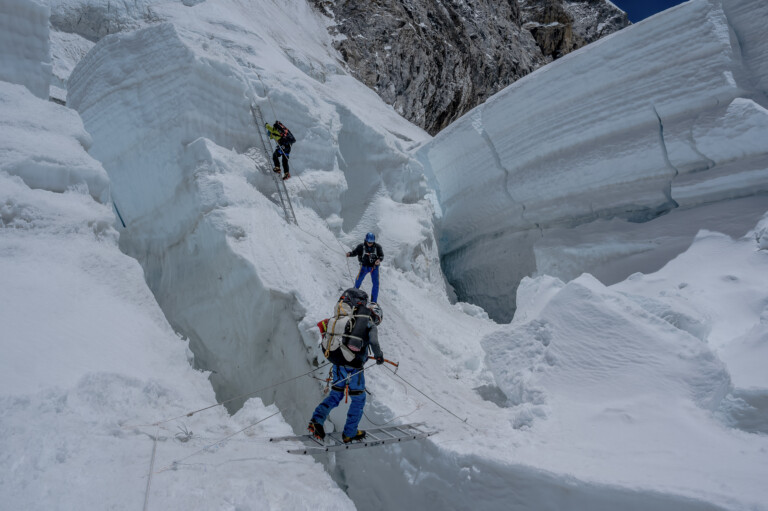
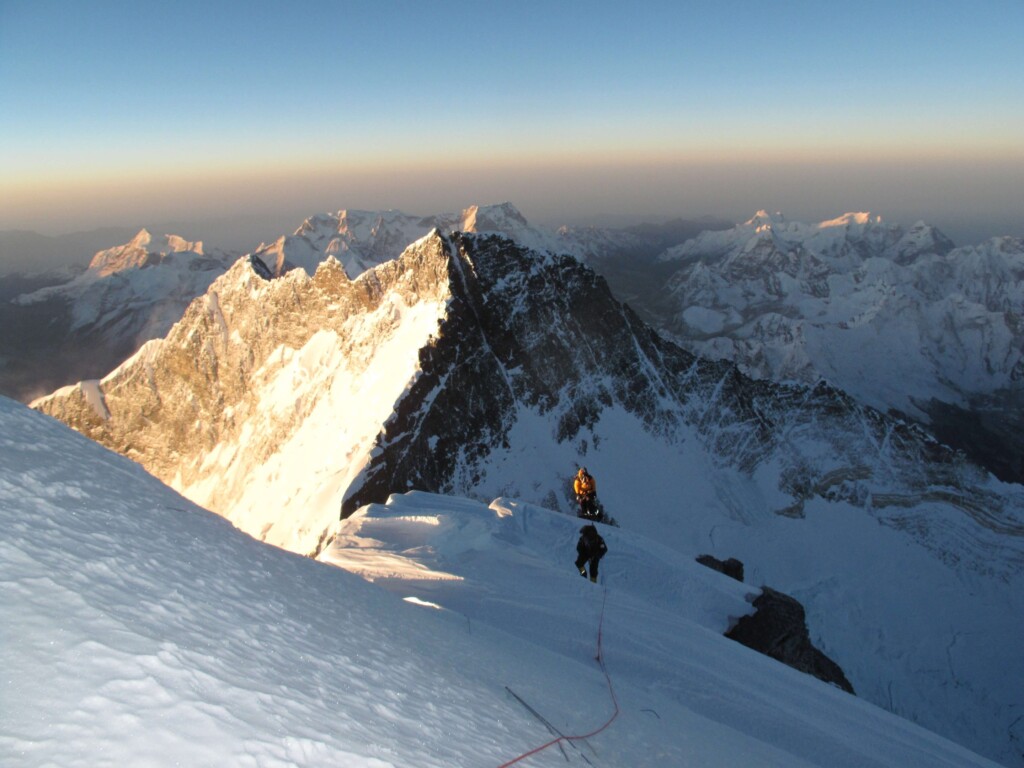
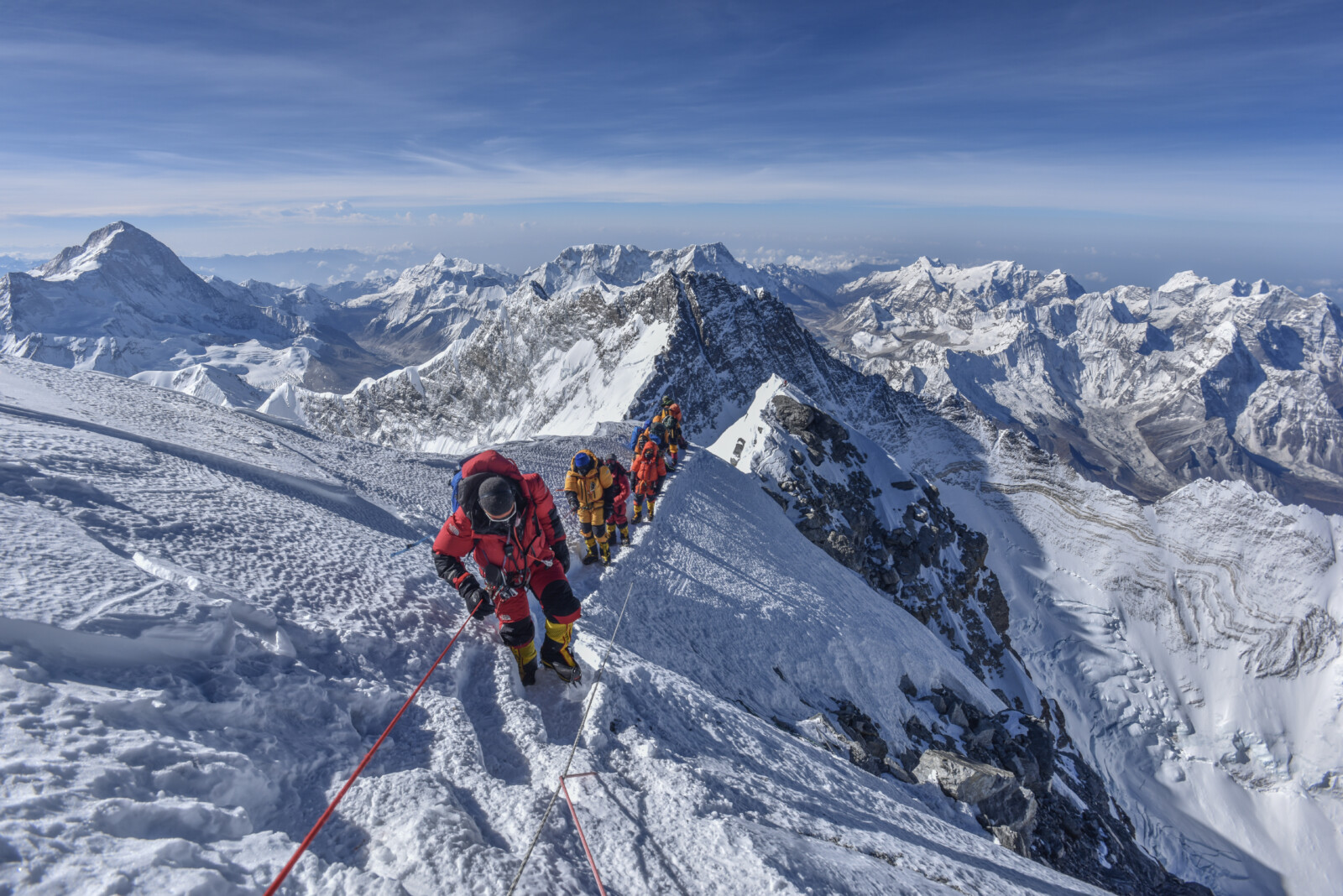
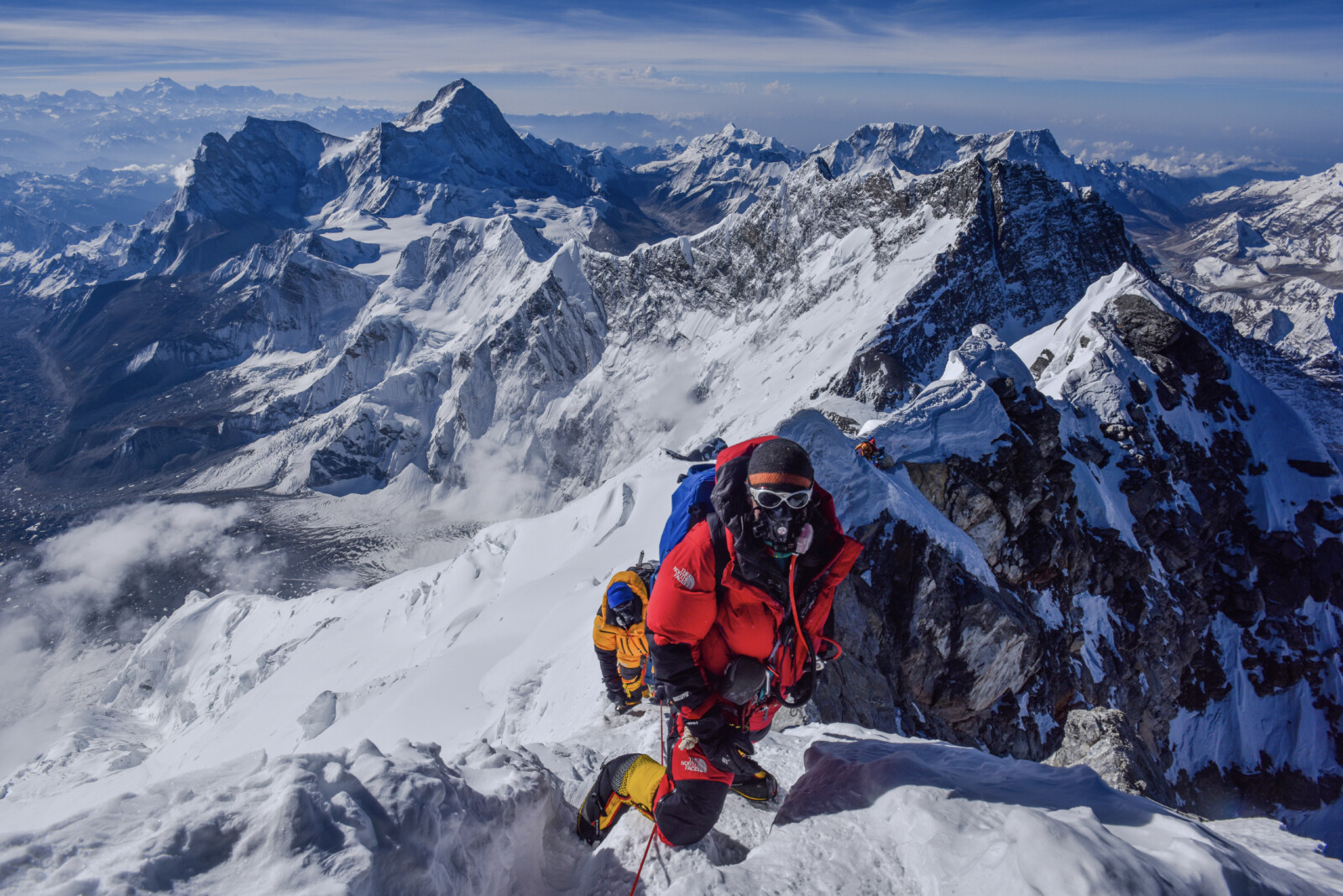
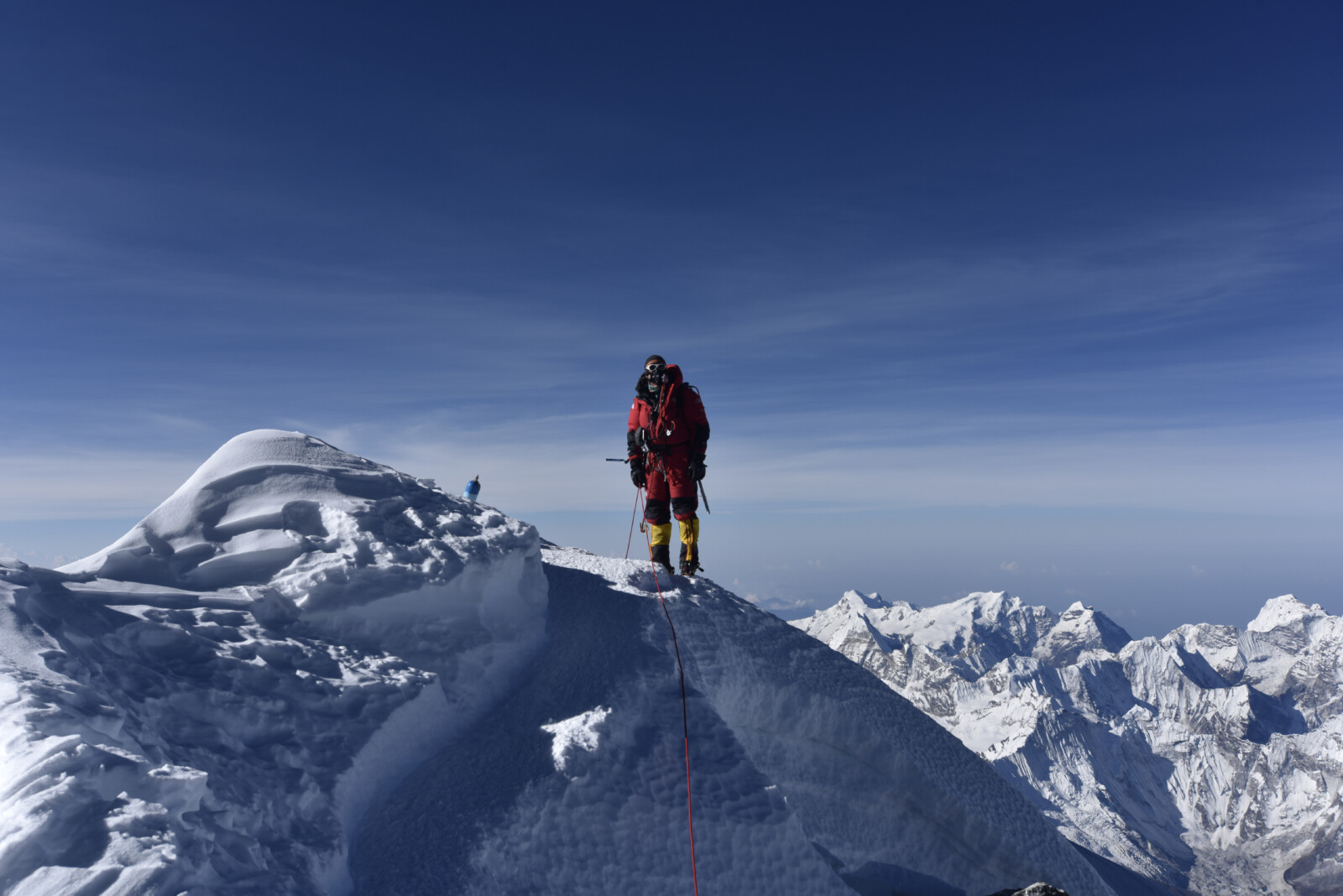
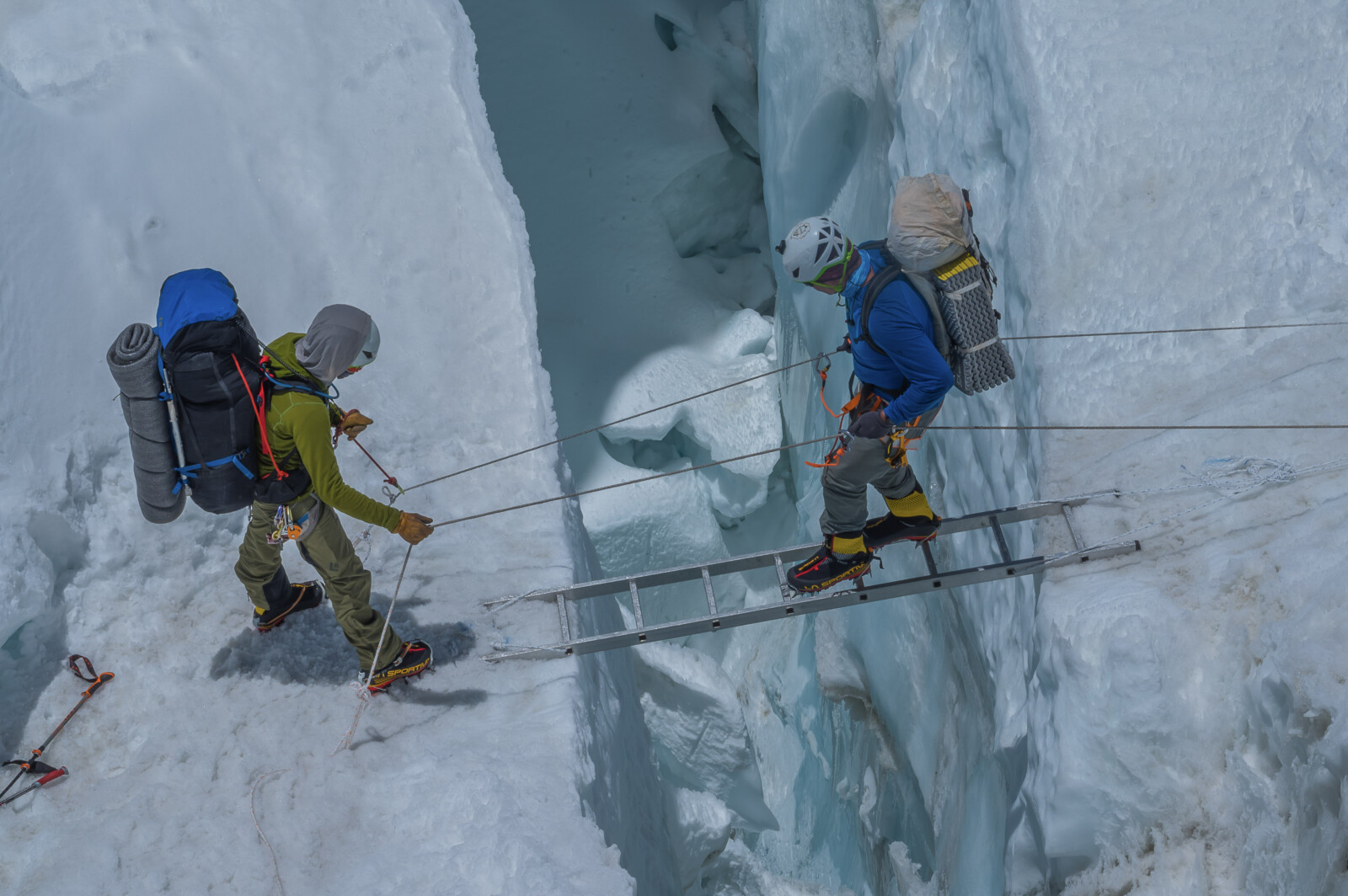
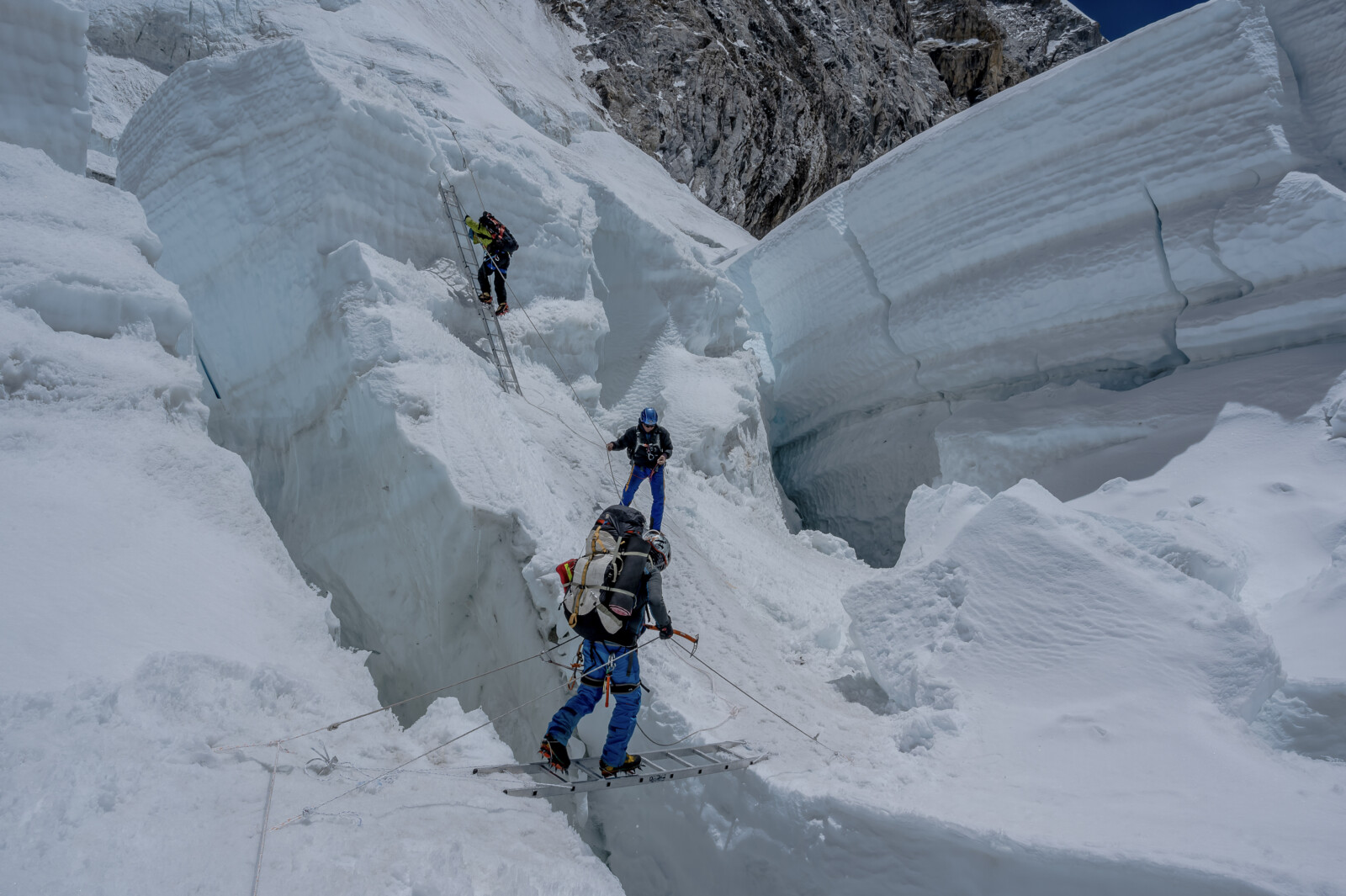
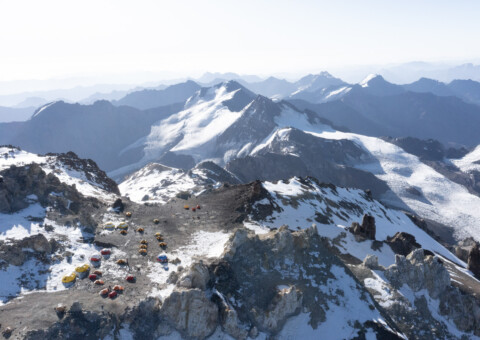
The route climbs through the Khumbu Icefall to Camp 1, up the Western Cwm to Camp 2, onto the Lhotse Face to Camp 3, and to the South Col. From there, summit night passes the Balcony, the South Summit and the Hillary Step to the top.
A Shorter, Smarter Way to Climb Everest
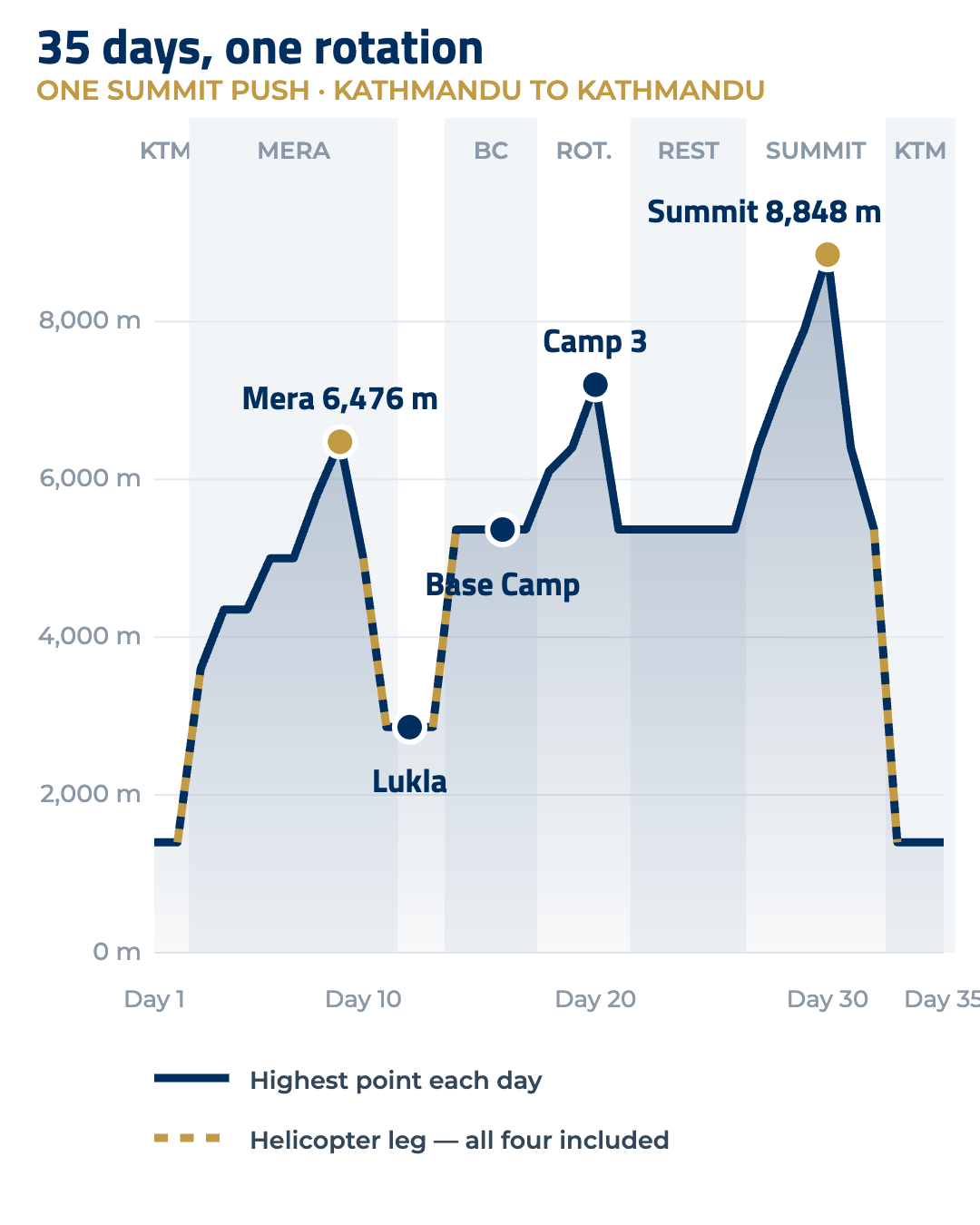
Traditional Everest expeditions run 50 to 60 days. This one runs 35. That is not because we skip steps. It is because three deliberate tools do the acclimatization work earlier, before the mountain’s margin for error gets involved.
A traditional Everest schedule
- 50 to 60 days
- The week-long trek in to Base Camp
- Acclimatization done on the peak itself
- Two or three rotations through the Khumbu Icefall
Benegas Brothers Everest
- 35 days, Kathmandu to Kathmandu
- Helicopter on every leg inside Nepal, all included
- Pre-acclimatized at home and on Mera Peak
- One rotation through the Icefall before the summit push
- Four climbers, led by Willie and Damian in person
Pre-Acclimatization at Home
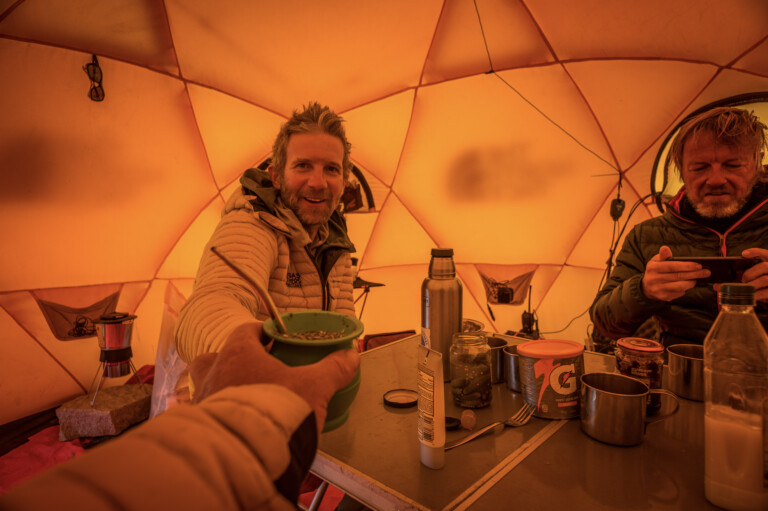
Eight weeks before you leave, a Hypoxico altitude tent system arrives at your home. You sleep in it on a personalized protocol, built and supervised by our team and a professional sports physiologist.
Your body begins adapting to elevations of 21,300 to 23,000 ft / 6,500 to 7,000 m before you board a flight to Kathmandu. It’s the same category of tool endurance athletes use to train at altitude without living there. The adaptation clock starts weeks before Base Camp, not after you arrive.
Mera Peak First
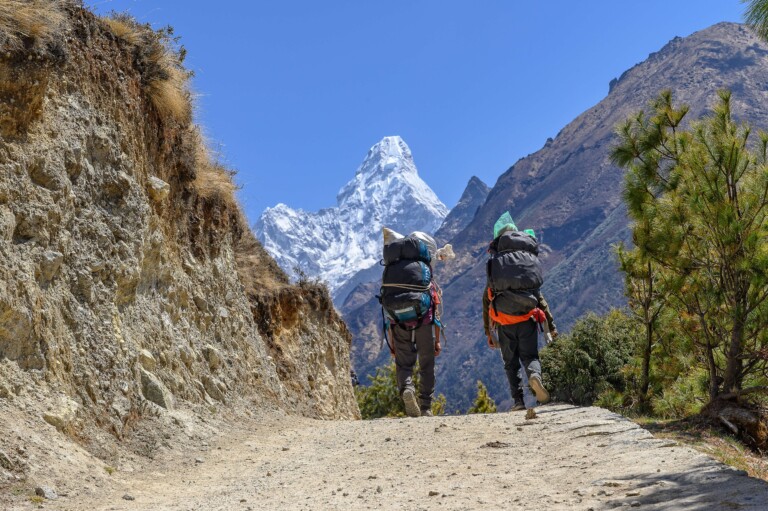
The expedition opens with a real ascent of Mera Peak, 21,247 ft / 6,476 m. It is one of Nepal’s highest trekking peaks and a genuine summit in its own right, not a warm-up hike.
Reaching that altitude early triggers the adaptations extreme elevation demands: more red blood cells, better oxygen transport, a body already learning to work with less air. After the summit, two full recovery days in Lukla let those gains consolidate. By the time you fly to Base Camp, you’ve already climbed a mountain above 19,700 ft / 6,000 m. Everest isn’t your first acclimatization test. It’s your second.
One Rotation, Not Three
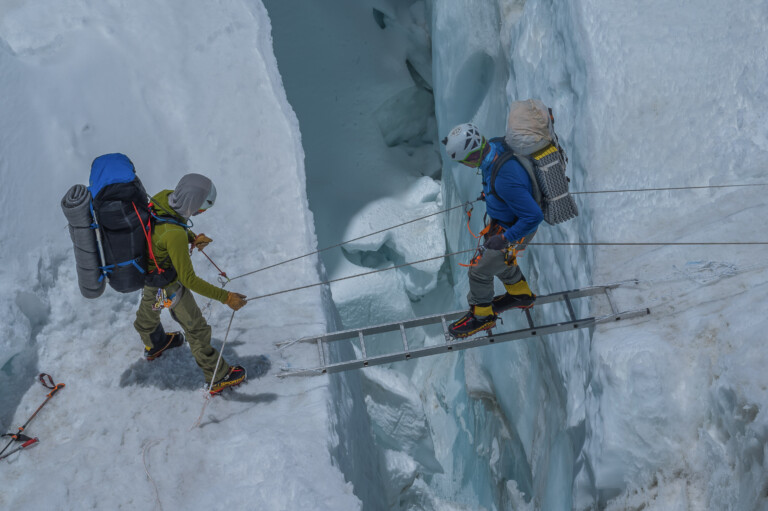
A traditional schedule sends climbers up and down the mountain two or three times to acclimatize on the peak itself. Each pass adds fatigue and another trip through the Khumbu Icefall.
Because the hypoxic protocol and Mera Peak have already done much of that work, this expedition needs only one clean rotation through the Icefall and up to Camp 3 before the summit push. Fewer passages through the most hazardous section of the route isn’t a convenience. It’s the strategy working as designed.
Helicopters, Not the Trek In
Every leg inside Nepal is by helicopter, and every leg is included: Kathmandu to Mera, Mera to Lukla, Lukla straight to Base Camp, and Base Camp back to Kathmandu. The expedition does not depend on the scheduled flights to Lukla, which cloud can delay for days.
Flying into Base Camp means you skip the week-long trek in and arrive with that energy still in hand.
Training Together Before Nepal
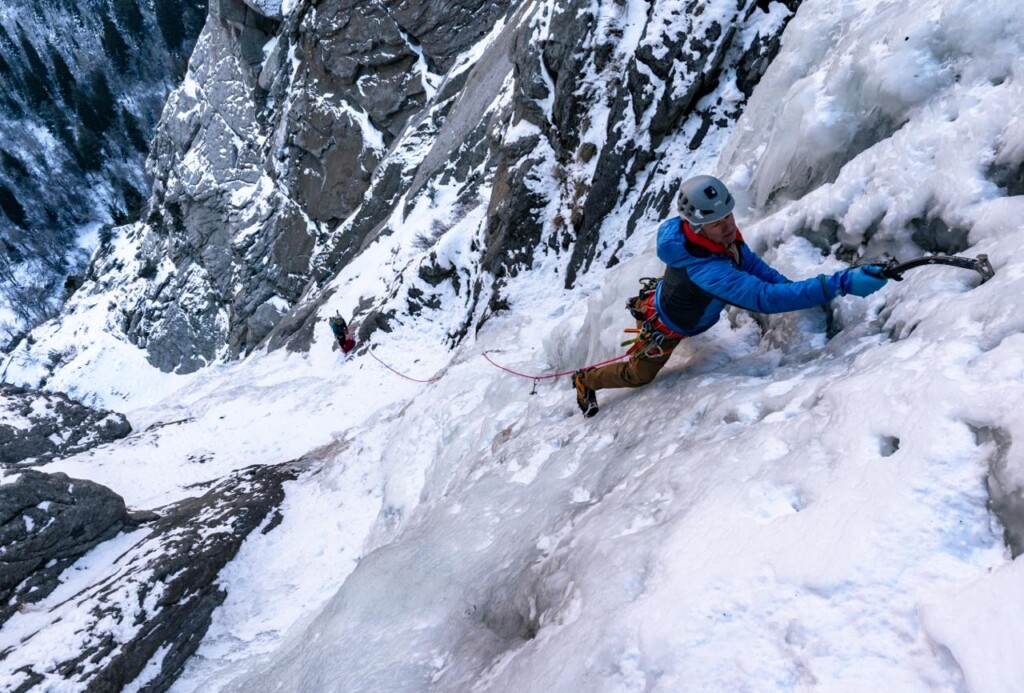
In the second week of February 2028, the team meets in person for a three-day Everest Training Camp in Utah’s Wasatch Mountains. Icefall techniques, fixed-rope systems and a night climb are all rehearsed together before anyone sets foot in the Khumbu.
You arrive in Kathmandu having already trained with your teammates and guides, not meeting them for the first time at the airport.
The result: you arrive at Base Camp already acclimatized, complete one rotation instead of several, spend less time in the Icefall, and hold your strength for the summit push.
Personally Led by Willie and Damian Benegas
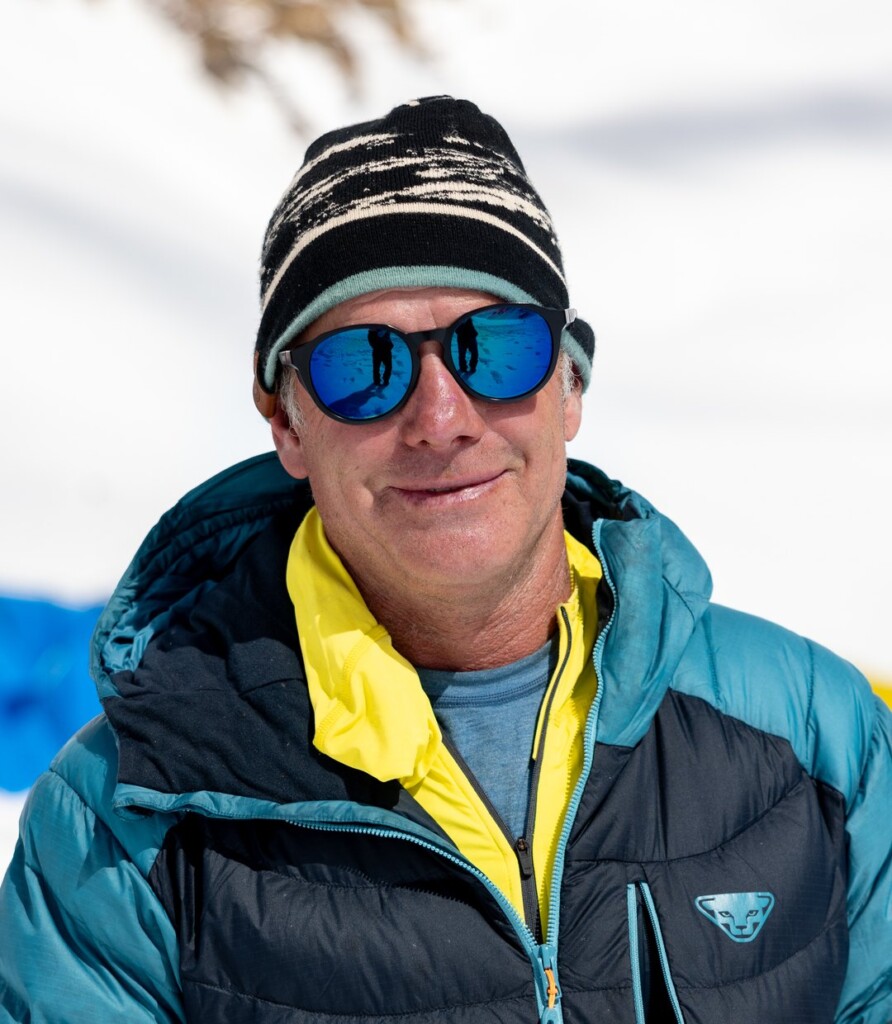
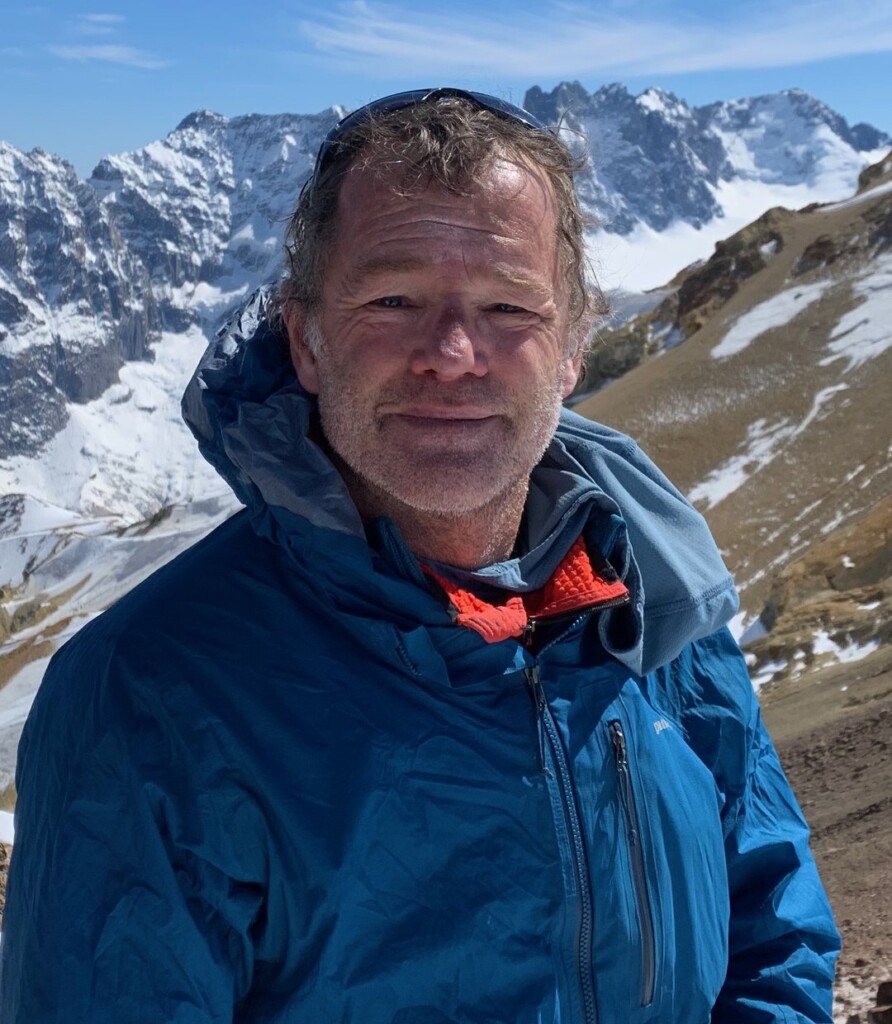
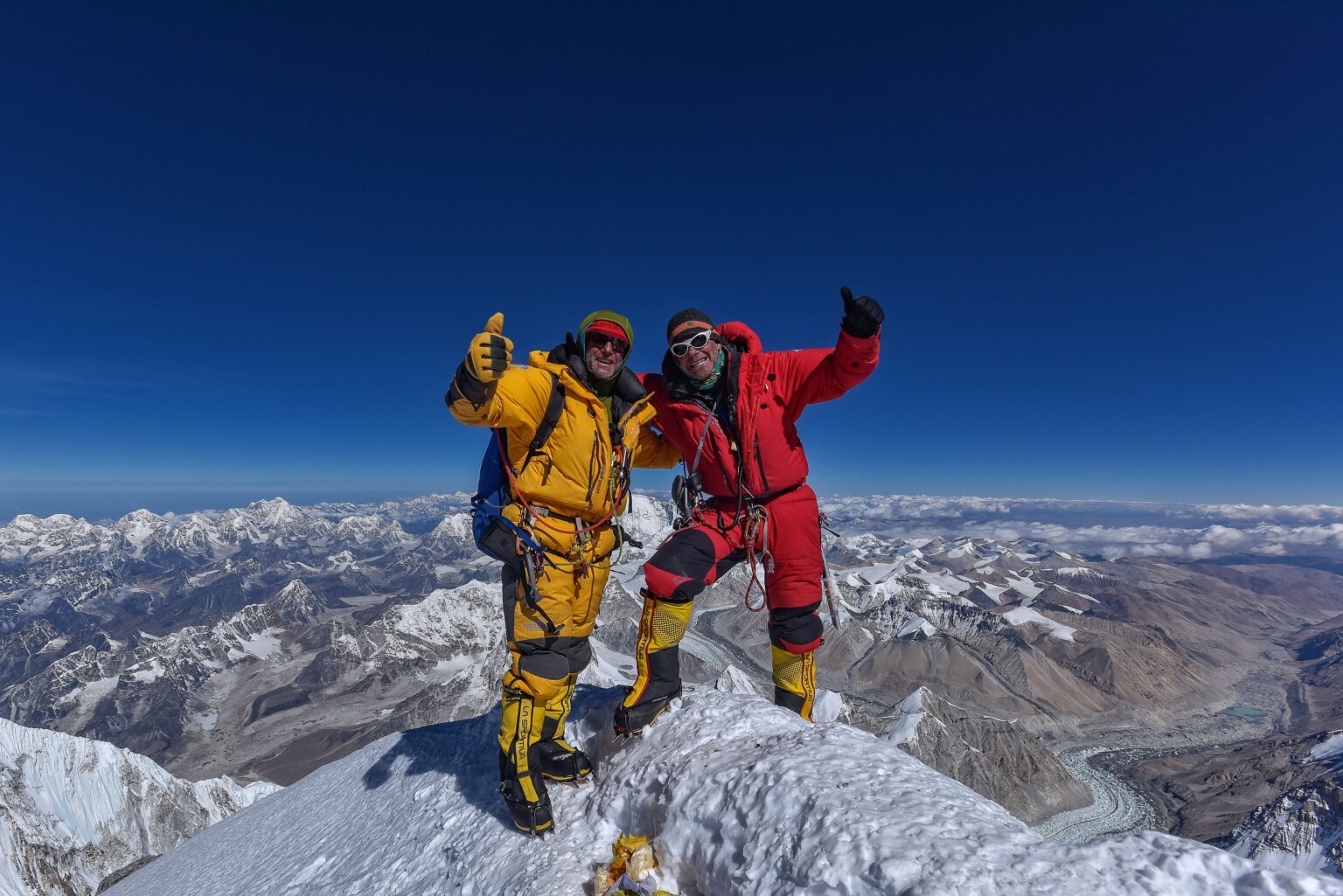
On this expedition, Willie and Damian guide in person: on the acclimatization rotation, at Base Camp and on the summit push. This is not a general claim about the company. It is how this specific program is staffed, every departure.
That matters because Everest doesn’t reward good intentions. It rewards judgment built from doing it repeatedly, under real conditions, with the outcome on the line. Willie and Damian bring that judgment to every climber on the team.
Who they are, and what they’ve done on this mountain, is on Why Everest With Us.
Why Four Climbers
Four climbers, maximum. Not a number chosen for exclusivity. It’s the number of climbers that one IFMGA- or AMGA-certified Western guide and a small, senior team can watch closely on summit day.
- 2:1 Sherpa ratio. Each climber is supported by two dedicated Climbing Sherpas. It is built into every departure, not an add-on.
- Oxygen. Eight bottles of supplemental oxygen per climber, with high-flow regulators. Your guides and Sherpas manage flow rates and carry the reserve.
- Decisions with the team. Your guides know exactly how you are moving, and the team can adapt to a weather window in hours rather than days.
The Sherpa climbers, cooks and Base Camp staff are partners on this mountain. We do not count them as Western guides, and we don’t treat their work as background. You will never disappear into the group.
Base Camp and Medical Support
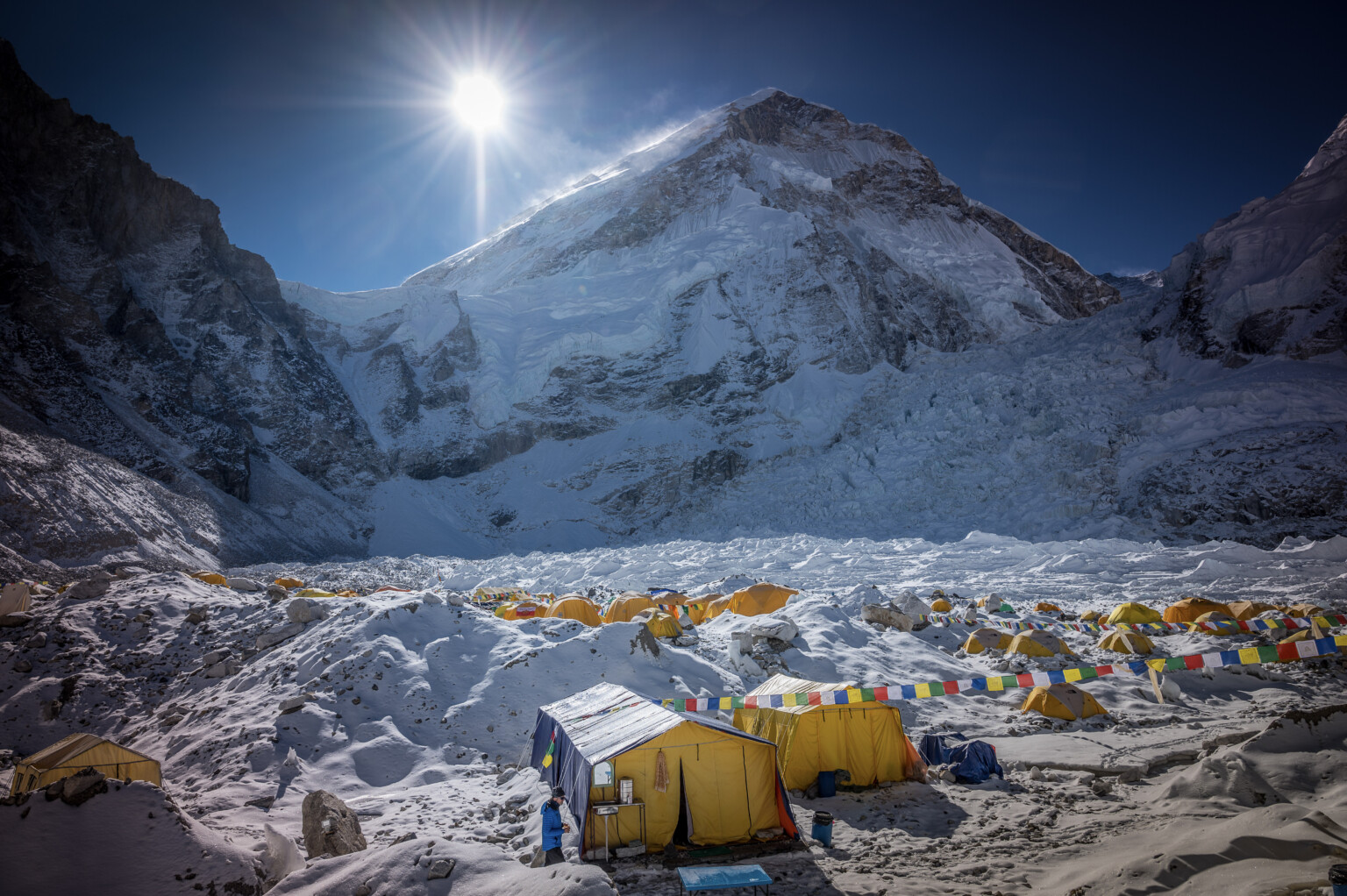
Medical support runs in layers:
- A consultation with a high-altitude doctor before you leave home
- The Himalayan Rescue Association’s Everest clinic at Base Camp
- 24-hour access to Everest Online Doctor services and our team doctor
- Radios and satellite communications above Base Camp
- Established helicopter evacuation procedures
Turnaround times are set before you leave the tent on summit night. Turning around is sometimes the right call. When it is, it is a professional decision, made early and clearly, not a failure.
Who This Climb Suits
This program is built for climbers who’ve already done real work in the mountains. Often they are professionals or entrepreneurs with limited time who want their Everest done right, not rushed or oversold.
If you’ve already summited in the 19,700 to 23,000 ft / 6,000 to 7,000 m range (Aconcagua, Denali or a Himalayan 6,000er) and you know what living on a multi-week expedition feels like, you have the foundation this climb is built on.
More than experience, we look for a particular kind of partner: someone who values a four-person team over a crowded camp, wants direct daily communication with their guides, trains seriously and follows the plan we build together, and treats the Sherpa climbers and staff as partners, not support.
For the full, honest picture of training, altitude and how we review applications, read Is This for Me?
The Expedition Film
The 2028 expedition will be professionally filmed by Benegas Brothers Productions, documenting the training, the climb and the team. It is for the climbers on it, and for BBE’s own record of how this mountain should be climbed.
If you want a dedicated film of your own climb, see Private & Custom Expeditions.
Joining the Team: By Application
Everest with us begins with a conversation, not a checkout page. Because the team is four climbers, every application is reviewed personally:
Apply
Tell us about your climbing background and goals.
Talk with Willie or Damian
A direct call about your experience, the expedition and fit.
Reserve your place
Deposit and paperwork.
Begin preparation
Training plan, mentoring, the hypoxic protocol and the Utah Training Camp.
Acceptance is not automatic. Is This for Me? explains what we look for. Price is on Dates & Prices.
Ready to Talk About Everest?
Tell us what you’ve climbed, how you train, and what you want Everest to be for you. If this is the right objective, we’ll say so. If something else should come first, we’ll say that too.
We don’t simply guide expeditions. We help people build a lifetime in the mountains.
Apply for Everest 2028
Everest is booked by application, and every climber speaks with Willie or Damian before a place is confirmed. See dates and prices. · climbing@benegasbrothers.com