The Trip
Moab Desert Towers · Moab, Utah
Four days, two towers, and the skills to climb them well.
Castleton Tower’s Kor–Ingalls route goes at 5.9. Ancient Art is 5.8 with a short section of aid. On paper, moderate.
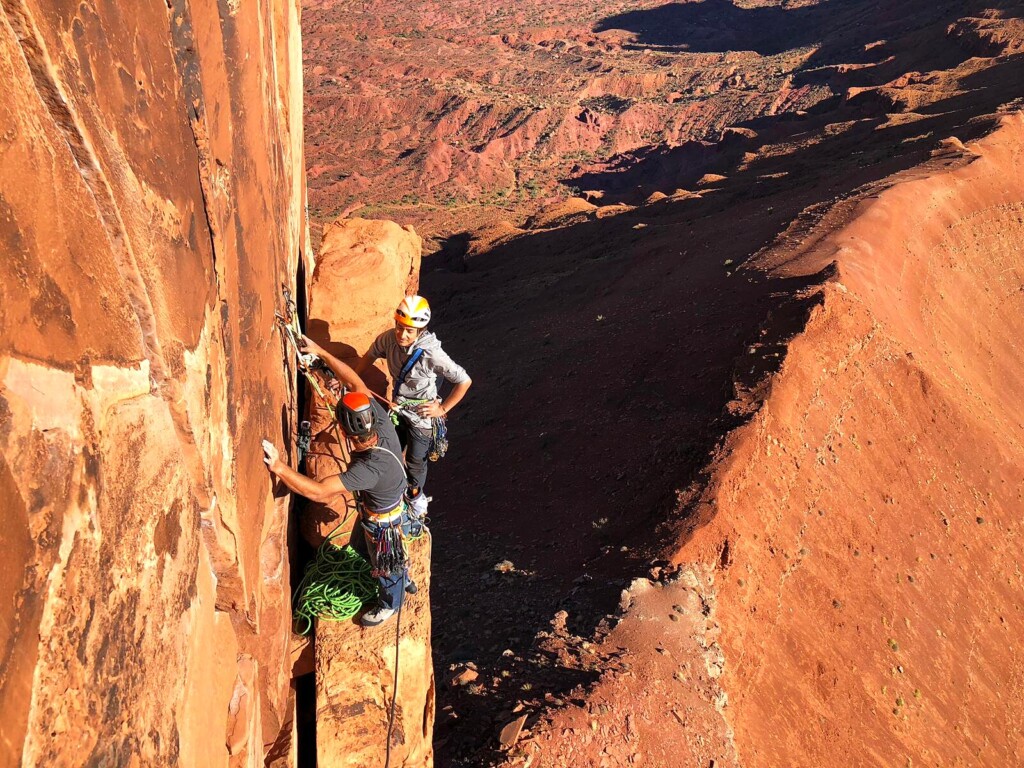
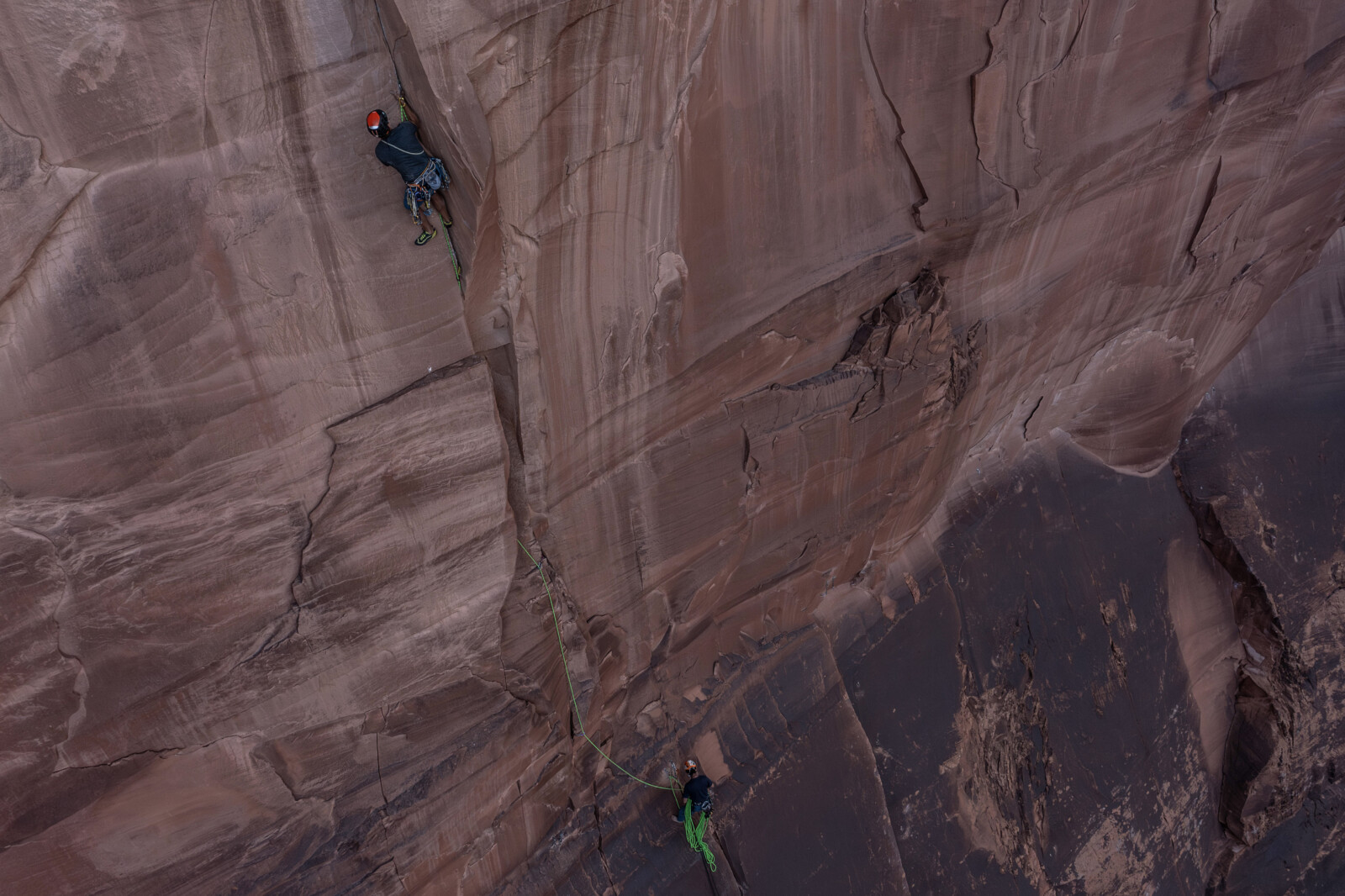
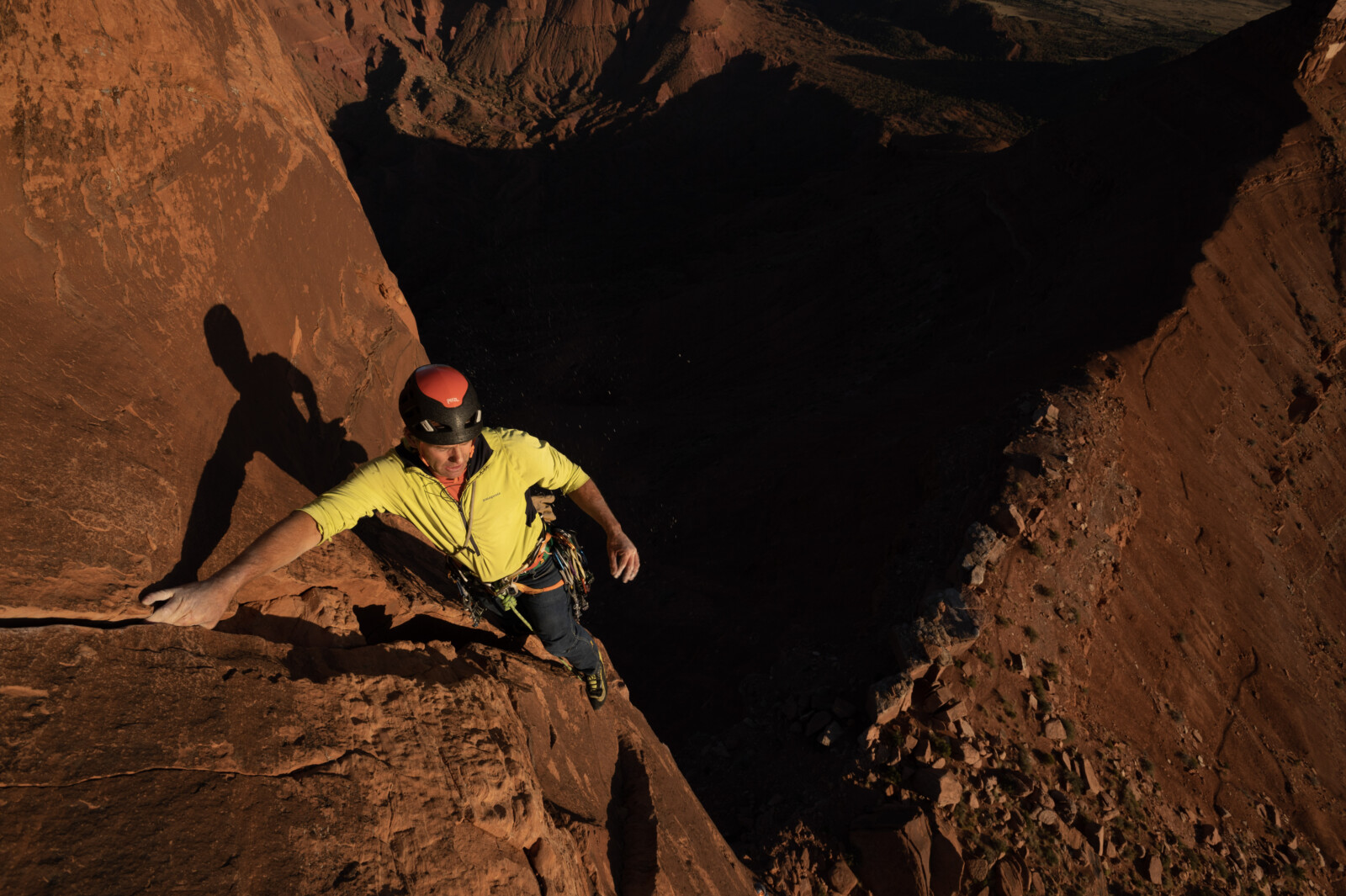
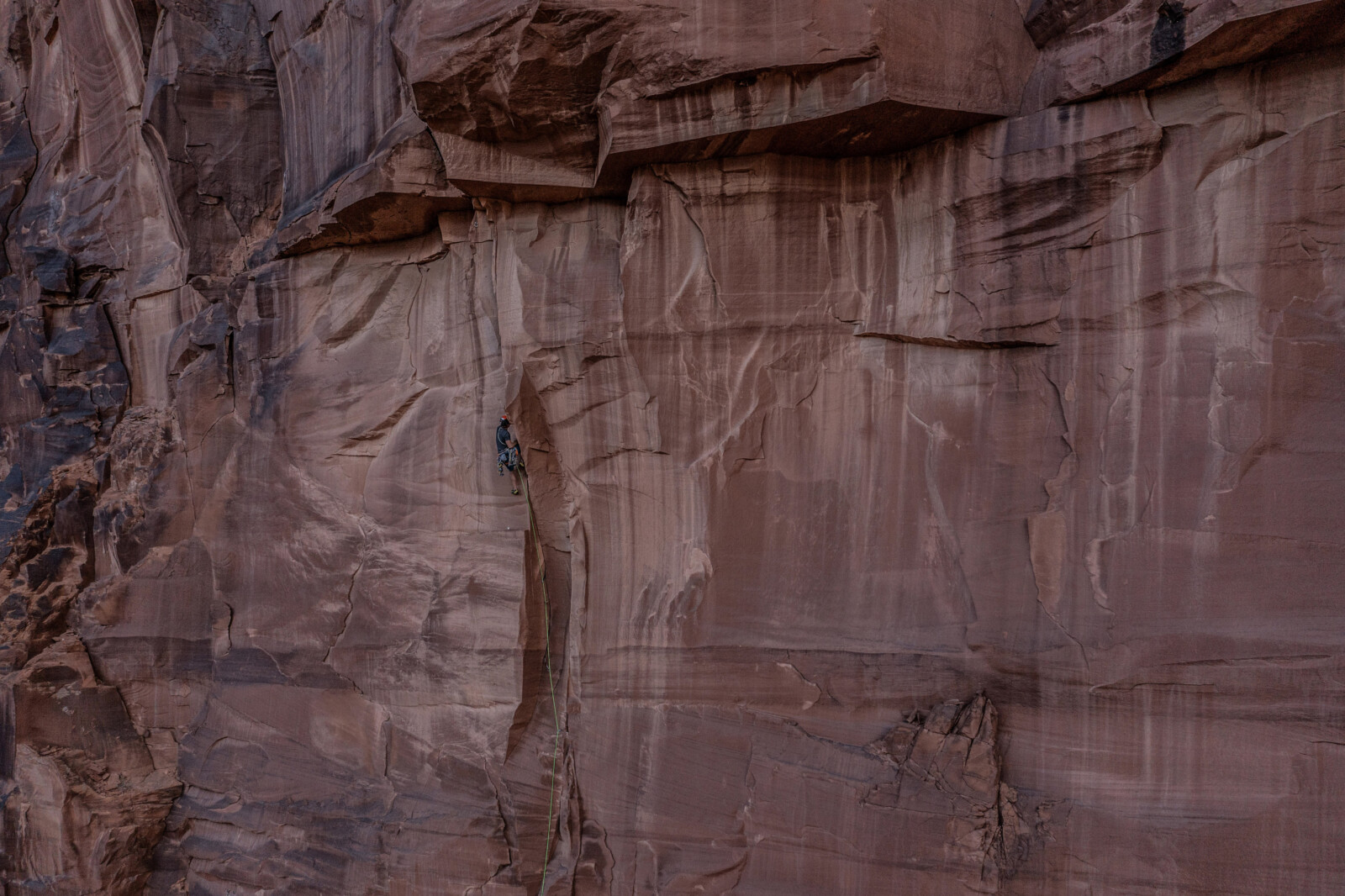
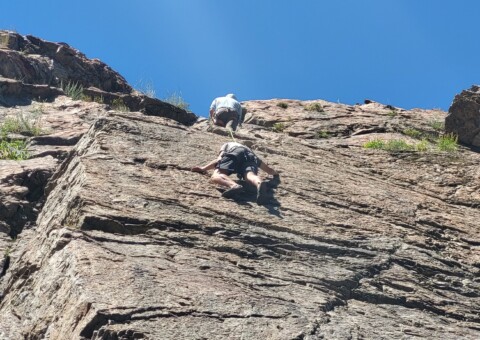
Then you get on sandstone and find out desert climbing is its own language: hands, fists, chimneys, offwidths, and a rock that punishes anyone who climbs it like granite. Plenty of strong gym climbers have arrived in Moab and been stopped by a 5.9.
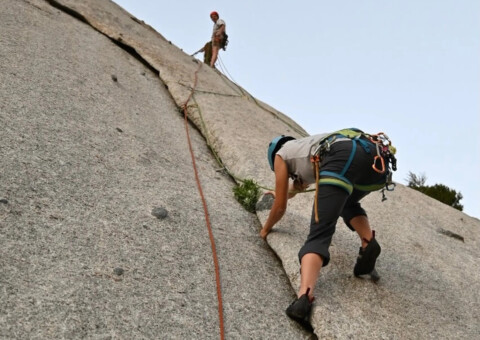
So we don’t start with a tower. We start in Little Cottonwood Canyon, where your guide sees how you climb. Then we drive to Moab, spend a day on crack technique and systems, and only then go up — one tower on day three, another on day four.
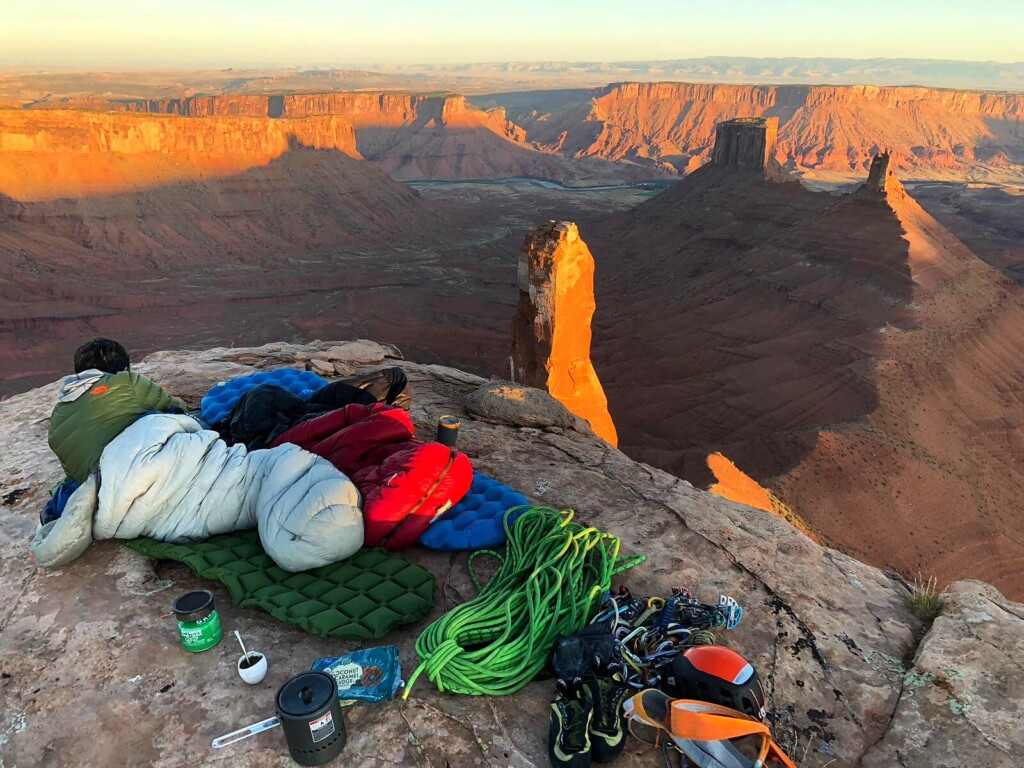
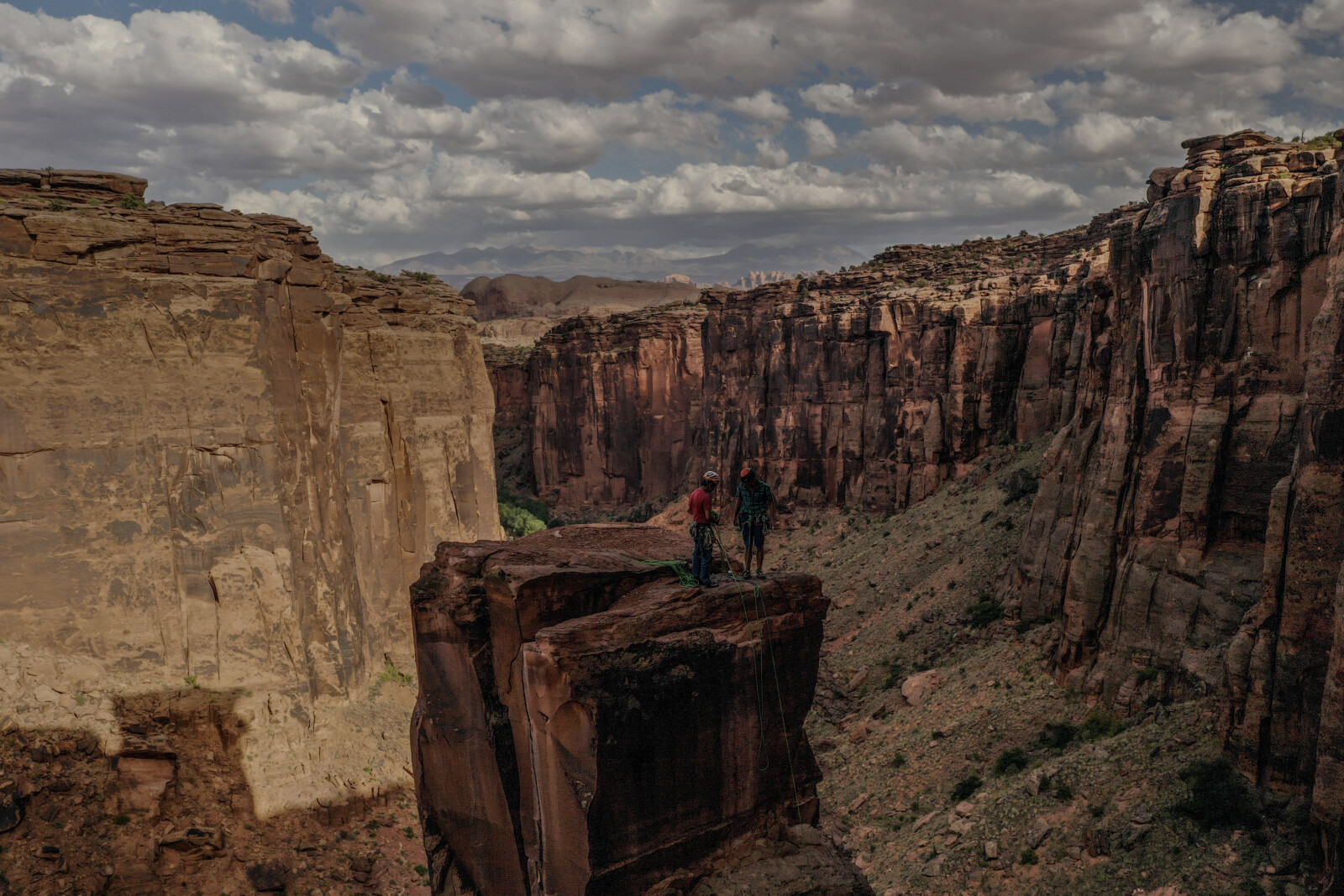
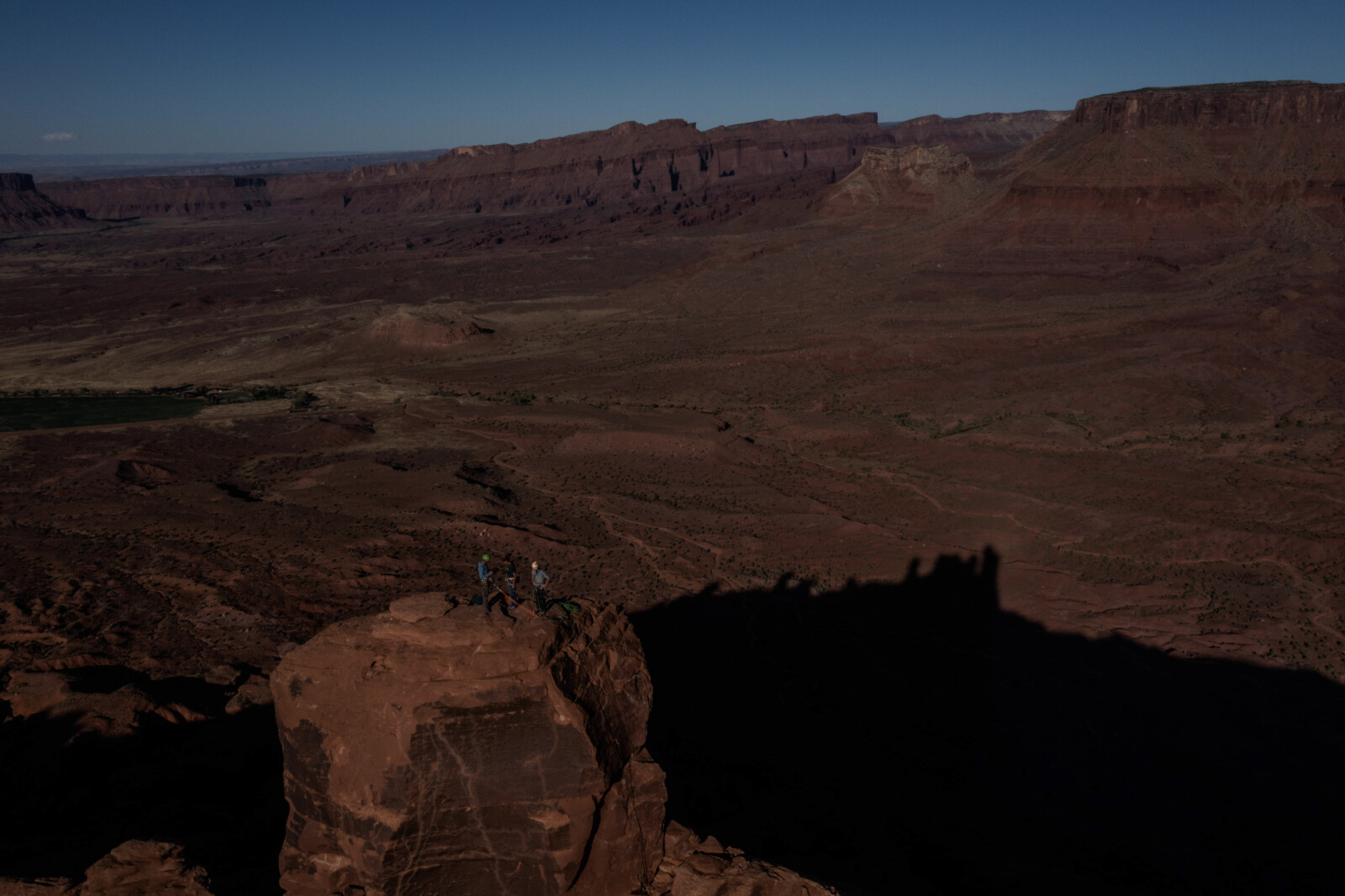
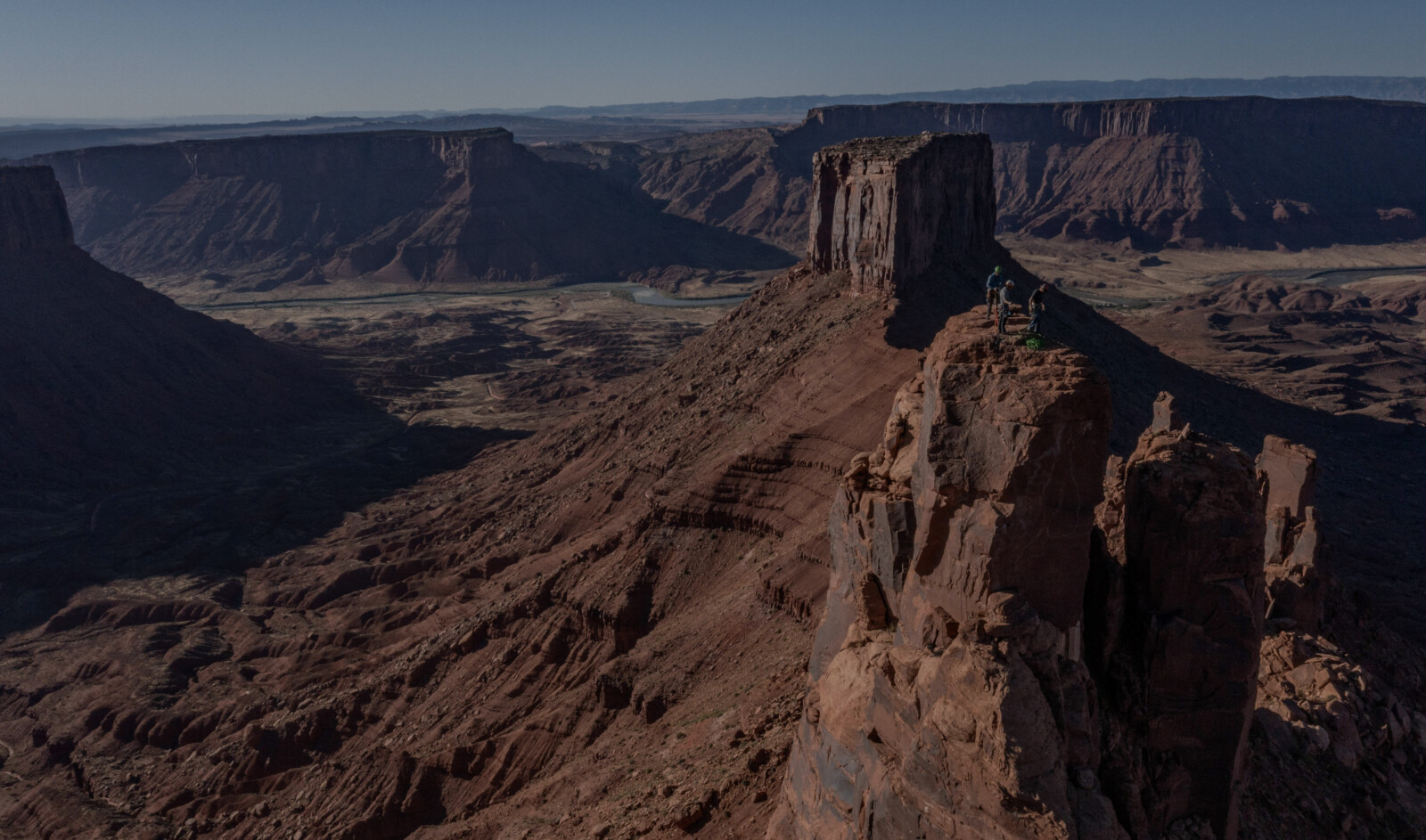
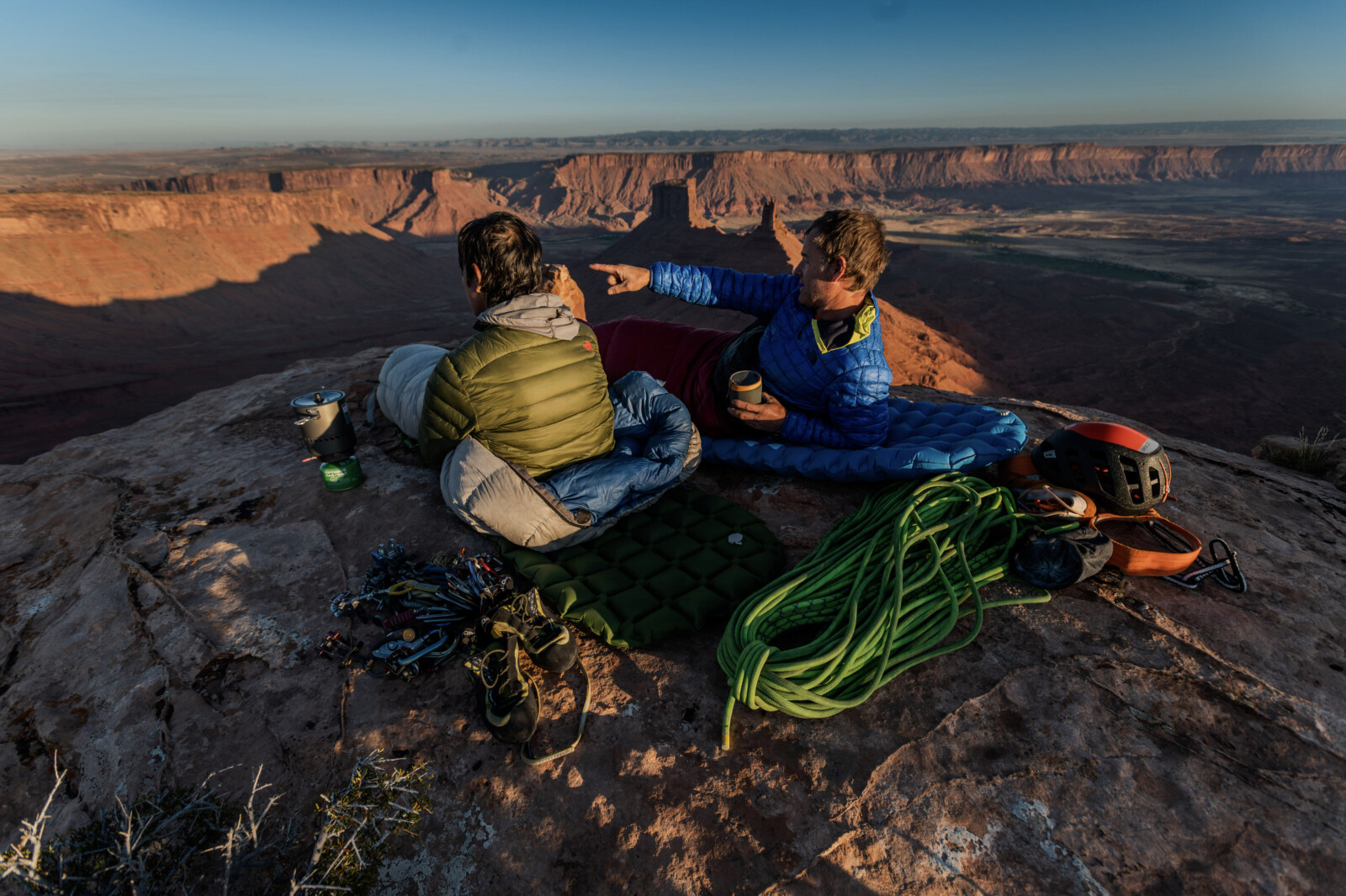
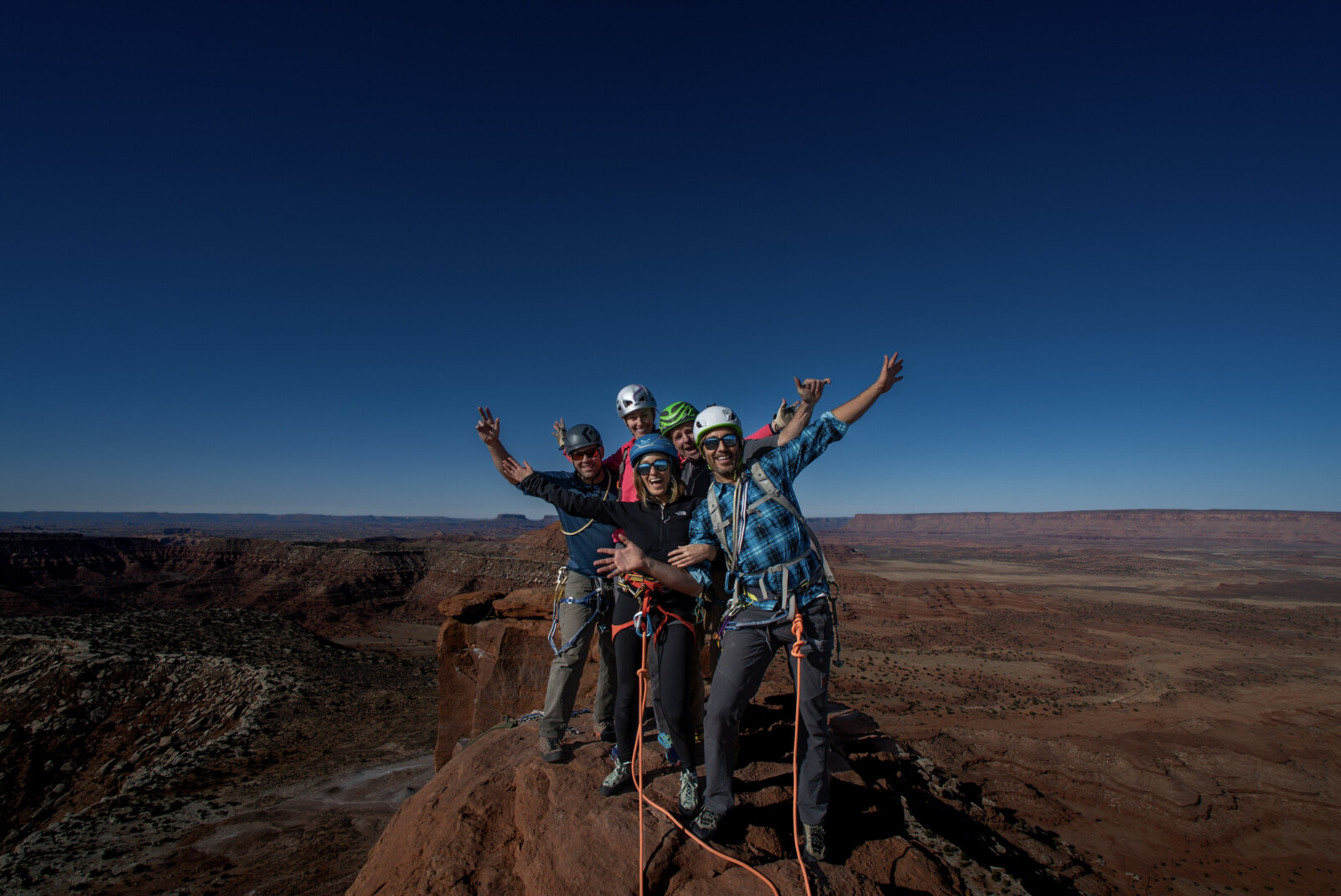
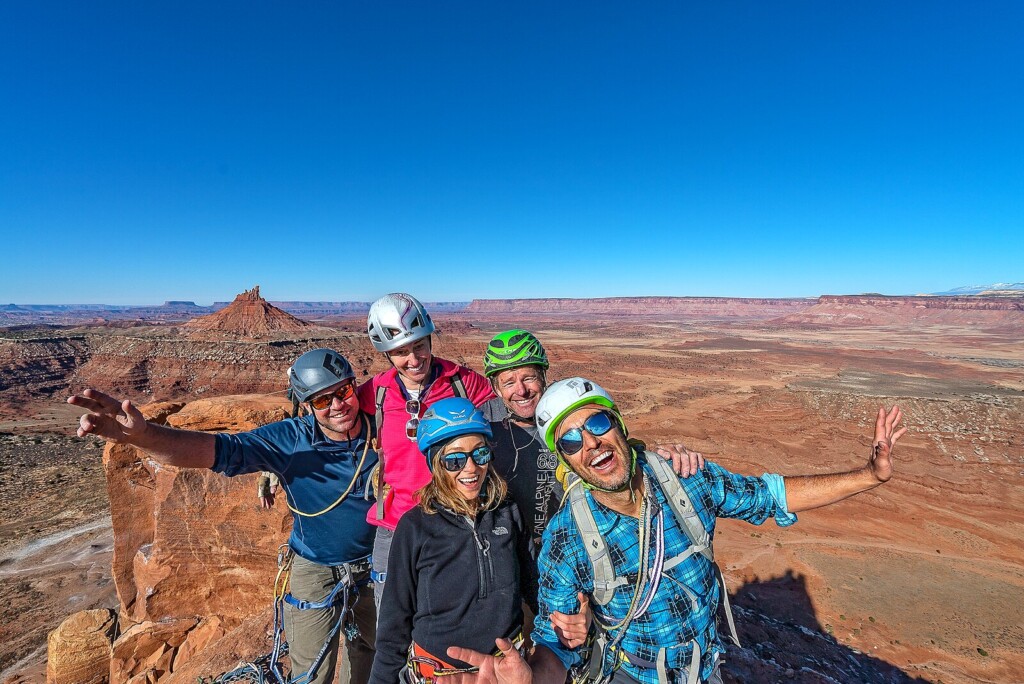
By the time you stand on a summit the size of a table with the Colorado Plateau falling away on every side, you’ll have earned it.
Quick facts
| Length | 4 days — 1 half-day in Little Cottonwood Canyon, 3 days in Moab |
| Towers | 2, chosen from more than 20 towers WMG guides |
| Grades | 5.5 to 5.11 |
| Ratio | 2 climbers per guide, always |
| Experience | Some climbing experience · crack experience not required |
| Season | March–May · September–November |
| 2027 dates | April 22–25 · October 14–17 · or custom dates |
| Rate | $1,800 per person, team of 2 · $3,200 private |
How the four days work
Day 1 — Little Cottonwood Canyon, then Moab. A half-day of climbing on Wasatch granite: your guide checks your movement, belaying and rope systems, and starts on crack technique. In the afternoon you drive to Moab.
Day 2 — Desert climbing day. Crack and systems work on sandstone — the day that makes the towers possible.
Day 3 — Your first tower.
Day 4 — Your second tower, then the drive home.
See Day by Day for the detail.
The towers
Your guide matches the objective to how you climb and what you want. Options include:
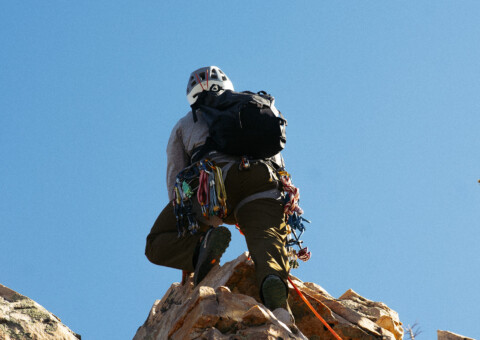
Castleton Tower — Kor–Ingalls Route (5.9). One of North America’s Fifty Classic Climbs, and the tower most people picture when they picture Moab.
Castleton Tower — North Chimney. Steep, direct crack climbing on excellent sandstone.
Ancient Art, Fisher Towers (5.8 with aid). The corkscrew summit. Improbable, photogenic, and unlike anything else.
Fine Jade, The Rectory (5.11). One of the best splitter cracks in the desert, with serious exposure.
Honeymoon Chimney, The Priest (5.10). Squeezes, chimneys and wide cracks.
Lonely Vigil, Lighthouse Tower (5.10). Striking and adventurous, above the River Road.
Regular Route, East Rib, Looking Glass Rock (5.5). A Moab classic, with one of the best-known free-hanging rappels in the desert.
What you’ll learn
Crack technique — fingers, hands, fists, and the wide cracks most climbers avoid until a tower makes them deal with it
Chimney and offwidth movement — technique, not strength
Multi-pitch systems — belays, anchors, changeovers and gear management at a hanging stance
Rappelling on long and free-hanging descents
Moving efficiently on sandstone, without wasting energy on rock that punishes over-gripping
Small teams
Two climbers per guide, always. On a tower, a team of two moves efficiently, and your guide is never managing more than one partner at a belay. Bigger group? We add a guide for every two climbers.
Canyoneering — depending on the group
If your team would rather see more of the desert than climb a second tower, a guided canyon can take the place of a tower day. Ask us when you book; it depends on the group and conditions.
Where this leads
Desert towers build crack technique and multi-pitch efficiency that carry into alpine rock everywhere. Climbers go from here to Wasatch Alpine Rock Climbing and The Two Canyons Traverse, and on to bigger multi-pitch and alpine objectives.
Operated and guided by Wasatch Mountain Guides (WMG). BBE is the referral and sales partner; reservations, payments and required forms are handled directly by WMG.
Questions before you book?
We answer every inquiry personally.