US AdventuresRock Climbing in Utah USA Utah

Rock Climbing Mentorship

Four days of personal coaching, used across a year

4 days in a year Group: 1–2 climbers per guide From $1,495 per person · 4 days in a year (2 climbers) · $2,395 for one

The Activity

Rock Climbing Mentorship · Wasatch, Utah

You’ve taken the courses. You’re still following someone else up the route.

That’s the plateau, and almost nobody climbs out of it by taking another one-day class.

Duration4 days in a year
Group1–2 climbers per guide
PriceFrom $1,495 per person · 4 days in a year (2 climbers) · $2,395 for one
ExperienceYou already climb outside
SeasonApril–October
WhereWasatch, Utah

You know how a top-rope anchor works. You’ve been shown a clove hitch. Maybe you’ve led a few sport routes. But the person who racks up, picks the line, decides when to bail, and gets you both down is still somebody else—and every season that stays true, the gap widens.

Four days closes it. Not four guided days—four days of being watched, corrected, and handed more of the decisions each time, with a written record of what changed.
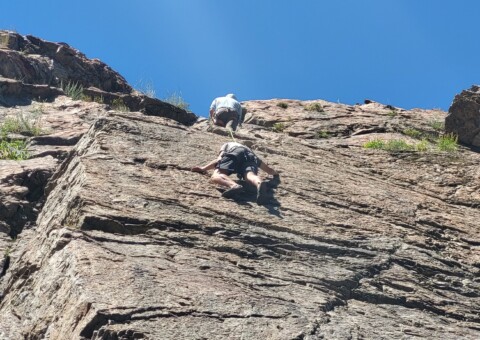
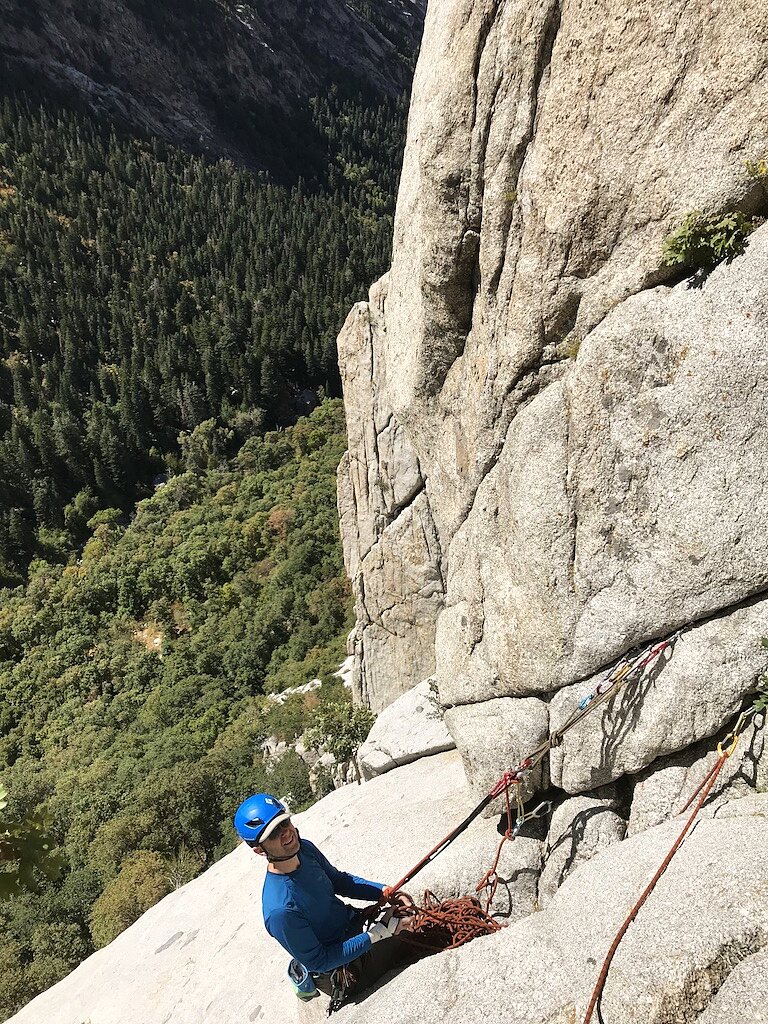
Climber on a steep Wasatch face, Utah

Four days. One year. Use them when you’re ready.

You buy the four days together and use them across a full year.

That’s deliberate. Most climbers can’t find four consecutive weekends. So don’t—take a day in May, climb on your own through June, come back in July with a question you couldn’t have asked before. Take the last one in September when you’re ready for it.

The time between days isn’t downtime. It’s where the learning lands.

A program that follows you

You’ll work with more than one WMG guide across the four days. After every day, the guide writes down what they saw, what you should work on, and what the next guide needs to know. You get that record. So does the next guide, before your day starts.

That’s what makes four days spread across a season one progression rather than four separate outings.

It also gives you something one guide can’t. There’s no single correct way to build an anchor, organize a rack, or run a belay change. Over four days you see how several professionals solve the same problems—and why each chose their way.

This is the program our mission was written for. We don’t simply guide expeditions. We help people build a lifetime in the mountains, and on rock this is what that looks like.

What four days buys that one day can’t

  • Time between sessions. You practice, get something wrong, and come back with a real question.
  • A written progression. An honest assessment after each day—what’s improving, what isn’t, what to practice.
  • Responsibility handed over gradually. Day one you’re assessed. Day four you choose the objective, plan the day, and lead it, with a professional watching.
  • An honest read on where you are, from four days of evidence rather than an afternoon’s impression.

What we can work on

Movement and footwork · sport leading and lead belaying · trad protection and rack management · anchors, and how to evaluate someone else’s · multi-pitch systems and transitions · rope management · rappelling and descent planning · route and objective selection · weather, rockfall, and retreat decisions.

The curriculum depends on you. Day one establishes what you need.

The real subject is judgment

Technical skills are the easy half. The harder half is knowing which route you should be on today, when the weather has changed the plan, when your partner is out of their depth, and when the correct decision is to go down.

Judgment is built by making decisions in real terrain with someone qualified watching.

Considering guiding as a career?

Four days with several working professionals will show you honestly where your skills sit against what the work requires. It will not qualify you to guide. What you get is a straight assessment of the gap.

Operated and guided by Wasatch Mountain Guides (WMG). BBE is the referral and sales partner; reservations, payments and required forms are handled directly by WMG.

Questions before you book?

We answer every inquiry personally.
Ask a guide

The Day & Logistics

Four days, one progression

Learn → practice → return → refine → apply.

Each day builds on what the last one revealed. These describe what each day is for—not a fixed syllabus.

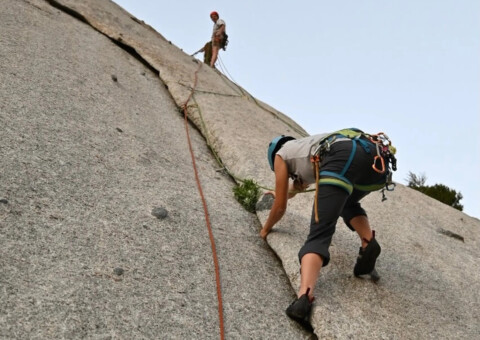
Climber on a granite slab in the Wasatch, Utah

Day 1 — Assessment and foundations

Your guide watches you climb, belay, tie in, manage rope, communicate, build and judge systems, choose routes, and handle exposure. Not a test—a baseline.

By the end of the day, you agree what the mentorship is actually about. You leave with your first written notes and the two or three things to work on before day two.

Day 2 — Systems and efficiency

Whatever day one identified: rope management, anchors, belay transitions, cleaning, rappelling, lead systems, trad placements, multi-pitch organization, partner checks.

Most climbers aren’t held back by strength or nerve—they’re held back by taking twenty minutes to do something that should take four.

Day 3 — Leading and decision-making

Responsibility starts moving across. As far as is appropriate for you, you take on route selection, leading, protection and anchor decisions, transitions, descent planning, and reading the weather. Your guide steps back and coaches.

Day 4 — Putting it together

You choose the objective. You plan the day, organize the gear, lead, manage the belays, handle transitions, and plan the descent. Your guide supervises, coaches, and intervenes if they need to.

It isn’t an exam. Nobody passes or fails. It’s the only way to see how you function when all the pieces arrive at once.

After day four

An honest debrief and a final written summary: what’s solid, what still needs work, what you should and shouldn’t take on unsupervised, and the sensible next objective.

Who you’ll climb with

More than one WMG guide, by design and by scheduling. Holding one guide for four dates across a season isn’t realistic, and we’d rather give you the days you want.

What carries between them is written. After every day your guide records what they saw and what you’re working on. Your next guide reads it before your day. You get a copy too—if a note doesn’t match your memory of the day, tell us.

What we won’t pretend: you’ll spend the first twenty minutes of some days getting acquainted. We think the trade is worth it.

Scheduling your days

You don’t have to schedule all four up front. Book day one and arrange the rest as you go—or fix all four at the start if you prefer, which helps in the busy autumn weeks.

  • What works best: three to six weeks apart
  • What doesn’t work: four days in a fortnight—you’d be absorbing rather than applying
  • From out of state: two days on one trip and two on another, or one day on each of four visits
  • Starting late in the season: take a day or two this autumn and the rest next spring
  • Weekdays are easier to schedule and the canyons are quieter

Long gaps

If six months pass between days, some of it will have faded. That day opens with a short re-baseline, and your guide will have read your notes. Then you carry on from where you actually are.

What you do between sessions

This is what decides how much the program is worth. Go climbing. Practice the two or three things in your notes. Write down what didn’t work, and bring the question back.

Where you’ll climb

Different areas across the Wasatch, chosen day by day for the training objective, your ability, and the conditions. Deliberately not one crag—applying a system somewhere unfamiliar is what turns a procedure into a skill.

Each day’s meeting point is confirmed the evening before. Transport isn’t included, and venues change day to day, so you’ll need a vehicle. Canyon parking may require a fee.

Weather

On a one-day course a weather cancellation is disruptive; here it’s routine. We won’t climb on unsafe rock, and we’d rather move a day than waste one of your four.

What we need before day one

  • Your climbing history—where, how long, indoors and out, sport and trad, grades leading and following, multi-pitch and rappelling experience
  • What you want from the four days, in your own words
  • How often you climb, honestly—it changes how we space the days
  • Injuries, medical conditions, or medication your guide should know about

Is This For Me?

Is mentorship the right step?

This is for you if

  • You’ve plateaued. You climb, you’ve taken courses, and you’re not getting better—or you can’t tell whether you are.
  • You’re still dependent on stronger partners to manage routes, systems, and decisions.
  • You’ve done the courses and need supervised practice. A day taught you the anchor; nobody has watched you build twenty.
  • You’re moving into trad or multi-pitch and know the step is bigger than one day.
  • You’re preparing for a bigger objective—a desert tower, an alpine route, a mountain that needs efficient systems.
  • You’re considering guiding as a career and want an honest assessment first.
  • You couldn’t commit to a block program. The year is why this one fits.

Something else fits better if

  • You’ve never climbed outside. Learn to Rock Climb Outside first.
  • You want one specific skill. Learn to Lead Outside for sport leading—cheaper, and it does the job.
  • You want a day on a route, not development. Full-Day Private Rock Climbing.
  • You want all four days inside a fortnight. That’s four guided days with a coaching label.
  • You specifically want one instructor throughout. Tell us, and we’ll talk about a series of private days with a requested guide instead.

What experience do I need?

You should already climb outside—comfortable top-roping at minimum, and most climbers who take this can lead something. Beyond that there’s no bar, because day one sets the level.

What matters more than your grade is climbing often enough to practice between sessions.

I don’t live in Utah. Does this work?

Yes, and the year is why. Two days on one trip and two on another, or one day on each of four visits. You keep what matters: a tracked progression rather than four unconnected days.

Can two of us do it together?

Yes—two climbers per guide is the maximum, and it works well if you climb together regularly and want to become a competent team.

It works badly if you’re at very different levels or want different things. You also need to make the same dates across the year.

Is 1:1 worth the extra?

$2,395 against $1,495 each. Worth it if your goals are specific or you don’t have a partner at a similar level. Two climbers is better value and adds something real—you belay each other, watch each other’s mistakes, and leave as a functioning team.

Will this make me an independent climber?

Closer, and possibly there—but it depends where you started, and we won’t promise it in advance. What you’ll have for certain is four days of honest evidence, in writing.

Age

The minimum age for rock climbing is 8, and anyone under 18 needs a parent or guardian to sign. This program suits climbers who already climb outside regularly, whatever their age.

Gear & Equipment

Gear and equipment

Bring your own kit—that’s part of the program

On a one-day course, borrowing our equipment is fine. Here it isn’t: your guide needs to see the equipment you actually climb on.

A worn harness, a belay device that doesn’t suit how you climb, a rack organized in a way that costs you two minutes at every belay—real, common problems that can’t be spotted if you use our gear and go home to your own.

Item Notes
Harness Yours. Your guide will check its condition and how you wear it.
Helmet Required.
Climbing shoes A pair you can wear all day, and your harder pair if you have one.
Belay device Yours, and tell us which.
Locking carabiners Several of your own.
Personal anchor system If you use one—especially if you’re unsure it’s right.
Any rack you own Cams, nuts, draws, slings. Even a partial rack is worth bringing.

Don’t own much yet? Fine, and common. We provide the group technical equipment—ropes, protection, anchor material, hardware. Tell us what personal items you’re missing when you book.

Your kit will change over the year

What you own on day one is often not what you should own by day four. Ask before you buy—ideally on day two, once a guide has seen how you climb. If two guides give you different answers, ask each of them why.

Bring, every day

  • Backpack, 25–35 liters
  • 2–3 liters of water, more in summer
  • Lunch and snacks for a full day
  • Sun protection—hat, sunglasses, sunscreen
  • Approach shoes, and a headlamp for longer days
  • A warm layer and a shell
  • Something to write with
  • A card or cash for canyon parking

Rates & Booking

Rates and booking

Rates

Four full field days, used within one year
1 climber $2,395 ($599 a day)
2 climbers $1,495 each ($2,990 total; $374 each a day)

Maximum two climbers per guide. No weekend premium.

Paid once, up front. You then draw the days down over the year.

How the year works

  • The year runs from the date you register.
  • Book day one, then the rest as you go—or fix all four at the start.
  • Moving a booked day: free with 14 or more days’ notice. With less than 14 days’ notice, the day counts as used.
  • If we cancel a day for weather or conditions, we reschedule it. Those days are never lost, even if the reschedule falls after your year ends.
  • Days not used within the year expire.

Rock season runs April through October. Starting late in the season is fine—take a day or two this autumn and the rest next spring.

It also makes a good gift. Four days of coaching is a better present for a climber than another piece of equipment. Gift certificates are issued by BBE—ask us.

What’s included — and what isn’t

Included

  • Four full days with professional WMG guides
  • All group technical equipment—ropes, protection, anchors, hardware
  • Day-one assessment and a closing debrief
  • Written notes after every day, kept by you and passed to your next guide
  • Planning between days—each session is built from what the last one found
  • Venue selection across the Wasatch

Not included

  • Personal climbing equipment—bring your own; it’s part of the program
  • Transportation—venues change day to day, so you’ll need a vehicle
  • Canyon parking fees
  • Food and water
  • Lodging, if you’re traveling
  • Personal insurance
  • Gratuities — customary; 15–25% is standard. Cash is always appreciated, and every WMG guide also accepts Venmo.

Is it worth it against four guided days?

Four private guided days cost a similar amount, and you’d get four days of climbing with no record, no plan, and nobody tracking whether you improved. Here, each day is built from the last, you keep a written assessment across the season, and the final day is one you plan and run yourself.

If what you want is routes, book Full-Day Private Rock Climbing—we’d rather sell you that honestly.

How to request a place

This one needs a conversation, not a form. Tell us:

  • Where your climbing is now, and where you want it to go
  • Climbing alone or with a partner
  • How often you climb
  • When you’d like to start

We’ll agree whether mentorship is the right step, confirm availability, and send you the registration link.

Registration and payment

Once your program is confirmed, we send you the Wasatch Mountain Guides registration and payment link.

Through that link you will:

  1. Complete your program registration
  2. Complete the required acceptance-of-risk documents
  3. Submit payment

Start with us. We will send you the correct WMG link once your program is confirmed.

Payment and cancellation

Payment. Full payment is due when you register with Wasatch Mountain Guides — card, PayPal, check or wire.

If you cancel

If we cancel

Before a field day, for weather, hazard or conditions: we move the day. It is never lost.

Partway through: partial credit, based on the time you spent in the field.

Once a field day starts, there are no refunds for weather or conditions. Your guide will change, shorten or end the day when conditions call for it.

Guides may remove anyone whose ability or conduct puts themselves or the team at risk. There is no refund in that case.

Rescue and evacuation costs are your responsibility. Check that your insurance covers climbing; many standard policies don’t.

Full terms: Wasatch Mountain Guides Reservation, Cancellation and Refund Policy.

When you cancel What happens
More than 30 days before day one Full credit toward a later date, or a refund less a 5% fee
14 to 30 days before day one Move to a later date, subject to availability. No refund.
Fewer than 14 days before day one No refund or reschedule — for any reason, including injury, illness, weather or travel delays

Frequently Asked Questions

More questions? Booking, payment, cancellation, insurance, age and tipping are answered in the General FAQ — US Adventures. Choosing between our rock climbing and alpine programs is covered in the Rock Climbing & Alpine FAQ.

No—you’ll work with more than one WMG guide. Each records what they saw and what you’re working on, and your next guide reads it before your day. If you’d rather have one instructor throughout, tell us; a series of private days with a requested guide is a different option we can arrange.

A little, on some days—usually the first twenty minutes. That’s what the written notes are for.

You buy four days and use them within a year of registering. Book day one, then arrange the others as you go. Most climbers fit all four inside one season, spaced far enough apart to practice in between.

Days not used within the year expire. Days we cancel for weather or conditions are always rescheduled. See Rates & Booking.

Yes, with 14 or more days’ notice. With less notice, the day counts as used.

Four guided days gives you four days of climbing with no record and no plan. Here each day is built from the last, you keep a written assessment, and the final day is one you plan and run yourself.

You can, and we’d talk you out of it. The practice weeks between days are where most of the value is.

Yes. Two days on one trip and two on another, or one on each of four visits.

Some of it will have faded—normal. That day opens with a short re-baseline, and then you carry on from where you actually are.

Yes, after every day—what your guide saw and what to work on. If a note doesn’t match your memory of the day, tell us; it’s your record.

No. Day one sets the level. What matters more is climbing often enough to practice between sessions.

Start with Learn to Rock Climb Outside. Mentorship assumes you’re comfortable top-roping outdoors at minimum.

We move it. With a year to work in, a bad forecast means a different date, not a lost day.

One or two. Never more.

Bring a partner if you climb together regularly, want the same things, and can make the same dates. Go 1:1 if your goals are specific or you don’t have a partner at a similar level.

Climb. Practice the two or three things in your notes, and bring back what didn’t work.

Either or both, if that’s what you need. Day one decides.

No. Certification and employment require substantially more experience and formal training. What you get is a straight assessment, from several professionals, of where your skills sit.

It carries real risk, including serious injury and death. Your guide manages it through terrain choice, professional systems, and constant attention—judgment, not certainty. Over four days you’ll also learn to see and manage those hazards yourself.

Bigger objectives with Full-Day Private Rock Climbing or Wasatch Alpine Rock Climbing, desert towers in Moab, glaciated peaks—or another four days next year with different goals.

You’ve taken the courses. You’re still following someone else up the route.

That’s the plateau, and almost nobody climbs out of it by taking another one-day class.

PriceFrom $1,495 per person · 4 days in a year (2 climbers) · $2,395 for one
Private & Custom Your dates. Your team.

This trip can run privately, on the dates that work for you.

Season
  • April–OctoberOn request

Questions first? Ask a guide

Location:
Wasatch, Utah
Group:
1–2 climbers per guide
Duration:
4 days in a year
Skill:
You already climb outside
Pricing

All prices are in US dollars.

You’ve taken the courses. You’re still following someone else up the route.

That’s the plateau, and almost nobody climbs out of it by taking another one-day class.

Request a Place

Private Expedition

Plan your private Rock Climbing Mentorship

Rock Climbing Mentorship runs as a private trip: on your dates, with your people, built around your goal. Same guides and the same safety standard as every BBE expedition.

Your dates

We set the departure around your calendar, not the other way round.

Your people

Family, friends, a company team, or just you and a guide.

Your goal

Training for a bigger peak, a winter or speed attempt, a film, or a route that runs from summit to ocean.

Your price

Private trips are quoted for your group size, dates and plan.

Professional Mountain Standards

Your guide is a professional mountain guide from Wasatch Mountain Guides (WMG).

AMGA — American Mountain Guides Association logo
IFMGA / UIAGM — International Federation of Mountain Guides Associations logo
AAGM — Asociación Argentina de Guías de Montaña logo

Related Trips