Schools / CoursesUS Adventures USA Utah

Wasatch Everest Prep Course

Wasatch Everest Prep Course · 4 days · 2 climbers, 1 guide · Taught by Willie or Damian Benegas

4 days Group: 2 climbers, 1 guide $2,000 per person

The Trip

Wasatch Everest Prep Course · Wasatch, Utah

Everything we learned up there, before you go up there.

The first time you use a jumar should not be in the Khumbu Icefall.

Duration4 days
Group2 climbers, 1 guide
Price$2,000 per person
WhereWasatch, Utah

The first time you pass an anchor in expedition gloves, cross a ladder, or move in an oxygen mask and goggles should not be on the mountain either. Those are the things this course solves—four days in the Wasatch, drilled until they are boring.

The other half is judgment: how an Everest season actually runs, where time and energy disappear, and how small decisions made by tired people turn into big problems.

We are not going to tell you Utah is high altitude. No course anywhere prepares your body for 8,000 meters. What four days here can do is make sure your systems, your equipment, and your thinking are already solved—so that on the mountain, your attention is on the mountain.

Quick facts

Length 4 days, including one night at high camp
2027 date Friday 12 – Monday 15 February (Presidents’ Day weekend)
Places 2 climbers, 1 guide
Taught by Willie or Damian Benegas
Base Little Cottonwood Canyon, Salt Lake City
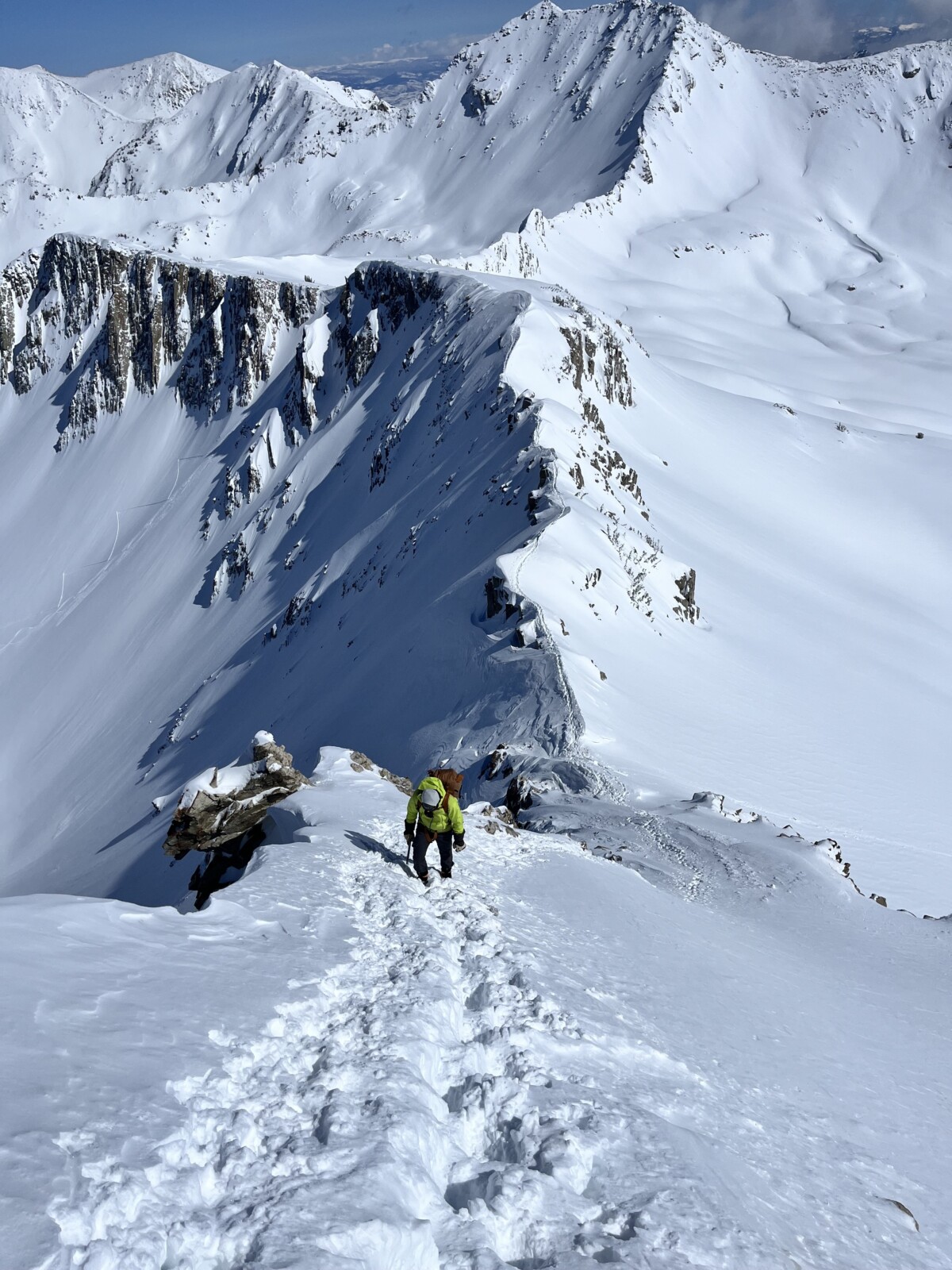
Ends with A West Ridge ascent of Toledo Peak (10,388 ft)
Rate $2,000 per person

Who teaches it

Willie or Damian Benegas, personally.

The course is operated by Wasatch Mountain Guides (WMG). This course exists because of what the two of them know about one mountain, and it doesn’t work delivered secondhand.

Willie is an IFMGA mountain guide; Damian is an AAGM mountain guide. Willie has reached the summit of Everest fourteen times, Damian six. In 2011 they received the Argentine Olympic Committee’s Heroic Athlete Award for a rescue on Everest.

Patience, skill, and no summit fever

Asked what matters most on Everest, Willie’s answer has always come down to three things.

Be patient. Everest rewards climbers who can wait—through acclimatization rotations, through storm days at Base Camp, through a weather window that isn’t quite right yet. Many of the worst decisions on the mountain start with someone who couldn’t wait any longer.

Be technically good. Your systems should be automatic: clipping, passing anchors, jumaring, managing oxygen, all in big gloves and a mask. When the technical part takes no thought, your energy and attention go where they belong—to the weather, the clock, and how your body is doing.

Don’t let summit fever take over. The summit is only halfway. Summit fever is what makes people ignore a turnaround time, a building storm, or their own warning signs. The climbers who come home are the ones who can still make a clear decision with the top in sight.

The technical half of that list, you can practice here until it is automatic. The other two you practice here as well—by learning to be honest about where you are.

What you’ll work on

Fixed-line ascent. Jumar technique on steep snow, ice, and rock—moving efficiently rather than hauling.

Anchor transitions. Passing an anchor cleanly, in gloves, without ever unclipping from the mountain. Slow transitions cost you, and everyone behind you, time nobody gets back.

Ladder crossings, including in limited visibility.

Moving in an oxygen mask and goggles. Restricted vision, restricted breathing, cold hands. Everything you know how to do gets harder, and the only remedy is having done it before.

Oxygen system management. Fitting, adjusting, and troubleshooting with cold hands.

Cold-weather camp systems, a night at high camp, and rope work on the descent—where a large share of accidents happen.

Bring the gear you plan to take

The day-one gear check is one of the most valuable parts of the course. Bring the boots, gloves, harness, hardware, and clothing you intend to use on the expedition, and have it examined by people who have used the same equipment on Everest.

In February, there is still time to change something before a spring season.

One course a year, two places

The course runs once a year, in February, timed for the spring Himalayan season.

It has two places: one guide, two climbers. The value of these four days is individual correction, and that is how many people one guide can coach properly.

If February doesn’t work for your expedition, ask about a private course.

What this course is not

It is not altitude training. You cannot acclimatize in Utah. That happens on the expedition.

It is not a fitness program. Arrive already training.

It is not a substitute for big-mountain experience. It makes you technically sharper. The mountain still teaches the rest.

Where this leads

Straight into a Himalayan expedition: Everest, or another 8,000-meter peak with fixed lines, ladders, and supplementary oxygen.

This course is only for climbers preparing for the Himalaya. If you are earlier in the progression, start with Mount Baker and our international expeditions—tell us your objective and we will tell you honestly what order to do things in.

Operated and guided by Wasatch Mountain Guides (WMG). BBE is the referral and sales partner; reservations, payments and required forms are handled directly by WMG.

Questions before you book?

We answer every inquiry personally.

Ask a guide

Day by Day

How the course runs

Four days, building from the classroom to a real ascent. Conditions decide the details—the venue or the order may change when weather or snowpack gives reason to.

Before you arrive

Tell us your objective, your expedition dates, and your climbing background when you register. The four days are shaped around what you are preparing for.

Before the course, you’ll receive pre-course material: the meeting point, a full kit list, and what to read and prepare before Day 1. We’ll also talk with you before you arrive.

Weather and conditions

Winter in the Wasatch means storms, cold, and avalanche hazard. Your guides will adjust venues, timing, and the Toledo Peak ascent to conditions. If the ridge is not appropriate on Monday, we choose another objective that trains the same skills.

Meet at 8:00 AM in Little Cottonwood Canyon. The exact meeting point is in your pre-course material.

The day starts indoors, and this is where much of the Everest-specific knowledge is handed over: how a season actually runs, gear selection for 8,000 meters, nutrition and hydration at altitude, route planning, Leave No Trace, and decision-making when you are tired and short of oxygen.

Then a full gear check. Bring the equipment you intend to take. This is the best chance you’ll get to have it examined by people who have used the same things on the same mountain, while there is still time to change something.

Field time to finish the day, and a first look at how you move.

Night in Salt Lake City (your own lodging).

The technical core, on steep snow, ice, and rock in the Wasatch.

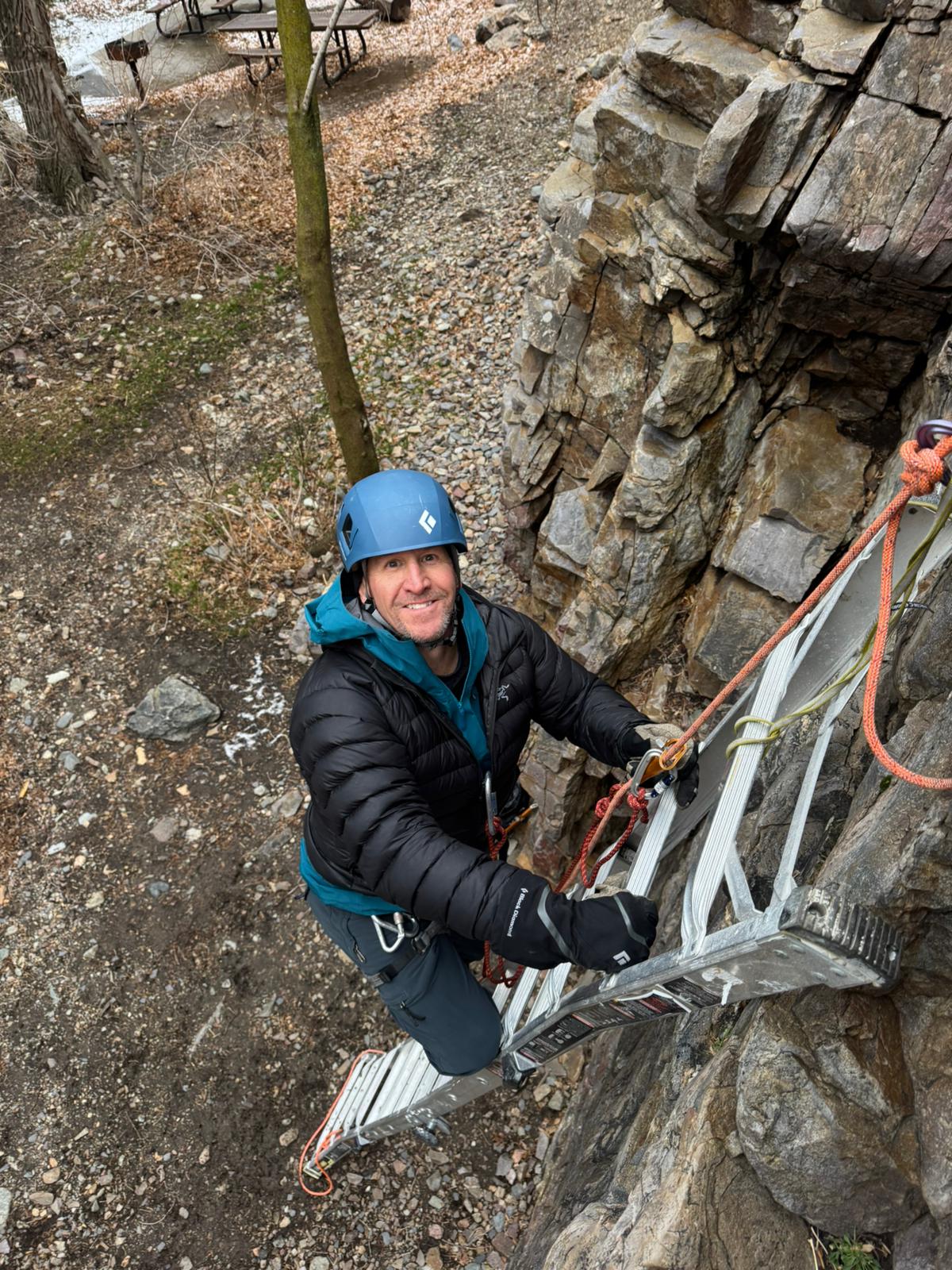
  • Fixed-line ascent with a jumar, until the movement is efficient rather than effortful
  • Anchor transitions, repeated well past the point of novelty
  • The same drills again in an oxygen mask and goggles
  • Ladder crossings, including in limited visibility

Night in Salt Lake City (your own lodging).

  • Final expedition gear check and layering for extreme cold
  • Cold-weather camp: setup, staying dry, melting snow, cooking
  • Summit-day movement drills focused on conserving energy
  • Oxygen systems in the field: masks, regulators, and troubleshooting
  • Emergency response and self-care scenarios

Overnight at high camp. You’ll learn more about your sleep system and your own tolerance in one night out than in a season of reading.

An alpine start, and everything from three days applied to a real ascent.

  • Fixed-line climbing on the West Ridge
  • A summit ridge on ice axe and crampons
  • A descent focused on controlled movement and rappel transitions—because the way down is where people get sloppy

The debrief. An honest assessment of where you are, what to work on before you leave, and whether we think you are ready for the objective you’ve named.

That conversation is one of the most valuable parts of the course. We would rather have it here than have someone else have it with you at Base Camp.

Course ends Monday afternoon.

Is This For Me?

Is this for you?

This course is only for climbers preparing for a Himalayan expedition—usually within the next twelve months.

Who it’s for

  • Climbers going to Everest
  • Climbers going to another 8,000-meter peak with fixed lines and supplementary oxygen
  • Himalayan climbers who have never used ladders, fixed lines, or oxygen

What you need

Existing climbing experience. Comfortable on snow and ice with crampons and an ice axe, and familiar with a harness and basic rope systems. This is not a beginner course.

Good fitness. Four days of cold technical work, a night at high camp, and an alpine start.

A real objective. The course is far more valuable when we know what you are preparing for—the mountain, the route, the timing.

What you don’t need

Experience with fixed lines, jumars, ladders, or oxygen. Those are the point.

Altitude experience—though if you have none at all, that is a conversation worth having, and we will be honest about whether an expedition-scale objective is the right next step.

Who this isn’t for

Climbers without a Himalayan expedition ahead. The course is built for one kind of objective. If yours is different, ask us what would serve you better.

Anyone new to mountaineering. Start with Mount Baker and Avalanche Level 1, and come back the following year.

Anyone hoping this substitutes for altitude. It doesn’t.

An honest word on readiness

You will get a straight assessment at the end—including, occasionally, that we don’t think the objective you’ve named is right for next season.

That is an uncomfortable conversation, and it is one of the reasons clients take this course. Few people in your expedition chain have much reason to tell you. Finding out at Base Camp is expensive in every sense.

Not sure?

Tell us your objective, your dates, and what you’ve climbed. We’ll tell you whether this course is the right next step.

Before You Go

Four things matter most. In order:

1. Tell us your objective

The mountain, the route, the operator if you have one, and your dates. We shape the four days around it.

2. Bring your expedition kit

The equipment you intend to take: boots, gloves, harness, hardware, clothing, sleeping bag. If you haven’t bought it yet, come anyway—you will leave knowing what to buy, which is arguably better. See Gear and Equipment.

3. Arrive fit

Four days won’t build your endurance. Arrive already training for the expedition, and you’ll get far more out of the technical work.

4. Plan to be here Thursday night

The course starts at 8:00 AM Friday in Little Cottonwood Canyon. See Travel Planning.

What to tell us when you register

  • Your objective, route, and expedition dates
  • Your climbing background—snow, ice, rock, altitude
  • Any experience with fixed lines, ladders, or oxygen
  • What expedition kit you already own
  • Anything about your health or fitness we should know

Pre-course material

Once you’re registered, you’ll receive pre-course material with:

  • The exact meeting point and your guide’s contact details
  • A full kit list
  • What to read and prepare before Day 1

Where and when you’ll meet

8:00 AM, Friday 12 February 2027, Little Cottonwood Canyon. The exact meeting point is in your pre-course material.

Travel Planning

Travel planning

Most climbers on this course fly in. Here’s what to sort out, in the order it matters.

Getting here

Salt Lake City International has direct flights from most of the country and is a short drive from Little Cottonwood Canyon.

You’ll need a car. Meeting times are early, and rideshare into the canyons is unreliable coming back out. Winter canyon driving can involve snow, traffic, and road restrictions.

Fitting it around work

The course runs Friday to Monday, across Presidents’ Day weekend. Fly in Thursday, fly home Monday evening or Tuesday. Four days of training for one or two days of leave—which matters when you’re already spending weeks of it on the expedition.

Where to stay

You need lodging for Thursday, Friday, and Saturday nights, and possibly Monday. Sunday night is at high camp.

In Salt Lake City or the Cottonwood Heights–Sandy area: more choice, lower cost, and a reasonable morning drive to Little Cottonwood.

In the canyon (Alta or Snowbird): a shorter morning, at a higher price. Storm mornings can bring road closures for avalanche control, which can work for or against you depending on which side you’re sleeping.

Tell us where you’re flying from and we’ll suggest what makes sense.

Insurance

Not required, but strongly recommended—for this course, and certainly for the expedition that follows. Under WMG’s terms, rescue and evacuation costs are yours, and cancelling fewer than 14 days out forfeits the course fee. Look for cover that includes trip cancellation and rescue and evacuation, and check that it covers mountaineering and roped travel.

Building a longer trip

Some climbers add a guided ice climbing day or a ski mountaineering day either side of the course. Ask and we’ll tell you what conditions make worthwhile.

Gear and Equipment

Gear and equipment

Bring your expedition kit. This is the most underused part of the course.

Discovering that your gloves don’t work with your jumar, or that your boots don’t fit your crampons properly, is worth the course fee on its own. In February, there’s still time to fix it before a spring expedition.

What we provide

  • Group technical equipment: ropes, fixed lines, anchors, and ladders
  • Oxygen masks and regulators for the training drills
  • Tents and stoves for the night at high camp

What you bring

Climbing equipment

  • Mountaineering or expedition boots
  • Crampons that fit those boots
  • Ice axe
  • Harness
  • Helmet
  • Ascender (jumar)
  • Belay/rappel device
  • Locking and non-locking carabiners
  • Slings or a personal anchor system

Clothing

  • Your full expedition layering system: base layers, midlayers, insulated jacket, shell jacket and pants
  • Down parka or down suit if your expedition uses one
  • Warm hat, Buff, balaclava
  • Ski goggles and glacier glasses
  • The gloves and mittens you plan to use on the expedition, plus alternatives

For the night at high camp

  • Sleeping bag rated for winter conditions
  • Sleeping pad (two if you have them)
  • Insulated bottles
  • Personal bowl, mug, and spoon
  • Headlamp and spare batteries

Other

  • Expedition or alpine pack
  • Food and water for four days
  • Sunscreen and lip balm
  • Personal medications

A full kit list comes with your registration confirmation.

A note on gloves

Most of the frustration on this course comes down to gloves.

Everything you practice—jumaring, clipping, transitions, adjusting oxygen—you’ll do wearing them, because you will up there. Bring the gloves from your expedition kit, plus alternatives. Working out which pair lets you operate your hardware is exactly the problem to solve in Utah rather than at 8,000 meters.

Haven’t bought your kit yet?

Come anyway. Bring what you have and we’ll help you decide what to buy. Don’t buy expensive expedition equipment before talking to us.

Daily Life on the Course

“Take care of the mountain, and the mountain will take care of you.” It is the Benegas Brothers’ motto, and the rule we climb by.

Daily life on the course

The shape of a day

Early starts, long days, and most of your time outside in winter conditions. Expect cold hands, repetitive drills, and a lot of standing on steep snow clipping and unclipping.

Day 1 begins indoors. Days 2–4 are in the field.

Food

Food isn’t included. Bring lunch and snacks for each field day, and dinner and breakfast for the night at high camp.

Eat on a schedule, not on hunger—a habit worth building here before the expedition.

Water

Bring insulated bottles. Hydration hoses freeze. At high camp, we melt snow for water.

The night at high camp

You’ll help set up camp, cook, and manage your gear in the cold. Pay attention to what works and what doesn’t: your sleeping system, how you keep gloves and boots from freezing, how long things take.

One night out tells you more about your system than a season of reading.

Staying warm

  • Put on insulation before you get cold, especially during drills
  • Keep spare gloves inside your jacket
  • Sleep with your boot liners and water bottles inside your sleeping bag
  • Eat something before bed

Toilets and hygiene

There are no facilities at high camp. Your guides will explain how we manage waste and leave no trace.

When it gets hard

It will, at some point. That’s part of the value: finding your limits here, with guides watching, is much better than finding them on the expedition.

What to Budget For

What to budget for

The course

Rate
Wasatch Everest Prep Course · 4 days, 1 night at high camp $2,000 per person
Private course · 1 climber $3,500

Two climbers per course, with one guide. That works out to $500 a day for four days of hands-on, individual coaching.

What’s included — and what isn’t

Included

  • Four days of instruction with Willie or Damian Benegas
  • Ropes, fixed lines, anchors, and ladders
  • Oxygen masks and regulators for training
  • Tents and stoves for the night at high camp

Not included

  • Your expedition kit — Boots, crampons, harness, jumar, clothing, sleeping bag. Bring what you’ll take on the expedition.
  • Lodging — Thursday, Friday, and Saturday nights, and possibly Monday. Sunday night is at high camp.
  • Food — All food for four days, including dinner and breakfast at high camp.
  • Car — You need one.
  • Canyon parking — Fees at some locations.
  • Flights — Into Salt Lake City International.
  • Gratuities — Customary — 15–25% is standard. Cash is always appreciated, and every WMG guide also accepts Venmo.
  • Trip insurance — Not required, strongly recommended.
The realistic total

For an out-of-state climber: the $2,000, plus three or four nights of lodging, a rental car, food for four days, and flights.

The honest note: the biggest variable is your kit. If the gear check shows that your boots, crampons, or gloves don’t work, the cost of fixing it is real—but far cheaper here than at Base Camp.

Payment and cancellation

Full payment is due when you register with WMG. Cancel more than 30 days out and you can take full credit toward a later date, or a refund less a 5% fee. Between 14 and 30 days you can move dates but not get a refund. Inside 14 days the fee is not refundable, for any reason. Full terms are on Dates and Prices.

Your Questions

More questions? Booking, payment, cancellation and tipping are answered in the General FAQ — US Adventures.

Willie or Damian Benegas, personally. The course is operated by Wasatch Mountain Guides (WMG).

One guide, two climbers. The value of the course is individual correction, and that is how many people one guide can coach properly over four days.

It is timed for the spring Himalayan season. February is recent enough that the skills are fresh, and early enough that anything the gear check uncovers can still be fixed. If February doesn’t work, ask about a private course.

No. Utah is not high altitude, and four days here does nothing meaningful for a Himalayan objective. Acclimatization happens on the expedition. What this course removes is the technical learning curve.

Only climbers preparing for a Himalayan expedition—Everest or another 8,000-meter peak with fixed lines, ladders, or supplementary oxygen. If your objective is different, ask us what would serve you better.

Comfortable on snow and ice with crampons and an ice axe, and familiar with a harness and basic rope systems. Everything specific to 8,000-meter climbing, we teach.

That’s most people, and it’s the point. Climbing in a mask and goggles is more disorienting than anyone expects. The only fix is having done it.

Yes—exactly what you plan to take. The gear check is one of the most valuable parts of the course.

Yes. The night at high camp is part of every course. Camp systems in the cold are part of what we teach, and one night out tells you things about your sleep system no reading will.

Yes, subject to Willie’s and Damian’s expedition schedules. A private course for one climber is $3,500. Ask us.

Yes. That is part of what you’re paying for.

No, and nothing does. Summits depend on weather, conditions, health, and decisions made on a mountain we may not be on with you. What this course does is make sure the technical systems aren’t what stops you.

Yes—for this course and certainly for the expedition that follows. Check that your policy covers mountaineering, roped travel, and rescue and evacuation. Many policies exclude them.

Dates & Prices

Dates and prices

Rates

Rate
Scheduled course · 2 climbers, 1 guide $2,000 per person
Private course · 1 climber $3,500

2027 date

Friday 12 – Monday 15 February 2027. Two places.

Presidents’ Day falls on the Monday, so the four days cost most climbers one or two days of leave.

February suits a spring Himalayan season—recent enough that the skills are fresh, early enough that anything the gear check uncovers can still be fixed. If your expedition is later in the year, the systems don’t expire, and the assessment at the end gives you months to work on it.

What’s included — and what isn’t

Included

  • Four days of instruction with Willie or Damian Benegas
  • Ropes, fixed lines, anchors, and ladders
  • Oxygen masks and regulators for training
  • Tents and stoves for the night at high camp

Not included

  • Your personal and expedition equipment, lodging, food, transport, parking, gratuities, and insurance. See What to Budget For.

How to book

  1. Contact us with your objective, expedition dates, and climbing background.
  2. We talk it through—what you’re preparing for, what you’ve done, and whether the timing is right.
  3. We confirm your place and send you the registration link.
  4. You register directly with Wasatch Mountain Guides. The link is WMG-branded; that’s expected. You’ll complete the application, sign the acceptance of risk, and pay in full there.
  5. You receive your pre-course material: meeting point, kit list, and what to prepare.
Payment and cancellation

Payment. Full payment is due when you register with Wasatch Mountain Guides — card, PayPal, check or wire.

If you cancel

If we cancel

Before the course, for weather, hazard or conditions: move to a later date, or take a credit that never expires.

Before the course, for low enrollment: WMG will contact you as early as possible. You choose a full refund, a credit or a later date, or running it as a private course at a reduced rate.

Partway through: partial credit, based on the time you spent in the field.

Once a course starts, there are no refunds for weather or conditions. Your guide will change, shorten or turn the day around when the mountain calls for it. That is the job, and it’s the judgment you’re paying for.

Guides may remove anyone whose ability or conduct puts themselves or the team at risk. There is no refund in that case, and any cost of leaving is yours.

Rescue and evacuation costs are your responsibility. We strongly recommend trip insurance that covers both cancellation and backcountry rescue and evacuation. Many standard travel and health policies cover neither.

Full terms: Wasatch Mountain Guides Reservation, Cancellation and Refund Policy.

When you cancel What happens
More than 30 days before Full credit toward a later date, or a refund less a 5% fee
14 to 30 days before Move to a later date, subject to availability. No refund.
Fewer than 14 days before No refund or reschedule — for any reason, including injury, illness, weather or travel delays
Everything we learned up there, before you go up there.

The first time you use a jumar should not be in the Khumbu Icefall.

Price$2,000 per person
Private & Custom Your dates. Your team.

This trip can run privately, on the dates that work for you.

Scheduled departures
  • Friday 12 – Monday 15 February 2027Two places

Questions first? Ask a guide

Location:
Wasatch, Utah
Group:
2 climbers, 1 guide
Duration:
4 days
Pricing

All prices are in US dollars.

Everything we learned up there, before you go up there.

The first time you use a jumar should not be in the Khumbu Icefall.

Request a Place

Private & Custom

Make Wasatch Everest Prep Course your own expedition

Every trip we run can also run privately: on your dates, with your people, built around your goal. Same guides, same safety standard as our scheduled departures.

Your dates

We set the departure around your calendar, not the other way round.

Your people

Family, friends, a company team, or just you and a guide.

Your goal

Training for a bigger peak, a winter or speed attempt, a film, or a route that runs from summit to ocean.

Your price

Private trips are quoted for your group size, dates and plan.

Professional Mountain Standards

Your guide is a professional mountain guide from Wasatch Mountain Guides (WMG).

AMGA — American Mountain Guides Association logo
IFMGA / UIAGM — International Federation of Mountain Guides Associations logo

Related Trips