Global Expeditions Argentina South America

Aconcagua Express

Aconcagua Express · 22,841 ft / 6,962 m · 14 Days · Maximum 4 Climbers

14 days Group: Maximum 4 climbers · 2 guides $18,500 per person

The Climb

Aconcagua Express · Normal Route · Argentina

Aconcagua is the highest summit in the Western Hemisphere and the highest peak outside of Asia. Most guided expeditions on the Normal Route run eighteen to twenty days. This one runs fourteen.

6,962mAconcagua summit · 22,841 ft
14Days, Mendoza to Mendoza
4Climbers, maximum, with two guides
4,595mCerro Santa Elena, before the park
2Summit windows
HeliIn and out, Horcones ↔ Plaza de Mulas

The difference is not that we move faster on the mountain. It is that the acclimatization starts months before you fly, and the days a standard itinerary spends walking in, walking out, and waiting are removed by logistics rather than by hurrying. The total physiological work does not decrease. It is redistributed.

That is the whole idea, and everything on this page follows from it.

Who This Expedition Is Built For

Almost every climber who writes to us about Aconcagua is capable. What most of them do not have is three weeks.

This expedition is for experienced climbers whose limit is the calendar — people running businesses, holding positions that do not pause, training seriously around a real life. It assumes you have been high before, that you understand expedition living, and that you will do the preparation we ask for.

It is the wrong choice if Aconcagua would be your first mountain of this size, if you have had an unexplained problem at altitude, or if you cannot commit to the full pre-departure protocol. In those cases our 19-day Normal Route expedition is the better program, and we will tell you so.
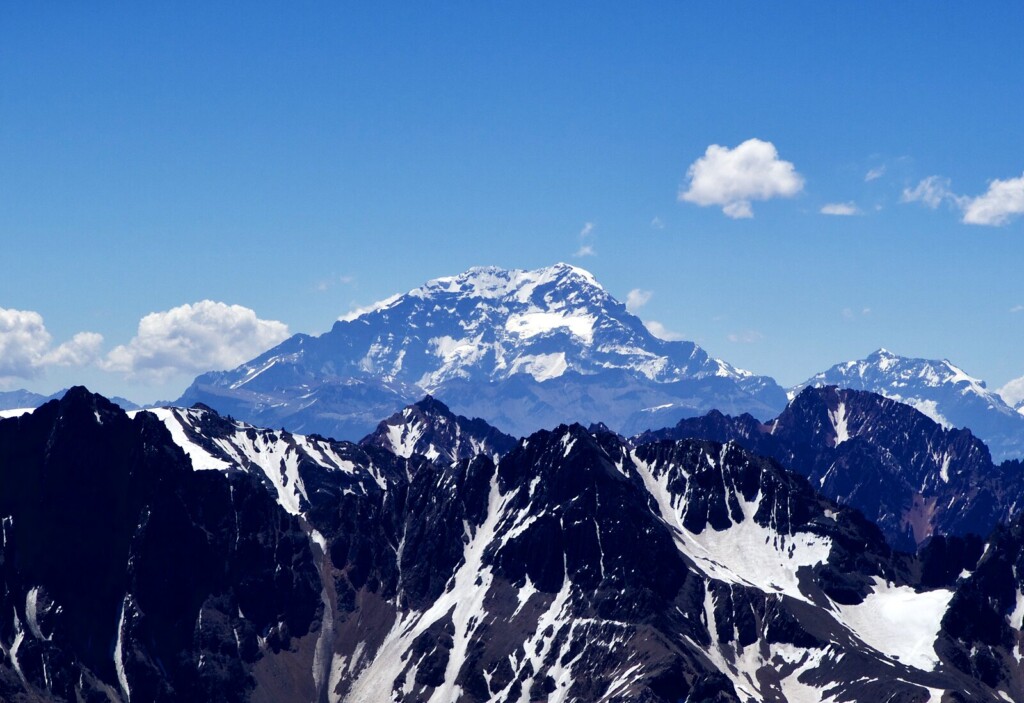
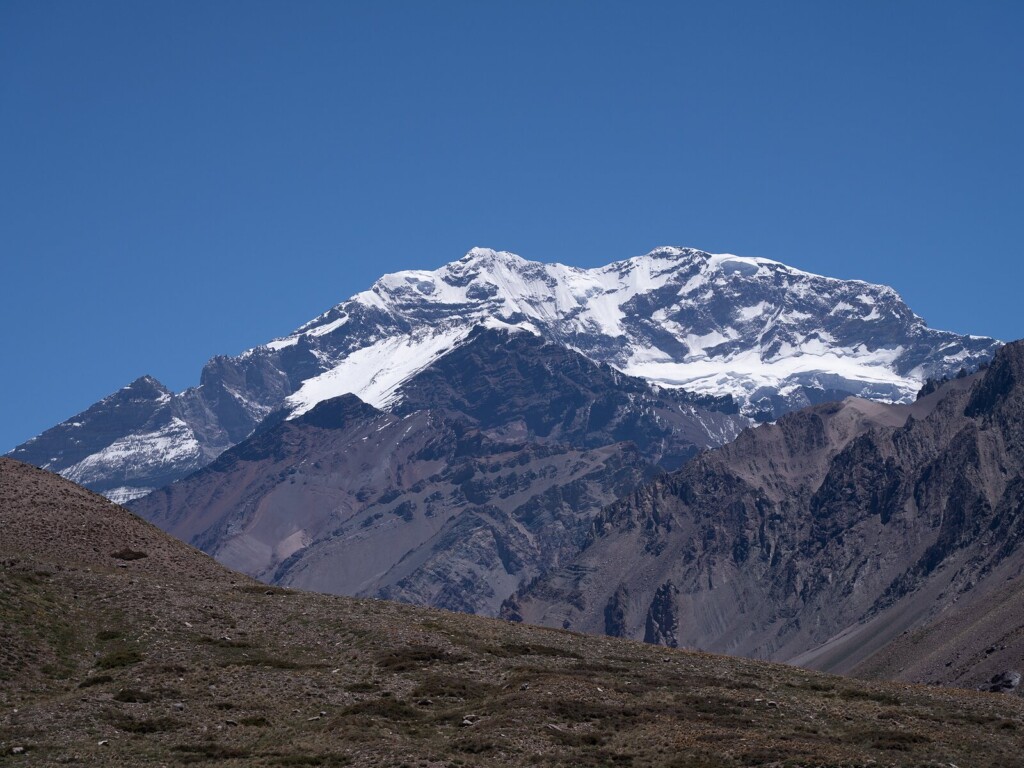
Aconcagua above the Andes, Argentina

Readiness Is Built in Three Stages

At home — the hypoxic protocol. Every climber receives a Hypoxico altitude system, delivered to your home, with a written protocol built around this objective and reviewed against your training history, your record at altitude, and your medical background. Four weeks of consistent use before departure is the standard. It has a schedule, a target, and a record. It is not a device you receive and use as you please.

On arrival — real altitude before the park. The team stages in the Las Cuevas valley at 10,500 ft / 3,200 m, on the Argentina–Chile border, based at the Portezuelo del Viento refuge, and acclimatizes by climbing rather than by waiting. The objective is Cerro Santa Elena, 15,075 ft / 4,595 m, rising directly above the Cristo Redentor pass.

That is higher than Aconcagua’s Plaza de Mulas base camp. Our climbers have already stood above base camp elevation, on real terrain, before they enter the provincial park. A hypoxic tent reproduces reduced oxygen. It does not reproduce cold, dry air, exertion at elevation, or broken sleep in a real camp. This stage does, and it is the part of the model that cannot be bought — knowing where to place climbers, at what elevation, on which terrain, and for how long is knowledge earned over more than thirty years in this specific range.

On the mountain — refined logistics. With the physiology handled, the remaining waste is time lost to movement. A helicopter carries the team from Horcones to Plaza de Mulas (14,300 ft / 4,350 m) and out again at the end, removing the two-to-three-day approach in each direction — flights are included and operate subject to weather and authorization. Private transfers, porter support for group gear, and professional forecasting handle the rest. You arrive at base camp with your energy intact and spend it on the climb.

A standard Normal Route expedition

  • Eighteen to twenty days
  • Two to three days walking in, and again walking out
  • Acclimatization starts when you arrive

Benegas Brothers Aconcagua Express

  • Fourteen days, Mendoza to Mendoza
  • A home hypoxic protocol before you fly
  • Real altitude on Cerro Santa Elena, 4,595 m, before the park
  • Helicopter in and out
  • Two summit windows
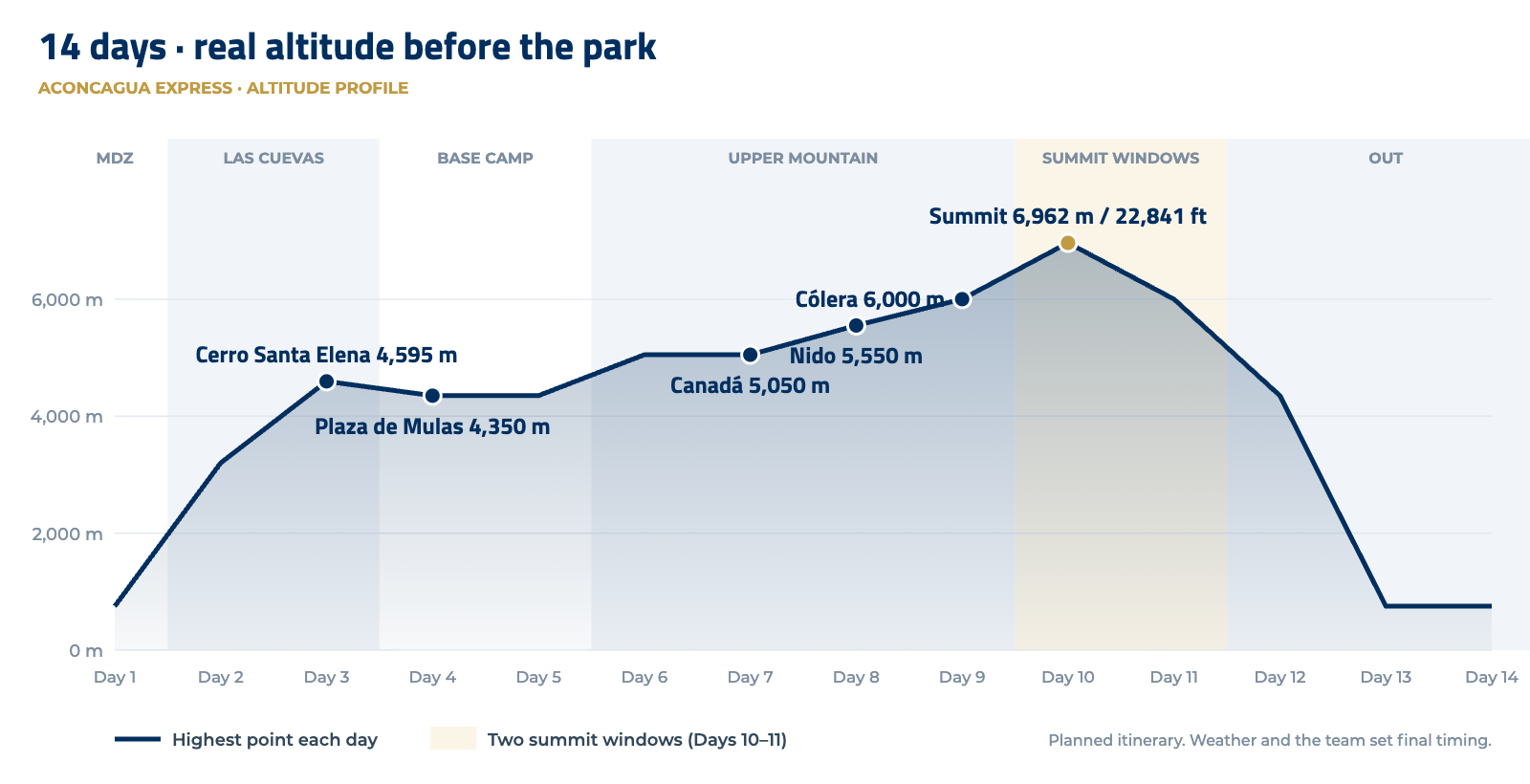
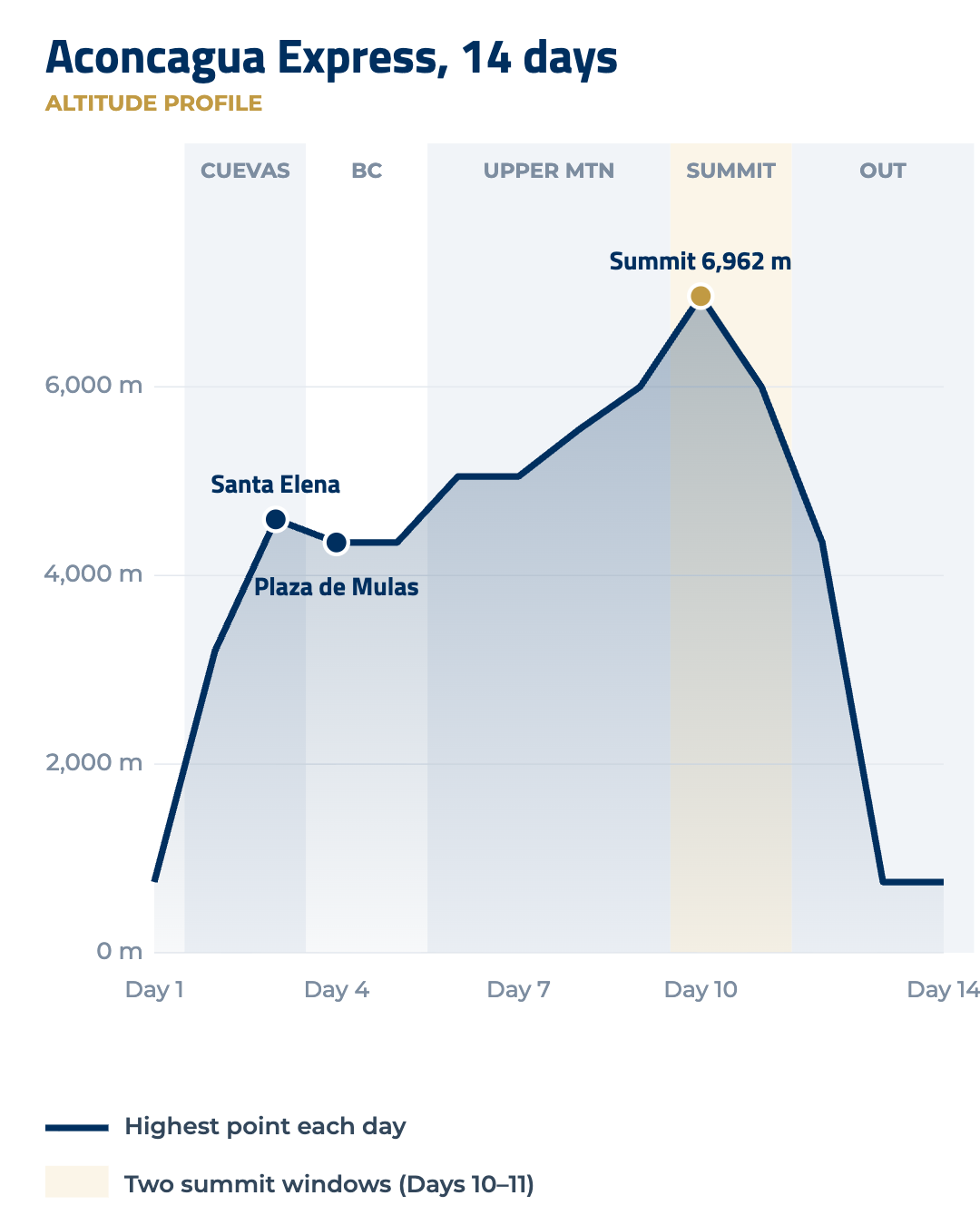
Altitude profile of the 14-day Aconcagua Express: Mendoza, Las Cuevas, Cerro Santa Elena 4,595 m, Plaza de Mulas 4,350 m, Camp Canadá, Nido de Cóndores, Camp Cólera 6,000 m and the summit at 6,962 mAltitude profile of the 14-day Aconcagua Express: Mendoza, Las Cuevas, Cerro Santa Elena 4,595 m, Plaza de Mulas 4,350 m, Camp Canadá, Nido de Cóndores, Camp Cólera 6,000 m and the summit at 6,962 m
Highest point reached each day. Days 10 and 11 are the two summit windows. See the full itinerary, day by day.

Your Preparation Is Supported by the Founders

On this expedition, the preparation phase is run personally by Willie or Damian Benegas.

From the moment you are accepted, one of them works directly with you through it — your training, your protocol, how you are responding to it, and what needs to change. Not a form, not a portal, not a coordinator relaying messages. This is a standing commitment on Aconcagua Express, and it is where more than a hundred combined Aconcagua summits actually become useful to a client: in the months before the flight, while there is still time to fix something.

It applies to your preparation, not to your departure. Who guides you on the mountain is confirmed in your written trip terms and never assumed.

Readiness Is a Requirement, Not a Benefit

This is the part we are least flexible about, and you should understand it before you book.

A shorter itinerary is safe only when the preparation actually happened. A climber who receives a hypoxic system, uses it inconsistently, and then stands at 6,900 metres on a compressed schedule is in a worse position than a climber on a traditional itinerary — not a better one. The efficiency is borrowed against the preparation. If the preparation is not there, there is nothing to borrow against.

So your compliance and your response to the protocol are reviewed before departure by your guide team together with the founders, and by our doctor where your history or medical background warrants it.

If the protocol has not been met, we will tell you. Depending on where you stand, that conversation may lead to a longer itinerary, a different objective, or a later departure. We would rather have it months out than at high camp. Turning a climber around at home is not a failure of the program. It is the program working.

Four Climbers, Two Guides

Four climbers, two guides, calibrated to experienced people who have already done the work — no averaging down to accommodate a wide range of ability.

The expedition is built and managed to IFMGA standards, and led by certified professional mountain guides — IFMGA, AMGA, and the Argentine Association of Mountain Guides — with experience across the Andes, the Himalaya, Alaska, and Patagonia.

You will never disappear into the group. Small teams are how the company works.

Safety and Judgment

Every departure carries emergency oxygen on the upper mountain, a full expedition medical kit, guides trained in high-altitude field medicine, and satellite and radio communication at all times. Starlink internet at base camp gives a limited connection — enough to message home and for the guide team to pull current weather data. Every climber is monitored daily — pace, oxygen saturation, hydration, appetite, recovery.

Two summit windows are built into the schedule. That margin exists to be used, or not used, as conditions decide. A compressed itinerary does not buy urgency: nobody on a BBE expedition is pushed because the calendar is tight, and turning around at the right moment remains a professional decision rather than a failure.

No one can promise you a summit on Aconcagua. Be careful of anyone who does.

The Standard Behind It

Benegas Brothers Expeditions was founded by two Argentine climbers, and the Andes are where the company learned what it knows. Aconcagua is not a destination we visit each season. It is home ground — the same staff for years, the same mule teams, the same understanding of a particular aspect in a particular month.

We don’t simply guide expeditions. We help people build a lifetime in the mountains.

Questions About Aconcagua Express?

Read next: Aconcagua Normal Route · Day by Day
Ask a guide

Day by Day

This itinerary assumes your hypoxic protocol is already complete. Fourteen days works because the adaptation started at home months ago and the approach is flown rather than walked — not because anything on the mountain is rushed.

Days are described as planned. Weather, conditions, and how the team is actually moving take priority over the schedule, and your guides will change it when that is the right call.

Altitude profile of the 14-day Aconcagua Express: Mendoza, Las Cuevas, Cerro Santa Elena 4,595 m, Plaza de Mulas 4,350 m, Camp Canadá, Nido de Cóndores, Camp Cólera 6,000 m and the summit at 6,962 mAltitude profile of the 14-day Aconcagua Express: Mendoza, Las Cuevas, Cerro Santa Elena 4,595 m, Plaza de Mulas 4,350 m, Camp Canadá, Nido de Cóndores, Camp Cólera 6,000 m and the summit at 6,962 m
Highest point reached each day. Days 10 and 11 are the two summit windows.

The 14 Days at a Glance

Each bar shows where you sleep that night. ▲ marks the day’s high point. Tap a day to open it.

In each day below, altitude reads start → high point → where you sleep. Distances and hiking times are estimates.

Climb high, sleep low

Some days climb well above where you sleep. The gap between the day’s high point and the night’s camp is how your body adapts.

Times are estimates

Hiking times change with the team and the conditions. A slow, steady pace is the plan, not a problem.

The plan can flex

Weather, how the team is acclimatizing and your guides’ judgment can change the daily plan. That flexibility is part of the plan.

Mendoza, Argentina · 2,460 ft / 750 m

Arrival transfer from Mendoza airport to the hotel. Evening team dinner: introductions, expedition briefing, and the first full gear check — done here, in a city with shops, rather than at a refuge where nothing can be replaced.

Your guides will also want to hear how the hypoxic protocol went. That conversation is part of the expedition, not small talk.

Las Cuevas · 10,500 ft / 3,200 m

Roughly three hours up Ruta 7 through the Uspallata valley to Las Cuevas, on the Argentina–Chile border. The team is based at the Portezuelo del Viento refuge.

An easy afternoon walk to settle into the elevation. No hard effort today — the point of this phase is adaptation, and adaptation is not a workout.

High point: 15,075 ft / 4,595 m

The staging day, and the reason this program works.

The team climbs Cerro Santa Elena, 15,075 ft / 4,595 m, rising directly above the Cristo Redentor pass. It is a real ascent on real terrain, and its summit is higher than Aconcagua’s Plaza de Mulas base camp.

That matters more than it sounds. Most teams arrive at Plaza de Mulas and spend their first days simply absorbing 14,300 ft. Our climbers have already been higher than that, under load, before entering the provincial park.

The pace is deliberate and the guides are watching closely — breathing, recovery, appetite, how you move on descent. What they learn today shapes how the rest of the expedition is run. Descent to Las Cuevas, final gear check, early night.

Plaza de Mulas Base Camp · 14,300 ft / 4,350 m

Drive to Horcones, the park entrance, then a helicopter transfer directly to Plaza de Mulas — a flight of roughly twenty minutes in place of a two-to-three-day approach trek. Flights are included and operate subject to weather and park authorization.

This is not comfort for its own sake. The Horcones approach costs energy without adding altitude adaptation you have not already banked. Removing it means arriving at base camp with reserves intact.

Afternoon at base camp: tents, orientation, and the first proper look at the upper mountain. Guides brief the camps ahead and current route conditions.

Plaza de Mulas · 14,300 ft / 4,350 m

The first push above Plaza de Mulas, climbing on the Normal Route toward Camp Canadá before returning to sleep at base camp. Climb high, sleep low — the principle that governs the next several days.

Guides assess how the team is responding at working altitude. Everything from here is calibrated to that answer.

Camp Canadá · 16,570 ft / 5,050 m · Sleep: Plaza de Mulas

Carry day. The team moves gear and supplies up to Camp Canadá, then descends to sleep at base camp.

The descent matters as much as the climb. Loading the body at altitude and then recovering lower is what drives adaptation — and it is the reason a carry day is not a wasted day.

Camp Canadá · 16,570 ft / 5,050 m

The team moves up with full loads and sleeps at Camp Canadá, the first camp above base camp. Straightforward ground, sustained rather than difficult.

Camp sits above the Horcones glacier moraine with the upper mountain open ahead. Eat well, hydrate, sleep.

Nido de Cóndores · 18,210 ft / 5,550 m

From Camp Canadá the route climbs steeply through scree and rocky switchbacks to Nido de Cóndores — the Condors’ Nest — one of the best-positioned camps on the mountain, reasonably sheltered from the prevailing wind with a direct line to the upper route.

At this elevation the work is real. Guides set a measured pace and there is no rushing this section. Arriving at Nido in good condition, with energy intact and no significant symptoms, is the objective — not arriving quickly.

Camp Cólera · 19,685 ft / 6,000 m

A shorter but demanding move onto the shoulder at Camp Cólera, the highest the team sleeps.

Guides make final weather assessments and confirm the summit plan. Early dinner, gear laid out, water prepared, rest.

Aconcagua Summit · 22,841 ft / 6,962 m

Pre-dawn start, typically 3:00–4:00 AM depending on conditions and forecast wind.

The route climbs past Independencia, traverses to the base of the Canaleta, and finishes up roughly 3,200 ft of sustained ascent — the Canaleta itself is loose, steep and slow — to the summit ridge and the summit of the highest mountain in the Western Hemisphere.

Descent to Camp Cólera or Nido de Cóndores depending on team condition. Most incidents on this mountain happen on the way down, and the guides hold full discipline until everyone is in camp.

Camp Cólera or Nido de Cóndores

The built-in second window: a summit attempt if Day 10 was closed out by weather, or a controlled rest and descent day if the summit was reached.

Weather here turns within hours. A second window, with a team already positioned and acclimatized, is the difference between a schedule that plans for the mountain and one that hopes. It exists to be used or not used as conditions decide — never as pressure to push.

Plaza de Mulas · 14,300 ft / 4,350 m

Full descent from high camp through Nido de Cóndores and Camp Canadá to base camp. Dry clothes, a real meal, showers available for purchase, and thicker air than the team has breathed in a week.

Plaza de Mulas → Horcones Valley → Mendoza

Helicopter from Plaza de Mulas to the Horcones valley, then ground transfer to Mendoza. As with the inbound flight, this is weather- and authorization-dependent; guides build the day with that in mind.

Hotel, shower, and a team dinner in the city.

Mendoza

Departure transfers to Mendoza airport. The program concludes here.

A Note on the Schedule

Fourteen days on Aconcagua is only sound when the preparation behind it is real. That is why the hypoxic protocol is enforced rather than offered, and why every climber’s compliance is reviewed before departure.

Nothing in this itinerary trades safety for speed. There are two summit windows, not one. Guides turn teams around when the mountain says so, and a compressed schedule does not change that — a tight calendar has never been a reason to keep climbing.

Continue Preparing

Read next: Is This For Me? · Aconcagua Express Gear List · A Day on the Mountain · What to Budget For · Dates and Prices

Questions about the itinerary or your readiness? Ask a guide.

Is This for Me?

This program is not a faster version of our Normal Route expedition. It is a different program for a different climber, and picking the wrong one costs you the mountain.

This page is the conversation we would have with you before taking a deposit. Read it properly.

The Short Answer

Our 19-day Normal Route expedition is a serious, well-run climb, and it is the right program for most people who come to us for Aconcagua. It gives you time on the mountain: time to learn how you respond to altitude, time to build confidence, time to absorb a bad night and recover from it.

Aconcagua Express sells that time back to you in exchange for preparation you complete before you fly. If you need the time, keep it. Nobody has ever regretted a longer itinerary on a mountain of this size.

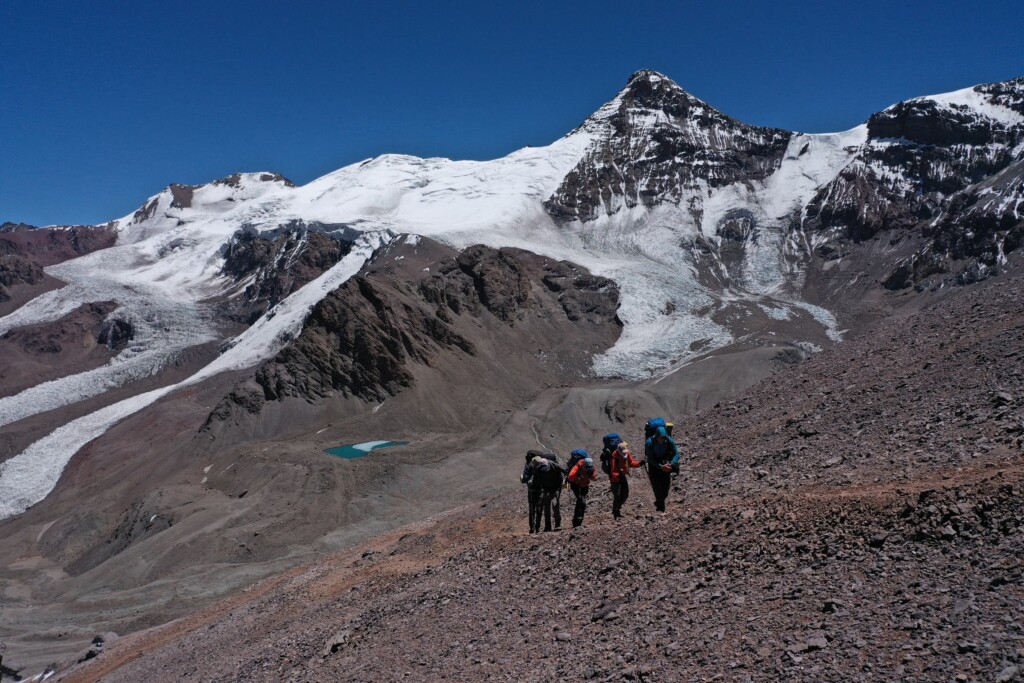
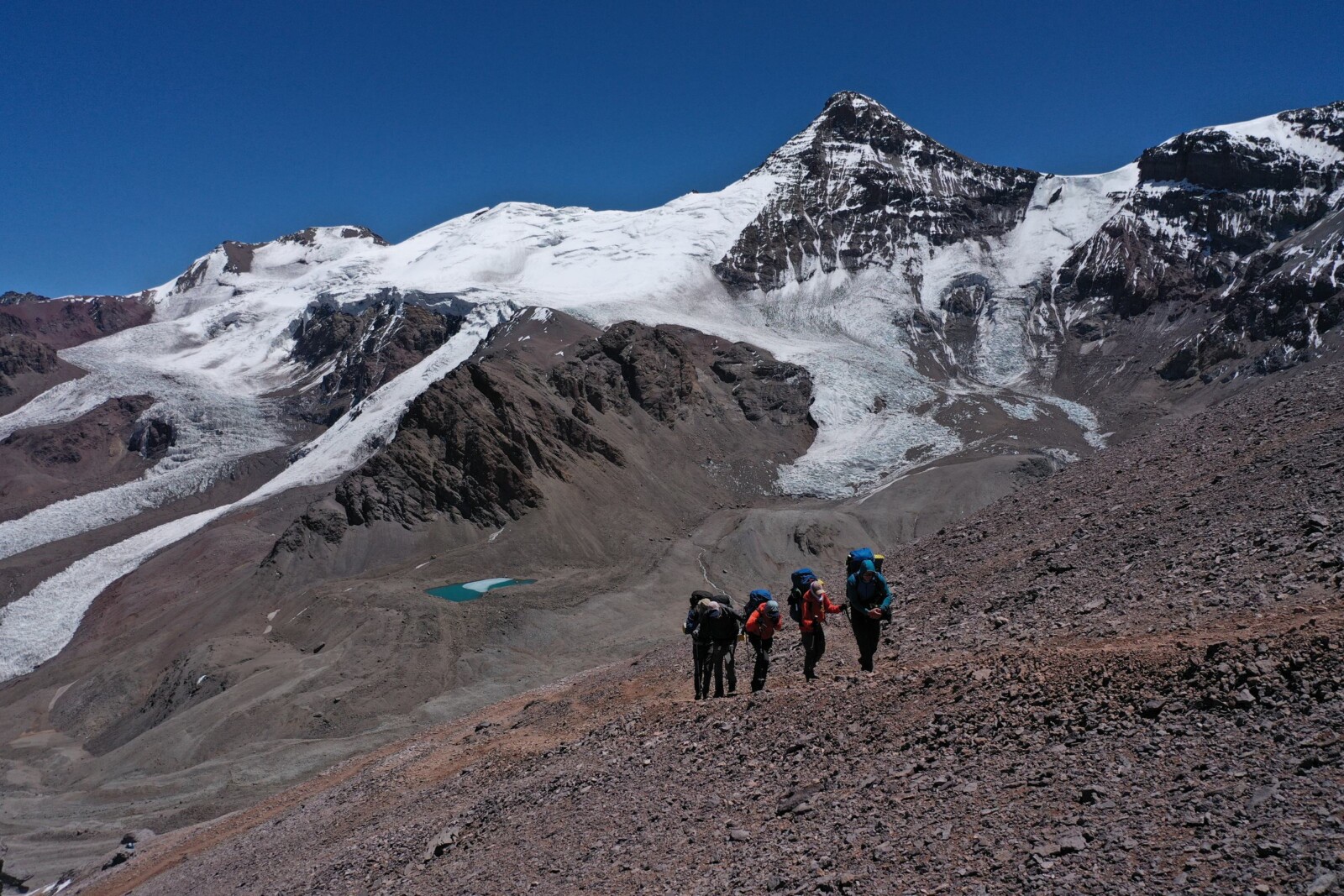
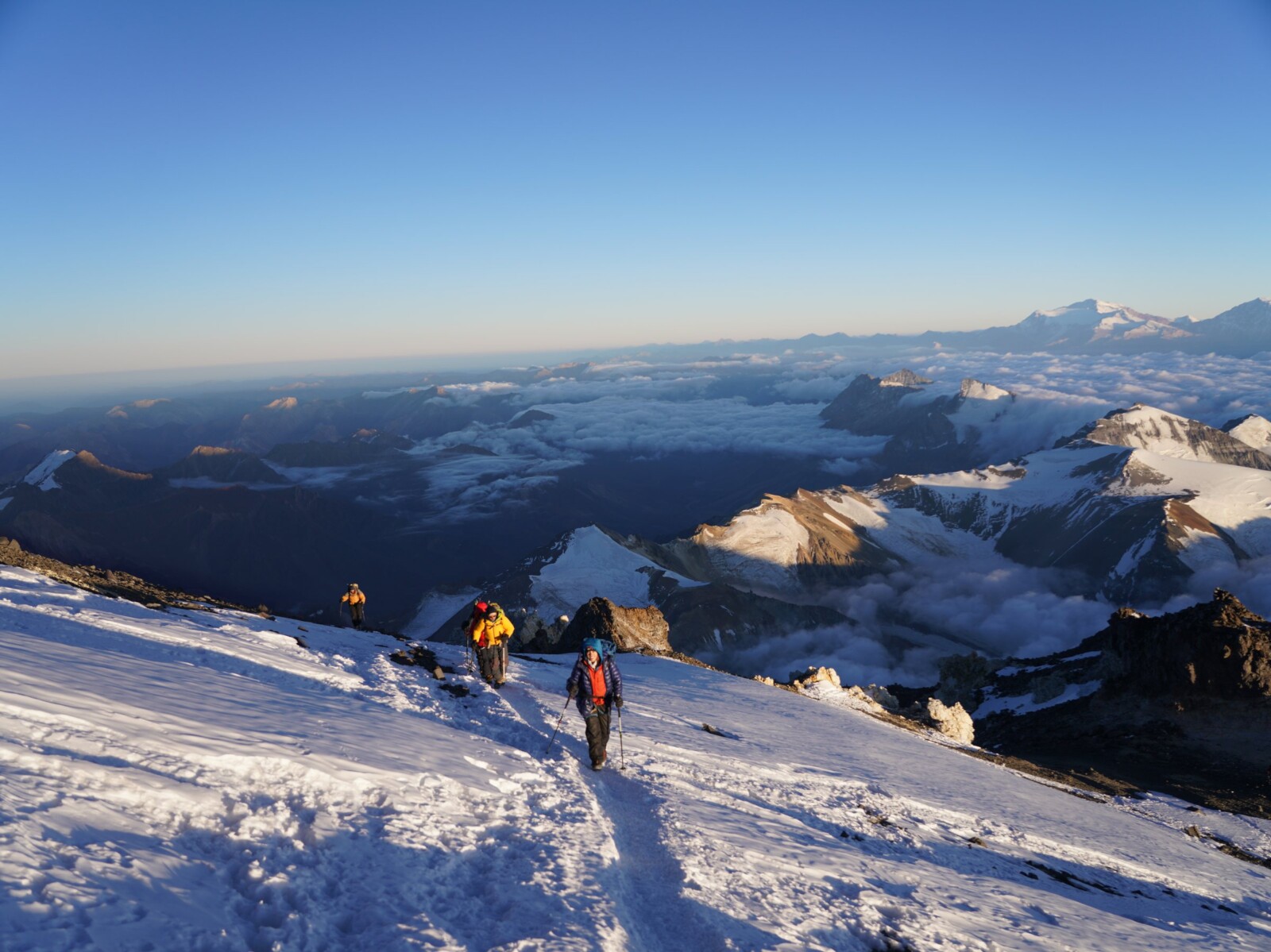
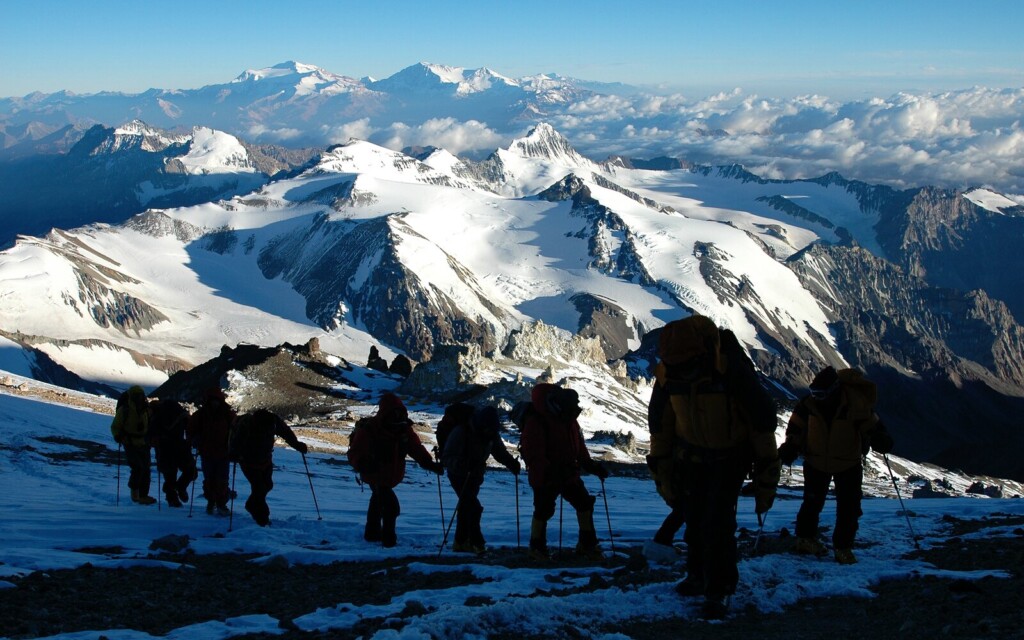
Climbers moving in a line high on Aconcagua, Argentina

The Experience We Are Looking For

Previous high-altitude climbing experience is required. We typically look for previous time above 18,000 ft / 5,500 m, and we review every application individually, because a number on its own has never told us much. What we are looking for is three things:

  • Real time at high altitude. You have climbed high before and you know how your body behaves up there — not in theory, but from experience.
  • The ability to sustain long days. Multi-day expedition living, early starts, real loads, and the discipline to get up and do it again the next morning.
  • The right attitude. Coachable, honest about how you are feeling, and steady when a plan changes.

Climbs that build that background include Kilimanjaro, Elbrus, Pico de Orizaba, Chimborazo, Mont Blanc, Island Peak, Mera Peak, high Andean objectives, and Alaska objectives. There are many others. If you have been high, moved well, and enjoyed the work, tell us what you have done and we will give you a straight answer about whether this is the right next step.

What matters more than any single summit is the pattern: that you have been tested at altitude, and that it went well.

If your altitude history includes an evacuation, an unexplained collapse in performance, or a case of AMS you never got a clear answer about, tell us. That does not automatically rule you out. Concealing it does.

What a Compressed Schedule Actually Demands

The Normal Route on Aconcagua is not technical. There is no roped climbing and no glacier travel; crampons and an ice axe may be required depending on season and snow conditions. What the mountain demands is sustained output at altitude, day after day, in serious cold and some of the strongest wind in the Andes.

The 14-day schedule removes the slack. There are no spare days to absorb a slow start, and no rest week to recover a body that arrived undertrained. Summit day is roughly 3,200 ft of gain beginning above 19,500 ft, finishing up the Canaleta — loose, steep, and slow.

Train for consecutive hard days, not single efforts: long weighted hill days, back-to-back big weekends, and a real aerobic base underneath it. Arrive with reserve. Altitude takes a share of everything you bring.

The Hypoxic Protocol Is a Condition, Not a Perk

Every climber on this program receives a Hypoxico system at home, with a written protocol built around this objective and your own history. Four weeks of consistent use before departure is the standard.

Completing it is a condition of joining the expedition. Not a recommendation, not a bonus feature — the fourteen-day structure is built on the assumption that the work was done. A climber who uses the system inconsistently and then stands at 6,900 metres on a compressed schedule is worse off than a climber on a traditional itinerary, not better off. The efficiency is borrowed against the preparation. If the preparation is not there, there is nothing to borrow against.

So the protocol is reviewed. Your compliance and your response to it are assessed before departure by your guide team together with the founders, and by our doctor where your history warrants it. If it has not been met, we will tell you — and depending on where you stand, that may mean a longer itinerary, a different objective, or a later departure.

You Will Not Be Preparing Alone

The preparation phase on this expedition is run personally by Willie or Damian Benegas. From acceptance onward, one of them works directly with you on training, protocol and how you are responding to it.

That is worth knowing when you assess whether you are ready, because readiness here is not a test you sit alone and pass or fail. It is something built over months with people who have been on this mountain more than a hundred times between them. If you are close but not there yet, the honest move is usually to start the conversation early rather than wait until you feel qualified.

This applies to your preparation, not to your departure — who guides you on the mountain is confirmed in your written trip terms.

Who Does Well Here

On a team of four, individual character shows immediately. The climbers who do well on this program:

  • Pace by their own physiology rather than by whoever is in front
  • Report symptoms early and accurately, including when it is inconvenient
  • Are experienced enough to have opinions and secure enough to be coached
  • Handle a weather day, a schedule change, or a turnaround without drama
  • Understand that four people means there is nowhere for a bad attitude to hide

When the Normal Route Is the Better Choice

Choose the 19-day expedition if you have not climbed at high altitude before, if you are unsure how you respond to it, if you cannot commit fully to the pre-departure protocol, or if what you actually want is unhurried time in the range.

That last one deserves saying plainly: a shorter itinerary buys time at home by giving up time on the mountain. For a lot of climbers that is the wrong trade. Neither program outranks the other — they are built for different people, and there is no ladder you are supposed to be climbing.

Not There Yet?

If high-altitude experience is the gap, the useful next steps are altitude and expedition mileage: Pico de Orizaba, our Ecuador Mountaineering School for technical skills, or Ojos del Salado. Any of those puts a real high-altitude expedition behind you, and all of them make the eventual Aconcagua stronger.

We would rather help you choose the right mountain this year than sell you the wrong one.

Your Questions

Can I do Aconcagua Express without prior Andes experience? Prior high-altitude experience is required, but it does not have to be in the Andes specifically. Kilimanjaro, Elbrus, Orizaba, and comparable peaks build the same background.

What if my hypoxic protocol compliance is borderline? We would rather have that conversation early. Depending on how far off you are, the outcome may be a longer itinerary, a later departure, or a different objective — not an automatic cancellation.

Is this program more dangerous than the 19-day Normal Route? Not if the preparation is real. The risk on any compressed schedule comes from skipping the preparation, which is exactly why it is enforced rather than offered here.

Next

The Climb · Day by Day

Before You Go

The climbers who arrive in Mendoza relaxed are the ones who handled the paperwork — and the hypoxic protocol — months ago, not weeks. This page puts everything in order: what to do when, and where to find the details. Handle it early, and your energy in the final weeks goes into training, not logistics.

Your Preparation Guides

Aconcagua Express at a Glance

Duration14 days, Mendoza to Mendoza
Team sizeMaximum 4 climbers, 2 guides
Elevation22,841 ft / 6,962 m
DifficultyNon-technical high-altitude enduranceCrampons and an ice axe may be required depending on season and snow conditions
Guide certificationBuilt and managed to IFMGA standardsGuides certified by IFMGA, AMGA, and the Argentine Association of Mountain Guides
Pre-acclimatization requirementA four-week home hypoxic protocol, enforced, reviewed before departure
Staging objectiveCerro Santa Elena, 15,075 ft / 4,595 m, above Aconcagua’s own base camp elevation
Helicopter accessIncluded both directions between Horcones and Plaza de Mulas, subject to weather and park authorization
Rescue & evacuation insuranceRequired on this expedition
ConnectivityStarlink included at Plaza de Mulas base camp
SeasonDecember through February
Aconcagua's south face from the approach valley, Argentina

Your Preparation Timeline

When You Book — Submit your Trip Application & Medical History Form, liability waiver, emergency contacts and passport copy. Your Hypoxico system ships to your home shortly after.

3–5 Months Before — Start your four-week hypoxic protocol on the schedule your guide team builds around your history. Purchase rescue and medical evacuation insurance. Book flights to Mendoza once your departure is confirmed.

6–8 Weeks Before — Confirm entry requirements for your nationality. Send BBE your flight itinerary and insurance certificate. Begin the gear review with your guide team if you haven’t already.

The Final 2 Weeks — Complete your hypoxic protocol review with your guide team and the founders. Do a full pack-out against the gear list. Taper training. Confirm the cash you’ll carry for the permit and tips.

Arrival Day — A member of the BBE team meets you at Mendoza airport. That evening the team gathers for orientation, the first gear check, and a welcome dinner — and your guides will want to hear how the protocol went.

Still Deciding?

If you’re not yet sure whether the 14-day format is the right fit, Is This For Me? walks through exactly who this program is built for, and when our 19-day Normal Route is the better choice.

Questions While You Prepare?

Preparation questions are exactly what we are here for — the protocol, gear choices, insurance fine print, flight timing. Ask early; small questions are easiest to solve months out.

Ask a guide

Your Expedition Checklist

International mountain travel requires proper documentation, emergency planning and appropriate insurance in place before you leave home. This section covers everything to complete, carry and confirm before the expedition begins.

Your Paperwork at a Glance

Everything BBE needs from you, in the order you’ll do it. Tick items off as you go; your ticks are saved on this device. The details for each item are below.

Step 1At booking, in the registration formDone together with your deposit

Step 2Buy, then send to BBEEmail climbing@benegasbrothers.com

Step 3Arrange and carryNeeded on the trip

Passport

Your passport must be valid for at least six months beyond your expedition return date. Check the expiration date now — renewing a passport can take six to eight weeks through standard processing.

Argentina requires a valid passport for entry. No visa is required for US, Canadian, EU, UK, or Australian citizens for tourism stays under 90 days.

Argentina Entry

No advance visa is required for most nationalities. On arrival you’ll receive a tourist entry stamp valid for 90 days — keep it, you’ll need it at the Aconcagua Provincial Park permit office in Mendoza.

If your nationality does require a visa for Argentina, apply well in advance and contact us if you have questions about your specific situation.

Personal climbing and camping equipment can be brought into Argentina duty-free as part of your luggage. Do not attempt to bring food products, fresh fruit, or plant material across the border — Argentine customs enforces agricultural restrictions strictly.

The Aconcagua Climbing Permit

The Aconcagua Provincial Park climbing permit is required for every climber and is not included in the expedition fee. BBE handles the paperwork and coordination — you do not apply independently. Bring the fee in US dollar cash. At the start of the expedition in Mendoza, we go with you to an exchange house to change it into Argentine pesos, then buy the permit together.

Plan on about $1,200 USD per climber. Mendoza sets each season’s rate (2025–26: $1,170 through an authorized provider), and your pre-departure packet confirms your exact amount and payment instructions.

Permits are issued per person and are non-transferable. Bring your passport to the permit office — it’s required for processing.

Health & Vaccinations

No vaccinations are required for entry into Argentina. Routine vaccinations (tetanus, hepatitis A) are recommended if not current — see a physician or travel medicine clinic at least six weeks before departure. There is no malaria risk in Mendoza or the Aconcagua region.

Your Hypoxico System

Your Hypoxico system ships to your home address before departure. Keep a record of the delivery and the equipment serial number. The unit should be returned in good condition after the expedition — return shipping instructions come with your pre-departure packet.

What to Bring to the Permit Office

On Day 1 you’ll need: your valid passport (original, not a copy), USD cash for the permit fee (we change it into pesos together at an exchange house first), proof of rescue and evacuation insurance, and your BBE expedition confirmation documentation. Have these organized and accessible — not buried in a checked bag.

Your Questions

Is rescue and evacuation insurance really required, or just recommended? Required, without exception, for every climber on this expedition.

How far in advance should I buy my insurance? As soon as your departure is confirmed. It’s one of the first things on your preparation timeline, alongside starting your hypoxic protocol.

Do I need a visa for Argentina? Most nationalities — including US, Canadian, EU, UK, and Australian citizens — do not need a visa for tourism stays under 90 days. If your nationality does, apply well in advance.

Next

Before You Go · Flights & Getting to Mendoza

Trip Insurance & Evacuation Coverage

Two kinds of cover apply to this expedition. One is required. One is strongly recommended.

Required by BBERescue and evacuation coverage

Required on every BBE international expedition. It pays to get you off the mountain and to proper medical care. The coverage it must include for this trip is listed below.

Strongly recommendedTrip insurance

Protects the money you’ve spent if illness, a family emergency or a travel disruption stops or cuts short your trip.

Rescue & Evacuation Insurance — Required on This Expedition

All participants must have emergency medical coverage and mountain rescue/evacuation coverage appropriate to the expedition’s altitude, location and activities. Coverage may be obtained from a provider of your choice, provided the policy meets the expedition’s requirements. Global Rescue and Ripcord are options to consider, but participants must verify the specific coverage, exclusions and eligibility directly with their provider. Trip cancellation and interruption insurance is strongly recommended to help protect your financial investment.

Arrange your coverage before departure and carry your policy details on the mountain.

Trip Insurance

Comprehensive trip insurance is strongly recommended: cancellation and interruption, travel delay and missed connections, emergency medical expenses abroad, and baggage loss or delay. Confirm in writing that your policy covers the altitude and activities involved — many standard policies exclude mountaineering above a certain elevation.

Ask a guide · Back to Before You Go · climbing@benegasbrothers.com

Flights & Getting to Mendoza

Your expedition starts the moment you book your flights. Get the logistics right from home and the rest of the trip runs smoothly. This section covers how to get to Mendoza, what to know about the flights, and how to time your arrival.

Getting to Mendoza

The gateway city for Aconcagua Express is Mendoza, Argentina. The expedition begins and ends here.

Most international travelers fly into Buenos Aires (Ezeiza International Airport — EZE) and connect to Mendoza (Governor Francisco Gabrielli International Airport — MDZ). The Buenos Aires–Mendoza connection is a short domestic flight, typically 1.5 to 2 hours. Several airlines operate this route daily, including Aerolíneas Argentinas, LATAM, and Flybondi.

Direct international flights to Mendoza exist from select cities in Chile and Brazil, with seasonal connections from other South American hubs. Check routing options from your home city — flying through Santiago, Chile (SCL) is sometimes faster or more direct than routing through Buenos Aires.

Flight Booking Guidance

Book flights early. December through February is peak season in Mendoza — availability tightens significantly as the season approaches.

Arrive Day 1 by early afternoon. The expedition officially starts with a team dinner on Day 1 evening. Aim to land in Mendoza no later than 3:00–4:00 PM local time, with buffer built in for the Buenos Aires connection — domestic flights in Argentina experience delays.

Departure Day 14. The program ends at the Mendoza airport. Book your outbound flight for the afternoon or evening of Day 14. An early-morning departure does not allow enough margin.

Add a buffer day if you can. Arriving one day early gives you a cushion for flight delays, lost baggage, and last-minute gear needs.

Buenos Aires Layover

If you have a layover in Buenos Aires, note that Ezeiza (EZE) handles international flights and Aeroparque (AEP / Jorge Newbery) handles most domestic connections. They are separate airports on opposite sides of the city — allow at least 3–4 hours between your international arrival and your domestic departure to account for immigration, baggage claim, transfer, and check-in.

Do not cut this connection tight. Missing your Mendoza flight on Day 1 creates real problems for the expedition schedule.

Mendoza Airport Arrival

BBE provides airport pickup on Day 1. Your pre-departure packet will include the transfer time and meeting point. If your flight is delayed, contact us immediately.

If you arrive early (Day 0), arrange your own transfer to the hotel. Uber and registered taxis operate at MDZ airport. The drive to central Mendoza takes approximately 30–40 minutes.

Luggage & Gear

Your expedition duffel will be substantial — technical clothing, sleeping system, and personal gear for 14 days on a high mountain. Plan for one large checked bag plus a carry-on.

Budget time and attention for overweight and oversize bag fees on both international and domestic legs. Argentine domestic carriers enforce size and weight limits strictly. Pack smart — heavy items in checked bags, valuables and essentials in your carry-on.

Before You Fly

  • Confirm your passport is valid for six-plus months past your return date
  • Check baggage allowances on every leg of your routing
  • Download offline maps for Mendoza and Buenos Aires
  • Notify your bank and credit cards of international travel in Argentina
  • Carry USD cash — useful at the permit office and throughout the country
  • Share your complete itinerary and emergency contacts with someone at home
  • Have your insurance and rescue coverage details accessible at all times

Your Questions

How early should I book my flights? As soon as your departure is confirmed — December through February is Mendoza’s peak season and availability tightens as the date gets closer.

What happens if my flight is delayed on Day 1? Contact us immediately. BBE’s airport pickup is coordinated around your confirmed itinerary, and we can adjust if we know early.

Should I book my return flight for the evening of Day 14? Yes — book the afternoon or evening of Day 14, not an early-morning departure. That gives enough margin for the final transfer from Mendoza.

Next

Before You Go · Permits, Visas & Required Insurance · Where You Sleep: Hotels, Camps & Refuges

Where You'll Stay

The accommodations on this expedition are straightforward — Mendoza on either end, Las Cuevas for pre-acclimatization, and expedition tents on the mountain. This section covers what to expect at each stage.

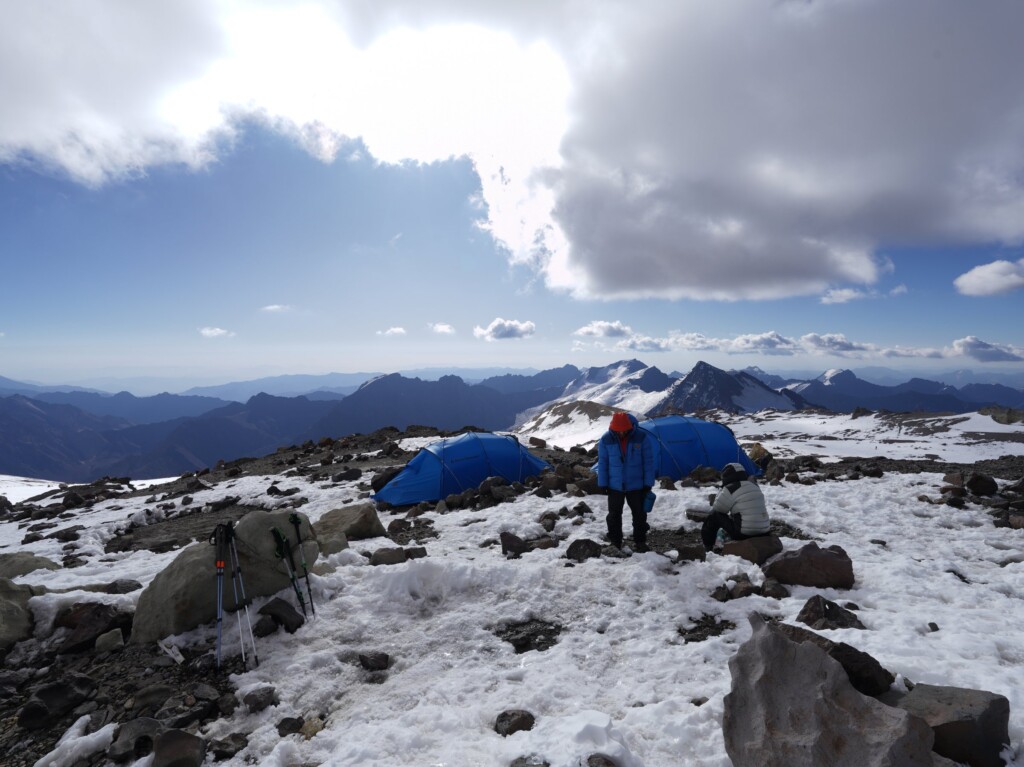
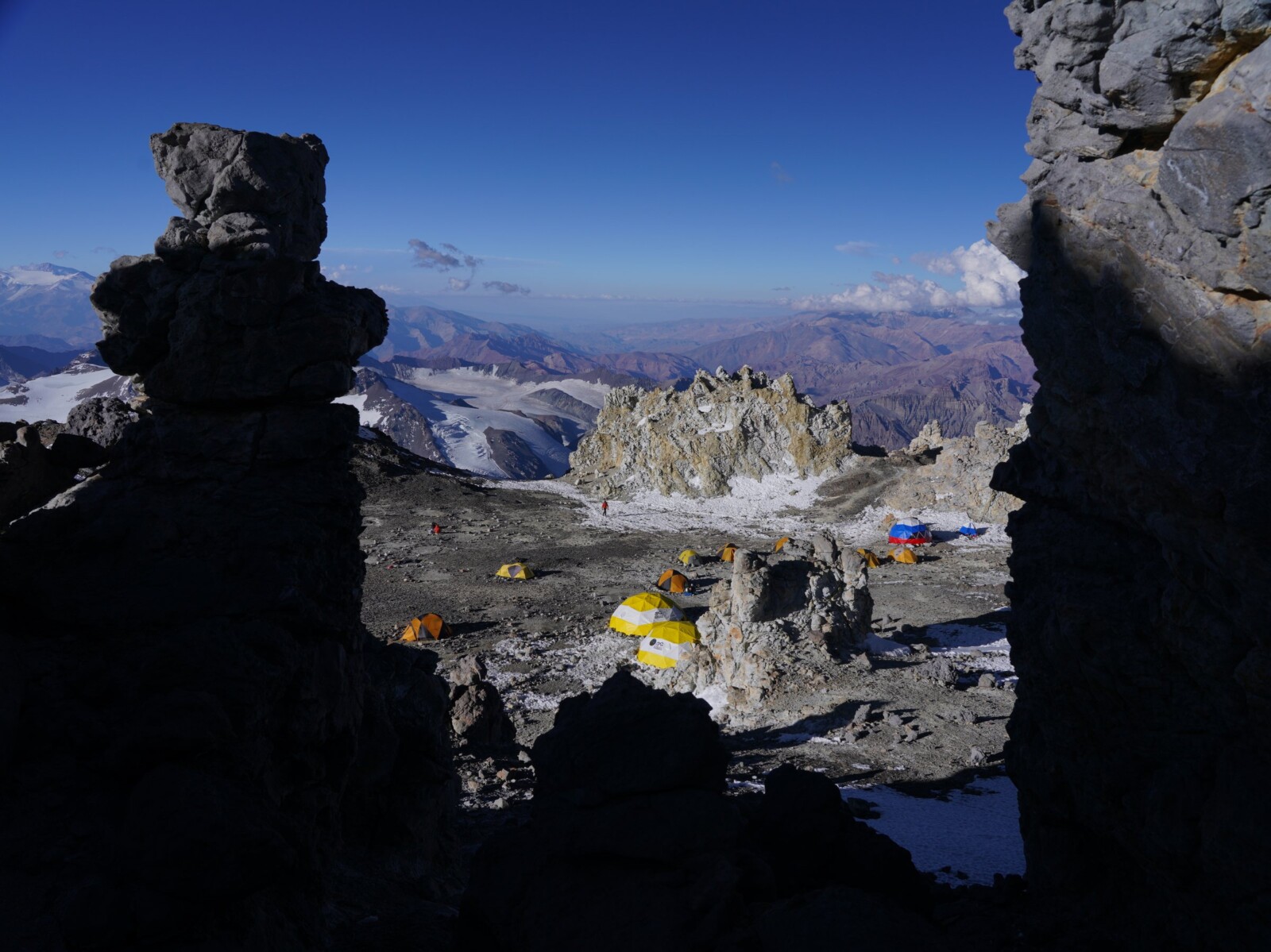
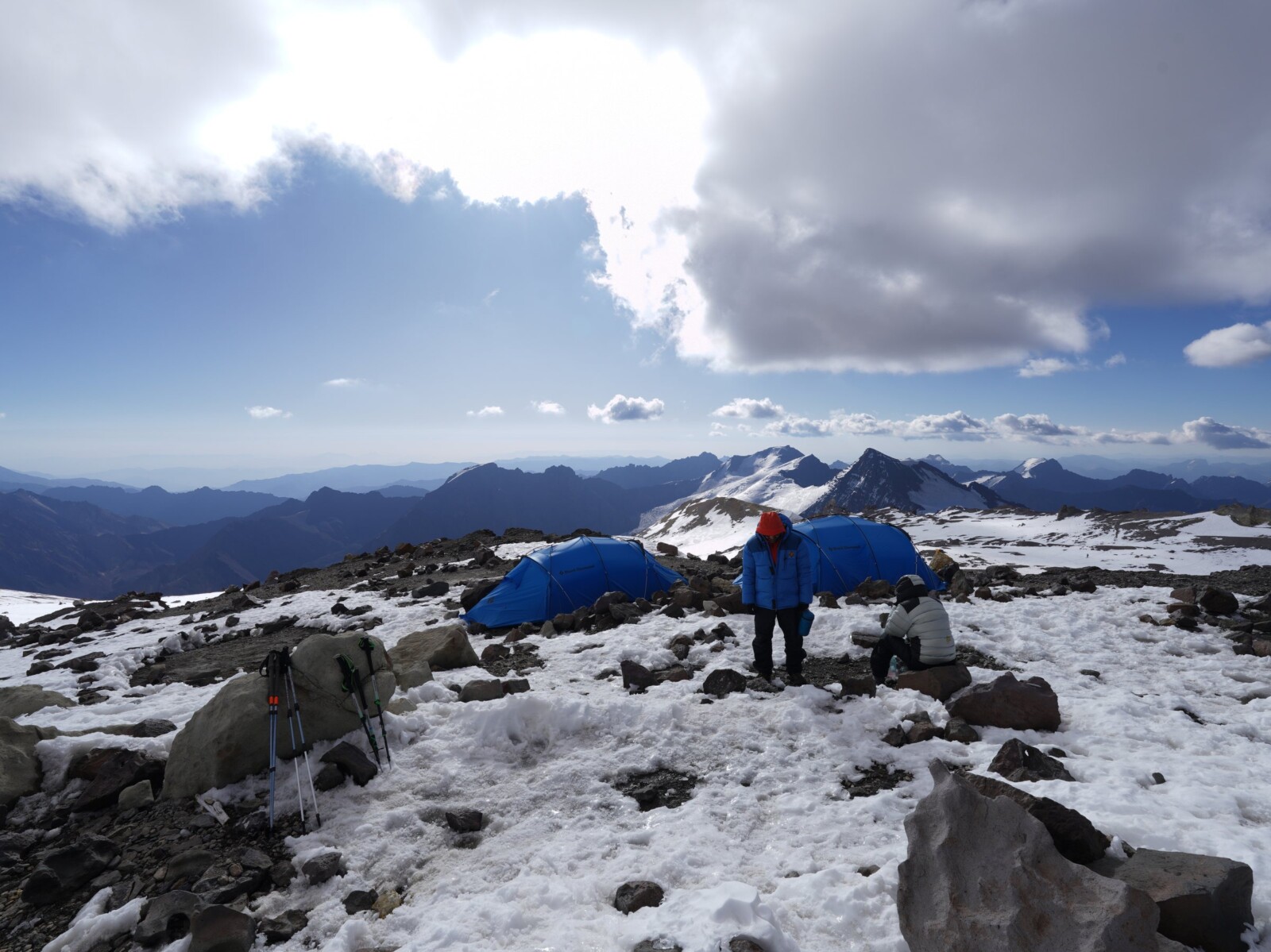
Expedition tents at camp on Aconcagua

Mendoza — Arrival (Day 1)

The expedition begins with one night in Mendoza before driving to Las Cuevas the following morning. BBE books the Park Hyatt Mendoza: private rooms, reliable Wi-Fi, and easy access to restaurants and gear shops.

Mendoza is a comfortable, walkable city with excellent food and wine. Day 1 is your last night in a real bed for two weeks — enjoy it. The team dinner is hosted here.

If you arrive early (Day 0), BBE can assist with hotel recommendations in the same area. Any extra nights before the official program start are at your own expense.

Las Cuevas — Pre-Acclimatization (Days 2–3)

Days 2 and 3 are spent at the Portezuelo del Viento refuge in Las Cuevas, on the Argentina–Chile border at 10,500 ft / 3,200 m. This is a mountain refuge — basic, functional, and well-suited to the purpose. Expect shared or semi-private rooms, hot meals, and heating. It is not a hotel, and it is not meant to be.

Two nights here — combined with your Hypoxico pre-acclimatization — puts the team in a significantly better position before the helicopter sets you down at base camp.

On the Mountain (Days 4–12)

From Day 4 onward, the team lives in expedition tents at each camp. BBE provides all group camping equipment — tents, cooking systems, and base camp infrastructure. Personal sleeping systems (bag and pad) are the climber’s responsibility.

Plaza de Mulas Base Camp (14,300 ft / 4,350 m) is a full expedition base camp with on-site services: a staffed kitchen, shower facilities, Wi-Fi access, and a small camp store. It is not comfortable by any standard other than a mountain one, but it is well-run and functional.

Higher camps — Camp Canadá, Nido de Cóndores, Camp Cólera — are expedition tent camps only. No services, no shelter beyond what the team carries. Conditions at Nido and Cólera can be severe. Gear selection matters.

Mendoza — Return (Day 13)

After the helicopter out on Day 13, the team returns to Mendoza for one night. The team stays at the Park Hyatt Mendoza again. This is the celebration night: shower, clean clothes, a proper meal, and cold wine.

If you need an extra night before your departure flight, BBE can assist with arrangements. Extra nights are at your own expense.

Your Questions

Do I need my own sleeping bag and pad on the mountain? Yes — BBE provides all group camping equipment (tents, cooking systems, base camp infrastructure), but your personal sleeping system is your own gear.

Is there Wi-Fi on the mountain? At Plaza de Mulas base camp, yes, along with Starlink. Above that, there are no services — expect to be offline until you’re back down.

Are extra hotel nights in Mendoza included? No. Extra nights before Day 1 or after Day 13 are arranged on request but are at your own expense.

Next

Before You Go · Flights & Getting to Mendoza · Aconcagua Express Gear List

Life on the Mountain

“Take care of the mountain, and the mountain will take care of you.” It is the Benegas Brothers’ motto, and the rule we climb by.

Fourteen days on a high mountain is a serious physical and mental undertaking. Knowing what to expect day to day — how the camps run, how you eat, how you sleep, how you manage your body — is part of arriving prepared. This is what daily life actually looks like on Aconcagua Express.

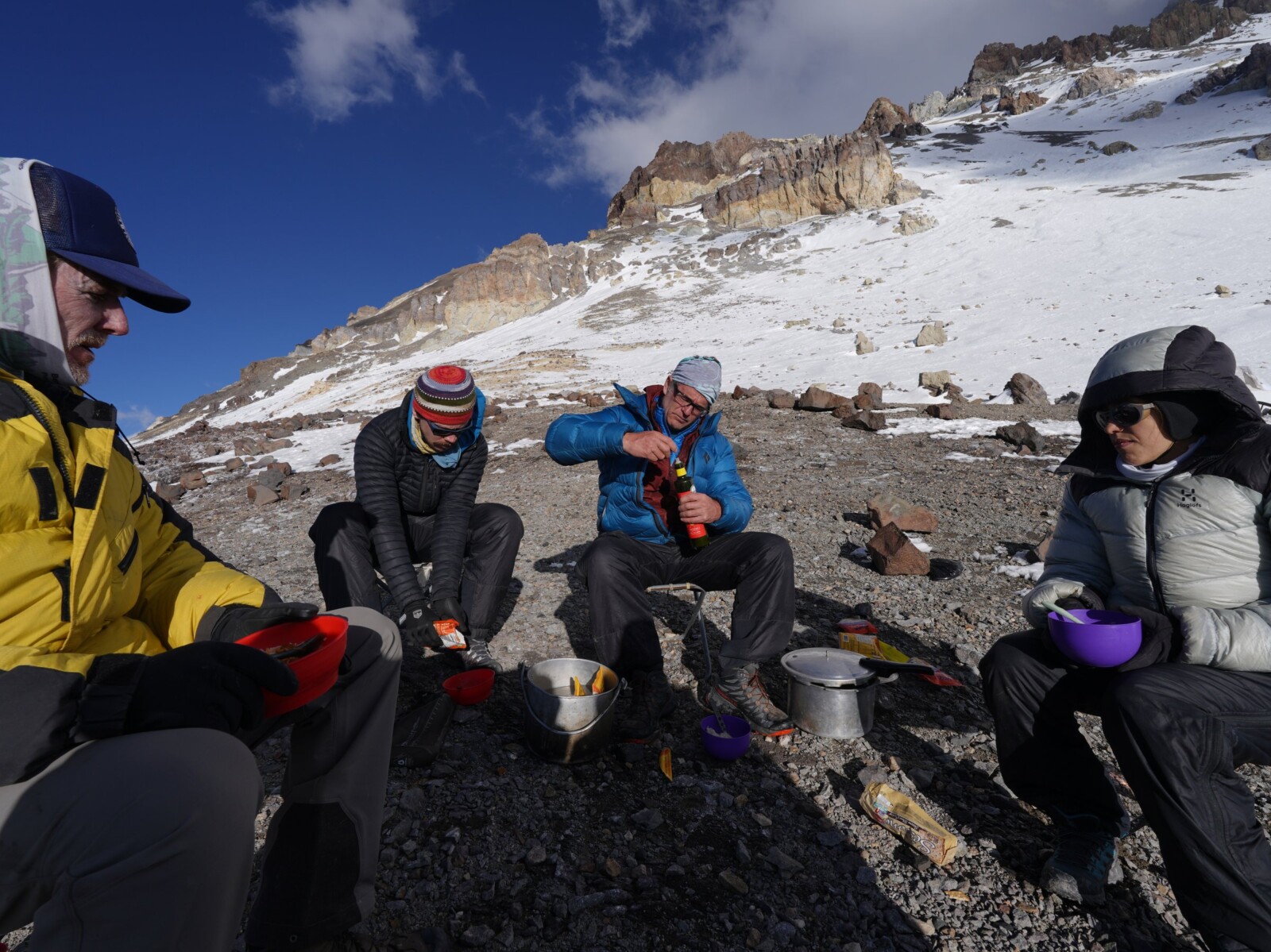
Climbers resting with hot drinks at camp on Aconcagua

The Rhythm of the Expedition

Aconcagua Express runs on a tight, purposeful schedule. Every day has a specific objective — acclimatization hikes, carries, camp moves, or summit pushes. There is very little idle time above base camp. This is by design.

Days start early. Summit day begins at 3:00–4:00 AM. Carry days and move-up days typically begin between 6:00 and 8:00 AM depending on conditions. The guide team sets the pace and the schedule. Your job is to be ready when it’s time to move.

Food & Water

All meals are provided from Day 1 dinner through departure from the mountain. The base camp kitchen at Plaza de Mulas produces real, hot meals — soups, stews, pasta, rice, protein, and fresh produce early in the stay. Quality is good by expedition standards.

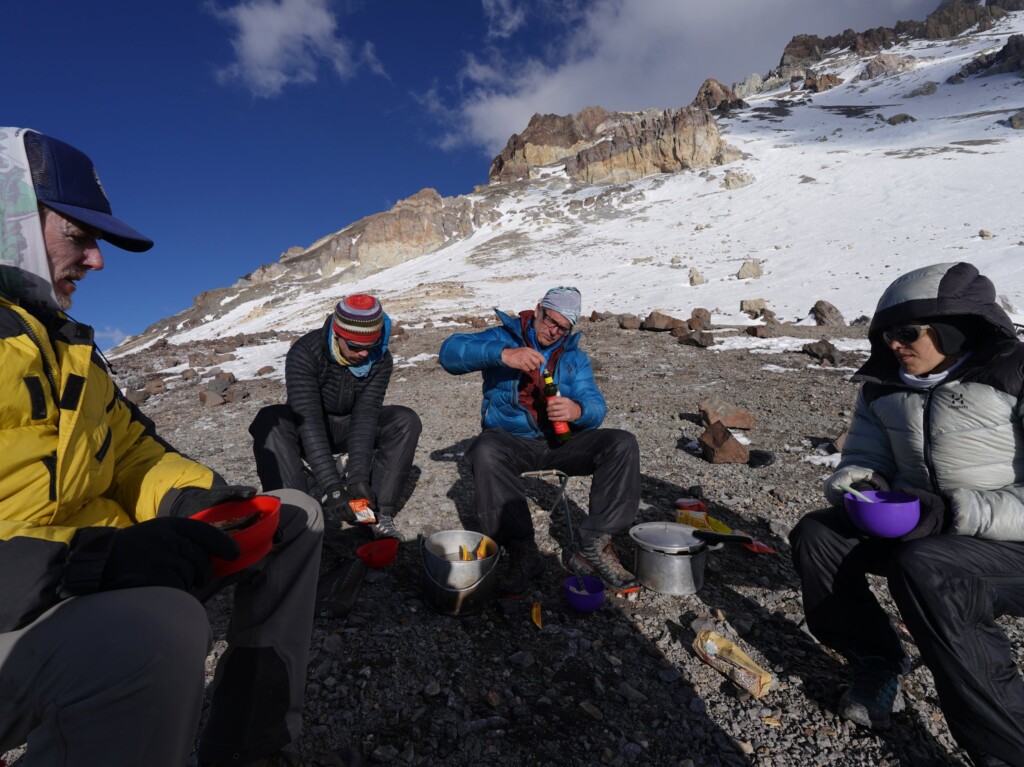
At higher camps, meals are simpler — hot food cooked on expedition stoves in the tent vestibule. The guide team manages cooking. Caloric intake is critical above 18,000 ft, even when appetite disappears. Eat even when you don’t feel like it.

Water is melted from snow at high camps and treated. Hydration at altitude is non-negotiable — minimum 4–5 liters per day. Your urine color is your best hydration indicator: if it isn’t clear, drink more.

Personal snacks for carry days and summit day are your responsibility. Stock up in Mendoza: energy bars, gels, nuts, dried fruit, and anything you can eat with gloves on at -20°F.

Sleep & Rest

Sleep quality at altitude deteriorates as you go higher. Expect lighter, less restorative sleep above 15,000 ft. This is normal. The Hypoxico pre-acclimatization you did at home will have improved your physiological baseline — but it doesn’t eliminate the challenge of sleeping above 18,000 ft.

At high camps — Nido de Cóndores and Camp Cólera — nights are cold, loud with wind, and uncomfortable by any normal standard. A properly rated sleeping bag and insulated pad are essential. Earplugs help. A pee bottle is non-negotiable — leaving the tent at -20°F at 3:00 AM is not a reasonable option.

Rest when you can. Even lying still at altitude is productive recovery.

Hygiene & Sanitation

Shower access is available at Plaza de Mulas Base Camp for a small on-site fee, paid locally in cash. Above base camp, there are no showers. Wet wipes, dry shampoo, and hand sanitizer keep things manageable — bring more than you think you need.

Toilets at base camp are basic but functional. Above base camp, waste management follows Leave No Trace protocols — guides will brief the team on proper procedures at each camp.

Dental hygiene matters more at altitude than most people realize. Brush your teeth every day regardless of conditions — illness at altitude is harder to recover from than at sea level.

Managing Your Body at Altitude

Watch yourself closely. The guide team is watching too, but you know your body better than anyone. Key things to monitor:

Headache is normal during acclimatization and doesn’t automatically mean a problem. A persistent headache that keeps getting worse, even with good hydration, is a signal to report to your guide immediately.

Nausea and loss of appetite are common above 15,000 ft. Eat anyway. Force fluids. If nausea is severe or persistent, tell the guide team.

Sleep disruption and Cheyne-Stokes breathing (irregular breathing during sleep) is common at altitude and not dangerous. If a tentmate is concerned about your breathing, it’s almost certainly normal acclimatization.

Fatigue at altitude is expected. Extreme fatigue disproportionate to the effort — especially combined with headache or confusion — is not normal. Report it.

When in doubt, tell a guide. No judgment. The guide team has seen everything on this mountain. Communicating early keeps small problems from becoming serious ones.

The Small-Team Difference

At a maximum of four climbers, Aconcagua Express runs differently from any larger expedition. There’s no averaging, no waiting on a slower group member, no guide attention split ten ways. Decisions are made fast. The team moves as a unit.

The flip side: on a team of four, everyone’s attitude matters. Good days and bad days are shared closely. The climbers who do best on small expeditions are the ones who communicate honestly, support their teammates, and manage their own psychology without leaning on others for emotional labor.

Connectivity & Communication

Starlink internet is included at Plaza de Mulas Base Camp, giving a limited but real connection — enough to message home and for the guide team to pull current weather data. Above base camp, connectivity is very limited. The guide team carries a satellite communication device for emergencies. Personal satellite communicators (Garmin inReach, SPOT) are recommended if you want to stay in regular contact with people at home.

Set expectations before you leave. Fourteen days with limited communication is part of the experience.

Mendoza — Before and After

Day 1 and Day 13 nights in Mendoza are part of the program. Mendoza has excellent restaurants, wine bars, and a walkable city center. The celebration dinner on Day 13 is one of the best parts of any expedition — use it.

Your Questions

Will I have any connectivity on the mountain? At Plaza de Mulas base camp, yes — Starlink is included. Above base camp, expect to be mostly offline; a personal satellite communicator is a good option if staying in touch matters to you.

What happens if I feel sick at altitude? Tell your guide immediately. Some symptoms — mild headache, disrupted sleep, low appetite — are normal parts of acclimatization. Persistent or worsening symptoms are taken seriously and reviewed in real time.

How does the small team affect the day-to-day experience? With a maximum of four climbers, decisions move fast and attention isn’t split. It also means your attitude affects the group — the best experiences come from climbers who communicate honestly and manage their own ups and downs.

Next

Before You Go · Aconcagua Express Gear List · Cash, Extra Costs & Tipping

Aconcagua Express Gear List

Your equipment is not a detail — it is a core part of your safety system. At nearly 23,000 feet, gear failure is not inconvenient. It is dangerous. Every item on the list exists for a reason, and every climber is expected to arrive with the right equipment, in good condition, ready to perform.

Official gear list — PDF attached. A complete, itemized gear list with quantities for every category is included as a separate PDF with your expedition documents. Review it carefully and plan your purchases and rentals well in advance — not the week before departure.

What’s on the List

Your gear list covers every category required for the expedition: layered clothing systems, down parka and high-altitude insulation, double boots, gloves and mitts, sleeping bag and pads, backpack and expedition duffels, crampons, trekking poles, ice axe, eye protection, personal medical items, and more.

Each item has been selected based on years of guiding on Aconcagua. The list reflects what actually performs at altitude on this specific mountain — not a generic gear catalog. Follow it closely. Substitutions that seem reasonable at sea level often fall short above 18,000 feet.

Why Gear Matters on Aconcagua

The Normal Route does not require extreme technical equipment in standard conditions — but the altitude, wind, and cold demand gear that performs. Aconcagua is dry, exposed, and can be brutally cold. Conditions shift quickly. A weak layering system, inadequate gloves, or ill-fitting boots can move from uncomfortable to genuinely dangerous above 19,000 feet.

This is not a mountain where you improvise on gear. Arriving under-equipped creates problems the guide team cannot solve once you are on the mountain. Every climber is responsible for their own kit — properly selected, tested, and packed.

The right gear makes the climb safer, more efficient, and more enjoyable. It also protects the team, because a climber who is cold, wet, or in pain affects pace and decision-making for everyone.

Gear Review & Preparation

Before departure, inspect and test all of your equipment at home. Boots should be fully broken in — not new out of the box. All layers should fit correctly over each other. Your summit pack should be loaded and adjusted before you arrive in Argentina.

Once in Mendoza, guides will conduct a gear review with each climber during the Day 1 team meeting. This is a real check, not a formality. If there are gaps, Mendoza is your last opportunity to address them through rental or purchase before the expedition moves to the mountains.

Unneeded travel clothing and luggage can typically be stored at the hotel in Mendoza during the expedition. Pack a separate bag for city items you won’t take on the mountain.

Rental Equipment — Mendoza

We work with trusted local providers in Mendoza for rental equipment. Rentals are a practical option for high-cost items, items you don’t already own, or specialized gear you don’t want to purchase for a single expedition.

Available rental items include:

  • Double boots — high-altitude, crampon-compatible
  • Sleeping bags — expedition-rated
  • Crampons
  • Ice axe
  • Trekking poles
  • Insulated clothing — limited availability

Rental requests must be submitted at least three weeks before the expedition start date. Do not wait until you arrive in Mendoza to arrange rentals. Popular sizes book out early in the season. Contact us directly and we will coordinate availability with our local partners.

Questions About Gear?

We are glad to help you build the right system — whether you are purchasing new equipment, reviewing what you already own, or deciding what to rent. We know this mountain and we know what works. A quick conversation before you buy can save you from expensive mistakes and help you arrive genuinely prepared.

Your Questions

Do I need to buy everything, or can I rent? Both are options. High-cost or specialized items — double boots, sleeping bags, crampons, ice axe — are commonly rented through our Mendoza partners. Rental requests need at least three weeks’ notice.

What if a piece of my gear fails the Day 1 review? Mendoza is your last chance to fix it through rental or purchase before the team moves to the mountains. That’s exactly why the review happens there, before you’re on the mountain.

How much does the down parka and high-altitude insulation actually need to handle? Aconcagua’s upper mountain runs brutally cold and windy even in good weather — the layering system on the gear list is built for genuinely severe conditions, not a mild winter day. Follow the list closely rather than substituting based on sea-level experience.

Next

Before You Go · Where You Sleep: Hotels, Camps & Refuges · A Day on the Mountain

What to Budget For

Aconcagua Express is a small-team, high-attention expedition. Every core component — home hypoxic pre-acclimatization, helicopter access, a four-climber maximum, IFMGA guide leadership — is built in. This page gives you the full picture of what’s included, what isn’t, and what to plan for beyond the expedition fee. For current pricing, see Dates and Prices.

Cash to carry$1,600–2,000

For the park permit, gratuities, base-camp extras and personal spending.

Park permitabout $1,200

Paid in cash. Mendoza sets each season’s rate.

Full porter service+$915–1,150

Optional, on top of your cash budget.

Your Budget at a Glance

RequiredCosts every climber pays
  • Aconcagua climbing permitCash; Mendoza sets each season’s rateabout $1,200
  • Emergency medical and rescue/evacuation coverageProvider of your choicevaries by provider
  • GratuitiesPer climber, shared across the team$280–450
Personal spending
  • Base camp extrasShowers, internet, camp store$50–150
  • Personal snacksBought in Mendoza$50–100
OptionalOnly if you add them
  • Full porter serviceOn top of your cash budget$915–1,150

Tips: How They Work

Total per climberAbout $280–450

Tipping is always optional, and the right amount depends on the service you received and your own budget. As a guideline, about $280–450 per climber in total, shared among the guide team, the base camp kitchen and support staff at Plaza de Mulas, porters and muleteers. Give the guide team’s share to the lead guide; the whole team shares it.

Contingency

Plan on about $1,600 to $2,000 USD in cash beyond the expedition fee. That covers the permit, gratuities, base camp extras and personal spending. Add about $915–1,150 if you plan to use full porter service.

Bring a mix of USD cash and a Visa or Mastercard. Cash is required for the permit and preferred on the mountain. No banking services are available above Mendoza.

More cost details for this trip

What’s Included

Hypoxico pre-acclimatization systemIncluded

A Hypoxico altitude tent system delivered to your home before departure, yours to use for the four weeks leading up to the expedition, then returned. This is the foundation of the compressed timeline.

Helicopter access, in and outIncluded

Round-trip helicopter transfers between Horcones and Plaza de Mulas Base Camp (Day 4 in, Day 13 out), subject to weather and park authorization.

Pre-trip supportIncluded

Expedition preparation guidance, hypoxic protocol coaching, equipment consultation, and training recommendations from the guide team and the founders before departure.

Logistics & transportationIncluded

Airport pickup in Mendoza, all ground transportation throughout Argentina, and all transfers between Mendoza, Las Cuevas, and the helicopter staging point.

AccommodationsIncluded

Hotel nights at the Park Hyatt Mendoza per itinerary, the Las Cuevas refuge stay (Days 2–3), and all expedition camp accommodations on the mountain.

MealsIncluded

All meals from Day 1 dinner through departure from the mountain, including full base camp kitchen service at Plaza de Mulas.

Expedition operationsIncluded

Professional guide leadership (IFMGA, AMGA or equivalent national certification), mule transport of group equipment to base camp, group technical equipment, group camp systems, satellite communication, Starlink at base camp, and a comprehensive group medical kit.

Permit coordinationIncluded

BBE coordinates all Aconcagua Provincial Park permit paperwork. The permit fee itself is paid separately — see below.

What’s Not Included

  • International airfare
  • Aconcagua climbing permit fee (about $1,200 USD; bring it in US dollar cash, changed into pesos in Mendoza; Mendoza sets each season’s rate)
  • Excess baggage fees
  • Personal gear and clothing
  • Equipment rentals
  • Rescue and medical evacuation insurance — required on this expedition, see below
  • Trip cancellation / travel insurance (strongly recommended)
  • Guide and staff gratuities
  • Personal porter services (optional, available through BBE)
  • Base camp extras: showers, beverages
  • Personal snacks and summit-day fuel
  • Meals in Mendoza not listed in the published itinerary
  • Costs resulting from delays or circumstances beyond the expedition’s control

Rescue & Evacuation Insurance — Required on This Expedition

All participants must have emergency medical coverage and mountain rescue/evacuation coverage appropriate to the expedition’s altitude, location and activities. Coverage may be obtained from a provider of your choice, provided the policy meets the expedition’s requirements. Global Rescue and Ripcord are options to consider, but participants must verify the specific coverage, exclusions and eligibility directly with their provider. Trip cancellation and interruption insurance is strongly recommended to help protect your financial investment.

Do not arrive without it. Helicopter evacuation from the mountain runs into the thousands of dollars depending on group size and circumstances. A medical emergency at altitude without evacuation coverage becomes a financial crisis layered on top of a physical one.

What to Budget Beyond the Expedition Fee

  • Climbing permit — about $1,200
  • Emergency medical and rescue/evacuation coverage — varies by provider
  • Trip cancellation / travel insurance — approximately $300–$600
  • Gratuities — about $280–450 in total
  • Personal porter, optional — about $160–450 per carry, or about $915–1,150 for full service
  • Personal snacks & summit fuel — approximately $75–$125
  • Base camp extras (showers, incidentals) — approximately $50–$150
  • Personal expenses buffer — approximately $500–$1,000

Bring a mix of USD cash and a credit or debit card (Visa or Mastercard). Cash is required for the permit and preferred on the mountain. No banking services are available above Mendoza. Argentina’s exchange rate situation can shift — we’ll provide current guidance in your pre-departure packet.

A Note on Value

This is a significant investment, and it’s worth understanding what it buys. It covers a Hypoxico system delivered to your home, two helicopter flights, a four-person maximum team, certified guides (IFMGA, AMGA or equivalent national certification) with long experience on this specific mountain, and a program structure built on more than thirty years of knowing exactly how Aconcagua works.

You are not paying for luxury. You are paying for precision — a compressed timeline built on genuine preparation, not shortcuts, run by guides who know when to push and when to turn around. No one can promise you a summit. What this program is built to give you is the best-prepared shot at one, in the shortest operationally sound timeline available.

Next

The Climb · Before You Go

Cash, Extra Costs & Tipping

Beyond the expedition fee, plan for a range of personal costs in Argentina. This section keeps it simple — for the full cost breakdown including insurance, permit, and total budget planning, see What to Budget For.

Park Permit — Not Included

The Aconcagua climbing permit is not included in the expedition price. BBE handles all paperwork — you bring the fee in US dollar cash, and on Day 1 in Mendoza we go with you to an exchange house to change it into Argentine pesos, then buy the permit together.

Plan on about $1,200 USD. Mendoza sets each season’s rate (2025–26: $1,170 through an authorized provider), and your pre-departure packet confirms your exact amount.

Porter Support — Optional

Porters carry personal loads between camps and are hired locally through the guide team. On Aconcagua Express, guide attention is high and loads are managed carefully — but porter support remains an option if you want to reduce your carry weight on demanding days.

Rates per carry, up to 20 kg (charged as a full load):

Plaza de Mulas to Camp CanadáAbout $160
Camp Canadá to Nido de CóndoresAbout $220
Nido de Cóndores to CóleraAbout $320
Cólera down to Plaza de MulasAbout $450

Full porter service across the climb runs about $915–1,150, depending on the provider. Rates are set by local porters, vary by camp, load and season, and are confirmed before departure. Guides will give you an honest recommendation based on how the expedition is going.

Base Camp Extras

Plaza de Mulas has on-site services available during the base camp phase. Budget $50 to $150 depending on usage.

  • Showers — approximately $5 to $10 USD per use
  • Beer, wine, soda, and snack items — available at the camp store

Personal Snacks

Expedition meals are included throughout the climb, but personal snacks for carry days and summit day are your responsibility. Stock up in Mendoza. Budget $50 to $100 for a full supply of energy bars, gels, nuts, and personal favorites.

Your Questions

Is the climbing permit included in the expedition price? No — it’s paid separately. Bring it in US dollar cash; on Day 1 in Mendoza we go with you to an exchange house to change it into Argentine pesos, then buy the permit together. Plan on about $1,200 USD; Mendoza sets each season’s rate (2025–26: $1,170 through an authorized provider), and your pre-departure packet confirms your exact amount.

Is tipping mandatory? No, it’s optional but standard practice in the guiding industry. The figures on this section are a starting point based on our small-team model, not a requirement.

How much cash should I actually carry? about $1,600–2,000 USD beyond the expedition fee, covering the permit, tips, base camp extras and personal spending — plus about $915–1,150 more if you plan to use full porter service.

Next

Before You Go · A Day on the Mountain · Private & Custom Expeditions

Private & Custom Expeditions

Aconcagua Express already runs as a small, high-attention program — maximum four climbers, helicopter access, home hypoxic pre-acclimatization, IFMGA guide leadership. Private departures take that further: your schedule, your team, your objective.

What a Private Aconcagua Express Expedition Means

A private departure means the entire program runs exclusively for you — no shared team, no compromises on schedule or pace, no adjusting to unfamiliar teammates. The guide team works for your group from Day 1 in Mendoza through the descent.

Aconcagua Express is already one of the most personal expedition formats available on Aconcagua. A private departure is the highest level above that.

Who Private Expeditions Are For

Couples and small groups. Two to four climbers who want to do Aconcagua Express together, on their own terms. You set the dynamic. The guide team adapts to you.

Climbers with specific objectives. If you want to modify the acclimatization schedule or extend the timeline, a private departure gives us the flexibility to design around your goals.

Anyone who needs a specific date. Private expeditions run when you need to go, within the December–February season window and subject to permit availability. See Dates and Prices for currently scheduled departures.

Founder-Supported Preparation

On Aconcagua Express, preparation support from Willie or Damian Benegas is a standing part of the program — private or scheduled departure alike. From acceptance through departure, one of them works directly with you on your training and your hypoxic protocol.

This commitment applies to your preparation. Who guides your team on the mountain — for a private departure or otherwise — is confirmed in your written trip terms and never assumed.

What Can Be Customized

Departure dates, timeline length, acclimatization schedule, and guide assignments are all on the table. We have been running expeditions in the Andes since 1992 and know what is possible, what is smart, and what will actually improve your odds of standing on the summit.

Tell us what you’re trying to accomplish. We will design the program.

How to Start

Contact us directly. Private Aconcagua Express expeditions require advance planning — permit allocation, guide scheduling, helicopter coordination, and Hypoxico system logistics all need lead time. The earlier you reach out, the more options we can offer.

We respond to every inquiry personally. Tell us your dates, your team, and your goals, and we will take it from there.

Your Questions

Can I book Willie or Damian to guide my private expedition? Who guides on the mountain is confirmed in your written trip terms, never assumed in advance. What is a standing commitment on Aconcagua Express is founder-supported preparation before you go — that applies whether or not your departure is private.

When do private departures run? Within the December–February Aconcagua season, subject to permit availability. See Dates and Prices for currently scheduled departures, or contact us to discuss a specific window.

Can I customize the acclimatization schedule on a private departure? Yes — timeline length and acclimatization schedule are among the things we can adjust for a private group. Tell us what you’re trying to accomplish and we’ll design around it.

Next

Before You Go · Cash, Extra Costs & Tipping

Dates & Prices

Aconcagua Express runs December through February, the Aconcagua summer season, when conditions on the mountain are most stable. Departures are limited to a maximum of four climbers per team.

Expedition price$18,500

USD per person.

Deposit to book20%

Of the expedition price. Includes a $350 non-refundable booking fee.

Balance120 days

Due 120 days before departure. Inside 120 days, you pay in full at booking.

2026–27 Expedition Dates

Departure 1 — December 19, 2026 – January 1, 2027.

Status: open.

Departure 2 — January 29 – February 11, 2027.

Status: open.

All departures account for full in-country logistics, transfers, Las Cuevas pre-acclimatization, helicopter access in and out, acclimatization rotations, two summit windows, and return to Mendoza. A place is confirmed only after BBE has accepted the client’s application and received the required deposit.

2027–28 Expedition Dates

Departure 1 — December 18 – 31, 2027.

Status: planned.

Departure 2 — January 28 – February 10, 2028.

Status: planned.

A note on the December departure. The December team is on the mountain over Christmas and New Year. Many climbers choose it deliberately, because the holiday period is when the time off exists. If that matters to the people at home, tell them early. Above base camp, connectivity is limited to the guide team’s satellite communications.

Expedition Cost

$18,500 USD per person — Aconcagua Express

Based on double occupancy in Mendoza where applicable. Single supplement available — contact us for current pricing.

Why the Investment

Aconcagua Express is built differently from a standard Normal Route climb, and the price reflects real structural cost, not a markup for the same trip. Six things drive it, and above all of them is how well we know this mountain:

Our knowledge of AconcaguaSince 1989

Damian and Willie first summited Aconcagua together in the 1988–89 season, and between them they have stood on top more than 100 times. Willie was the first person to attempt Horcones–summit–Horcones, and the 360, in a single push. That knowledge is what tells us where to place four climbers, at what elevation and for how long, and it is what makes fourteen days work.

Four climbers, two guides2:1, the whole way

The team is capped at four climbers with two guides. Attention is never split, decisions move fast, and the pace is built around four experienced people, not averaged down for a crowd.

Prepared by Willie and DamianFrom acceptance to departure

Willie and Damian Benegas personally guide your preparation: your training, your hypoxic protocol and how you are responding to it, before you ever fly.

Acclimatization at home4-week protocol

A Hypoxico system delivered to your home and a founder-supervised four-week protocol before you ever fly.

Staging on Cerro Santa Elena15,075 ft

Real-altitude staging above Aconcagua’s own base camp elevation, a stage a tent alone can’t replicate.

Two helicopter flightsIn and out

Cuts four to six days of approach and exit without cutting the acclimatization those days would have given you.

You are not paying more for the same climb, faster. You are paying for a different, more resource-intensive way of getting a well-prepared, experienced climber to the same summit in a compressed window.

What’s Included — and What Isn’t

Included in the price

  • Hypoxico pre-acclimatization system, delivered to your home before departure
  • Helicopter access, in and out, between Horcones and Plaza de Mulas Base Camp
  • Pre-trip support: preparation guidance, hypoxic protocol coaching, equipment consultation, and training recommendations from the guide team and the founders
  • Logistics & transportation: airport pickup in Mendoza, all ground transportation, and all transfers to and from the helicopter staging point
  • Accommodations: hotel nights at the Park Hyatt Mendoza per itinerary, the Las Cuevas refuge stay (Days 2–3), and all expedition camp accommodations on the mountain
  • Meals: all meals from Day 1 dinner through departure from the mountain, including full base camp kitchen service
  • Expedition operations: Certified guide leadership (IFMGA, AMGA or equivalent national certification), mule transport of group equipment, group technical equipment, group camp systems, satellite communication, Starlink at base camp, and a comprehensive group medical kit
  • Permit coordination — BBE handles the paperwork; the permit fee itself is paid separately

Not included

  • International airfare
  • Aconcagua climbing permit fee (about $1,200 USD; bring it in US dollar cash, changed into pesos in Mendoza; Mendoza sets each season’s rate)
  • Excess baggage fees
  • Personal gear and clothing; equipment rentals
  • Rescue and medical evacuation insurance — required on this expedition, see below
  • Trip cancellation / travel insurance (strongly recommended)
  • Guide and staff gratuities
  • Personal porter services (optional, available through BBE)
  • Base camp extras: showers, incidentals
  • Personal snacks and summit-day fuel
  • Meals in Mendoza not listed in the published itinerary
  • Costs resulting from delays or circumstances beyond the expedition’s control

Your Total Trip Cost

The expedition price is the biggest number, not the only one. Typical ranges per climber, in U.S. dollars:

Expedition price$18,500
Cash beyond the price (permit, tips, extras, personal)$1,600–2,000
Emergency medical and rescue/evacuation coverage (required)varies by provider
Typical total, before flights, gear and insuranceabout $20,100–20,500

Not included in that total: international flights, personal gear, emergency medical and rescue/evacuation coverage, trip insurance and optional porter service. The full breakdown is on What to Budget For.

Payment & Cancellation

Deposit: $3,700 (20% of the trip price), due at booking. $350 of it is a nonrefundable booking fee.

Balance: $14,800, due 120 days before the start date. Booking within 120 days? Full payment is due at booking.

How to pay: bank transfer/ACH (no fee), wire transfer (you pay the bank fees) or credit card (3% surcharge). All prices are in U.S. dollars.

If you cancel:

  • 121 days or more before the start date: full refund, less the $350 booking fee
  • 90 to 120 days: 50% refund, after the $350 booking fee
  • 89 days or fewer: no refund

Can’t make it? Send a qualified climber in your place at no BBE fee.

Insurance: medical and rescue/evacuation coverage required. Trip cancellation insurance strongly recommended.

Once the trip begins, payments are nonrefundable.

Read the full Payment & Cancellation Policy →

Insurance

All participants must have emergency medical coverage and mountain rescue/evacuation coverage appropriate to the expedition’s altitude, location and activities. Coverage may be obtained from a provider of your choice, provided the policy meets the expedition’s requirements. Global Rescue and Ripcord are options to consider, but participants must verify the specific coverage, exclusions and eligibility directly with their provider. Trip cancellation and interruption insurance is strongly recommended to help protect your financial investment. See What to Budget For for full insurance guidance.

Private Expeditions

One-on-one guiding. Your guide’s full attention from Day 1 to summit day — suited to climbers with a specific performance objective or a larger peak in mind.

Private group departures. Two, three, or four climbers — we run the expedition exclusively for you. Same structure, same standards, your schedule.

Founder-supported, on your terms. Who guides your team on the mountain is confirmed in your written trip terms, never assumed. What’s a standing commitment on every Aconcagua Express departure, private or scheduled, is founder-led preparation — Willie or Damian works directly with you on your training and protocol before you fly. See Private & Custom Expeditions for more.

Next

The Climb · Before You Go

Questions About Pricing, Dates, or Availability?

Book this trip

Your Questions

The questions we hear most from climbers considering Aconcagua Express. Straight answers.

Yes. The 14-day timeline is built around the assumption that pre-acclimatization work has been done at home. Climbers who skip it aren’t starting at zero — they’re starting behind the program. Your Hypoxico system is delivered to your door before departure. Use it consistently for four weeks and you’ll feel the difference when the helicopter sets you down at 14,300 ft.

Typically, previous time above 18,000 ft / 5,500 m on an expedition-style climb, and we review every application individually. You should have managed multi-day logistics, camp carries, and your own altitude response before. Peaks like Denali, Kilimanjaro, Elbrus, Mont Blanc, Island Peak, or Mera Peak are good benchmarks. If your highest point is 14,000 ft, our 19-day Normal Route is the better starting point.

No. The Normal Route is a non-technical high-altitude climb — no ropes, no glacier travel, no technical terrain. What it demands is sustained physical output at very high altitude over consecutive days. The Canaleta on summit day is steep, loose, and relentless, but it isn’t technical. You need fitness, acclimatization, and experience at altitude.

Long days with sustained elevation gain, weighted carries, and back-to-back efforts over multiple days. The Canaleta on summit day is roughly 3,200 ft of vertical gain starting above 19,500 ft. Cardiovascular base matters more than gym strength. If you can hike 8–10 hours with a loaded pack on consecutive days and recover well, you’re on the right track. Your guide team will give you a specific preparation framework at the time of booking.

The approach trek to Plaza de Mulas is two to three days each way on foot — physically taxing terrain before the real climbing even starts. On a 14-day program, those days matter. The helicopter gets the team to base camp fresh, with full energy reserves for the acclimatization work and carries ahead. It’s a strategic decision, not a comfort upgrade.

Days 10 and 11. The program is positioned at Camp Cólera by Day 9, with the first summit attempt on Day 10. If weather blocks Day 10, Day 11 is the backup. Having two genuine summit windows, with the team already in position, is one of the key structural advantages of this program.

Weather on Aconcagua is the variable no one controls. If both windows are blocked by genuinely dangerous conditions, the guide team makes the call to descend safely. This outcome is rare, but it happens on any mountain. It’s also why trip cancellation insurance is strongly recommended — it doesn’t change the mountain, but it protects your investment if circumstances force an early exit.

Shorter timeline (14 vs. 19 days), smaller team (4 vs. 6 climbers), helicopter access both ways, home hypoxic pre-acclimatization, and stricter experience requirements. Same mountain, same summit objective, same guide standards — a different structure built for a different climber profile.

Two guides for a maximum of four climbers — one guide for every two climbers. At that ratio, every climber gets a level of attention that isn’t possible on larger expeditions.

Who guides your team on the mountain is confirmed in your written trip terms, never assumed in advance — that’s true for scheduled and private departures alike. What is a standing commitment on Aconcagua Express is founder-led preparation: from acceptance through departure, Willie or Damian works directly with you on your training and your hypoxic protocol. Contact us to talk through what you’re looking for.

Contact us directly at climbing@benegasbrothers.com. Spots are limited to four per departure. A deposit secures your place — see Dates and Prices for current terms. We’ll confirm dates, discuss your climbing history, and review the hypoxic protocol with you before the deposit is collected.

Read next: Is This For Me? · Before You Go

We answer every inquiry personally. Ask a guide.

Fourteen days. The work starts at home.

A home hypoxic protocol, real altitude on Cerro Santa Elena before the park, helicopter access in and out, and two summit windows. Four climbers, two guides.

Price$18,500 per person
Private & Custom Your dates. Your team.

This trip can run privately, on the dates that work for you.

Scheduled departures
  • Saturday, Dec 19, 2026 - Friday, Jan 1, 2027Christmas and New Year on the mountain
  • Friday, Jan 29 - Thursday, Feb 11, 2027Open
  • Saturday, Dec 18 - Friday, Dec 31, 2027Planned
  • Friday, Jan 28 - Thursday, Feb 10, 2028Planned

Questions first? Ask a guide

Location:
Argentina
Group:
Maximum 4 climbers · 2 guides
Duration:
14 days
Skill:
Previous high-altitude experience required
Activities:
Expeditions
Pricing

All prices are in US dollars.

Fourteen days. The work starts at home.

A home hypoxic protocol, real altitude on Cerro Santa Elena before the park, helicopter access in and out, and two summit windows. Four climbers, two guides.

Book now

Private & Custom

Make Aconcagua Express your own expedition

Every trip we run can also run privately: on your dates, with your people, built around your goal. Same guides, same safety standard as our scheduled departures.

Your dates

We set the departure around your calendar, not the other way round.

Your people

Family, friends, a company team, or just you and a guide.

Your goal

Training for a bigger peak, a winter or speed attempt, a film, or a route that runs from summit to ocean.

Your price

Private trips are quoted for your group size, dates and plan.

Aconcagua Express

Scheduled Departure

Maximum 4 climbers · 2 guides · 14 days
Price per Person $18,500

Fourteen days, Mendoza to Mendoza: a home hypoxic system and protocol, real-altitude staging on Cerro Santa Elena, helicopter access in and out, all camps and meals on the mountain, and two summit windows. The climbing permit is paid separately.

Private & Custom

Your dates · Your team
Priced individually On request

Two, three or four climbers: the expedition run exclusively for you, with the same structure and standards, on your schedule.

The BBE Advantage

Small team of climbers hiking a trail above a glacier and turquoise lake on Aconcagua

Real Altitude Before the Park

The team climbs Cerro Santa Elena, 4,595 m, above Plaza de Mulas base camp, before entering the provincial park. Cold, dry air and real exertion, not a tent.

Blue expedition tents on snow at a high camp on Aconcagua with the Andes stretching to the horizon

Helicopter In and Out

A helicopter carries the team between Horcones and Plaza de Mulas, removing the two-to-three-day approach in each direction. You arrive at base camp with your energy intact.

Climbers cooking and eating together outside their tents at a high camp on Aconcagua

Four Climbers, Two Guides

A team calibrated to experienced climbers who have already done the work. You never disappear into the group.

Professional Mountain Standards

Our guide team includes internationally and nationally certified mountain professionals.

AMGA — American Mountain Guides Association logo
IFMGA / UIAGM — International Federation of Mountain Guides Associations logo
AAGM — Asociación Argentina de Guías de Montaña logo

Related Trips