US AdventuresRock Climbing in Utah USA Utah

Learn to Lead Outside

A full-day sport lead climbing course in the Wasatch

Full day Group: Maximum 4 climbers per guide $295 per person · full day

The Activity

Learn to Lead Outside · Wasatch, Utah

You climb outside. Someone else still leads the route.

That’s the honest position most outdoor climbers are in for a long time—comfortable on a top rope, competent on the ground, and dependent on whoever is willing to go up first and put the rope there.

DurationFull day
GroupMaximum 4 climbers per guide
Price$295 per person · full day
ExperienceComfortable top-roping outdoors
SeasonApril–October
WhereWasatch, Utah

What you pay

Full day · per person and total for your group

Group Per person Total
Scheduled course date $295 —
Private: 1 climber $500 $500
Private: 2 climbers $375 $750
Private: 3 climbers $325 $975
Private: 4 climbers $295 $1,180

On a scheduled date the price is $295 per person, even if the group ends up smaller than four. Inclusions and cancellation terms are in the Rates & Booking tab.

Leading is not clipping the rope into quickdraws. It’s managing a system while you climb: where the rope sits, when to clip and when to keep moving, what happens if you fall from here rather than three feet higher, and whether the belayer behind you is paying attention or standing too far back.

This is a full day learning that system, on real sport routes, with a professional guide who will catch the habits that get people hurt before they become habits.

We teach lead climbing on bolted sport routes. Not trad, not multi-pitch—one clear objective in one day, taught properly.

You will not leave an independent lead climber. One day doesn’t do that. You’ll leave understanding the system, having led routes with instruction, and knowing exactly what you need to practice before you lead without a guide standing there.
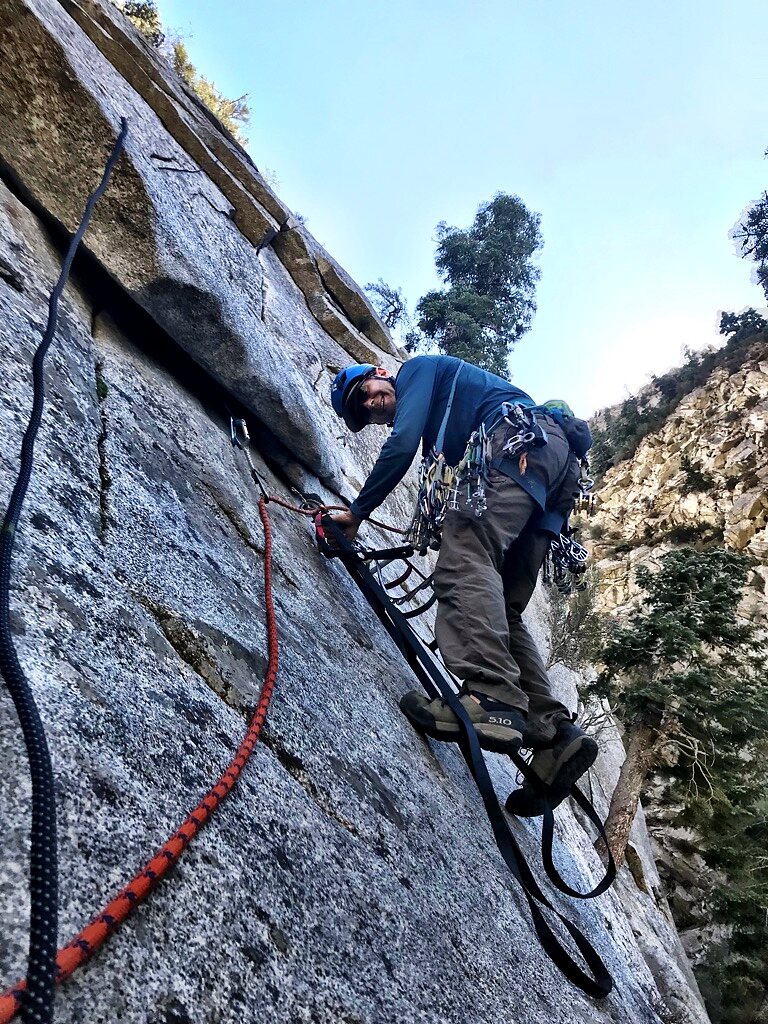
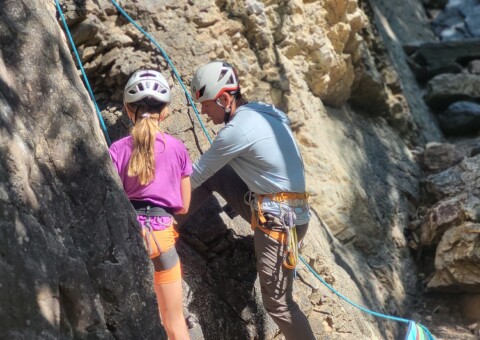
Climber leading a crack with quickdraws in the Wasatch, Utah

Why learn this from a guide

Learning to lead from friends works. It also transfers whatever bad habits your friends have, and neither of you will know which ones those are.

A guide watches your clipping position before you back-clip, sees where your leg is relative to the rope before you flip upside down, and can explain why a system is built that way. Mistakes get named on the day they happen instead of a year later, at the wrong moment.

What the day covers

  • The lead system, and what the climber and belayer each owe each other
  • Lead belaying—slack, brake hand, fall distance, dynamic catches, position
  • Clipping quickdraws properly, and how back-clipping and z-clipping happen
  • Falls and fall zones—rope stretch, ledges, ground-fall potential, when not to fall
  • Moving while leading: resting before clips, reading sequences, not lingering above gear
  • Choosing a route you should be on—grade, bolt spacing, anchors, descent
  • Fixed anchors, cleaning a sport route, and lowering
  • Running a climbing day yourself, not just climbing one

What it doesn’t cover

Trad leading and placing protection, multi-pitch systems, advanced anchor building, self-rescue, and alpine climbing. Each is its own course.

Where this fits

Before this: Learn to Rock Climb Outside, if you’re coming from the gym and outdoor systems are still new. Recommended, not required—equivalent outdoor experience is fine. Each scheduled Learn to Lead follows a Learn to Rock Climb Outside course by about four weeks.

After this: practice, mostly. Then Rock Climbing Mentorship for coaching across a season, or Full-Day Private Rock Climbing for a day on a bigger objective.

Operated and guided by Wasatch Mountain Guides (WMG). BBE is the referral and sales partner; reservations, payments and required forms are handled directly by WMG.

Questions before you book?

We answer every inquiry personally.
Ask a guide

The Day & Logistics

The course day

Your guide chooses the venue for its teaching terrain, not its reputation—somewhere with a spread of easy bolted routes close together, room at the base, and clean fall zones. That matters more than the crag being famous.

The day runs in this order for a reason. Each part is the foundation of the next.

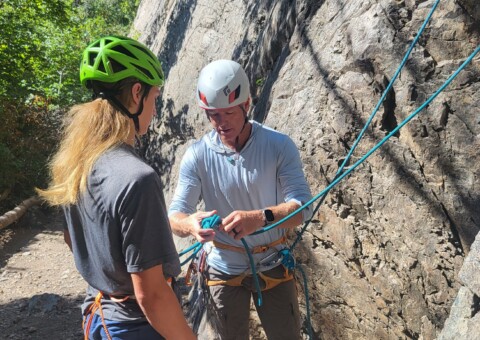
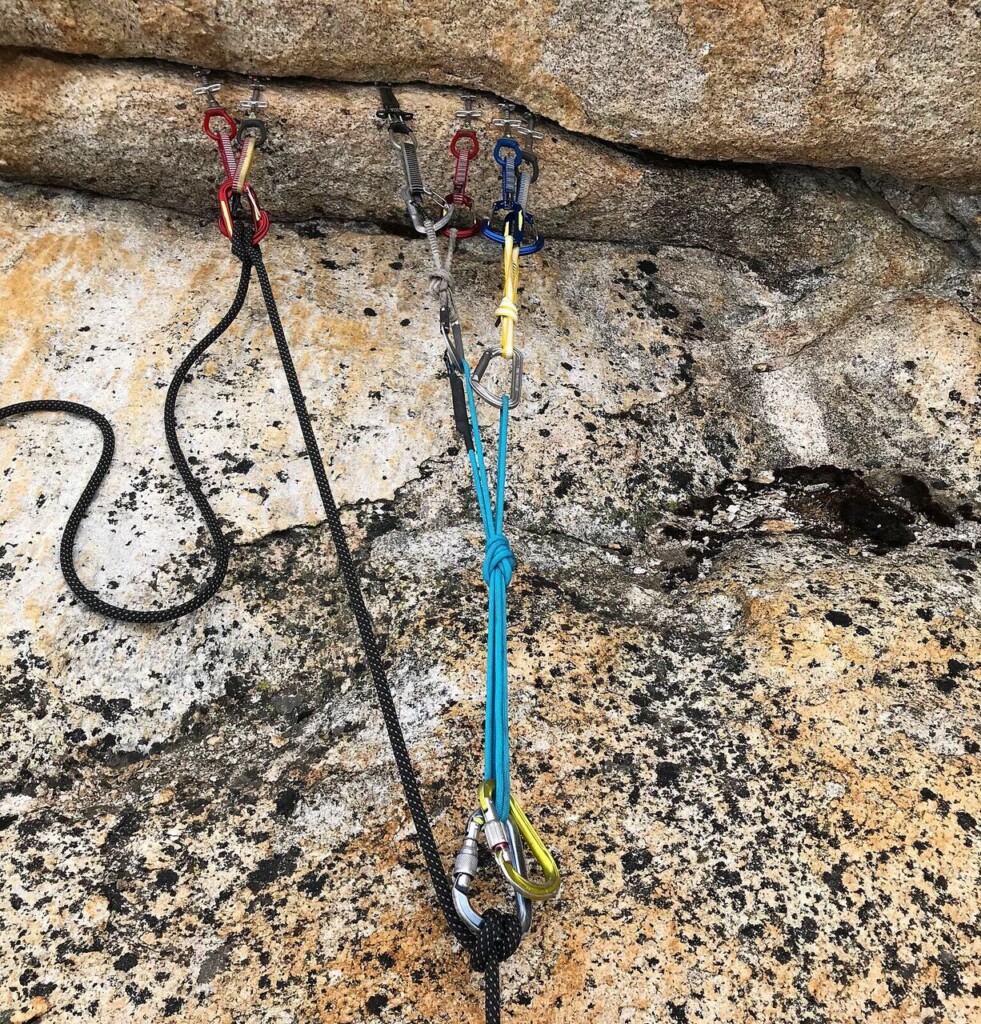
Climbing anchor and quickdraws on Wasatch rock, Utah

Ground school

What the lead system actually is, what the climber and the belayer are each responsible for, and how they communicate. You’ll look at a route from the ground the way a lead climber does—where the bolts go, where the hard section is, where you’d rest before a clip, and where a fall would or wouldn’t be fine.

Lead belaying

This comes before you lead anything, because a lead climber is only as safe as the person holding the rope.

You’ll belay a leader under supervision: feeding and taking rope, keeping the brake hand where it belongs, managing slack, standing in the right place, and giving a dynamic catch instead of a hard stop. You’ll see what fall distance actually looks like—it’s further than people expect.

Clipping, on the ground and then on a rope

Quickdraw orientation, clipping the bolt, clipping the rope, and the two mistakes that cause most of the damage: back-clipping and z-clipping. Then clipping from stable positions on easy ground.

Mock leads

Leading on a top rope. You climb with a second rope trailing and clip it as though you were leading, while the top rope keeps the consequence off the table.

It’s the single most useful drill in outdoor climbing, and where most of the day’s learning happens.

Your first leads

On routes well below your top-rope grade. The point is running the system yourself while someone qualified watches.

Anchors, cleaning, and lowering

Recognizing fixed anchors and reading the hardware, getting secure, threading or cleaning where appropriate, communicating with your belayer, and lowering. Cleaning mistakes are the ones that hurt experienced sport climbers, so we teach it slowly, with partner checks. Rappelling is added where the terrain and group suit it.

Running the day, not just the route

Choosing a climbing area, picking routes for your party, organizing gear at the base, sharing a crag with other climbers, watching the weather, and knowing when to change the plan.

The debrief

Your guide tells you plainly where you are—what you’re doing well, what needs practice, and what you should and shouldn’t do next without supervision.

The sequence above is the shape of the day, not a script. Your guide adjusts it to the group.

Where and when we meet

A Wasatch sport-climbing area, usually 20–40 minutes from downtown Salt Lake City. Your guide confirms the exact venue and start time the evening before. Salt Lake City International is roughly 35–45 minutes away.

Getting there

Transport isn’t included, and there’s no shuttle. Most clients drive. Canyon parking may require a fee and fills early on good weekends.

Weather

Lead climbing needs dry rock—you can’t teach clipping on a wet route. If conditions make a venue unsafe, your guide moves it. If nothing is climbable, we’ll talk with you before you drive up. Afternoon thunderstorms are common in Utah summers; expect an early start in high season.

Getting more from the day

  • Practice your belaying. The more automatic your top-rope belay, the faster we get to lead belaying.
  • Lead in the gym if you can. Clipping under mild pressure is a motor skill, and the gym is a cheap place to build it.
  • Watch the rope. On your next outdoor day, watch where the rope runs relative to the leader’s legs.

What to tell us before the day

  • Your climbing background—indoors and outdoors, whether you lead in the gym, your comfortable grades
  • Injuries, medical conditions, or medication your guide should know about
  • Whether falling worries you—very common on this course, and useful to know

Is This For Me?

Is this course for you?

This course is for you if

  • You’re comfortable top-rope climbing outside
  • You can tie in and belay competently without being reminded
  • You’ve been climbing outdoors with someone who leads, and you’d like to stop depending on them
  • You lead in the gym and want to understand what changes outside—because plenty does
  • You want professional instruction before you lead independently, rather than after something goes wrong

What you need to be able to do already

Figure-eight follow-through Tied without thinking about it
Belaying Competent on a top rope, brake hand where it belongs
Partner checks You already do them, out loud
Top-rope climbing outdoors Comfortable, not just willing
Rope handling Basic—flaking, stacking, keeping it out of the dirt
Communication The standard calls, used correctly

Learn to Rock Climb Outside is recommended but not required. If your outdoor days were all with a friend who set everything up while you climbed, take that course first.

Do I need to climb a certain grade?

No. You will lead well below your top-rope grade, because the day is about running the system. A climber who leads 5.7 with clean, calm clipping is in a better position than one who leads 5.10 badly.

Take something else first if

  • You climb in a gym and outdoor systems are still new. Learn to Rock Climb Outside.
  • You’ve never climbed at all. Half-Day or Full-Day Private Rock Climbing.
  • You lead sport comfortably and want trad or multi-pitch. Talk to us about Full-Day Private Rock Climbing or Rock Climbing Mentorship.
  • You want someone to take you up routes. Full-Day Private Rock Climbing.

I lead in the gym. Isn’t that the same?

No. Outside, the bolts are where someone else decided to put them—sometimes further apart than you’d like. Your belayer isn’t on a flat mat. There are ledges and rockfall. And a fall at the third clip has consequences a padded floor absorbs and a talus slope doesn’t. Gym lead experience helps. It isn’t a substitute for this day.

I’m nervous about lead falls

Sensible. The day introduces consequence gradually—mock leads first, easy ground, routes with clean fall zones—and your guide won’t push you onto something you’re not ready for.

Can I do this course with a partner?

Yes, and it works well. You’ll belay each other under supervision and leave with the same understanding of a system you’re about to trust each other with.

Age

The minimum age for rock climbing is 8, and anyone under 18 needs a parent or guardian to sign. This course suits adults and teenagers who already meet the prerequisites above.

Gear & Equipment

Gear and equipment

What we provide

  • Ropes
  • Quickdraws
  • Anchor material and hardware
  • All other technical group equipment

What you bring

Item Notes
Harness Yours, in good condition. Your guide will check it.
Helmet Required.
Climbing shoes A pair you can wear all day.
Belay device Bring your own, and tell us which one. See below.
Locking carabiner At least one of your own.
Chalk bag If you use one.

Don’t own some of it? Harness, helmet, and shoes can usually be arranged. Tell us what you need and your sizes when you book.

Why your own belay device matters

More than on any other day we run. You’re learning lead belaying—a motor skill, in your hands, under load—and you should learn it on the device you’ll actually use afterwards.

Assisted-braking devices and tubers behave differently when feeding slack quickly and when catching a lead fall. Tell us which device you own when you book. If you don’t own one yet, ask us before you buy.

Bring, regardless

  • Backpack, 25–35 liters
  • 2–3 liters of water. Utah is dry and higher than most people expect.
  • Lunch and snacks for a full day
  • Sun protection—hat, sunglasses, sunscreen
  • Approach or trail shoes for the walk in
  • A warm layer and a light shell. A shaded belay is cold even in July.
  • Athletic clothing you can move in
  • A card or cash for canyon parking

Thinking about buying quickdraws?

Don’t, not for this course. Quickdraws are ours for the day, and by the end of it you’ll know what you actually want. Ask your guide.

The gear you’ll want afterwards

To lead sport routes with a partner you’ll eventually want a rope, a set of quickdraws, and your own belay device and locking carabiners. That’s a real amount of money, and it’s why we tell you not to buy any of it before the day. Plenty of people lead for a season on a partner’s rack before buying anything.

Rates & Booking

Rates and booking

Scheduled courses

Date Price Group
Saturday, June 12, 2027 $295 per person 2–4 climbers
Saturday, August 14, 2027 $295 per person 2–4 climbers
Saturday, October 9, 2027 $295 per person 2–4 climbers

More dates may be added through the season. If none of these work, a private course runs on any date you choose.

Each course follows a Learn to Rock Climb Outside course by about four weeks—so if you’re coming from the gym, you can take both in the same season.

$295 per person is the price you pay. It doesn’t change if the group ends up smaller than four.

Scheduled courses need a minimum of two climbers. If a course doesn’t fill, WMG will contact you as early as possible, and you choose: move to a later date or take a credit, run the course anyway at a reduced private rate, or take a full refund.

Private course — your own date

Climbers Price per person
1 climber $500
2 climbers $375
3 climbers $325
4 climbers $295

Private courses run April through October, subject to guide availability and conditions. Useful if you and a partner want the systems taught to both of you at once.

Groups of five or more: we add a second guide and quote you directly.

What’s included — and what isn’t

Included

  • Professional WMG guide for the full day
  • Ropes, quickdraws, anchor material, and all group technical equipment
  • Venue and route selection, chosen for teaching
  • An honest assessment of what you should and shouldn’t do next

Not included

  • Personal climbing equipment (harness, helmet, shoes, belay device, locking carabiner)
  • Transportation and canyon parking
  • Food and water
  • Lodging, if you’re traveling
  • Personal insurance
  • Gratuities — customary; 15–25% is standard. Cash is always appreciated, and every WMG guide also accepts Venmo.

How to request a place

Send us:

  • The date you want, or that you’d like a private course
  • Number of climbers
  • Your climbing background, including whether you lead in the gym
  • Which belay device you own

We confirm your place and send you the registration link.

Registration and payment

Once your place is confirmed, we send you the Wasatch Mountain Guides registration and payment link.

Through that link you will:

  1. Complete your registration
  2. Complete the required acceptance-of-risk documents
  3. Submit payment

Start with us. We will send you the correct WMG link once your place is confirmed.

Payment and cancellation

Payment. Full payment is due when you register with Wasatch Mountain Guides — card, PayPal, check or wire.

If you cancel

If we cancel

Before the course, for weather, hazard or conditions: move to a later date, or take a credit that never expires.

Before the course, for low enrollment: WMG will contact you as early as possible. You choose a full refund, a credit or a later date, or running it as a private course at a reduced rate.

Partway through: partial credit, based on the time you spent in the field.

Once a course starts, there are no refunds for weather or conditions. Your guide will change, shorten or end the day when conditions call for it.

Guides may remove anyone whose ability or conduct puts themselves or the team at risk. There is no refund in that case.

Rescue and evacuation costs are your responsibility. Check that your insurance covers climbing; many standard policies don’t.

Full terms: Wasatch Mountain Guides Reservation, Cancellation and Refund Policy.

When you cancel What happens
More than 30 days before Full credit toward a later date, or a refund less a 5% fee
14 to 30 days before Move to a later date, subject to availability. No refund.
Fewer than 14 days before No refund or reschedule — for any reason, including injury, illness, weather or travel delays

More useful than more gear

Another day of instruction—or Rock Climbing Mentorship, coaching across a season. Most climbers who plateau after learning to lead do it because they practiced alone with nobody to tell them what they were doing wrong.

Frequently Asked Questions

More questions? Booking, payment, cancellation, insurance and tipping are answered in the General FAQ — US Adventures. Choosing between our rock climbing and alpine programs is covered in the Rock Climbing & Alpine FAQ.

Yes—you should be comfortable top-roping outdoors and belaying competently. If your outdoor days were all with a friend who rigged everything while you climbed, take Learn to Rock Climb Outside first.

Yes. Outside, bolt spacing is somebody else’s decision, the ground under your belayer is uneven, there are ledges and rockfall, and a fall has consequences a padded floor absorbs and talus doesn’t.

Yes, on ground well below your top-rope grade, after mock leads and after you’ve belayed a leader.

Not straight away, and we won’t tell you otherwise. A day gives you the systems, supervised practice, and an honest read on where you stand. Competence comes from practice after that.

No. You’ll lead easy routes. A climber leading 5.7 with clean, calm clipping is in better shape than one leading 5.10 badly.

Yes. Being cautious about lead falls is a good trait. The day builds gradually—mock leads first, easy ground, clean fall zones. Tell your guide at the start.

No. This is sport lead climbing on bolted routes. Trad leading, multi-pitch, advanced anchors, and self-rescue are separate skills and separate instruction.

Ropes, quickdraws, and anchor material are ours. Bring your harness, helmet, shoes, belay device, and a locking carabiner if you own them. Bring your own belay device if at all possible.

No. Use ours, find out what you like, and ask your guide what’s worth buying.

A maximum of four climbers per guide. Scheduled courses need a minimum of two.

Lowering from fixed anchors is always covered. Rappelling is taught where the venue and group suit it.

More consequential than top-roping, yes. A lead fall is a real fall, and the hazards—ledges, ground-fall potential, bad clips, rope behind the leg—are exactly what this course teaches you to recognize. Risk is managed, not eliminated.

Your guide moves the venue if there’s dry rock somewhere. If nothing is climbable, we’ll contact you before you drive up.

A professional guide from Wasatch Mountain Guides, assigned by availability and the group.

Practice, mostly—supervised if you can get it. Then Rock Climbing Mentorship for coaching across a season, or Full-Day Private Rock Climbing for a day on a bigger objective.

You climb outside. Someone else still leads the route.

That’s the honest position most outdoor climbers are in for a long time—comfortable on a top rope, competent on the ground, and dependent on whoever is willing to go up first and put the rope there.

Price$295 per person · full day
Private & Custom Your dates. Your team.

This trip can run privately, on the dates that work for you.

Scheduled departures
  • Saturday, June 12, 2027
  • Saturday, August 14, 2027
  • Saturday, October 9, 2027

Questions first? Ask a guide

Location:
Wasatch, Utah
Group:
Maximum 4 climbers per guide
Duration:
Full day
Skill:
Comfortable top-roping outdoors
Pricing

All prices are in US dollars.

You climb outside. Someone else still leads the route.

That’s the honest position most outdoor climbers are in for a long time—comfortable on a top rope, competent on the ground, and dependent on whoever is willing to go up first and put the rope there.

Request a Place

Private & Custom

Make Learn to Lead Outside your own expedition

Every trip we run can also run privately: on your dates, with your people, built around your goal. Same guides, same safety standard as our scheduled departures.

Your dates

We set the departure around your calendar, not the other way round.

Your people

Family, friends, a company team, or just you and a guide.

Your goal

Training for a bigger peak, a winter or speed attempt, a film, or a route that runs from summit to ocean.

Your price

Private trips are quoted for your group size, dates and plan.

Professional Mountain Standards

Your guide is a professional mountain guide from Wasatch Mountain Guides (WMG).

AMGA — American Mountain Guides Association logo
IFMGA / UIAGM — International Federation of Mountain Guides Associations logo
AAGM — Asociación Argentina de Guías de Montaña logo

Related Trips