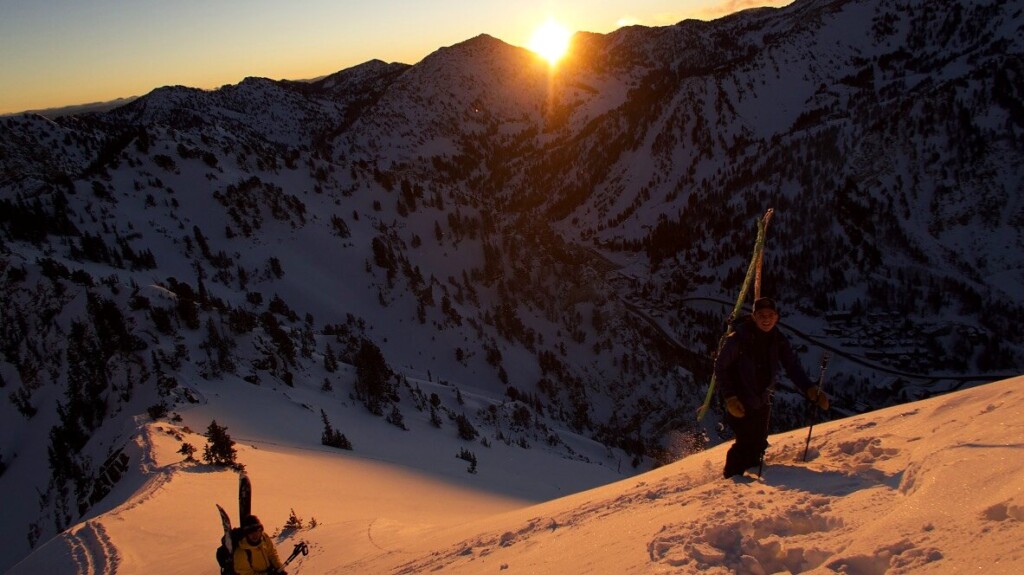
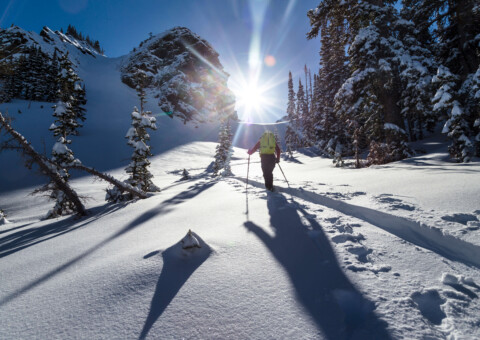
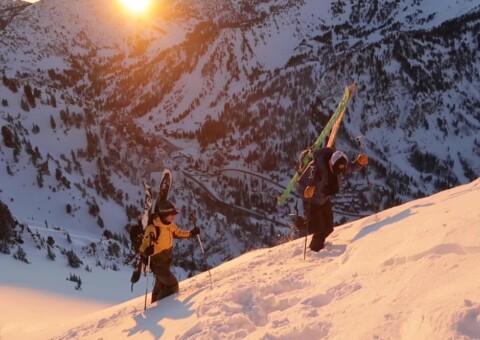
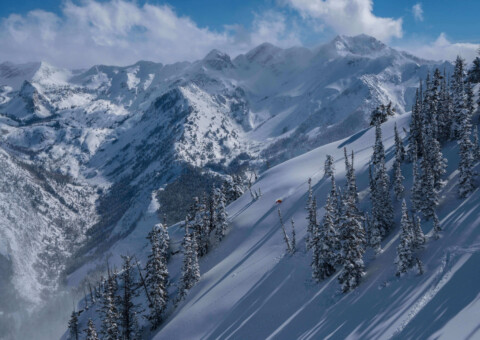
The Trip
Avalanche Level 1 with Winter Camping · Wasatch, Utah
Most avalanche courses send you home to a warm bed.
The decisions that hurt people aren’t made on the first morning, rested and fresh. They’re made late in a trip — cold, short of sleep, with a plan you’re already committed to and a partner who doesn’t want to turn around.
That’s why this course camps.
You finish with the same AAI Level 1 certificate as our two-day course. The difference is how far into your own decision-making you get to look.
How it differs from the two-day course
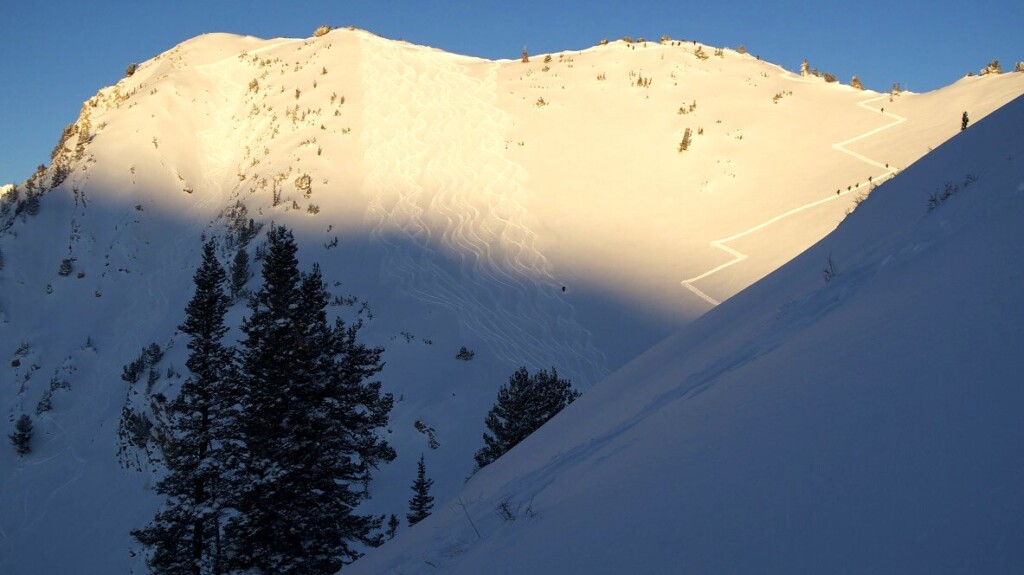
Three field days instead of two, with two nights of winter camping between them. You’ll make your day-three decisions tired, cold and having slept badly — the state most real backcountry mistakes are made in, and the one no classroom can simulate.
If the camping is the obstacle, take the two-day Avalanche Level 1 instead. Same certificate.
Quick facts
| Where | Salt Lake and Provo area mountains, Utah |
| Length | 3 field days and 2 nights out, plus a 6–8 hour online module and a live evening seminar |
| Team size | 2–4 clients per guide |
| Certification | AAI Level 1 |
| Prior touring | Assumed. If you’ve never toured, take Backcountry Essentials first. |
| Season | February — Presidents’ Day weekend |
| Rate | $1,150 per person |
What you’ll work on
Snowpack and weather. Making observations that mean something — and knowing which ones don’t. Most people can be taught to dig a pit in an afternoon. Knowing what the pit is worth takes longer, and that’s where the time goes.
Terrain assessment. Slope angle, aspect, terrain traps, consequence. Learning to look at a slope and see the whole picture rather than the line down it.
Stability tests. How to run them, and more importantly how much weight to put on the answer.
Tour planning. Turning the advisory and the forecast into a plan for one specific day — then adjusting it in the field when the plan turns out to be wrong, which it regularly is.
Rescue. Beacon search and probing, practised until it’s fast. Speed is the whole thing.
Winter camping. Site selection, staying dry, cooking, melting water, and building a sleep system that actually lets you sleep. Unglamorous, and it decides how well you function on the last day.
Why February
By mid-winter the snowpack is deep enough to build a decent camp in, and the days run more than an hour longer than in mid-December. The nights are still cold. That matters when you’re sleeping out twice and still expected to think clearly on the third morning.
In most Wasatch seasons the early-winter weak layers are still in the snowpack by February, buried deeper. Reading them there is the problem you’ll be managing from then until spring.
Team size
2–4 clients per guide.
Your instructor will know your name and how you think by the end of the first day. That is the only way coaching works, and it’s the difference between a course and a lecture.
Who teaches it
Wasatch Mountain Guides (WMG) instructors — assessing the snowpack and the avalanche hazard on the morning of each field day rather than relying on what it was doing last week.
The course follows the American Avalanche Institute (AAI) Level 1 curriculum, approved by the American Avalanche Association (A3). You finish with an AAI Level 1 certificate of completion.
Where this leads
Level 1 is a real threshold. It’s the point where clients stop needing us for ordinary days and start calling about bigger ones.
From here: the Backcountry Ski Mentorship, six days ending with you leading a tour under supervision. Then Wasatch ski mountaineering descents, Mount Baker, and for some clients Valdez or the Alaska Range.
If you’ve never toured, start with Backcountry Essentials — two days, no camping, and you’ll get far more out of Level 1 a season later.
Operated and guided by Wasatch Mountain Guides (WMG). BBE is the referral and sales partner; reservations, payments and required forms are handled directly by WMG.
Questions before you book?
We answer every inquiry personally.