The Climb
Pico de Orizaba Express · Mexico
Less time away. The same mountain.
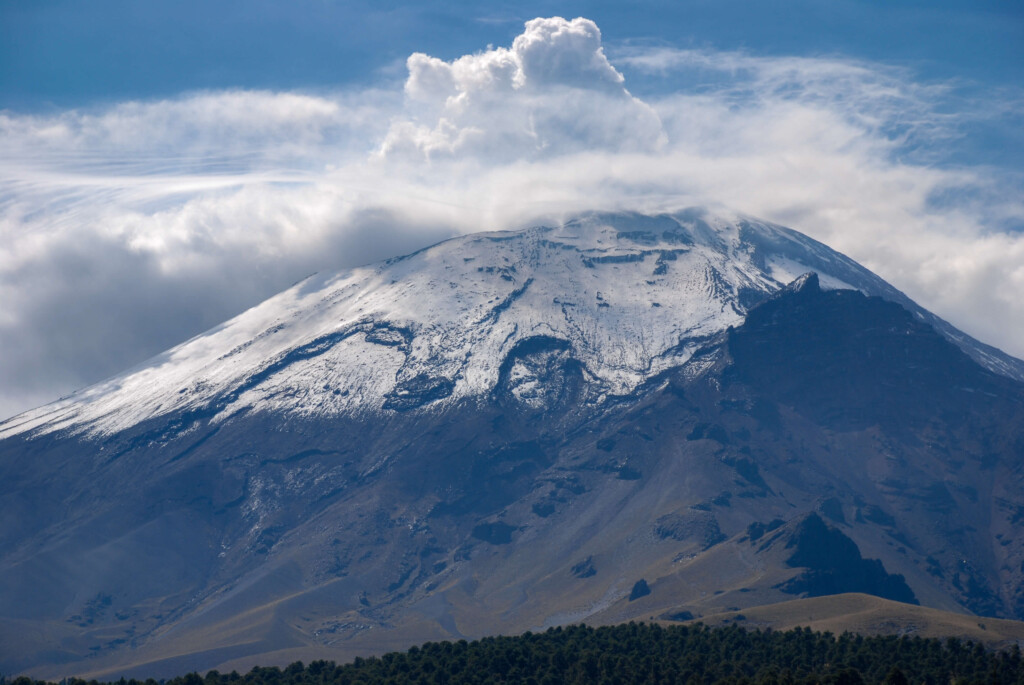
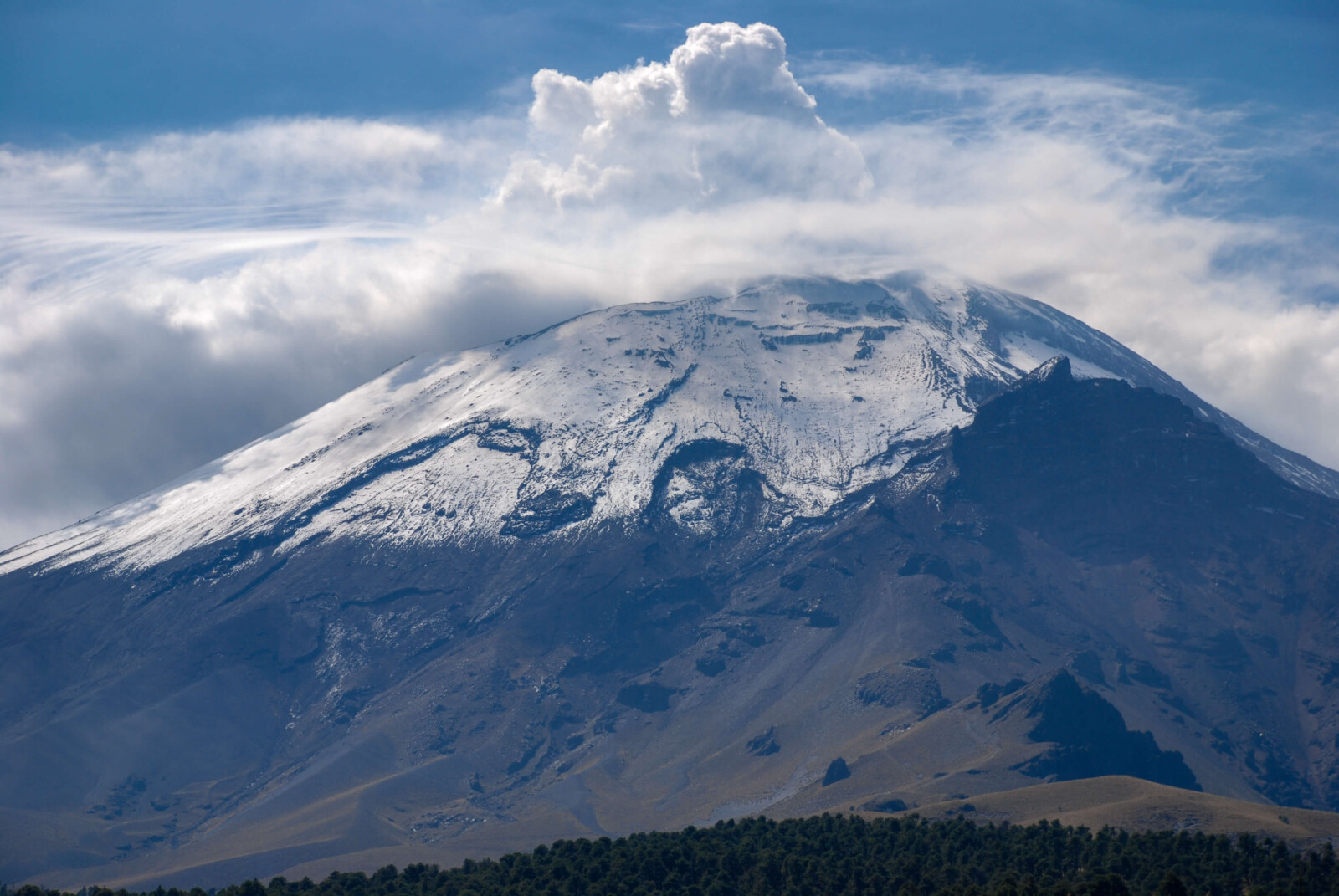
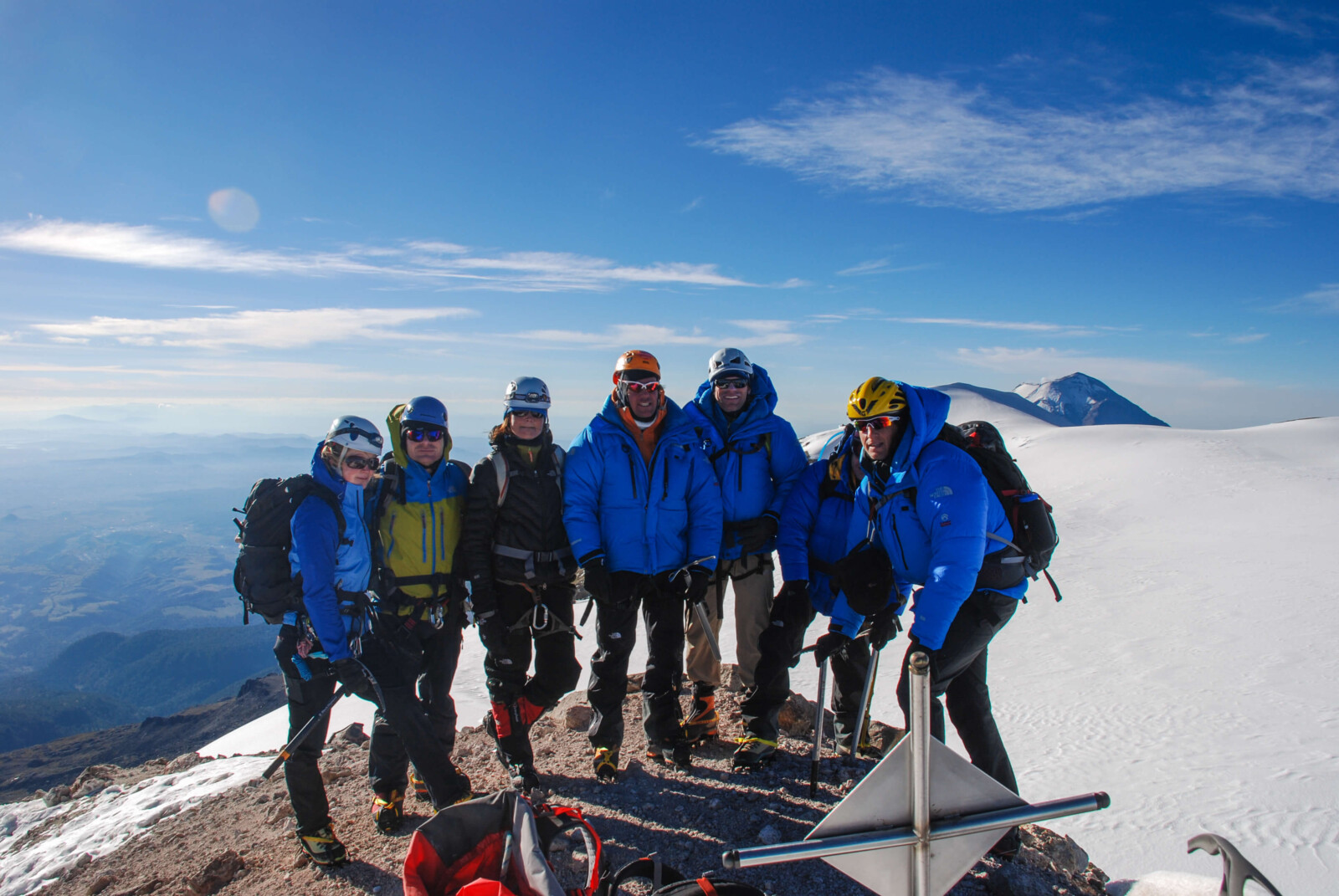
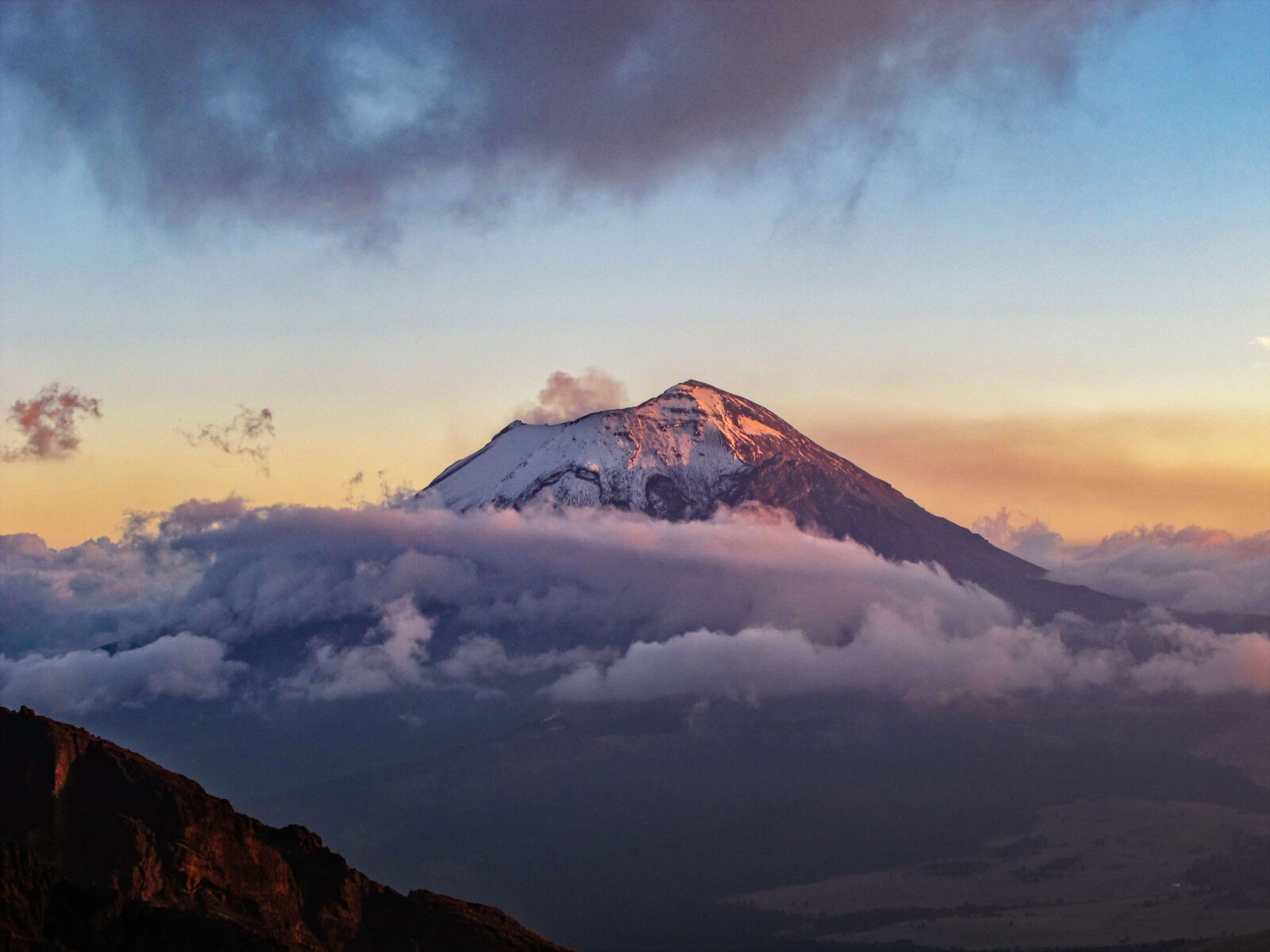
Pico de Orizaba is the highest mountain in Mexico and the third-highest peak in North America. The Express climbs it in seven days — one acclimatization summit, a tented base camp, a night at high camp, and a glacier ascent to 18,491 feet on Day 6.
This is not a stripped-down version of our ten-day expedition. It is the same mountain, the same guides and the same standards, compressed for climbers whose constraint is the calendar rather than the mountain. You pay more for the Express than for the ten-day program, because compression costs more to deliver than time does.
Volcanoes of Mexico, 10 days
- Three summits
- A full acclimatization progression
- Margin to absorb a bad weather day
- Costs less
Pico de Orizaba Express, 7 days
- Five working days away, Saturday to Friday
- La Malinche as the acclimatization summit
- A personalized training plan from the day you book
- A tented high camp at 4,800 m
- Porters carry all the gear
Your Preparation Starts When You Book
Every climber on this program receives a personalized training plan from our team before departure — built around the specific demands of this climb and your actual starting point, not a generic template.
This is the part of the Express that happens before you arrive, and it is the reason a seven-day program works at all. The mountain does not care that you are short on vacation days. What we can do is make sure the days you have are spent climbing rather than catching up.
Arrive with altitude if you can. The seven-day schedule builds acclimatization efficiently — Mexico City at 7,382 feet, two nights in the Tlaxcala highlands, La Malinche at 14,636 feet, then base camp and high camp. It works. It works considerably better for a climber who arrives with recent time high already behind them. If you can sleep at altitude, climb a peak in the weeks before you fly, or come to Mexico a few days early, do it — and tell us on your call so we can build it into your plan.
Who This Is For
Climbers who train with intent, and whose real constraint is time rather than ability.
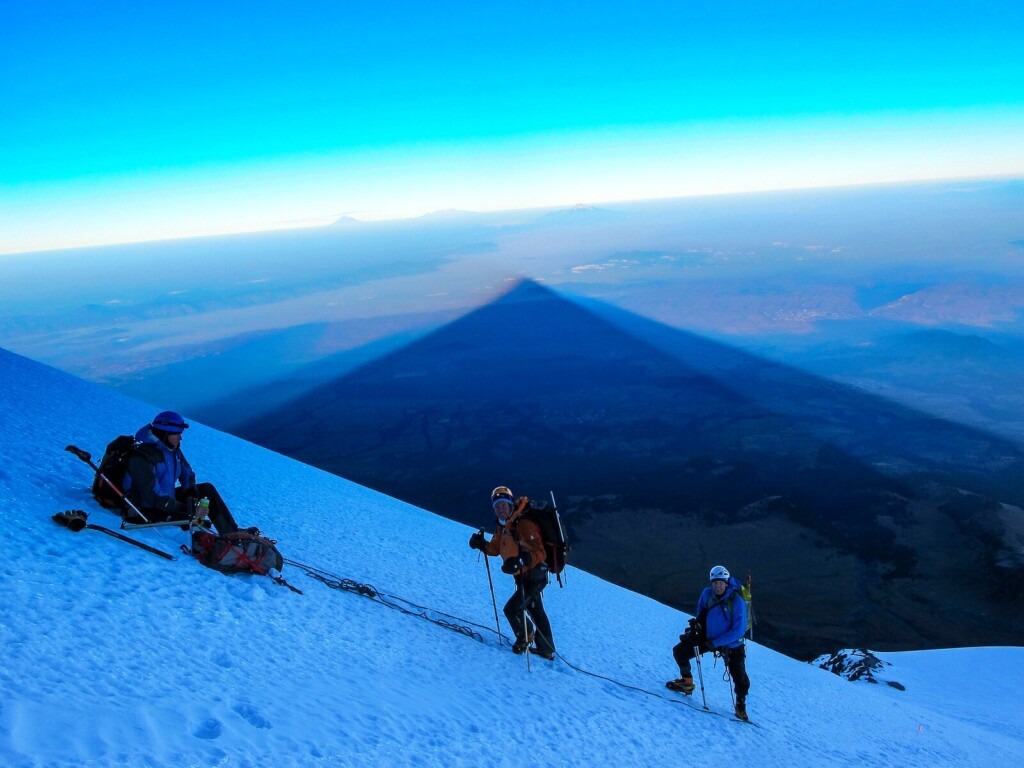
No technical climbing experience is required. Your guides will walk you through what you need — crampons on snow and ice, ice axe for balance and self-arrest, rope-team travel on the glacier, and managing your pace over a long day at altitude. Prior time on a glaciated or high-altitude peak is a genuine advantage. Neither is a hard requirement — but arriving fit and pre-acclimatized is what separates a climber who summits comfortably from one who struggles, and we will be straight with you about that on your call.
What is not optional is the training. Seven days is enough to climb Orizaba well. It is not enough to get fit in.
Every climber on this program speaks with a guide before booking, and we decide together whether it’s the right trip. If more time on the mountain would serve you better, the ten-day Volcanoes of Mexico Expedition builds the acclimatization in rather than asking you to arrive with it. We would rather put you on the right program than sell you the shorter one.
Is This For Me? has the honest version — what the climb demands, and who should reconsider.
Porters Carry the Gear. You Carry a Day Pack.
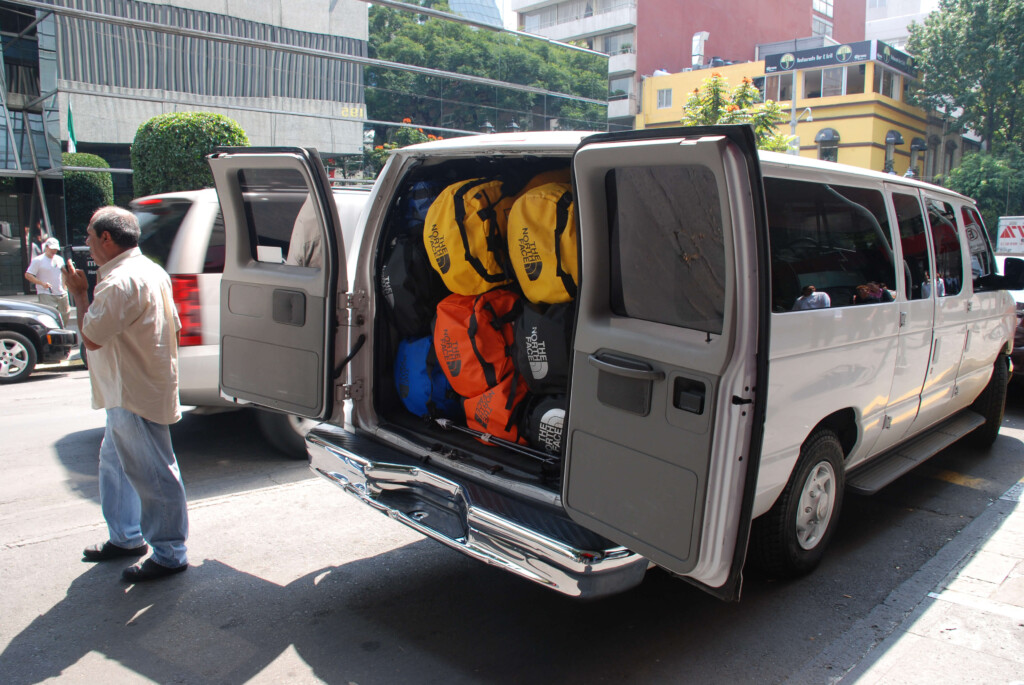
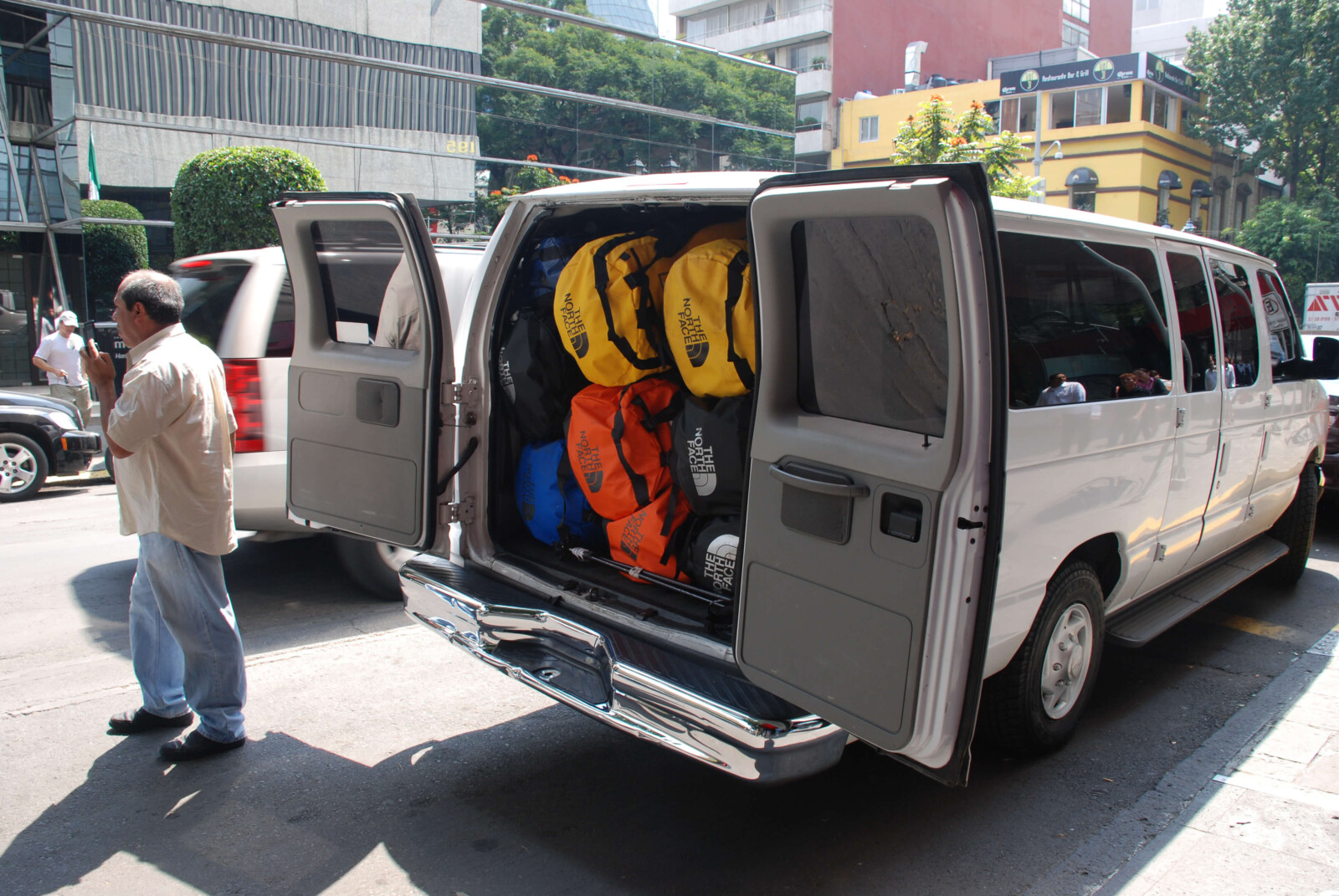
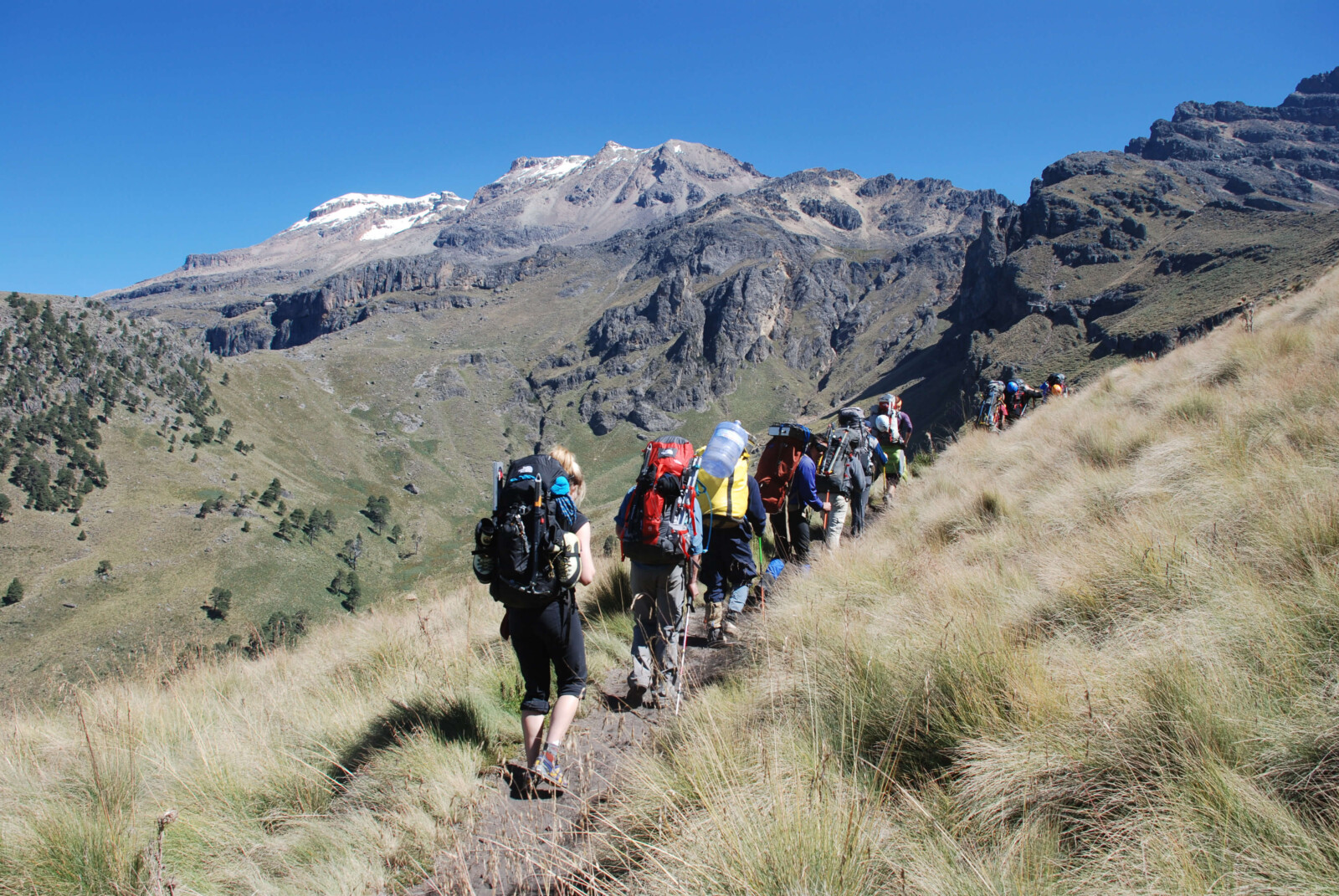
On every BBE Mexico program, our porters carry all the gear — your duffel, the tents, the kitchen, the food and the fuel. You climb with a day pack: layers, water, food, camera, and whatever you want within reach.
This is not a small thing. On a compressed schedule, arriving at each camp with energy left is what makes the next day work, and carrying a light pack instead of a heavy one is the difference. It also means the climb is decided by your fitness and your acclimatization rather than by how much weight you can shoulder at 15,000 feet.
How Seven Days Works
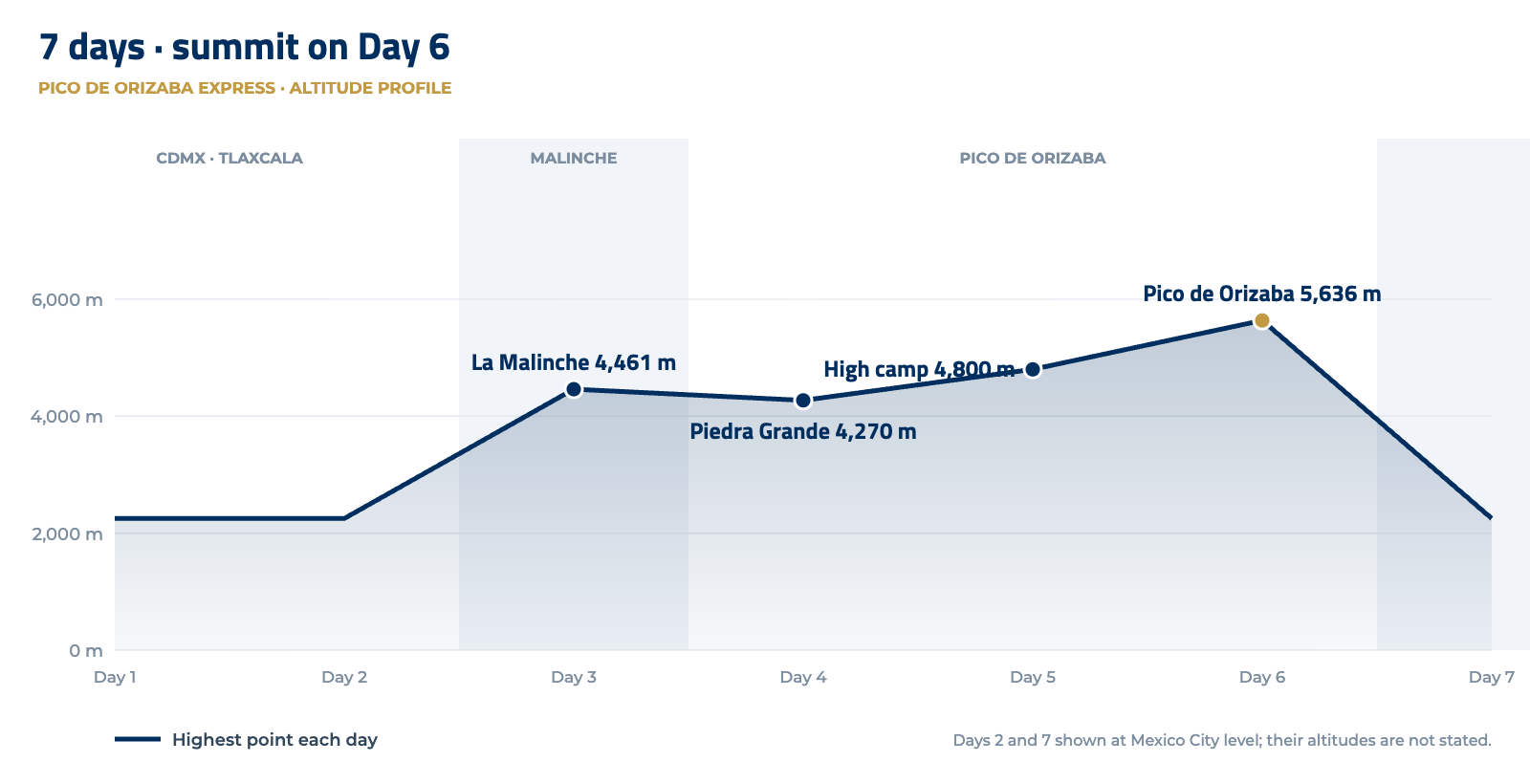
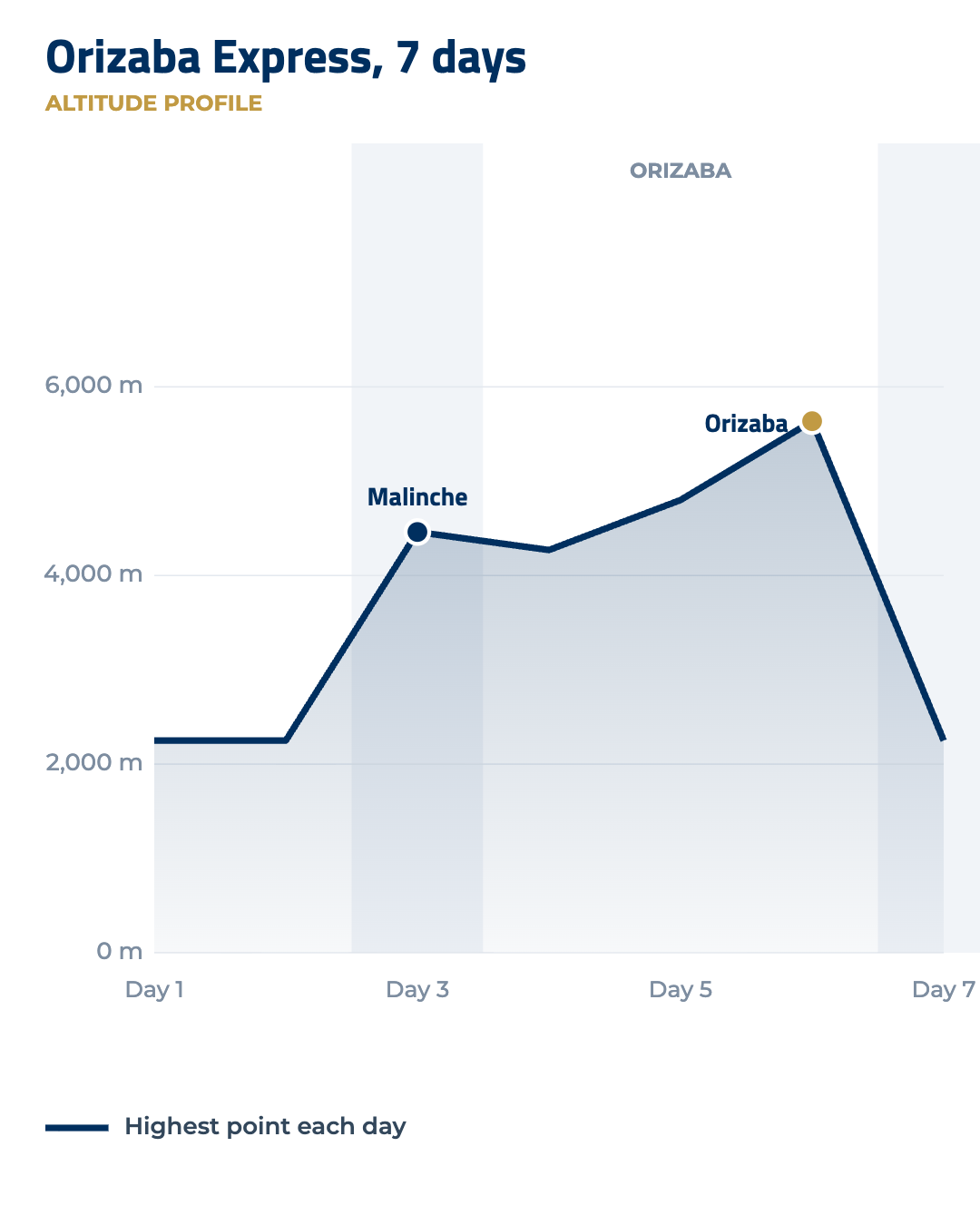
Day 1 — Mexico City, 7,382 ft. Arrival, team briefing, equipment review and welcome dinner.
Day 2 — Teotihuacan · Tlaxcala · Hacienda Santa Bárbara. East out of the city, past the pyramids at Teotihuacan and through Tlaxcala, to the hacienda beneath La Malinche.
Day 3 — La Malinche, 14,636 ft. A non-technical acclimatization summit and your first read on how you’re adapting. Back to the hacienda to recover.
Day 4 — Piedra Grande base camp, 14,010 ft. Drive to Zoapan, then 4WD up to Piedra Grande, where we set up our own tented camp. Gear sorted, an acclimatization hike above camp, and rest.
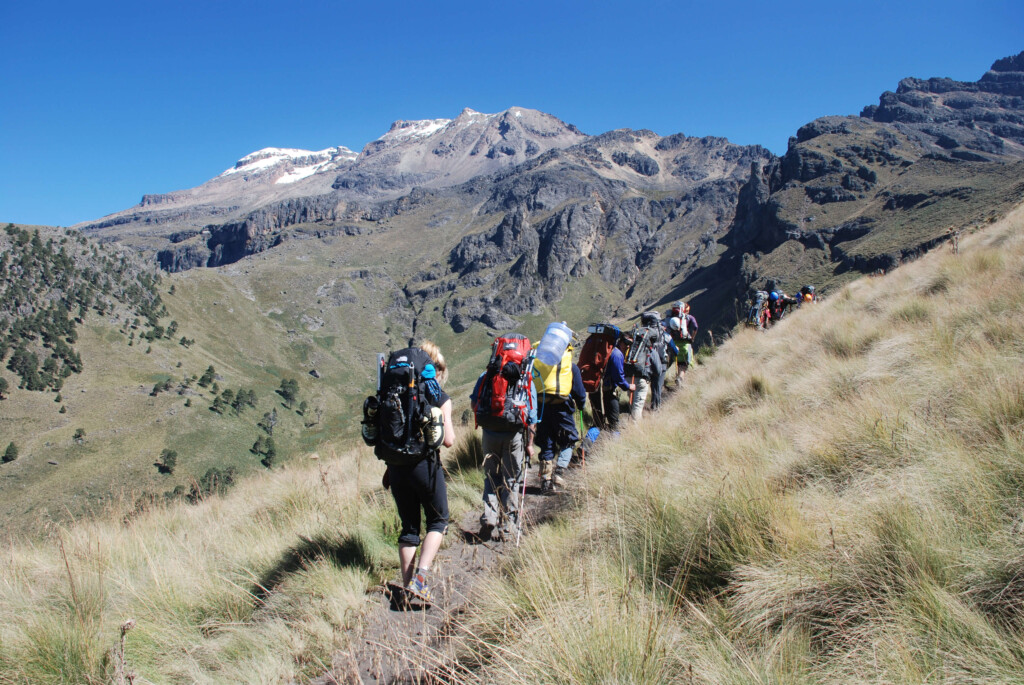
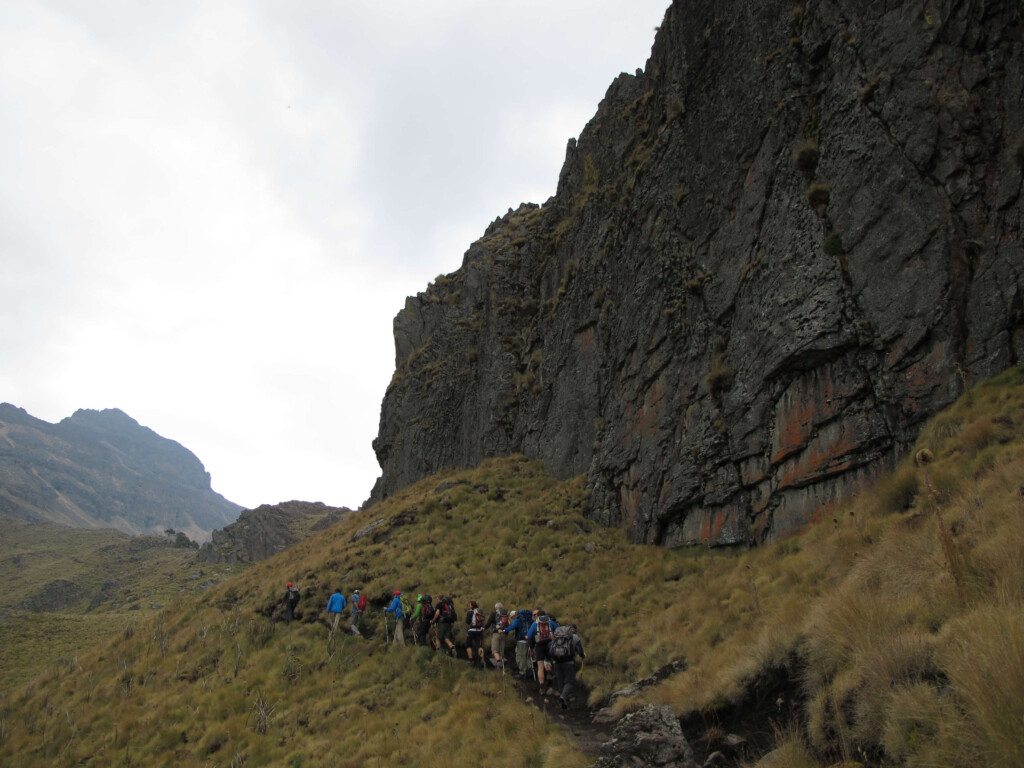
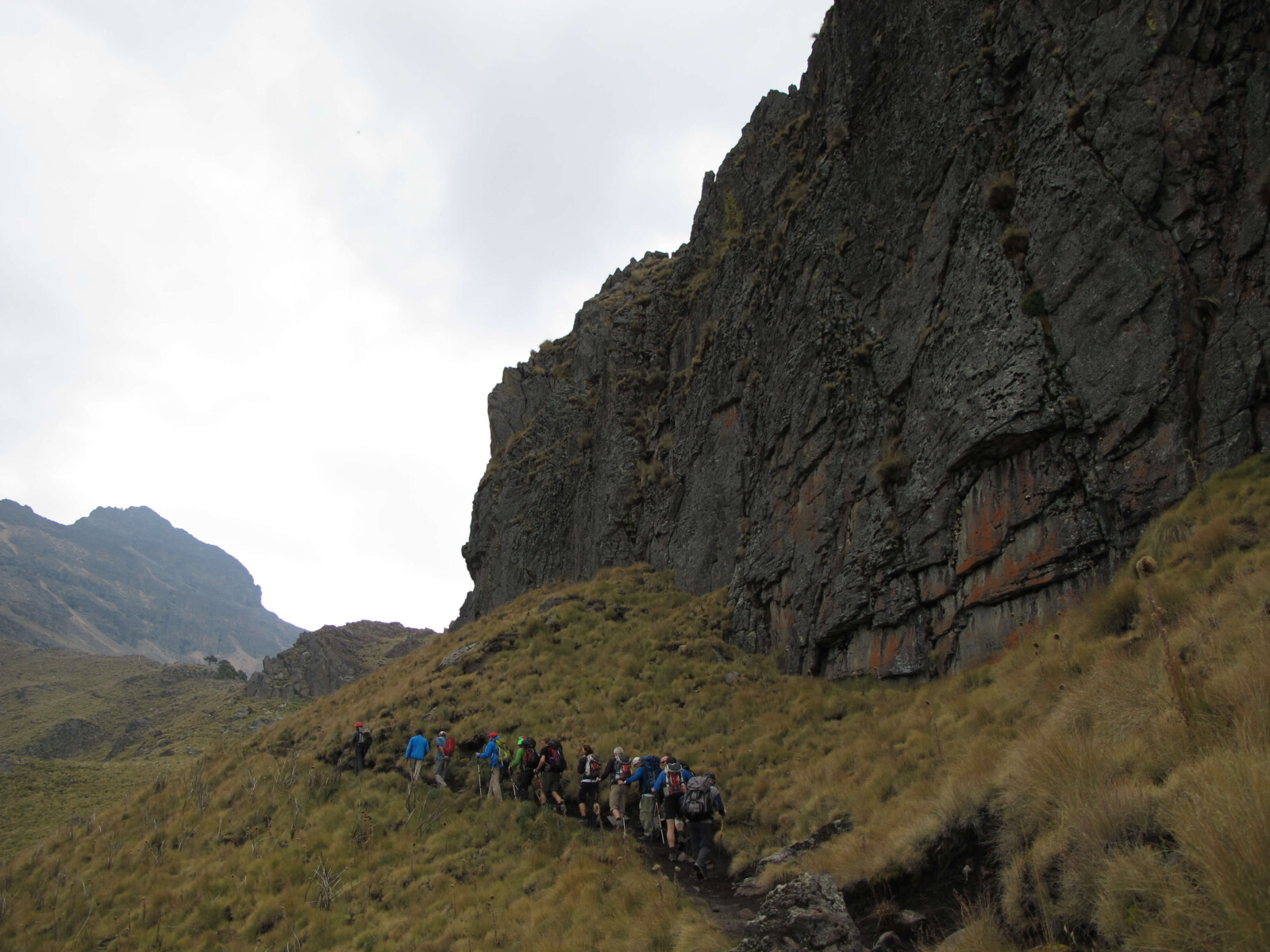
Day 5 — Move to high camp, 15,748 ft. We climb through volcanic terrain and the Labyrinth to a tented high camp closer to the glacier, two climbers to a tent. Porters carry the gear; you climb with a day pack. Short day by design — arrive, eat, review the plan, sleep.
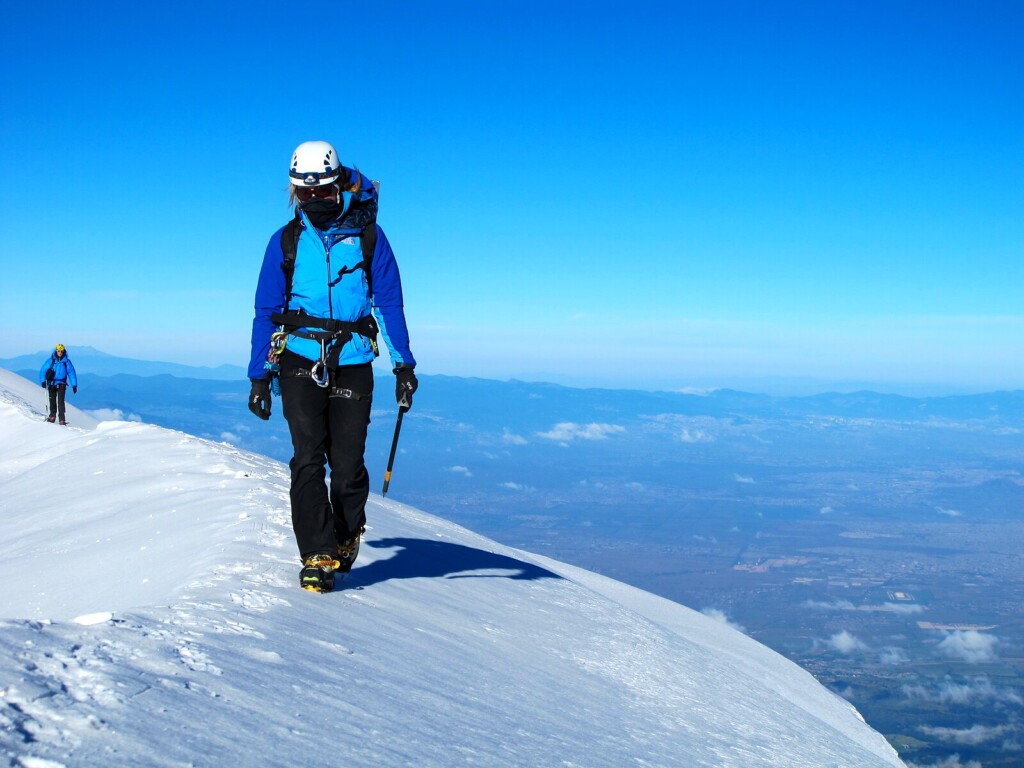
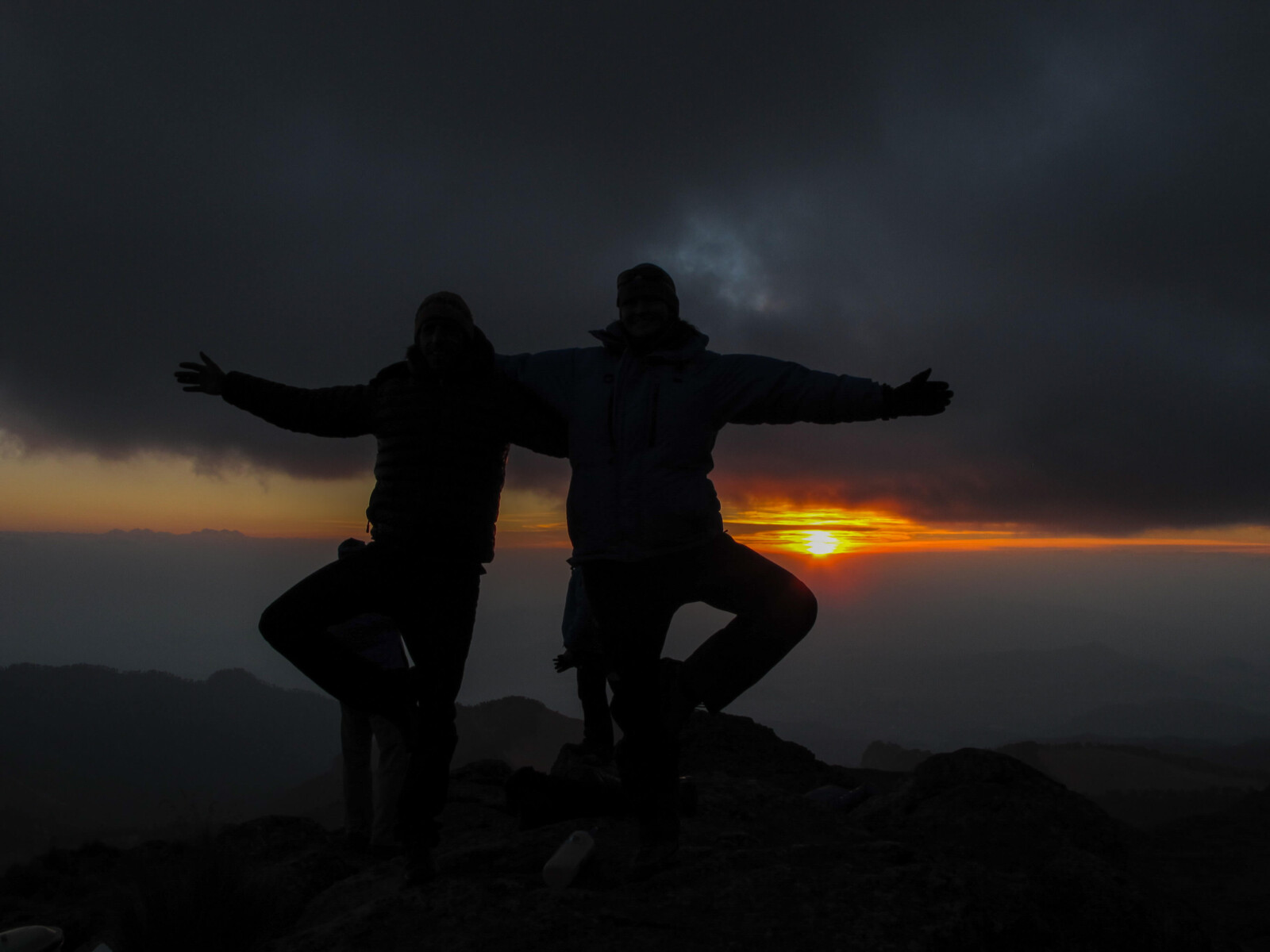
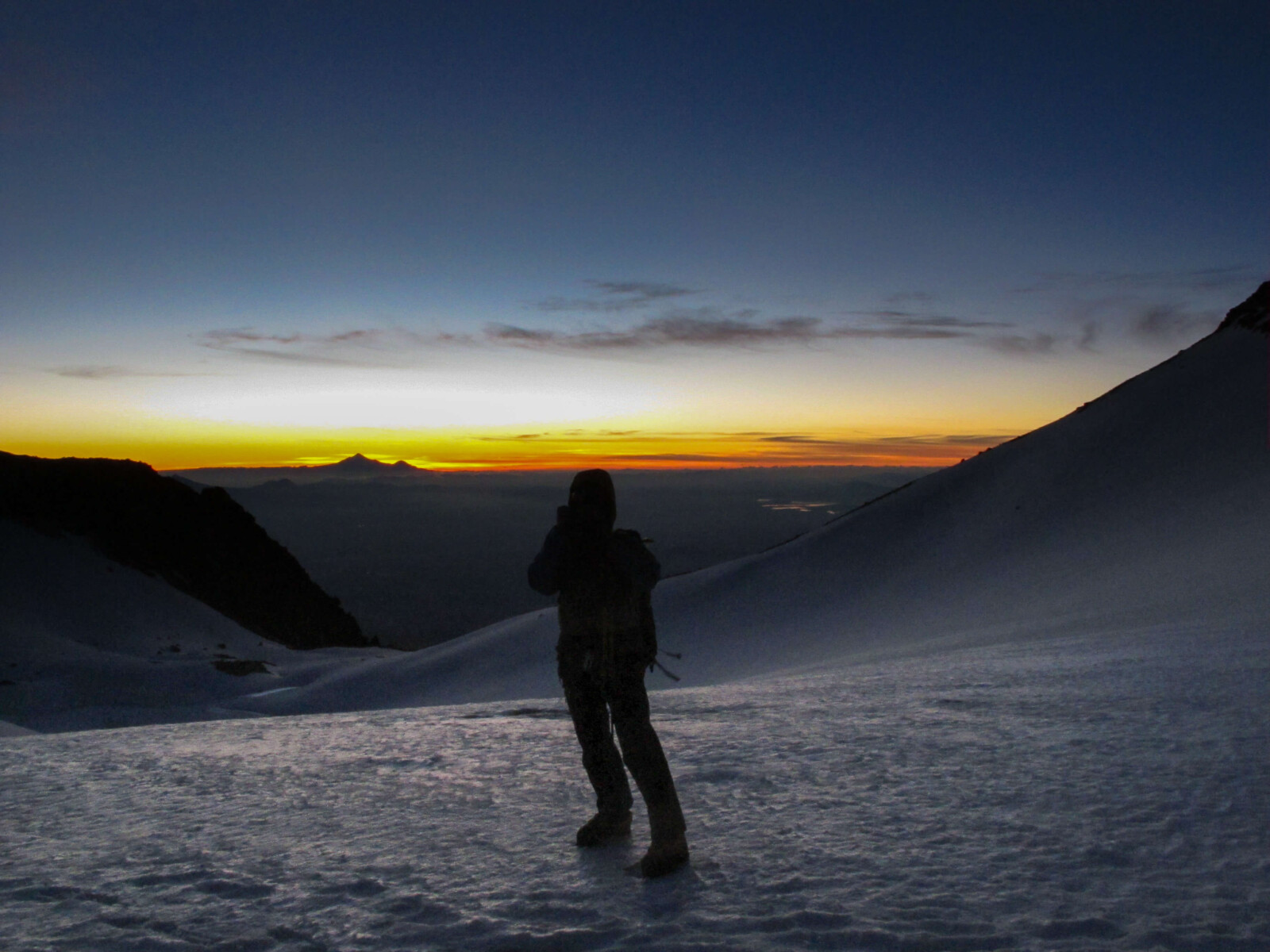
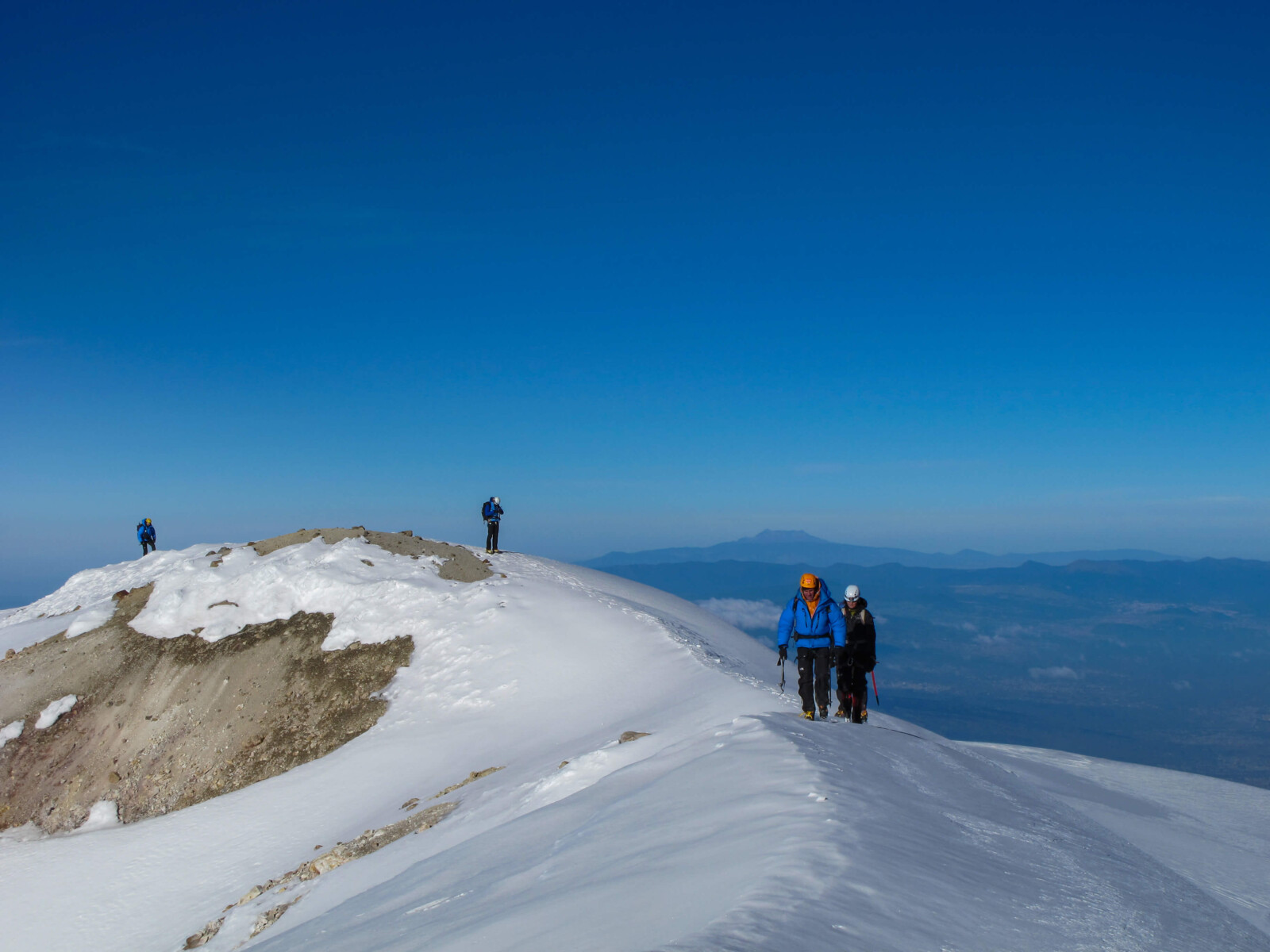
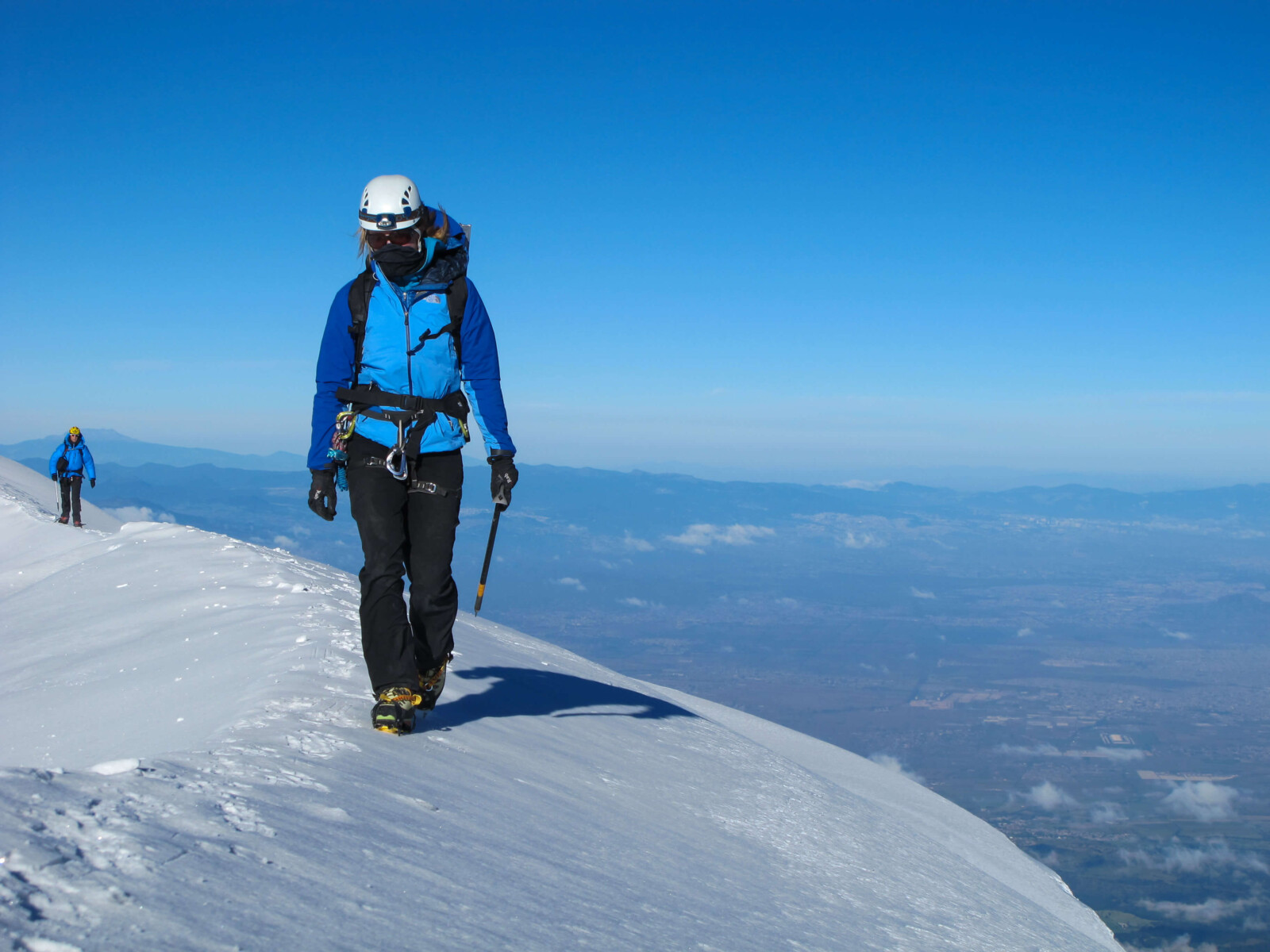
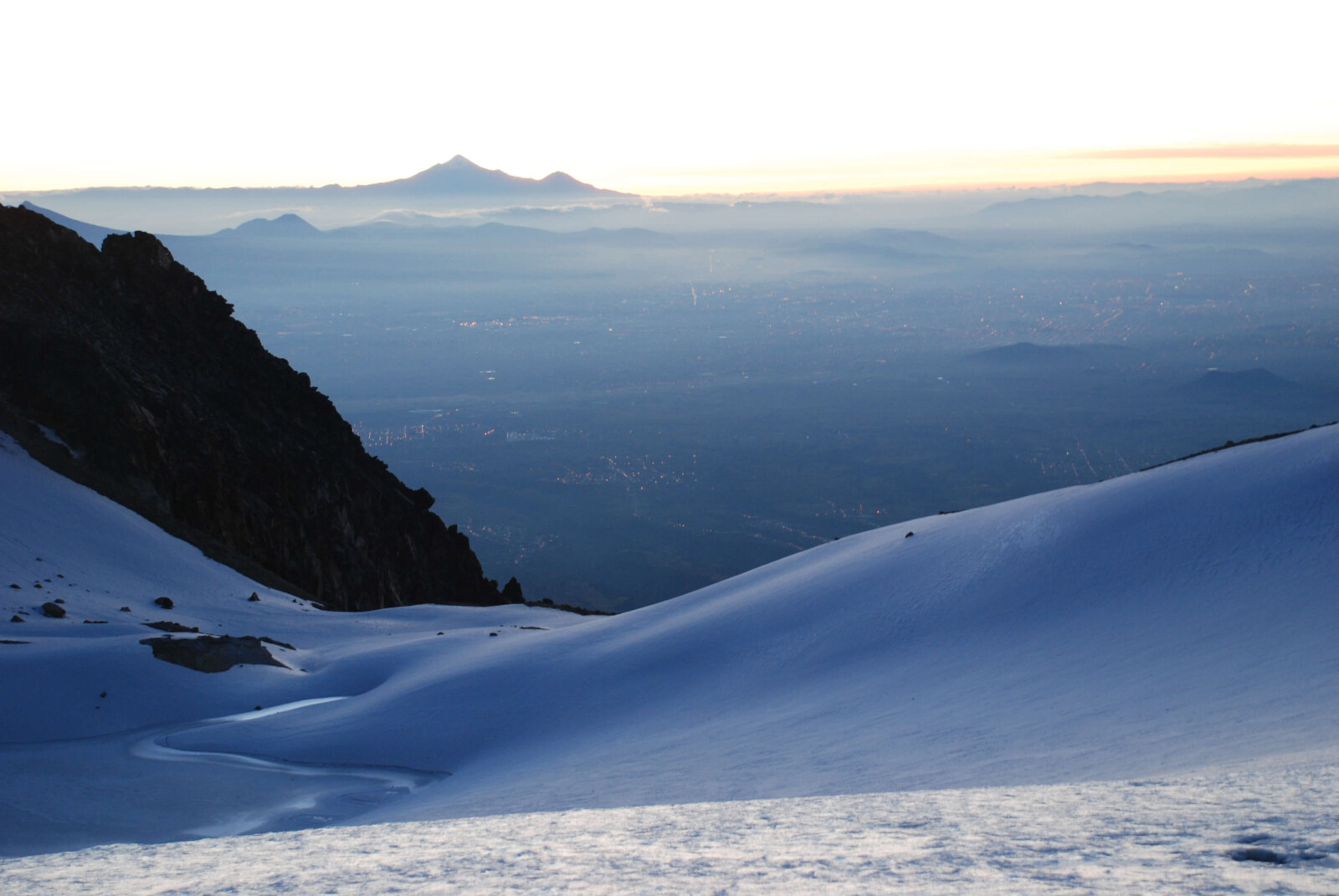
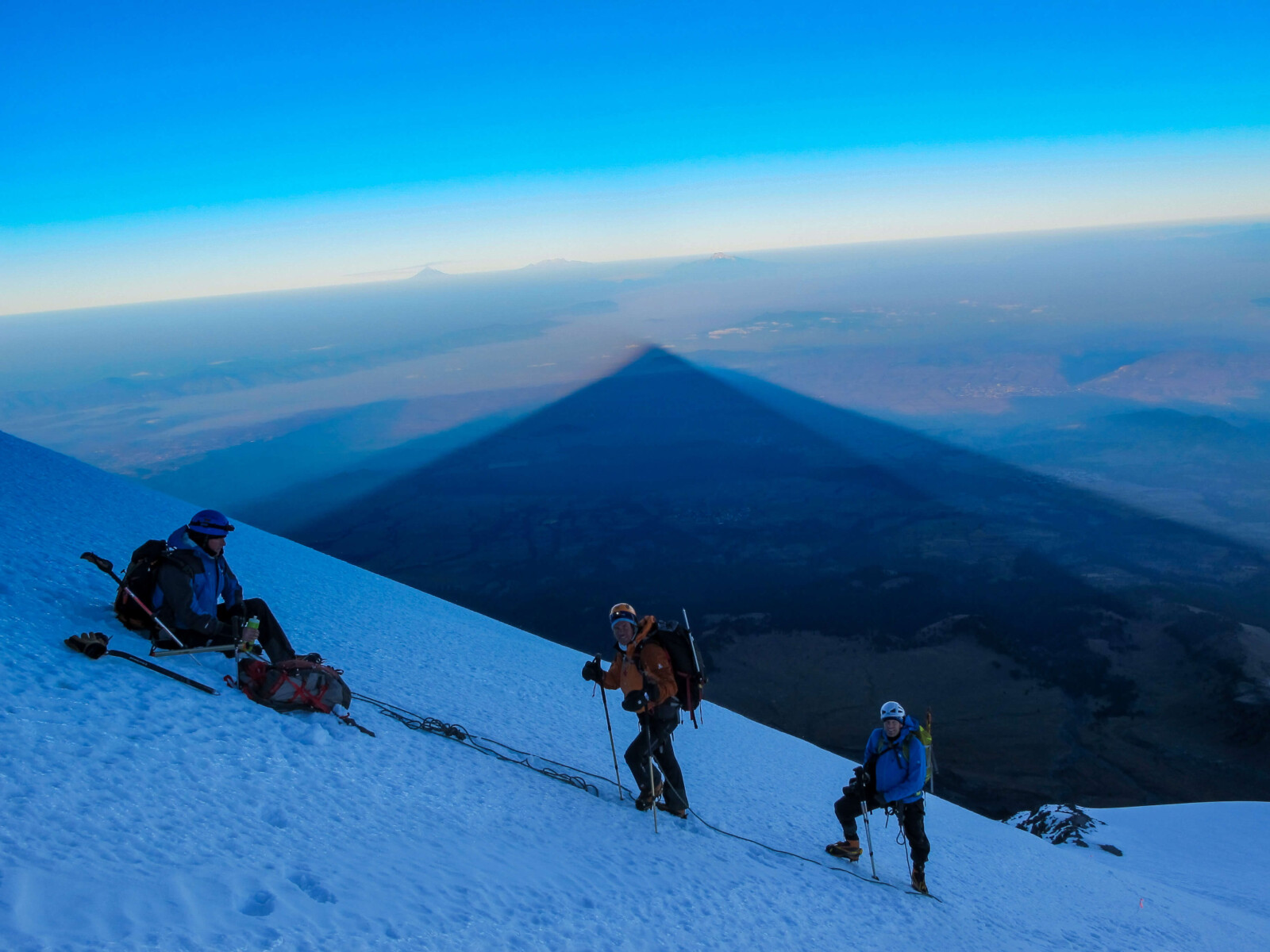
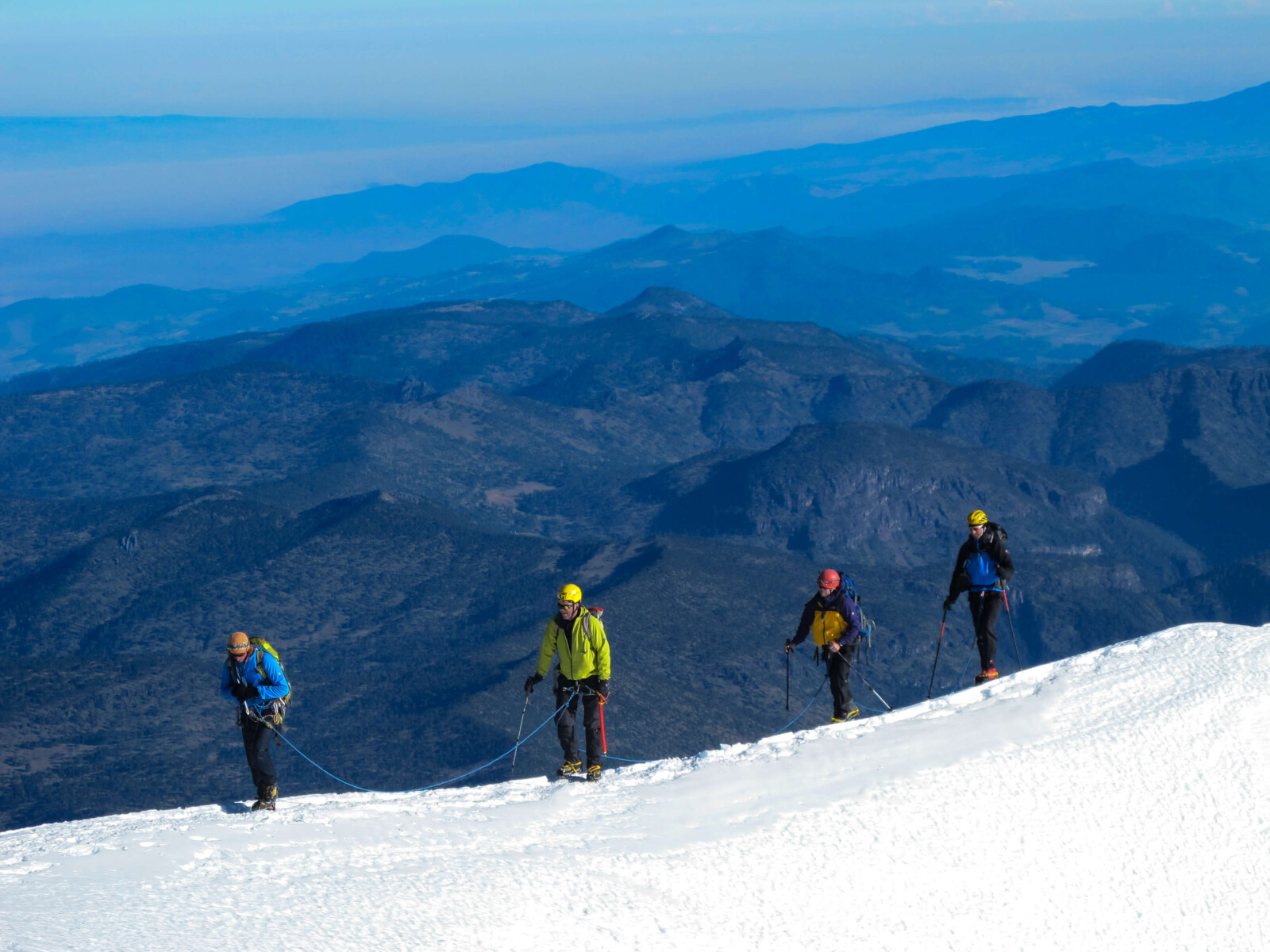
Day 6 — Summit day, 18,491 ft. Away from high camp normally around 1am, onto the Jamapa Glacier. Crampons, rope teams, and sustained 35-degree snow and ice to the crater rim. Plan on about 11 hours. Then the full descent, off the mountain, and on to Puebla.
Day 7 — Puebla to Mexico City. Morning transfer for international departures.
The full schedule is on Day by Day.
Why We Still Camp High
The high camp is not something we drop to save days.
Starting summit day from 15,748 feet rather than 14,010 takes hours off the climb, gets you onto the glacier earlier, and leaves more in reserve for the descent — which is the half of the day people underestimate. On a compressed program that margin matters more, not less.
It also gives you a night sleeping high on the mountain, which for a lot of climbers turns out to be the part they remember.
This is how we climb Orizaba on both our programs. It isn’t a feature of one of them.
Small Teams, and What They Buy You
The Express is capped at six climbers, with a climbing ratio of one guide to every two on the glacier.
Small teams let your guides watch how each climber is moving and recovering — which matters more on seven days than on ten, because there is less time to correct course. They also let us move: if the best weather window falls a day either side of the printed schedule, a team of six can be standing in it. A large group usually cannot.
You will never disappear into the group.
More Than the Mountain
The Express is not an airport-to-summit sprint. The road east passes through Teotihuacan and Tlaxcala, the team stays at a working hacienda beneath La Malinche, and the trip finishes in Puebla — one of the best places to eat in Mexico, and a reasonable reward for a long summit day.
You are in Mexico for a week. We think you should see some of it.
What’s Included
All in-country costs: private ground transportation, 4WD transfers to and from Piedra Grande, all lodging from Mexico City to Puebla, all meals, group climbing and camping equipment, tents at both mountain camps, porters to carry all the gear on the mountain, and full guide support — plus your personalized training plan from the moment you book.
Not included: international flights, personal climbing equipment, travel and rescue insurance, gratuities and personal spending. Full detail is on What to Budget For.
The Benegas Brothers Standard
Since 1992, Benegas Brothers Expeditions has been built through expedition leadership — from the Andes to Alaska and the Himalaya. Our Mexico programs are built and managed to IFMGA standards, led by professional mountain guides certified by IFMGA, AMGA or equivalent national bodies, working with experienced Mexican guides and strong local logistics.
Compressed does not mean cut back. The Express runs to the same standards as every other BBE expedition — small teams, honest communication, conservative decision-making, and no pressure to summit when the mountain says otherwise.
Going Further
Orizaba is one of the most useful mountains in the world for a climber building toward something bigger. Seven days here tells you how you perform at 18,000 feet without spending a month to find out.
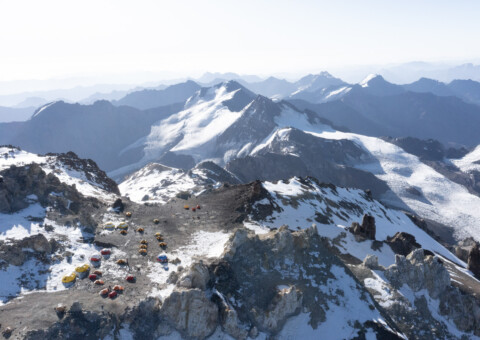
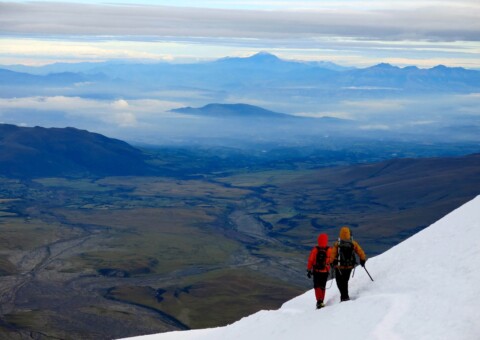
For climbers heading further, Aconcagua is the next altitude step, and the Ecuador Mountaineering School is where to build technical glacier skills if that’s the gap.
Extensions are available for climbers with more time — additional acclimatization, Iztaccíhuatl, or a longer cultural program. Ask us.
Ready to Talk It Through?
Tell us what you’ve climbed, when you were last at altitude, and how much time you have. We’ll tell you honestly whether the Express fits, or whether the ten-day expedition is the better trip for you.