Global Expeditions Bolivia South America

Bolivia Alpinist Expedition

Bolivia Alpinist Expedition · Cordillera Real, Bolivia · 13 Days + Optional 5-Day Illimani Extension · Maximum Six Climbers

13 Days + optional Illimani extension Group: Maximum 6 climbers $5,400 per person

The Climb

Bolivia Alpinist Expedition · Cordillera Real, Bolivia · 13 Days + Optional 5-Day Illimani Extension · Maximum Six Climbers

The Cordillera Real has glaciated peaks, real technical climbing and a mountain culture that was never packaged for mass tourism. It is a place to build genuine alpine experience in a single trip: glacier travel, rope work, steep snow and ice, and a 6,000-meter summit.

6,088mHuayna Potosí summit · 19,975 ft
13Days, plus an optional 5-day Illimani extension
3Summit attempts in the core program
6Climbers, maximum
11,900ftLa Paz: acclimatization from day one
6,438mIllimani, the optional final objective

You start high. La Paz sits at 11,900 ft / 3,627 m, so acclimatization begins the moment you land. From there the program builds deliberately: Lake Titicaca, technical training in the Condoriri massif, two summits, then Huayna Potosí at 19,975 ft / 6,088 m.

Climbers who want to go further can add five days and finish on Illimani, the mountain that watches over La Paz.

The Mountains

Three summit attempts in the core program, four with the extension. You are not building two weeks around a single shot at one peak.

Piramide Blanca17,552 ft / 5,350 m

The first summit, in the Condoriri group.

Pequeño Alpamayo17,618 ft / 5,370 m

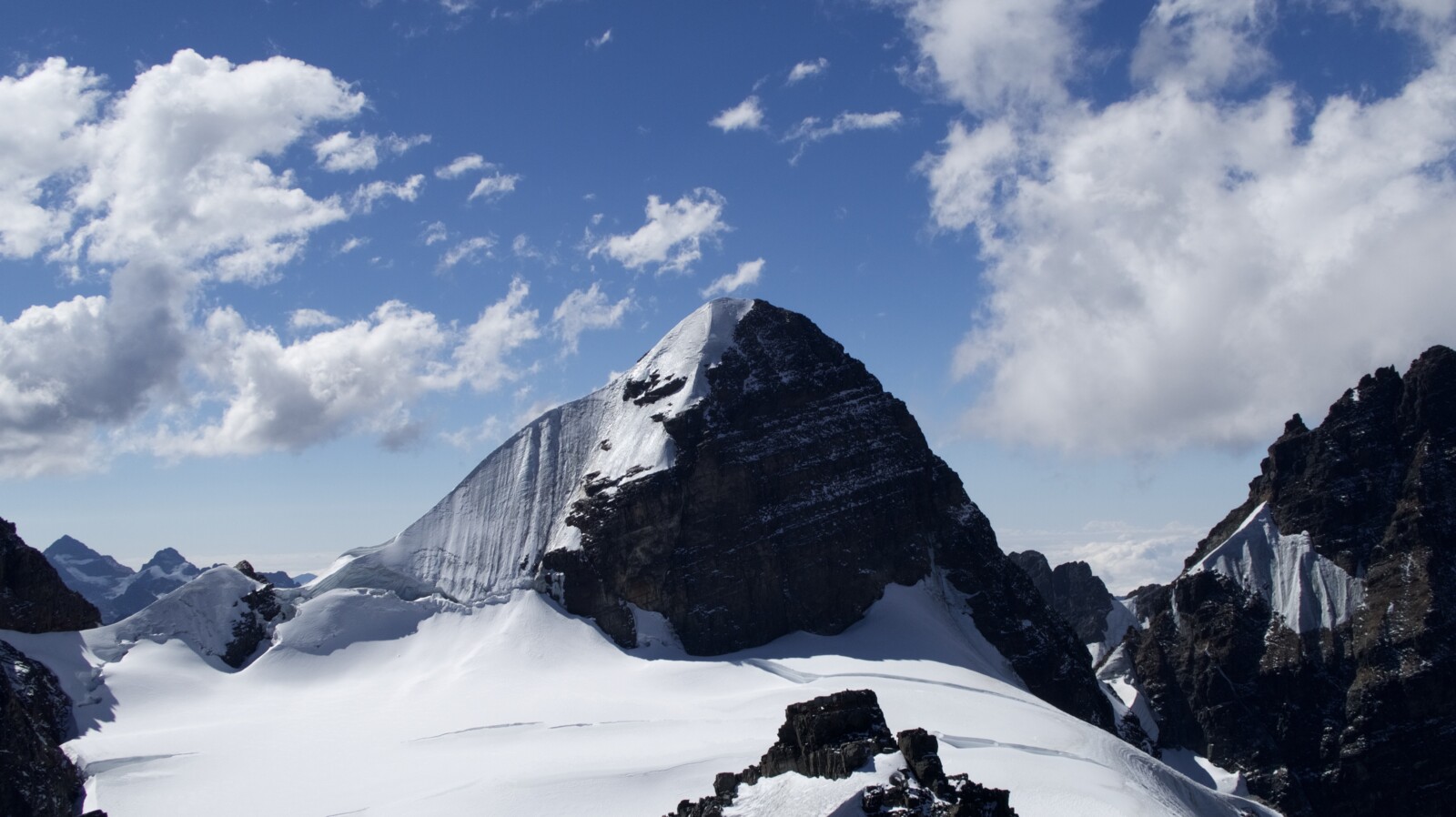
A striking summit ridge, climbed via the Tarija shoulder.

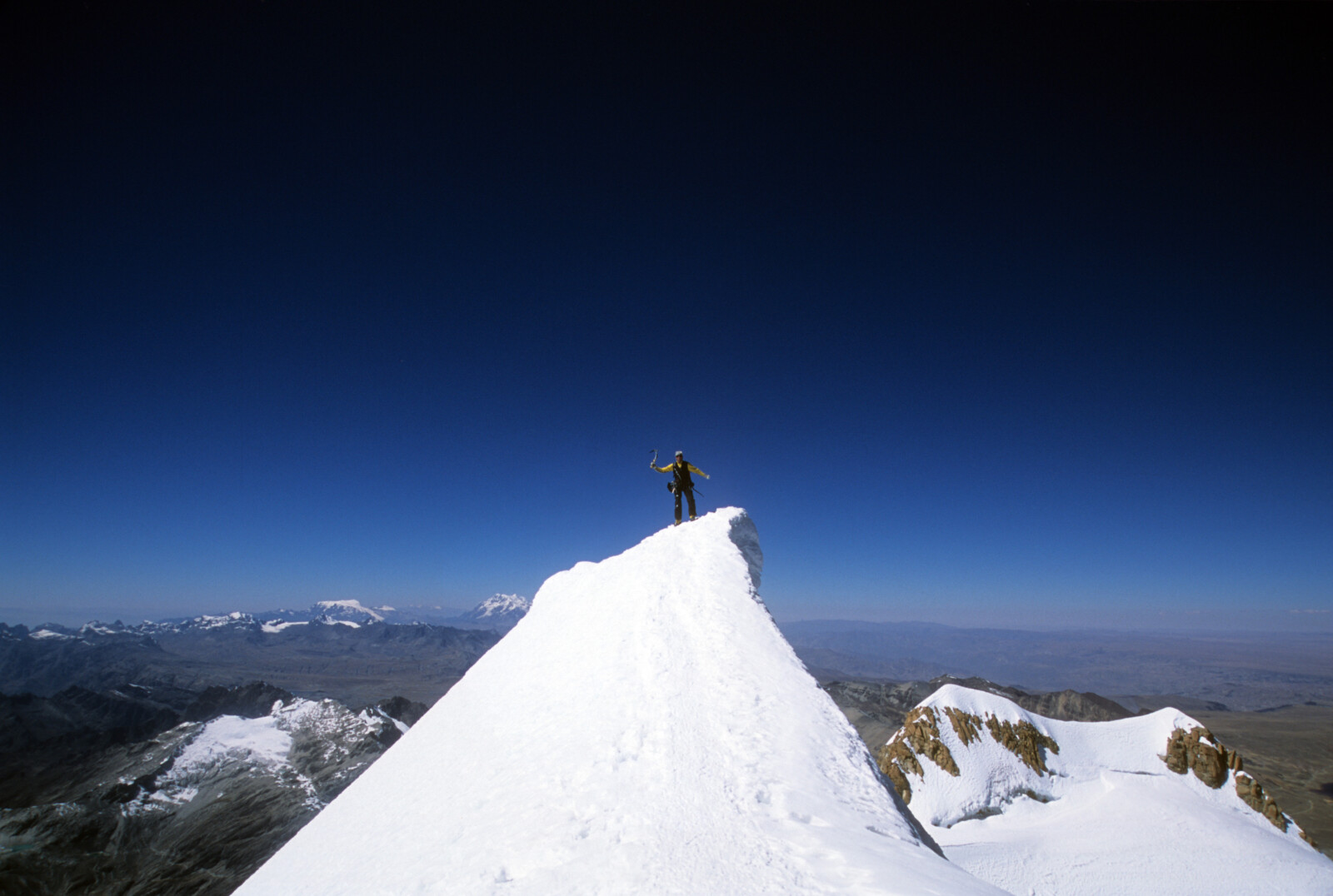
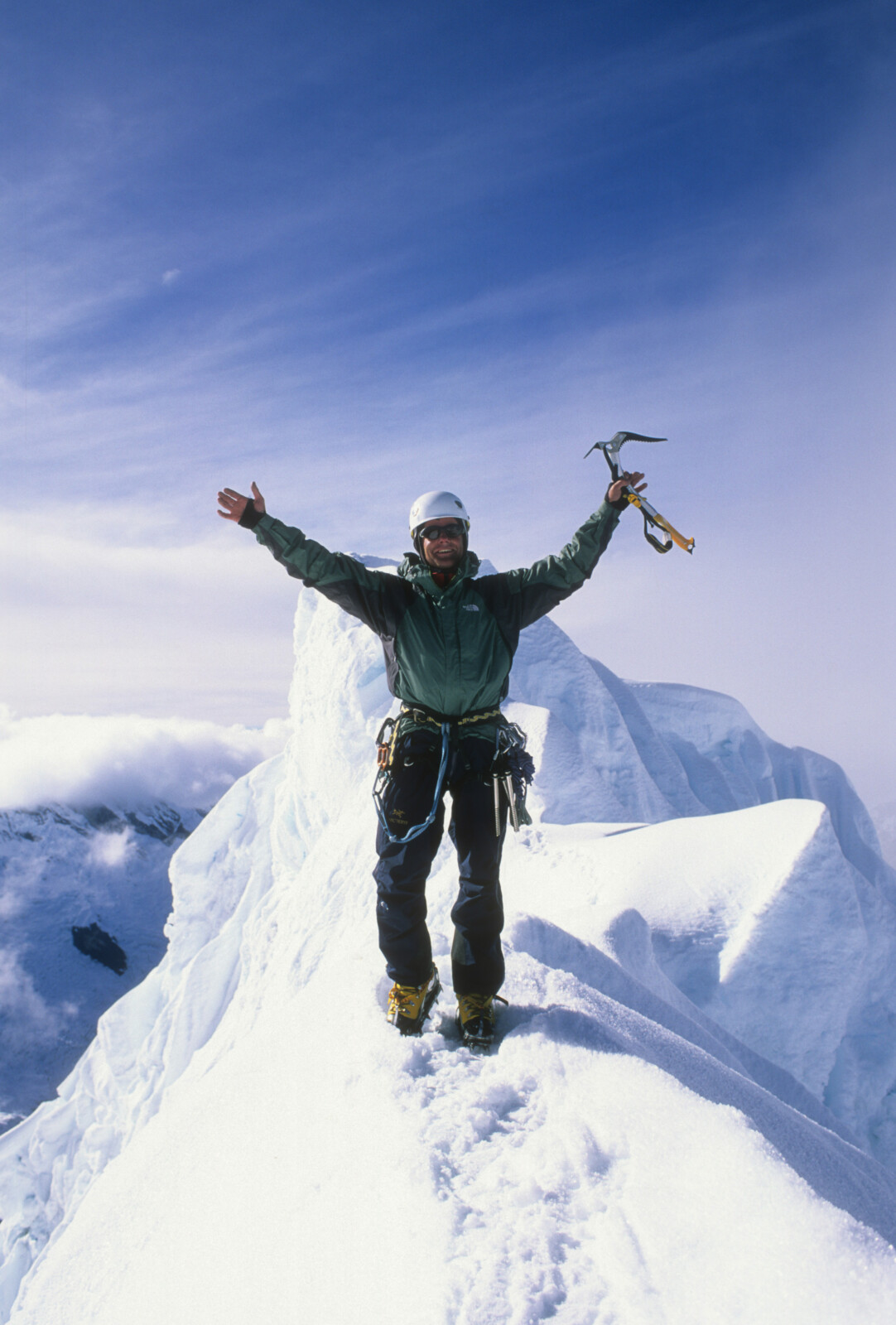
Huayna Potosí19,975 ft / 6,088 m

Bolivia’s best-known 6,000-meter peak, with a steep final ridge.

Illimani (extension)21,122 ft / 6,438 m

The great guardian peak of the Cordillera Real.

Every one of these is a real summit on glaciated terrain. None of them is a trekking peak.

Why Bolivia: Skills and Altitude Together

Kilimanjaro introduces you to altitude. Ecuador teaches you glacier and mountaineering skills. Mexico takes you toward 18,000 feet.

Bolivia asks for both at once.

You are on rope, on crampons and on steep snow and ice, and you are doing it above 17,000 feet, repeatedly, over two weeks. That combination is what makes the Cordillera Real such efficient preparation: technical movement and high-altitude adaptation, practiced together on real summits.

Bolivia can be the range that prepares you for what comes next. It can also simply be the climb you came for.

The Progressive Summit Strategy

The program is sequenced, not rushed. Each peak prepares you for the next.

  • Arrive in La Paz at 11,900 ft / 3,627 m, where the acclimatization head start is built into the whole itinerary
  • An active cultural day on Isla del Sol in Lake Titicaca, sleeping at 12,500 ft / 3,810 m
  • A night at Rinconada, then into Condoriri Base Camp beneath the Condoriri peaks
  • A full alpine training day on the glacier: crampon technique, rope travel, self-arrest, anchors and rappelling
  • Piramide Blanca, then a recovery day, then Pequeño Alpamayo
  • A night back in La Paz, then the Huayna Potosí refuge at 15,420 ft / 4,700 m and the summit

By the time the team reaches Huayna Potosí, every climber has been tested on real terrain and adapted to real altitude. The 6,000-meter peak is not a leap. It is the next step.

The full sequence is on Day by Day.

The Illimani Extension

Illimani rises above La Paz at 21,122 ft / 6,438 m. The extension adds five days and treats it as the natural final objective, not a bolt-on.

Its logic is timing. After 13 days of progressive climbing, you arrive at Illimani carrying the acclimatization you built in the Condoriri and on Huayna Potosí. That is a far stronger position than flying in to attempt it cold.

The team climbs from Puente Roto Base Camp via Nido de Cóndores High Camp at 19,030 ft / 5,800 m, and the extension carries a dedicated reserve day for the summit push.

It suits climbers who want to finish on Bolivia’s biggest objective and would rather earn the altitude than fight it. See the extension, day by day.

Why Six Climbers and a 2:1 Ratio

Every scheduled departure is capped at six climbers, with one guide for every two climbers. A full team of six climbs with three guides.

That is not about exclusivity. On glaciers above 17,000 feet, the ratio decides how closely a guide can watch each climber, how quickly a rope team moves and whether a change of plan is possible when conditions shift.

  • Your guide knows how you are adapting, day by day: pace, appetite, sleep and hydration.
  • Technique gets coached on the rope, not shouted across a slope.
  • Summit and turnaround decisions are made with full knowledge of each climber.

Drivers, cooks, porters and pack-animal handlers support the expedition. We do not count them as climbing guides. You will never disappear into the group.

The Guide Team

Every Bolivia expedition is guided by guides certified to IFMGA, AMGA or equivalent national standards, and delivered to the same BBE standard on every departure.

The pacing, acclimatization flow, summit sequencing and equipment standards in this itinerary reflect decades of guiding across the Andes, the Himalaya and Alaska. The guide team delivers that system on every departure.

Bolivia expeditions can also be personally led by Willie or Damian Benegas on request, confirmed in writing in the trip terms. See Private & Custom Expeditions.

Guiding Since 1992

Benegas Brothers Expeditions has been guiding the world’s great mountains since 1992. What came out of those seasons is not a summit count. It is a working system: how we acclimatize, how we sequence objectives, how we decide when to move and when to wait.

The history matters only if it changes how your expedition is run. In Bolivia, it shows in the order of the peaks and the days in between them.

Safety and Communications

Safety on a real mountain is a system, not a slogan. Every BBE Bolivia expedition runs with:

  • Guides certified to IFMGA, AMGA or equivalent national standards, at a 2:1 client-to-guide ratio
  • Satellite and radio communications carried by the guides
  • A comprehensive group medical kit on every climbing day
  • Daily checks on every climber’s pace, hydration and recovery
  • Starlink in camp: a limited, shared connection home that also lets us pull current weather. It depends on power, weather and camp position.

Turning around is sometimes the right call. When it is, your guide makes it early and clearly. It is a professional decision, not a failure.

Logistics That Let You Focus on Climbing

Strong logistics are easy to overlook until they are missing. We handle the airport transfers, ground transport, lodging, mountain transitions and realistic scheduling, so your energy goes into climbing well and recovering properly.

  • All meals are included for the whole trip, in La Paz and on the mountain. You pay only for alcohol and personal drinks.
  • Airport transfers in La Paz and all scheduled ground transport are included.
  • Your La Paz hotel stores your town clothes while you are in the mountains.
  • Pack animals carry expedition gear into the Condoriri, so you walk with a light pack.

More Than the Summits

This is also a cultural journey, and we build time for it deliberately. La Paz sits inside a deep Andean valley, full of markets and street life. Lake Titicaca and Isla del Sol, the island Andean mythology names as the birthplace of the sun, come early in the itinerary as both acclimatization and context.

Responsible stewardship. We aim to leave each site in the Cordillera Real cleaner than we found it. Beyond managing our own waste, we clean up after less careful groups. Safety, cultural respect and environmental care go together.

Who This Climb Suits

Climbers with strong fitness and real basics who want genuine alpine experience across several classic peaks in one trip. You should arrive comfortable on crampons, with an ice axe, in a harness and helmet, and on basic roped systems. Prior experience above 14,000 feet is recommended; above 16,000 feet is ideal. You do not need vertical ice or advanced alpinism.

If you are not there yet, that is a starting point, not a rejection. The Ecuador Mountaineering School is built to get climbers to where Bolivia begins.

Bolivia is affordable and accessible. It is not easy. Summit days run about 6 to 10 hours on Piramide Blanca and Pequeño Alpamayo and 10 to 14 hours on Huayna Potosí and Illimani. Nights at base camp drop to 14°F / -10°C, and summit ridges reach -4°F / -20°C with wind chill. For the full requirements and an honest look at how hard this is, read Is This for Me?

Where Bolivia Can Lead

Maybe Bolivia is exactly the trip you want and nothing more. That is a complete objective on its own.

There is no required ladder and no mountain you have to climb next. Climbers arrive from Ecuador or Mexico with their first glacier days, from alpine routes closer to home, or simply because they want two weeks of real climbing. From here, some go on to Aconcagua, Alaska objectives or the Himalaya.

The useful question after Bolivia is not: what is the next highest mountain?

It is: what did Bolivia teach you about how you climb?

Ready for Bolivia?

Tell us what you have climbed, how you train, what altitude you have experienced and what you want Bolivia to be for you. If this is the right objective, we will say so. If something else should come first, we will say that too.

Ready for Bolivia?

We don’t simply guide expeditions. We help people build a lifetime in the mountains. See dates and prices. · climbing@benegasbrothers.com
Ask a guide

Day by Day

Bolivia Alpinist Expedition · 13 Days · La Paz to La Paz · Optional 5-Day Illimani Extension

Day by Day

This itinerary builds from a high start in La Paz to a 6,000-meter summit through deliberate acclimatization: a cultural day at Lake Titicaca, a glacier training day, two summits in the Condoriri massif, then Huayna Potosí. Climbers continuing to Illimani carry all of that adaptation onto Bolivia’s highest objective. The schedule is a plan; the mountain is the reality.

Duration13 days, La Paz to La Paz; 18 days with the Illimani extension
Highest campNido de Cóndores, 19,030 ft / 5,800 m (extension)
SummitsPiramide Blanca 17,552 ft / 5,350 m, Pequeño Alpamayo 17,618 ft / 5,370 m, Huayna Potosí 19,975 ft / 6,088 m; extension adds Illimani 21,122 ft / 6,438 m
Nights, core4 in a La Paz hotel, 1 in an eco-lodge, 6 in mountain camps, 1 in a mountain refuge
MealsAll included
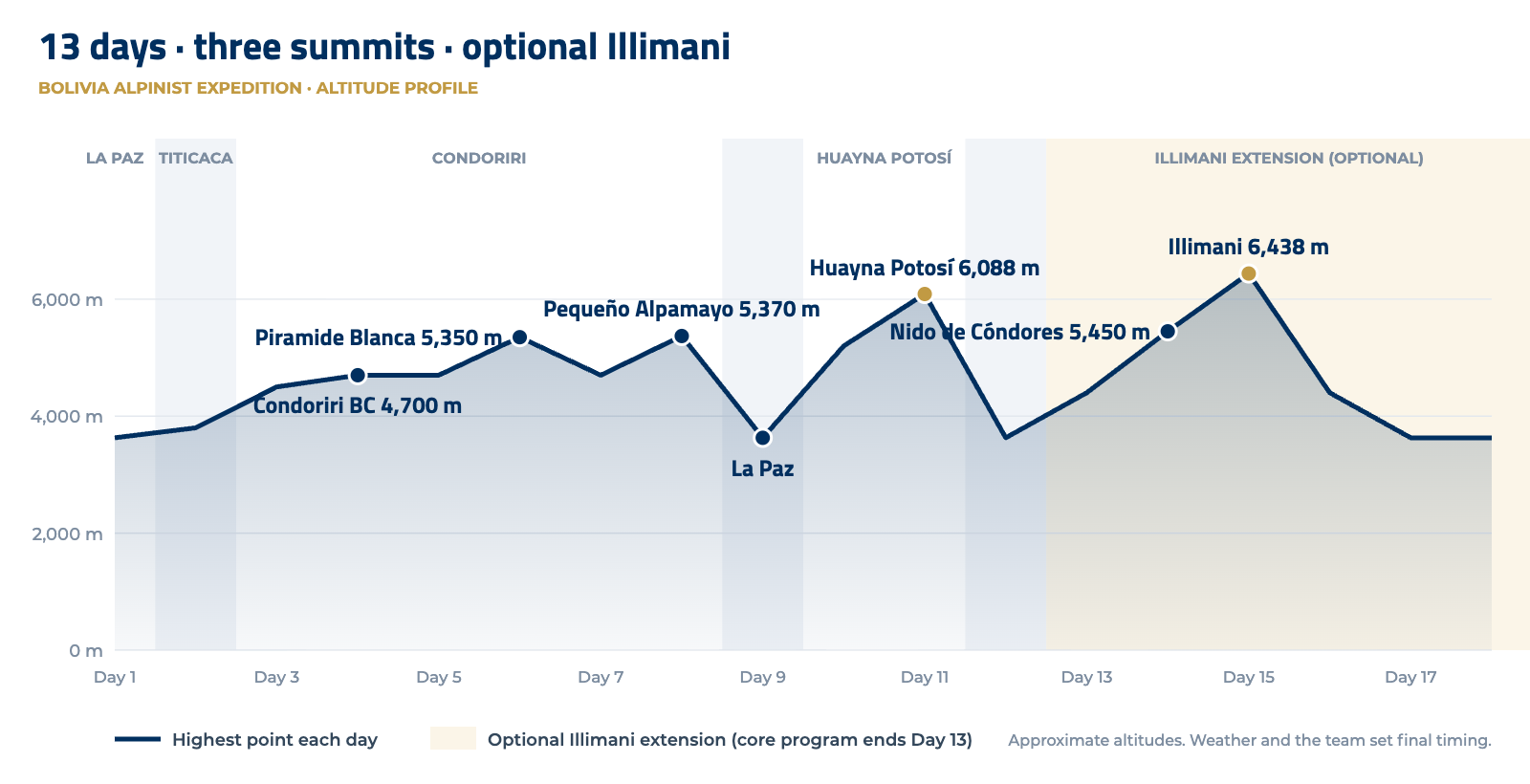
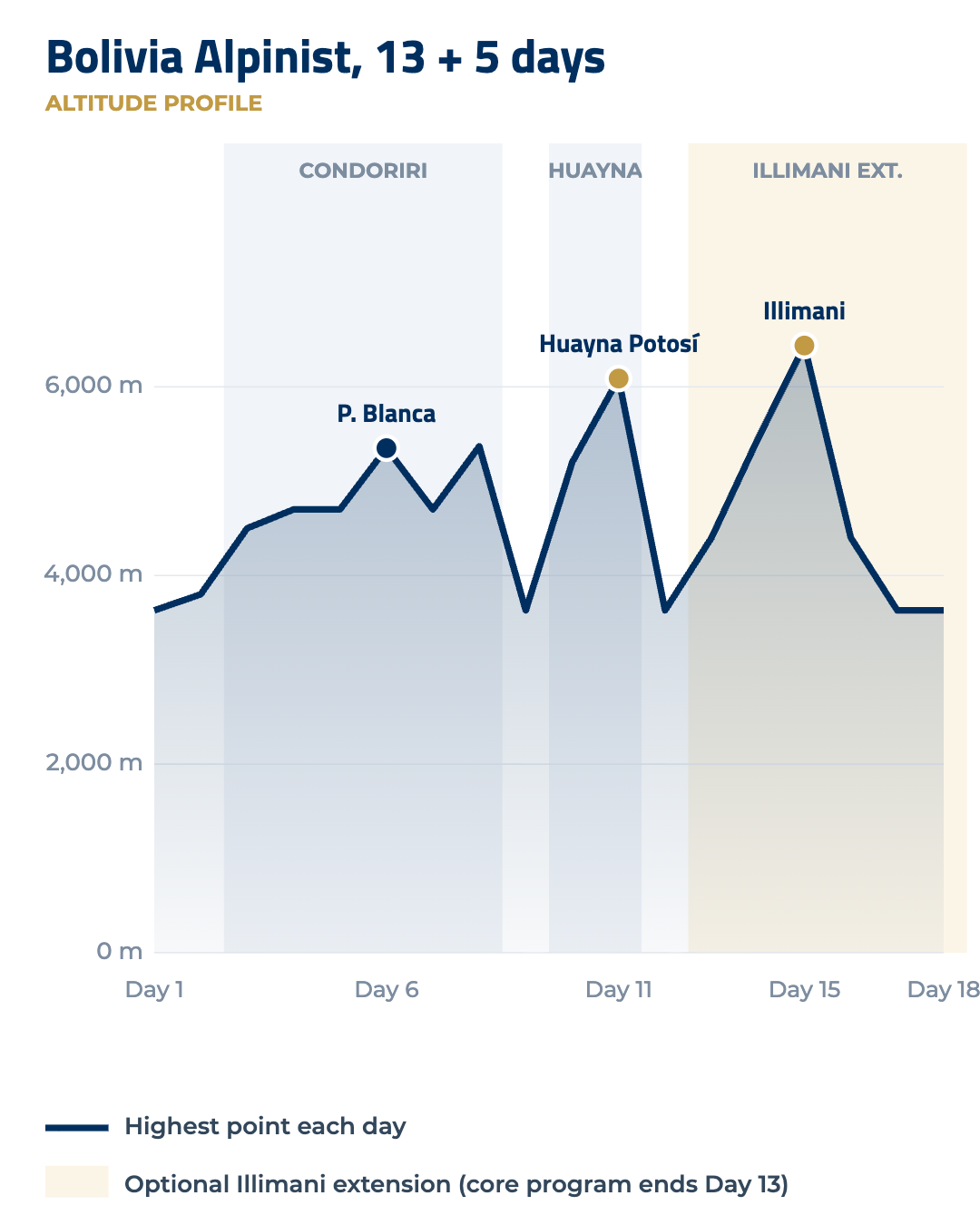
Altitude profile of the Bolivia Alpinist Expedition: Condoriri, Huayna Potosí and the optional Illimani extensionAltitude profile of the Bolivia Alpinist Expedition
Highest point reached each day.

The 12-Day Program at a Glance (+ Illimani Extension)

Each bar shows where you sleep that night. ▲ marks the day’s high point. Tap a day to open it.

In each day below, altitude reads start → high point → where you sleep. Distances and hiking times are estimates.

Climb high, sleep low

Some days climb well above where you sleep. The gap between the day’s high point and the night’s camp is how your body adapts.

Times are estimates

Hiking times change with the team and the conditions. A slow, steady pace is the plan, not a problem.

The plan can flex

Weather, how the team is acclimatizing and your guides’ judgment can change the daily plan. That flexibility is part of the plan.

Good to know

Each day lists its altitudes and where you sleep, plus start times where we have reliable figures. Times are estimates and change with the team and the conditions. The shape of the progression matters more than the numbers.

Weather, how the team is acclimatizing and your guides’ judgment can all change the daily plan. That flexibility is part of the plan, not a departure from it.

Meals

All meals are included throughout the expedition, in La Paz and on the mountain. You pay only for alcohol and personal drinks.

Altitude: land at El Alto, 13,300 ft / 4,060 m · sleep in La Paz, 11,900 ft / 3,627 m

Welcome to Bolivia. A member of the BBE team meets you at El Alto International Airport, at 13,300 ft / 4,060 m, and transfers you to La Paz, set inside a deep Andean valley. The day is for rest, hydration and the start of acclimatization. Depending on your arrival time, we may take a short orientation walk and the guides will do a first equipment review with you.

Sleep: hotel in La Paz

Altitude: 11,900 ft → 12,500 ft / 3,810 m · Travel: drive to Copacabana, boat to Isla del Sol (crossing included)

A scenic drive takes us to Copacabana on the shore of Lake Titicaca, one of the highest navigable lakes in the world. From there we cross by boat to Isla del Sol, the island Andean mythology names as the birthplace of the sun. We hike ancient stone paths through traditional villages and farming terraces with the lake all around. It is a cultural day and an active one, and it does real acclimatization work before the mountains.

Sleep: eco-lodge on Isla del Sol, 12,500 ft / 3,810 m

Altitude: 12,500 ft → Rinconada camp

After sunrise on the island, we return by boat to Copacabana and drive toward the Cordillera Real. The landscape changes from lake country to open high valleys, grazing llamas and snow peaks on the horizon. We reach Rinconada, the gateway to the Condoriri massif, set up camp and take a short acclimatization hike.

Sleep: camp at Rinconada

Altitude: Rinconada → Condoriri Base Camp at Laguna Chiar Khota, about 15,250 ft / 4,650 m

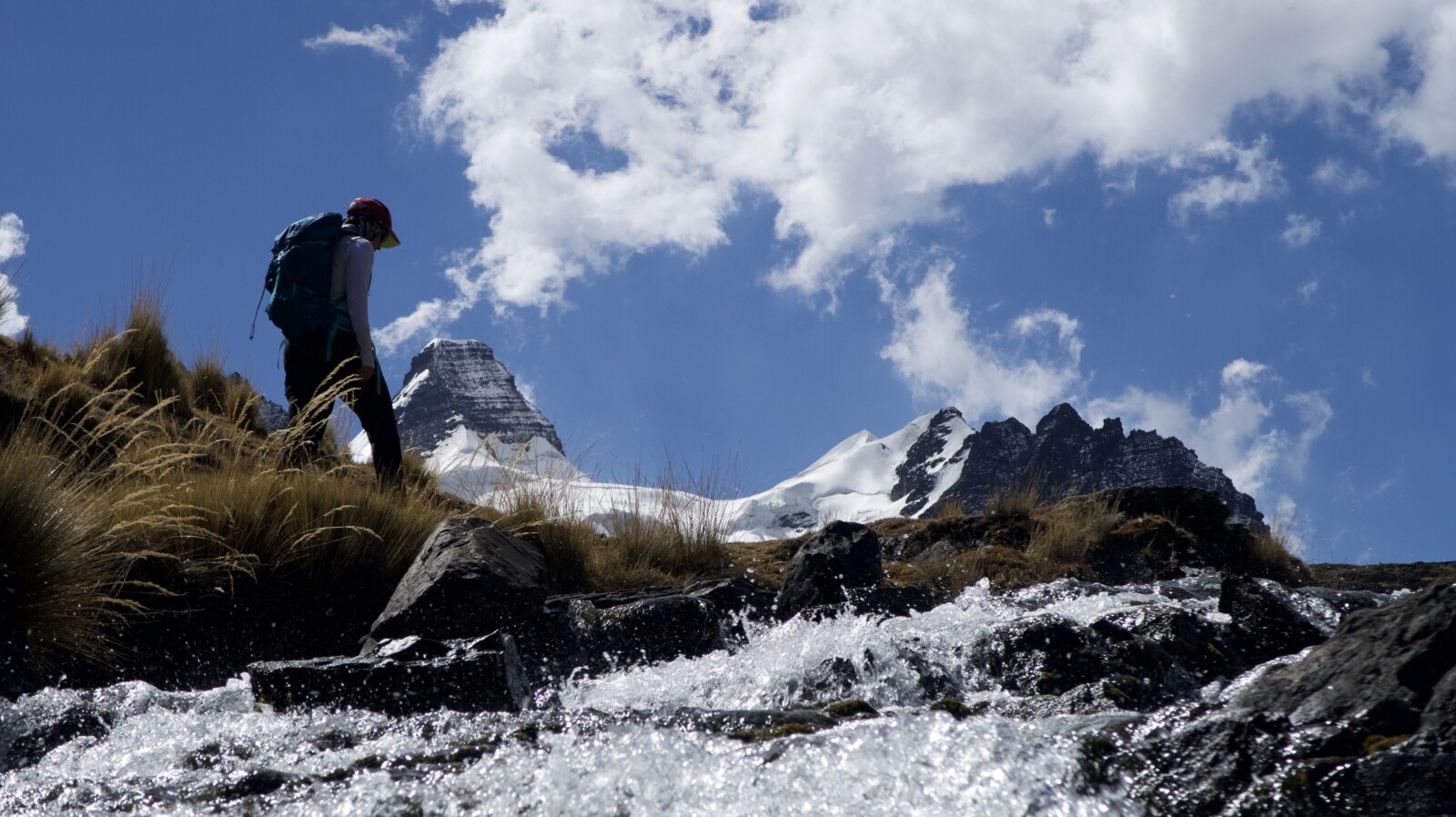
A hike into one of Bolivia’s most beautiful alpine zones. Pack animals carry the expedition gear while we walk a scenic trail to Laguna Chiar Khota beneath the Condoriri peaks. Granite walls and glaciated summits surround camp. We establish Base Camp, organize equipment, and the guides review your gear again and talk through the climbing days ahead.

Sleep: Condoriri Base Camp

Altitude: Base Camp → glacier → Base Camp

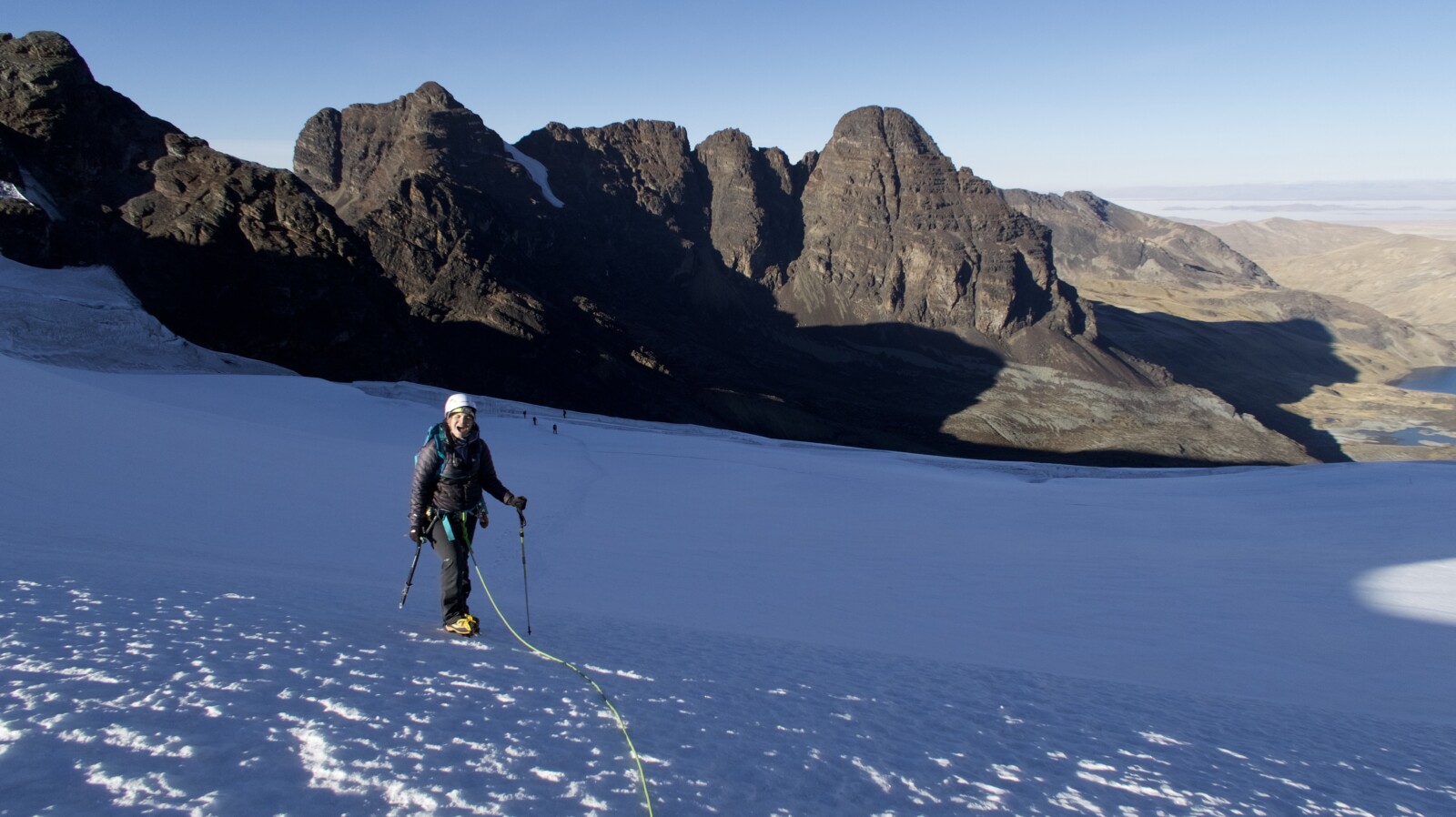
A key day. After breakfast we hike to the glacier for a full alpine training session. Topics may include crampon technique, rope travel, self-arrest, anchor systems, glacier movement, rappelling and moving efficiently. Experienced climbers benefit too: this is where the team’s systems get refined before the summit pushes. It is also an important day of work at altitude.

Sleep: Condoriri Base Camp

Altitude: Base Camp → 17,552 ft / 5,350 m → Base Camp · Start: midnight or 1:00 AM

The first alpine objective. An early start puts us on snow while it is still frozen. Piramide Blanca gives you a real summit in the Cordillera Real while acclimatization continues. The route climbs snow slopes to a summit ridge with views across the Condoriri group. Then we descend to Base Camp to rest and recover.

Sleep: Condoriri Base Camp · High point: Piramide Blanca, 17,552 ft / 5,350 m

Altitude: Base Camp · Hiking: optional

A deliberately lighter day to let your body adapt and recover. Sleep in, hydrate, reorganize gear and enjoy the setting. Climbers who feel strong can join an optional hike to a nearby ridge or lake for extra acclimatization. Rest is part of the plan, not a gap in it.

Sleep: Condoriri Base Camp

Altitude: Base Camp → 17,618 ft / 5,370 m → Base Camp · Start: midnight or 1:00 AM

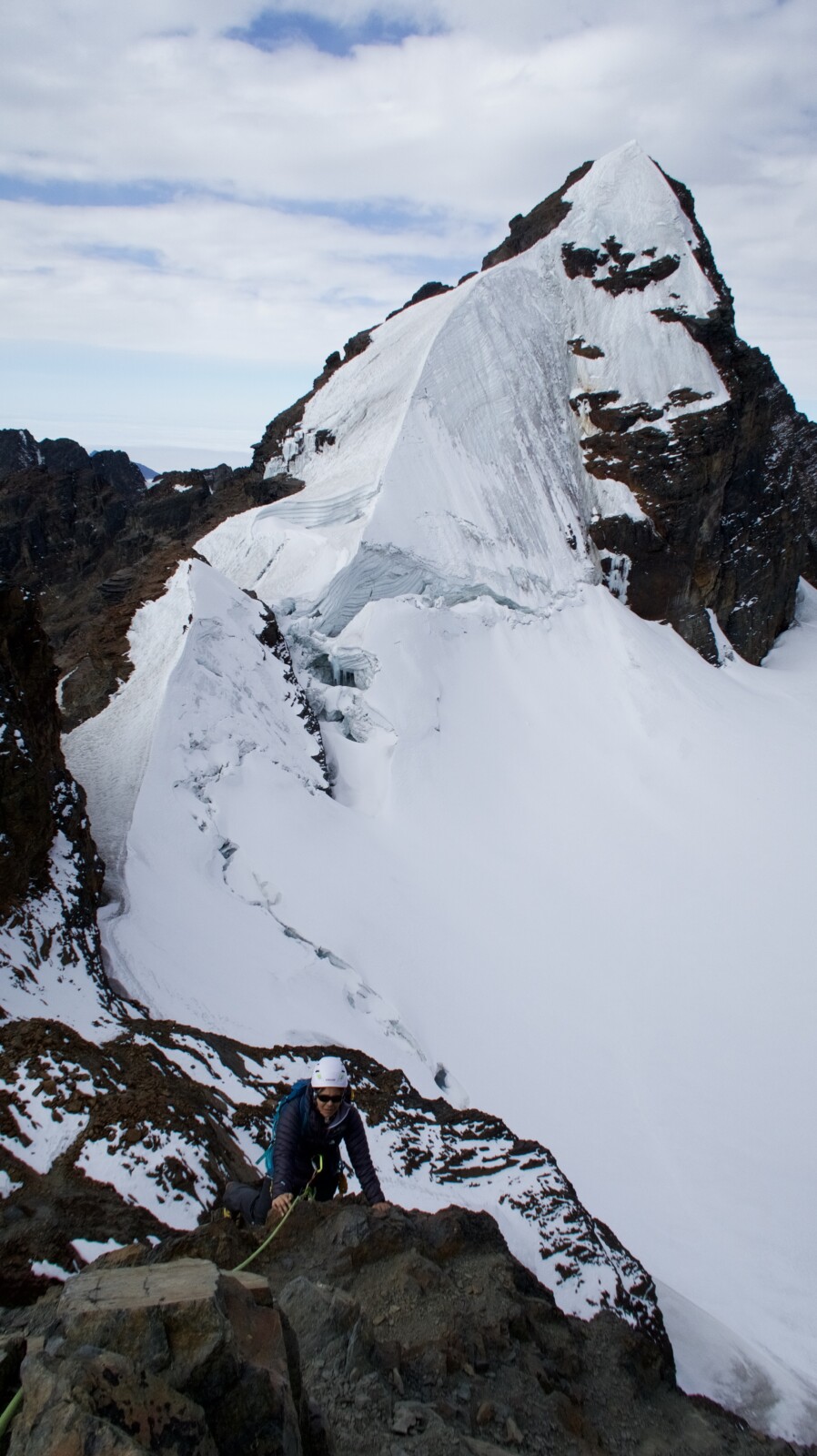
Pequeño Alpamayo is known for its striking summit ridge and its shape. We climb via the Tarija shoulder and continue to the final ridge, where the exposure and the views make this a true alpine day. Then we return to Base Camp.

Sleep: Condoriri Base Camp · High point: Pequeño Alpamayo, 17,618 ft / 5,370 m

Altitude: Base Camp → 11,900 ft / 3,627 m

We break camp and hike back to Rinconada, where transport meets us for the drive to La Paz. Hot showers and a proper bed feel especially good after six nights in the mountains. The evening is for dinner as a team and recovery.

Sleep: hotel in La Paz

Altitude: 11,900 ft → 15,420 ft / 4,700 m

After breakfast we drive to the Zongo area beneath Huayna Potosí. From the trailhead we hike to the mountain refuge with light packs while porters help with the loads. The guides check equipment one more time before the 6,000-meter push. Eat well and rest early.

Sleep: Huayna Potosí refuge, 15,420 ft / 4,700 m

Altitude: 15,420 ft → 19,975 ft / 6,088 m → 11,900 ft · Start: 11:00 PM the night before

A pre-dawn alpine start takes us onto the glacier and up through crevassed slopes to the final summit ridge. As the sun reaches the Cordillera Real, we climb the last steep section to the summit. On a clear morning the view runs from the Andes toward the Amazon basin. We descend carefully to the refuge, then continue down to La Paz the same day.

Sleep: hotel in La Paz · High point: Huayna Potosí, 19,975 ft / 6,088 m

Altitude: 11,900 ft / 3,627 m

A well-earned recovery day in La Paz. Explore the markets, rest and enjoy the city. In the evening the team gathers for a celebration dinner to mark the close of the core expedition. Climbers continuing to Illimani use the day to recover and prepare for the final phase.

Sleep: hotel in La Paz

Airport transfers and departure for climbers finishing the 13-day program. You leave with new skills and three summit attempts behind you. Extension climbers start the drive to Illimani today.

Illimani (21,122 ft / 6,438 m) is the great guardian mountain above La Paz. After 13 days of progressive climbing, extension climbers arrive carrying everything they built in the Condoriri and on Huayna Potosí. That is the strongest position from which to attempt a mountain of this scale.

The extension runs Days 13 to 18 and includes a dedicated reserve day for the summit push.

Altitude: 11,900 ft → Puente Roto Base Camp

Instead of flying home, we drive through rural valleys and farming communities toward Illimani. At Puente Roto Base Camp we organize loads and settle into camp beneath the final objective. On the extension, donkeys carry the loads to Puente Roto Base Camp and porters carry them to Nido de Cóndores; you carry your personal pack.

Sleep: Puente Roto Base Camp

Altitude: Puente Roto → 19,030 ft / 5,800 m

A demanding ascent up rocky ridges and glaciated terrain to Nido de Cóndores High Camp, with the whole Altiplano spread out below. This is the most committing night of the trip: rest, hydrate and prepare for an alpine start.

Sleep: Nido de Cóndores High Camp, 19,030 ft / 5,800 m

Altitude: 19,030 ft → 21,122 ft / 6,438 m → Puente Roto · Start: 11:00 PM the night before

We start under the stars, climbing glacier slopes and narrow ridges toward the summit, which the team aims to reach around dawn. Standing on Illimani is the culmination of more than two weeks of progressive acclimatization and climbing. Then we descend all the way to Base Camp for the night.

Sleep: Puente Roto Base Camp · High point: Illimani, 21,122 ft / 6,438 m

A built-in reserve day for the summit push. If the team summited on schedule on Day 15, we drive back to La Paz today. If weather or conditions delayed the attempt, this becomes the summit day, and the team sleeps at Puente Roto Base Camp.

Sleep: Puente Roto Base Camp, or La Paz if the summit went on schedule

Altitude: → 11,900 ft / 3,627 m

If the reserve day was used for the summit, we drive back to La Paz from Puente Roto today. Either way, the team gathers in La Paz for the celebration dinner to mark the close of the expedition.

Sleep: hotel in La Paz

Airport transfers and departure. You leave Bolivia with glacier skills, up to four summits, and a foundation you can take into whatever you climb next.

Good to Know

Weather and Flexibility

The itinerary carries its buffer where it matters. Day 7 in the Condoriri is a recovery day between the two summits, and the extension has a full reserve day for Illimani.

Objectives may adjust with conditions. Your guides can change the order of days, move a summit attempt or adjust a plan in real time based on the weather and on how the team is actually moving.

Summit days start early for a reason: they put you on frozen snow and get you off exposed ground before the afternoon weather builds. June and July are the dry season in the Cordillera Real, generally dry and stable, but afternoon storms can still build quickly.

No one can promise a summit. Our responsibility is to give the team the strongest responsible opportunity, and to turn around when that is the right call.

For how hard each part feels, read Is This for Me? For hotels, camps and the refuge, see Where You’ll Stay.

The Team Behind the Team

Your guides climb at a 2:1 ratio: one guide for every two climbers. Behind them is a wider team. Drivers handle every transfer. Pack animals carry the expedition gear into the Condoriri. Porters help with loads at Huayna Potosí. Donkeys carry the loads to Puente Roto Base Camp and porters carry them to Nido de Cóndores on the Illimani extension. The expedition team prepares every meal on the mountain.

They are professionals, and we treat them that way.

Is This for Me?

Bolivia Alpinist Expedition · Cordillera Real · An Honest Answer, Not a Sales Pitch

The Bolivia Alpinist Expedition is a true mountaineering program. You will be roped on glaciers above 17,000 feet, climb steep snow and ice in the dark, and do it again several times over two weeks. This is not a trekking trip.

Bolivia’s reputation as an affordable, accessible range is accurate. It is also incomplete. If you have the basics and want to grow as a climber, this can be an outstanding next step. If you are still building those basics, there is a better starting point, and we can help you find it. This page tells you honestly where the line is.

The Bolivia Alpinist Expedition at a Glance

Technical skillRequired. Prior use of crampons, ice axe, harness, helmet and basic roped systems
SummitsPiramide Blanca 17,552 ft / 5,350 m; Pequeño Alpamayo 17,618 ft / 5,370 m; Huayna Potosí 19,975 ft / 6,088 m; Illimani 21,122 ft / 6,438 m on the extension
Altitude experienceAbove 14,000 ft recommended; 16,000 to 18,000 ft ideal
Longest daysSummit days, about 6 to 10 hours on Piramide Blanca and Pequeño Alpamayo, 10 to 14 hours on Huayna Potosí and Illimani
Coldest conditions14°F / -10°C or below at Condoriri Base Camp at night; -4°F / -20°C on summit ridges with wind chill
Training timeAt least 3 to 5 months, structured
FamiliesWelcome
Team sizeMaximum six climbers, one guide for every two climbers

Technical Difficulty vs. What Actually Makes It Hard

On many first big mountains, the difficulty is altitude, not technique. In Bolivia it is both, at a moderate level, again and again.

The technical part. Glacier travel, rope systems, cramponing and steep snow, with moderate ice and exposed ridges. Pequeño Alpamayo’s summit ridge is exposed, and the final section of Huayna Potosí is steep. You do not need vertical ice or advanced alpinism.

Everything around it. Altitude, cold and repetition. Much of the expedition takes place between 15,000 and 20,000 feet. You climb three summits in the core program, four with the extension, with only a day or two between them. Infrastructure is simpler than on more commercialized mountains.

Fitness helps you cope. It does not decide how your body will acclimatize. Altitude affects every climber differently, and smart pacing, hydration, nutrition and previous time at elevation matter as much as strength.

Experience: What’s Required

You should be able to honestly say yes to each of these before booking:

  • You have used crampons, an ice axe, a harness and a helmet in the mountains
  • You have climbed on basic roped systems
  • You are comfortable moving on snow, moderate ice, exposed ridges and uneven mountain terrain for long periods
  • You can move efficiently, keep a steady pace and follow guide instruction on technical terrain

Strongly recommended: prior experience above 14,000 feet. Experience above 16,000 to 18,000 feet is ideal.

If you have completed a mountaineering course, glacier climbs or alpine objectives in places such as the Cascades, Alaska, Ecuador or the Alps, you are likely building the right foundation.

You do not need to be an elite alpinist. Your guides will refine your technique on the Day 5 glacier training day; they cannot build your foundation from nothing on the mountain.

Fitness: What the Days Ask of You

Excellent physical condition is essential. This is not about athletic talent. It is about whether your body keeps working, day after day, when it is tired.

  • Long summit days. Expect about 6 to 10 hours on Piramide Blanca and Pequeño Alpamayo and 10 to 14 hours on Huayna Potosí and Illimani, from an alpine start, with significant elevation gain in cold, thin air.
  • Steep ascents. Snow slopes, glacier and exposed ridges, often in the dark.
  • Several active days in a row. Training day, summit, recovery day, summit, then a move to La Paz and on to Huayna Potosí.

Consecutive hard days are what this trip asks for, more than any single big effort. Train for that.

What You Carry

Pack animals carry the expedition gear into the Condoriri, so you walk with a light pack. Porters help with loads on the way to the Huayna Potosí refuge, and the expedition team prepares every meal on the mountain.

That does not make the days easy. A light pack on glacier terrain above 17,000 feet is still real work, and it is much harder if you are undertrained.

Camping, Cold and Recovery

The core program spends six nights in tents in the Condoriri and one night in the Huayna Potosí refuge at 15,420 ft / 4,700 m. The extension adds tent nights at Puente Roto and at Nido de Cóndores High Camp, 19,030 ft / 5,800 m, the coldest and most committing night of the trip.

Facilities at the remote camps are basic. Sleep is lighter at altitude, and appetite drops above 14,000 feet while your body needs more.

Recovering well between days is a skill: eating when you don’t feel like it, drinking steadily, keeping your gear dry and resting when the schedule allows. Life on the Mountain explains how.

What Will Feel Hard

No sugarcoating. These are the parts that challenge even experienced climbers.

  • The alpine starts. Midnight or 1:00 AM in the Condoriri, 11:00 PM on Huayna Potosí and Illimani. You will be cold and short on sleep, and you need to move well anyway.
  • Repeated summit days. Three in the core program, four with the extension. You need reserves for each one.
  • Altitude. Expect broken sleep, a raised heart rate on moderate effort and occasional headaches.
  • Cold. Base Camp nights drop to 14°F / -10°C or below, and summit ridges reach -4°F / -20°C with wind chill. Wet gear at altitude creates real risk.
  • Simpler infrastructure. Wilderness-style sanitation at the remote camps, no reliable charging on the mountain.
  • Weather uncertainty. June and July are the dry season, but afternoon storms can still build quickly. Some days the team waits. Some days it turns around.

The Summit Days in Brief

Piramide Blanca, Day 6.

A midnight or 1:00 AM start, snow slopes and a summit ridge above the Condoriri group, then back to Base Camp.

Pequeño Alpamayo, Day 8.

After a recovery day: the Tarija shoulder, then an exposed final ridge.

Huayna Potosí, Day 11.

An 11:00 PM start from the refuge, crevassed glacier slopes and a steep last section to 19,975 feet, then down to the refuge and on to La Paz the same day.

Illimani, Day 15 (extension).

An 11:00 PM start from Nido de Cóndores, glacier slopes and narrow ridges to 21,122 feet, then a long descent to Base Camp. A reserve day follows.

The climbers who do well on these days are not the ones who find them easy. They are the ones who knew what was coming and arrived ready for it.

Patience and Following Guide Decisions

Your guides make the calls that shape the climb: when to start, whether to wait for weather, whether to change the order of objectives, and when to turn around.

Do not push through symptoms without telling your guide. With one guide for every two climbers, your guide can see how you are adapting, but only if you say what you are feeling. Descending is a professional decision, not a failure. This expedition only works if you are willing to accept it.

Is This the Right Climb for You?

This climb is a good fit if:

  • You can say yes to every experience requirement above.
  • You’ll commit to at least 3 to 5 months of structured training.
  • You’re comfortable being uncomfortable: cold, early starts, broken sleep.
  • You’re strong, motivated, coachable and patient with acclimatization.
  • You understand the summit is the goal, not the guarantee.
  • You want real alpine objectives at altitude, across several peaks, with a small team.

It’s probably not the right fit if:

  • This would be your first time on crampons, an ice axe or a rope.
  • You’re hoping to learn the basics on the trip.
  • You won’t accept a guide’s pace or turnaround call.
  • You need a summit to feel it was worth it.
  • You are looking for a trekking trip.

Three more things to be clear about before you book:

  • Health. We do not require a medical certificate, but we do expect you to be honest with us and with yourself. If you have a heart, lung, blood-pressure or blood-clotting condition, diabetes, or any condition affected by low oxygen, talk to your physician about high altitude before you commit, and talk to your physician about altitude medication. Every climber completes a registration form that includes medical history.
  • Age. The minimum age is set by Bolivia’s regulations and by insurance: climbers under 18 climb with a parent or guardian, and each climber’s insurance must cover their age. Families are welcome: younger climbers can join a scheduled team with a parent or guardian, or come on a private family expedition built around your family, and if a special permit is needed, we’ll help you apply.
  • Insurance. Rescue and evacuation coverage is required on this expedition. You can buy it any time, but it must be in place before your departure date. Travel insurance is strongly recommended, but not required. See Trip Insurance & Evacuation Coverage.

How to Prepare

Begin structured training at least three to five months before departure. Consistency matters more than occasional hard workouts.

  • Hiking with elevation gain while carrying a pack
  • Running, cycling or uphill cardio sessions
  • Strength training for legs and core
  • Mobility and recovery work
  • Back-to-back endurance days on weekends

Keep your crampon and rope skills current, and if you can, spend time at altitude before the trip. Arriving prepared gives you a real advantage once the climbing starts.

Not Ready Yet? Better Starting Points

If this trip is a stretch right now, that is honest information, not a rejection. It is a sequence.

Come to Bolivia ready, and the experience will be completely different.

Not Sure If You’re Ready?

Ask us, and we’ll tell you straight. With a maximum of six climbers per departure, we have time for a real conversation before you book.

Tell us about your climbing

What you have climbed, how you train and what altitude you have experienced. We will review your background, recommend training, and help you decide whether Bolivia is the right challenge now, or what steps will get you there. See dates and prices. · climbing@benegasbrothers.com
Ask a guide

Before You Go

Bolivia Alpinist Expedition · Before You Go

Preparing for the Bolivia Alpinist Expedition: Start Here

The climbers who do well in the Cordillera Real are almost always the ones who sorted two things early: their boots and their insurance. Most other problems can be fixed in La Paz. Those two can’t. A boot that doesn’t fit is a problem you carry to 19,975 ft, and a policy that excludes glacier travel gets discovered at exactly the wrong moment. This page puts your preparation in order: what to do, when, and where to find the details. Handle it early, and your energy in the final weeks goes into training, not logistics.

Three Things to Know Now

This is a technical glacier expedition. Arrive with the basics.Prerequisite

You need prior experience on crampons, with an ice axe, in a harness and helmet, and on basic rope systems. You don’t need vertical ice or advanced alpinism. The Day 5 glacier session refines your skills; it doesn’t teach them from scratch. Is This for Me? sets out exactly what you need.

Rescue and evacuation coverage is required on this expedition.Required

It must cover helicopter rescue and high-altitude mountaineering to 19,975 ft / 6,088 m, or 21,122 ft / 6,438 m if you join the Illimani extension. You can buy it any time, but it must be in place before your departure date. We recommend Global Rescue (add its High-Altitude Evacuation Package) or Ripcord. Travel insurance is strongly recommended, but not required.

There are no ATMs past La Paz, and tips are given in cash.$250–800

Bring small US bills from home, and draw what else you need in La Paz before the mountains. Tips run about $250–800 per climber, depending on your team size.

Your Seven Preparation Guides

Your Preparation Timeline

When you book

  • Complete the reservation form through the registration link we email you and pay your deposit by the invoice we send, then complete your Registration Form, passport copy, Terms & Conditions and Release there. Your place is confirmed once BBE receives your deposit
  • Check your passport: valid at least six months beyond your return date, with blank pages for entry stamps
  • Buy trip insurance (strongly recommended) soon after your deposit. Pre-existing-condition cover usually depends on it
  • Start structured training: three to five months is the runway we recommend. See Is This for Me?
  • Read the gear list now, so boots and a sleeping bag have time to be bought, fitted and tested

3–5 months before

  • Keep your crampon and rope skills current
  • Break your boots in on real terrain, with your crampons on them
  • Test your sleeping system on a genuinely cold night
  • Add back-to-back training days. Consecutive hard days are what this trip asks for, more than any single big effort

120 days before departure

  • Your balance is due. (If you book within 120 days, full payment is due at booking.)
  • Once you’ve paid in full, book your flights to La Paz. Booking soon after that gives you the best choice of fares. Favor refundable or changeable fares, and email us your itinerary once booked

At least 3 weeks before

  • Tell us about any gear you plan to rent in La Paz, so we can confirm what’s available and reserve it

Any time before departure

  • Buy your rescue and evacuation coverage, if you haven’t already, and email us the certificate. It’s required on this expedition and must be in place before your departure date. Buying early gives you time to replace a policy that doesn’t cover the climb
  • Talk to your physician about altitude, altitude medication and any medical conditions
  • If you don’t hold a US passport, confirm your entry requirements with the Bolivian consulate

The final 2 weeks

  • Send us any medication list or medical information your guides should know
  • Do a full pack-out using the gear list: two duffels, with boots and a set of layers in your carry-on
  • Arrange your cash for tips, personal spending and an emergency reserve, in a mix of small and large US bills
  • Save copies of your passport, insurance and itinerary to your phone and the cloud
  • Ease off your training. Arrive rested, not worn out

Arrival day

A member of the BBE team meets you at El Alto International Airport and takes you to your hotel in La Paz. La Paz is high enough that your first evening is deliberately quiet: check in, eat, drink water and sleep while your body starts adapting. Depending on your arrival time, we may take a short orientation walk and do a first look at your equipment with the guides. From then on, logistics are our job. Yours is climbing.

Still Deciding?

This section assumes you’re going. If you’re still working out whether Bolivia is right for you this season, the honest questions are narrower than they look. Do you already have real hours on crampons and in a harness? Is three to five months of consistent training realistic before June? And do you want the Illimani extension? That decision changes the trip from 13 days to 18, and from a 19,975 ft summit to a 21,122 ft one.

Start with Is This for Me? and Your Questions. If Bolivia isn’t the right fit yet, the Ecuador Mountaineering School, the Peru Alpinist expedition (Alpamayo & Quitaraju) and Aconcagua are worth a look. For different dates or your own team, see Private & Custom Expeditions.

Questions While You Prepare?

Whether your boots will take your crampons, whether a policy exclusion you’ve spotted actually matters, whether your training is on track for a June departure: ask early. Small questions are easiest to solve months out.

Your Expedition Checklist

The climbers who arrive in La Paz relaxed are the ones who handled the paperwork months ago, not weeks. None of it is complicated, but a few pieces take time, and one or two can’t be fixed once you’ve landed at El Alto. This page lists everything BBE needs from you, what you arrange yourself, and when.

Your Paperwork at a Glance

Everything BBE needs from you, in the order you’ll do it. Tick items off as you go; your ticks are saved on this device. The details for each item are below.

Step 1At booking, in the registration formDone together with your deposit

Step 2Buy, then send to BBEEmail climbing@benegasbrothers.com

Step 3Arrange and carryNeeded on the trip

At Booking

How booking works. Email climbing@benegasbrothers.com. We review your experience honestly, answer your questions, and reply by email with the trip details and a link to our online registration form. Everything in this section is done there.

Reservation form and deposit. Complete the reservation form (your full name, email, date of birth and address, plus any notes for our program staff) and pay your deposit by the invoice we send. Your place is confirmed once BBE receives your deposit. Amounts and deadlines are on Dates & Prices.

Complete at booking. With your deposit, complete your Registration Form (personal profile, emergency contacts, medical history and climbing experience), upload a copy of your passport photo page, and sign the Terms & Conditions and the Release. Be thorough and honest about both your health and your climbing experience. It protects you, and it tells your guides what they need to know before you tie in together. Read the Release carefully. It means what it says.

Balance payment. Due 120 days before departure. If you book within 120 days of departure, full payment is due at booking.

Send Us Before Departure

Passport copy. Your passport copy goes in the registration form at booking. If you renew your passport before the trip, send us the new data page.

Rescue and evacuation certificate. Rescue and evacuation coverage is required on this expedition. You can buy it any time, but it must be in place before your departure date, and we need the certificate before you travel. It should show the provider, your policy or membership number, the coverage limits, and confirmation that high-altitude mountaineering and helicopter rescue are included. Travel insurance is strongly recommended, but not required. See Trip Insurance & Evacuation Coverage.

Flight itinerary. As soon as you’ve booked, so we can meet the right flight at El Alto.

Medical information. Any medication list or medical information your guides should know about, no later than two weeks before departure.

Permits and Local Fees: Who Does What

BBE arranges the permits, and they’re included. All mountain access, park and climbing permits for the Condoriri massif, Huayna Potosí and, on the extension, Illimani are coordinated by BBE and included in your expedition price. You don’t apply for anything or queue at a park office.

Small local fees. Some community and refuge fees are collected on the ground. If a fee changes after publication and isn’t already in your trip price, it’s passed through to you at cost, with no markup. Carry a modest amount of bolivianos for these. They’re set by the communities and refuge operators, not by us.

Entry to Bolivia

US passport holders enter Bolivia visa-free for tourist stays of up to 90 days, a rule in force since December 2025. Entry is granted on arrival with a valid passport.

Canada, UK, EU and other passports. Check the current rules with the Bolivian consulate or embassy for your country before you book flights. Tell us which passport you hold and we’ll help you confirm.

Bolivian immigration may ask for proof of onward travel, so keep your return itinerary easy to reach. The full details are on Flights & Getting to La Paz.

Health Preparation

No medical certificate required. We don’t ask for a doctor’s certificate. We do ask you to be honest with us, and with yourself.

See your physician. This expedition sleeps above 14,000 ft for a week and climbs above 19,000 ft. If you have a cardiac, respiratory, blood-pressure or blood-clotting condition, diabetes, or any condition affected by low oxygen, have it evaluated for high-altitude activity before you book, and tell us what your doctor said.

Altitude medication. If you’re considering medication to help with altitude, talk to your physician well before departure. It’s a decision for you and your doctor, not for us. If you carry any, tell your guide on Day 1 so it’s part of the picture rather than a surprise at the refuge.

Prescription medications. Bring enough for the full trip plus several extra days, in the original packaging, in your carry-on.

Travel clinic. Make sure your routine vaccinations are current, and ask your clinic about yellow fever. A certificate is generally only relevant if you’re arriving from a risk country or visiting Bolivia’s lowlands. Your clinic will advise based on your health history and travel plans.

First aid. Bring a small personal kit for blisters, minor aches and an upset stomach. Your guides carry a first aid and emergency kit on every climbing day.

Gear and Rentals

Read the gear list early. Boots and a sleeping bag need time to be bought, fitted and tested. Break your boots in on real terrain with your crampons on them, and test your sleep system on a genuinely cold night. Nothing should be used for the first time on the glacier.

Rentals in La Paz. Crampons, ice axes, harnesses, helmets and sleeping bags can be rented in La Paz through local outfitters. Tell us at least three weeks before departure so we can confirm what’s actually available and reserve it.

Boots. We don’t recommend renting boots for this climb. Fit matters too much, and a boot problem on Huayna Potosí can’t be solved on the mountain.

Travel

Passport. Valid at least six months beyond your return date, with blank pages for entry stamps. Check the expiry date today. Renewals take longer than most people expect.

Flights. Book your flights to La Paz once your place is confirmed and you’ve paid in full. Booking soon after that gives you the best choice of fares. Favor refundable or changeable fares, and book on one itinerary so your bags check through.

Arrive early. Plan to land in La Paz at least one full day before the expedition begins, two if your schedule allows. Flights & Getting to La Paz explains why.

The Final Two Weeks

  • Do a full pack-out using the gear list: two duffels, every item packed the way it will travel, with your boots and a set of climbing layers in your carry-on
  • Arrange your cash for tips, personal spending and an emergency reserve, in a mix of small and large US bills. There are no ATMs past La Paz (see What to Budget For)
  • Ease off your training. Arrive rested, not worn out
  • Save copies of your passport, insurance certificate and itinerary to your phone and a cloud account

Bring With You to Bolivia

  • Passport, valid six months beyond your return date
  • Printed flight and hotel confirmations, and proof of onward travel
  • Your rescue and evacuation insurance certificate and your insurer’s emergency number
  • A written list of emergency contacts and relevant medical information
  • Prescription medications in their original labeled containers
  • A credit card for hotel incidentals and emergencies
  • Small US bills

Arrival Day

A member of the BBE team meets you at El Alto International Airport and takes you to your hotel in La Paz. La Paz is high enough that your first evening is deliberately quiet: check in, eat, drink water and sleep while your body starts adapting. Depending on your arrival time, we may take a short orientation walk and do a first equipment review with your guides. From then on, the logistics are our job. Yours is climbing.

Paperwork is the least interesting and most fixable part of expedition preparation. Ask early.

Questions?

Ask a guide · Back to Before You Go · climbing@benegasbrothers.com
Trip Insurance & Evacuation Coverage

Huayna Potosí reaches 19,975 ft / 6,088 m, and Illimani 21,122 ft / 6,438 m if you join the extension. Every summit on this expedition is on glaciated terrain. Many travel-insurance policies exclude mountaineering, glacier travel or anything above a set elevation, and the exclusion is usually buried in the fine print. This page explains the two kinds of cover, which one is required, and how to confirm yours before you pay.

Required by BBERescue and evacuation coverage

Required on every BBE international expedition. It pays to get you off the mountain and to proper medical care. The coverage it must include for this trip is listed below.

Strongly recommendedTrip insurance

Protects the money you’ve spent if illness, a family emergency or a travel disruption stops or cuts short your trip.

Rescue and Evacuation Coverage: Required

Rescue and medical evacuation coverage is required on this expedition. Bring proof of cover, or you don’t climb. It pays for rescue, emergency treatment and transport to medical care if you’re injured or ill in the mountains.

BBE doesn’t pay evacuation or medical costs on behalf of a climber. A helicopter out of the Cordillera Real is expensive, and it’s billed to you or your insurer. That is the honest reason this requirement exists.

Your policy must cover all of the following:

  • Altitude: high-altitude mountaineering up to at least 19,975 ft / 6,088 m, the summit of Huayna Potosí, and up to 21,122 ft / 6,438 m if you’re joining the Illimani extension.
  • Helicopter rescue, where available, stated explicitly in the policy, and ground evacuation.
  • Activity: glacier travel and technical mountaineering with crampons, ice axe, harness and rope, with no mountaineering exclusion.
  • Field rescue: evacuation from remote mountain terrain, including the Condoriri camps, the Huayna Potosí refuge at 15,420 ft / 4,700 m and, on the extension, Nido de Cóndores High Camp at 19,030 ft / 5,800 m.
  • Destination: Bolivia, for your full travel dates.
  • Emergency medical treatment in Bolivia.
  • Medical transport: repatriation and international medical transport if needed.

Providers we recommend:

  • Global Rescue, with the High-Altitude Evacuation Package added. Standard Global Rescue membership doesn’t cover field rescue above 15,000 ft / 4,600 m, and every summit on this expedition is higher than that, so the package isn’t optional here.
  • Ripcord Rescue Travel.

You may use any provider whose policy genuinely covers every point above.

When to Buy It

You can buy your rescue and evacuation coverage any time before your departure date, as long as it is in place by then, and we need your certificate before you travel. There’s no earlier deadline.

Buying early still makes sense. It costs nothing extra, and it leaves you time to replace a policy that turns out not to cover the climb.

Trip Insurance: Strongly Recommended

Trip insurance isn’t required on this expedition, but we strongly recommend it. It’s separate from rescue cover, and worth more than most climbers assume. Comprehensive trip insurance covers trip cancellation and interruption, flight delays and missed connections, lost or delayed baggage, and medical costs while traveling.

The expedition runs on a fixed itinerary with limited slack. A missed connection, delayed baggage or illness in the week before departure can cost you the trip, and BBE’s cancellation terms apply whatever the reason you can’t travel (see Dates & Prices). In many of those situations, trip insurance is the only realistic way to recover your costs.

Buy it when you book. Most policies only cover conditions that arise after the policy starts, and some benefits, such as pre-existing-condition waivers, depend on buying early. Premiums are set by the insurer and vary with your age, your provider and your coverage, so we don’t publish a figure.

Rescue cover and trip insurance are often sold separately, and buying one doesn’t give you the other.

What to Confirm With Your Insurer

Before you buy, give the provider this description:

“I will take part in a professionally guided mountaineering expedition in the Cordillera Real, Bolivia. The itinerary includes roped glacier travel with crampons, ice axe and harness, steep snow and ice, rappels, six nights camping in the Condoriri massif, a night in a mountain refuge at 15,420 ft / 4,700 m, and summit attempts reaching 17,552 ft / 5,350 m, 17,618 ft / 5,370 m and 19,975 ft / 6,088 m. On the optional extension: a night at a high camp at 19,030 ft / 5,800 m and a summit attempt on Illimani, 21,122 ft / 6,438 m.”

Then ask them to confirm in writing:

  • The maximum altitude covered, and that it is at least 6,088 m, or 6,438 m with the extension
  • That helicopter rescue is included
  • That glacier travel and technical mountaineering are not excluded
  • If you use Global Rescue, that the High-Altitude Evacuation Package is on your membership for your travel dates
  • The coverage limits for evacuation and for medical treatment
  • How to reach their emergency assistance line from Bolivia, and whether you must call before an evacuation
  • Whether pre-existing conditions are covered, and what the purchase deadline is

The insurance that came with your credit card almost certainly won’t meet the rescue requirement. Card-included policies very rarely cover roped glacier travel above 15,000 ft, and many exclude mountaineering outright. Read the exclusions, not the summary.

If an insurer won’t clearly confirm those points, choose another policy.

What to Send BBE

Email your rescue and evacuation certificate to climbing@benegasbrothers.com before you travel. It should show the provider, your policy or membership number, your coverage dates and limits, confirmation that high-altitude mountaineering and helicopter evacuation are included, and the emergency number. Your guides carry these details on the mountain. Keep a copy on your phone and a paper copy in your pack.

BBE doesn’t sell insurance and can’t interpret or guarantee an individual policy.

What Evacuation Actually Involves

Mountain rescue in the Cordillera Real isn’t like calling emergency services at home. The camps are remote, the terrain is glaciated, and above the trailheads everything moves on foot or on a rope.

If a climber becomes sick or injured, the guide team assesses the situation and decides on the safest practical response. That can include first aid and stabilization, stopping the climb, an assisted descent, contacting rescue services and your insurer’s assistance line over the team’s satellite and radio communications, and arranging transport to medical care in La Paz. Descent is the treatment for altitude illness. Turning around is a professional decision, not a failure.

Helicopter rescue in Bolivia is available but not guaranteed. Weather, wind, cloud and altitude all limit when a helicopter can fly. On parts of this program, the Illimani high camp in particular, a ground evacuation is the realistic scenario. Your policy needs to cover both.

BBE doesn’t control rescue services, aircraft, hospitals or insurance decisions, and a policy doesn’t guarantee that a rescue can happen or that every cost will be paid. What good coverage does is take cost out of the decision and get you to proper care quickly once you’re off the mountain.

Your financial responsibility. Rescue teams, transport providers and hospitals may ask for payment before they act, even when you’re insured. Travel with a credit card with real available credit, and save your policy number, emergency number and claim instructions offline. Any cost your insurance doesn’t pay remains yours.

Send us what your insurer told you, and we’ll tell you if anything looks missing. We can’t approve a policy for you, but we can point out the gaps we see most often.

Questions About Your Policy?

Ask a guide · Back to Before You Go · climbing@benegasbrothers.com
Flights & Getting to La Paz

Bolivia has fewer direct international routes than the bigger South American hubs, so nearly everyone connects through another gateway city. That makes the routing worth a little thought. The arrival deserves more thought than most people give it: El Alto International Airport sits at 13,300 ft / 4,060 m, and you’ll feel it on the jet bridge. The guidance below gets you to La Paz with your bags, your energy and a day to spare.

Before You Book

Book your flights to La Paz once your place is confirmed and you’ve paid in full. Booking soon after that gives you the best choice of fares. Favor refundable or changeable fares. Book with your full legal name exactly as it appears in your passport.

Book everything on one complete itinerary whenever you can. It protects you on missed connections, checks your bags through to La Paz, and removes the most common source of pre-expedition stress. Email your itinerary to climbing@benegasbrothers.com as soon as you’ve booked, so we can meet the right flight.
Flying to La Paz

Every climber flies into El Alto International Airport, airport code LPB. It is your arrival and departure airport for the expedition.

Common routings:

  • LATAM via Lima: our usual recommendation. A strong South American network, efficient Bolivia connections, bags checked through and good one-ticket options.
  • Avianca via Bogotá: a strong alternative, with competitive fares and efficient connections.
  • American Airlines often routes through Miami and on via Lima. United can work, depending on your departure city.

For most travelers Lima is the better connection point: more frequency, stronger onward service, and easier rebooking when something goes wrong. Schedules change by season, so check current flights for your dates, and avoid tight connections.

When to Arrive

Arrive at least one full day before the expedition begins, two if your schedule allows. Of everything on this page, this is the advice that most often separates a climber who performs well from one who spends the first four days catching up:

  • Your acclimatization starts on arrival. La Paz altitude is doing real work for you while you sleep
  • You recover from travel and jet lag before the first mountain day
  • You have time to solve a delayed-luggage problem before it becomes an expedition problem
  • You start the trip rested instead of depleted

Land in the afternoon or early evening if you can, roughly 3:00 to 9:00 PM. That gives you time to clear customs without rushing, meet your transfer, check in, eat something and sleep.

Tell us your plans and we’ll book your extra nights at the same or a similar hotel, at your cost.

Arriving at 13,300 Feet

El Alto sits at 13,300 ft / 4,060 m. La Paz, where you sleep, is lower, around 11,900 ft / 3,627 m, because the city drops into a valley below the airport.

You’ll feel the altitude the moment you stand up. Shortness of breath on the walk to baggage claim, a slightly faster heart rate and broken sleep the first night are normal adaptation, not altitude sickness. Move slowly, drink water, and don’t schedule anything demanding for your first evening. Tell your guide about any headache or nausea rather than waiting.

Booking Your Flight Home

The core expedition ends on Day 13. The best flights home generally leave between about 11:00 AM and 5:00 PM. That gives the expedition a relaxed close and avoids a pre-dawn airport transfer after a demanding final push.

Joining the Illimani extension? Build your return around Day 18, the extension’s final day, not the core program’s. The two end five days apart.

Airport Transfers: Included

Airport transfers in La Paz are included on the scheduled arrival and departure days. So is all scheduled ground transport during the expedition: to Copacabana and Lake Titicaca, including the boat crossing to and from Isla del Sol, into the Condoriri, to Huayna Potosí, back to La Paz, and to Illimani on the extension. Send us your flight details well in advance so we meet the right flight.

If you arrive early or leave on a different day, and we hope you’ll arrive early, the extra transfers are at your cost. Tell us anyway and we’ll help arrange them.

Your Passport

Valid at least six months beyond your return date, with blank pages for entry stamps. Check the expiry date today rather than the week before you fly. A passport problem is the one reason a climber misses a trip that nobody can fix at the airport. Carry a photo of the data page on your phone, stored somewhere you can reach without signal.

Entering Bolivia

US passport holders enter visa-free for tourist stays of up to 90 days, a rule in force since December 2025. Entry is granted on arrival with a valid passport.

Canada, UK, EU and other passports. Rules vary and change. Check your requirements with the Bolivian consulate or embassy for your country before you book flights. Tell us which passport you hold and we’ll help you confirm. We deliberately don’t publish a country-by-country list: immigration rules shift, and an out-of-date page is worse than none.

Proof of onward travel. Bolivian immigration may ask for it. Keep your return itinerary where you can reach it, not buried in an email.

Baggage

Travel with two duffels rather than your pack, since baggage handling damages straps. Lock both with TSA-approved locks or zip ties.

  • Your main duffel travels with you to Lake Titicaca and the climbs. Pack animals carry it into the Condoriri.
  • Your second duffel holds city clothes and a clean change of mountain clothes. It stays at the hotel in La Paz while you’re on the mountain.

Checked-bag allowances and any extra-bag charges are set by your airline, not by us. Check your specific fare before you fly. Crampons and ice axes go in checked luggage, with points and picks covered.

What goes in your carry-on:

  • Passport, flight itinerary, and our contact details
  • Your rescue and evacuation insurance certificate (required on this expedition)
  • Prescription medications
  • Your boots and your primary layering system
BBE tip

Crampons, ice axes, harnesses, helmets and sleeping bags can be rented in La Paz at a pinch. Correctly fitted boots can’t. A lost bag with your boots in it is the one baggage problem that ends a climb. Drop a tracking tag in each duffel.

Money on Arrival

Bolivia’s currency is the boliviano (BOB). US dollars are widely accepted at hotels and larger restaurants in La Paz. Local currency is what you want for markets, small restaurants and small purchases.

ATMs are available throughout La Paz and accept major international cards. There are none at the Condoriri camps, the Huayna Potosí refuge or anywhere near Illimani, so withdraw what you need in La Paz before the mountains. Bring small US bills from home for tips. What to Budget For covers how much.

If Something Goes Wrong

Flight delayed, cancelled or connection missed. Contact us right away at climbing@benegasbrothers.com, before you rebook if you can, and we’ll work out the best way to get you to the team. Extra hotel nights, transfers and flight changes caused by travel disruption are your cost. This is where trip insurance earns its price.

Bag delayed. Report it to the airline before you leave the airport, then tell us. We can help you rent what you need in La Paz.

Travel problems are solvable. Late information is what makes them expensive.

A quick email now saves rebooking fees later.

Questions Before You Book?

Ask a guide · Back to Before You Go · climbing@benegasbrothers.com
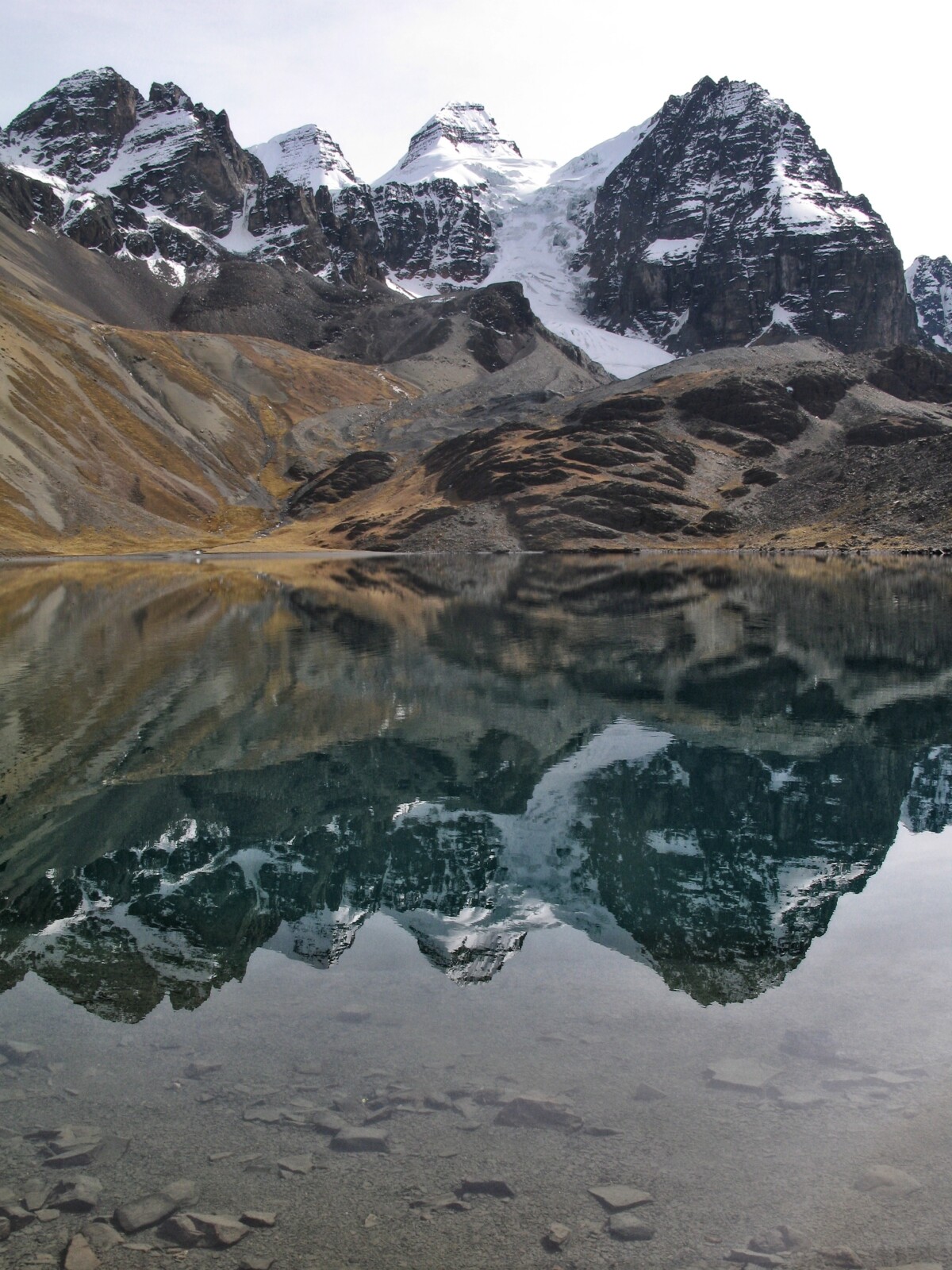
Where You'll Stay

Recovery happens where you sleep. Warmth, food and rest between hard days are what add up to strong summit days. On the 13-day core expedition you spend four nights in a La Paz hotel, one in an eco-lodge on Isla del Sol, six in tents in the Condoriri and one in the Huayna Potosí refuge. The Illimani extension adds up to four mountain nights and a final night in La Paz.

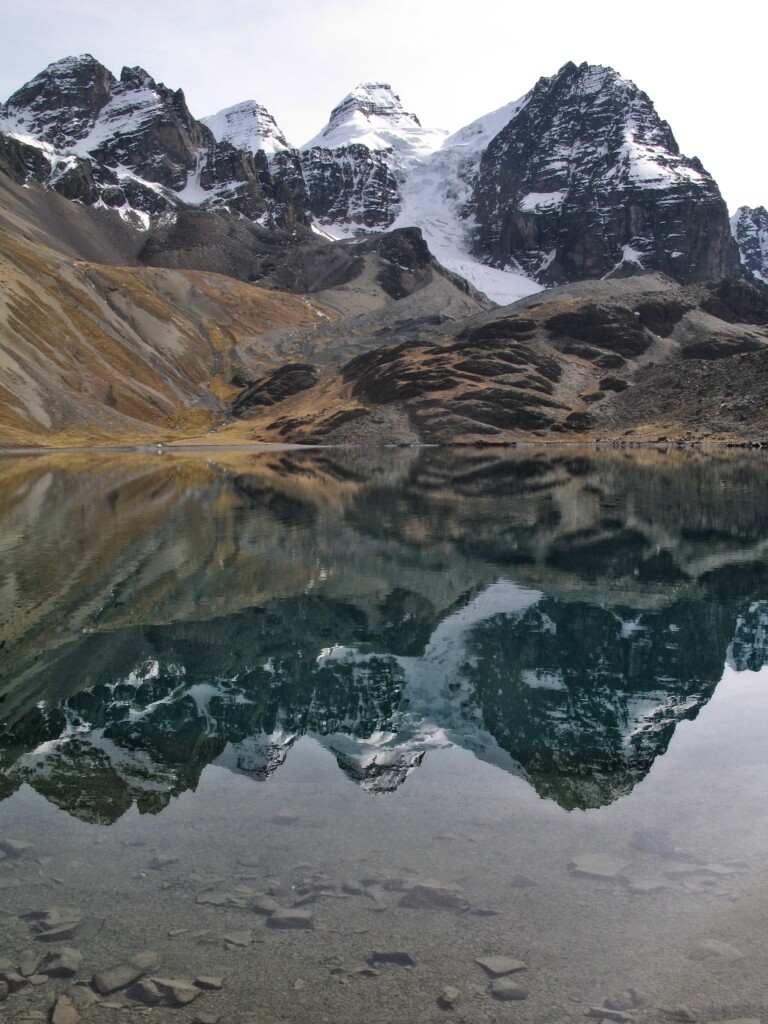
Lake and peaks in the Cordillera Real, Bolivia

The standard drops as the altitude rises, and that’s deliberate. Every night is chosen to support recovery, acclimatization and efficient mountain operations. Bolivian mountain infrastructure is simpler and less commercialized than many destinations, so here is exactly what to expect.

Night by Night: The Core Expedition

  • Night 1 (Day 1): Hotel, La Paz, 11,900 ft / 3,627 m
  • Night 2 (Day 2): Eco-lodge, Isla del Sol, Lake Titicaca, 12,500 ft / 3,810 m
  • Night 3 (Day 3): Camp at Rinconada, gateway to the Condoriri massif
  • Night 4 (Day 4): Condoriri Base Camp at Laguna Chiar Khota, about 15,250 ft / 4,650 m
  • Night 5 (Day 5): Condoriri Base Camp, after the glacier skills day
  • Night 6 (Day 6): Condoriri Base Camp, after Piramide Blanca
  • Night 7 (Day 7): Condoriri Base Camp, recovery day
  • Night 8 (Day 8): Condoriri Base Camp, after Pequeño Alpamayo
  • Night 9 (Day 9): Hotel, La Paz
  • Night 10 (Day 10): Huayna Potosí refuge, 15,420 ft / 4,700 m
  • Night 11 (Day 11): Hotel, La Paz, after the Huayna Potosí summit
  • Night 12 (Day 12): Hotel, La Paz, rest day and celebration dinner
  • Day 13: Transfer to El Alto and your flight home, or on to Illimani

Night by Night: The Illimani Extension

  • Night 13 (Day 13): Puente Roto Base Camp
  • Night 14 (Day 14): Nido de Cóndores High Camp, 19,030 ft / 5,800 m
  • Night 15 (Day 15): Puente Roto Base Camp, after the Illimani summit
  • Night 16 (Day 16): Reserve day. Hotel, La Paz, if the summit went on schedule on Day 15 and the team has driven back; Puente Roto Base Camp if the reserve day is used for the summit
  • Night 17 (Day 17): Hotel, La Paz, after the celebration dinner
  • Day 18: Transfer to El Alto and your flight home

La Paz and Isla del Sol

La Paz: a comfortable hotel in Miraflores or Sopocachi · four nights, Days 1, 9, 11 and 12. Extension climbers add Night 17. Both neighborhoods are well located for gear organization, rest and services, and quieter than the city center while staying close to everything you need. At 11,900 ft / 3,627 m, simply being here starts your acclimatization. Expect some breathlessness, a slower pace and fatigue for the first day or two. That’s normal, and it’s working. Hot showers and proper beds on Nights 9 and 11, after the Condoriri and after Huayna Potosí, feel considerably better than they sound on paper.

Isla del Sol: eco-lodge · one night, Day 2. On Lake Titicaca, at about 12,500 ft / 3,810 m, on the island Andean mythology names as the birthplace of the sun. Lodging is simple, clean and scenic. The gain over La Paz is modest and entirely deliberate: this is an acclimatization night that happens to be a cultural one too.

In town:

  • Hot showers and proper beds
  • Power for charging in La Paz
  • All meals included, as on the rest of the expedition; alcohol and personal drinks are your own
  • Secure storage at the La Paz hotel for your second duffel and town clothes while you’re on the mountain

Room sharing. Hotel rooms are double occupancy as standard.

Single rooms. Available on request; we’ll quote the cost when you ask. Tell us your preference when you register rather than on arrival.

Extra nights. If you arrive early, and we recommend it, or leave late, we’re happy to book you into the same or a similar property at your own cost. Contact us in advance and we’ll coordinate it rather than leaving you to sort it out from the airport.

On the Mountain: Camps and the Refuge

From Day 3 you move into expedition camps. Camp life is expedition style: sleeping tents, a cook tent and access to clean glacial water. Pack animals carry the expedition gear into the Condoriri, so you walk with a light pack. On Huayna Potosí, porters assist with logistics on the hike to the refuge.

On the mountain you’ll have:

  • Sleeping tents at every camp, shared as standard
  • Hot meals cooked by the expedition team
  • A cook tent at camp
  • Starlink in camp for a limited connection home

You bring your own sleeping bag, an inflatable sleeping pad and a closed-cell foam pad (see the Bolivia Alpinist Gear List). There are no showers at the camps.

The Camps

Rinconada · Night 3. The gateway to the Condoriri massif, reached by road from Copacabana. You settle into camp and take a short acclimatization hike.

Condoriri Base Camp · about 15,250 ft / 4,650 m · Nights 4–8. Tents at or near Laguna Chiar Khota, beneath the Condoriri peaks, in one of Bolivia’s most beautiful alpine zones. Both Condoriri summits and the glacier skills day leave from here. This is the cold part of the core program. Nights drop to 14°F / −10°C or below. A pad that genuinely insulates you from frozen ground and an expedition sleeping bag rated to −20°F / −29°C matter here: a cold night before a summit day leaves you depleted before you start.

Huayna Potosí refuge · 15,420 ft / 4,700 m · Night 10. The mountain’s established high refuge: bunk sleeping, meals and basic facilities, including toilets. Well run, and entirely adequate for a pre-summit night. It isn’t a hotel and doesn’t need to be. You’ll be up at 11:00 PM anyway. Bring earplugs: a refuge full of climbers preparing for an alpine start is not a quiet building.

Puente Roto Base Camp · Extension Nights 13 and 15, and Night 16 if the reserve day is used for the summit. Expedition tents beneath Illimani, reached by road through rural valleys and farming communities. On the extension, donkeys carry the loads to Puente Roto Base Camp and porters carry them to Nido de Cóndores; you carry your personal pack. Infrastructure here is more remote and less developed than anywhere else on the program: no refuges and no facilities. Come prepared for cold, wind and basic camp living.

Nido de Cóndores High Camp · 19,030 ft / 5,800 m · Extension Night 14. A tent camp on a perch above the Altiplano and the most committing night of the whole trip. It’s why the extension asks for your warmest kit, not your adequate kit. If you’re unsure about the warmth of any single item, upgrade it before the extension.

Toilets, Charging and Staying in Touch

Toilets. Standard bathrooms in La Paz and at the Huayna Potosí refuge. At the Condoriri camps and on Illimani, expect wilderness-style sanitation. Baby wipes and hand sanitizer make a real difference to camp life.

Charging. Power is available in the La Paz hotels. On the mountain it’s limited, so bring a power bank and spare headlamp batteries, and keep them warm at night.

Connectivity. Starlink in camp gives a limited, shared connection home. Your guides also carry satellite and radio communications. Life on the Mountain has the details.

Questions About Where You’ll Stay?

Ask a guide · Back to Before You Go · climbing@benegasbrothers.com
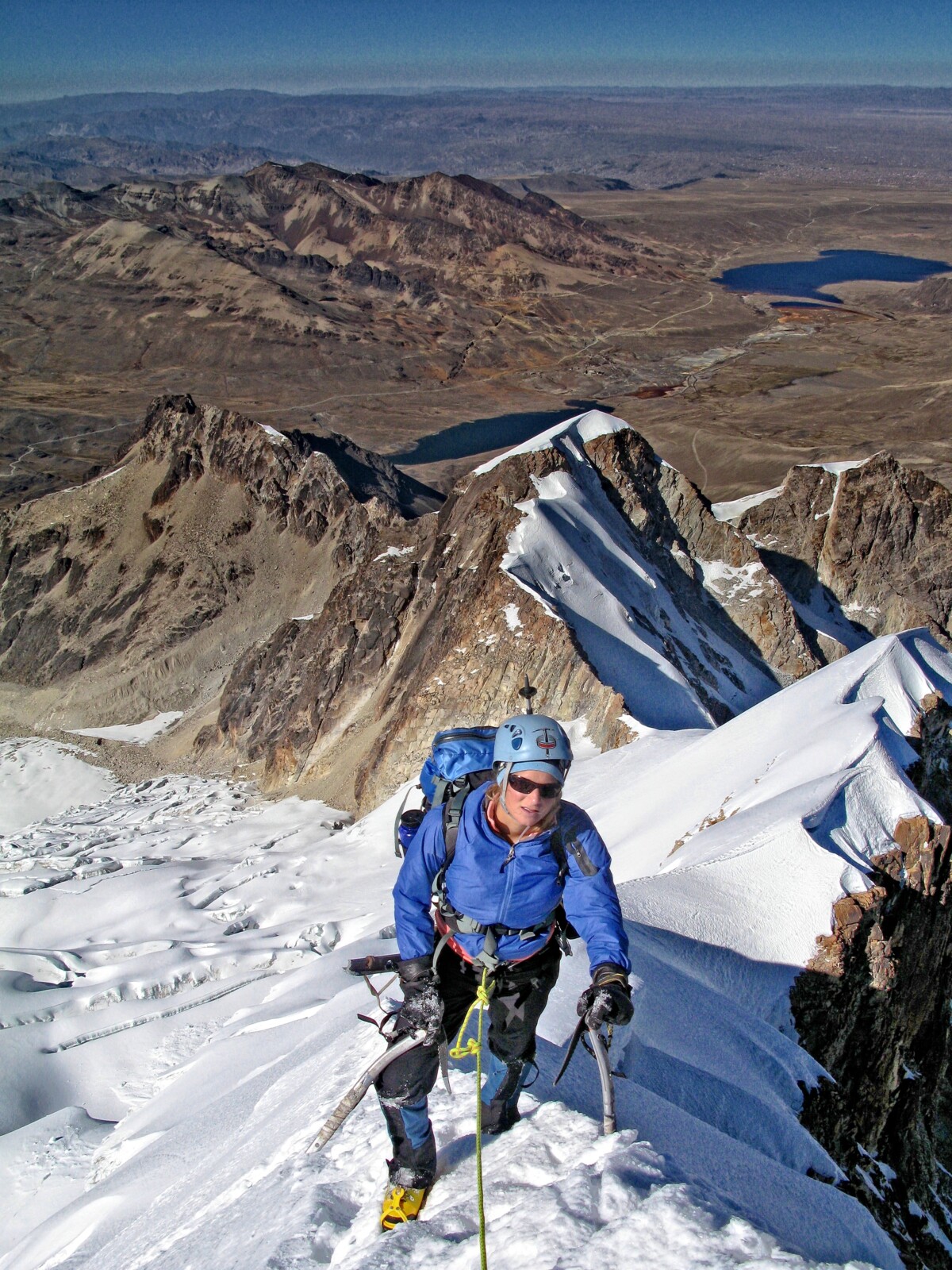
Life on the Mountain

“Take care of the mountain, and the mountain will take care of you.” It is the Benegas Brothers’ motto, and the rule we climb by.

The summit is one day. The expedition is thirteen, or eighteen with Illimani.

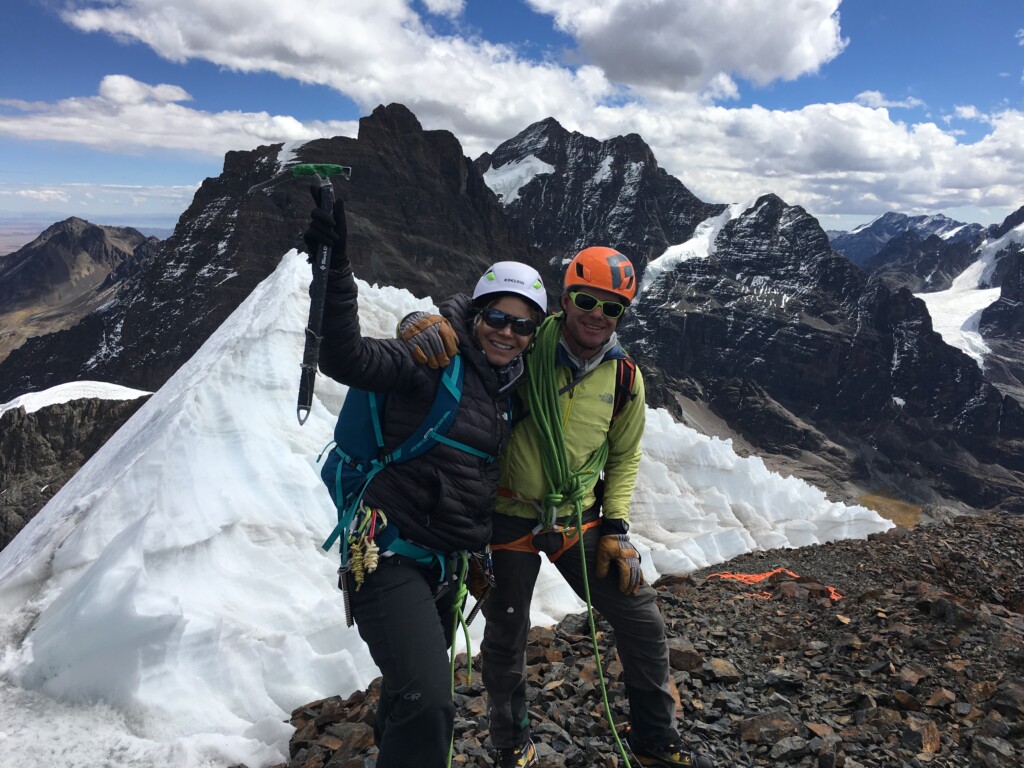
Two climbers smiling on a summit ridge, Cordillera Real

What separates climbers who thrive from those who merely get through is not fitness or technical skill alone. It is how they handle the daily realities: eating when appetite fades, sleeping poorly at altitude, keeping their gear organized in a cold camp, and waiting patiently for the weather and the snow to come right.

Here is what life in the Cordillera Real actually looks like, and how to prepare for it.

The Daily Rhythm

The schedule is driven by altitude and weather, not convenience. On most days outside the summit pushes:

  • Breakfast around 7:00 AM, with hot drinks and a short briefing from your guide on the day’s plan and how everyone is feeling
  • Moving at a controlled, deliberate pace, with regular stops for water and food
  • Arrival at camp by mid-afternoon, then rest. Sleep if you can
  • A hot dinner, an evening check-in with your guide, and an early night

Teams are capped at six climbers, with one guide for every two climbers. Camp is quiet and focused, and your guide knows exactly how you’re doing.

The Kinds of Days

Town days in La Paz. Breakfast at 7:00 AM, gear organization, briefings and time in the city, and rest by 9:00 PM. Day 1, Day 9 and Day 12 are town days, and Day 12 ends with the team’s celebration dinner.

Approach and travel days. Breakfast at 7:00 AM, moving by 8:00 to 9:00 AM, and into camp by mid-afternoon. Day 2 takes you to Isla del Sol, Day 3 to Rinconada, Day 4 into Condoriri Base Camp, and Day 10 to the Huayna Potosí refuge. Pack animals carry the loads into the Condoriri, so you walk with a light pack.

Training and recovery days. Day 5 is the glacier skills day: out to the glacier around 8:00 AM to work on crampon technique, rope travel, self-arrest, anchors and rappelling, and back at camp by midday. Day 7 is deliberately lighter, with an optional acclimatization hike for climbers who want it. The body adapts during rest, not effort, so don’t treat these days as wasted.

Summit days. Piramide Blanca on Day 6 and Pequeño Alpamayo on Day 8 start around midnight or 1:00 AM, and the team is back at Base Camp by late morning. Huayna Potosí on Day 11 starts at 11:00 PM, summits before or around dawn, and returns to the refuge and on to La Paz the same day. On the extension, Illimani on Day 15 starts at 11:00 PM and summits around dawn.

Those alpine starts aren’t for atmosphere. They put you on snow while it’s still frozen and get you off exposed terrain before the afternoon turns. Summit days on Piramide Blanca and Pequeño Alpamayo run about six to ten hours; on Huayna Potosí and Illimani they run ten to fourteen.

Pacing: The Most Important Skill

On every mountain we guide, slow is fast. Climbers who push hard early struggle later; climbers who move steadily and save energy do better on summit days and enjoy the climb more.

From your first walk in La Paz, your guide is watching how you move at altitude and helping you find a rhythm you can hold for hours. On the glacier you climb on a rope with your guide, two climbers to one guide, and the rope team moves at a pace everyone on it can sustain.

BBE tip

When your guide tells you to slow down, slow down. It’s a decision based on watching how you and your teammates are adapting.

What Your Guide Is Watching

La Paz already sits at 11,900 ft / 3,627 m. The Condoriri camps sit between about 14,000 and 16,000 ft, and every summit is above 17,500 ft. You will feel it: lighter sleep, an elevated heart rate on moderate effort, less appetite, and occasional headaches that water usually handles.

Your guide watches every climber every day: pace, breathing, appetite, energy, sleep and mood. Those observations drive every decision on the mountain, including whether you go for a summit. Tell your guide right away, without waiting to see if it gets better, if you have:

  • A headache that doesn’t ease with water and rest
  • Nausea or vomiting
  • Dizziness, confusion or loss of coordination
  • Shortness of breath at rest
  • Unusual tiredness
  • Chest tightness or a persistent cough

Don’t push through symptoms without telling your guide. With a team this small your guides can see how each person is adapting, but only if you tell them what you’re feeling. Hydration, pacing, sleep and food all work better applied early. Descent is the treatment for altitude illness. Turning around is a professional decision, not a failure.

If you carry altitude medication prescribed by your own physician, tell your guide on Day 1.

Water

Dehydration accelerates altitude symptoms faster than almost anything else, and it’s one of the most preventable reasons climbers struggle.

  • Camps have access to clean glacial water, and the team manages drinking water in camp
  • Drink steadily all day, three to four liters on mountain days
  • Carry two 1-liter wide-mouth bottles in insulated covers, and a thermos of something hot on summit days
  • Don’t rely on a hydration bladder: the hose freezes
  • Electrolyte packets help you drink more
BBE tip

Start drinking before you feel thirsty. At altitude, by the time you feel thirsty, you’re already behind.

Eating When You Don’t Feel Like It

All meals are included, for the whole expedition, in La Paz, at Isla del Sol and on the mountain. Only drinks are your own: alcohol and personal drinks.

On the mountain, the expedition team organizes and cooks every meal. Mountain cooking is built for recovery: hot meals, soups, carbohydrates, protein and plenty of fluids. Tell us about any dietary needs before departure.

Eat even when you’re not hungry. Altitude suppresses appetite while raising what your body needs. Climbers who stop eating properly above 14,000 ft are the ones who fade on summit day, and it’s almost always avoidable. Eat little and often.

Your own snacks. Bring 3–4 lb of bars, gels, chocolate and dried fruit in flavors you already like, for approach and summit days. The selection in La Paz is limited, so bring favorites from home.

Sleeping at Altitude

Broken sleep, waking often and vivid dreams are normal above 14,000 ft for the first few nights. It improves as you adapt. Tell your guide if you’re not sleeping at all by the third night.

What helps:

  • Sleep on both pads: the inflatable on top of the closed-cell foam pad
  • Put tomorrow’s layers and boot liners inside your sleeping bag so they’re warm in the morning
  • Sleep with your water bottles and batteries in your bag so they don’t freeze
  • Keep your headlamp and gloves within reach
  • Bring earplugs, especially for the refuge
  • Use a pee bottle rather than going out into the cold at night

Cold and Weather

We run this expedition in June and July, the dry season in the Cordillera Real: generally dry and stable, with cold nights and strong sun. Afternoon storms can still build quickly, which is the other reason summit days start so early.

Typical temperatures:

  • La Paz: 54–64°F / 12–18°C by day; 28–41°F / −2 to 5°C at night
  • Condoriri Base Camp: 41–54°F / 5–12°C by day; down to 14°F / −10°C at night
  • Huayna Potosí refuge: 32–46°F / 0–8°C by day; 18–27°F / −8 to −3°C at night
  • Summit ridges: down to −4°F / −20°C with wind chill, on Huayna Potosí and on Illimani

Expect cold from day one. Layering properly and protecting your hands and feet are not optional.

Hygiene and Toilets

La Paz and the Huayna Potosí refuge have standard bathrooms. The Condoriri camps and the Illimani camps have basic, wilderness-style sanitation. The guides brief the team on how it works; follow it exactly, and bring a small stash of toilet paper and waste bags.

Baby wipes, hand sanitizer, a quick-dry towel and a small personal hygiene kit make camp life far more comfortable for very little weight. Two things matter more than anything else:

  • Wash or sanitize your hands before every meal. A stomach bug spreads quickly through a small team and can end a climb.
  • Protect yourself from the sun from Day 1. High-altitude sun plus glacier reflection burns fast. Wear SPF 50+ sunscreen and SPF lip balm, and glacier glasses on the snow.

Keeping Yourself Organized

Pack animals, porters and the team move the group loads and build the camps. Your job is your own system:

  • Have your duffel packed and ready when camp moves
  • Keep your harness, crampons, ice axe, personal anchor and belay device together, so an alpine start doesn’t begin with a search
  • Know where your headlamp, gloves and summit layers are
  • Keep batteries, electronics and water bottles warm at night

Climbers who stay organized save energy every day, and at midnight in a cold camp that matters.

Staying in Touch and Charging

The team carries Starlink, which gives camp a limited, shared connection home and lets the guides pull current weather data for summit planning. Treat it as a useful tool rather than a guarantee: it depends on power, weather and camp position. Your guides also carry satellite and radio communications at all times for safety and coordination on the mountain.

We set up a WhatsApp group for each expedition, with the guides, the office and the whole team. A Bolivian SIM card bought in La Paz adds basic coverage in some areas.

Charging is available in the La Paz hotels. On the mountain there’s no reliable power, so bring a power bank of 10,000 mAh or more and spare lithium headlamp batteries. Cold drains batteries quickly. Tell your family before you leave that a quiet day or two, especially around summit days, is normal and not a sign of a problem.

Fitness and Mindset

This expedition is physically demanding: long summit days with real elevation gain in cold, high-altitude conditions, on consecutive days. Arrive physically prepared and mentally ready for discomfort, slow progress and uncertain outcomes.

The climbers who do best pace well, talk openly with their guides, eat and drink consistently, and approach the mountain with patience. Ego and rushing are the two most common causes of problems at altitude, and neither is a fitness issue.

Weather and Changes to the Plan

Mountain weather always has the final say. The core itinerary builds in a recovery day between the two Condoriri summits, and the guides adjust objectives and summit days to conditions. On the Illimani extension, Day 16 is a reserve day for the summit push: if weather or conditions delay the attempt, it keeps the summit in reach; if the summit goes on schedule on Day 15, the team drives back to La Paz on Day 16.

If conditions are unsafe, the guides adjust the plan or turn the team around. Safety comes before the schedule, and no one can promise a summit.

If You Need to Leave Early

If you leave the expedition early for illness, injury, personal reasons or weather disruption, the extra costs are your responsibility unless otherwise specified: hotel nights, transport, flight changes and transfers outside the group plan. Trip insurance that covers interruption exists for exactly this, which is why we recommend it so firmly.

Leave No Trace

We follow Leave No Trace principles and ask every climber to do the same. Pack it in, pack it out, and leave every campsite as you found it or better. Beyond managing our own waste, our teams also clean up after less careful groups. The Cordillera Real is fragile and shared, and how we travel through it matters.

Questions About What the Days Actually Feel Like?

Ask a guide · Back to Before You Go · climbing@benegasbrothers.com
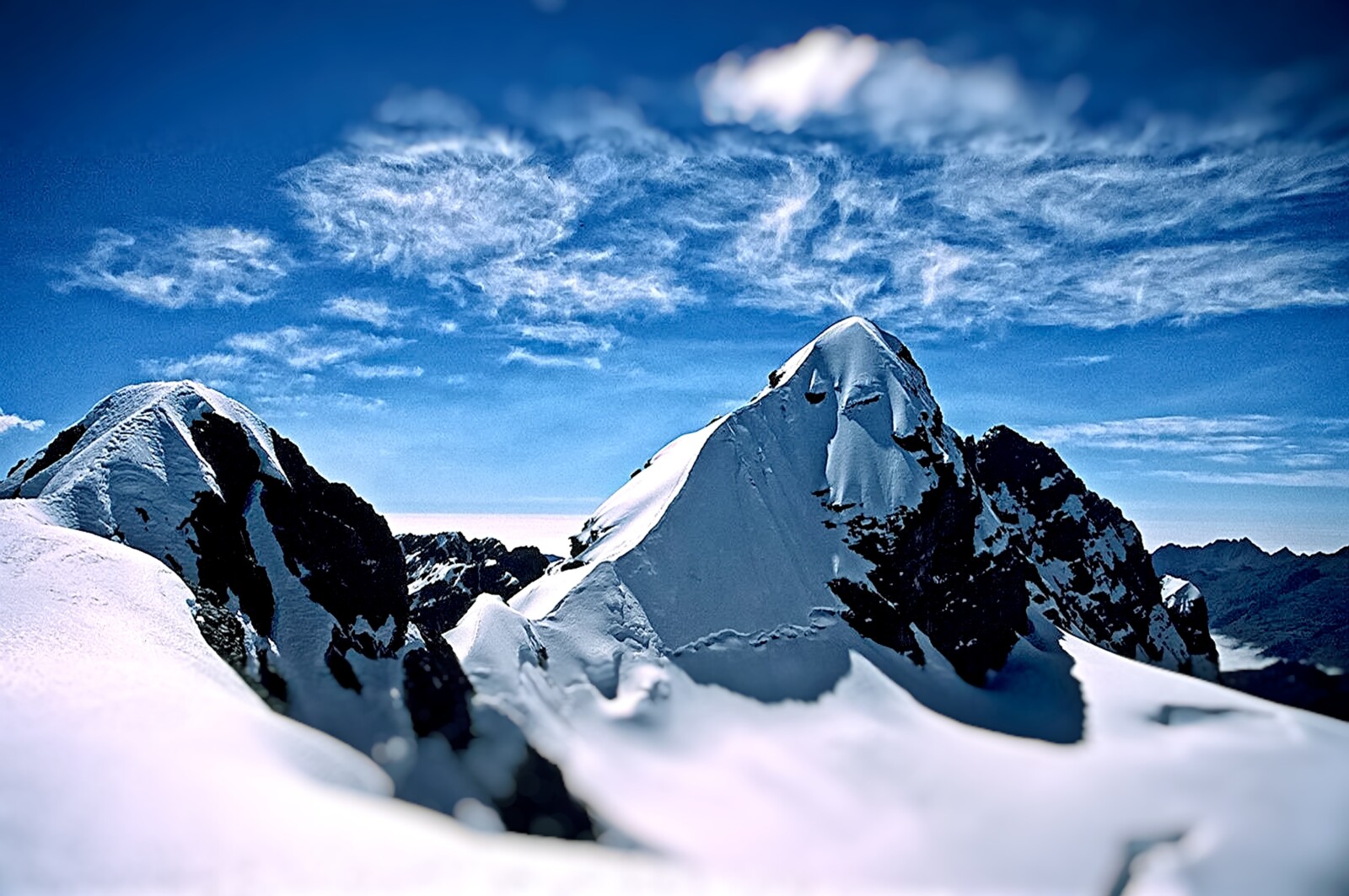
Bolivia Alpinist Gear List

This expedition takes you from La Paz at 11,900 ft / 3,627 m to glaciated summits on Piramide Blanca, Pequeño Alpamayo and Huayna Potosí, 19,975 ft / 6,088 m, and on the extension to Illimani at 21,122 ft / 6,438 m. You travel roped on glaciers, climb steep snow and ice, and sleep several nights in cold, high camps. Your equipment is part of the safety margin, not a comfort question. This page explains how to build and test your systems. The full list, every item with recommended models, is a download you can print and take shopping.

What the Weather Does

June and July are the dry season in the Cordillera Real: cold, clear and generally stable, with strong sun. Your clothing has to work across all of this:

  • La Paz, 11,900 ft / 3,627 m: 54–64°F / 12–18°C by day, dry with strong sun; 28–41°F / −2 to 5°C at night
  • Isla del Sol, 12,500 ft / 3,810 m: 50–61°F / 10–16°C by day; 27–37°F / −3 to 3°C at night
  • Condoriri Base Camp, about 15,250 ft / 4,650 m: 41–54°F / 5–12°C by day, clear with cold wind; down to 14°F / −10°C at night
  • Huayna Potosí refuge, 15,420 ft / 4,700 m: 32–46°F / 0–8°C by day; 18–27°F / −8 to −3°C at night
  • Summits, 17,552–19,975 ft / 5,350–6,088 m: 14–32°F / −10 to 0°C on alpine starts; down to −4°F / −20°C with wind chill
  • Illimani, extension, 19,030–21,122 ft / 5,800–6,438 m: 10–28°F / −12 to −2°C at high camp and on the summit; 5–14°F / −15 to −10°C at night, down to −4°F / −20°C with wind chill

How to Think About Your Gear

Bolivia is excellent alpine terrain, and it’s unforgiving of gear gaps. You’re on summit ridges in the dark, on rope, using your hands. A boot that flexes wrong under a crampon, a glove system that fails at a belay, a sleeping bag that leaves you cold at Base Camp: these problems don’t stay small at altitude. They cost you sleep, then they cost you the summit. Once you leave La Paz there is no shop. What you carry in is what you have.

Think in systems (feet, hands, layers and sleep) rather than a shopping list. Every item on the list is required unless it’s marked optional; for most items many brands work, so use our recommendations as a starting point.

Layering is the rule for clothing. Several thin layers control warmth and moisture better than one bulky piece. No cotton, anywhere.

The Three Items Worth Investing In

Mountaineering bootsDon’t rent

Insulated double or hybrid boots, rigid-soled and fully crampon-compatible, worn in on real terrain. This is the single most important item on the expedition. Test the boot-and-crampon fit yourself on a slope, not at the shop counter. Don’t rent boots for this climb.

Sleeping bag−20°F / −29°C

Expedition-quality goose down, rated to −20°F / −29°C, long enough that your feet don’t press the foot-box. Condoriri nights drop to 14°F / −10°C, and Illimani’s high camp sits at 19,030 ft / 5,800 m. Cold nights are the fastest way to arrive at a summit day already spent.

Your glove systemFive pairs

Liner gloves, midweight gloves for approaches and camp, heavy insulated gloves for technical climbing, heavyweight mittens for summit mornings on Huayna Potosí and Illimani, and a spare pair. You’ll change gloves in the dark, in wind, with cold fingers. Practise at home so the first time isn’t on a glacier.

Your Systems

Technical. A UIAA-approved helmet that fits over a hat or balaclava; a harness with adjustable leg loops; steel crampons fitted to your boots before you fly; a general mountaineering ice axe sized to your height; a second technical ice tool only if your guide asks for one (confirm with us before buying); a belay device; a mechanical ascender for fixed ropes; three locking and three non-locking carabiners; 5 m of 6 mm accessory cord; an adjustable personal anchor (required) for belays and rappel stations on Pequeño Alpamayo; a 120 cm sling; and adjustable trekking poles with snow baskets.

Feet. Mountaineering boots, approach or hiking shoes for travel and the trails, liner socks (optional), four pairs of hiking socks, three pairs of warm socks (a fresh, dry pair for each summit day) and camp shoes.

Sleep. Your sleeping bag, a full-length insulated inflatable pad (required) with its repair kit, a closed-cell foam pad to go underneath, and a compression sack.

Layers: upper body. A sun hoody, a base-layer top, a midweight fleece, a light puffy jacket, a softshell jacket, a waterproof hard shell with a helmet-compatible hood, and an expedition down parka warm enough for summit ridges at −4°F / −20°C.

Layers: lower body. Non-cotton underwear, lightweight and midweight base-layer bottoms, trekking pants, softshell pants for climbing days, hard-shell pants with full side zips, insulated pants (strongly recommended for the Illimani extension) and shorts (optional).

Head and eyes. Sun hat, warm beanie (one must fit under your helmet), buff and balaclava. Glacier glasses with side covers and category 4 lenses. Add goggles for bad weather, and clear glasses for alpine starts in the dark.

Packs and bags. A 90–120 L expedition duffel, a 40–70 L second duffel, a 45–55 L alpine pack that does everything from approach days to every summit, and an optional small daypack for La Paz and Isla del Sol.

Water and camp. Two 1 L wide-mouth bottles with insulated covers, a thermos, a pee bottle (female climbers: a pee funnel is highly recommended), water purification for travel days, a bowl, mug and spoon, electrolyte packets, 3–4 lb of snacks and six sets of hand and toe warmers. No hydration bladders; the hoses freeze.

Power and electronics. A headlamp of 300+ lumens with spare lithium batteries, a power bank of 10,000 mAh or more, and cables and an adapter. Bolivia uses Type A and C plugs at 230 V.

Health and hygiene. SPF 50+ sunscreen, SPF lip balm, hand sanitizer, baby wipes, a small toilet-paper stash and waste bags, a blister kit, a small personal first aid kit, earplugs, a quick-dry towel and your personal medications. Talk to your physician about altitude medication. The PDF lists the full kit.

How Your Gear Travels

Pack in two duffels, not your pack; baggage handling damages straps. Lock both with TSA-approved locks or zip ties.

  • Main duffel: everything for the mountain. It travels with you to Lake Titicaca and the climbs. Pack animals carry it into the Condoriri, and donkeys carry the loads to Puente Roto Base Camp and porters carry them to Nido de Cóndores on the Illimani extension.
  • Second duffel: city clothes and a clean change of mountain clothes. It stays at the hotel in La Paz while you’re on the mountain.
  • Your alpine pack: you carry your own day’s gear.

Keep medications and one set of climbing layers in your carry-on, with your boots if you can manage them. Crampons and ice axes go in checked luggage. Flights & Getting to La Paz has the full baggage guidance.

Test Everything Before You Go

Nothing on this expedition should be used for the first time on the glacier. Test your full system together at home:

  • Boots with your crampons, on real terrain
  • Gloves and mittens, including changing them quickly in the cold
  • Harness over your full layering, with your personal anchor and belay device set up
  • Your helmet over a beanie or balaclava
  • A genuinely cold night in your sleeping bag on both pads

Problems found at home are easy to fix. Problems found at Base Camp are not.

What BBE Provides

You don’t bring any group equipment. BBE provides:

  • Ropes for glacier travel and summit routes
  • Snow anchors and protection hardware
  • Group tents and a cook shelter
  • Stoves, fuel and cooking equipment
  • All meals, on the mountain and in town
  • A first aid and emergency kit on every climbing day
  • Satellite and radio communications, and Starlink in camp
  • Pack animals and porters for logistics

Renting Gear in La Paz

Crampons, ice axes, harnesses, helmets and sleeping bags can usually be rented in La Paz through local outfitters. Quality and availability vary by season, and inventory is never guaranteed. Rentals aren’t included in the expedition price and are paid directly to the shop. If you plan to rent, tell us at least three weeks before departure so we can confirm what’s actually available and reserve it.

Boots are the exception. We don’t recommend renting footwear for a climb near 20,000 ft. Fit matters too much, and a boot problem on Huayna Potosí can’t be fixed on the mountain.

The Gear Checks

You don’t have to get this perfect on your own. Your guides review your equipment with you on Day 1 in La Paz, again at Condoriri Base Camp on Day 4, and once more at the Huayna Potosí refuge on Day 10, before the summit push. The Day 5 glacier skills session is where your personal systems get tested in real conditions with a guide watching.

Day 1 matters most, because La Paz still has shops. It’s the last point at which a gap is cheap to fix. Send us questions about specific items at any point before the trip.

If You’re Continuing to Illimani

The extension adds a night at Nido de Cóndores, 19,030 ft / 5,800 m, and a summit day above 21,000 ft. The list doesn’t change; the margin does. Your warmest layers, your best gloves and your sleep system matter more on Illimani than anywhere else on the program. If you’re unsure about the warmth of any single item, upgrade it before the extension.

Gear questions are exactly what Ask a Guide is for.

Questions About Gear?

Ask a guide · Back to Before You Go · climbing@benegasbrothers.com
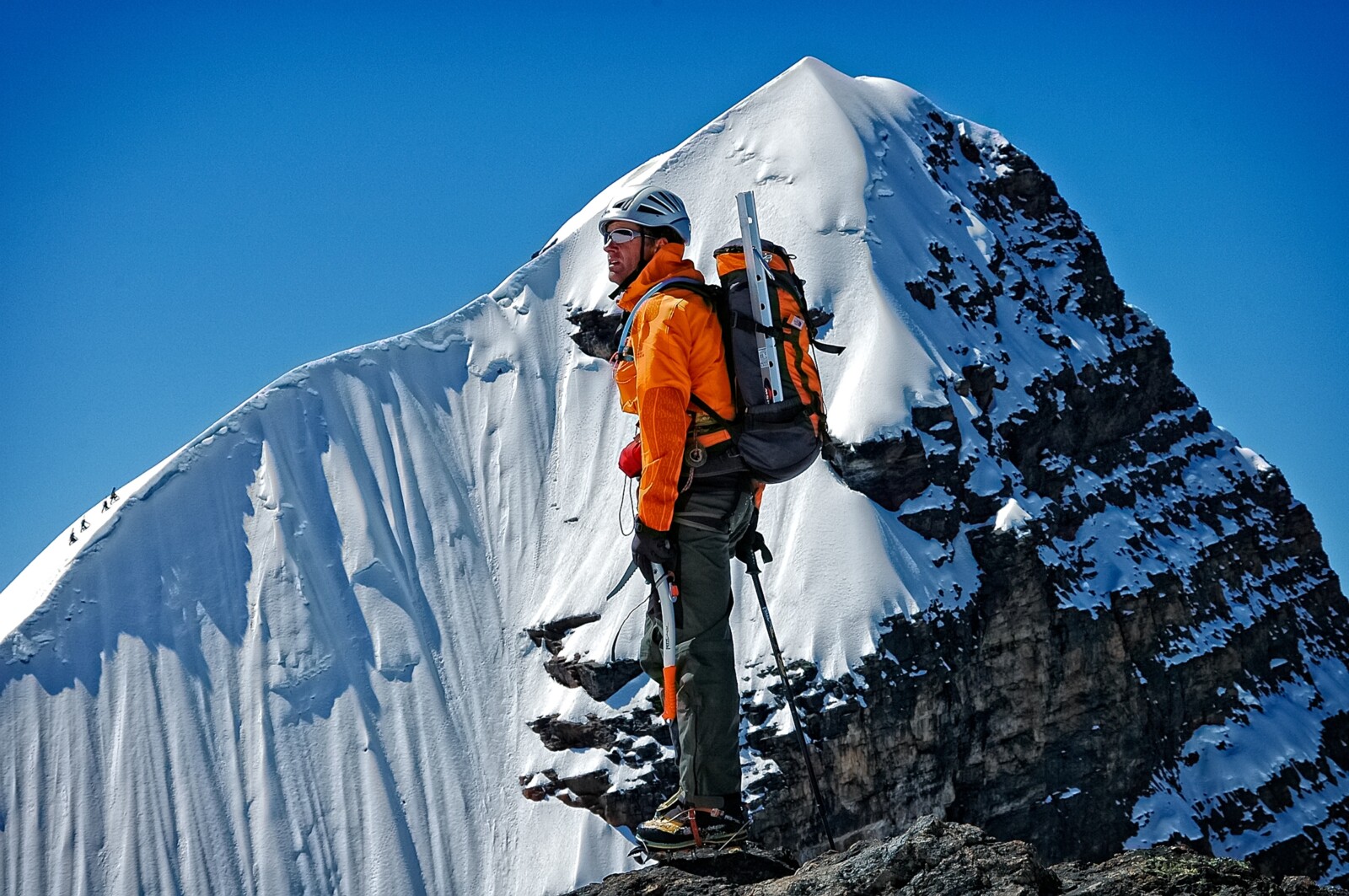
What to Budget For

The expedition price is one number, and it’s on Dates & Prices with departures and booking terms. The real cost of the trip is another. This page lays out every cost beyond the price: what you must pay, what we strongly recommend, what’s optional and what to hold in reserve. Day-to-day costs in Bolivia are modest, so the cash question here is less about how much and more about what form, and when you get it.

Beyond the price, most climbers spend$1,350–2,100

Rescue coverage, tips and personal spending.

Cash to carry$500–1,200

Within that budget, depending on team size.

Emergency reserve$300–500

On top.

Your Budget at a Glance

RequiredCosts every climber pays
  • Rescue & evacuation coverageRequired by BBE · to 6,088 m, or 6,438 m with Illimani$850–900
  • Flights to La PazYou book these · extra baggage is yoursVaries
  • Personal gearDepends on what you already ownVaries
  • Guide and staff tipsCustomary in Bolivia · details belowSee below
Strongly recommended
  • Trip insuranceCancellation, interruption, delays, baggage, travel medicalVaries
Personal spending
  • Personal spendingDrinks, snacks, SIM, laundry, souvenirs · meals included$250–400
OptionalOnly if you add them
  • Extra hotel nights in La PazArriving early is recommended$60–120 a night
  • Gear rentals in La PazPaid to the shop · tell us 3 weeks aheadVaries
  • Single room in townOn request · we quote when you askOn request
  • Meals outside expedition datesIf you arrive early or stay lateVaries
  • Private & custom extensionsExtra objectives or more time in the rangeQuoted
  • Snacks and summit food. 3–4 lb of bars, gels, chocolate and dried fruit you already like. Bring favorites from home; the selection in La Paz is limited.
  • Local SIM card. Available in La Paz, useful for maps, messaging and data.
  • Laundry. Available in La Paz.
  • Markets and souvenirs. La Paz is good for this. Budget as you like.
  • Personal medications. Including any altitude medication your physician prescribes.

Tips: How They Work

Your guides and the local staff work long hours in demanding mountain conditions, and tips are a meaningful way to recognize them. Tipping your guides is optional but standard across the guiding industry. Cooks, drivers, porters and arrieros contribute directly to whether the expedition works, and a tip at the end of the program is standard and appreciated.

Guidelines per climber, by role:

  • Lead guide: $150–300
  • Each additional guide: $75–150
  • Local staff pool (drivers, cooks, support): $100–200

We guide at one guide for every two climbers, so the number of guides depends on your team size. Total per climber, by team:

  • 1 or 2 climbers, 1 guide: $250–500
  • 3 or 4 climbers, 2 guides: $325–650
  • 5 or 6 climbers, 3 guides: $400–800

Illimani extension. The extension is run by the same guide team, so the same tip guidelines apply; there’s no separate extension tip.

How it works. For groups, tips are often combined and handed to the lead guide to distribute fairly, which is simpler for everyone. Tipping individually is fine too. US dollars and bolivianos are both welcome; small US bills are the easiest for guides and staff to use. These are guidelines, not invoices. Tip what the service was worth to you.

Cash and Cards

Plan on roughly $500–1,200 in cash across the trip, depending on your team size. That covers your tips and personal spending.

  • Where to get it. ATMs are available throughout La Paz and accept major international cards. There are none at the Condoriri camps, the Huayna Potosí refuge or anywhere near Illimani, so withdraw what you need in La Paz before the mountains, or bring it from home.
  • Which currency. The boliviano (BOB). US dollars are widely accepted at hotels and larger restaurants in La Paz; use bolivianos for markets, small restaurants and small purchases.
  • Which bills. Bring small US bills from home, far more useful than large notes, especially for tips. Bring a mix.
  • Cards. A credit card works for hotels and larger restaurants in La Paz. On the mountain, it’s cash only. Tell your bank you’re traveling.

Contingency

Emergency reserve$300–500

Kept accessible and separate from your spending money, in cash or on a credit card. It covers an unexpected hotel night, a flight change, private transport, or any cost from an unplanned early departure. It usually goes home with you.

Disruption and early departureReserve

If a flight is delayed or cancelled, or you leave the expedition early for any reason, the extra hotel nights, meals, private transport, flight changes and transfers outside the group plan are your cost, under our Payment & Cancellation Policy. Trip insurance is what usually covers these. Cancellation terms are on Dates & Prices.

More cost details for this trip

What the Expedition Price Covers

In short: leadership by guides certified to IFMGA, AMGA or equivalent national standards, one guide for every two climbers; airport transfers in La Paz and all scheduled ground transport; hotel nights in La Paz and the eco-lodge on Isla del Sol; the boat crossing to and from Isla del Sol; the camps and the Huayna Potosí refuge; all meals for the whole expedition, in town and on the mountain; pack animals and porters; group climbing and camp equipment; all mountain access, park and climbing permits; a first aid and emergency kit on climbing days; and weather monitoring and summit planning. The Illimani extension adds its own transport, guiding, camps, meals and summit logistics. The controlling list of inclusions and exclusions is on Dates & Prices.

Local Fees

All permits are included. Some small community and refuge fees are collected on the ground. If a fee changes after publication and isn’t already in your trip price, it’s passed through to you at cost, with no markup. Carry a modest amount of bolivianos for these.

Budget Summary

Beyond the expedition price, typical ranges in US dollars:

Rescue and evacuation coverageabout $850–900

On average · required

Tips$250–800

Depending on team size

Personal spendingabout $250–400

Not including tips

Most climbers spend about $1,350–2,100 on rescue coverage, tips and personal spending. That total does not include international flights, personal gear, rentals, trip insurance, extra nights or your emergency reserve.

Cash to carry: roughly $500–1,200, within that budget.

Emergency reserve: $300–500, on top.

Questions About Costs?

If you’d like a breakdown for your own situation, ask. We’d rather you plan it right than guess.

Ask a guide · See dates and prices · Back to Before You Go · climbing@benegasbrothers.com
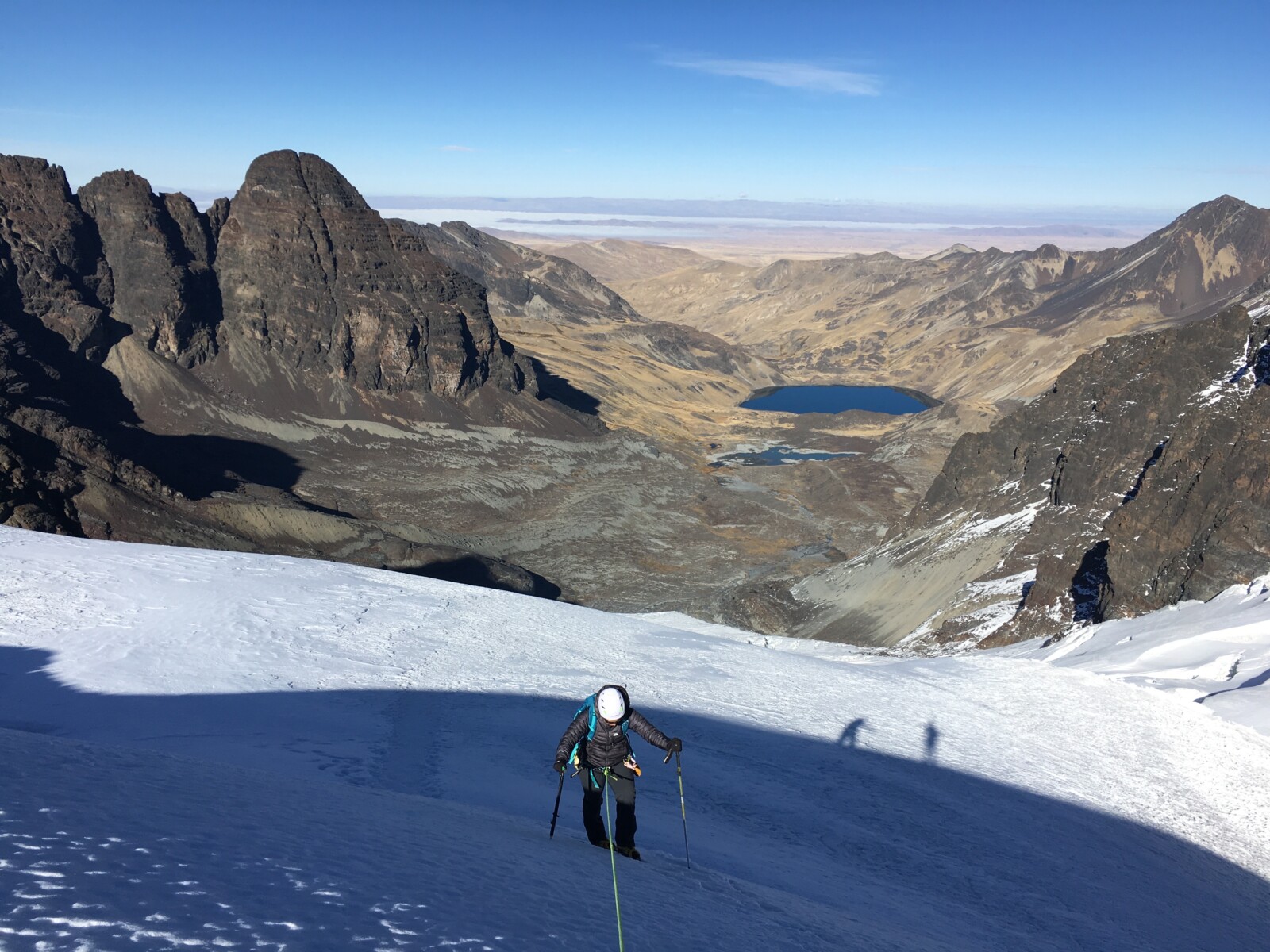
Private & Custom Expeditions

Bolivia Alpinist Expedition · Your Dates, Your Team, Your Objective

Our scheduled Bolivia Alpinist Expedition gives climbers a proven structure, a small team and experienced leadership in the Cordillera Real. Not every climber fits a fixed departure. If you have a specific window, your own partner or group, or an objective beyond the standard program, we build the expedition around you, with the same guide standards and mountain logistics as every BBE departure in Bolivia.

Private does not mean easier, and it does not mean more advanced. It means the expedition is designed around your team.

Who Private Climbs Suit

  • Solo climbers and couples who want the full Bolivia program on their own schedule
  • Small groups with aligned goals and timing, who want to set the dynamic and the pace themselves
  • Climbers with a specific objective: adding peaks, changing the order, or focusing on a single mountain
  • Climbers using Bolivia as a focused block ahead of Aconcagua, Alaska objectives or the Himalaya
  • Returning clients who want to add Illimani, or come back for a different sequence of peaks
  • Climbers under 18. The minimum age is set by Bolivia’s regulations and by insurance: climbers under 18 climb with a parent or guardian, and each climber’s insurance must cover their age. Families are welcome: younger climbers can join a scheduled team with a parent or guardian, or come on a private family expedition built around your family, and if a special permit is needed, we’ll help you apply.

What You Can Customize

DatesOn request

Our scheduled departures run in June and July, the heart of the dry season in the Cordillera Real. Private expeditions run on dates you request; we confirm feasibility for the season and conditions. We’ll tell you honestly how the range looks for the dates you have in mind.

Team size and staffing2:1 ratio

One climber is enough. A private expedition can run for a solo climber, a couple, a small group or a larger custom team. Guide staffing follows the same 2:1 ratio as our scheduled departures, one guide for every two climbers, and logistics are planned around your team rather than forcing it into the scheduled format.

SequenceYour order

You can start with Huayna Potosí and climb the Condoriri peaks afterward, or keep the standard order. We’ll explain what each sequence means for your acclimatization.

ObjectivesCordillera Real

Different peaks, different routes or additional summits in the Cordillera Real, depending on your goals and experience. We’ll tell you plainly what each objective asks of you.

Trip length13, 18 or shorter

The 13-day core program, the full 18 days with the Illimani extension, or a shorter, focused version built around one objective.

Combination programsPeru · Ecuador

Bolivia links naturally with Peru and Ecuador. We can join them into one trip. Tell us how much time you have and what you want to climb.

Pace and acclimatizationNo shortcuts

A private climb lets the daily pace fit your team, and your previous high-altitude experience is part of how we plan it. It doesn’t shorten what your body needs. We won’t build a private itinerary with less acclimatization than these mountains require, and a private climb doesn’t change the fact that no one can promise a summit.

Led by Willie or Damian

Willie or Damian Benegas can personally lead a private Bolivia expedition on request. Willie and Damian have guided major expeditions across the Andes, the Himalaya and Alaska for decades, and their standards shape every BBE departure. A founder-led climb puts that experience on the rope with you, subject to their schedules.

A founder’s participation applies only when it is confirmed in writing in your trip terms, never assumed.

One Standard of Care

Whether you join a scheduled departure or book a private expedition, the planning, logistics, safety standards and guiding philosophy are the same. A private expedition gives you flexibility in timing and itinerary. It doesn’t give you a different level of care, because there is only one.

How a Proposal Comes Together

Every private expedition is quoted individually. Per person, a private trip usually costs more than a scheduled departure, because fixed logistics costs are spread across fewer climbers. The price depends on your group size, the trip length and the guide staffing, so we don’t publish a rate. Ask and we’ll give you a real figure.

Private expeditions need lead time. Permits, guide scheduling and mountain logistics all book ahead, and the earlier you reach out, the more options we can offer. If you are working to a specific month, start the conversation as soon as you know.

How to Start

Tell us your preferred dates, your group size, your objectives and your climbing background, and whether you’d like Willie or Damian to lead. We’ll come back with availability, options and a clear written proposal. If something else should come first, we’ll say that too. We answer every inquiry personally.

Dates & Prices

Bolivia Alpinist Expedition · 13 Days + Optional 5-Day Illimani Extension · Cordillera Real, Bolivia · Maximum Six Climbers

Everything you need to book: departures, the price, what it covers and the terms. If you’re still deciding, start with Is This for Me? or talk to a guide first. We review every climber’s experience with them before booking.

2027 Departures

Expedition price$5,400

USD per person.

Deposit to book20%

Of the expedition price. Includes a $350 non-refundable booking fee.

Balance120 days

Due 120 days before departure. Inside 120 days, you pay in full at booking.

Departures

June 4–16, 2027Scheduled departure
June 19–July 1, 2027Scheduled departure

Optional Illimani Extension

Optional Illimani Extension, 5 additional days$1,250

USD per person.

June 16–21, 2027Scheduled departure.
July 1–6, 2027Scheduled departure.

The June 16–21 extension continues directly from the June 4–16 expedition. The July 1–6 extension continues directly from the June 19–July 1 expedition.

Each departure takes a maximum of six climbers, with one guide for every two climbers: a full team of six climbs with three guides. A departure is confirmed when we tell you so in writing. Please buy nonrefundable flights only after your departure is confirmed. When it’s full, it closes.

Day 1 is arrival in La Paz at El Alto International Airport (LPB), and Day 13 is your flight home. If you join the extension, Day 13 is the drive to Illimani instead, and you fly home on Day 18. The full itinerary is on Day by Day.

When to Climb

We run this expedition in June and July, the dry season in the Cordillera Real. Days are generally dry and stable, with strong sun and cold nights. Afternoon storms can still build quickly, which is one reason summit days start in the dark. No month guarantees good weather. The core itinerary carries a recovery day between the Condoriri summits, and the Illimani extension has a dedicated reserve day for the summit push.

What’s Included — and What Isn’t

Included in the price

Before you go
  • Preparation guidance, training recommendations and altitude preparation advice from our guide team
  • An equipment consultation and the Bolivia Alpinist gear list
In Bolivia
  • Airport transfers in La Paz on the scheduled arrival and departure days
  • All scheduled ground transportation on the itinerary
  • The guided day at Copacabana and Isla del Sol on Lake Titicaca, including the boat crossing to and from Isla del Sol
  • Hotel nights in La Paz at a comfortable hotel in Miraflores or Sopocachi, and one night at an eco-lodge on Isla del Sol, all on a shared room basis
  • Secure storage at the La Paz hotel for town clothes during the mountain phases
  • All meals for the whole expedition, in La Paz, at Lake Titicaca and on the mountain, including the team celebration dinner
  • All mountain access, park and climbing permits for the Condoriri massif and Huayna Potosí
On the mountain
  • Guides certified to IFMGA, AMGA or equivalent national standards, with one guide for every two climbers
  • Pack animals carrying expedition gear into the Condoriri, and porters supporting logistics on Huayna Potosí
  • Camps at Rinconada and Condoriri Base Camp, and the night at the Huayna Potosí refuge
  • Group camp systems: sleeping tents, cook shelter, stoves, fuel and cooking equipment
  • Group climbing equipment: ropes for glacier travel and summit routes, snow anchors and protection hardware
  • A full alpine skills training day on the glacier, technical coaching throughout, and gear checks with your guides
  • Weather monitoring and summit planning
  • A comprehensive group medical kit on every climbing day, and satellite and radio communications within the team
  • Starlink in camp: a limited, shared connection, enough to message home and pull current weather
Illimani Extension
  • Additional transportation to and from Illimani
  • Guide support at the same 2:1 ratio
  • Camps at Puente Roto Base Camp and Nido de Cóndores High Camp
  • All meals during the extension, including the final celebration dinner in La Paz
  • Mountain access and climbing permits for Illimani, and summit logistics
  • A hotel night in La Paz on Day 17

Not included

  • International flights to and from La Paz
  • Rescue and medical evacuation insurance (required) and travel insurance (strongly recommended)
  • Personal climbing gear and clothing, and any rentals in La Paz, paid directly to the shop
  • Tips for guides and local staff
  • Alcoholic beverages and personal drinks
  • Personal snacks and energy food
  • A single room in La Paz (available on request; we’ll quote the cost when you ask)
  • Extra hotel nights outside the itinerary, and airport transfers on days other than the scheduled arrival and departure days
  • Small local community or refuge fees, where fee structures change after publication, passed through at cost
  • Costs of leaving the expedition early, and costs from delays or circumstances beyond the expedition’s control
  • Evacuation and medical costs
  • Personal expenses

What each of these typically costs is on What to Budget For.

Your Total Trip Cost

The expedition price is the biggest number, not the only one. Typical ranges per climber, in U.S. dollars:

Expedition price$5,400
Rescue coverage, tips and personal spending$1,350–2,100
Typical total, before flights and gearabout $6,750–7,500

Not included in that total: international flights, personal gear, rentals, trip insurance, extra nights or your emergency reserve. The full breakdown is on What to Budget For.

Payment & Cancellation

Deposit: $1,080 (Core) or $1,330 (with extension) (20% of the trip price), due at booking. $350 of it is a nonrefundable booking fee.

Balance: $4,320 (Core) or $5,320 (with extension), due 120 days before the start date. Booking within 120 days? Full payment is due at booking.

How to pay: bank transfer/ACH (no fee), wire transfer (you pay the bank fees) or credit card (3% surcharge). All prices are in U.S. dollars.

If you cancel:

  • 121 days or more before the start date: full refund, less the $350 booking fee
  • 90 to 120 days: 50% refund, after the $350 booking fee
  • 89 days or fewer: no refund

Can’t make it? Send a qualified climber in your place at no BBE fee.

Insurance: medical and rescue/evacuation coverage required. Trip cancellation insurance strongly recommended.

Once the trip begins, payments are nonrefundable.

Read the full Payment & Cancellation Policy →

Insurance

Rescue and medical evacuation coverage is required on this expedition. Your policy must cover helicopter rescue, high-altitude mountaineering to 19,975 ft / 6,088 m on Huayna Potosí, or to 21,122 ft / 6,438 m if you join the Illimani extension, and international medical transport. If you use Global Rescue, that means its High-Altitude Evacuation Package, which it requires above 15,000 ft / 4,600 m.

You can arrange it any time before the trip’s departure date, but it must be in place by then. Email your insurance certificate to climbing@benegasbrothers.com before you travel.
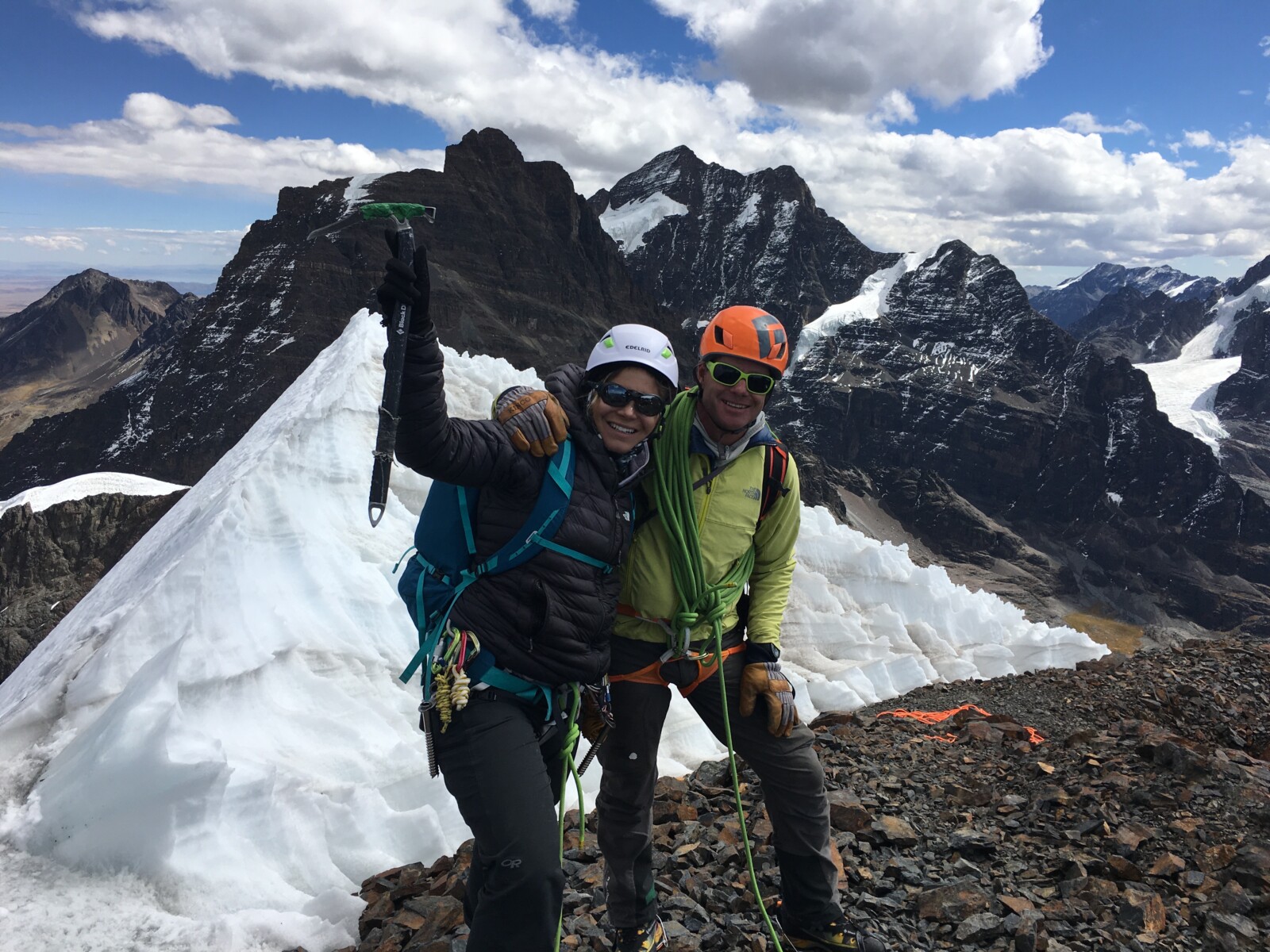
Coverage pays for a rescue; it can’t guarantee one. Helicopter rescue in Bolivia depends on weather and altitude, and on parts of this program a ground evacuation is the realistic scenario.

Travel insurance is strongly recommended, but not required. Cancellation and interruption cover is, in many situations, the only way to recover costs from disruptions outside anyone’s control. See Trip Insurance & Evacuation Coverage.

Private Departures

A private expedition runs on dates you request, with your own team or one-to-one with a guide; we confirm feasibility for the season and conditions. It can follow this program, change the order of the peaks, or link Bolivia with Peru or Ecuador.

Led by Willie or Damian Benegas: on request, priced individually. A founder’s participation applies only when it is confirmed in writing in your trip terms.

Every private expedition is priced individually, based on team size, trip length and guide staffing. See Private & Custom Expeditions.

Your Questions

Bolivia Alpinist Expedition · Answered by the Guides

Straight answers to the questions climbers ask most before committing to the Cordillera Real. Each answer is short and points you to the page with the full detail. If your question isn’t here, ask us. We answer every inquiry personally.

Still have a question? Ask a guide · See dates and prices · climbing@benegasbrothers.com
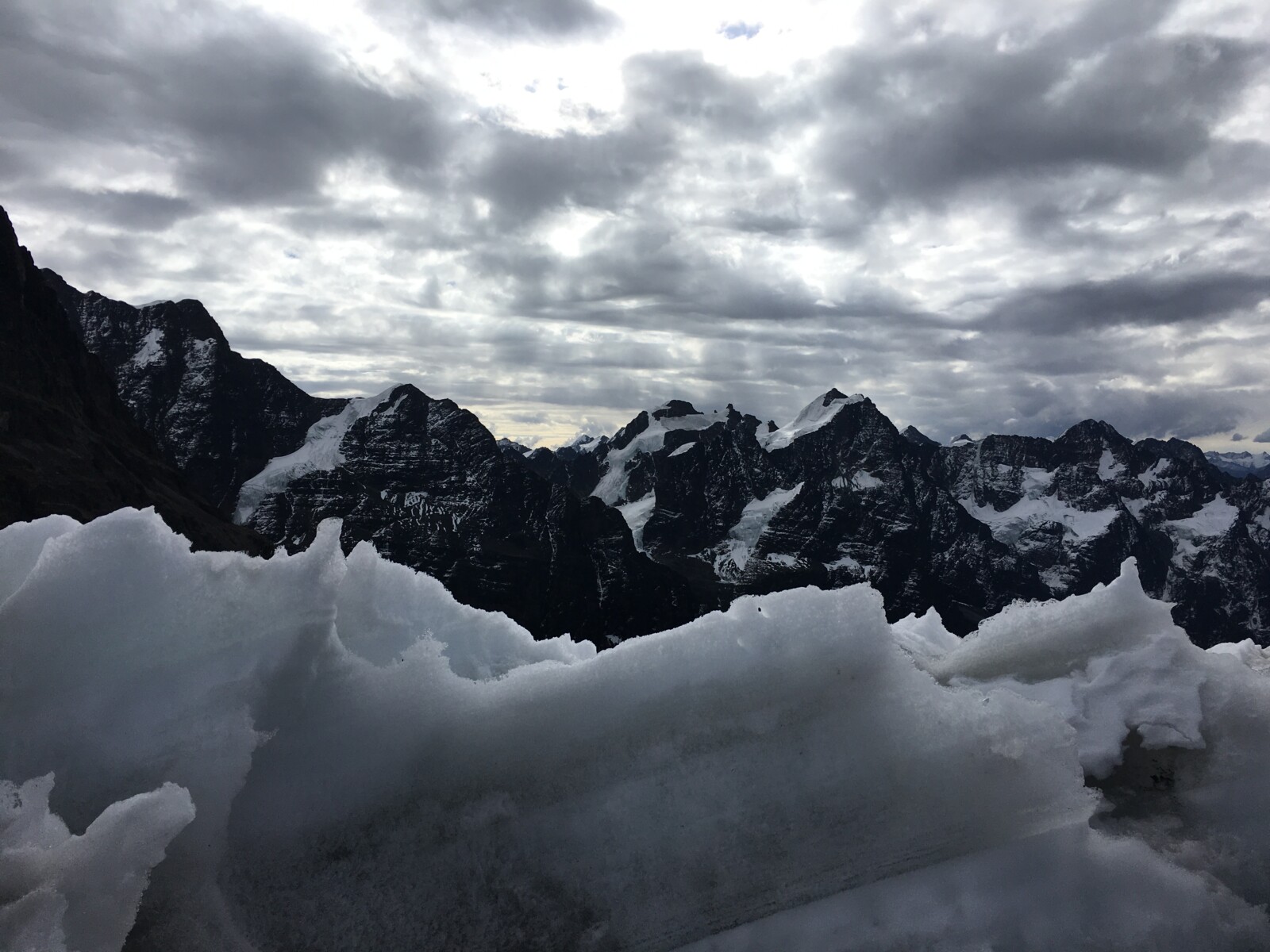
Climbers who want real high-altitude mountaineering: glacier travel, rope work, steep snow and several classic summits in one trip. It suits motivated climbers stepping up from their first glacier experience, experienced climbers looking for new alpine objectives, and returning clients preparing for bigger expeditions such as Aconcagua, Alaska objectives or the Himalaya. See Is This for Me?

This is an intermediate to advanced mountaineering trip. Expect glacier travel, steep snow, cramponing, rope systems and long summit days at altitude. Summit days run about 6 to 10 hours on Piramide Blanca and Pequeño Alpamayo and 10 to 14 hours on Huayna Potosí and Illimani. Nights at Condoriri Base Camp drop to 14°F / -10°C, and summit ridges reach -4°F / -20°C with wind chill. Bolivia is affordable and accessible. It is not a casual trekking trip.

Yes. You should already have used crampons, an ice axe, a harness, a helmet and basic roped systems. You don’t need to be an elite alpinist or to have climbed vertical ice, but you should be comfortable with the basics before this trip. Prior experience above 14,000 ft is recommended; above 16,000 ft is ideal. If you’re newer to mountaineering, the Ecuador Mountaineering School is built to get you to where Bolivia begins.

Very fit. Expect summit days of about 6 to 10 hours in the Condoriri and 10 to 14 hours on Huayna Potosí and Illimani, and several hard days in a row. Start structured training at least three to five months before departure: uphill hiking with a pack, cardio, leg and core strength, and back-to-back endurance days on weekends. Consistency matters more than occasional big efforts. See Is This for Me?

Tell us what you’ve climbed, how you train and what altitude you’ve reached. We’ll tell you straight. If Bolivia is the right objective now, we’ll say so. If something should come first, that’s not a rejection. It’s a starting point, and we’ll help you plan the steps that get you there.

The minimum age is set by Bolivia’s regulations and by insurance: climbers under 18 climb with a parent or guardian, and each climber’s insurance must cover their age. Families are welcome: younger climbers can join a scheduled team with a parent or guardian, or come on a private family expedition built around your family, and if a special permit is needed, we’ll help you apply. Fitness, skills and health matter far more than age.

No. BBE does not require a medical certificate. We do ask you to be honest with us about your medical history. This program sleeps above 14,000 ft for a week and climbs above 19,000 ft, so if you have a heart, lung, blood-pressure or blood-clotting condition, diabetes, or anything affected by low oxygen, have it evaluated by your physician for high-altitude activity before you book, and tell us what they said.

See a travel clinic well before you go. Routine vaccines should be up to date. A yellow fever certificate is generally needed only if you arrive from a country with yellow fever risk or visit Bolivia’s lowlands, so ask the clinic about your own route. Altitude medication is a conversation with your own physician. If you carry any, tell your guide on Day 1. See Your Expedition Checklist.

The core program climbs three peaks in the Cordillera Real: Piramide Blanca (17,552 ft / 5,350 m) and Pequeño Alpamayo (17,618 ft / 5,370 m) in the Condoriri massif, then Huayna Potosí (19,975 ft / 6,088 m), a 6,000-meter peak above La Paz. The optional extension adds Illimani (21,122 ft / 6,438 m), the mountain that watches over the city. Objectives may change with conditions. That flexibility is part of climbing in real mountains.

Thirteen days, airport to airport in La Paz, or 18 days with the Illimani extension. After a day in La Paz and a night on Isla del Sol, you spend Days 3 to 9 in the Condoriri, with a skills day, Piramide Blanca on Day 6, a recovery day and Pequeño Alpamayo on Day 8. Huayna Potosí follows on Day 11. On the extension, Illimani is planned for Day 15, with a reserve day after it. After the summit the team drives back to La Paz: on Day 16 if the summit goes on schedule, or on Day 17 if the reserve day is used for the summit. See Day by Day.

You sleep in La Paz at 11,900 ft / 3,627 m, then work up through camps between roughly 14,000 and 16,000 ft. The summits are 17,552 ft on Piramide Blanca, 17,618 ft on Pequeño Alpamayo and 19,975 ft on Huayna Potosí. The Illimani extension reaches 21,122 ft / 6,438 m. Altitude is one of the main challenges of this expedition, and the progressive itinerary is how we manage it.

Progressively, by design. La Paz sits at 11,900 ft, so adaptation starts on arrival. Isla del Sol on Lake Titicaca adds a gentle night at 12,500 ft. In the Condoriri you move through a training day, a first summit, a recovery day and a second summit before stepping up to Huayna Potosí. Extension climbers carry all of that adaptation onto Illimani.

In June and July, the dry season in the Cordillera Real, when weather is colder, drier and more stable. Expect cold nights, strong sun, freezing mornings and fast-changing alpine weather; summit mornings can be very cold and windy. Current 2027 departures are on Dates & Prices. If you need different dates or have your own team, ask about a private expedition.

If you have the days and want Bolivia’s highest objective on this trip, it’s worth considering, and the reason is timing. After 13 days in the Cordillera Real you arrive at Illimani well acclimatized, a far stronger position than flying in for it cold. The extension adds five days, takes you from a 19,975 ft summit to a 21,122 ft one, and includes a dedicated reserve day for weather. Donkeys carry the loads to Puente Roto Base Camp and porters carry them to Nido de Cóndores on the extension; you carry your personal pack. Most climbers should start with the core program; ask a guide if you’re unsure.

A comfortable hotel in La Paz, in the Miraflores or Sopocachi neighborhood; an eco-lodge on Isla del Sol; tents at Rinconada and Condoriri Base Camp; and a bunk at the Huayna Potosí refuge at 15,420 ft / 4,700 m the night before the summit. The extension uses tents at Puente Roto Base Camp and Nido de Cóndores High Camp at 19,030 ft / 5,800 m. See Where You’ll Stay.

We don’t publish a success rate. Results depend on the season, the weather and how the team is climbing, and a single number would hide all of that. What helps: arriving trained and skilled, a progressive itinerary with a recovery day, a small team with one guide for every two climbers, and guides who read the route and the team every day. Ask a guide and we’ll talk you through recent seasons.

The summit is the goal, not the contract. Altitude, weather, route conditions and how the team is moving all play a part, and no one can promise a summit. What we can promise is that you’ll be coached and supported throughout, and that every call is made with your safety first. Turning around at the right moment is a professional decision, not a failure.

Mountain weather always has the final say. The core itinerary has a recovery day in the Condoriri and objectives that can shift, and the Illimani extension carries a dedicated reserve day for the summit push. Guides adjust objectives and summit days as conditions change, with safety first. We won’t push a team into dangerous conditions to keep a schedule.

Tell your guide early. Small problems managed quickly rarely become big ones. Hydration, pacing, rest and, if needed, descent are the tools, and descending is a professional decision, not a failure. The team carries a comprehensive medical kit on every climbing day and satellite and radio communications. Evacuation depends on weather and conditions and is never guaranteed, which is why rescue and evacuation coverage is required on this expedition. See Life on the Mountain.

Condoriri Base Camp drops to 14°F / -10°C or below at night, and summit ridges on Huayna Potosí and Illimani reach -4°F / -20°C with wind chill. Illimani’s high camp is the coldest night of the trip. You need a sleeping bag rated to -20°F / -29°C and a pad that insulates you from frozen ground. See the Bolivia Alpinist Gear List.

Pack animals carry the expedition gear into the Condoriri, so you walk in with a light pack, and porters help with logistics on Huayna Potosí. On the Illimani extension, donkeys carry the loads to Puente Roto Base Camp and porters carry them to Nido de Cóndores. Moving even a personal pack above 15,000 ft is real work, so train for it.

All meals are included for the whole trip, in La Paz, at Lake Titicaca and on the mountain. On the mountain the expedition team cooks hot, filling meals built for recovery: soups, carbohydrates, protein and plenty of hot drinks. Bring your own snacks and energy food for climbing days, and tell us about dietary needs in advance. Altitude dulls your appetite, so eat even when you’re not hungry. See Life on the Mountain.

The La Paz hotel and the Huayna Potosí refuge have standard facilities. The Condoriri camps and Illimani are wilderness-style, so bring wet wipes and hand sanitizer. We follow Leave No Trace principles and ask every climber to do the same.

The team carries Starlink, which gives camp a limited shared connection, enough to message home and pull weather. It depends on power, weather and camp position, so treat it as a bonus. Your guides also carry satellite and radio communications for emergencies. Charging is easy in La Paz but limited on the mountain, so bring a power bank and spare headlamp batteries, and keep them warm in your sleeping bag.

Yes. You join a team of no more than six climbers, share a room in La Paz and a tent on the mountain, and get to know your team quickly. If you’d prefer your own room in town, see the single-room question below.

Teams are capped at six climbers, with one guide for every two climbers, so a full team of six climbs with three guides. Guides are certified to IFMGA, AMGA or equivalent national standards, and every departure runs to BBE’s guiding standards. Cooks, drivers and porters support the expedition; we don’t count them as climbing guides. Small teams move faster, communicate better, and let guides watch how each climber is adapting. You won’t disappear into the group.

Scheduled departures are led by BBE’s guide team, run to the same standards. Willie or Damian can personally lead a private Bolivia expedition on request, confirmed in writing in your trip terms. See Private & Custom Expeditions.

Yes. A private expedition runs on dates you request, for one climber, a couple or your own group; we confirm feasibility for the season and conditions. It can change the order of the peaks, add or focus objectives, include Illimani, or link Bolivia with Peru or Ecuador. See Private & Custom Expeditions.

The expedition price, for the 13-day program and separately for the optional Illimani extension, is on Dates & Prices. On top of it, plan for international flights, required rescue coverage, travel insurance, tips, gear and personal spending. What to Budget For lays it all out.

Guide leadership at a 2:1 ratio, airport transfers in La Paz on the scheduled days, all scheduled ground transport, hotel nights in La Paz and the eco-lodge on Isla del Sol, all meals, all mountain and climbing permits, camps and the Huayna Potosí refuge, pack animals and porter support, and group climbing and camp equipment. The full list, with the extension inclusions, is on Dates & Prices.

International flights, rescue and evacuation insurance (required) and travel insurance (strongly recommended), personal gear and rentals, tips, alcohol and personal drinks, personal snacks, a single room, and extra nights. What to Budget For has typical ranges for each.

Yes. Rescue and medical evacuation coverage is required on this expedition. Your policy must cover helicopter rescue and high-altitude mountaineering to 19,975 ft / 6,088 m, or 21,122 ft / 6,438 m with the Illimani extension. If you use Global Rescue, that means its High-Altitude Evacuation Package. Credit-card travel policies rarely cover roped glacier travel at these altitudes, so read the exclusions. You can arrange it any time before the trip’s departure date, but it must be in place by then; send us your certificate before you travel. Without valid cover, you can’t climb. Travel insurance is strongly recommended, but not required. See Trip Insurance & Evacuation Coverage.

Yes. We arrange all mountain access, park and climbing permits, including Illimani on the extension. Small local community or refuge fees are sometimes collected on the ground; if a fee changes after publication and isn’t already in your trip price, it’s passed through at cost.

Tipping is customary in Bolivia and a real part of how guides and local staff earn their living. Because the number of guides depends on team size, so does the suggested total per climber:

  • One guide (one or two climbers): $250–500
  • Two guides (three or four climbers): $325–650
  • Three guides (five or six climbers): $400–800

The Illimani extension is run by the same guide team, so the same tip guidelines apply; there’s no separate extension tip. Keep a separate emergency reserve of $300–500, and bring small US bills. There are no ATMs past La Paz, so withdraw what you need before the mountains. Personal spending runs about $250–400 for the trip; the full breakdown is on What to Budget For.

Contact us at climbing@benegasbrothers.com or use Register Now on Dates & Prices. We’ll review your experience honestly, answer your questions and email you a link to our online registration form. There you complete the reservation form and pay your deposit, which reserves your place, then your Registration Form, passport copy, Terms & Conditions and Release.
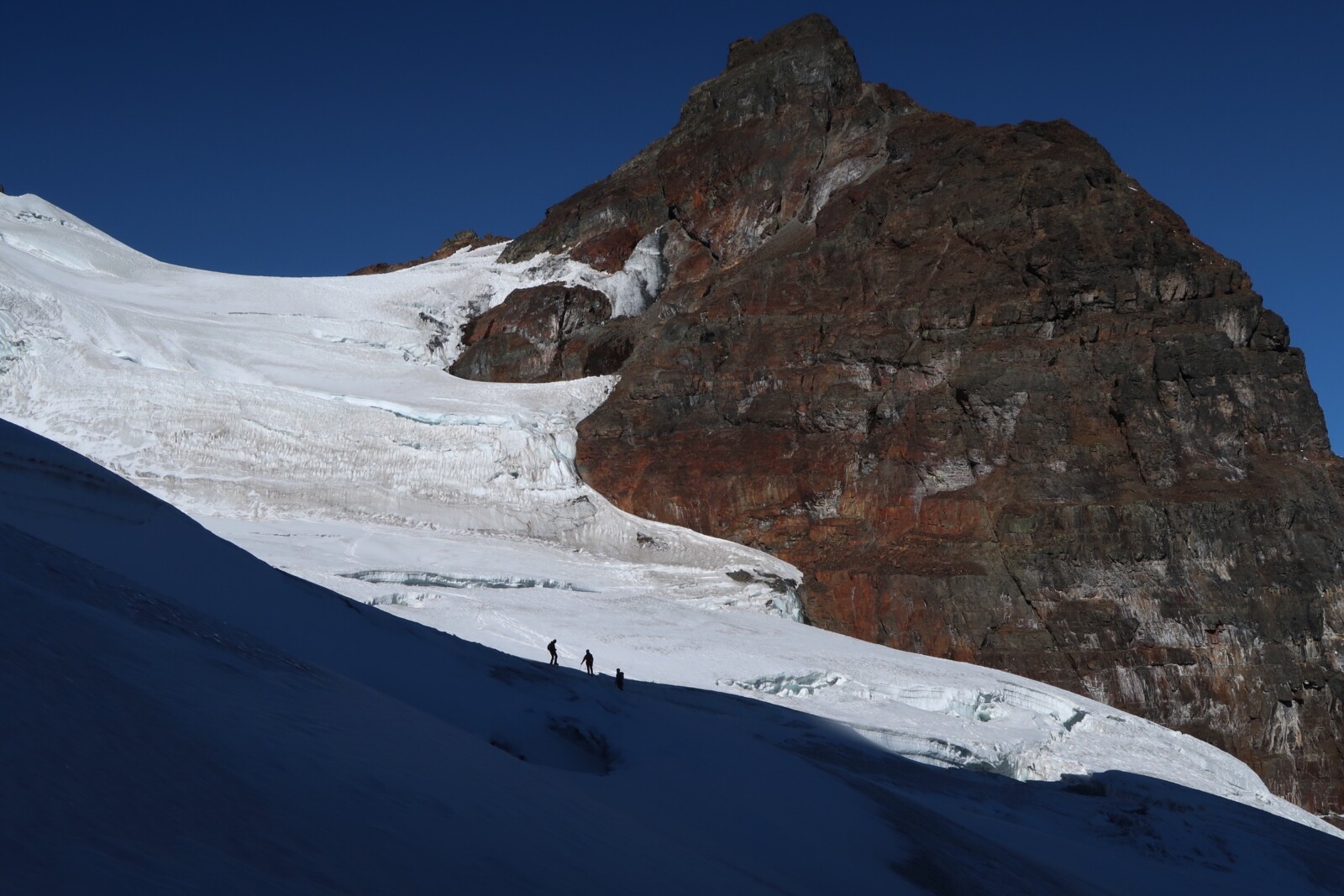
A 20% deposit reserves your place, and the balance is due 120 days before departure. Cancellations must be in writing. Refunds depend on how much notice you give, and the fixed booking fee is non-refundable. Full terms are on Dates & Prices. Travel insurance with cancellation cover is strongly recommended.

If you hold a US passport, no: since December 2025, US citizens can make visa-free tourist stays in Bolivia of up to 90 days. If you hold a Canadian, UK, EU or other passport, check the current rules with the Bolivian consulate; we’ll help you confirm the requirement for your passport. Your passport should be valid at least six months beyond your return date. See Your Expedition Checklist.

El Alto International Airport, La Paz (LPB), at 13,300 ft / 4,060 m. Land in the afternoon or early evening of Day 1 if you can. We strongly recommend arriving at least one full day early: you start acclimatizing, recover from travel and have time to solve a delayed bag. For your flight home, midday or afternoon on the last day works best. See Flights & Getting to La Paz.

Once your place is confirmed and you’ve paid in full. Booking soon after that gives you the best choice of fares. Book everything on one itinerary so your bags check through to La Paz and a missed connection is protected, and consider changeable fares. If you’re joining the extension, book your return for Day 18. See Flights & Getting to La Paz.

Yes, on the scheduled arrival and departure days. Send us your flight details well in advance. If you arrive early or leave on a different day, tell us and we’ll help arrange a transfer at your own cost.

Single rooms in La Paz are available on request; we’ll quote the cost when you ask. On the mountain, all climbers share tents.

Yes. Bring two duffels. One goes with you to Lake Titicaca and the mountains; the other stays in secure storage at the La Paz hotel with your town clothes.

Yes, in La Paz: crampons, ice axes, harnesses, helmets and sleeping bags are usually available. Tell us at least three weeks before departure so we can confirm and reserve them. Boots are the exception. We don’t recommend renting boots for a 6,000-meter climb, because fit matters too much. See the Bolivia Alpinist Gear List.

It can be. Bolivia combines altitude, glacier travel, technical skills and expedition rhythm, which is the foundation for Aconcagua, Alaska objectives and the Himalaya. Bolivia can also be a complete objective on its own. There’s no required ladder. The useful question after Bolivia is what it taught you about how you climb. Ask a guide what makes sense for you next.

Three summits. Then Illimani, if you want it.

Lake Titicaca, a full glacier training day, Piramide Blanca and Pequeño Alpamayo, then Huayna Potosí at 6,088 m. Six climbers maximum.

Price$5,400 per person
Private & Custom Your dates. Your team.

This trip can run privately, on the dates that work for you.

Scheduled departures
  • Friday, Jun 4 - Wednesday, Jun 16, 2027Scheduled departure · Illimani extension Jun 16 – 21
  • Saturday, Jun 19 - Thursday, Jul 1, 2027Scheduled departure · Illimani extension Jul 1 – 6

Questions first? Ask a guide

Location:
Bolivia
Group:
Maximum 6 climbers
Duration:
13 Days + optional Illimani extension
Skill:
Intermediate and above
Activities:
Expeditions
Pricing

All prices are in US dollars.

Three summits. Then Illimani, if you want it.

Lake Titicaca, a full glacier training day, Piramide Blanca and Pequeño Alpamayo, then Huayna Potosí at 6,088 m. Six climbers maximum.

Book now

Private & Custom

Make Bolivia Alpinist Expedition your own expedition

Every trip we run can also run privately: on your dates, with your people, built around your goal. Same guides, same safety standard as our scheduled departures.

Your dates

We set the departure around your calendar, not the other way round.

Your people

Family, friends, a company team, or just you and a guide.

Your goal

Training for a bigger peak, a winter or speed attempt, a film, or a route that runs from summit to ocean.

Your price

Private trips are quoted for your group size, dates and plan.

Bolivia Alpinist Expedition

Core Expedition

Maximum 6 climbers · 13 days · 3 summit attempts
Price per Person $5,400

Lake Titicaca, a full glacier training day, Piramide Blanca and Pequeño Alpamayo in the Condoriri, then Huayna Potosí. Hotels, camps, the refuge, scheduled ground transport and all meals for the whole trip included.

Core + Illimani Extension

Maximum 6 climbers · 18 days total
Core price plus extension, per person $5,400 + $1,250

The core program, then five more days for Illimani (21,122 ft / 6,438 m), with a dedicated weather reserve day for the summit push.

Private & Custom

Your dates · Your team · Your objective
Priced individually On request

A private expedition built around your team: dates, sequence, peaks, length and guide structure, or Bolivia linked with Peru or Ecuador.

The BBE Advantage

A roped climber crossing a glacier below rock peaks, Bolivia

You Start High

La Paz sits at 11,900 ft / 3,627 m, so acclimatization begins the moment you land.

A climber on a steep snow ridge in the Cordillera Real

Two Summits Before Huayna Potosí

By the time the team reaches Huayna Potosí, every climber has been tested on real terrain and adapted to real altitude. The 6,000-meter peak is not a leap. It is the next step.

A rope team on a glacier beneath a rock wall, Cordillera Real

Six Climbers, One Guide for Every Two

Every scheduled departure is capped at six climbers, with one guide for every two climbers. A full team of six climbs with three guides.

Professional Mountain Standards

Our guide team includes internationally and nationally certified mountain professionals.

AMGA — American Mountain Guides Association logo
IFMGA / UIAGM — International Federation of Mountain Guides Associations logo
AAGM — Asociación Argentina de Guías de Montaña logo

Related Trips