The Climb
Ojos del Salado Express · Atacama Desert · Chile
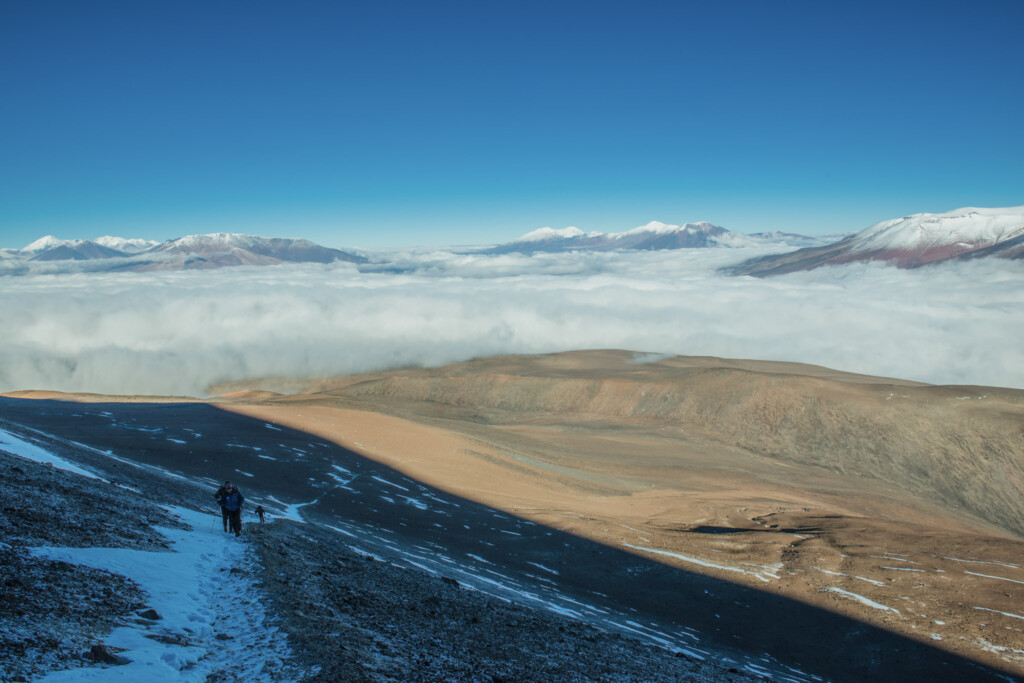
Ojos del Salado is the highest volcano on Earth and the highest mountain in Chile. Our main expedition takes fourteen days to climb it. The Express takes nine.
The difference isn’t that we move faster on the mountain. It’s that the acclimatization starts weeks before you fly, on a Hypoxico system in your own home. The total physiological work doesn’t shrink. It is redistributed, and part of it is done before you land in Chile.
Ojos del Salado, 14 days
- A week acclimatizing through the Atacama
- Siete Hermanas and Cerro San Francisco first
- Up to six climbers
Ojos del Salado Express, 9 days
- Acclimatization starts weeks before you fly
- A Hypoxico system and written protocol at home
- Founder-supported preparation
- Two summit windows
- Four climbers, two guides
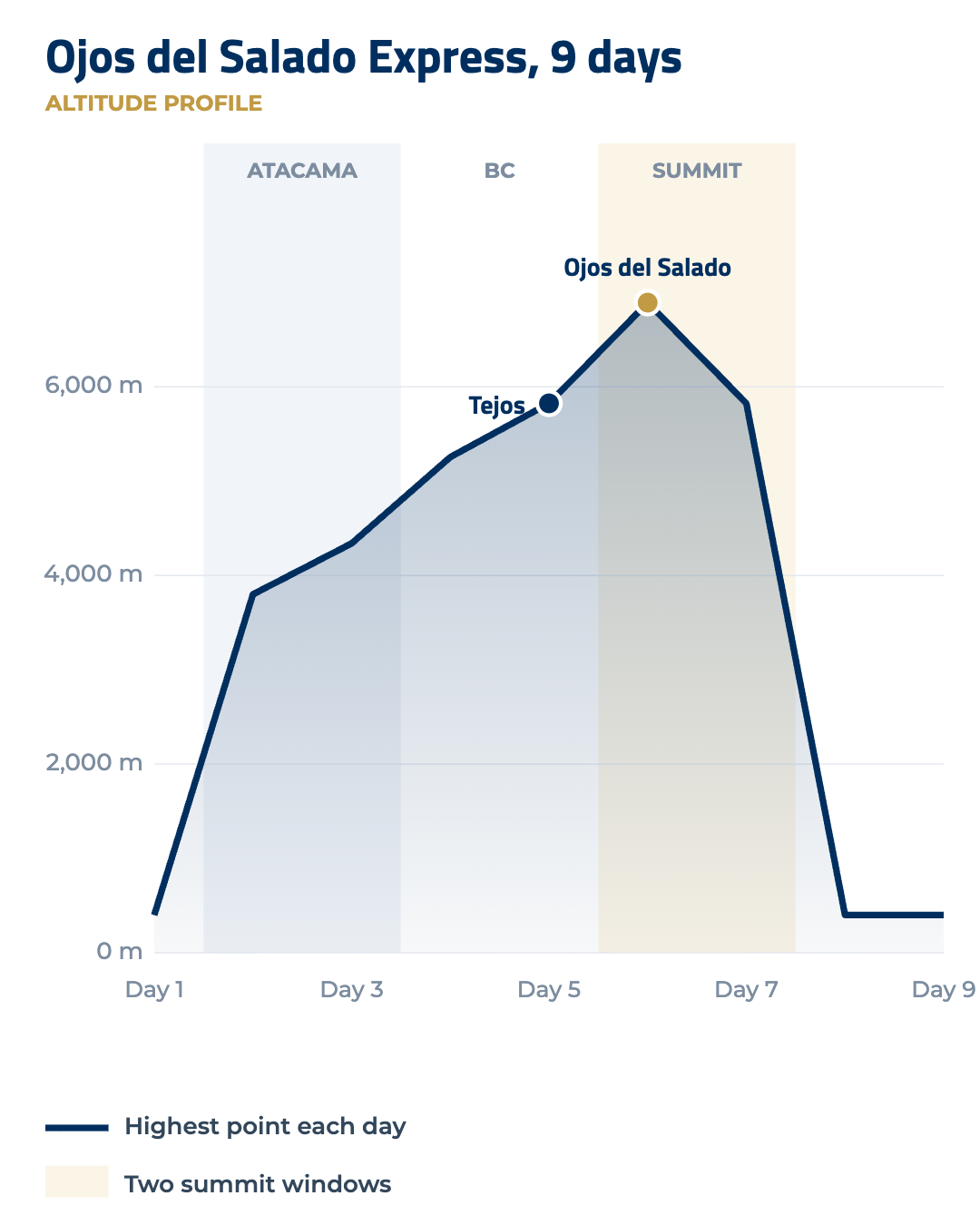
That is the whole idea, and everything on this page follows from it.
Who the Express Is Built For
Almost every climber who writes to us about Ojos is capable. What many of them don’t have is two and a half weeks.
The Express is for experienced climbers whose limit is the calendar. It assumes you have been high before, that you know how your body behaves there, and that you will do the preparation we ask for.
It’s the wrong choice if Ojos would be your first mountain near this height, if you’ve had an unexplained problem at altitude, or if you can’t commit to the full pre-departure protocol. In those cases our 14-day Ojos del Salado expedition is the better program, and we’ll tell you so.
Readiness Is Built in Three Stages
At home — the hypoxic protocol. Every climber receives a Hypoxico altitude system, delivered to your home and included in the trip price, with a written protocol built around this objective and reviewed against your training history and your record at altitude. Four weeks of consistent use before departure is the standard. It has a schedule, a target and a record.
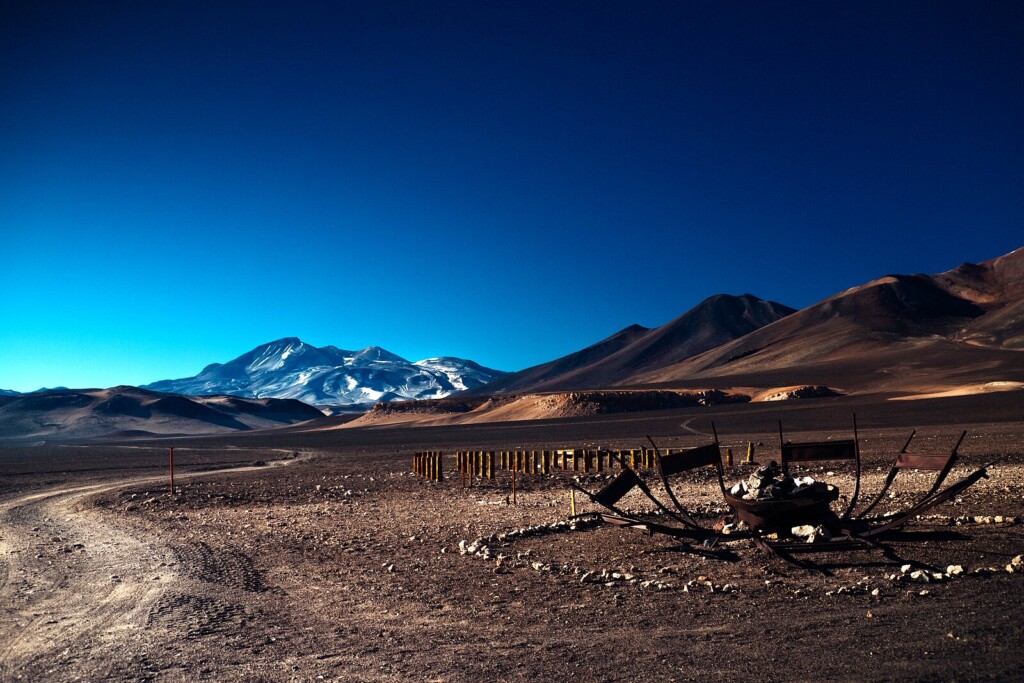
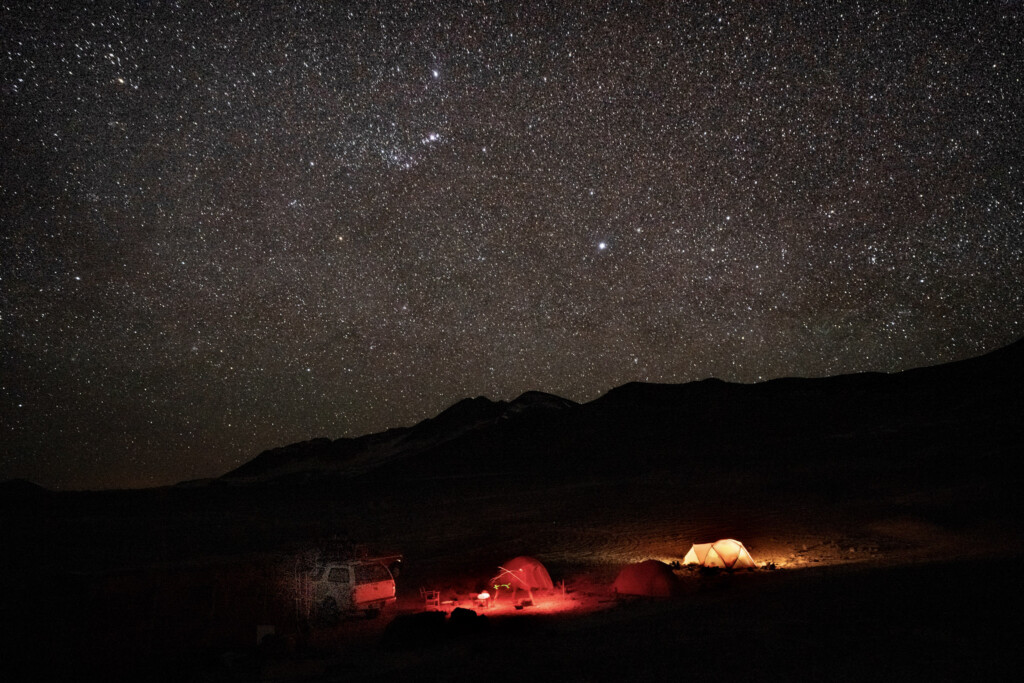
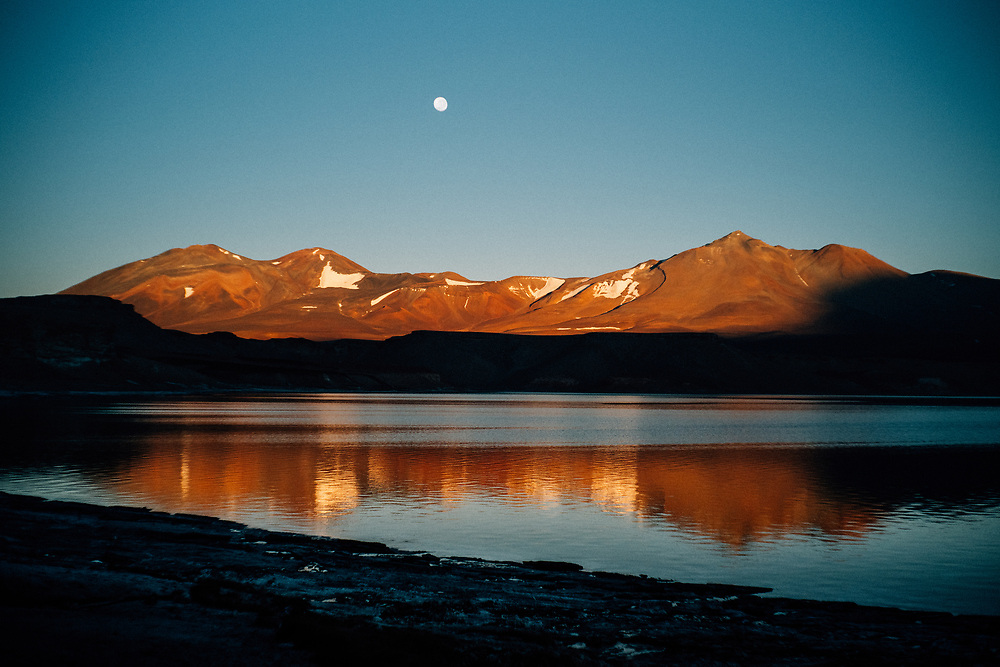
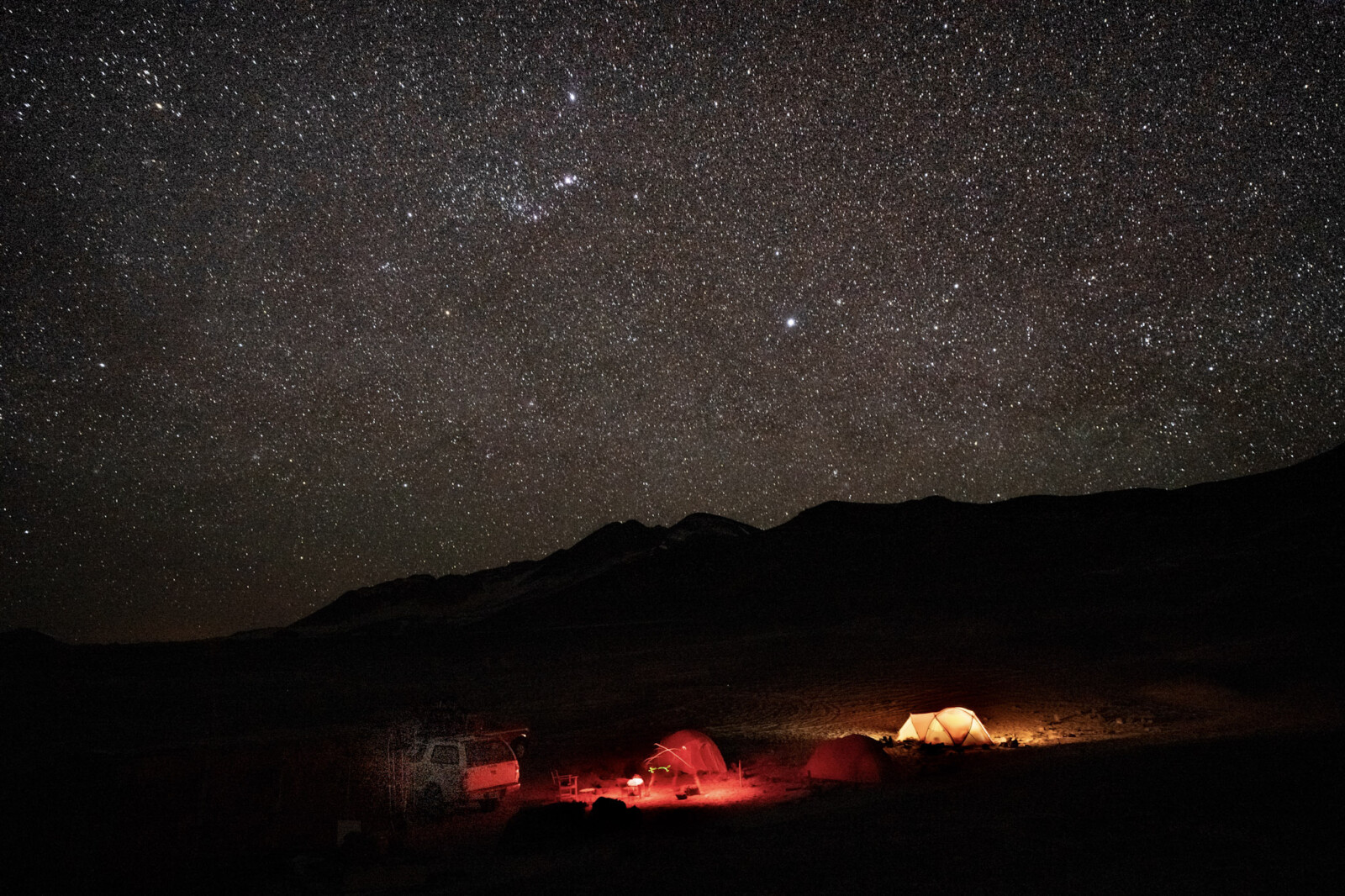
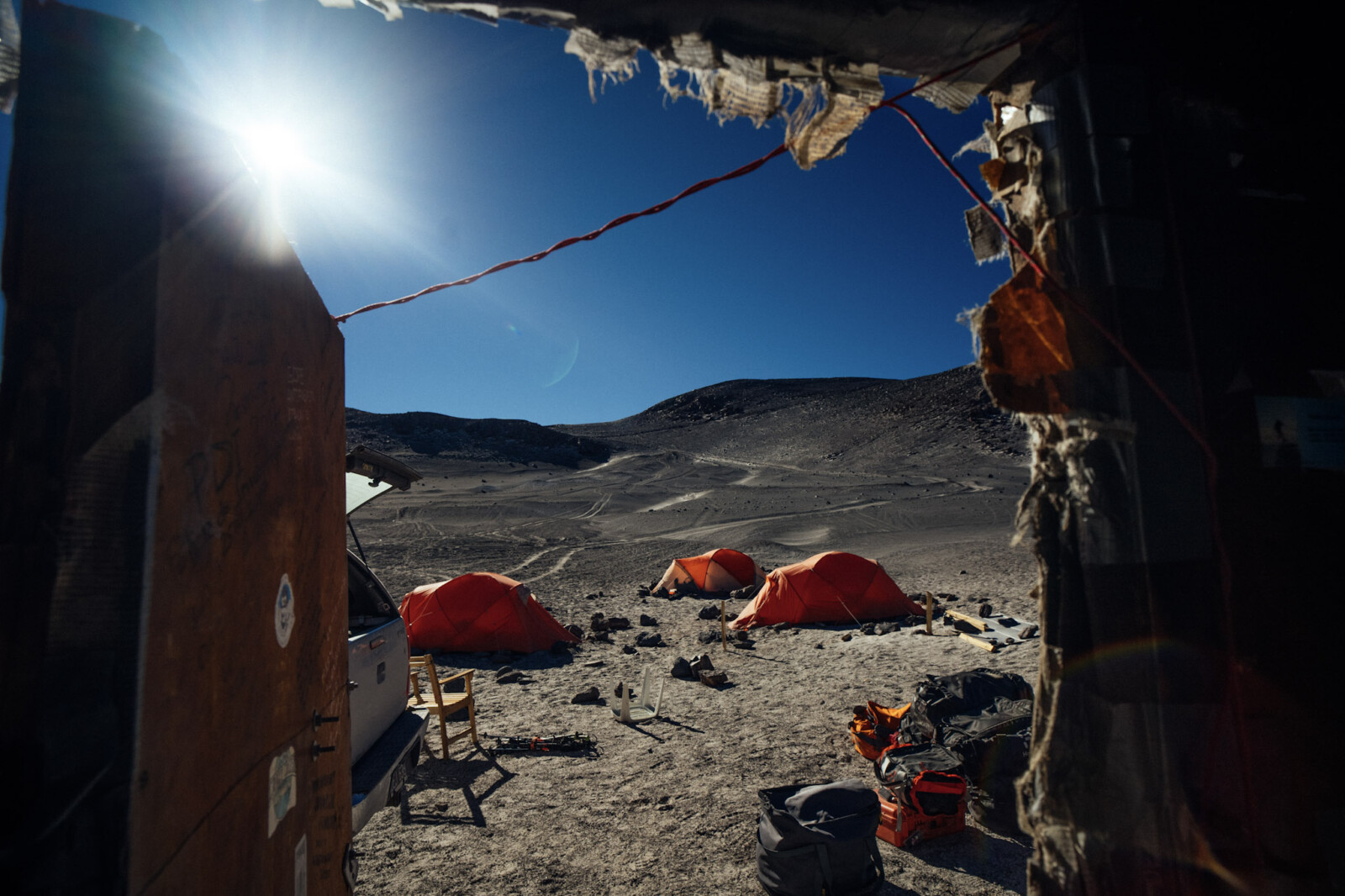
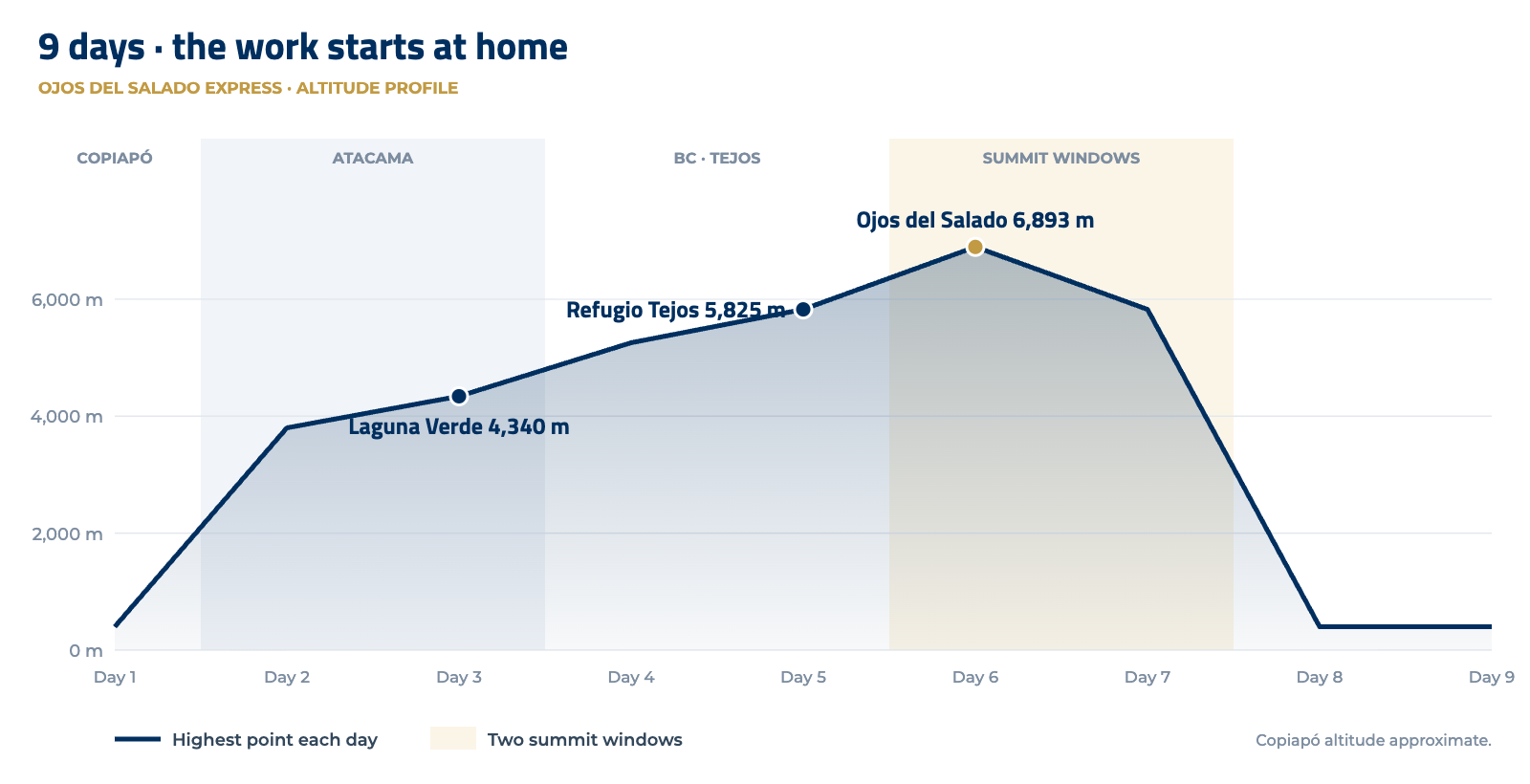
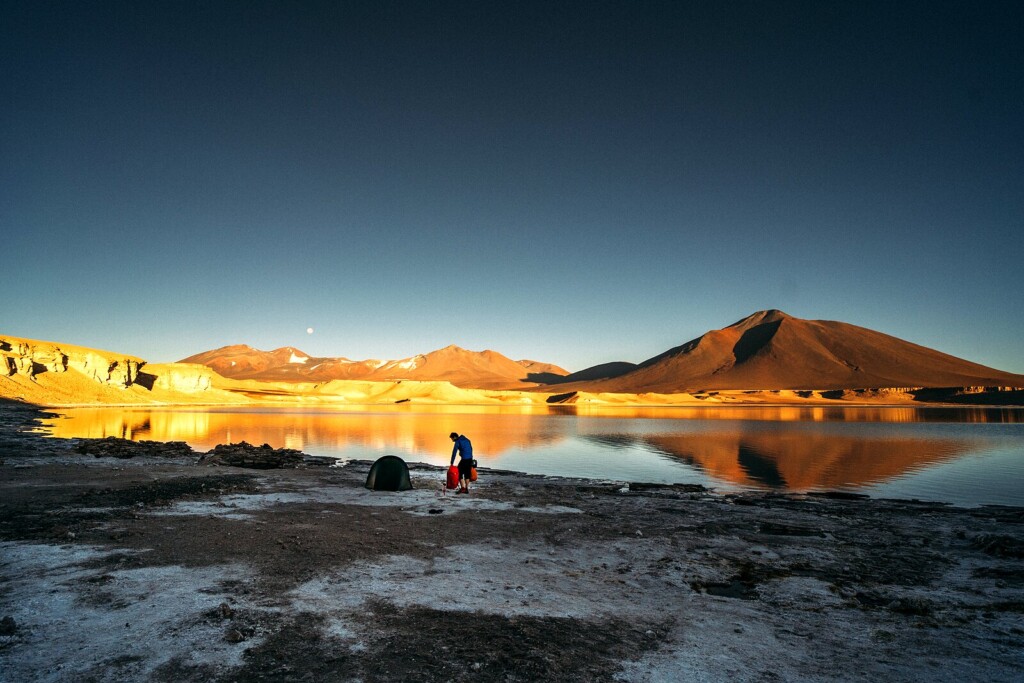
On arrival — the Atacama in steps. We don’t drive straight to the mountain. You sleep at Laguna Santa Rosa (3,800 m / 12,500 ft), then Laguna Verde (4,340 m / 14,240 ft), then Base Camp (5,255 m / 17,240 ft), then Refugio Tejos (5,825 m / 19,110 ft). Each night is higher than the last, and every step is watched by your guides.
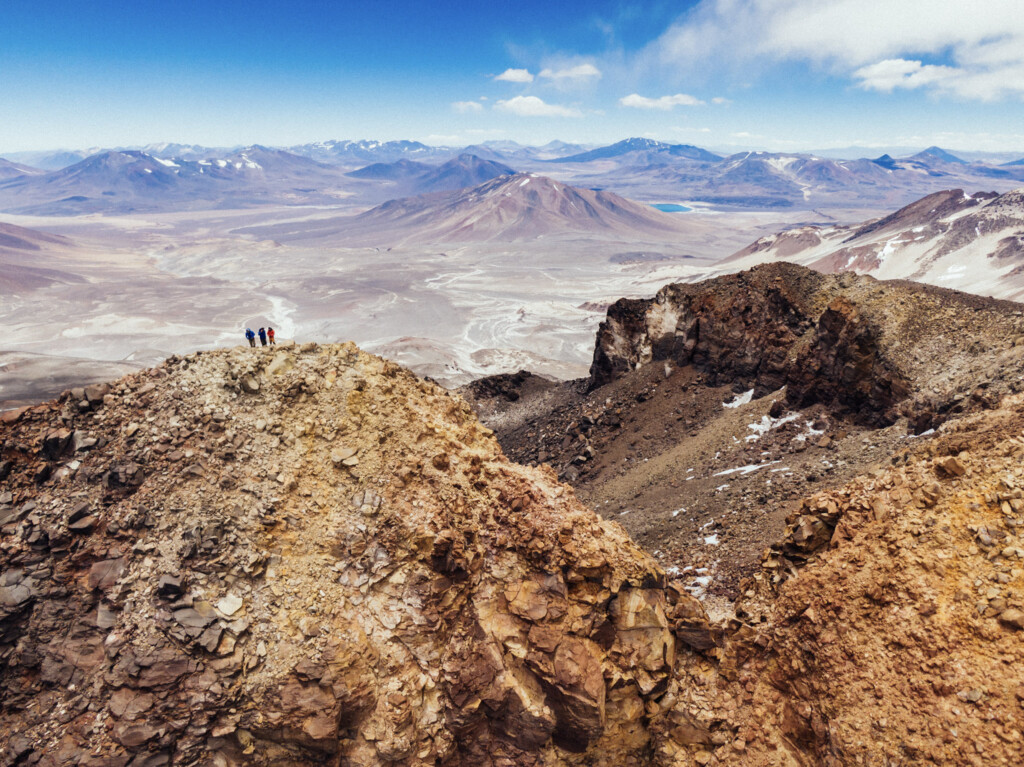
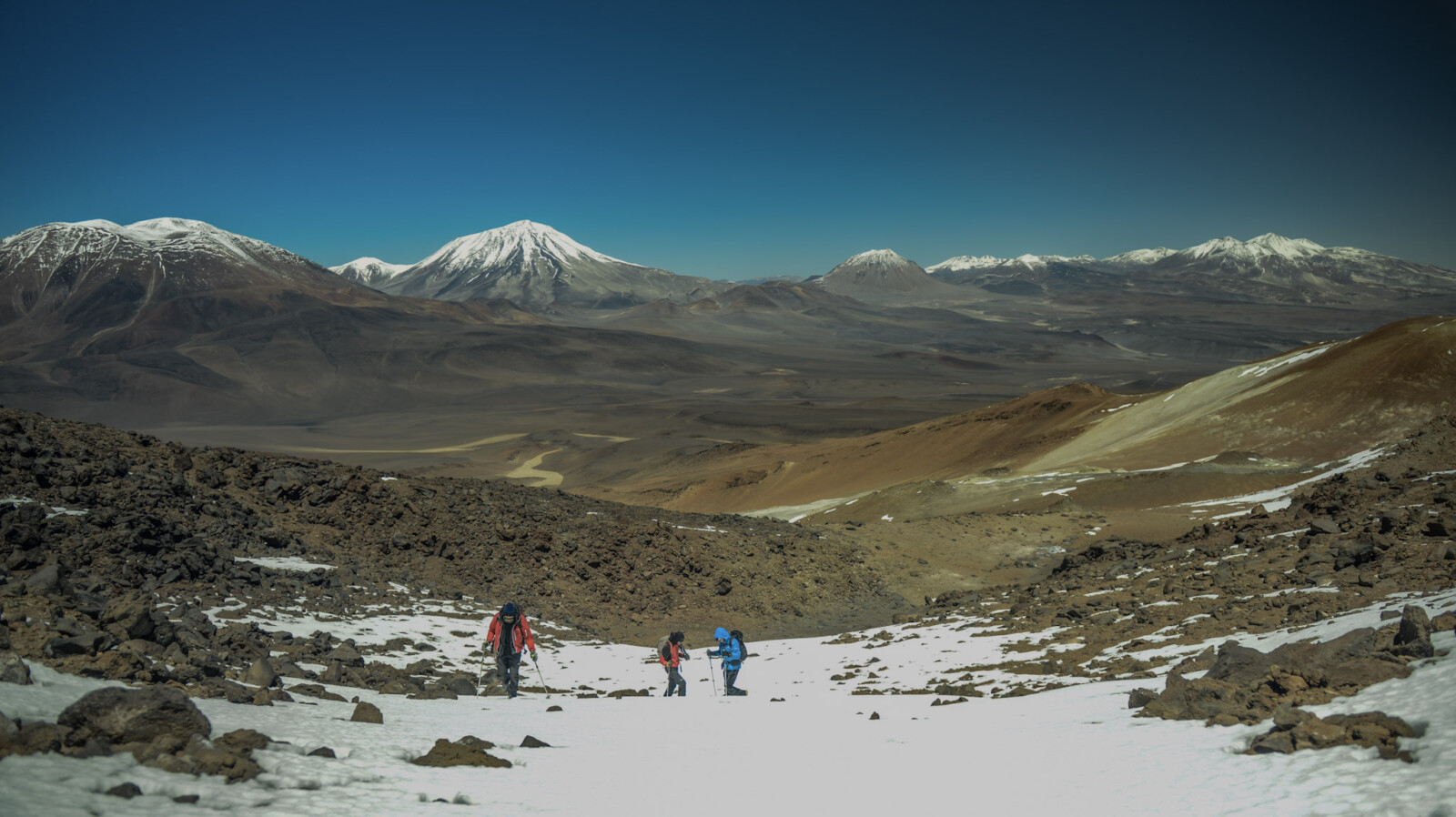
On the mountain — two summit windows. From Tejos, summit day climbs about 1,070 m / 3,500 ft to the crater and a short rock scramble to the top. The schedule holds a second summit day, because on Ojos the wind decides more attempts than the terrain does.
What the Express Trades Away
Compressing a trip has a cost, and you should know it before you book:
- No Cerro San Francisco. The 14-day trip climbs a 6,018 m peak before Ojos. The Express doesn’t. Your hypoxic protocol and your past altitude carry that load instead.
- No rest day at Laguna Verde. One night at the hot springs, not two or three.
- One spare summit day, not two. If both windows close, there isn’t a third.
- Less time in the desert. The Atacama is half the reason people love the long trip. The Express sees it at speed.
If you want the full Atacama, more margin and a 6,000 m warm-up, the 14-day expedition is the better trip. For many climbers it is.
The Express costs more than the 14-day trip. You’re paying for compression: a Hypoxico system and protocol, two guides for four climbers, and the same logistics fitted into fewer days.
Your Preparation Is Supported by the Founders
On every Express program, the preparation phase is run personally by Willie or Damian Benegas. From the moment you’re accepted, one of them works directly with you on your training, your hypoxic protocol and how you’re responding to it.
It applies to your preparation, not to your departure. Who guides you on the mountain is confirmed in your written trip terms and never assumed.
Readiness Is a Requirement, Not a Benefit
A shorter itinerary is sound only when the preparation actually happened. A climber who uses a hypoxic system inconsistently and then stands at 6,900 m on a compressed schedule is worse off than a climber on the 14-day trip, not better off.
So your compliance and your response to the protocol are reviewed before departure. If the protocol hasn’t been met, we’ll tell you. That conversation may lead to the 14-day expedition, a later departure or a different objective. We’d rather have it months out than at Tejos.
Four Climbers, Two Guides
Teams are capped at four climbers with two guides. Guides are certified to IFMGA, AMGA and/or equivalent national standards. Local drivers and camp staff support the team; your guides run the climbing, the acclimatization plan and every turnaround decision.
You will never disappear into the group.
Safety and Logistics
Ojos is 4×4-supported. That lets us carry proper food, real camp infrastructure, and full medical and communications equipment to 5,255 m, and it means a descent is measured in hours, not days. Every departure carries a group medical kit, satellite and radio communication, and Starlink in camp. Every climber is monitored daily: pace, hydration, appetite and recovery.
A compressed schedule doesn’t buy urgency. Nobody on a BBE expedition is pushed because the calendar is tight, and turning around at the right moment is a professional decision, not a failure. No one can promise you a summit on Ojos.
Questions About the Express?
Tell us what you’ve climbed and how high. We’ll tell you honestly whether the Express or the 14-day expedition fits. We don’t simply guide expeditions. We help people build a lifetime in the mountains. Day by Day · Is This For Me? · Before You Go