The Climb
Peru Alpinist · Alpamayo & Quitaraju · Cordillera Blanca, Peru · 16 Days · Maximum Four Climbers
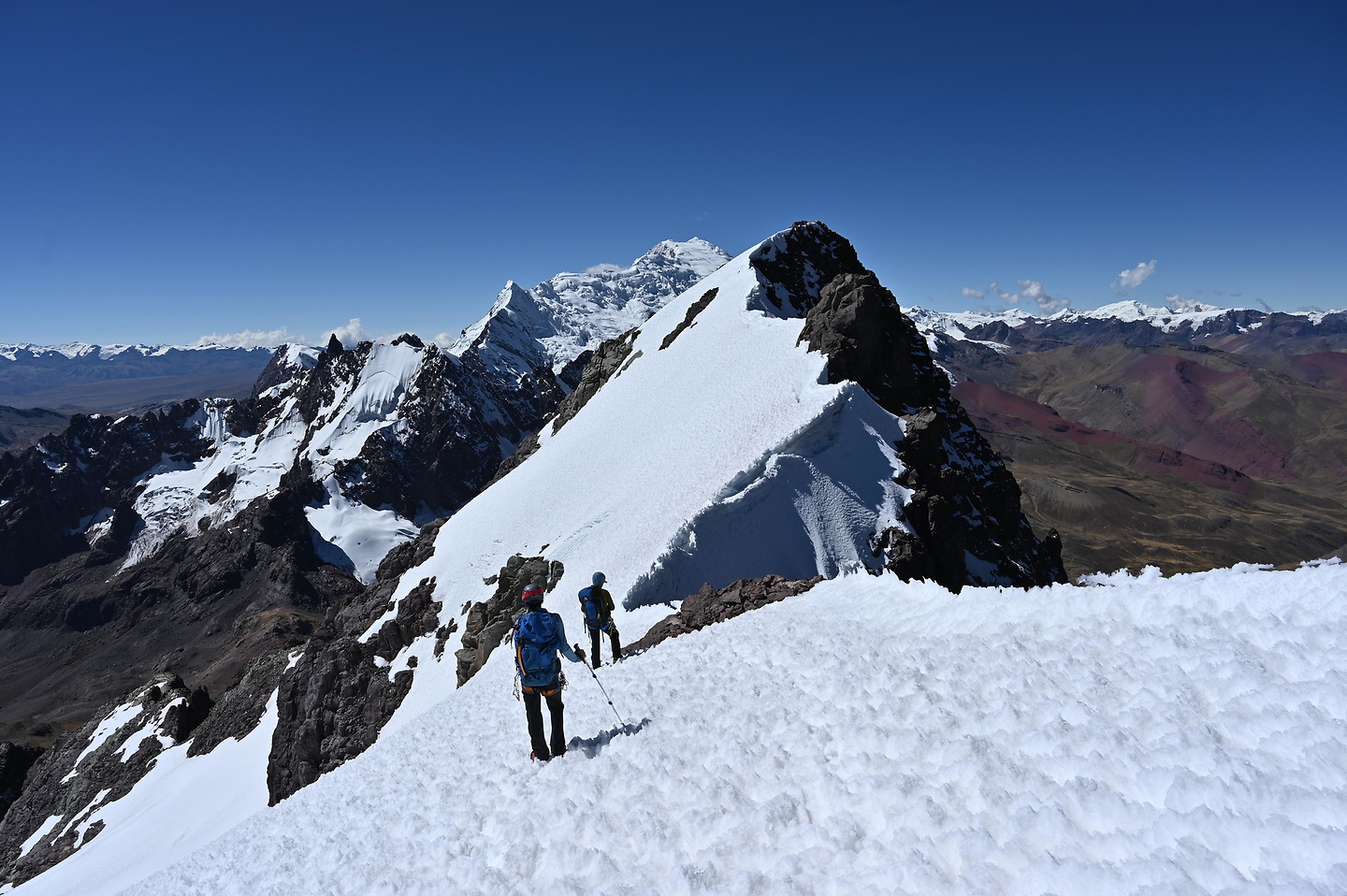
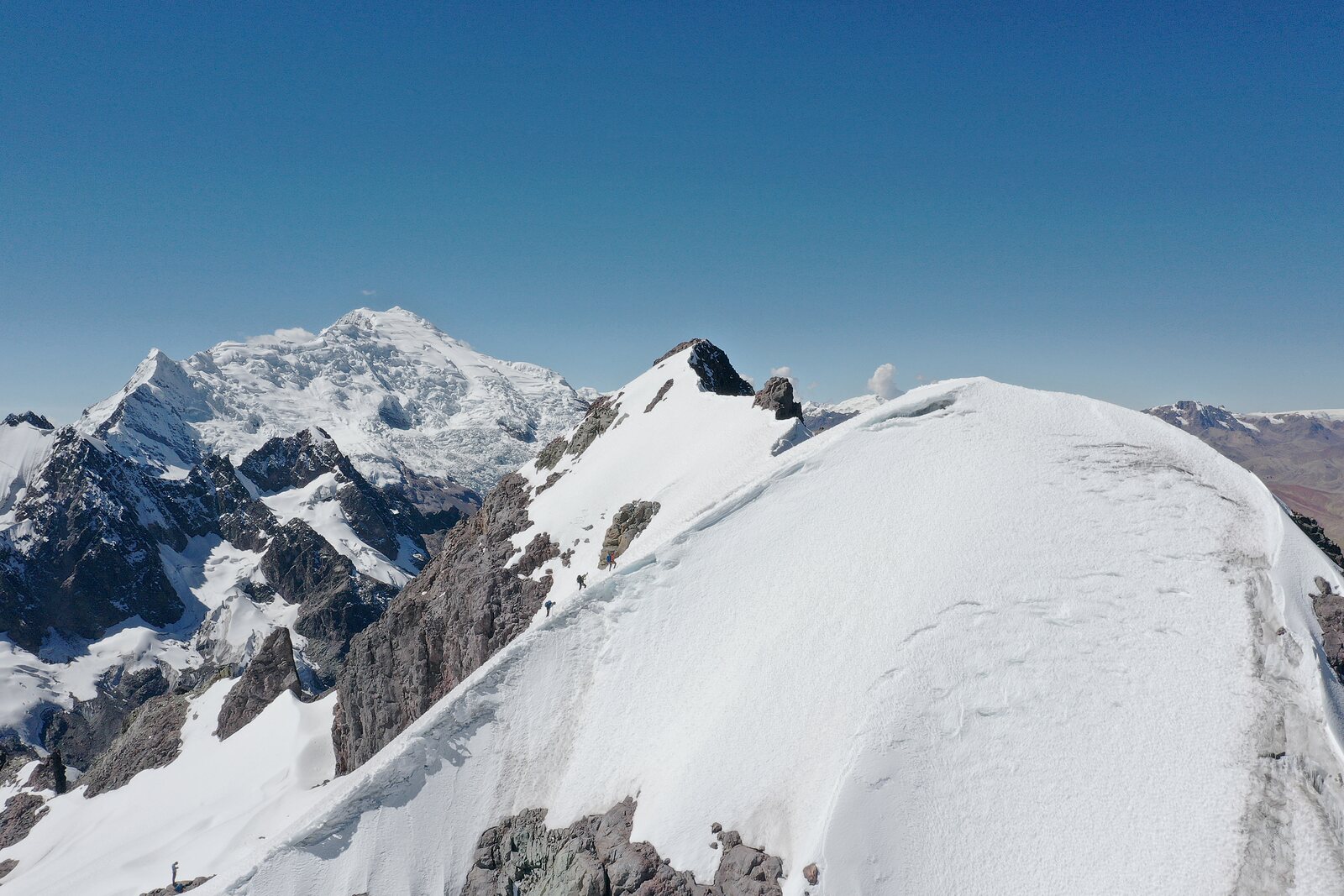
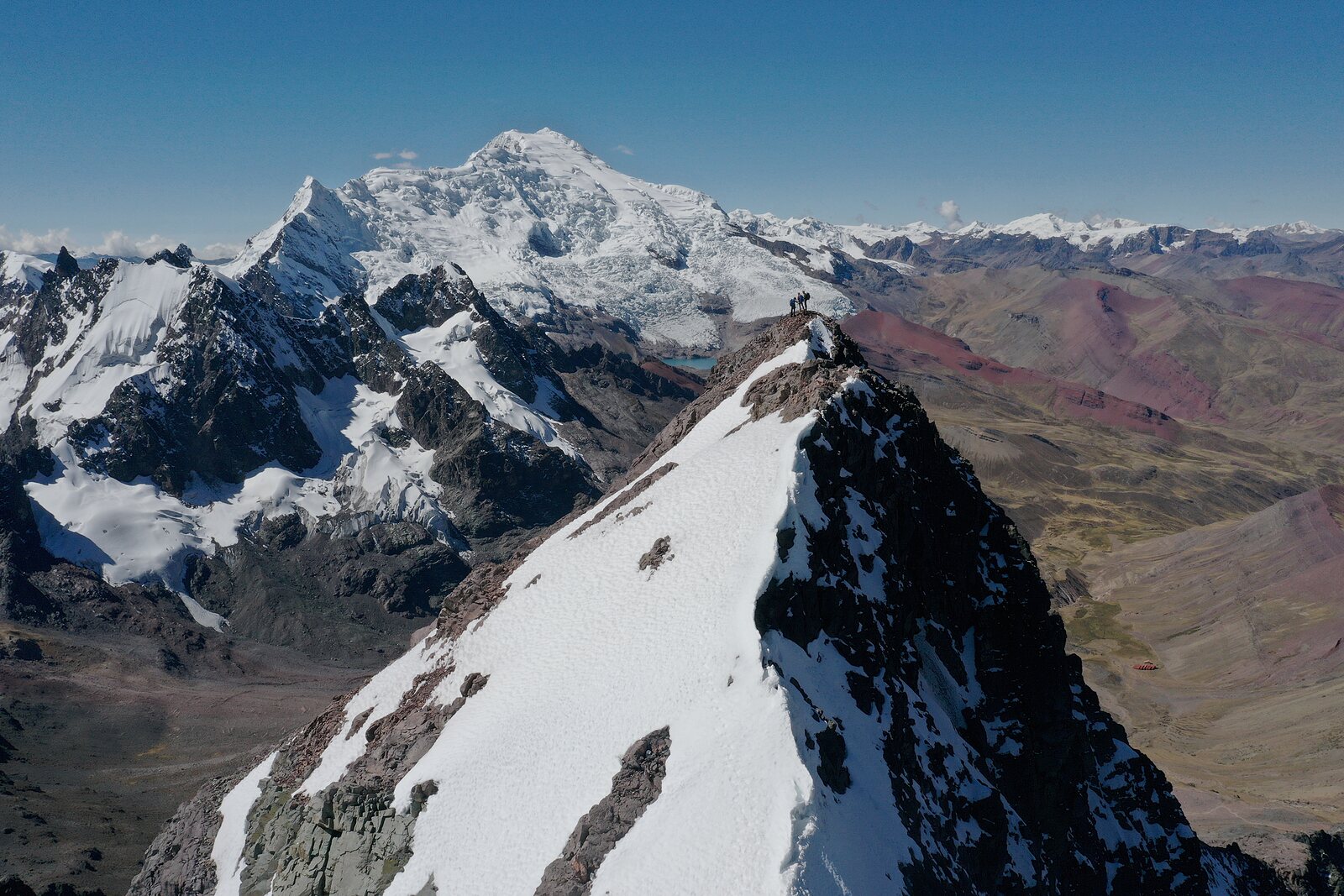
Alpamayo is often called the most beautiful mountain in the world. One look at that fluted ice face and you understand why. It is not a scramble or a trekking peak. It is a serious alpine objective: steep, technical and earned.
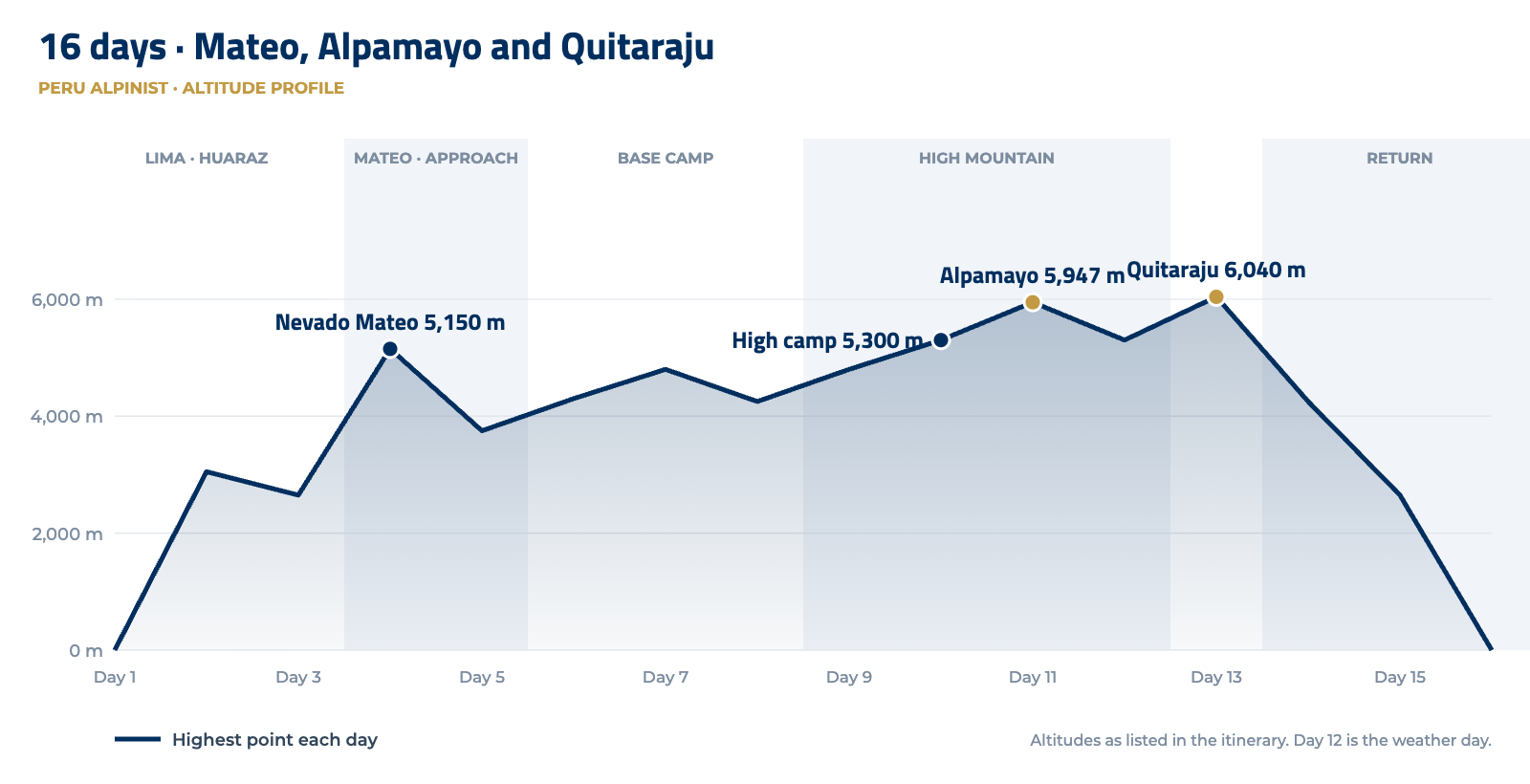
This expedition pairs Alpamayo with its neighbor Quitaraju, both climbed from the same High Camp on the col between them. Before either, the team climbs Nevado Mateo, a real glaciated summit that does the early acclimatization work. Over 16 days you build from sea level in Lima to two technical summits near 6,000 meters.
The Mountains
The Cordillera Blanca is the highest tropical mountain range on earth. It is compact, steep, glaciated and easy to reach: with daily flights from Lima to Anta, you can be in the range the day after you land.
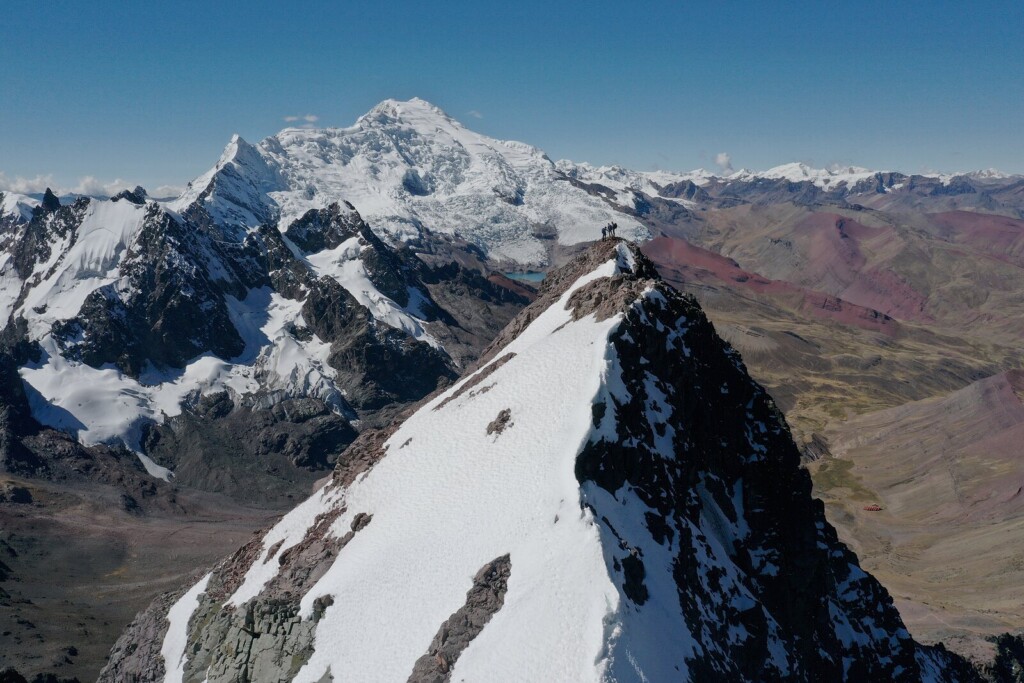
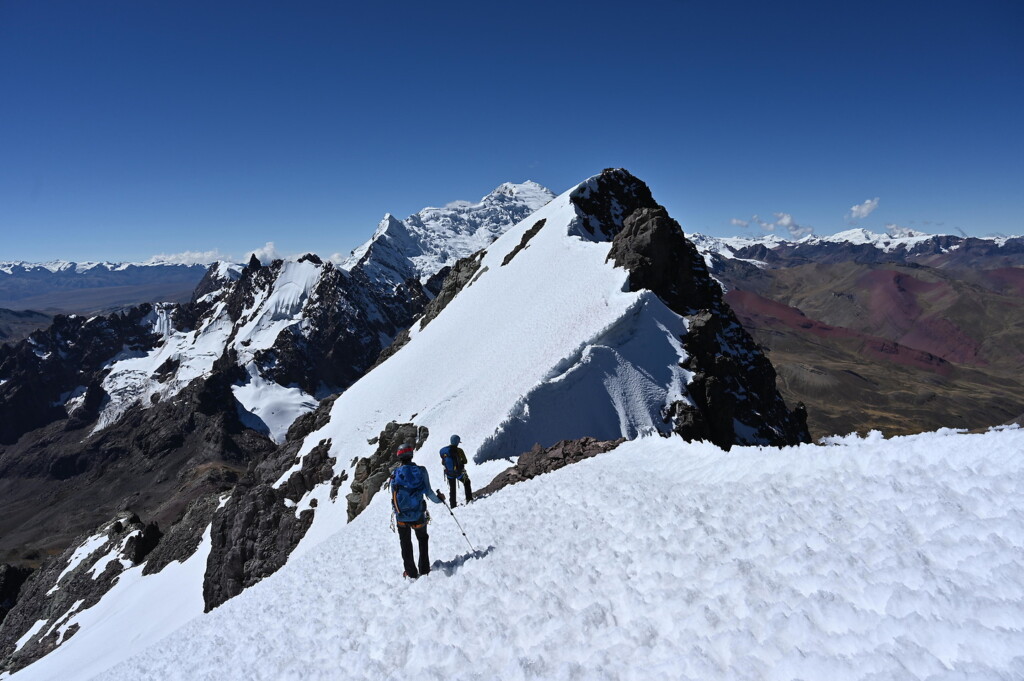
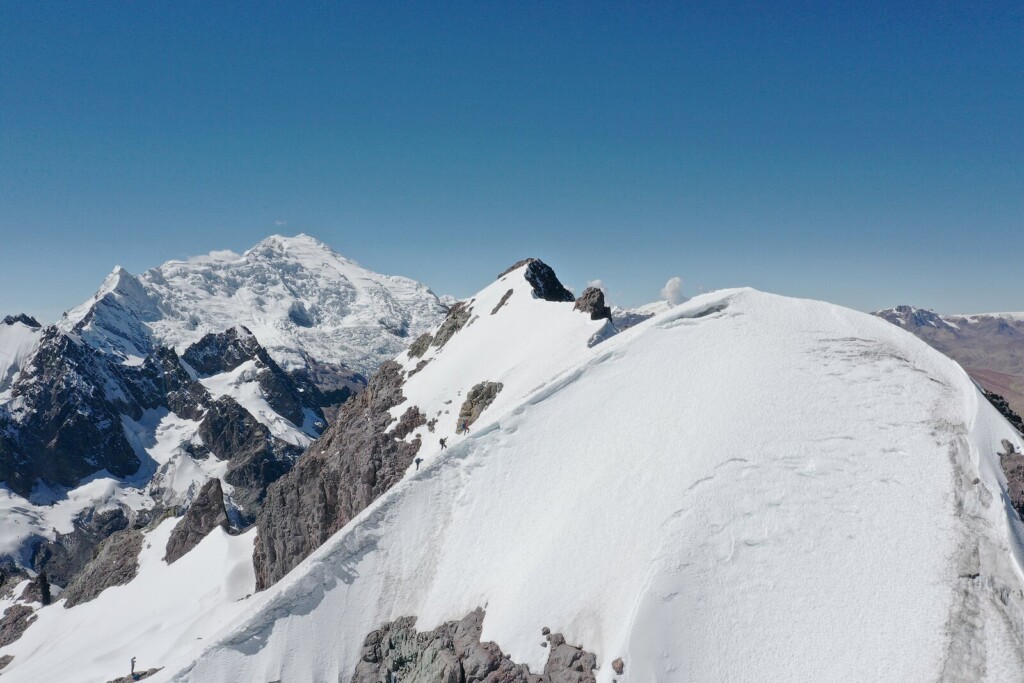
Alpamayo is a fluted snow and ice pyramid. We climb the southwest face: 8 to 10 pitches of 55- to 70-degree snow and ice to the summit ridge, with the descent by rappel. Whether the team can step onto the true summit depends on the cornice, which changes every season. Your guide makes that call on the day.
Quitaraju earns its place. The route from the col is less steep than Alpamayo but much longer, around 12 pitches of snow and ice. It is a long, sustained day at altitude, and it comes after Alpamayo.
Why the Cordillera Blanca: Skills First, Altitude Second
Kilimanjaro introduces you to altitude. Ecuador and Mexico take you higher and start building glacier skills. Aconcagua teaches you what happens to your body near 7,000 meters.
Peru asks something different. Here the altitude is real but not extreme. What the range demands instead is technical competence under pressure: steep ice, exposed ground and route decisions that matter.
You approach on foot through the Santa Cruz Valley, establish Base Camp, carry to Moraine Camp, then move to High Camp on the col. From there you climb faces, not slopes. The Cordillera Blanca packs steep, glaciated peaks into a compact range with short approaches, so you are on snow and ice within days of landing in Lima.
Porters carry group loads all the way to High Camp at 17,400 ft. You carry your personal gear. That is a deliberate decision about where your energy should go: into the climbing.
The BBE difference
The Carhuaz and Mateo Strategy
Huaraz is the climbing hub of the Cordillera Blanca, and it is where we run the gear check and briefing on Day 2. After that first night we base in Carhuaz instead.
Carhuaz sits lower than Huaraz, at 8,700 ft / 2,650 m. It is quieter, with less traffic and noise, and it is closer to Punta Olímpica and Nevado Mateo. Sleeping lower between acclimatization days means better rest. On an expedition where acclimatization decides how you climb at 17,400 feet, that is not a small detail.
We also fly from Lima to Anta instead of driving the full distance. LATAM flies the route daily, and the flight replaces about eight hours on the road. If a flight is disrupted, the road is the backup, and the itinerary has room to absorb it. The round-trip flight is included and booked by BBE.
Before we enter the Santa Cruz Valley, the team climbs Nevado Mateo. It is a working climb, not a tourist summit. It lets us see how each climber is sleeping, eating, recovering and moving on technical ground before we commit to the approach.
By the time we reach Alpamayo Base Camp, we already know how the team is responding.
Acclimatization: Climb High, Sleep Low
The body adapts during rest, not effort. The itinerary builds that in:
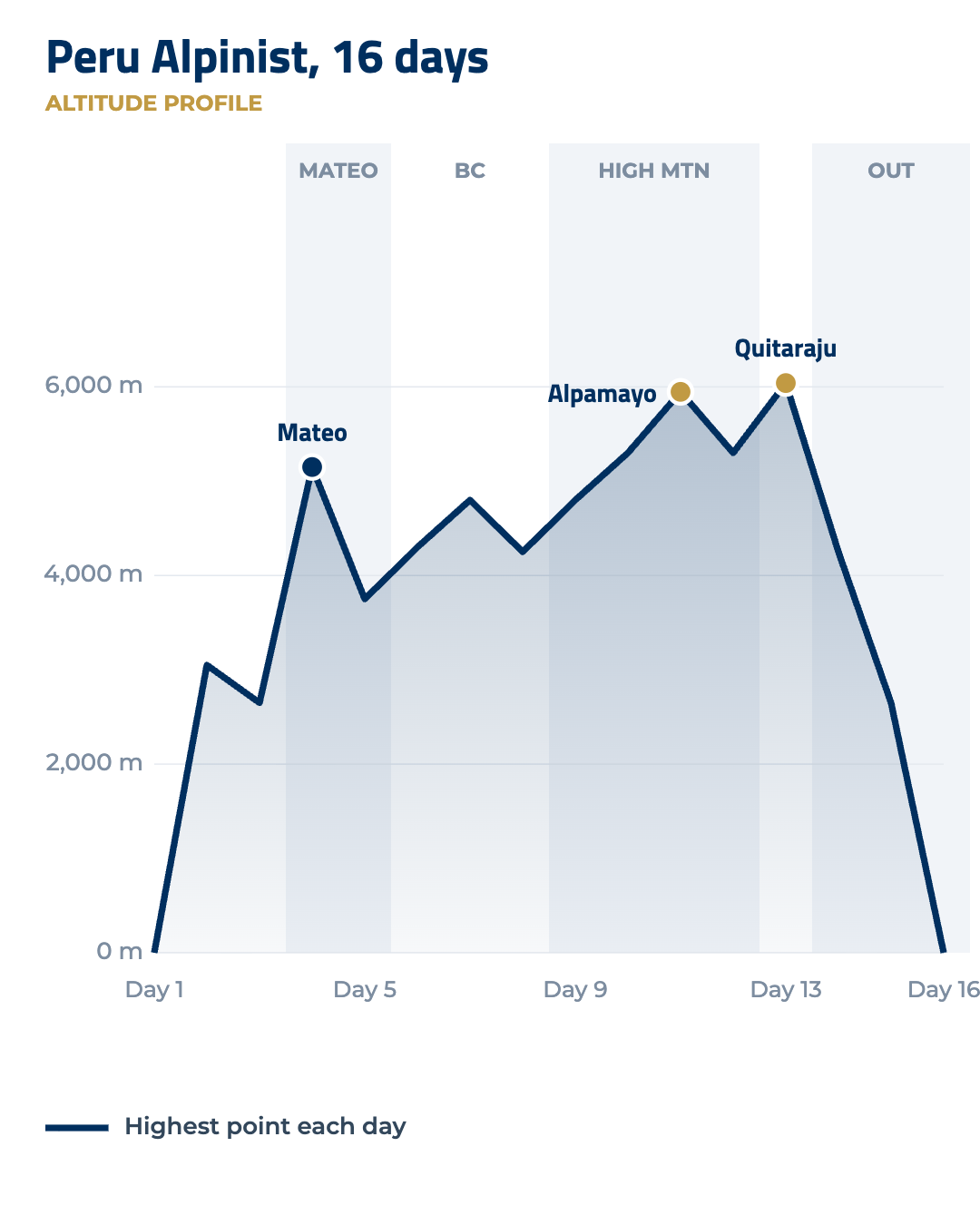
- A first night in Huaraz at 10,000 ft / 3,050 m, then an acclimatization hike before dropping to sleep in Carhuaz
- Nevado Mateo on Day 4: a full day on snow and glacier above 5,000 meters, then back down to sleep in Carhuaz
- A two-day approach through the Santa Cruz Valley to Alpamayo Base Camp at 13,950 ft / 4,250 m
- A load carry to Moraine Camp at 15,750 ft / 4,800 m, back down to sleep at Base Camp, then a full rest day
- A move to Moraine Camp, then High Camp at 17,400 ft / 5,300 m, with a weather day between the two summit days
The full sequence is on Day by Day.
Why Four Climbers
Every scheduled departure is capped at four climbers, with a 2:1 client-to-guide ratio on climbing days.
That is not about exclusivity. On steep ice at altitude, the ratio decides how quickly a rope team moves, how much terrain a guide can watch, and whether a change of plan is possible when conditions shift.
- Your guide knows how you are adapting, day by day: pace, appetite, sleep and hydration.
- Technique gets coached on the rope, not shouted across a slope.
- Summit, cornice and turnaround decisions are made with full knowledge of each climber.
Porters, cooks and camp staff support the expedition. We do not count them as climbing guides. You will never disappear into the group.
The Guide Team
Every departure is led by an IFMGA-certified guide. IFMGA certification is the international standard for professional mountain guides.
Every guide on our Peru team has climbed in this range and knows it well, so the judgment on your rope does not depend on one person. Your guides coach and refine your technique throughout the expedition. They cannot build your foundation on the mountain, but they will sharpen it.
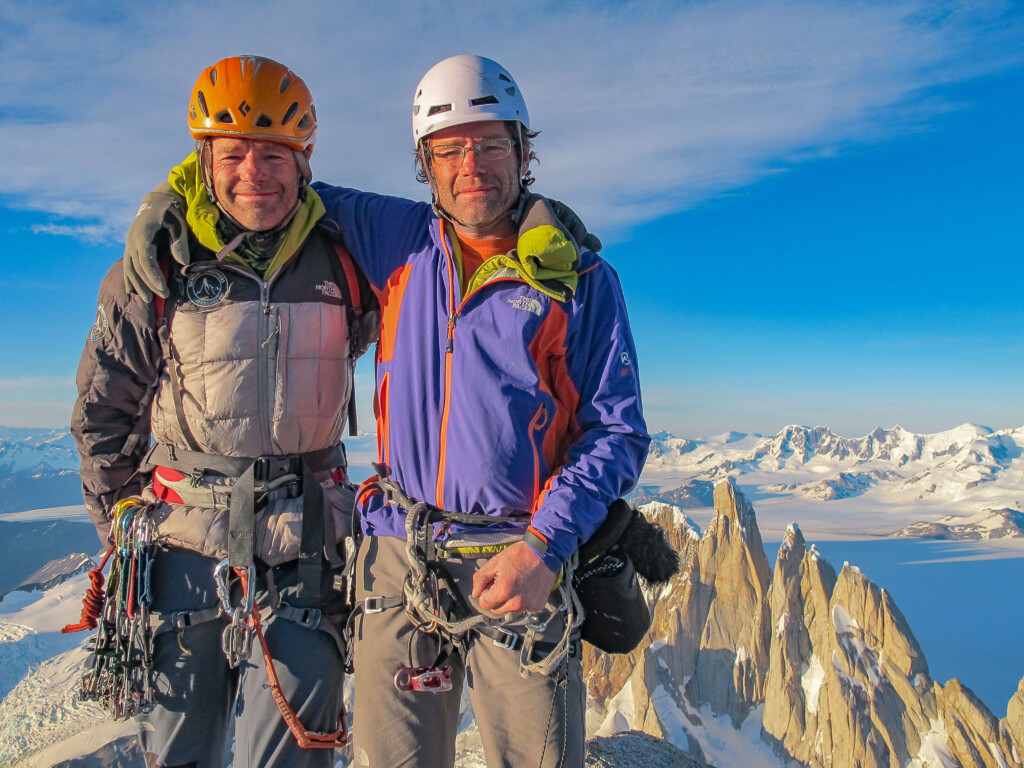
Peru expeditions can also be personally led by Willie or Damian Benegas on request, confirmed in writing in the trip terms. See Private & Custom Expeditions.
We Started Working in Peru in 1996
We started working in Peru in 1996, guiding in the Cordillera Blanca: a compact range of steep ice and 6,000-meter faces, working with Peruvian arrieros, porters and cooks.
Willie and Damian had been climbing for years by then. In 1996 that experience brought them to Peru. Thirty years later, we still run the same valleys.
1996
We start working in Peru, guiding in the Cordillera Blanca.
20 ascents of Alpamayo
Willie has climbed Alpamayo 20 times.
Since the early 2000s
Some of the arrieros, porters and cooks on our Peru expeditions have worked with BBE since the early 2000s. They know our systems and we know them. That continuity shows in how the camp runs and how the team moves.
Today
Peru expeditions are delivered by a professional guide team working within the systems built over those seasons. The history started with the brothers. The experience now belongs to the team.
What came out of those seasons is not a summit count. It is a working system: how we acclimatize, where we base, who carries what, which local crews we trust, and how we decide when to move and when to wait. The history matters only if it changes how your expedition is run. In the Blanca, it does.
Safety and Communications
Safety on a real mountain is a system, not a slogan. Every BBE Peru expedition runs with:
- An IFMGA-certified lead guide
- Satellite and radio communications within the team
- A comprehensive group medical kit on all climbing days
- Daily checks on every climber’s pace, hydration, appetite and recovery
- Starlink in camp: a limited connection, enough to message home and pull current weather. There is no cell service on the mountain.
Turning around is sometimes the right call. When it is, your guide makes it early and clearly. It is a professional decision, not a failure.
Who This Climb Suits
Alpinists ready for advanced terrain. You should already be comfortable on crampons and ice tools on steep snow and ice, travel roped on glaciers, and understand crevasse rescue and rope systems. If you have climbed a 5,000-meter peak or completed a structured mountaineering course and are moving toward harder objectives, this is a logical next step.
For the full requirements and an honest look at how hard this is, read Is This for Me?
Where Peru Can Lead
Maybe Alpamayo is the climb you have been working toward for years. That is a complete objective on its own.
There is no single correct path here, and no fixed ladder. Climbers arrive from Ecuador or Mexico with glacier experience, from ice and alpine routes closer to home, or after Aconcagua, looking for terrain that asks more of their hands and feet than their lungs. Plenty come to Peru before Aconcagua, because the two mountains test different things. From here, some go on to the Himalaya or Alaska.
The useful question after Peru is not: what is the next highest mountain?
It is: what did Peru teach you about how you climb?
Ready for Alpamayo & Quitaraju?
We don’t simply guide expeditions. We help people build a lifetime in the mountains.
Tell us about your climbing
Tell us what you have climbed, how you train, what technical terrain you are comfortable on, and what you want Peru to be for you. If this is the right objective, we will say so. If something else should come first, we will say that too. See dates and prices · climbing@benegasbrothers.com