US Adventures USA Utah

The Two Canyons Traverse

The Cottonwood Ridge in two days

2 days Group: 1 climber, 1 guide $1,700 per person · 2 days (private, 1 climber)

The Trip

The Two Canyons Traverse · Wasatch, Utah

Two days on the line between two canyons.

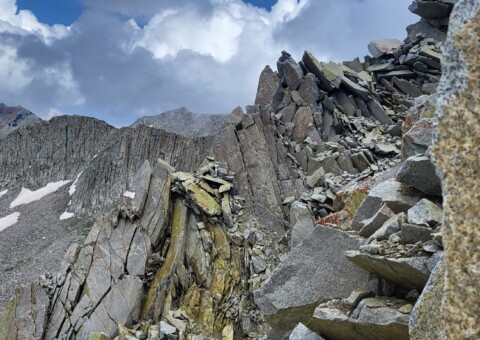
From the valley, the ridge between Big and Little Cottonwood looks like a wall. From the top, it’s a path—a long, broken crest of summits running from Mount Superior west to the Twin Peaks, with a canyon dropping away on either side.

Duration2 days
Group1 climber, 1 guide
Price$1,700 per person · 2 days (private, 1 climber)
SeasonJune–September
WhereWasatch, Utah

The Two Canyons Traverse follows it end to end. You climb Superior by its Southeast or East Ridge, follow the crest over summit after summit, and camp below the Twins. On the second morning you’re on the Twins for sunrise, with the Salt Lake Valley still in shadow below you. Then you descend Ferguson Canyon to the valley floor.

It’s our signature Wasatch objective: one climber, one guide, and everything you need on your backs.
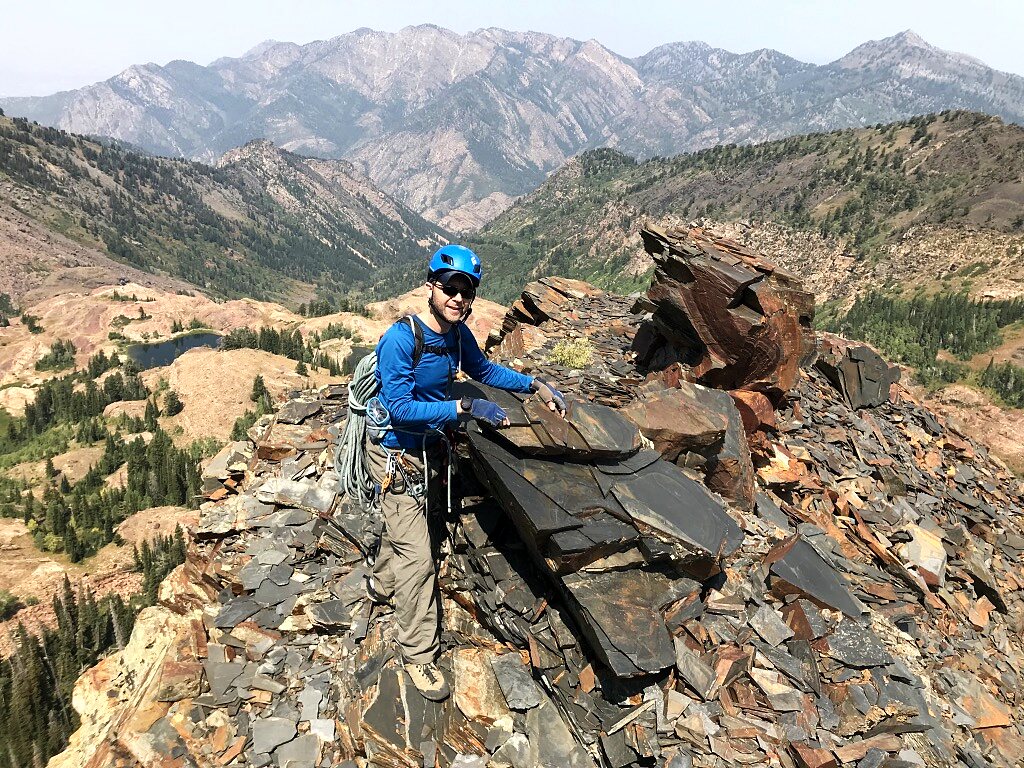
Climber on a rocky Wasatch ridge, Utah

Quick facts

Length 2 days, 1 night on the ridge
Start Mount Superior, Southeast or East Ridge
Summits Six named summits; high point 11,330 ft
Camp Below the Twin Peaks
Finish Twin Peaks at sunrise, descent via Ferguson Canyon
Style Fully self-supported—we carry all gear and water
Ratio 1 climber, 1 guide
Season June–September
Rate $1,700

The summits

East to west along the crest:

Summit Elevation
Mount Superior 11,050 ft
Monte Cristo 11,132 ft
Peak 11,033 11,033 ft
Dromedary Peak 11,107 ft
Sunrise Peak 11,275 ft
Broads Fork Twin Peaks 11,330 ft (East) · 11,328 ft (West)

There are unnamed high points between them. The hardest scrambling usually comes between Monte Cristo and Peak 11,033: a loose, exposed knife-edge where the rope comes out. The Twins are the high point of the whole line.

What makes it different

It’s a traverse, not a summit. The day isn’t measured by one top. It’s measured by the line—hours on an exposed crest, linking peak to peak, with route-finding, scrambling, and roped sections where the ground calls for them.

You sleep on the mountain. A night camped high on the ridge changes the trip completely: evening light on Superior behind you, the city lights below, and an alpine start already halfway along the route.

It’s self-supported. No porters, no caches, no resupply. You and your guide carry everything—shelter, stove, food, and water. Depending on the season, there may be water on the ridge; often there isn’t, and we plan for that.

It’s one-to-one. On terrain this long and exposed, with a heavy pack, your guide is with you, not managing a group.

Who it’s for

Strong, experienced hikers and scramblers who are comfortable with sustained exposure and can carry an overnight pack over rough ground for two long days. Climbers who want a real alpine traverse without leaving Utah. Anyone training for bigger ranges who wants a genuine multi-day ridge with a professional.

The natural preparation is a day traverse with us. See Is This For Me?

Part of Wasatch Alpine Traverses

The Two Canyons Traverse is the signature extension of our Wasatch Alpine Traverses—the day program that guides you along the Wasatch’s classic ridgelines. Many clients do a day traverse first, then come back for the two days.

Operated and guided by Wasatch Mountain Guides (WMG). BBE is the referral and sales partner; reservations, payments and required forms are handled directly by WMG.

Questions before you book?

We answer every inquiry personally.
Ask a guide

Day by Day

How the traverse runs

Conditions decide the details. The start, the line, and the camp may change with weather, snow, water, and how the day is going.

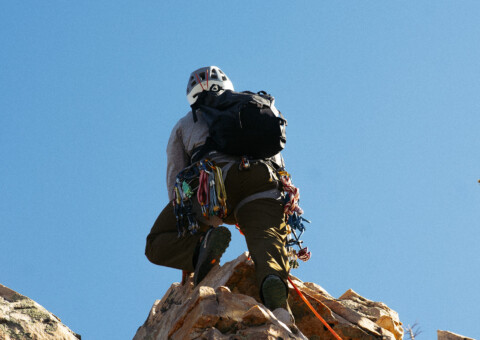
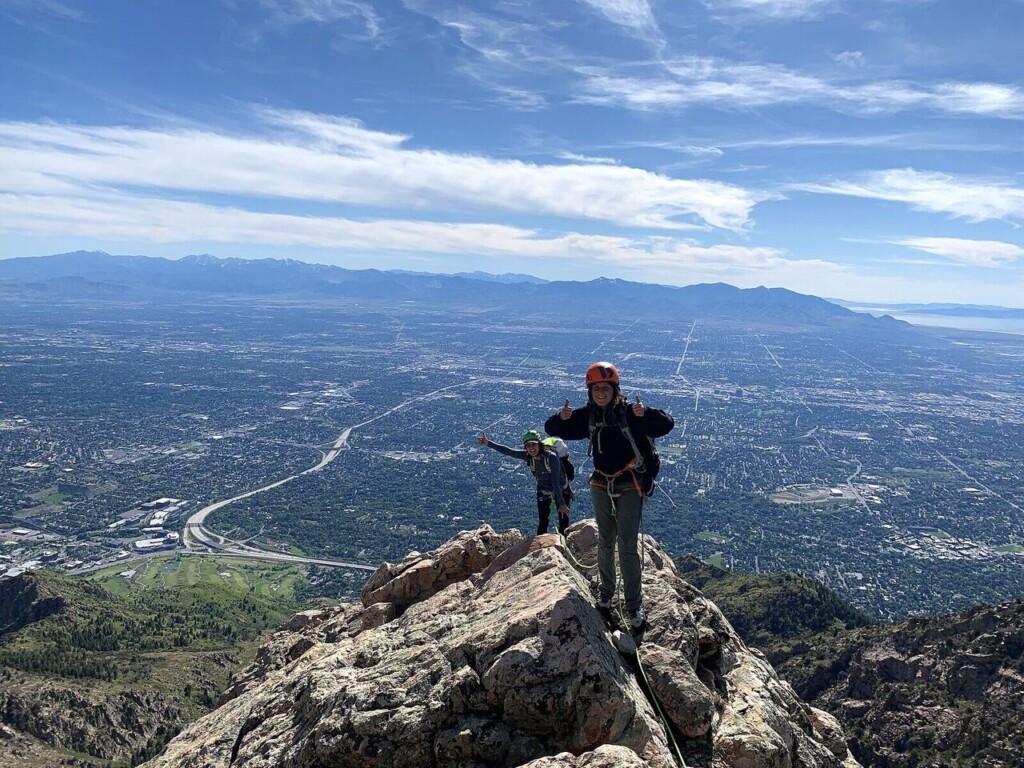
Climber on a Wasatch ridge above Salt Lake City

Before the trip

We’ll talk through your experience, your recent big days, your comfort with exposure, and your overnight kit. Your guide confirms the plan, the start time, and the vehicle logistics the day before.

This is a point-to-point traverse. It starts in Little Cottonwood Canyon and finishes at the bottom of Ferguson Canyon, so it needs a car shuttle. We’ll plan it with you.

An early start. You climb Mount Superior by its Southeast Ridge or East Ridge—your guide chooses based on conditions and your experience. Expect scrambling, exposure, and roped sections where the ground calls for them.

From Superior, the traverse follows the crest west over Monte Cristo, Peak 11,033, Dromedary and Sunrise Peak, with Little Cottonwood on one side and Big Cottonwood on the other. Long hours of movement, with a full pack, on ground where route-finding and pacing matter.

Camp below the Twin Peaks. You’ll help set up camp, melt or treat water, cook, and get your system ready for an early start.

An alpine start to reach the summit of the Twin Peaks for sunrise—the reward for carrying everything up the day before.

Then the descent via Ferguson Canyon: long, steep in places, and on tired legs. Your guide keeps working until you’re at the trailhead.

Turning around

On a two-day exposed traverse, the plan can change. Thunderstorms, heat, a slower pace than planned, or someone not feeling right can all mean a shorter line, a different camp, or an early descent. That decision is your guide’s. The summit is not the only measure of success.

Is This For Me?

Is this for you?

This is the most demanding objective in our Wasatch summer line. Two long days, sustained exposure, and an overnight pack on rough ground.

You should be

  • Very fit. Two consecutive long days of movement with substantial elevation gain, carrying a full overnight pack, and a long descent at the end.
  • Comfortable with exposure. Long stretches of ridge with a drop on both sides. If heights bother you, this is the wrong trip.
  • A confident scrambler. Hands-on 3rd and 4th class ground for hours. Technical climbing experience helps; it isn’t required.
  • Experienced with long days in the mountains, ideally with some overnight backpacking.

The best preparation

A Wasatch Alpine Traverse day with us. It shows you—and your guide—how you move on the ridge, how you handle exposure, and what pace is realistic. Equivalent experience elsewhere also works; tell us what you’ve done.

Who this isn’t for

  • Anyone new to scrambling or exposure. Start with a day traverse.
  • Anyone who wants to climb hard rock. The difficulty here is length, exposure, and carrying weight—not grade.
  • Anyone who can’t carry an overnight pack for two days. Be honest with us; we’d rather put you on a day traverse.

Age

14 and over. Climbers aged 14 to 17 need a parent or guardian’s consent and signature, and we’ll talk with the family before confirming.

Not sure?

Tell us your biggest recent days—distance, vertical, time, and how you felt at the end—and any scrambling you’ve done. We’ll give you a straight answer.

Before You Go

Four things matter most.

1. Train with a pack

Long days with elevation gain, carrying the weight you’ll carry on the ridge. Descend on rough ground—the Ferguson descent at the end of day two is what tests most people.

2. Test your overnight kit

Sleep in your sleeping bag and on your pad before the trip. Know how your stove and water treatment work if you’re bringing them. Nothing new on the ridge.

3. Plan the shuttle

The traverse starts in Little Cottonwood and finishes at the bottom of Ferguson Canyon. We’ll plan the car shuttle with you.

4. Tell us about yourself

  • Your recent big days—distance, vertical, time
  • Scrambling and climbing experience
  • Overnight backpacking experience
  • How you feel about exposure
  • Injuries, medical conditions, or medication

Where and when you’ll meet

Early on day one, usually at a Little Cottonwood trailhead. Your guide confirms the time and meeting point the day before, once they have the forecast.

Travel Planning

Travel planning

Getting here

Salt Lake City International is a short drive from both trailheads. You’ll need a car.

The shuttle

The route starts in Little Cottonwood Canyon and ends at the Ferguson Canyon trailhead in the valley. Leave a car at the finish, or arrange a pickup. We’ll plan it with you.

Where to stay

You need lodging the night before day one and, if you’re traveling, the night after you come down. The night between is on the ridge. Cottonwood Heights and Sandy are close to both ends of the route.

Fitting it around a trip

Clients visiting from out of state often add a day traverse or an Alpine Rock day first. It works as preparation and as a check on how you’re moving at altitude.

Insurance

Not required, but strongly recommended. Rescue and evacuation costs are your responsibility, and cancelling fewer than 14 days out forfeits the trip fee. Check that your policy covers scrambling and roped travel.

Gear and Equipment

Gear and equipment

This is a self-supported traverse. Everything goes on your back and your guide’s. Light matters more here than on any other trip we run.

What we provide

  • Tent
  • Stove, fuel, and cooking pot
  • Rope and technical equipment for the roped sections
  • Water treatment
  • Helmet and harness if you need them

Group gear is shared between you and your guide.

What you bring

Carrying

  • Backpack, about 45–55 liters, that carries well over rough ground

Sleeping

  • Sleeping bag suited to summer nights at altitude
  • Sleeping pad

Water

  • Capacity for at least 3–4 liters. Some seasons there is water on the ridge; often there isn’t. Your guide will tell you how much to carry for your dates.

Footwear

  • Approach shoes or light boots that edge well on rock. Trail runners are usually not enough with a full pack on 4th class ground.

Clothing

  • Light base layers
  • Warm midlayer or light insulated jacket for camp and the sunrise summit
  • Wind and rain shell
  • Warm hat and light gloves
  • Sun hat and sunglasses

Food

  • Two days of lightweight food, including dinner and breakfast in camp and snacks you can eat on the move

Small but important

  • Headlamp and spare batteries
  • Sunscreen and lip balm
  • Personal first aid and medications
  • Mug, bowl, and spoon
  • Phone

Pack weight

Every extra item is carried over two days of ridge. Your guide will go through your kit with you before the trip and help you cut what you don’t need.

Daily Life on the Traverse

“Take care of the mountain, and the mountain will take care of you.” It is the Benegas Brothers’ motto, and the rule we climb by.

Daily life on the traverse

The pace

Steady, not fast. The ridge rewards climbers who keep moving and manage their energy. Your guide sets the rhythm and keeps the whole two days in mind.

Carrying the pack

The first hours with a full pack are the hardest. It gets lighter as you eat and drink, and easier as you settle into it.

Water

The single biggest planning factor. Depending on the season, there may be snowmelt or a spring near the ridge; often there isn’t. Your guide plans water for your dates, and you carry what they tell you to.

Camp

Below the Twin Peaks. You’ll help set up the tent, treat or melt water, cook, and organize your kit for an early start. Evening on the ridge is one of the best parts of the trip—Superior behind you, the valley lights below.

Sleeping

It can be cool at night, even in summer. Wear your insulation to bed if you need it, and keep tomorrow’s water and headlamp close.

Thunderstorms

From July into September, afternoon storms are the main hazard on an exposed ridge. Early starts are part of the plan, and your guide will change the line or the camp if the sky calls for it.

Toilets and Leave No Trace

There are no facilities on the ridge. Your guide will explain how we manage waste and leave the crest as we found it.

The sunrise summit

An alpine start, a short climb in the dark, and the Twin Peaks as the sun comes up. It’s the moment the whole traverse is built around.

What to Budget For

What to budget for

The traverse

Rate
The Two Canyons Traverse · 2 days, 1 night on the ridge, 1 climber with 1 guide $1,700

What’s included — and what isn’t

Included

  • Professional WMG guide for two days and one night
  • Tent, stove, fuel, cooking pot, and water treatment
  • Rope and technical equipment
  • Helmet and harness if you need them
  • Route planning and the shuttle plan

Not included

  • Food — Two days of lightweight food, including camp dinner and breakfast
  • Personal gear — Pack, sleeping bag, pad, footwear, clothing
  • Lodging — The night before, and the night after if you’re traveling
  • Car and shuttle — You’ll need a car; the route is point to point
  • Parking — Fees at some trailheads
  • Flights — Into Salt Lake City International
  • Gratuities — Customary — 15–25% is standard. Cash is always appreciated, and every WMG guide also accepts Venmo.
  • Trip insurance — Not required, strongly recommended
The realistic total

For a local climber with their own gear: the $1,700, plus food and fuel for the drive. For a visitor: add flights, a car, one or two nights of lodging, and any gear you need to buy or rent.

The honest note: the biggest extra cost for most people is the overnight kit. If you don’t own a light pack, sleeping bag, and pad, ask us before you buy.

Payment and cancellation

Full payment is due when you register with WMG. Cancel more than 30 days out and you can take full credit toward a later date, or a refund less a 5% fee. Between 14 and 30 days you can move dates but not get a refund. Inside 14 days the fee is not refundable, for any reason. Full terms are on Dates and Prices.

Your Questions

More questions? Booking, payment, cancellation and tipping are answered in the General FAQ — US Adventures. Choosing between our rock climbing and alpine programs is covered in the Rock Climbing & Alpine FAQ.

Because the whole traverse follows the ridge that divides Big and Little Cottonwood Canyons. For two days, one canyon drops away on each side of you.

Mount Superior by its Southeast or East Ridge, then west along the crest over Monte Cristo, Peak 11,033, Dromedary and Sunrise Peak. Camp below the Broads Fork Twin Peaks, the Twins at sunrise, and a descent via Ferguson Canyon.

The technical climbing is moderate—mostly 3rd and 4th class scrambling, with roped sections where needed. What makes it hard is two long days, sustained exposure, and an overnight pack.

On a long, exposed ridge with heavy packs, your guide needs to be with you, not managing a group.

Each climber has their own guide. Tell us if you’d like to travel as a party of two climbers and two guides.

It’s the best preparation, and we recommend it. Equivalent experience elsewhere works—tell us what you’ve done.

Sometimes, depending on the season. Often there isn’t, so we plan to carry it.

Your personal gear, sleeping bag and pad, food, and water, plus a share of the group gear. Your guide carries the rest. See Gear and Equipment.

Your guide changes the plan—a shorter line, a different camp, or an early descent. That decision is theirs.

June to September. Early-season trips can still have snow on the ridge; mid-summer brings afternoon thunderstorms; September is often the most settled.

The route is point to point, finishing at the Ferguson Canyon trailhead. We’ll plan the shuttle with you.

Bigger ranges. A two-day self-supported ridge is real preparation for alpine traverses in the Cascades, the Tetons, the Alps, or the Andes.

Dates & Prices

Dates and prices

Rate

Rate
1 climber, 1 guide · 2 days, 1 night on the ridge $1,700

Season and dates

June through September, on your dates. This is a private trip, so we schedule it around you and the conditions. September is often the most settled month; book ahead for it.

What’s included — and what isn’t

Included

  • Your guide for two days and one night
  • Tent, stove, fuel, and water treatment
  • Rope and technical equipment
  • Helmet and harness if you need them
  • Route and shuttle planning

Not included

  • Food
  • Personal gear
  • Lodging
  • Transport
  • Parking
  • Gratuities
  • Insurance

See What to Budget For.

How to request a trip

Send us:

  • Your preferred dates
  • Your recent big days and scrambling experience
  • Your overnight backpacking experience
  • Whether you’ve done a day traverse with us

We’ll confirm the trip fits you, check guide availability, and send you the registration link.

Registration and payment

Once your trip is confirmed, we send you the Wasatch Mountain Guides registration and payment link.

Through that link you will:

  1. Complete your trip registration
  2. Complete the required acceptance-of-risk documents
  3. Submit payment

Start with us. We will send you the correct WMG link once your trip is confirmed.

Payment and cancellation

Payment. Full payment is due when you register with Wasatch Mountain Guides — card, PayPal, check or wire.

If you cancel

If we cancel

Before the trip, for weather, hazard or conditions: move to a later date, or take a credit that never expires.

Partway through: partial credit, based on the time you spent in the field.

Once the day starts, there are no refunds for weather or conditions. Your guide will change, shorten or end the day when conditions call for it.

Guides may remove anyone whose ability or conduct puts themselves or the team at risk. There is no refund in that case.

Rescue and evacuation costs are your responsibility. Check that your insurance covers climbing; many standard policies don’t.

Full terms: Wasatch Mountain Guides Reservation, Cancellation and Refund Policy.

When you cancel What happens
More than 30 days before Full credit toward a later date, or a refund less a 5% fee
14 to 30 days before Move to a later date, subject to availability. No refund.
Fewer than 14 days before No refund or reschedule — for any reason, including injury, illness, weather or travel delays
Two days on the line between two canyons.

From the valley, the ridge between Big and Little Cottonwood looks like a wall. From the top, it’s a path—a long, broken crest of summits running from Mount Superior west to the Twin Peaks, with a canyon dropping away on either side.

Price$1,700 per person · 2 days (private, 1 climber)
Private & Custom Your dates. Your team.

This trip can run privately, on the dates that work for you.

Season
  • June–SeptemberOn request

Questions first? Ask a guide

Location:
Wasatch, Utah
Group:
1 climber, 1 guide
Duration:
2 days
Pricing

All prices are in US dollars.

Two days on the line between two canyons.

From the valley, the ridge between Big and Little Cottonwood looks like a wall. From the top, it’s a path—a long, broken crest of summits running from Mount Superior west to the Twin Peaks, with a canyon dropping away on either side.

Request a Place

Private Expedition

Plan your private The Two Canyons Traverse

The Two Canyons Traverse runs as a private trip: on your dates, with your people, built around your goal. Same guides and the same safety standard as every BBE expedition.

Your dates

We set the departure around your calendar, not the other way round.

Your people

Family, friends, a company team, or just you and a guide.

Your goal

Training for a bigger peak, a winter or speed attempt, a film, or a route that runs from summit to ocean.

Your price

Private trips are quoted for your group size, dates and plan.

Professional Mountain Standards

Your guide is a professional mountain guide from Wasatch Mountain Guides (WMG).

AMGA — American Mountain Guides Association logo
IFMGA / UIAGM — International Federation of Mountain Guides Associations logo
AAGM — Asociación Argentina de Guías de Montaña logo

Related Trips