Global Expeditions Ecuador South America

Cotopaxi Express

Cotopaxi Express · 7 Days · Quito to Quito · Two Glaciated Summits · Max 4 Climbers

7 days Group: Maximum 4 climbers · 1 guide per 2 climbers $4,500 per person

The Climb

Cotopaxi Express · Rucu Pichincha · Cayambe · Cotopaxi

Cotopaxi is the reason for this trip. Cayambe is how you get ready for it. In seven days, airport to airport, the Cotopaxi Express takes you from Quito to the crater rim of one of the most recognizable volcanoes in the Americas. Along the way you climb a second glaciated summit, so you reach Cotopaxi already acclimatized.

5,897mCotopaxi summit · 19,347 ft
7Days, airport to airport
2Glaciated summits
4Climbers, maximum
1:2One guide for every two climbers
Cayambe5,790 m acclimatization summit before Cotopaxi

The Cotopaxi Express keeps the same mountain and the same guiding standard, with less time away from work and home. It’s built for climbers who arrive fit, prepared and, ideally, with recent time at altitude.

The Three Peaks

Rucu Pichincha — 4,698 m / 15,413 ft

The peak above Quito: a cable car, a high trail and a rocky scramble. There’s no glacier and no rope. It’s your first real day at altitude, and it shows your guides how each climber is moving.

Cayambe — 5,790 m / 18,996 ft

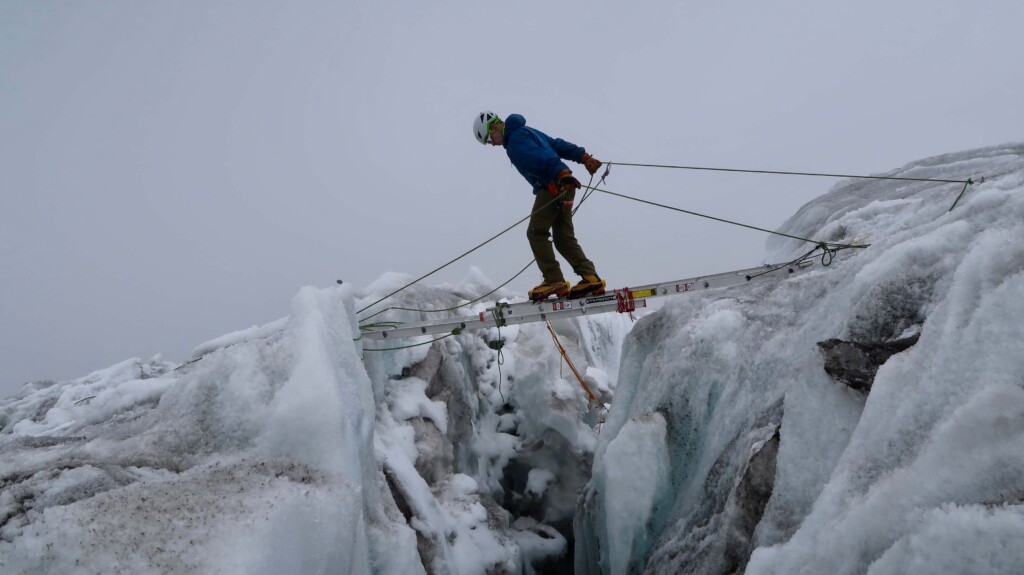
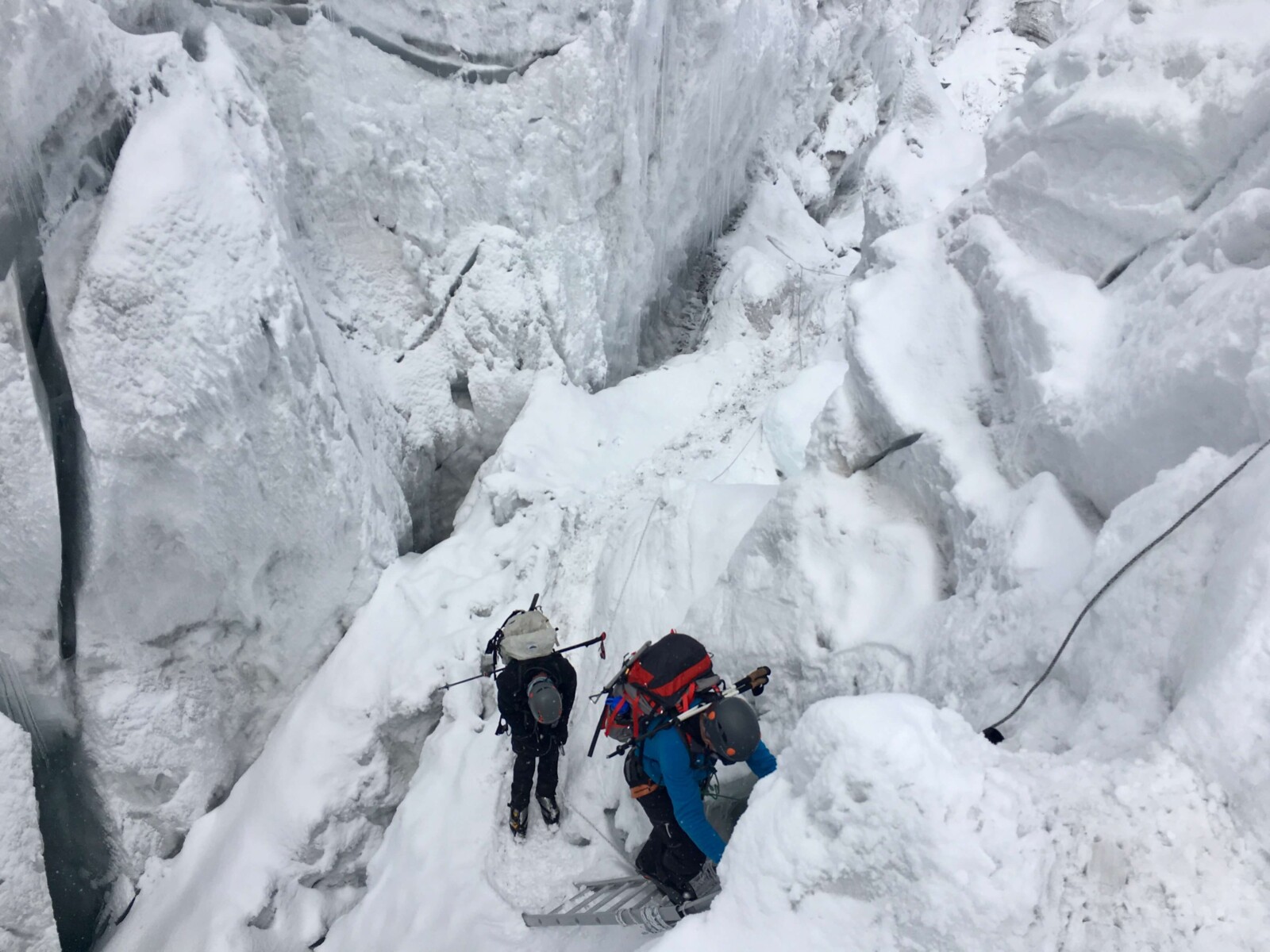
Ecuador’s third-highest mountain, sitting almost on the equator. The route is glaciated and crevassed, with a few steeper sections below the summit. On this trip, Cayambe is acclimatization with a summit attached. It takes you close to 5,800 m before Cotopaxi.

Cotopaxi — 5,897 m / 19,347 ft

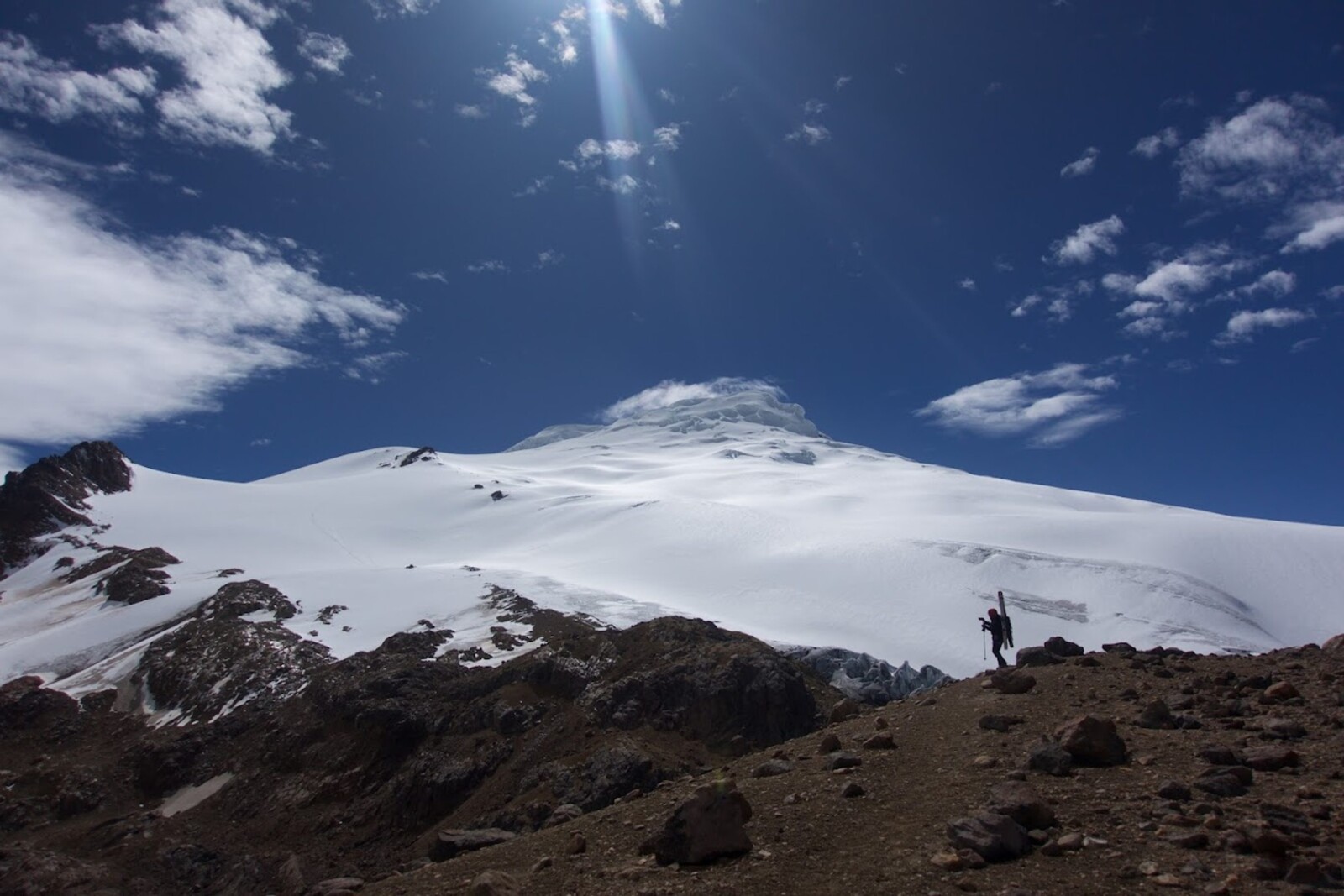
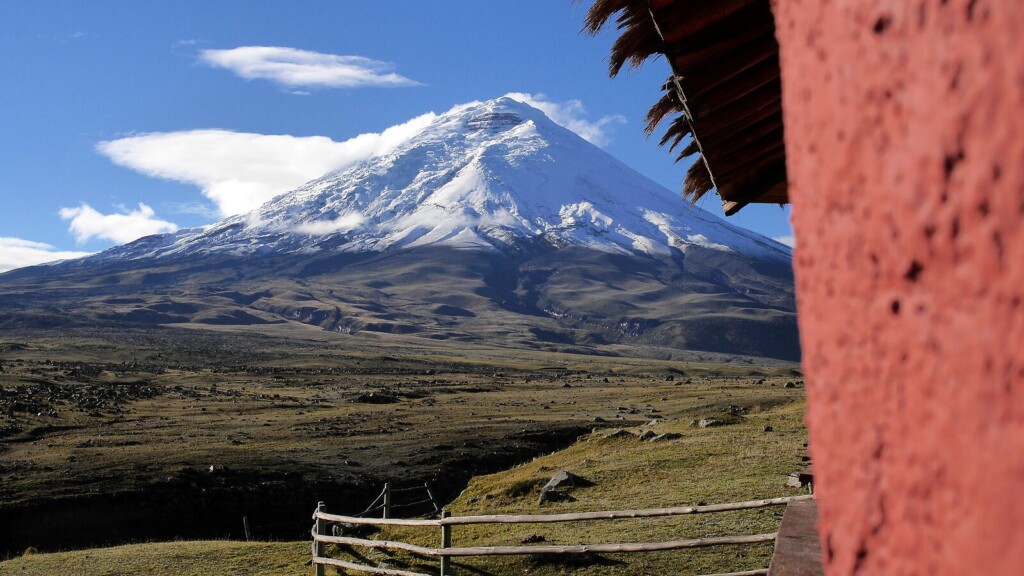
The near-perfect cone, with a steaming crater at the top and Chimborazo on the southern horizon on a clear morning. Cotopaxi is an active volcano, and access can change with its activity. We confirm its status before every departure. If it’s closed, we climb Antisana (5,753 m / 18,875 ft) instead.
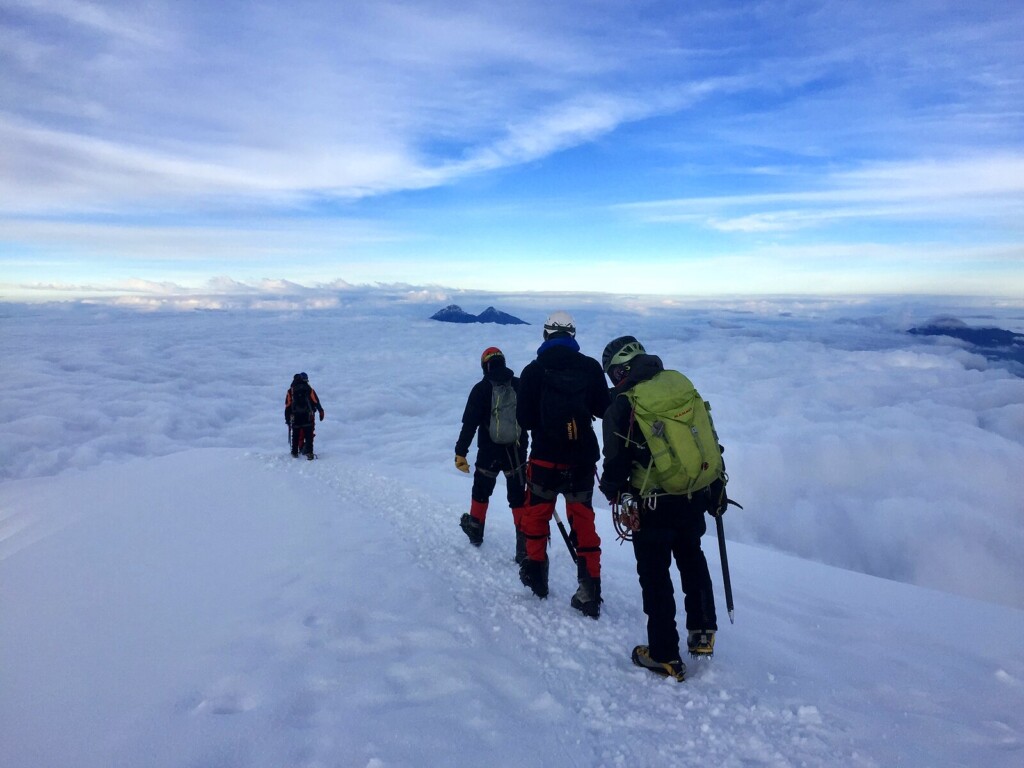
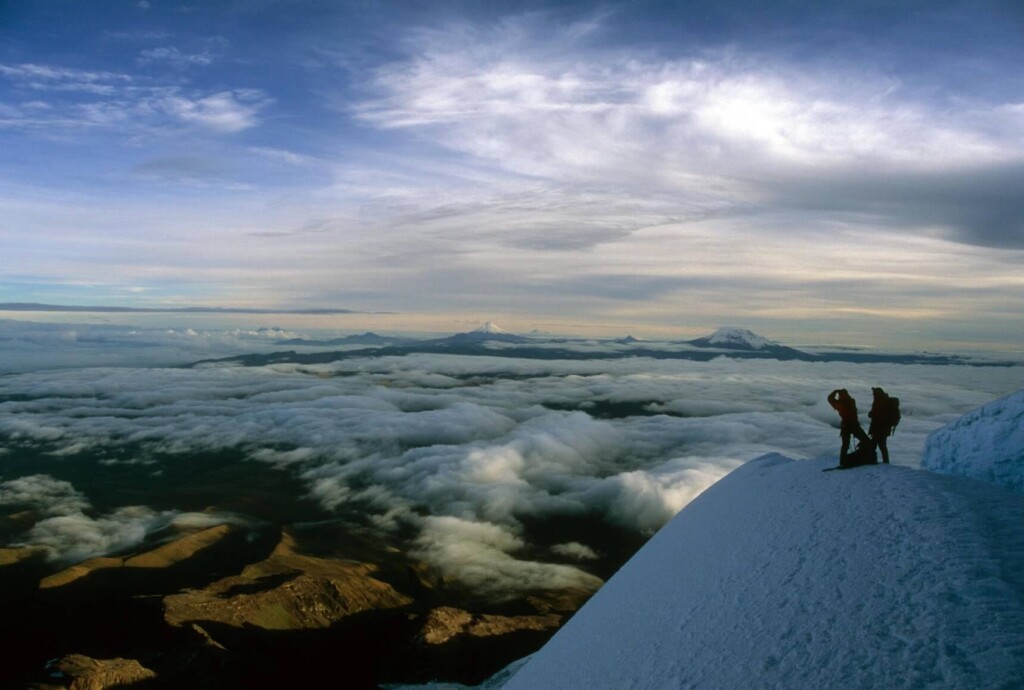
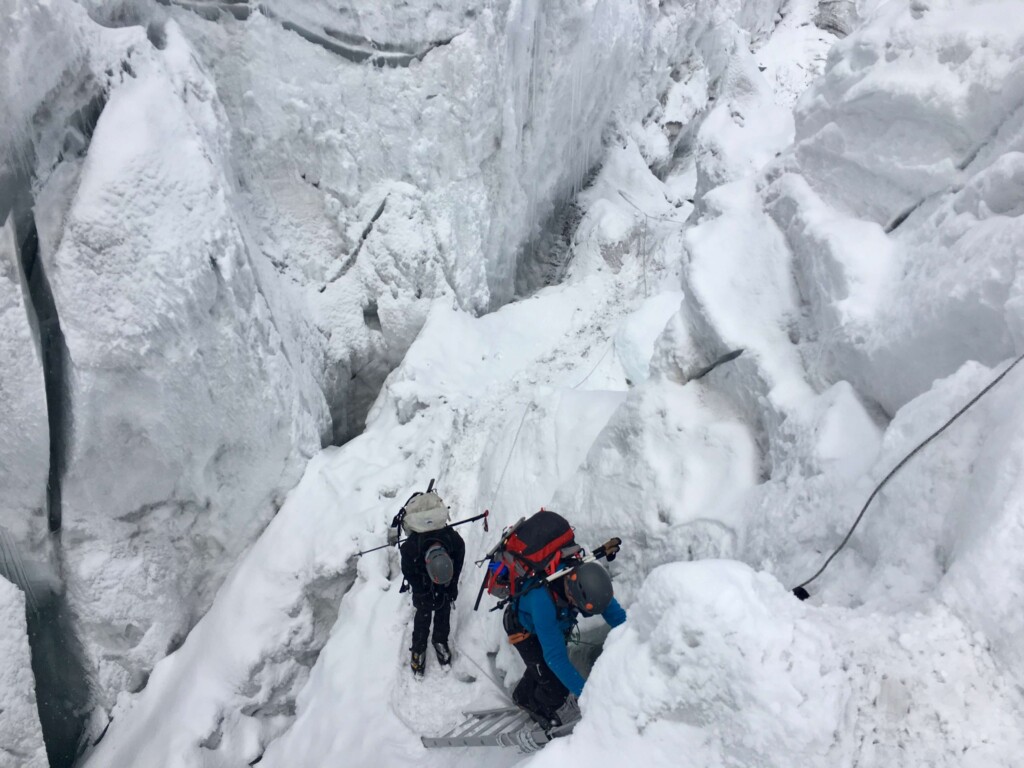
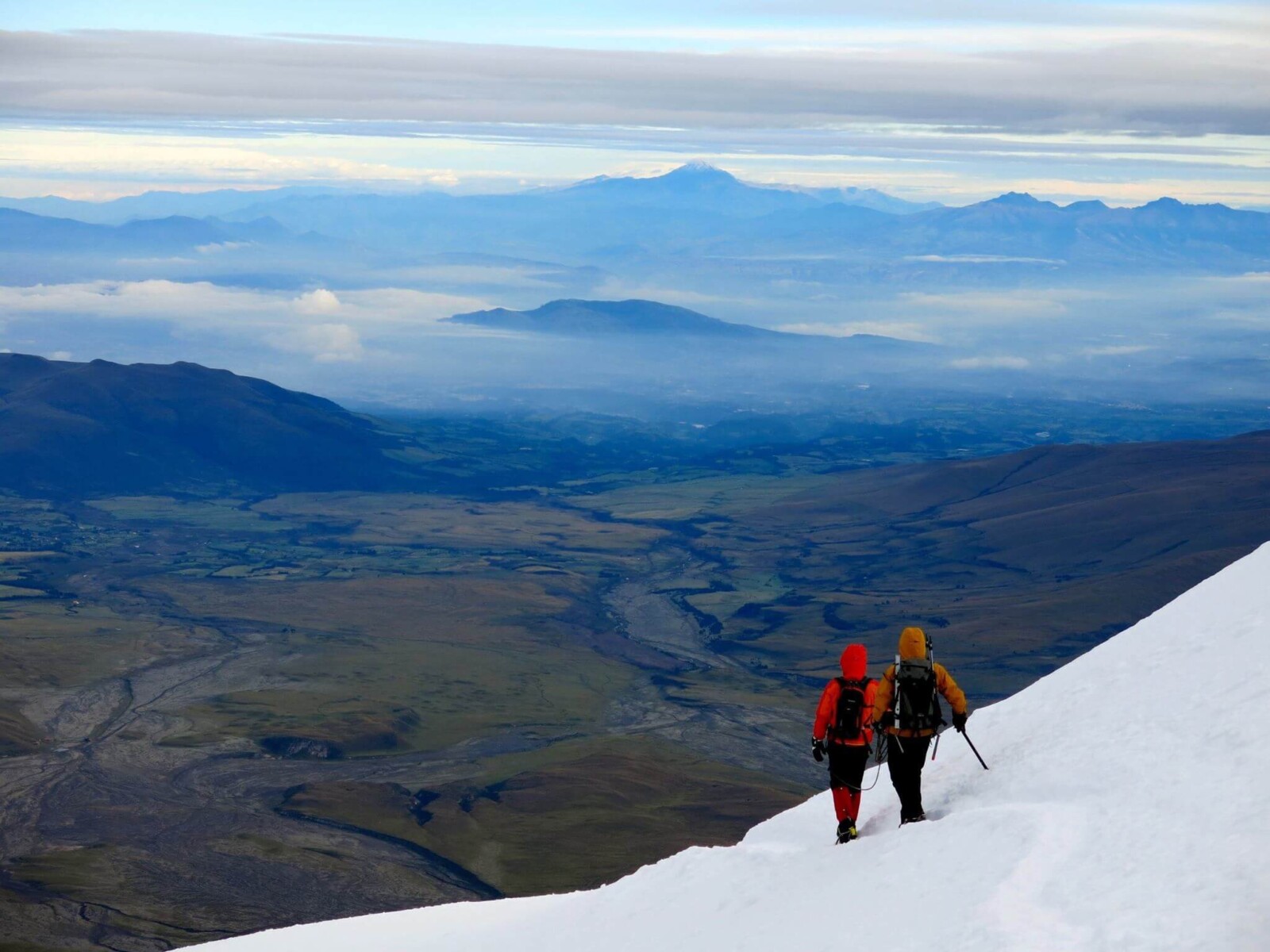
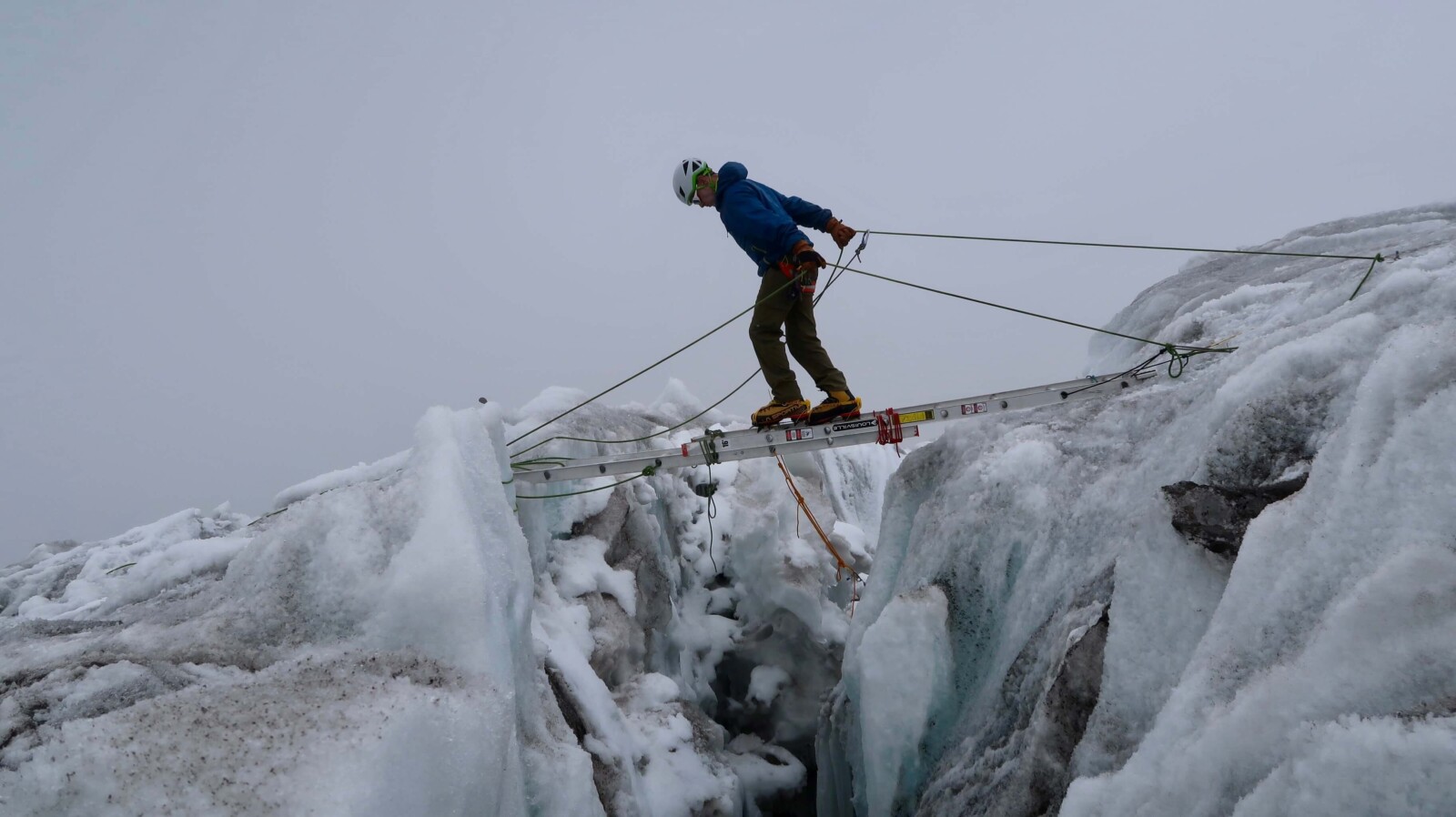
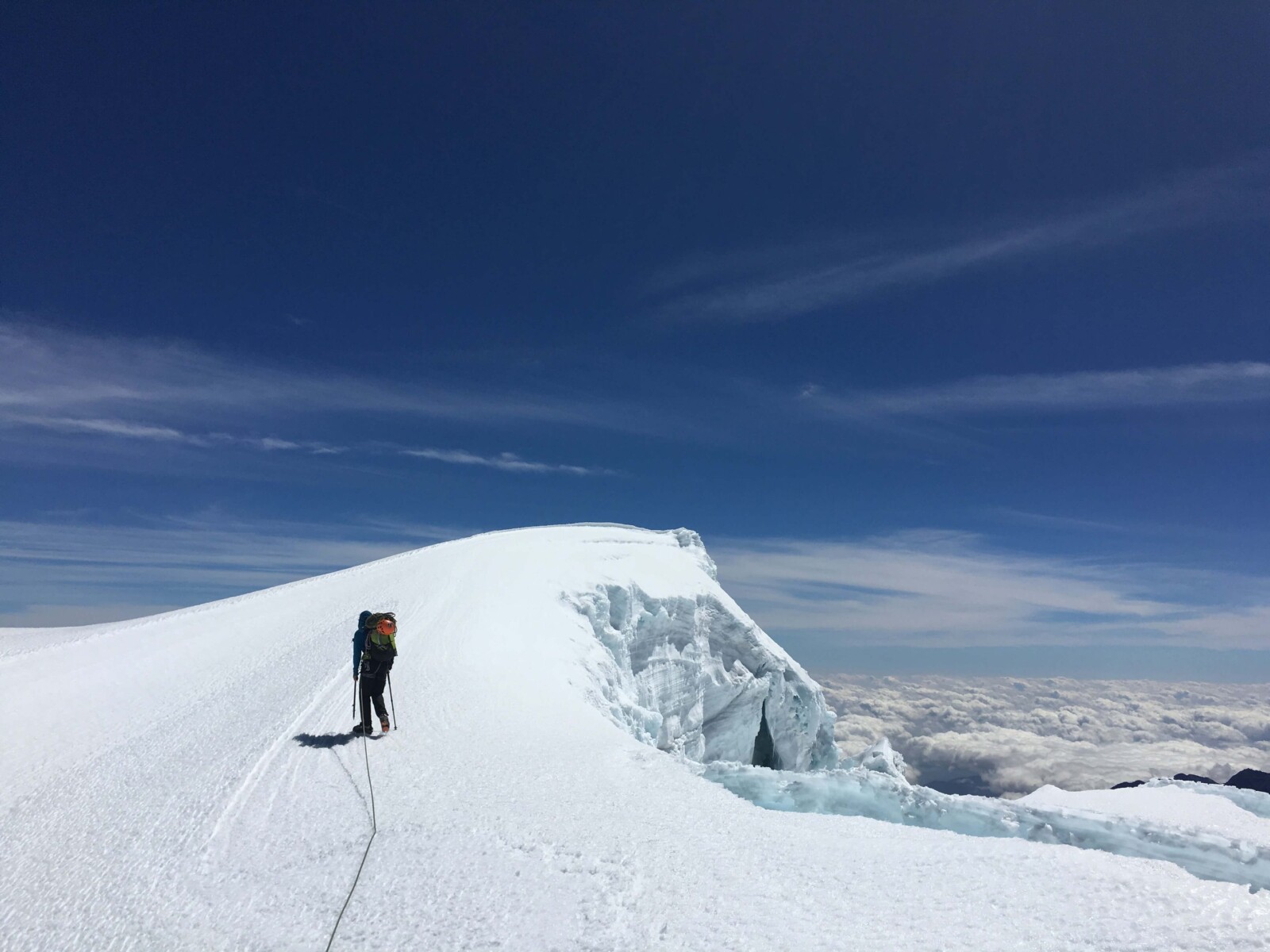
Rope team on a glacier above the clouds in Ecuador

Why Cayambe

Most guided Cotopaxi programs follow one of two patterns. The first is Cotopaxi on its own in about five days. The second is Iliniza Norte and Cotopaxi in about nine. Iliniza Norte is a good acclimatization peak, but it tops out just over 5,100 m and is a rock scramble, not a glacier climb.

The usual Cotopaxi programs

  • Cotopaxi on its own in about five days
  • Or Iliniza Norte and Cotopaxi in about nine
  • Iliniza Norte tops out just over 5,100 m, on rock, not glacier

Benegas Brothers Cotopaxi Express

  • Cayambe first: a real glaciated route to 5,790 m
  • Two glaciated summits in seven days
  • A night at the Cayambe Hut before Cotopaxi
  • Within about 100 m of Cotopaxi’s height before summit night

The Express climbs Cayambe instead. At 5,790 m, Cayambe takes you roughly 650 m higher than Iliniza Norte, on a real glaciated route with crevasses and rope teams. You get two glaciated summits in seven days, not one. You also arrive at Cotopaxi having already slept at the Cayambe Hut and climbed to within about 100 m of Cotopaxi’s height. That’s the acclimatization that matters on summit night, and it’s the experience that carries forward to Aconcagua, Peru or Bolivia.

How Seven Days Works

The Express is short, but every day has a job. Quito already sits at 2,850 m. Rucu Pichincha takes you above 4,500 m and back down to sleep. You spend a night at a lodge below Cayambe, then move up to the hut, so your sleeping altitude rises in steps instead of one jump. After Cayambe you drop to a historic hacienda to recover, then move to the lodge below Cotopaxi. By summit night you’ve already been close to 5,800 m, and Cotopaxi is the next step, not a leap.
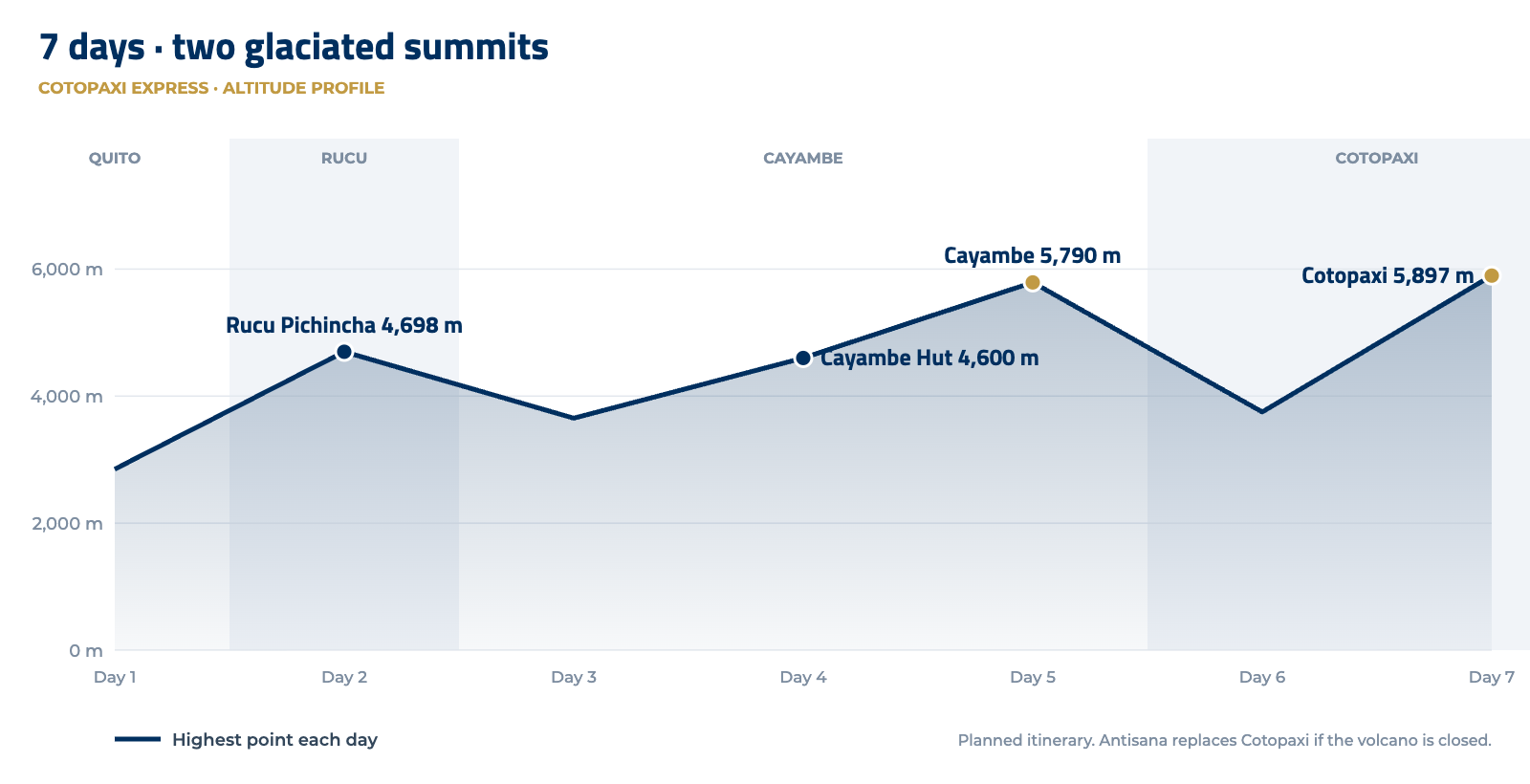
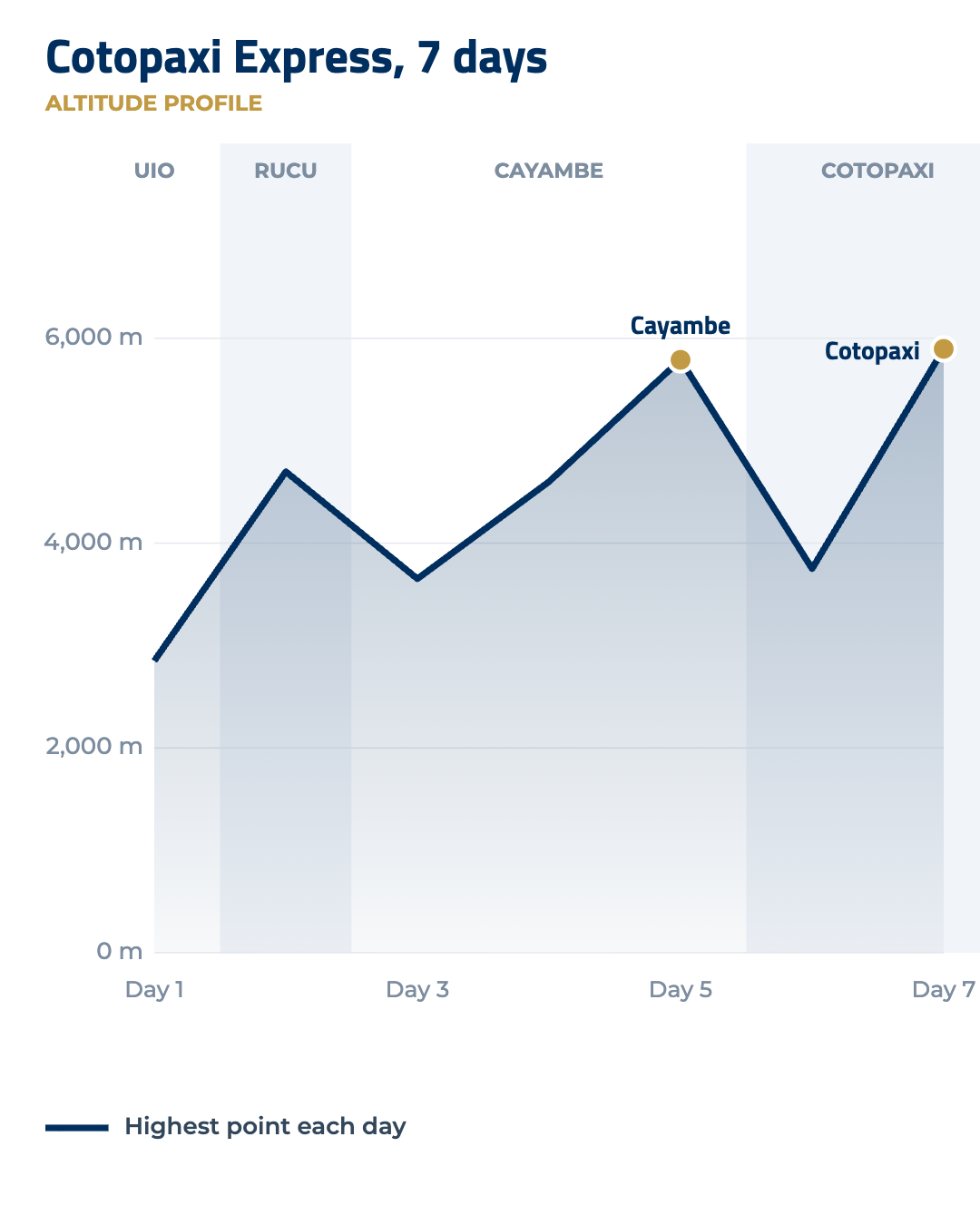
Altitude profile of the 7-day Cotopaxi Express: Quito, Rucu Pichincha 4,698 m, the Cayambe Hut 4,600 m, Cayambe 5,790 m and Cotopaxi 5,897 mAltitude profile of the 7-day Cotopaxi Express: Quito, Rucu Pichincha 4,698 m, the Cayambe Hut 4,600 m, Cayambe 5,790 m and Cotopaxi 5,897 m
Highest point reached each day. Two summit nights in three days, with a recovery night low at Hacienda Cusín between them. See the full itinerary, day by day.

What the Express Trades Away

Compressing a trip has a cost, and you should know it before you book:

  • One summit window per mountain. There’s no spare weather day. If a summit night is weathered out, there’s no second attempt on that peak within the seven days.
  • Two summit nights in three days. Cayambe on Day 5 and Cotopaxi on Day 7, with a recovery night low at Hacienda Cusín between them.
  • You fly home the night of the Cotopaxi summit. Book a departure after 8:00 pm. You’ll have a hotel room in Quito for the afternoon to shower and rest, and you’ll sleep on the plane.

If you’d rather have flex days, more rest or more peaks, look at the 14-day Ecuador Volcanoes Expedition. For many climbers it’s the better trip.

Day for day, the Express costs more than our longer Ecuador programs. You’re paying for compression: the same guiding, logistics and preparation, fitted into fewer days. That includes a personalized training plan from the BBE team, built around this climb and your actual starting point.

Arrive Ready — And If You Can, Arrive Acclimatized

On a seven-day trip, your preparation matters as much as the itinerary. Arrive fit, and arrive with recent altitude if you can. Sleep high in the weeks before you fly, climb a peak, or come to Quito a few days early. Tell us on your call, so it goes into your training plan.

Your Team

Every departure is led by an IFMGA- or ASEGUIM-certified guide, working with experienced BBE guides to the same standard. Teams are capped at four climbers, with one guide for every two climbers on Cayambe and Cotopaxi. Local drivers and lodge and hut staff support the team. Your guides run the climbing, the acclimatization plan and every turnaround decision.

Willie and Damian Benegas have built BBE’s standards on the world’s big mountains since 1992. Scheduled departures are led by the BBE guide team. A founder-led climb is available only when confirmed in your written trip terms.

Who the Express Is For

  • Climbers with glacier basics: crampons, ice axe and roped travel
  • People with limited time off who want a real summit, not a tour
  • Climbers preparing for Aconcagua, Peru or Bolivia who want time near 5,800 m in a week
  • People who accept that no one can promise a summit, and that turning around is sometimes the right call

New to glaciers? Start with the Ecuador Mountaineering School. Every climber speaks with a guide before booking, and we’ll tell you honestly which program fits. For the honest standard, read Is This For Me?

Questions About the Express?

We answer every inquiry personally. We don’t simply guide expeditions. We help people build a lifetime in the mountains.
Ask a guide

Day by Day

Summits: Rucu Pichincha 4,698 m / 15,413 ft · Cayambe 5,790 m / 18,996 ft · Cotopaxi 5,897 m / 19,347 ft

Altitude profile of the 7-day Cotopaxi Express: Quito, Rucu Pichincha 4,698 m, the Cayambe Hut 4,600 m, Cayambe 5,790 m and Cotopaxi 5,897 mAltitude profile of the 7-day Cotopaxi Express: Quito, Rucu Pichincha 4,698 m, the Cayambe Hut 4,600 m, Cayambe 5,790 m and Cotopaxi 5,897 m
Highest point reached each day. There are no spare weather days on the Express.

The 7 Days at a Glance

Each bar shows where you sleep that night. ▲ marks the day’s high point. Tap a day to open it.

In each day below, altitude reads start → high point → where you sleep. Distances and hiking times are estimates.

Climb high, sleep low

Some days climb well above where you sleep. The gap between the day’s high point and the night’s camp is how your body adapts.

Times are estimates

Hiking times change with the team and the conditions. A slow, steady pace is the plan, not a problem.

The plan can flex

Weather, how the team is acclimatizing and your guides’ judgment can change the daily plan. That flexibility is part of the plan.

Good to know

The schedule is a plan, and the mountains decide the details. On a seven-day trip there are no spare weather days. If conditions on a summit night aren’t safe, your guides will move the start time or turn the team around. They won’t push into bad weather to protect the schedule.

Altitude: 2,850 m / 9,350 ft

Our team meets you at Mariscal Sucre International Airport (UIO) and takes you to Hotel Quito. The team briefing and full gear check happen tonight, because tomorrow you’re climbing. Anything missing gets sorted here, where rentals are close. We strongly recommend arriving a day early: you get a night at altitude, and a buffer if a bag is late.

Overnight: Hotel Quito

Summit: 4,698 m / 15,413 ft · Hiking: ~6–7 hrs round trip

The TelefériQo cable car lifts us to about 3,950 m. From there we hike and scramble to the summit. It’s your first real test of pace and breathing at altitude. Then we return to Quito to sleep low.

Overnight: Hotel Quito

Altitude: 3,652 m / 11,982 ft · Drive: ~2–3 hrs

We drive north, cross the equator and climb through páramo grassland to Yanacocha Lodge below Cayambe. In the afternoon, an easy acclimatization walk above the lodge. Tonight is a deliberate step: higher than Quito, lower than the hut.

Overnight: Yanacocha Lodge

Altitude: 4,600 m / 15,100 ft

We move up to the hut. In the afternoon we walk to the glacier edge for a focused refresher: crampon footwork, ice-axe technique, self-arrest and rope-team travel. It’s a refresher, not a course. Then an early dinner and the summit briefing. The alarm goes off around midnight.

Overnight: Cayambe Hut

Summit: 5,790 m / 18,996 ft · Climbing: ~6–8 hrs up, ~3–4 hrs down

We leave the hut around midnight by headlamp. The route climbs steadily on glacier through crevassed terrain, with a few steeper sections below the summit. If conditions hold, we’re on top around sunrise. Then we descend to the hut and the vehicles, and drive down to Hacienda Cusín, a historic hacienda in the valley near Otavalo. Sleeping low tonight is deliberate. Your body recovers far better at lower altitude, and you’ll need that recovery for Cotopaxi.

Overnight: Hacienda Cusín, ~2,450 m / 8,000 ft · Drive from the hut: ~2 hrs

Altitude: ~3,750 m / 12,300 ft

A slow morning on purpose: eat, drink, dry your gear. We drive south (~3–3.5 hrs) to Tambopaxi Lodge, on the open plain below Cotopaxi. The afternoon is for rest, a gear check, an early dinner and the summit briefing. You’ll get a few hours of sleep before a late-night start.

If Cotopaxi is closed because of volcanic activity, we climb Antisana on Days 6 and 7 instead. Your guides confirm the plan before the trip starts.

Overnight: Tambopaxi Lodge

Summit: 5,897 m / 19,347 ft · Climbing: ~7–9 hrs up, ~2–3 hrs down · Drive to Quito: ~2–2.5 hrs · Afternoon: hotel room in Quito

We leave Tambopaxi between about 11:00 pm and midnight and drive to the parking area at about 4,600 m. From there we climb past the José Rivas Refuge onto the glacier, then up crevassed slopes to the crater rim. On a clear morning the crater steams below you and Chimborazo stands to the south. Down to the vehicles, then the drive to Quito, where you have a hotel room for the rest of the day to shower, eat and rest before your airport transfer. Book a flight home after 8:00 pm.

Sometimes the right call is to turn around. On summit night, that decision is made early and clearly. It’s a professional decision, not a failure.

Continue Preparing

Read next: Is This For Me? · Cotopaxi Express Gear List · A Day on the Mountain · What to Budget For · Dates and Prices

Questions about the itinerary or your readiness? Ask a guide.

Is This for Me?

The Express asks a lot in a short time: two glaciated summits in three days, midnight starts, cold, and a flight home on the night of the Cotopaxi summit. It’s built for climbers who already know the basics on a glacier, arrive fit, and want a real summit in a week.

You don’t need to be an elite athlete. You do need the basic skills before you arrive, real fitness, and a clear idea of what the hard days feel like. This page explains exactly what that means.

The Express at a Glance

ExperienceGlacier basics required — crampons, ice axe and roped travel
Highest summitCotopaxi, 5,897 m / 19,347 ft
Summit nightsTwo (Cayambe and Cotopaxi), in three days
Longest dayDay 7 — summit night, descent and the drive to Quito, before an evening flight
Summit conditionsRoughly −5 °C to −15 °C (23 °F to 5 °F) before dawn, colder in the wind
Training time12–16 weeks, structured, with a personalized plan from the BBE team
FamiliesWelcome
Team sizeMaximum four climbers; one guide for every two climbers
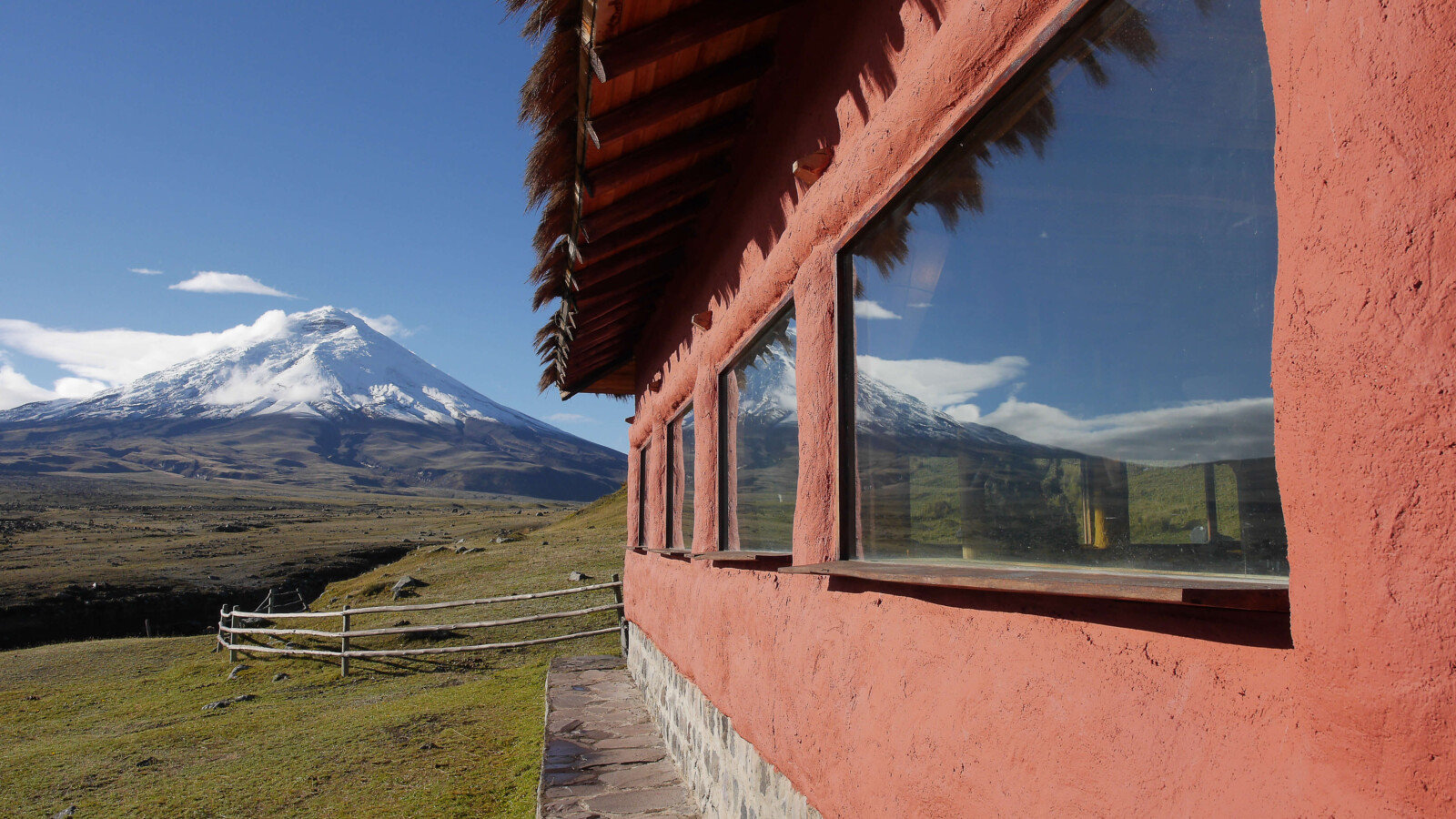
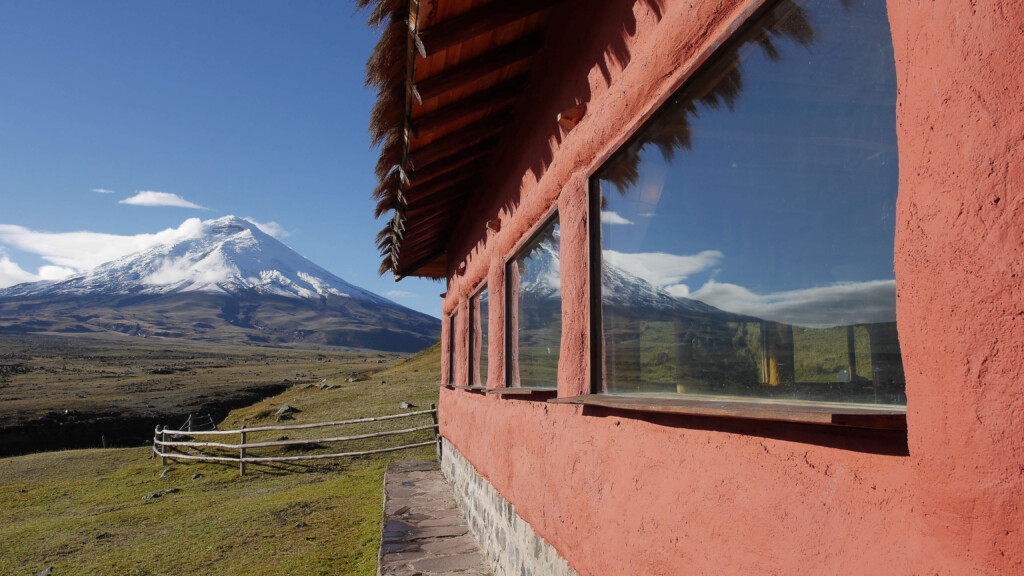
Snow-capped volcano seen from a mountain lodge in Ecuador

Experience: What’s Required

You need glacier basics before you join. In practice, that means you have:

  • Walked in crampons on snow and ice, on flat and angled terrain
  • Used an ice axe for balance and practiced self-arrest
  • Travelled roped on a glacier as part of a team

Day 4 includes a refresher on Cayambe’s glacier, and your guides coach you on both climbs. But there isn’t time to teach these skills from the beginning.

If you’ve never been on a glacier, the Ecuador Mountaineering School is the right place to start. If you’re close but not sure, ask a guide. We’ll look at what you’ve done and tell you honestly.

Every Express climber also has a screening call with our team before booking. It’s where we talk through your experience, your training and your schedule.

Fitness: Can You Do These?

  • Climb steadily uphill for 7–9 hours with a pack. Test it with your longest training day: a big hill or mountain, slow and steady, with 1,000 m or more of gain.
  • Do it again two days later. Test it with back-to-back weekends of long days, or two long days with one easy day between.
  • Keep your footing when you’re tired. Most slips happen on the way down. Train long descents at the end of hard days.
  • Start at midnight and keep going. Do at least two pre-dawn starts in the cold before the trip.

The second one matters most. Many fit people can manage one hard summit day. Two in three days is what makes the Express different.

Arrive Ready — And If You Can, Arrive Acclimatized

On a seven-day trip there’s no extra time for your body to catch up. Climbers who arrive with recent altitude do better.

Neither prior altitude nor pre-acclimatization is a hard requirement, but both change how the climb goes. The best ways to arrive with altitude in your body:

  • Sleep high in the weeks before you fly
  • Climb a peak at altitude a few weeks out
  • Come to Quito a few days early (we can book the nights)

Tell us on your call, so it goes into your training plan.

What Will Feel Hard

The midnight starts. Twice on this trip you’ll wake around midnight, put on every layer and step onto the glacier by headlamp. On Cayambe you start from the hut. On Cotopaxi you leave the lodge late at night and drive to the trailhead first.

The cold. Before dawn on the summits it’s well below freezing, and wind makes it feel much colder. Good gear and good habits keep you safe. They won’t make you comfortable.

Cotopaxi summit night. About 1,300 m of climbing from the parking area to the crater rim, on glacier slopes and through crevassed terrain, in thin air. Every step takes focus.

Day 7. After the summit comes the descent and the drive to Quito. You have a hotel room for the afternoon to shower and rest, then a flight home that night. It’s a long day. Plan your first day back at home as a rest day.

The weather. The equatorial Andes change quickly. On a seven-day trip there’s no spare weather day, so a bad night can cost a summit. That’s the trade the Express makes.

Sometimes the right call is to turn around. When it is, your guide makes it clearly and early. That’s a professional decision, not a failure.

Is the Express Right for You?

The Express is a good fit if:

  • You already have glacier basics and limited time off
  • You’ll commit to 12–16 weeks of structured training
  • You’re preparing for Aconcagua, Peru or Bolivia and want time near 5,800 m first
  • You’ll slow down when your guide says slow down, and accept a turnaround call
  • You understand no one can promise a summit

It’s probably not the right fit if:

  • You’ve never used crampons or travelled roped on a glacier. Start with the Ecuador Mountaineering School.
  • You want weather days and more rest. The 14-day Ecuador Volcanoes Expedition builds them in.
  • You’re hoping to get by on general fitness.
  • You need a guaranteed summit to feel it was worth it.

Two more things to be clear about before you book:

  • Health. If you have a heart, lung or other medical condition, talk to your physician about high altitude before you commit. Every climber completes a medical history form, and we may ask for a physician’s clearance.
  • Age. The minimum age is set by Ecuador’s regulations and by insurance: climbers under 18 climb with a parent or guardian, and each climber’s insurance must cover their age. Families are welcome: younger climbers can join a scheduled team with a parent or guardian, or come on a private family expedition built around your family, and if a special permit is needed, we’ll help you apply. There’s no upper limit; fitness, health and experience matter far more than age.

How to Prepare

Every Express climber receives a personalized training plan from the BBE team, built around this climb and your starting point. The shape is the same for most people:

  • Early weeks: build a base. Hiking, stairs or incline walking three to four times a week, plus leg and core strength.
  • Middle weeks: add load, length and gain. Longer days with a pack, then back-to-back days.
  • Final weeks: peak, then ease off. Your biggest back-to-back weekend, a pre-dawn start or two, then a taper in the last 7–10 days.

Still Deciding?

With a maximum of four climbers per departure, there’s time for a real conversation before you book. Tell us what you’ve climbed, how you’ve trained and what worries you. If the School or the 14-day expedition is the better choice, we’ll say so.

For the full route, read Day by Day. For costs beyond the trip fee, see What to Budget For.

Questions About Whether You’re Ready?

Ask a guide

Before You Go

On a seven-day trip there’s no time to fix problems after you land. Climbers who arrive ready have three things sorted well before they fly: insurance that covers mountaineering above 5,800 m, boots and gloves tested on real training days, and glacier skills refreshed rather than assumed. This page puts everything in order: what to do, when, and where to find the details.

Your Preparation Guides

Cotopaxi Express at a Glance

Trip length7 days, airport to airport. Arrive in Quito on Day 1; fly home the evening of Day 7.
SummitsRucu Pichincha 4,698 m, Cayambe 5,790 m and Cotopaxi 5,897 m / 19,347 ftAntisana replaces Cotopaxi if Cotopaxi is closed.
Where you sleep highOne night in the Cayambe Hut, 4,600 m. Every other night is in a hotel, lodge or hacienda.
TeamMaximum four climbers; one guide for every two climbers.
ExperienceGlacier basics required.
SeasonEcuador’s more stable climbing periods are generally June to September and December to February.
Fly intoMariscal Sucre International Airport (UIO), Quito. Both airport transfers are included.
Fly homeAfter 8:00 pm on Day 7.
VisaNone needed for US, Canadian, UK and most European passports for stays up to 90 days.
Park fees and permitsArranged by BBE and included in your trip price.
InsuranceRescue and evacuation cover is required on this expedition.
Cash to carrySmall US bills for tips (7–10% of the trip price for the whole team), plus roughly $30–$80 for drinks and extras. Ecuador uses the US dollar.

Your Preparation Timeline

When You Book

  • Have your screening call and receive your personalized training plan.
  • Complete your Trip Application & Medical History Form (including your climbing experience), liability waiver, emergency contacts and passport copy.
  • Buy your rescue and evacuation cover in the first week or two.
  • Check that your passport is valid for at least six months beyond your entry date.

3–5 Months Before

  • Check your boots, gloves and shell against the gear list, and break new boots in on training days.
  • Send us your proposed flights. Book once your departure is confirmed in writing, and favor changeable fares.
  • Talk to your physician about altitude, altitude medication and any medical conditions.
  • If it’s been a while since you were on a glacier, get out on snow with crampons and an axe.
  • Plan how you’ll arrive with altitude: sleeping high, a peak, or extra days in Quito.

6–8 Weeks Before

  • See a travel clinic about vaccinations.
  • Send us any rental requests (at least three weeks before the trip).
  • Send us your flight itinerary and your insurance certificate.
  • Put in your biggest back-to-back training days, including a pre-dawn start or two.

The Final 2 Weeks

  • Do a full pack-out: every item on the list, packed the way it will travel.
  • Get your cash: plenty of $5, $10 and $20 bills.
  • Check with us whether Ecuador’s online customs form (FRA) applies to you.
  • Ease off your training. Arrive rested.

Arrival Day

A member of our team meets you at Quito’s airport and takes you to Hotel Quito. That evening is your briefing and full gear check with your guides. Tomorrow you climb.

Still Deciding?

This section assumes you’re going. If you’re still working out whether the Express is right for you, we’ve written that out honestly.

Is This For Me? · Your Questions

Questions While You Prepare?

Ask early. Small questions are easiest to solve months out.

Ask a guide

Your Expedition Checklist

Getting into Ecuador is easy for most travelers. The piece that deserves real attention is insurance: both summits on this trip are above 5,700 m, and many standard policies stop well below that. Sort your coverage early, then your forms and passport.

Your Paperwork at a Glance

Everything BBE needs from you, in the order you’ll do it. Tick items off as you go; your ticks are saved on this device. The details for each item are below.

Step 1At booking, in the registration formDone together with your deposit

Step 2Buy, then send to BBEEmail climbing@benegasbrothers.com

Step 3Arrange and carryNeeded on the trip

Required Documentation

Every climber submits the following before departure. We send you every form after booking.

Trip Application & Medical History Form. Your climbing background, including a short climbing résumé, and relevant medical history. Be thorough and honest; it’s how your guides plan for you.

Liability Waiver. A standard mountaineering waiver acknowledging the inherent risks of high-altitude glacier climbing.

Emergency Contact Information. At least one person we can reach in an emergency.

Passport Copy. Your passport photo page.

Flight Itinerary. With flight numbers, so we can meet you and plan Day 7.

Insurance Certificate. Proof of your rescue and evacuation coverage.

Send everything to climbing@benegasbrothers.com as soon as you have it.

Passport and Visa

Your passport must be valid for at least six months beyond your entry date. US, Canadian, UK and most European citizens don’t need a visa for stays of up to 90 days; you receive a tourist stamp on arrival. If you hold another passport, check with an Ecuadorian consulate before you book.

Ecuador’s Digital Customs Form

Ecuador introduced an online customs declaration, the Formulario de Registro Aduanero (FRA), in 2025. Official guidance on who must complete it has changed more than once. We’ll confirm the current rule with you before departure. If in doubt, fill it in: it’s free and takes about five minutes.

Your climbing equipment counts as personal sporting equipment and needs no special permit.

Park Fees and Climbing Permits

National park fees and climbing registrations for Cayambe and Cotopaxi (and Antisana, if needed) are arranged by BBE and included in your trip price.

Vaccinations and Health

See a travel medicine clinic four to six weeks before departure. Hepatitis A and typhoid are commonly recommended for Ecuador.

Talk to your physician about altitude medication early. Whether it’s right for you is a decision for you and your physician. On a short itinerary, this conversation matters more.

If you have a heart, lung or other condition that altitude, cold or exertion could affect, talk to your physician before you book. We may ask for a physician’s clearance.

Common Questions

Do I need a visa to climb Cotopaxi?

Not with a US, Canadian, UK or most European passports. You receive a tourist stamp on arrival.

Is rescue insurance required?

Yes. Your policy must cover helicopter rescue and high-altitude mountaineering to at least 6,000 m.

Does Global Rescue cover Cotopaxi?

Only with the High-Altitude Evacuation Package added. Standard membership stops at 4,600 m.

Do I need to arrange climbing permits myself?

No. BBE arranges them, and they’re included in your trip price.

Questions About Documentation or Coverage?

Trip Insurance & Evacuation Coverage

Two kinds of cover apply to this expedition. One is required. One is strongly recommended.

Required by BBERescue and evacuation coverage

Required on every BBE international expedition. It pays to get you off the mountain and to proper medical care. The coverage it must include for this trip is listed below.

Strongly recommendedTrip insurance

Protects the money you’ve spent if illness, a family emergency or a travel disruption stops or cuts short your trip.

Rescue and Evacuation Insurance — Required on This Expedition

Every climber must carry rescue and evacuation coverage. Emergencies are rare with good guiding, but when they happen high on a mountain they’re serious, and evacuation is expensive.

A good policy for this trip covers:

  • Emergency evacuation from remote mountain terrain, to at least 6,000 m / 19,700 ft
  • Helicopter rescue, stated explicitly
  • High-altitude mountaineering and glacier travel, with no activity exclusion
  • International medical transport

Providers we recommend:

  • Global Rescue, with the High-Altitude Evacuation Package added. Standard membership doesn’t cover evacuation above 15,000 ft / 4,600 m.
  • Ripcord Rescue Travel.

Buy your coverage soon after booking. Many providers waive pre-existing-condition exclusions only if you buy within a set window after your first trip payment.

Trip Insurance

Comprehensive trip insurance is strongly recommended. It covers cancellation, interruption, delays, baggage and travel medical. On a seven-day trip with a same-day flight home, delay cover matters more than usual.

Ask a guide · Back to Before You Go · climbing@benegasbrothers.com

Flights & Getting to Quito

Quito is easy to reach, with direct flights from several US cities. On the Express, your flight timing matters more than on a longer trip: there’s no buffer day at the start, and you fly home the night of the Cotopaxi summit.

Getting to Quito

Fly into Mariscal Sucre International Airport (UIO). Nonstop flights currently run from Miami, Atlanta and Houston. Other common connections run through Panama City and Bogotá, and there are nonstops from Madrid and Amsterdam. Routes change by season, so check current schedules when you book.

When to Arrive

Your briefing and gear check are on the evening of Day 1, and you climb Rucu Pichincha on Day 2. A late-night arrival works, but it’s tight.

We strongly recommend arriving a day early. You get an extra night at altitude, and a full day’s buffer if a bag is late. We can book the extra night at Hotel Quito; ask when you book.

When to Fly Home

On Day 7, the team summits Cotopaxi, descends and drives about 2–2.5 hours to Quito. You have a hotel room for the rest of the day to shower, eat and rest, then we take you to the airport. Book a departure after 8:00 pm. Late-evening and overnight flights to the US work well.

Two rules, same as every BBE program: book once your departure is confirmed in writing, and favor changeable fares.

Baggage

One duffel plus a carry-on covers most climbers. Wear or carry on your mountaineering boots and anything else that must fit you. On a seven-day trip, a bag that arrives a day late can cost you Rucu Pichincha, and missing boots can cost you the trip. Put a tracker in your checked duffel.

Airport Transfers

We meet you at UIO on arrival and take you back to the airport on Day 7. Both transfers are included.

If Something Goes Wrong

Flight cancelled or bag delayed? Email climbing@benegasbrothers.com straight away, before you rebook if you can.

Common Questions

What time should I arrive on Day 1?

Any time works, but the briefing is that evening. We strongly recommend arriving a day early.

What time should I fly home?

After 8:00 pm on Day 7.

Is the airport transfer included?

Yes, both ways.

Questions About Routing or Timing?

Ask before you book.

Where You'll Stay

Six nights in five places, plus an afternoon room in Quito on Day 7. Each is chosen for a reason. Sleeping altitude rises in steps toward Cayambe, drops for recovery after the summit, and rises again below Cotopaxi.

The José F. Ribas Refuge, the climbers' hut on Cotopaxi

Night by Night

Days 1–2 · Hotel Quito · 2,850 m / 9,350 ft

Your base for arrival, the briefing and Rucu Pichincha. Even your hotel nights here are part of acclimatization.

Day 3 · Yanacocha Lodge, Cayambe · 3,652 m / 11,982 ft

A mountain lodge in the páramo below Cayambe. It’s the step between Quito and the hut.

Day 4 · Cayambe Hut · 4,600 m / 15,100 ft

A climbers’ refuge with shared bunk rooms and a communal dining area. You eat early, rest a few hours and start climbing around midnight. It’s the only hut night of the trip.

Day 5 · Hacienda Cusín · ~2,450 m / 8,000 ft

A historic hacienda in the valley near Otavalo. After Cayambe you sleep low, which is where real recovery happens.

Day 6 · Tambopaxi Lodge, Cotopaxi National Park · ~3,750 m / 12,300 ft

A lodge on the open plain below Cotopaxi. You rest here, then leave between about 11:00 pm and midnight for the summit.

Day 7 · Hotel room in Quito, for the afternoon

After the summit we drive back to Quito, where you have a hotel room for the rest of the day to shower, eat and rest before your evening flight.

How Rooms Work

Hotels, lodges and the hacienda are based on shared rooms, two climbers per room. A single room can usually be arranged for an extra cost, subject to availability. The hut is shared by nature.

Occasionally a lodge may be replaced with a comparable property for availability or operational reasons.

Storing Extra Luggage

Travel clothes and anything you don’t need on the mountains stay in the expedition vehicle or with us in Quito. Your guides will tell you what goes up to the hut.

Common Questions

Do you sleep at the Cotopaxi refuge?

No. We sleep at Tambopaxi Lodge and start summit night from there, passing the José Rivas Refuge on the way up.

Do I need a sleeping bag?

Yes, for the night in the Cayambe Hut. The rating is on the gear list.

Can I have a single room?

Usually, in hotels, lodges and the hacienda, for an extra cost and subject to availability.

Questions About Where You’ll Stay?

Life on the Mountain

“Take care of the mountain, and the mountain will take care of you.” It is the Benegas Brothers’ motto, and the rule we climb by.

Seven days move quickly. Knowing the rhythm in advance makes the hard days easier.

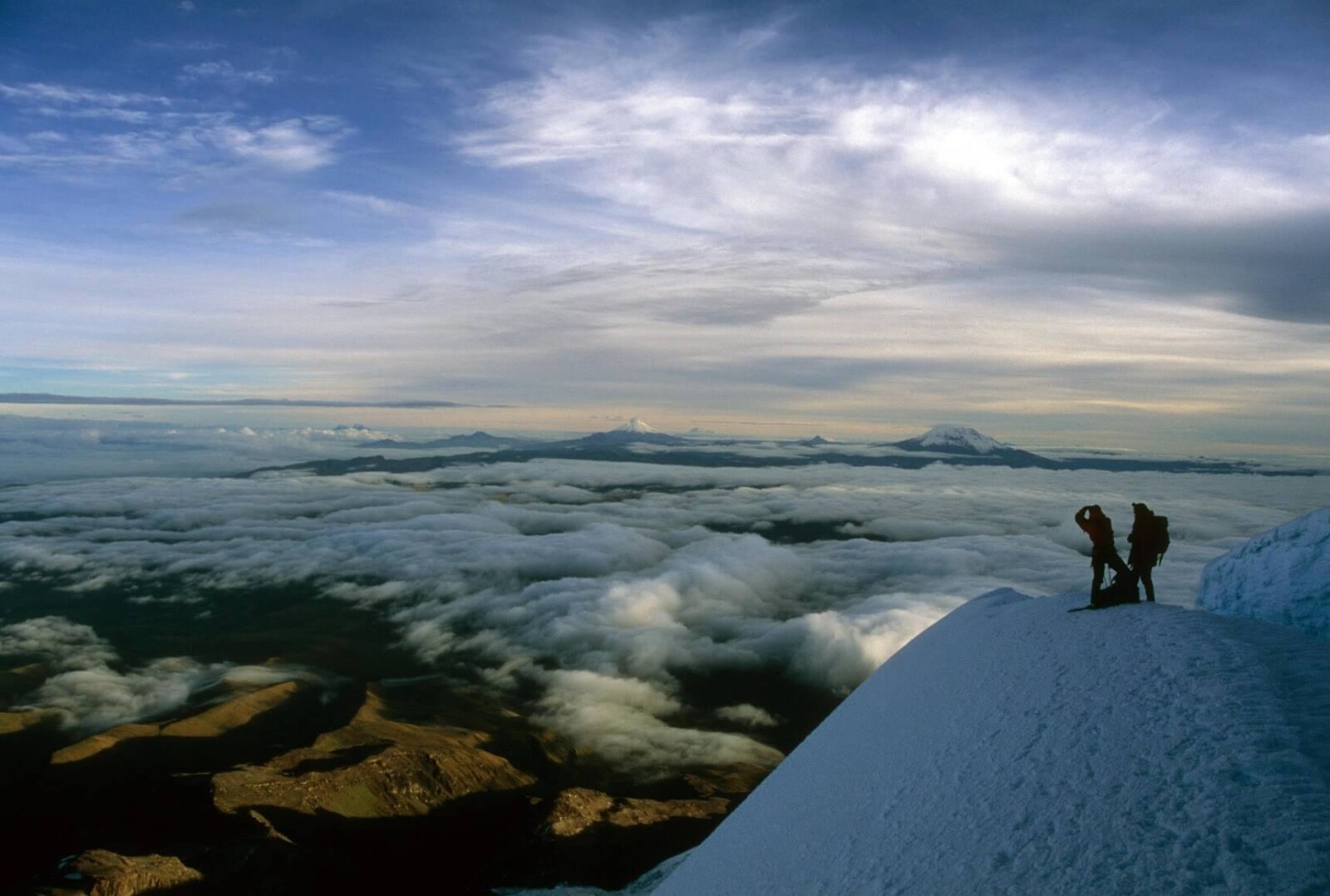
Climbing team on the glacier above the clouds, Ecuador

The Rhythm of the Express

Build days (Days 1–4). Arrival, Rucu Pichincha, the lodge below Cayambe, and the move up to the hut with a glacier refresher.

Summit days (Days 5 and 7). A midnight start, many hours on the glacier, and a long descent.

Recovery day (Day 6). A slow morning at Hacienda Cusín and a drive to Cotopaxi. Use it to eat, drink and rest. Don’t spend it proving your fitness.

Food and Water

All meals are included. Alcoholic drinks and personal snacks are on your own account. On summit nights you eat a hot meal before leaving and carry your own snacks and water. Bring the bars, gels and electrolytes you already rely on. Carry at least two liters on summit nights, in insulated bottles.

Sleep at Altitude

Sleep up high is lighter and more broken than at home. It’s normal. The hut night is the shortest. Before Cotopaxi you sleep a few hours at Tambopaxi before a late-night start. Treat both as rest, not a full night.

Summit Nights

On Cayambe, the alarm goes around midnight at the hut. On Cotopaxi, you leave the lodge late at night and drive to the trailhead. Either way: a hot drink and food, boots and layers on, harness and crampons, and onto the glacier by headlamp. Keep your pace steady and follow your guide. The aim is to be on top in the early morning and heading down before the sun softens the snow.

Acclimatization and Altitude

Headache, poor appetite, broken sleep and mild tiredness are common and usually settle. Tell your guide right away if you have:

  • A headache that keeps getting worse or won’t go away
  • Nausea or vomiting
  • Loss of coordination or confusion
  • Shortness of breath at rest

When symptoms escalate, going down is always the right call, and your guides make it without hesitation.

Weather on the Equator

The more stable climbing periods are generally June to September and December to February, but conditions can change fast in any month. On a seven-day trip there are no weather days, so your guides choose start times carefully and won’t climb into unsafe conditions.

Staying in Touch

There’s mobile coverage in Quito and at some lodges. On the mountains, expect little or none. Tell your family that silence on summit days is normal. Your guides carry radio and satellite communication and a medical kit on every climbing day.

Common Questions

What time do summit nights start?

Around midnight on Cayambe. On Cotopaxi you leave the lodge late at night and drive to the trailhead first.

What happens if I feel sick at altitude?

Tell your guide immediately. Escalating symptoms mean going down.

When is the best time to climb Cotopaxi?

Generally June to September and December to February, but weather can change in any month.

Questions About Life on the Mountains?

Cotopaxi Express Gear List

You come to the Express with glacier basics, so you probably own some of this gear already. The question is whether it’s right for two summit nights on equatorial glaciers, where the cold is often wet as well as deep. On a seven-day trip there’s no time to replace something that fails.

What Makes Ecuador Different

Wet cold. Freezing fog, rime and wet snow are common up high. A real waterproof shell and a spare pair of gloves matter.

Equatorial sun. UV above 5,000 m on the equator is as strong as anywhere on Earth. Category 4 glacier glasses and high-SPF sunscreen are required.

Two midnight starts. On each summit night your headlamp, layers, gloves and boots are all working at once. Gaps show up fast.

Where It’s Worth Investing

  • Mountaineering boots suitable for 6,000 m peaks, broken in on real training days
  • A glove system with a backup: light gloves, insulated gloves and warm mitts, plus a spare pair
  • A layering system you can adjust without stopping, with a waterproof shell and a warm insulated parka
  • A sleeping bag for the Cayambe Hut night, rated to at least −18 °C / 0 °F

What BBE Provides

  • Ropes, snow protection and rescue equipment for each rope team
  • All meals, and treated water on the mountain
  • A group medical kit, and radio and satellite communication

Your Technical Gear

Crampons, ice axe, harness and helmet are yours to bring or rent. We arrange rentals through our partners in Quito. Send requests at least three weeks before the trip; rentals are paid directly to the shop.

We Check Everything

Your guides run a full gear check on the evening of Day 1. Because you climb the next morning, check everything at home against the list first.

The Complete Gear List

Every required item, with specifications and notes from our guides:

Print it, check items off as you pack, and bring your questions.

Common Questions

Can I rent climbing gear in Quito?

Yes, through our partners. Send requests at least three weeks ahead.

Do I need a tent or sleeping pad?

No. There are no camp nights on this trip.

What sunglasses do I need?

Category 4 glacier glasses.

Unsure About a Specific Item?

Ask us. It’s easier to fix a gear question at home than at 5,000 m.

What to Budget For

The trip fee is on Dates and Prices. This page covers everything beyond it.

Beyond the price, most climbers spend$330–880

Insurance and incidentals, plus tips.

Emergency reserve$300–500

Cash, beyond your planned spending.

Your Budget at a Glance

RequiredCosts every climber pays
  • Rescue cover and trip insuranceTogether; get a current quote$300–800
  • Flights and personal gearYou book and bring theseVaries
Personal spending
  • Drinks, snacks and incidentalsOver the seven days$30–80

The short version: every meal, every night’s lodging, ground transport, permits and park fees are already in the fee. What’s left is insurance, tips and a little personal spending.

Tips: How They Work

Tips aren’t included, and tipping is a long-standing part of climbing in Ecuador. The guideline is 7–10% of your trip price for the whole team, including drivers and support staff. Give it to your lead guide at the end, and it’s shared across the team.

The trip ends at the airport, so have your tip ready before the airport transfer on Day 7.

Cash and Cards

There’s nothing to exchange. Large bills are often hard to change, even in Quito, so bring plenty of $5, $10 and $20 bills.

Contingency

Bring $300 to $500 in cash beyond your planned spending, for a missed flight or anything unexpected.

More cost details for this trip

What Your Trip Fee Includes

  • An IFMGA- or ASEGUIM-certified lead guide, working with experienced BBE guides to the same standard
  • One guide for every two climbers on Cayambe and Cotopaxi
  • A personalized training plan from the BBE team
  • All accommodation: Hotel Quito, Yanacocha Lodge, the Cayambe Hut, Hacienda Cusín and Tambopaxi Lodge, plus a hotel room in Quito on the afternoon of Day 7
  • All meals
  • Airport transfers and all ground transportation, including the TelefériQo
  • National park fees and climbing permits
  • Group climbing equipment, a group medical kit, and radio and satellite communication

What Isn’t Included — Plan for These

International flightsYou book these yourself

The cost depends on where you fly from. Send us your itinerary before you buy.

Personal gearDepends on what you already own

Rentals are available through our Quito partners and paid directly to the shop.

Rescue and evacuation insuranceRequired

Cover to at least 6,000 m, with helicopter rescue.

Trip insuranceStrongly recommended
Tips7–10% of your trip price

, for the whole team.

Drinks, snacks and incidentals$30 to $80
A single roomAvailable at extra cost

Insurance

As a planning figure, most climbers spend about $300 to $800 on rescue cover and trip insurance together. Prices depend on your age and provider, so get a current quote directly.

Optional Costs

An extra night in Quito before the tripRoughly $80 to $180

We recommend it on the Express.

Budget Summary

Beyond the trip fee, typical ranges in US dollars:

Visa — none for US, Canadian, UK and most European passports

Rescue, evacuation and trip insurance — $300 to $800

Drinks, snacks and incidentals — $30 to $80

Tips — 7–10% of your trip price

International flights and personal gear — depend on your home city and what you already own; not included in the total below

Most climbers spend about $330 to $880 beyond the trip fee, their flights and their gear, plus tips.

Cash, Extra Costs & Tipping

Money is simple in Ecuador. The country uses the US dollar, almost everything on the trip is already paid for, and the main cash you’ll need is for tips. Bring small bills.

What’s Already Covered

Your trip price includes all accommodation, all meals, ground transport, park fees and permits.

What you’ll actually spend money on:

  • Alcoholic drinks and personal snacks
  • Souvenirs
  • Any extra nights in Quito
  • Gear rentals, paid directly to the shop

For drinks, snacks and incidentals, most climbers spend roughly $30–$80 over the seven days.

ATMs and Cards

Use ATMs in Quito, including at the airport. There are none at the lodges or the hut, so take out what you need on Day 1. Visa and Mastercard work at most hotels; for tips, you’ll need cash.

Common Questions

How much should I tip on the Cotopaxi Express?

7–10% of your trip price for the whole team, given to your lead guide at the end.

Can I use ATMs on the trip?

In Quito only. Withdraw what you need on arrival.

Why do I need small bills?

Large bills are often hard to change in Ecuador.

Questions About Money?

For the full cost picture, see What to Budget For.

Questions About Costs?

Ask a guide

Private & Custom Expeditions

If our scheduled dates don’t work, or you want the mountain to yourself, a private Express is built around you: your dates, your team, your pace.

What a Private Express Can Look Like

  • The same seven days on your own dates
  • An extra day or two for a Cotopaxi weather window or more acclimatization
  • Different peaks, such as Antisana or the Illinizas, swapped in or added
  • Chimborazo added, for climbers who want Ecuador’s highest summit

Who Private Trips Suit

  • Couples, friends or small teams who want to climb together
  • Climbers with fixed dates around work or family
  • Climbers preparing for a bigger objective who want an itinerary built around it

Led by Willie or Damian

A private expedition can be personally led by Willie or Damian on request. A founder takes part only when it’s confirmed in your written trip terms, never assumed.

How Pricing Works

Every private expedition is priced individually, based on the peaks, the days, the size of your group and the level of support. Tell us what you have in mind and we’ll send a proposal.

Common Questions

Can I add a weather day for Cotopaxi?

Yes. On a private trip we can build one in.

Can Willie or Damian guide my climb?

A private expedition can be personally led by Willie or Damian on request, confirmed in your written trip terms.

Ready to Start Planning?

Dates & Prices

Everything you need to book. Still deciding? Start with Is This For Me?. Every climber speaks with us before booking.

Expedition price$4,500

USD per person.

Deposit to book20%

Of the expedition price. Includes a $350 non-refundable booking fee.

Balance120 days

Due 120 days before departure. Inside 120 days, you pay in full at booking.

Departures

Every departure runs Saturday to Friday: arrive in Quito on Saturday, summit Cotopaxi on Friday morning, fly home Friday night.

2027

Saturday, February 13 – Friday, February 19, 2027

Open. Presidents’ Day (Monday, February 15) falls inside the trip.

Saturday, June 12 – Friday, June 18, 2027

Open.

Saturday, November 6 – Friday, November 12, 2027

Open. Veterans Day (Thursday, November 11) falls inside the trip.

2028

Saturday, February 19 – Friday, February 25, 2028

Open. Presidents’ Day (Monday, February 21) falls inside the trip.

Saturday, June 17 – Friday, June 23, 2028

Open. Juneteenth (Monday, June 19) falls inside the trip.

Saturday, November 11 – Friday, November 17, 2028

Open.

Each departure takes a maximum of four climbers and runs with a minimum of two. When a departure is full, it closes. If a departure hasn’t reached two climbers, we’ll tell you well before your final payment is due, and you’ll have the choice of another date or a full refund.

Day 1 is arrival in Quito. Day 7 is the Cotopaxi summit and departure; book a flight home after 8:00 pm.

Price

$4,500 USD per person

What’s Included — and What Isn’t

Included in the price

Before you go
  • A screening call and a personalized training plan from the BBE team
  • An equipment consultation and the gear list
In Ecuador
  • Airport transfers on arrival and departure
  • All accommodation on a shared-room basis: Hotel Quito, Yanacocha Lodge, the Cayambe Hut, Hacienda Cusín and Tambopaxi Lodge
  • A hotel room in Quito for the afternoon of Day 7, to shower and rest before your flight
  • All meals
  • All ground transportation, including the TelefériQo
  • National park fees and climbing permits
On the mountains
  • An IFMGA- or ASEGUIM-certified lead guide, working with experienced BBE guides to the same standard
  • One guide for every two climbers
  • A glacier skills refresher on Cayambe
  • Group climbing equipment, a group medical kit, and radio and satellite communication
  • Summit forecast monitoring

Not included

  • International flights
  • Rescue and evacuation insurance (required) and trip insurance (strongly recommended)
  • Personal climbing gear and clothing (rentals available in Quito)
  • Tips for guides and staff
  • Alcoholic drinks and personal snacks
  • A single room (extra cost)
  • Extra nights in Quito
  • Personal expenses

What these typically cost is on What to Budget For.

Your Total Trip Cost

The expedition price is the biggest number, not the only one. Typical ranges per climber, in U.S. dollars:

Trip price$4,500
Rescue cover and trip insurance$300–800
Drinks, snacks and incidentals$30–80
Typical total, before flights and gearabout $4,830–5,380, plus tips

Not included in that total: flights, gear and tips. The full breakdown is on What to Budget For.

Payment & Cancellation

Deposit: $900 (20% of the trip price), due at booking. $350 of it is a nonrefundable booking fee.

Balance: $3,600, due 120 days before the start date. Booking within 120 days? Full payment is due at booking.

How to pay: bank transfer/ACH (no fee), wire transfer (you pay the bank fees) or credit card (3% surcharge). All prices are in U.S. dollars.

If you cancel:

  • 121 days or more before the start date: full refund, less the $350 booking fee
  • 90 to 120 days: 50% refund, after the $350 booking fee
  • 89 days or fewer: no refund

Can’t make it? Send a qualified climber in your place at no BBE fee.

Insurance: medical and rescue/evacuation coverage required. Trip cancellation insurance strongly recommended.

Once the trip begins, payments are nonrefundable.

Read the full Payment & Cancellation Policy →

Private Departures

A private Express runs on your dates, with your group, and can add days or peaks. Each one is priced individually.

Founder-led expedition: guided by Willie or Damian Benegas, on request. Confirmed in your written trip terms.

Why Book Early

Preparation time. The Express asks for 12–16 weeks of structured training, and with four places per departure, booking early also secures your spot.

Ready to Book?

Book this trip

Your Questions

These are the questions climbers ask most before booking the Express. For the practical side (visas, flights, gear, cash), start with Before You Go.

Yes: glacier basics, meaning crampons, ice axe and roped travel. Day 4 includes a refresher, but there’s no time to teach from scratch. If you’re new to glaciers, start with the Ecuador Mountaineering School.

Fit enough to climb for 7–9 hours with a pack and do it again two days later. The benchmarks are on Is This For Me?

It isn’t required, but it helps. Climbers who arrive with recent altitude do better on a seven-day trip. We’ll build it into your training plan.

Iliniza Norte is a common acclimatization peak before Cotopaxi, but it’s a rock scramble just over 5,100 m. Cayambe is a glaciated 5,790 m summit. It acclimatizes you closer to Cotopaxi’s height and gives you a second real glacier climb in the same week.

The Express gives you Cotopaxi in a week, with no weather days. The Ecuador Volcanoes Expedition gives you four summits, including Chimborazo, with two flex days. If you have the time, the longer trip is more forgiving.

No honest guide can give you a number. What makes the difference is acclimatization, preparation, a small team and the weather on your night. The Express has no spare weather day, and that’s the trade it makes.

Your guides move the start time or turn the team around. On a seven-day trip there’s no second attempt on the same peak.

Cotopaxi is an active volcano. We check its status before every departure. If it’s closed, we climb Antisana instead.

Then your guide made the right call for that day. It’s a professional decision, not a failure. The trip fee isn’t refunded for a missed summit.

A maximum of four climbers, with one guide for every two. Every departure is led by an IFMGA- or ASEGUIM-certified guide.

Yes. You’ll share a room with another climber, or take a single room at extra cost.

Not on a scheduled departure unless confirmed for your dates. Founder-led climbs are available as private trips. See Private & Custom Expeditions.

You’re paying for compression: the same guiding, logistics and preparation in fewer days, plus a personalized training plan.

The Express follows BBE’s standard cancellation policy for international expeditions. The full terms are on Dates and Prices. Trip insurance is strongly recommended.

Yes, including extra days. See Private & Custom Expeditions.

For a healthy, well-hydrated climber, yes; many climbers do. You descend from altitude well before you fly, and you’ll have a hotel room in Quito for the afternoon to shower, eat and rest. Drink plenty and expect to be tired.

Cayambe first. Then Cotopaxi.

Two glaciated summits in seven days, airport to airport, with one guide for every two climbers and four climbers maximum.

Price$4,500 per person
Private & Custom Your dates. Your team.

This trip can run privately, on the dates that work for you.

Scheduled departures
  • Saturday, Feb 13 - Friday, Feb 19, 2027Open. Presidents’ Day (Monday, February 15) falls inside the trip.
  • Saturday, Jun 12 - Friday, Jun 18, 2027Open.
  • Saturday, Nov 6 - Friday, Nov 12, 2027Open. Veterans Day (Thursday, November 11) falls inside the trip.
  • Saturday, Feb 19 - Friday, Feb 25, 2028Open. Presidents’ Day (Monday, February 21) falls inside the trip.
  • Saturday, Jun 17 - Friday, Jun 23, 2028Open. Juneteenth (Monday, June 19) falls inside the trip.
  • Saturday, Nov 11 - Friday, Nov 17, 2028Open.

Questions first? Ask a guide

Location:
Ecuador
Group:
Maximum 4 climbers · 1 guide per 2 climbers
Duration:
7 days
Skill:
Glacier basics required
Activities:
Expeditions
Pricing

All prices are in US dollars.

Cayambe first. Then Cotopaxi.

Two glaciated summits in seven days, airport to airport, with one guide for every two climbers and four climbers maximum.

Book now

Private & Custom

Make Cotopaxi Express your own expedition

Every trip we run can also run privately: on your dates, with your people, built around your goal. Same guides, same safety standard as our scheduled departures.

Your dates

We set the departure around your calendar, not the other way round.

Your people

Family, friends, a company team, or just you and a guide.

Your goal

Training for a bigger peak, a winter or speed attempt, a film, or a route that runs from summit to ocean.

Your price

Private trips are quoted for your group size, dates and plan.

Cotopaxi Express

Scheduled Departure

Maximum 4 climbers · 7 days · Cayambe + Cotopaxi
Price per Person $4,500

Seven days, airport to airport: all accommodation and meals, park fees and climbing permits, one guide for every two climbers, a glacier refresher on Cayambe and an afternoon room in Quito before your flight home.

Private & Custom

Your dates · Your team · Extra days or peaks
Priced individually On request

A private Express runs on your dates, with your group, and can add days or peaks.

The BBE Advantage

Ecuador Mountaineering School — Ecuador

Cayambe Before Cotopaxi

Instead of a rock scramble on Iliniza Norte, you climb a real glaciated route to 5,790 m, within about 100 m of Cotopaxi’s height.

Ecuador Mountaineering School — Ecuador

Sleeping Altitude in Steps

Quito, Rucu Pichincha, a lodge below Cayambe, then the hut. Your sleeping altitude rises in steps instead of one jump.

Ecuador Mountaineering School — Ecuador

Four Climbers. Two per Guide.

Teams are capped at four, with one guide for every two climbers on Cayambe and Cotopaxi. Your guides know how you move long before summit night.

Professional Mountain Standards

Our guide team includes internationally and nationally certified mountain professionals.

AMGA — American Mountain Guides Association logo
IFMGA / UIAGM — International Federation of Mountain Guides Associations logo
AAGM — Asociación Argentina de Guías de Montaña logo

Related Trips