Global Expeditions Mexico

Volcanoes of Mexico Expedition

High Altitude. Closer Than You Think. · Pico de Orizaba · 18,491 ft / 5,636 m · 10 Days

10 Days Group: Maximum 6 climbers $4,500 per person

The Climb

Volcanoes of Mexico Expedition · La Malinche, Sierra Negra & Pico de Orizaba · 10 Days · Maximum Six Climbers

Build experience. Climb higher. Climb with confidence.

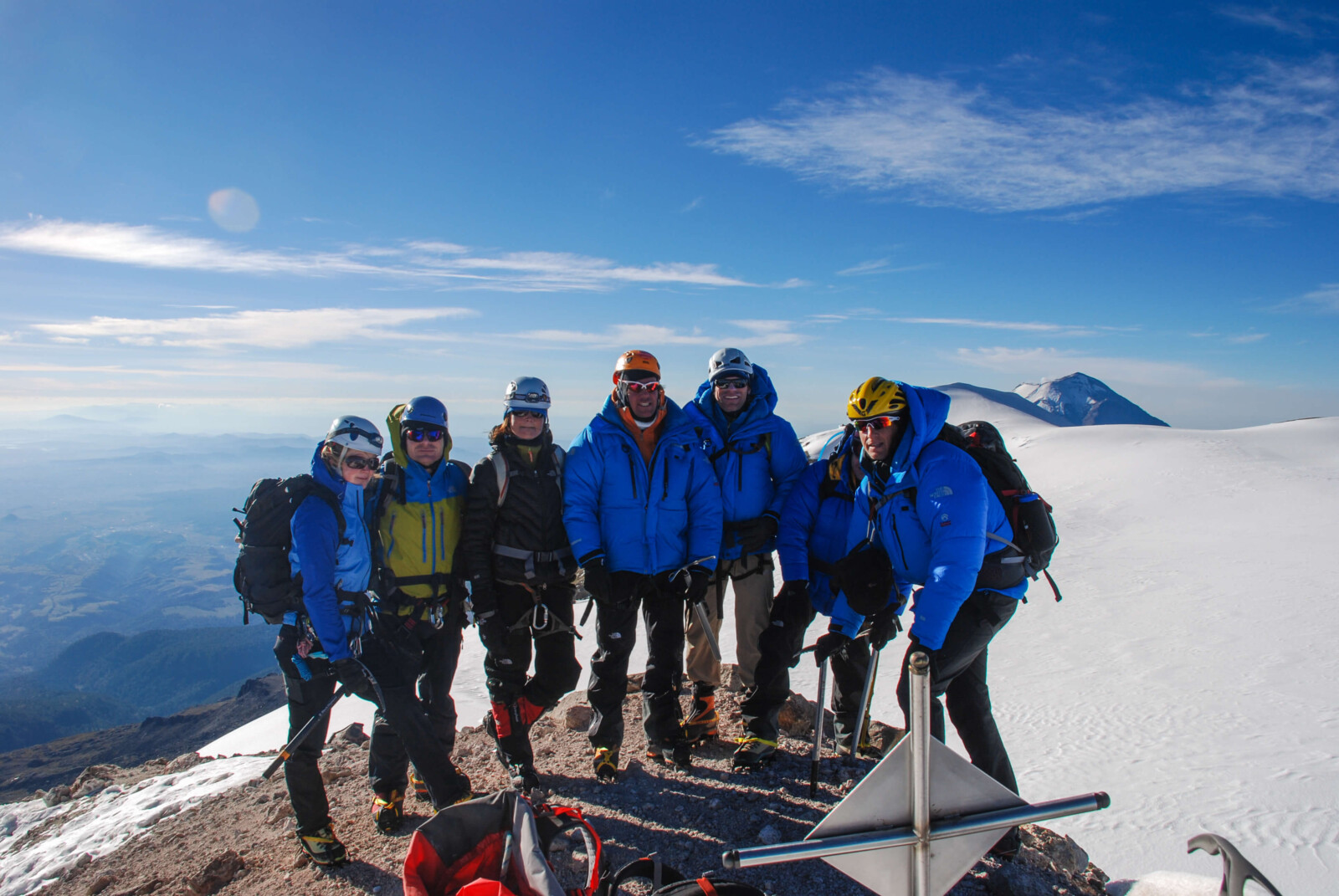
Mexico is one of the best places to start high-altitude mountaineering, or to prepare for a bigger expedition. Over ten days you climb three volcanoes, each higher than the last. You use the mountaineering systems you’ll need on bigger peaks, stay a night at a real high camp, and attempt Pico de Orizaba: the highest mountain in Mexico and, at 18,491 ft / 5,636 m, the third-highest peak in North America.

5,636mPico de Orizaba · 18,491 ft
10Days, Mexico City to Mexico City
3Volcanoes, progressively higher
6Climbers, maximum
1:2One guide for every two climbers
PortersCarry all the gear on the mountain

This isn’t a quick Orizaba climb. It’s a full high-altitude progression, built to give you the acclimatization, the instruction and the confidence to climb well.

For some climbers, Mexico is their first serious time at altitude. For others, it’s where they sharpen up before Aconcagua or Denali. These mountains are worth climbing for their own sake. Together, they give you a lot of high-altitude experience in a short trip.

Four Questions. Answered Before You Book.

Can I do this?Neither program requires technical climbing experience. Your guides teach what you need on the mountain. Both programs do require good fitness, real hiking experience, and at least three months of training. Is This for Me? →
Which Mexico is right for me?For most climbers, the ten-day expedition. It builds the acclimatization in, and it costs less. The Express is for climbers who can’t free up ten days and are willing to do the preparation before they fly. Private is for teams that need their own dates or objectives.
What will it really cost?Once you land in Mexico, transportation, lodging, meals and permits are all covered. You budget separately for international flights, personal climbing gear, insurance and tips. The What to Budget For page lays all of it out before you commit. What to Budget For · Dates & Prices →
When can I go?The climbing season in Mexico runs from November through March. Our scheduled departures fall between November and February. Dates & Prices →

The Mountain

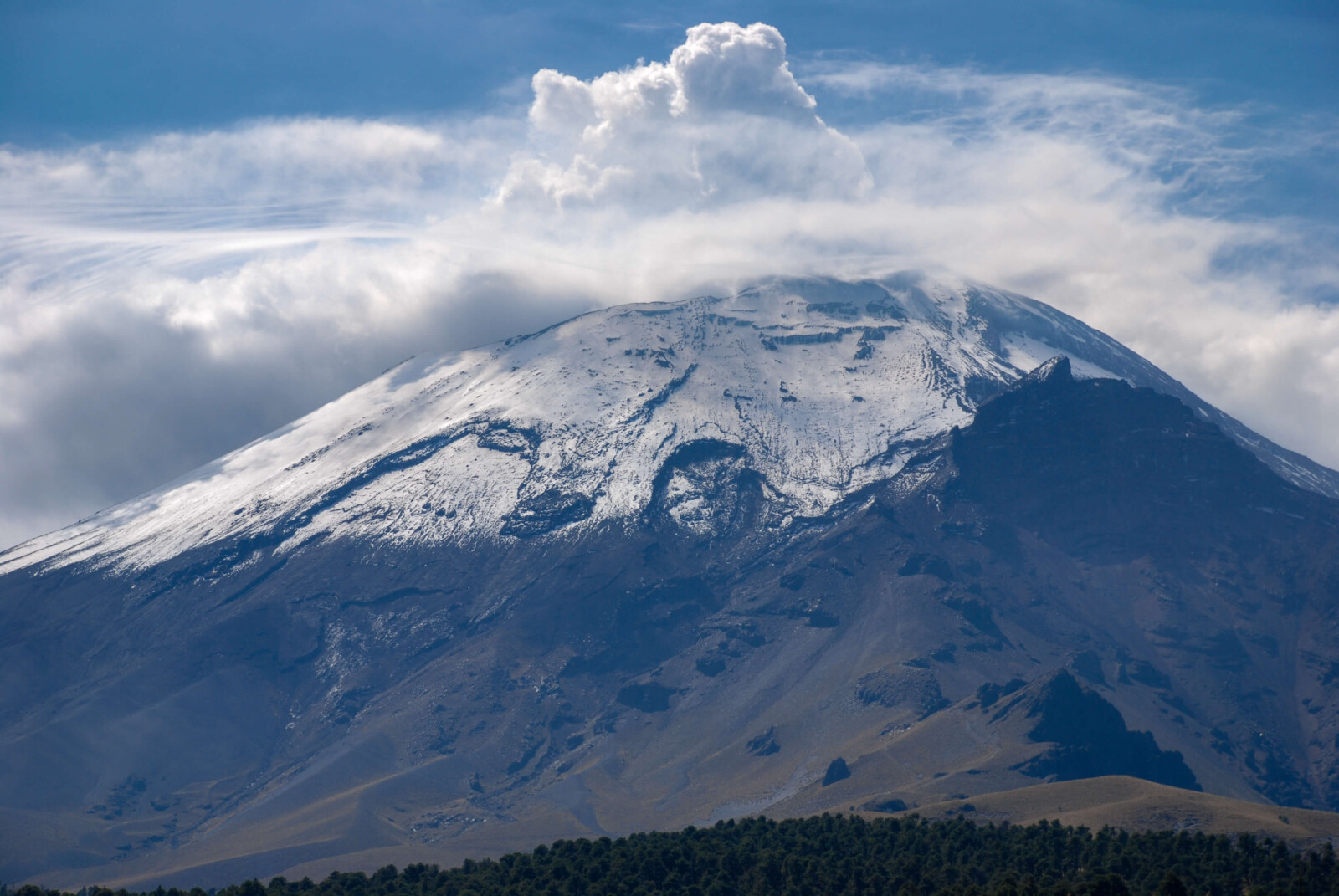
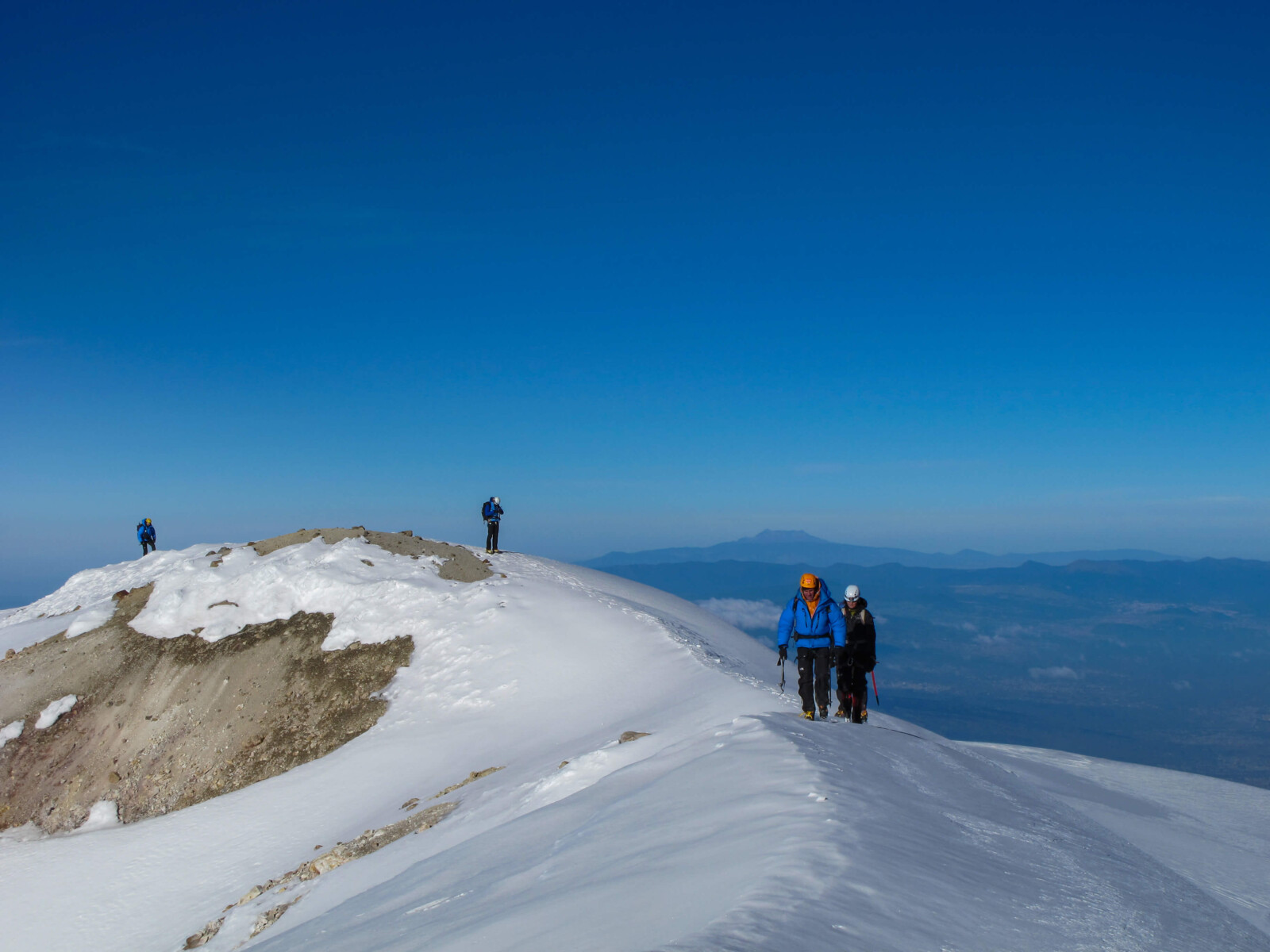
Pico de Orizaba (Citlaltépetl) is a dormant stratovolcano on the border of Puebla and Veracruz. Its north side carries the Jamapa Glacier, a sustained slope of about 35 degrees that leads to the crater rim. Its condition varies by season and year: hard ice, firm snow, penitentes or runnels.

Below the glacier, the route crosses loose volcanic ground and the Labyrinth, a band of rock and old ice between Piedra Grande and the snow. It’s a real mountain: high, cold and exposed. Most of the time it’s also very achievable for a well-prepared climber.
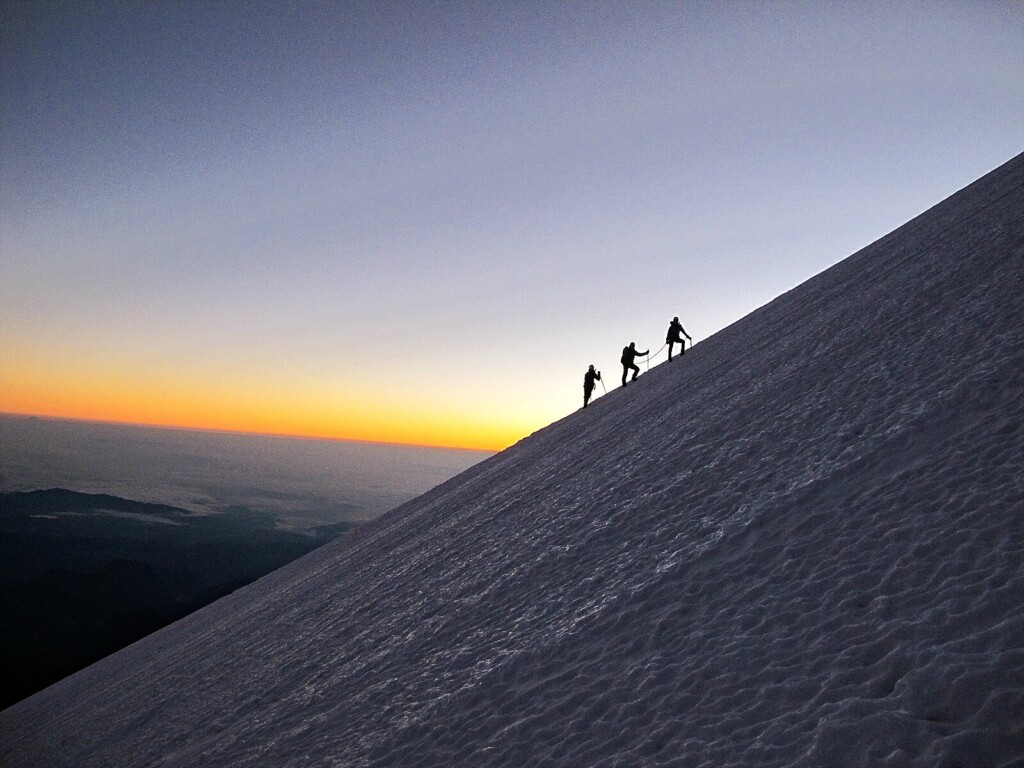
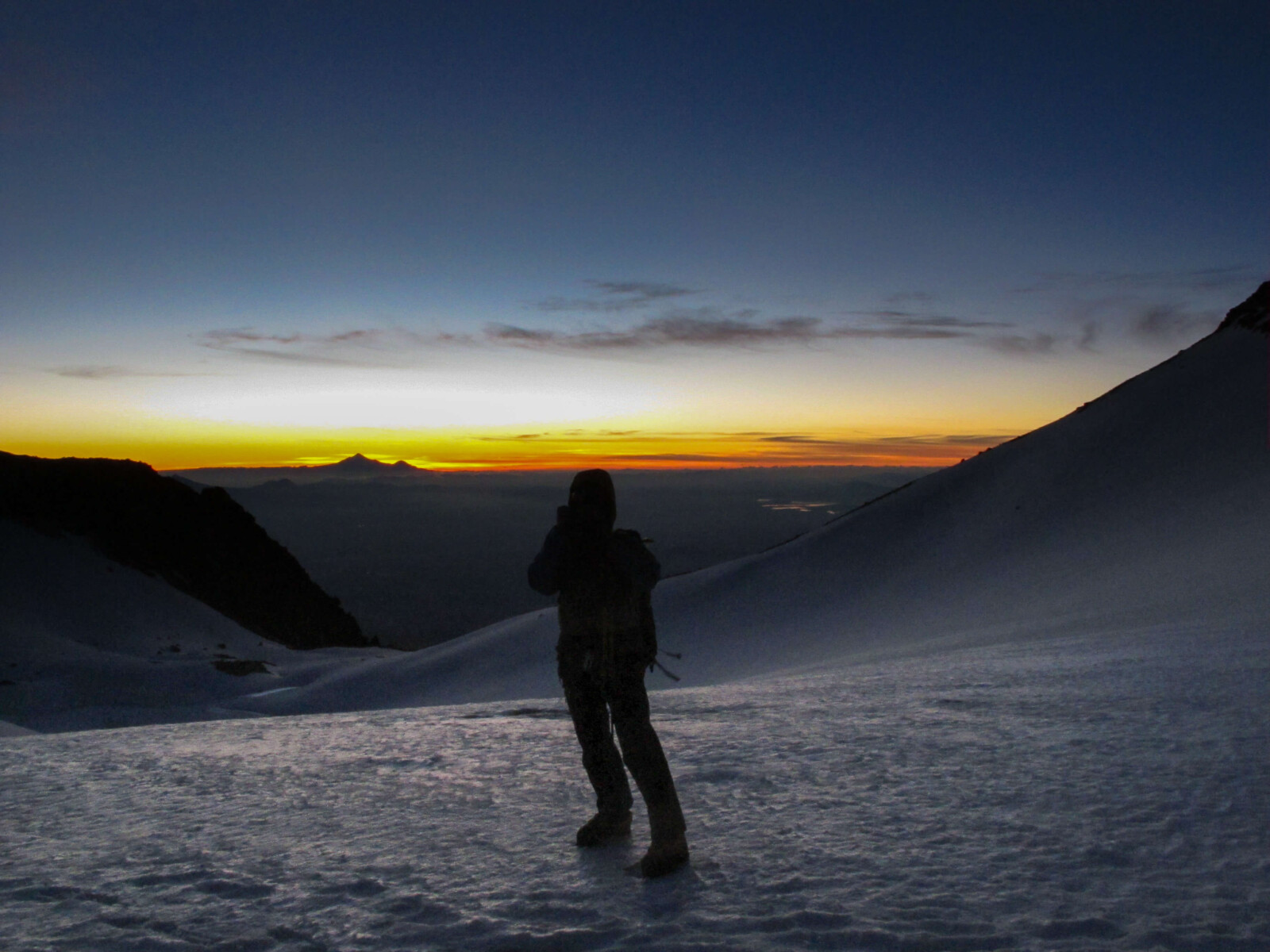
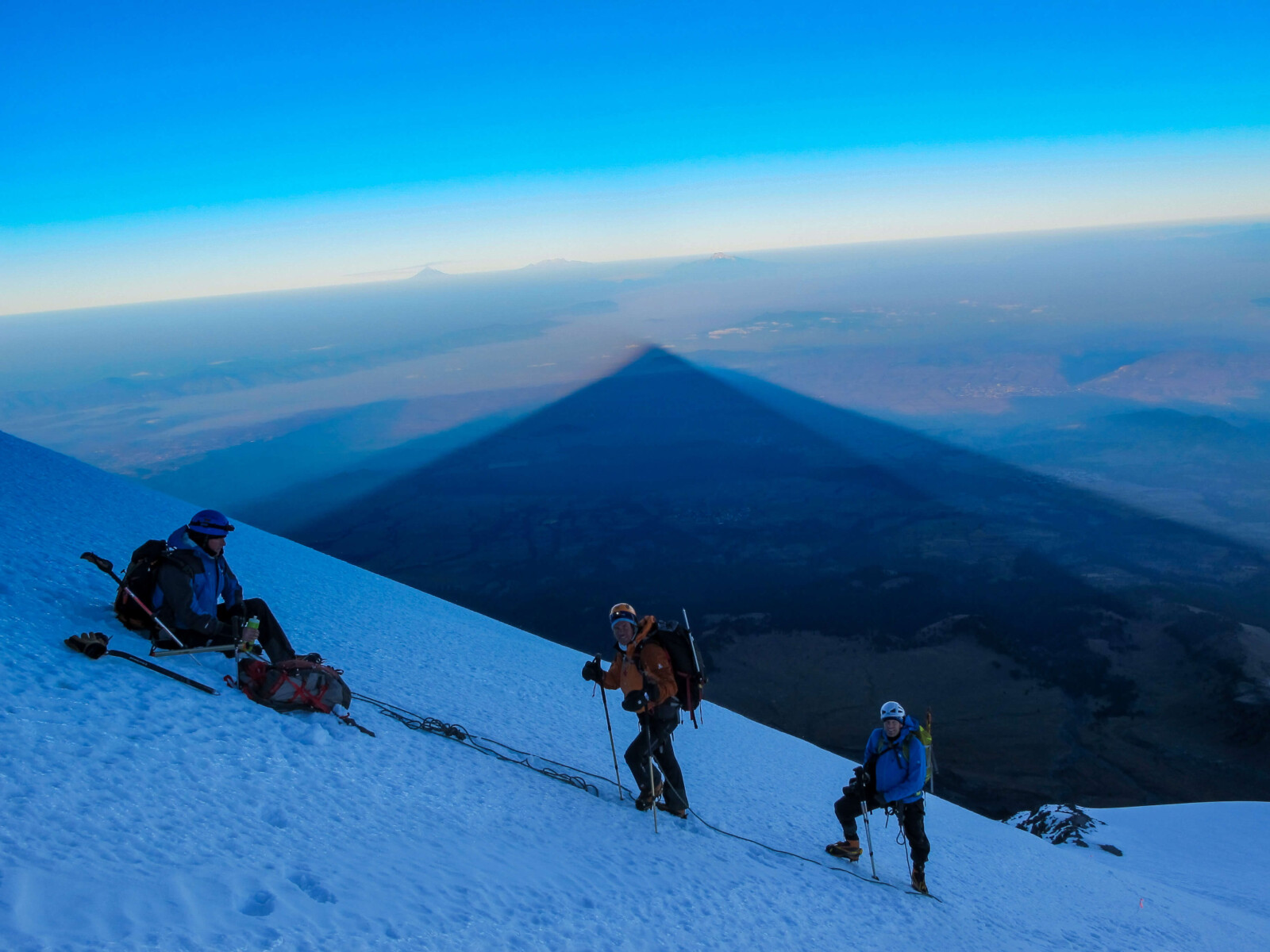
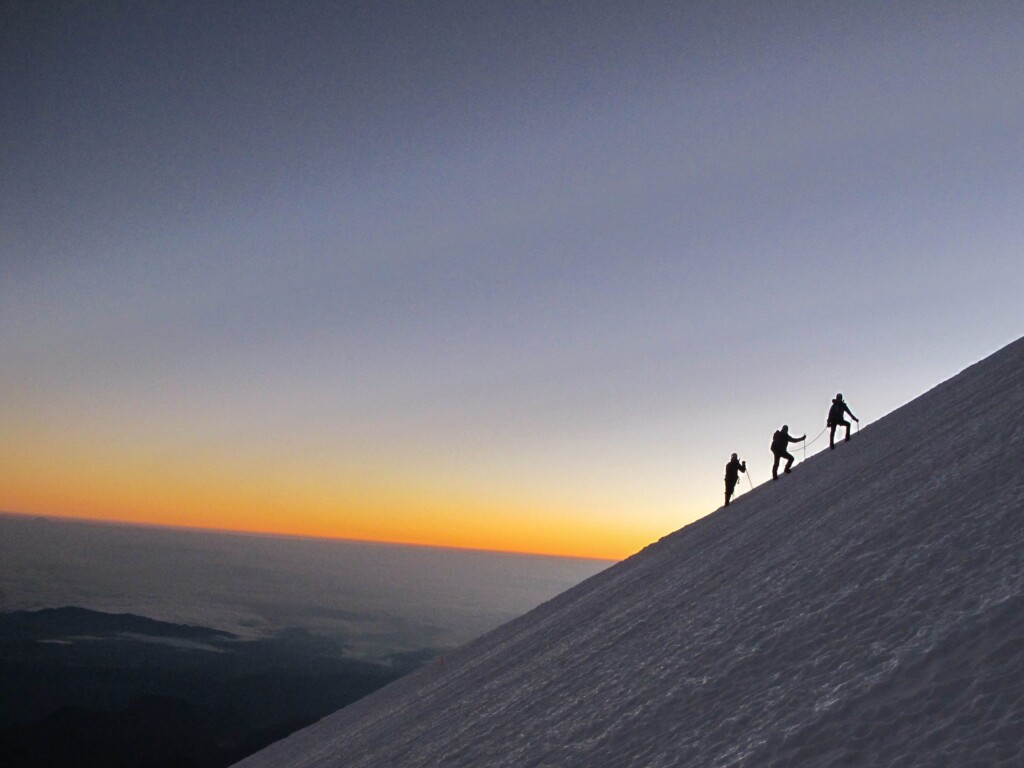
Climbers silhouetted on a Mexican volcano at dawn

Why Mexico

A short flight from the United States puts you among high volcanoes, mountain towns and old colonial cities, and there’s a real glaciated objective at the end of it.

Getting there is simple, the flight from the United States or Canada is short, and the mountains still rise above 18,000 feet onto real glacier.

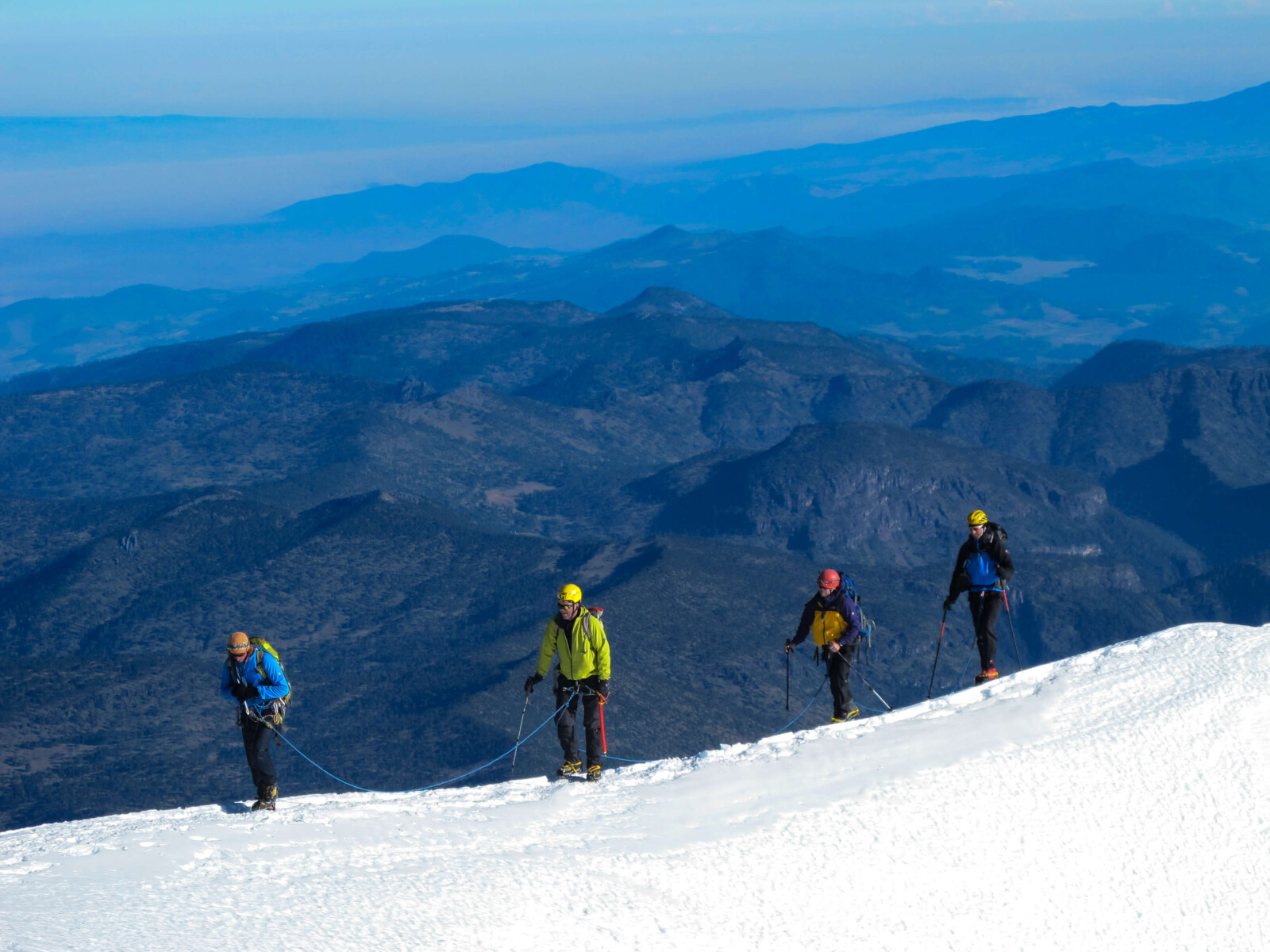
Over ten days you work through progressive acclimatization on three volcanoes, crampon and ice-axe technique, rope-team travel, early alpine starts, changing mountain weather, recovery between summits, and a final climb on the Jamapa Glacier.

Why It Takes Ten Days

Many Orizaba programs are built around getting to the mountain as fast as possible. That cuts days. It doesn’t give climbers the best preparation, and it compresses the one thing that can’t be compressed: the time your body needs to adapt to 18,491 feet.

Our progression is deliberate:

  • La Malinche, 14,636 ft / 4,461 m. The first real altitude test. It’s not technical, but it’s sustained, and it’s the first time your guides see how you move, eat, recover and respond above 14,000 feet.
  • Sierra Negra, 15,026 ft / 4,580 m. Higher again, after a recovery day. It’s a second long day at altitude without Orizaba’s technical demands, and a second look at how you’re adapting.
  • Pico de Orizaba, 18,491 ft / 5,636 m. Base camp at Piedra Grande, 14,010 ft / 4,270 m, then a tented high camp at 15,748 ft / 4,800 m below the Labyrinth before the summit attempt.
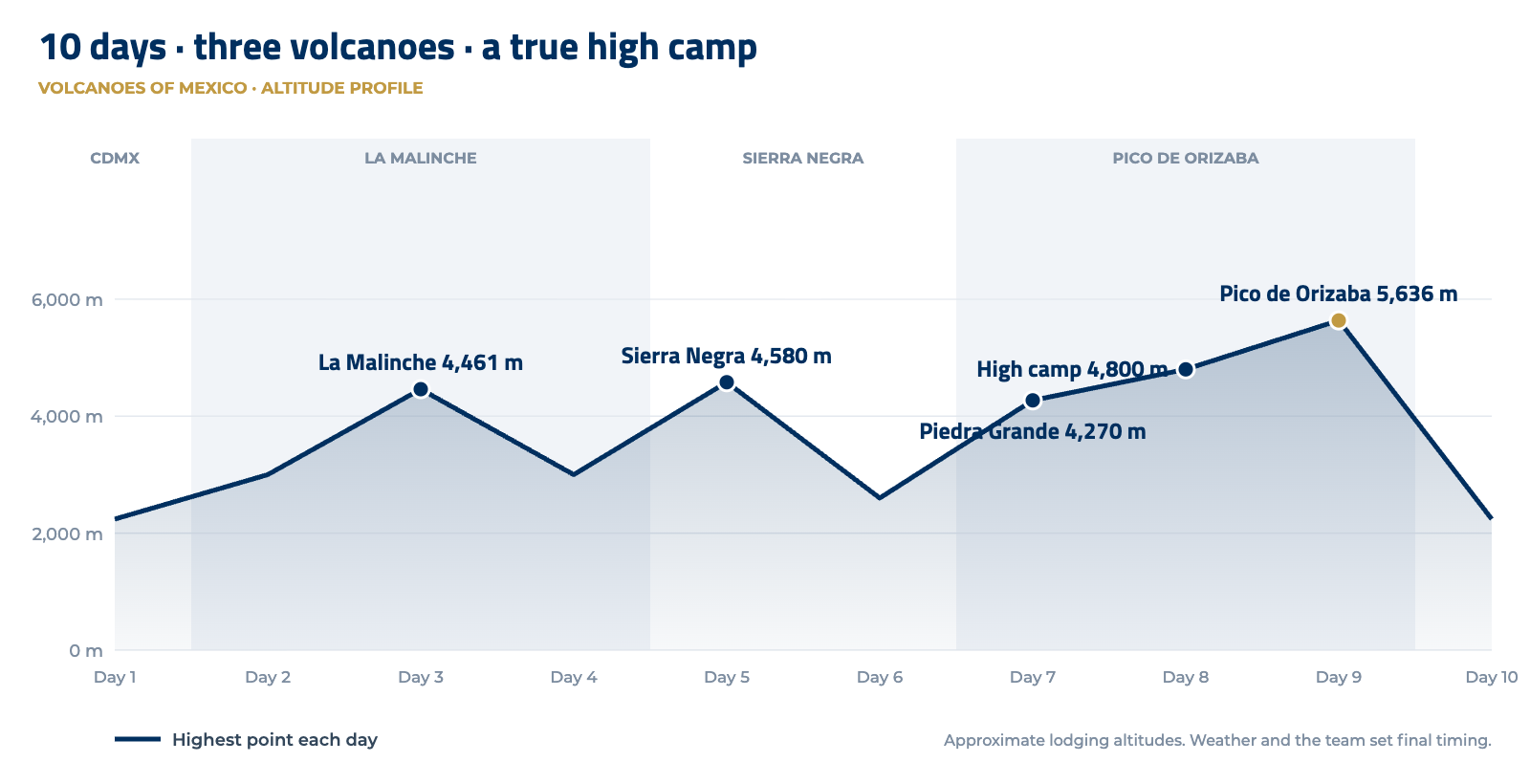
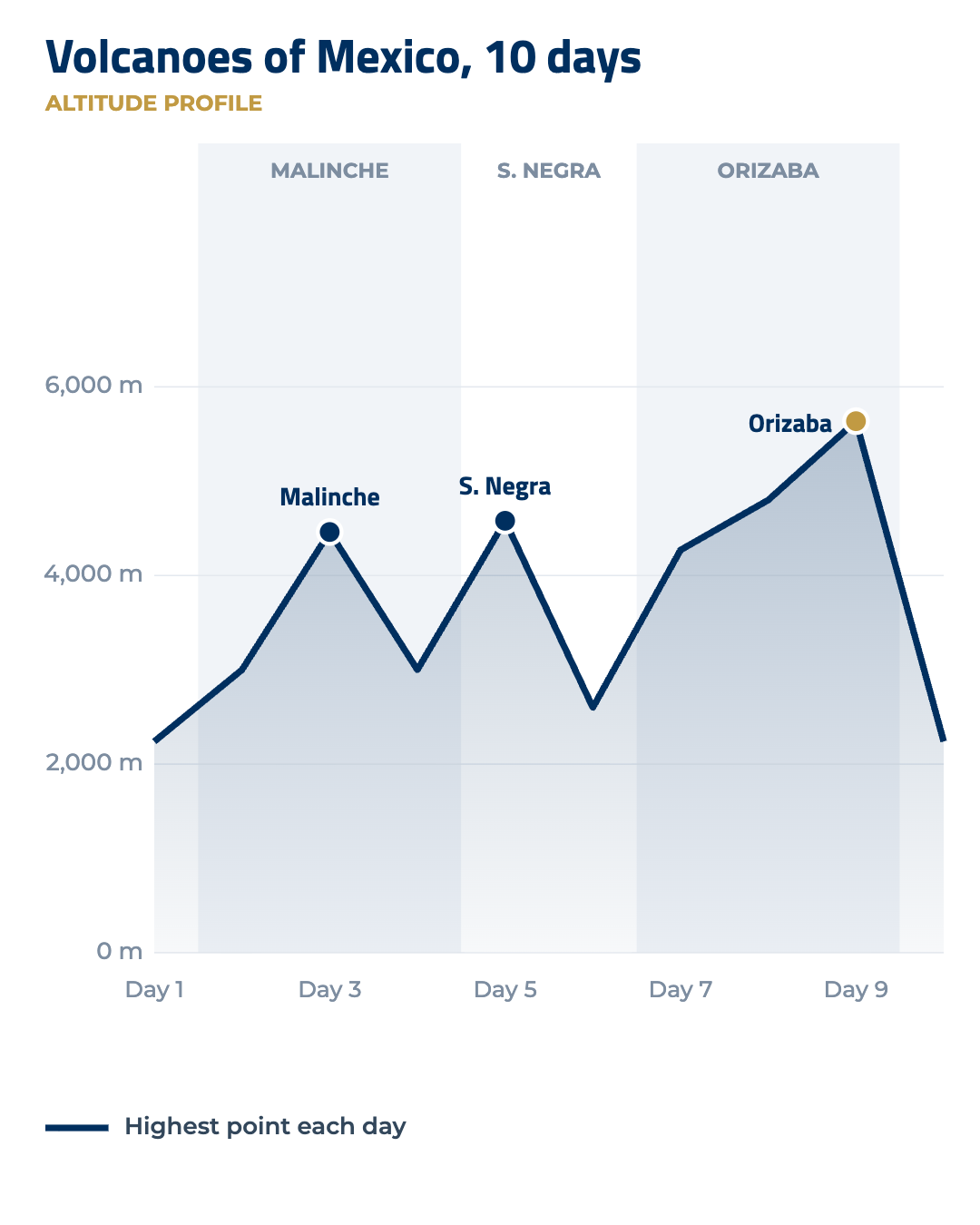
Altitude profile of the 10-day Volcanoes of Mexico Expedition: La Malinche 4,461 m, Sierra Negra 4,580 m, Piedra Grande 4,270 m, high camp 4,800 m and Pico de Orizaba 5,636 mAltitude profile of the 10-day Volcanoes of Mexico Expedition: La Malinche 4,461 m, Sierra Negra 4,580 m, Piedra Grande 4,270 m, high camp 4,800 m and Pico de Orizaba 5,636 m
Highest point reached each day; lodging altitudes are approximate. See the full itinerary, day by day.

The acclimatization climbs aren’t filler before Orizaba. They’re part of the expedition, and part of how you develop as a climber.

Acclimatization: Climb High, Sleep Low

Your body adapts while it rests, not while it works. The itinerary builds that in:

  • A first night in Mexico City at 7,382 ft
  • Two nights at haciendas at about 8,200 ft, around the La Malinche climb
  • A recovery day, then three nights in Ciudad Serdán with Sierra Negra in between
  • One night at Piedra Grande, then one at high camp, before the summit

The High Camp Matters Twice

First, it takes hours off summit day. You reach the glacier earlier and have more left for the descent.

Second, the night itself is part of what you came for: sleeping high on the mountain, watching the weather move across it, getting up in the cold to climb. A trip that drives to the road head and pushes for the top can’t give you that.

Porters Carry the Gear

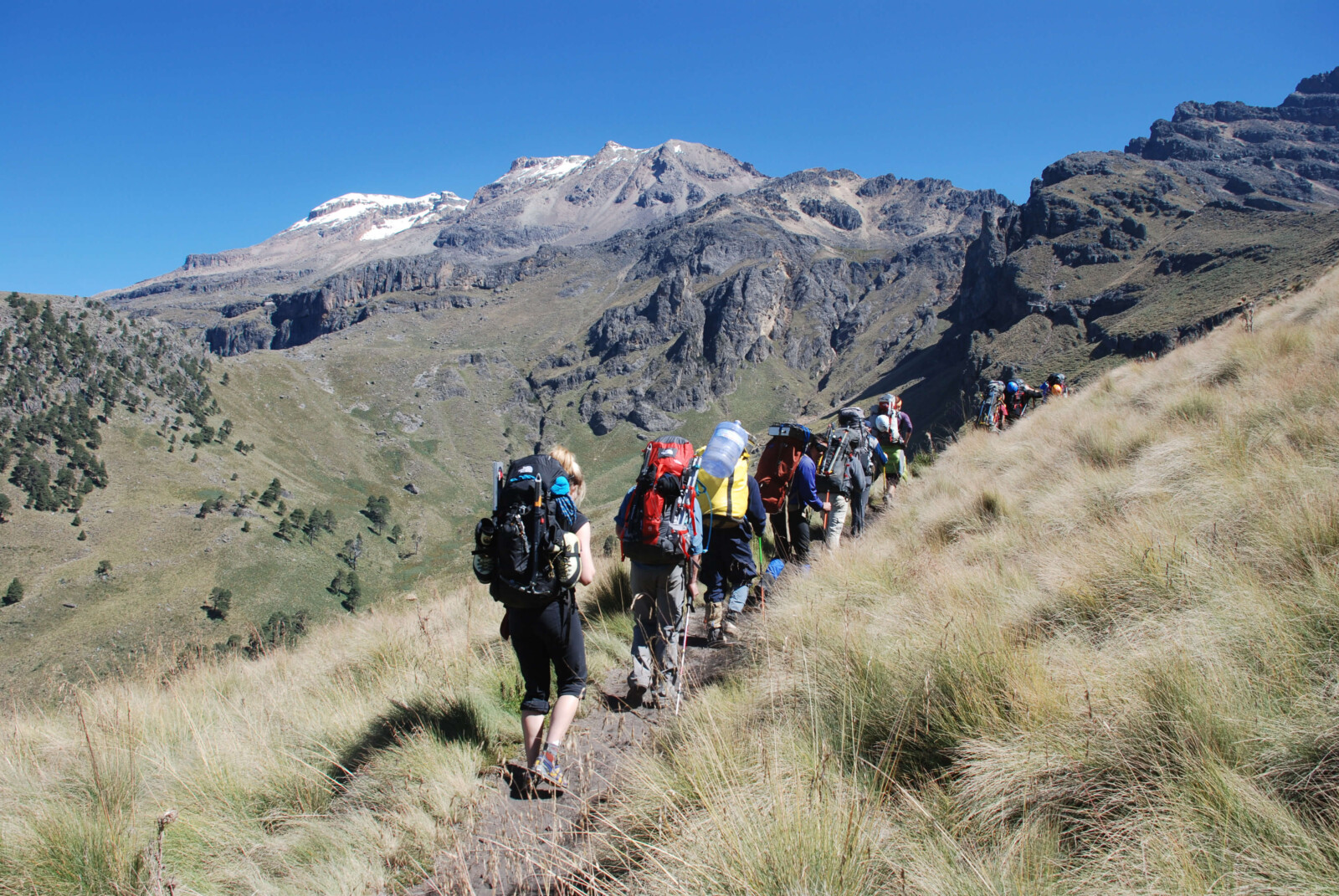
On every BBE Mexico program, our porters carry all the gear: your duffel, the tents, the kitchen, the food and the fuel, including on the move to high camp. You climb with a day pack holding your layers, water, food and camera.

On a ten-day expedition with three summits, this matters. Reaching each camp with energy left is what lets the progression work. It’s a big part of why climbers finish this trip stronger than they started, rather than worn out.

Small Teams, and a Plan That Can Move

Scheduled departures are capped at six climbers, with one guide for every two climbers on the glacier. Small teams let your guides get to know each climber, watch how each person is acclimatizing, give real instruction, and respond when conditions or individual needs change.

Small teams can also move. The printed itinerary is a plan, not a promise. The order of the acclimatization climbs, the move to Piedra Grande, the move to high camp and the summit departure can all shift within the ten days as the forecast develops. If the best window on Orizaba falls a day either side of the schedule, a team of six can be standing in it. A large group usually can’t. You will never disappear into the group.

The Guide Team

Our Mexico program is built and managed to IFMGA standards. It’s led by professional mountain guides certified by IFMGA, AMGA or an equivalent national body, working with experienced Mexican guides and strong local logistics.

We bring the same standard to Mexico that Benegas Brothers Expeditions has built over decades of expeditions in the Andes, Alaska and the Himalaya: small teams, personal attention, honest communication, conservative decisions, and no pressure to summit when the mountain says otherwise.

Safety

  • Certified professional lead guides and a guide ratio of 1:2 on the glacier
  • Emergency communication equipment carried by the guide team
  • A group medical kit on every climbing day
  • Daily monitoring of every climber’s pace, hydration, appetite and recovery
  • Turnaround decisions based on safety and the team’s ability to descend well, not on how close the summit looks

Turning around is sometimes the right decision. When it is, your guide makes it early and clearly.

More Than a Summit

Reaching the top of Pico de Orizaba is the main objective, and no summit is ever guaranteed. Altitude, weather, snow and glacier conditions, health and team performance all shape the final decision.

A good expedition is measured by more than the highest point you reach. By the time you leave, you’ll know how your body responds above 14,000, 16,000 and 18,000 feet, how to manage equipment through a cold alpine start, how a high camp works, and how you recover across back-to-back mountain days. That knowledge doesn’t expire.

Accessible Doesn’t Mean Easy

Mexico is one of the more approachable ways into high-altitude mountaineering. It’s not a soft option.

Summit day on Orizaba usually starts around 1 a.m. and takes about eleven hours round trip. You’ll be climbing in the cold and the dark, on legs that have been working all week. Reaching the summit is only half the day. You still have the whole descent.

Altitude illness is a real risk, and fitness doesn’t prevent it. Your guides may tell you to stop climbing or to descend if continuing would be unsafe, and that decision is final.

Completely new to crampons and glacier travel?

Mexico isn’t designed to be a full introductory glacier course. Our Ecuador Mountaineering School may be a better place to start. Talk to us first.

Who This Climb Suits

This trip suits fit hikers, trekkers, skiers and developing mountaineers who want:

  • Their first major high-altitude peak
  • Supervised experience with glacier-travel systems
  • Preparation for Aconcagua, Denali or another larger expedition

Previous glacier experience is recommended. If you don’t have it, talk to us about the right way to prepare, including our Ecuador Mountaineering School. For an honest look at the demands, read Is This for Me?

One Mountain. Two Ways to Climb It.

Which program fits depends more on the time you have than on your experience.

Both programs cover all in-country costs. Both are capped at six climbers, and on both, porters carry all the gear. Every climber speaks with a guide before booking.

Volcanoes of Mexico Expedition — 10 Days. This is our main Mexico expedition, and the one we recommend for most climbers. We don’t drive to the mountain and push for the summit. Instead we climb three volcanoes, each one higher than the last: La Malinche, then Sierra Negra, then Pico de Orizaba. There’s real recovery between them, a base camp at Piedra Grande and a tented high camp below the Labyrinth. The acclimatization is built into the trip, so you don’t have to arrive with it. Best for: climbers taking their first serious step into high altitude, and anyone preparing for a bigger expedition.

Short on time? The seven-day Pico de Orizaba Express climbs the same mountain on a compressed plan. It’s built for climbers who arrive fit and ideally with recent time at altitude. It costs more and includes less instruction. We’ll tell you honestly which one fits.

Plan Your Volcanoes of Mexico Expedition

Ready to Talk It Through?

Tell us what you’ve climbed, how you train, the highest altitude you’ve reached, and what you want this expedition to do for you. We’ll tell you honestly whether it fits. Every climber we guide speaks with us before booking. We’d rather spend twenty minutes helping you choose than have you book the wrong trip. We don’t simply guide expeditions. We help people build a lifetime in the mountains. See dates & prices. · climbing@benegasbrothers.com
Ask a guide

Day by Day

Volcanoes of Mexico Expedition · La Malinche, Sierra Negra & Pico de Orizaba · 10 Days · Maximum Six Climbers

This itinerary is a deliberate progression from high-altitude hiking to a glaciated summit. Every climb has a purpose. It builds acclimatization, shows your guides how you respond to altitude, and prepares the team for a true high camp and a summit attempt on Pico de Orizaba.

The schedule can change for weather, snow and glacier conditions, road access, acclimatization or the team’s needs. On this mountain, that flexibility works in your favor. There’s more on how at the end of this page.

Altitude profile of the Volcanoes of Mexico Expedition: La Malinche, Sierra Negra and Pico de OrizabaAltitude profile of the Volcanoes of Mexico Expedition: La Malinche, Sierra Negra and Pico de Orizaba
Highest point reached each day.

The 10 Days at a Glance

Each bar shows where you sleep that night. ▲ marks the day’s high point. Tap a day to open it.

In each day below, altitude reads start → high point → where you sleep. Distances and hiking times are estimates.

Climb high, sleep low

Some days climb well above where you sleep. The gap between the day’s high point and the night’s camp is how your body adapts.

Times are estimates

Hiking times change with the team and the conditions. A slow, steady pace is the plan, not a problem.

The plan can flex

Weather, how the team is acclimatizing and your guides’ judgment can change the daily plan. That flexibility is part of the plan.

Meals

All meals are included from dinner on Day 1, including at the mountain camps. You pay only for alcohol, soft drinks, specialty coffees and other personal drinks.

Porters

Our porters carry all the gear on the mountain: your duffel, the tents, the kitchen, the food and the fuel. You climb with a day pack.

Fly into Mexico City International Airport (MEX). Our team meets you and takes you to the hotel.

After check-in we hold the expedition briefing, covering the itinerary, current mountain conditions, our acclimatization strategy, equipment and expectations. Your guide checks your personal climbing gear, which leaves time to deal with anything missing or unsuitable before we leave the city.

The rest of the day is for recovery, hydration and meeting the team. Plan to arrive by early afternoon.

Overnight: Four Points by Sheraton, Colonia Roma · Activity: arrival, briefing and equipment review

After breakfast we leave Mexico City for La Malinche. Once we’re settled near the mountain, we do a moderate acclimatization hike.

This first day at altitude lets your guides watch your pacing, fitness and equipment. It also introduces the breathing, hydration, eating and layering habits we use for the rest of the expedition. We finish with a briefing to prepare for the first summit climb.

Overnight: Hacienda Santa Bárbara, about 8,200 ft / 2,500 m · Activity: acclimatization hike

Summit: 14,636 ft / 4,461 m

We start early and climb through forest before coming out onto the mountain’s open upper slopes. The terrain gets steeper and rockier near the summit.

La Malinche isn’t technical, but the altitude and the long climb make it a real physical test. It’s also a chance to practice efficient pacing, drinking, eating, clothing changes and moving at altitude.

After the climb we descend and drive to comfortable lodging to eat, rehydrate and recover.

Overnight: Hacienda Soltepec, about 8,200 ft / 2,500 m · Climbing time: about 7–9 hours round trip

Today is for recovery while the acclimatization from La Malinche does its work. Depending on the team and logistics, we may visit a local town, take a short recovery walk, or spend the time preparing equipment.

Your guides review:

  • Boot and crampon fit
  • Ice-axe handling
  • How rope teams are organized
  • Clothing changes
  • Summit pacing and communication
  • Preparing for the cold

This is a systems review, not a complete glacier course. The real glacier terrain comes later, close to summit day. If you don’t have basic snow and glacier experience, complete appropriate training before the expedition.

Overnight: Hostel La Fuente, Ciudad Serdán · Activity: recovery and technical preparation

Summit: 15,026 ft / 4,580 m

Sierra Negra is the second acclimatization climb, and it takes us higher than La Malinche’s summit.

It gives you another long day at altitude without Orizaba’s technical demands. It also gives your guides a second look at your pacing, your recovery, your equipment, and how each climber is adapting.

After descending, we return to lower elevation to eat, rehydrate and recover.

Overnight: Hostel La Fuente, Ciudad Serdán · Climbing time: about 6–8 hours round trip

After two acclimatization summits, today is for recovering and getting into position for the last mountain. We travel through the towns below Orizaba and organize the final climbing logistics.

Your guide does another equipment check and reviews the current weather, route, snow, glacier and road conditions. We go over:

  • The summit strategy and turnaround criteria
  • Rope teams and each person’s responsibilities
  • The plan for base camp and high camp

Overnight: Hostel La Fuente, Ciudad Serdán · Activity: recovery and final logistics

Elevation: 14,010 ft / 4,270 m

We drive to Piedra Grande, our base camp for Pico de Orizaba, in four-wheel-drive vehicles. Road conditions vary, and the last stretch can be slow and rough.

When we arrive, we set up our own tented camp. The refuge building here isn’t operational, and we don’t rely on it. This is where expedition life really starts, and it’s your first night sleeping at real altitude on this mountain.

Once camp is set up, we do a moderate acclimatization hike above Piedra Grande. It keeps you adapting, introduces you to the lower route, and keeps your body moving without adding unnecessary fatigue. Depending on terrain and conditions, your guides also review crampon fitting, ice-axe handling, rope-team organization, and managing your equipment in the dark and cold.

Overnight: our tented base camp at Piedra Grande · Activity: acclimatization hike and summit systems review

Elevation: 15,748 ft / 4,800 m

After breakfast we organize climbing equipment and prepare loads. Our porters carry all the gear: tents, group equipment, food, fuel and your duffel. You climb with a day pack.

It’s roughly three to four hours from Piedra Grande, through volcanic terrain, to a true tented high camp below the Labyrinth. You’ll share a tent with one other climber.

High camp is what makes summit day manageable. Starting from nearly 16,000 feet instead of 14,000 takes hours off the climb. It also means you don’t spend the first part of the night picking your way over rough, rocky ground in the dark. And for many climbers, this is the night they remember most.

This isn’t a demanding training day. The priority is to get there efficiently, save energy, and rest before the early start.

Overnight: tented high camp · Activity: about 3–4 hours to high camp

Summit: 18,491 ft / 5,636 m

We leave high camp during the night, usually around 1 a.m. Your guides set the exact time the evening before, based on conditions and how the team is moving.

Depending on conditions, we put on crampons, rope up, and climb the Jamapa Glacier toward the crater rim. Cold, altitude, wind, snow and ice conditions, and the fatigue of the whole week all shape the day.

Your guides watch the weather, the route, the pace, and the health and condition of every climber. Turnaround decisions are based on safety and on the team’s ability to get down safely, not on how close the summit looks.

After a short stop on top, we descend to high camp, collect our gear, continue to Piedra Grande, and drive down to Puebla for dinner and a real bed.

Overnight: Mesón Sacristía de la Compañía, Puebla · Climbing time: about 11 hours round trip, typically 10–12, and longer if conditions or team pace require it

After breakfast we drive back to Mexico City International Airport.

Book your flight home for the afternoon or evening. Mountain, road and traffic conditions can cause delays, and an early-morning flight doesn’t work with this itinerary. If you want recovery time, consider flying out on Day 11.

Why This Itinerary Can Move, and Why That Helps You

Because our teams are capped at six climbers, the schedule can move. The order of the acclimatization climbs, the timing of the moves to Piedra Grande and high camp, and the summit departure can all shift within the ten days as the forecast develops. If the best window on Orizaba falls a day either side of the printed schedule, a small team can be standing in it. A large group usually can’t.

Weather, snow and glacier conditions, road access, altitude, an individual’s health or the team’s performance may all require changes. The expedition leader may change climbing objectives, departure times, routes, lodging, the high-camp location or the order of activities.

None of that can create a summit. No summit is guaranteed. Our priority is to give you the best chance we can while protecting the safety of the team.

Questions About the Itinerary?

For an honest look at the demands, read Is This for Me? For what each day really feels like, read Life on the Mountain. For the answers clients ask us most, see Your Questions.

Ask a guide · See dates & prices · climbing@benegasbrothers.com

Is This for Me?

Volcanoes of Mexico Expedition · Three Volcanoes · True High Camp · Maximum Six Climbers

An honest answer, not a sales pitch.

This expedition is for strong hikers, trekkers and developing mountaineers who want real high-altitude experience and a serious attempt on Pico de Orizaba at 18,491 feet.

You don’t need to be an expert mountaineer. You do need solid fitness, experience with long mountain days, the ability to look after yourself in the cold, and a willingness to work as part of a small team.

It’s an accessible high-altitude expedition, but you shouldn’t underestimate it.

The Short Answer

This expedition is probably right for you if most of these are true:

  • You train for endurance regularly
  • You can handle long days in the mountains
  • You have real hiking, trekking, backpacking or backcountry experience
  • You can manage your own clothing, food, water and equipment
  • You’re comfortable with cold, early starts and basic camping
  • You can follow instructions and work closely with your guides
  • You understand that no summit is guaranteed
  • You’re prepared to sleep in a tent at nearly 16,000 feet

If that sounds like you, it’s worth talking to us.

Before You Book: Altitude

Pico de Orizaba is high enough that altitude illness is a real risk, and no level of fitness prevents it.

Above about 8,000 feet, anyone can develop acute mountain sickness. It can progress to life-threatening conditions if the climber doesn’t descend. This expedition sleeps at 15,748 feet and climbs to 18,491 feet.

Our itinerary is built to acclimatize you properly: two acclimatization peaks, planned recovery, and a staged move onto Orizaba. That greatly improves your odds. It doesn’t remove the risk.

Your guides may require you to stop climbing or to descend if your symptoms, performance or judgment show that continuing would be unsafe. That decision is about your safety, and it is final.

If you’ve had altitude illness before, or you have a medical condition that hasn’t been assessed for high-altitude activity, tell us when you register. It usually changes the plan, not the answer. Talk to your physician about altitude and altitude medication before you travel.

What Makes It Hard

The real challenges are altitude, fatigue that builds over the week, cold, sleeping at high camp, a night-time summit start, loose volcanic terrain, glacier travel, and a long descent when you’re already tired.

The elevations climb steadily:

  • La Malinche: 14,636 ft / 4,461 m
  • Sierra Negra: 15,026 ft / 4,580 m
  • Piedra Grande base camp: 14,010 ft / 4,270 m
  • Orizaba high camp: 15,748 ft / 4,800 m
  • Pico de Orizaba: 18,491 ft / 5,636 m

The first two climbs build acclimatization and let your guides see how you respond to altitude. They also tire you out, and that’s intentional. It’s better to learn how you perform when you’re tired somewhere the stakes are low.

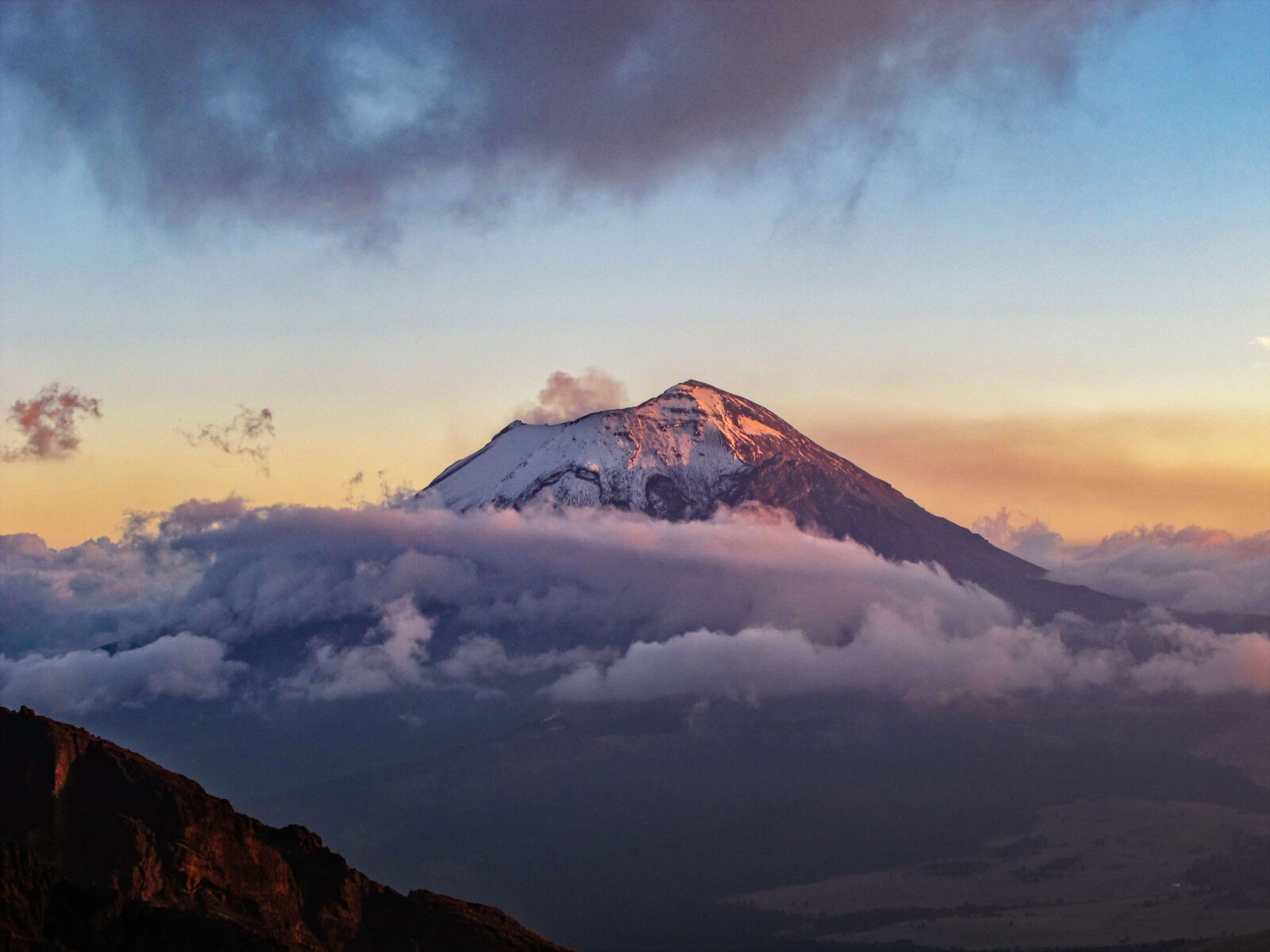
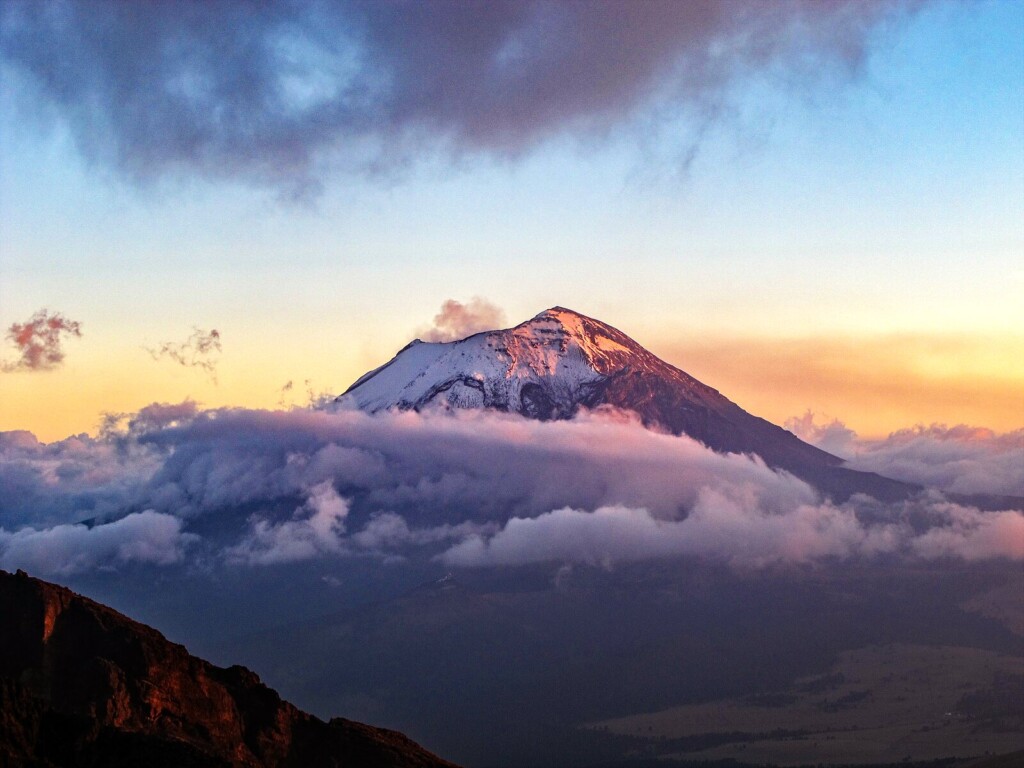
Volcano at sunrise above the clouds in Mexico

Summit Day

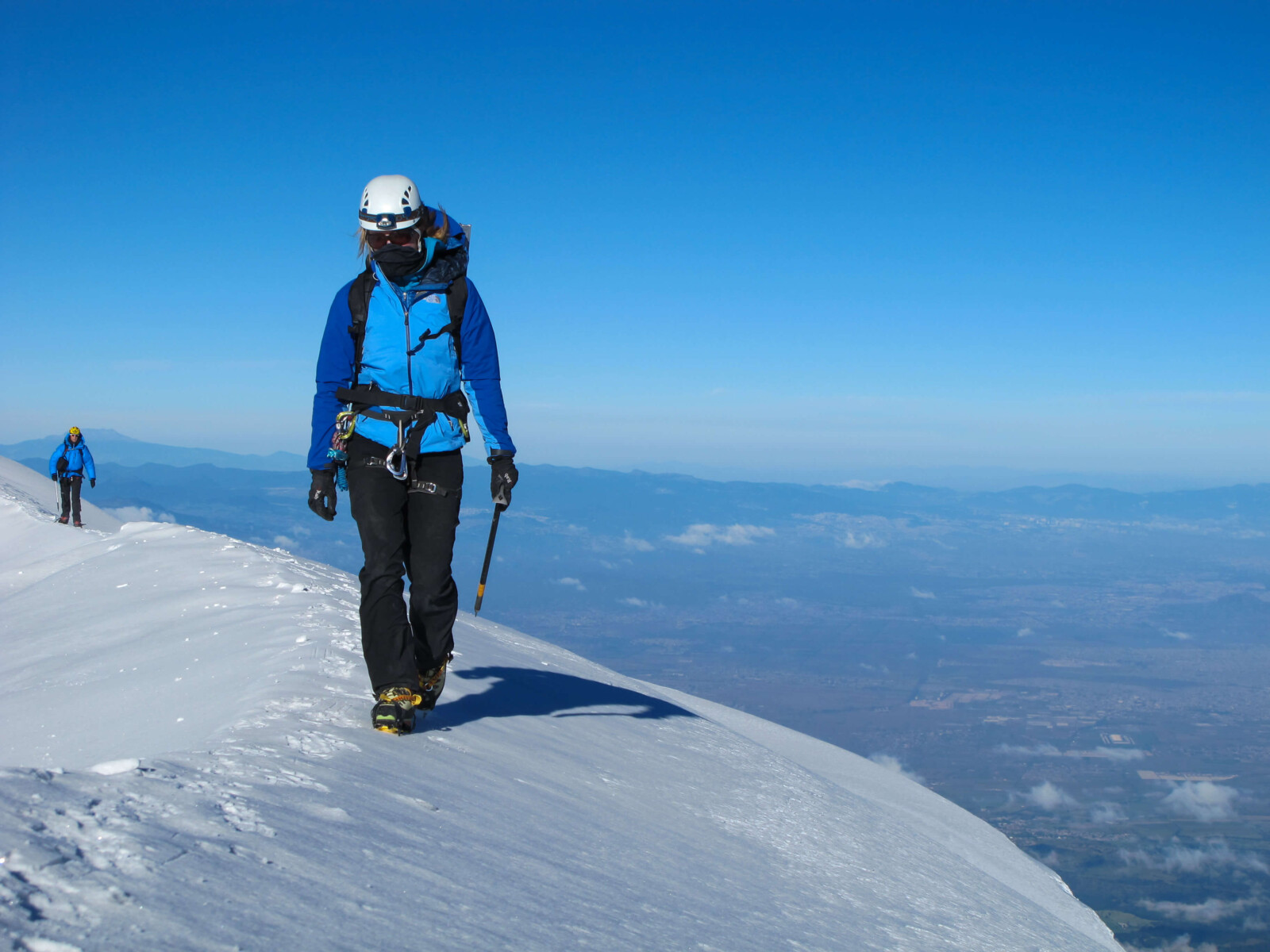
Summit day usually starts around 1 a.m. and takes about 11 hours round trip, typically 10 to 12. It can take longer. You’ll climb in the dark and cold, on crampons, roped together on sustained 35-degree snow and ice, on legs that have been working all week.

Reaching the summit is only half the day. You still have the whole descent, and the drive to Puebla after it.

Fitness

Arrive with strong cardiovascular endurance and durable legs. A well-prepared climber on this expedition can:

  • Hike seven to nine hours in mountain terrain
  • Gain 3,000–4,000 vertical feet in a day
  • Handle demanding days back to back with limited recovery
  • Move efficiently when tired and cold
  • Descend safely after a long summit attempt

Plan on at least three months of structured training, and longer if you’re starting from a lower base. Build it around uphill hiking, long endurance days, back-to-back training days, and leg and core strength.

Gym fitness helps, but it doesn’t replace hiking uphill. This expedition is not the place to build basic fitness.

One thing makes the bar more achievable: our porters carry all the gear. You climb with a day pack, so train for endurance and back-to-back days, not for carrying heavy loads.

Experience and Technical Skills

Previous high-altitude or glacier experience is recommended but not required. You should have real hiking, backpacking, trekking or backcountry experience, some long days in changing mountain weather, and the ability to follow technical instructions when you’re tired.

Depending on conditions, the Orizaba summit climb may require mountaineering boots, crampons, an ice axe, a helmet, a harness, rope-team travel, and moving over snow and glacier terrain. The expedition includes an equipment review, movement coaching, rope-team organization, and supervised glacier travel where conditions allow.

It’s not a complete introductory mountaineering course. The Jamapa Glacier is well above Piedra Grande, and the move to high camp is about getting there efficiently and saving energy. We don’t promise a full glacier-training day right before the climb.

If Orizaba would be your first time on crampons and an ice axe, tell us when you register. We’ll assess your background honestly. Our Ecuador Mountaineering School is the natural way to prepare, and we’d rather send you there first than have you learn glacier travel at 17,000 feet.

What High Camp Is Really Like

High camp is below the Labyrinth, at 15,748 ft / 4,800 m. It’s simple: tents, cold, limited personal space, expedition meals and hot drinks, no shower, poor sleep because of the altitude, and a wake-up around midnight.

We set up a basic portable camp toilet at high camp. At Piedra Grande, the park provides a latrine. Come self-sufficient either way.

High camp gives you a much stronger start for summit day. It also asks you to stay organized, patient and functional at significant altitude. For most climbers, that’s the truly new skill on this trip.

Mental Preparation

Fitness is only part of it. You also need:

  • Patience and adaptability
  • Honest communication
  • Respect for your guides’ decisions
  • Willingness to move at the team’s pace
  • The ability to stay organized when you’re tired
  • A healthy attitude toward turning around

Weather, conditions, road access, altitude or the team’s health may change the itinerary. The climbers who do well adapt without letting frustration affect their judgment.

Turning around isn’t failure. On this mountain it’s sometimes the professional decision, and we make it without apology.

Who Should Reconsider

This expedition may not be right for you if:

  • You have little hiking or mountain experience
  • You can’t comfortably complete a full mountain day
  • You’re unwilling to train consistently
  • You expect hotel comfort at high camp
  • You want a guaranteed summit
  • You’re unwilling to turn around when your guide says so
  • You need a full introductory glacier course during the trip
  • You have a medical condition that hasn’t been evaluated for high-altitude activity

Being honest about this before you book protects your money, your safety, and everyone else on the rope.

Every climber discloses relevant medical conditions, medications, allergies, past injuries and past altitude problems in the Registration Form. Depending on your history, we may ask for clearance from your physician. The minimum age is set by Mexico’s regulations and by insurance: climbers under 18 climb with a parent or guardian, and each climber’s insurance must cover their age. Families are welcome: younger climbers can join a scheduled team with a parent or guardian, or come on a private family expedition built around your family, and if a special permit is needed, we’ll help you apply.

Where Mexico Can Lead

There’s no required ladder. But what you learn here, including pacing, altitude, cold alpine starts, high-camp routine and glacier travel, carries directly into the next objective:

Our Honest Assessment

Pico de Orizaba is accessible, but it’s a serious high-altitude mountain. The altitude is significant, summit day is demanding, glacier conditions change from year to year, high camp is basic, and every climber still has a long descent after the summit attempt.

We built this itinerary with two acclimatization climbs, planned recovery and a true high camp because that gives you a real chance, not just a hope.

We won’t push you toward an expedition that doesn’t match your preparation. If the timing isn’t right, we’ll say so, and we’ll tell you what to do instead. If ten days doesn’t fit your schedule, the seven-day Pico de Orizaba Express climbs the same mountain on a tighter plan, for climbers who arrive with recent altitude behind them.

Next Step

Tell us what you’ve climbed, how you train, and when you were last at altitude. We’ll give you a straight answer. See dates & prices. · climbing@benegasbrothers.com
Ask a guide

Before You Go

Volcanoes of Mexico Expedition · Before You Go

Preparing for the Mexico Volcanoes: Start Here

Preparation is part of the expedition, not a chore before it. The climbers who arrive relaxed in Mexico City aren’t always the most experienced. They’re the ones who sorted their insurance, boots and flights weeks earlier. This page puts your preparation in order: what to do, when to do it, and where to find the details.

Three Things to Know Now

Your insurance has to cover 18,491 feetRequired

Rescue and evacuation coverage is required, and it must cover guided mountaineering to at least 18,491 ft / 5,636 m, including glacier travel. Many standard policies exclude exactly this. Get confirmation in writing. We recommend Global Rescue (add its High-Altitude Evacuation Package) or Ripcord.

Don’t bring a vapeSince January 2026

Since January 2026, Mexican law bans bringing e-cigarettes and vaping devices into the country. Some medicines sold over the counter in the US are controlled in Mexico, so check yours before you pack.

Fly into MEX, not NLUMEX

Mexico City has two airports. Only Benito Juárez International (MEX) works with our transfers.

Your Seven Preparation Guides

Your Preparation Timeline

When you book

  • Through the registration link we email you, complete the reservation form, then pay your deposit by the invoice we send. Then complete the Registration Form (your profile, emergency contacts, medical history and climbing experience), upload your passport, and accept the Terms & Conditions and the Release.
  • Check your passport. It must be valid for your whole stay with a blank page. We recommend six months of validity beyond your return.
  • Buy rescue and evacuation cover soon after booking. Pre-existing-condition waivers usually depend on buying early. Email your insurance certificate to climbing@benegasbrothers.com.
  • Tell us which technical items you want to rent in Mexico, so we can reserve your sizes.
  • Start your training program, with at least three months of structured training. See Is This for Me?
  • Read the gear list now. Buy mountaineering boots early, break them in, and send us photographs so your guide can approve them.

120 days before departure

  • Your balance is due. If you book within 120 days of departure, full payment is due at booking.

Once you’ve paid in full

  • Book your flights into MEX, then email your full itinerary to climbing@benegasbrothers.com.
  • Talk to your physician about altitude, altitude medication and any medical conditions.
  • Check every medication you take against Mexican rules.

At least 3 weeks before

  • Confirm your rental sizes with us. Requests after this point can’t be guaranteed.

The final 2 weeks

  • Do a full pack-out using the gear list.
  • Make sure you have two working payment cards and access to emergency funds.
  • Save copies of your passport, insurance and itinerary to your phone and the cloud.
  • Ease off your training. Arrive rested, not worn out.

Arrival day

Arrive at MEX by early afternoon. Our team meets you and takes you to the Four Points by Sheraton in Colonia Roma for the briefing and gear check. From then on, the logistics are our job. Yours is climbing.

Still Deciding?

This section assumes you’re going. If you’re still deciding whether Mexico is right for you this season, start with Is This for Me? and Your Questions. For different dates or your own team, see Private & Custom Expeditions.

Questions While You Prepare?

Whether it’s boots, rentals or an insurance policy you’re unsure about, ask early. Small questions are easiest to solve months out. See dates & prices. · climbing@benegasbrothers.com
Ask a guide

Your Expedition Checklist

There’s no climbing permit for you to arrange on this expedition. BBE handles all park and access fees. What you’re responsible for is your paperwork, your insurance, your health checks and your documents. Here’s everything, in the order you’ll do it.

Your Paperwork at a Glance

Everything BBE needs from you, in the order you’ll do it. Tick items off as you go; your ticks are saved on this device. The details for each item are below.

Step 1At booking, in the registration formDone together with your deposit

Step 2Buy, then send to BBEEmail climbing@benegasbrothers.com

Step 3Arrange and carryNeeded on the trip

A climber can’t start the expedition with incomplete forms, unverified insurance or a required physician’s clearance still missing.

1. Register Online

When you inquire, we reply with trip information and a link to our online registration form. Everything is completed there, in this order:

  1. Reservation form: full name, email, date of birth, address, and any notes for the program staff. It includes the link to pay your deposit.
  2. Registration Form: your personal profile, including a primary and backup emergency contact; your medical history; and your climbing experience, altitude history, fitness and goals.
  3. Passport: a clear copy of your passport’s identification page.
  4. Terms & Conditions: read them before you accept.
  5. Release: our liability release and assumption of risk. Mountaineering involves risks that can’t be eliminated, so read it carefully before you sign.

Be complete on the medical history. Include conditions, medications, allergies, past injuries and any past altitude illness. Don’t leave out a condition out of concern it could affect your acceptance. Missing information delays treatment and puts you and the team at greater risk.

Physician’s clearance may be required, depending on your medical history, age or medications. We’ll tell you if it is. Clearance doesn’t guarantee you’ll acclimatize. Decisions on the mountain are based on your actual condition on the day.

2. Send Us by Email

Send these to climbing@benegasbrothers.com:

  • Insurance certificate: provider, policy number, coverage dates, the 24-hour emergency number, and written confirmation that guided mountaineering through 18,491 ft / 5,636 m is covered. See Trip Insurance & Evacuation Coverage.
  • Flight itinerary: once you’ve paid in full and booked. See Flights & Getting to Mexico City.
  • Boot photos and model: so your guide can approve them before you travel.
  • Rental request: harness, ice axe, crampons and helmet, with your sizes.

Tell us right away if your health, medications, insurance or flights change after you submit.

3. Health Steps

  • Talk to your physician about high-altitude travel, altitude medication and any conditions you have. Never take prescription altitude medication on another climber’s advice.
  • Check every medication you take against Mexican rules. Some medicines sold over the counter in the US are controlled substances in Mexico. Your physician, COFEPRIS (Mexico’s health regulator) or a Mexican consulate can confirm.
  • Pack enough prescription medication for the whole trip plus a few extra days, in your carry-on, in the original labeled containers, with copies of your prescriptions.
  • Put together a small personal kit: blister care, pain relief, antidiarrheal, electrolytes, bandages, sunscreen and lip balm. Your guides carry a group medical kit, but it doesn’t replace your own supplies.
  • If you get a fever, a respiratory or stomach illness, a new injury or a medication change before departure, contact us right away.

4. Documents to Carry

  • Passport, valid for your whole stay with at least one blank page. We recommend six months of validity beyond your return, because airlines sometimes apply stricter rules than Mexico does.
  • Your insurance policy number and 24-hour emergency-assistance number, saved offline
  • Your flight itinerary and the hotel address
  • Two payment cards, kept separately
  • Paper copies of key documents stored apart from the originals, plus photos you can reach without signal
Not in your luggage

E-cigarettes or vaping devices. It’s been illegal to bring them into Mexico since January 2026.

5. Final Check Before You Fly

  • Registration complete: reservation, Registration Form, passport, Terms & Conditions, Release
  • Insurance certificate emailed and confirmed in writing to 18,491 ft
  • Balance paid (120 days before departure)
  • Flight itinerary emailed
  • Boots approved and rentals confirmed
  • Medications checked against Mexican rules and packed in your carry-on
  • No vaping devices
  • Emergency funds and policy details accessible offline

Questions?

If anything on this list is unclear, ask us before the deadline, not after.

Ask a guide · See dates & prices · climbing@benegasbrothers.com

Trip Insurance & Evacuation Coverage

Pico de Orizaba reaches 18,491 ft / 5,636 m. Many travel-insurance policies exclude mountaineering, glacier travel, or anything above a stated elevation, and the exclusion is usually buried in the fine print. This page explains the two kinds of cover, which one is required, and how to confirm it before you pay.

Required by BBERescue and evacuation coverage

Required on every BBE international expedition. It pays to get you off the mountain and to proper medical care. The coverage it must include for this trip is listed below.

Strongly recommendedTrip insurance

Protects the money you’ve spent if illness, a family emergency or a travel disruption stops or cuts short your trip.

Two Different Products

Rescue and medical evacuation cover: required. It pays for rescue, emergency treatment and transport to medical care if you’re injured or ill on the mountain. Every climber must carry it, with proof on file before departure.

Trip cancellation and interruption insurance: strongly recommended. It protects the money you’ve paid if you can’t travel or have to leave early. Our cancellation terms apply whatever the reason you can’t travel.

These are often sold separately, and buying one doesn’t give you the other.

What Your Rescue Policy Must Cover

  • Emergency medical treatment in Mexico
  • Illness or injury during guided mountaineering
  • Rescue or evacuation from remote mountain terrain
  • High-altitude mountaineering through at least 18,491 ft / 5,636 m
  • Glacier travel and the use of rope, crampons, ice axe and harness
  • Helicopter evacuation when medically necessary and operationally possible
  • Transport to an appropriate medical facility, and medical repatriation when necessary
  • 24-hour emergency assistance

A policy that covers hiking, trekking or “adventure travel” may still exclude Pico de Orizaba. Read the full policy, not the sales summary.

We recommend Global Rescue or Ripcord. With Global Rescue, add the High-Altitude Evacuation Package; standard membership covers field rescue only to 15,000 ft / 4,600 m, and high camp and the summit are above that. Whichever you choose, confirm the plan covers helicopter evacuation to at least 18,491 ft / 5,636 m.

Confirm It in Writing

Before you buy, give the provider this description:

“I will take part in a professionally guided mountaineering expedition in Mexico. The itinerary includes crampons, an ice axe, a climbing harness, rope-team travel, glacier terrain, a tented high camp at 15,748 ft / 4,800 m, and a summit attempt reaching 18,491 ft / 5,636 m.”

Ask them to confirm in writing that your specific plan covers the full elevation, glacier travel, technical equipment, field rescue and evacuation, treatment in Mexico, and repatriation. If they won’t clearly confirm those points, choose another policy.

Email your certificate to climbing@benegasbrothers.com. It should show the provider, policy number, coverage dates and the emergency-assistance number. BBE doesn’t sell insurance and can’t interpret or guarantee an individual policy.

What Rescue Really Looks Like Here

Mountain rescue in Mexico isn’t like calling emergency services at home. Orizaba is high, remote and exposed. Weather, terrain, road conditions and the availability of trained personnel all affect the response.

If a climber becomes sick or injured, the guide team assesses the situation and decides on the safest practical response. That can include first aid and stabilization, stopping the ascent, an assisted descent, contacting local rescue services and your insurer’s assistance line, and arranging ground or air transport to medical care. Your guides carry emergency communication equipment and coordinate the first response. BBE doesn’t control local rescue services, aircraft, hospitals or insurance decisions.

Helicopter evacuation is never guaranteed. It depends on weather, wind, aircraft availability, where the climber is, and whether the aircraft can operate safely at that elevation. Many real evacuations start with guide assistance, a litter carry, a four-wheel-drive vehicle or an ambulance. Your policy should cover a helicopter when one is possible, but don’t plan around it.

Your Financial Responsibility

Rescue teams, transport providers and hospitals may require payment before they provide services, even when you’re insured. Travel with a credit card that has real available credit, and save your policy number, emergency-assistance number and claim instructions offline. Any cost your insurance doesn’t pay remains yours.

Trip Cancellation Cover: Buy It Early

BBE commits to costs that can’t be refunded well before departure, and our cancellation schedule is on Dates & Prices. Trip insurance is the main way to protect your payment against illness, injury, family emergencies, missed connections and lost baggage.

Buy it soon after your deposit. Some benefits, such as pre-existing-condition waivers and Cancel for Any Reason options, are only available for a limited time after your first trip payment.

Questions About Your Policy?

Send us what your insurer told you, and we’ll tell you if anything looks missing. We can’t approve a policy for you, but we can point out the gaps we see most often.

Ask a guide · See dates & prices · climbing@benegasbrothers.com

Flights & Getting to Mexico City

The expedition starts and ends in Mexico City. You book your own flights. We provide airport transfers when your flights fall within the arrival and departure windows below.

Fly Into MEX, Not NLU

Book flights to Mexico City International Airport, Benito Juárez (MEX).

Mexico City has a second airport, Felipe Ángeles (NLU). It’s a long way from the city and doesn’t work with our scheduled transfers. If your only routing arrives at NLU, contact us before you book, not after.

This is the most common expensive mistake. A cheaper fare into the wrong airport can cost you a long private transfer and, if the timing is tight, the team’s departure from Mexico City.

When to Book

Book your flights once you’ve paid in full, which means 120 days before departure, or at booking if you register inside that window. A departure is confirmed when we tell you so in writing. Please buy nonrefundable flights only after your departure is confirmed.

Where you can, choose a ticket that allows changes. The cheapest ticket isn’t the best one if it has poor connections, strict change rules, or an arrival time that adds risk.

Arrival: Day 1

Plan to arrive by early afternoon on Day 1. That gives you time to clear immigration, collect your bags, meet your transfer, check in, and attend the expedition briefing and first gear check at the Four Points by Sheraton in Colonia Roma.

A late-evening arrival leaves almost no time to recover, chase a delayed bag, or replace missing equipment before the team leaves the city. If you can’t arrive within that window, talk to us before you book.

Arriving a day early is worth considering if your itinerary has several connections or lands late. The extra night, meals and transfer aren’t included, but we can help arrange them if you ask in advance.

Departure: Day 10

Book your flight home for the afternoon or evening of Day 10. Day 9 is the summit attempt, the full descent and the drive to Puebla. Mountain, road and traffic conditions can all move that schedule. An early-morning flight on Day 10 doesn’t work. If you want recovery time, or time to see Mexico City, fly out on Day 11.

Entering Mexico

  • Visa: Citizens of the United States, Canada and most European countries don’t need a visa to visit Mexico as tourists. Other nationalities should check with a Mexican consulate before booking flights.
  • Passport: It must be valid when you enter, with at least one blank page. We recommend six months of validity beyond your travel dates.
  • Entry permit: Mexico issues a digital entry permit at international airports. There’s no paper form to arrange in advance for air arrivals. The immigration officer sets your authorized stay, up to 180 days.
  • Vapes: Bringing e-cigarettes and vaping devices into Mexico is illegal. Leave them at home.
  • Medication: Keep medicine in its original labeled containers with copies of your prescriptions. See Your Expedition Checklist.

Airport Transfers

Pickup on Day 1 and the airport transfer on Day 10 are included when your flights fit the windows above. Before departure, we send pickup instructions, the meeting point and a local contact number.

Don’t leave the airport with an unverified driver. If you can’t find your transfer, stay in a safe public area and call the number we gave you. Private transfers needed because of an early arrival, a late departure or a missed flight may cost extra.

Send Us Your Flight Details

Once you’ve booked, email climbing@benegasbrothers.com with:

  • Your full name as it appears on your passport
  • Airline and flight numbers
  • Arrival and departure dates and times, and any connecting airports
  • The mobile number you’ll use in Mexico

Tell us right away if the airline changes your schedule.

Connections

Avoid very short connections. Allow extra time when changing airlines or countries, and confirm your bags are checked through to Mexico City. Avoid separate tickets with unprotected connections. If the first flight makes you miss the second, the second airline may not have to rebook you.

Flying With Climbing Gear

  • Checked bags: crampons, ice axes, trekking poles, knives and repair tools. Never pack stove fuel or other flammables.
  • Carry-on: mountaineering boots, prescription medication, glasses or contacts, one full set of climbing layers, your insulated jacket, shell, gloves, documents and electronics.

Your boots matter most. If your checked bag is delayed, properly fitted mountaineering boots are almost impossible to replace quickly in your size.

Check the baggage allowance for every flight on your itinerary. Baggage fees aren’t included.

Label and Track Your Bags

Label every bag inside and out with your name, mobile number and email. Photograph your bags and what’s in them before you check them, and put an AirTag or similar tracker inside each checked duffel.

If Your Bags Don’t Arrive

Report it to the airline before you leave baggage claim. Get a written report and a reference number, give the airline the delivery address from your trip information, and tell us right away. The expedition may not be able to wait for one person’s missing luggage, which is the real reason your essentials travel in your carry-on.

Travel-Day Checklist

  • Passport and copies of key documents
  • Flight itinerary and insurance details
  • Hotel address and transfer instructions saved offline
  • BBE contact numbers
  • Boots, medication and essential clothing in your carry-on
  • A credit card and emergency funds
  • An AirTag in each checked duffel

Ask a guide · See dates & prices · climbing@benegasbrothers.com

Where You'll Stay

You’ll spend nine nights in seven different places. You’ll sleep in a city hotel, two historic haciendas, a simple hostel in a mountain town, two tented camps on a glaciated volcano, and a restored colonial building in Puebla.

That range is deliberate. Lower down, the lodging is chosen to support recovery and acclimatization. On the mountain, the camps put you in the right place for the summit.

Room sharing: City and hacienda lodging is double occupancy as standard. A single room may be available for an extra charge in the city hotels. Ask when you book. A single tent can’t be arranged at Piedra Grande or high camp, where two climbers share each tent.

Changes: We confirm the arrangements for the middle of the trip in your final trip information, because road conditions and logistics can change where the team stays.

Night 1 — Mexico City: Four Points by Sheraton, Colonia Roma7,382 ft

Roma is one of Mexico City’s most walkable neighborhoods, with restaurants, good coffee and easy transit. The team meets here for the Day 1 briefing and gear check.

Night 2 — La Malinche: Hacienda Santa Bárbaraabout 8,200 ft / 2,500 m

This historic hacienda sits at the base of La Malinche, in Huamantla, Tlaxcala. It’s your first night at altitude, with meals on site and the mountain right above you.

Night 3 — After La Malinche: Hacienda Soltepecabout 8,200 ft / 2,500 m

After the La Malinche summit, the team recovers at Hacienda Soltepec, also in Huamantla. It has comfortable rooms, warm meals and cell service. This is the last comfortable night before the expedition turns toward Orizaba, and we schedule it that way on purpose.

Nights 4–6 — Ciudad Serdán: Hostel La Fuente3 nights

Ciudad Serdán is the gateway town for Sierra Negra and Pico de Orizaba. Hostel La Fuente is clean, simple and well located. It’s not a hotel, and it doesn’t pretend to be.

The team stays here for the recovery day, the Sierra Negra climb and the final preparation. At this point in the trip, three nights in one place are worth more than a nicer room somewhere else. You unpack once, you sleep at a steady altitude, and your body gets on with acclimatizing.

Night 7 — Piedra Grande Base Camp14,010 ft / 4,270 m

We set up our own tented base camp at Piedra Grande. The refuge building here isn’t operational, and we don’t rely on it. Your guides and staff handle the camp setup, cooking and logistics. Our porters carry all the gear up here, so you arrive with just a day pack.

Night 8 — High Camp15,748 ft / 4,800 m

The team moves up to a true tented high camp below the Labyrinth, with two climbers in each tent. It’s basic and exposed. Expect cold, simple meals, no shower, and a wake-up around midnight for the summit attempt. For a lot of climbers, it’s also the night they remember longest.

Night 9 — Puebla: Mesón Sacristía de la CompañíaPuebla

After the summit attempt and the full descent, the last night is in Puebla’s historic center. It’s a small boutique hotel in a restored colonial building, with tiled courtyards, local art and excellent food. You’ll get a hot shower, a real bed and a proper meal, roughly twelve hours after standing on a glacier at 18,491 feet.

What’s Included

  • All nine nights of lodging on the itinerary
  • All meals from dinner on Day 1, including at the mountain camps
  • Tents at both mountain camps, with a sleeping mat in every tent (bring your own inflatable pad and sleeping bag)
  • A portable camp toilet at high camp

Not included: extra nights before or after the itinerary, single-room supplements, and personal drinks.

Toilets and Washing

At high camp we set up a basic portable camp toilet. It’s not a bathroom and it’s not plumbing. It’s a seat, in a private spot, at nearly 16,000 feet.

At Piedra Grande, the park provides a latrine at the camp area. It’s a basic pit toilet. We don’t install it, and we can’t vouch for its condition on any given day.

Either way, come self-sufficient. Bring toilet paper, biodegradable wet wipes, hand sanitizer and small waste bags. Expect to pack some waste off the mountain.

There are no showers above the hotels and haciendas. Two nights without one is fine.

Power, Signal and Sleep

  • Charging is available at the hotels and haciendas, not at Piedra Grande or high camp. Bring a power bank and start it full.
  • Cell service works in the towns and at the haciendas. Don’t count on it at Piedra Grande or above. Tell people at home you’ll be out of contact for about three days.
  • Your sleeping bag must be rated to 0°F / −18°C, and you’ll need an insulated inflatable pad. See the Volcanoes of Mexico Gear List.

Ask a guide · See dates & prices · climbing@benegasbrothers.com

Life on the Mountain

“Take care of the mountain, and the mountain will take care of you.” It is the Benegas Brothers’ motto, and the rule we climb by.

The summit is one day. The expedition is ten.

Climbing team at camp on Pico de Orizaba

Fitness alone isn’t what separates climbers who thrive from those who just get through. It’s how they handle the daily realities: eating when their appetite fades, sleeping poorly at altitude, keeping themselves organized, and waiting patiently for the wind to ease.

Here’s what life on Mexico’s volcanoes actually looks like, and how to prepare for it.

The Rhythm of the Ten Days

  • Mexico City: arrival, orientation and the gear check
  • La Malinche: your first serious altitude
  • Sierra Negra: a higher acclimatization climb
  • Piedra Grande: Orizaba base camp
  • High camp: one night at 15,748 ft / 4,800 m
  • Summit day: an alpine start and a long descent
  • Puebla: the final night

This progression gives your body time to adjust. It also gives your guides time to see how you move, recover, manage your equipment and respond to altitude, before any of it matters at 18,000 feet.

You Carry a Day Pack

Our porters carry all the gear: your duffel, the tents, the kitchen, the food and the fuel, including on the move from Piedra Grande to high camp. You climb with a day pack holding your layers, water, food and camera. On a ten-day expedition with three summits, reaching each camp with energy left is what lets the progression work.

A Typical Climbing Day

  1. Early wake-up
  2. Breakfast and fluids
  3. Equipment prep and a guide briefing
  4. Climbing at a steady pace, with regular stops for food, water and layer changes
  5. Descent or arrival at camp
  6. Recovery and dinner
  7. Preparation for tomorrow

Acclimatization days are still working mountain days. Your guides may change start times or objectives for weather, route conditions, road access or the team’s health. That’s not a sign something has gone wrong. It’s how expeditions are run properly.

Pace and Acclimatization

At altitude, moving efficiently doesn’t mean moving fast. Your guides set a pace that helps you acclimatize, saves energy, keeps the team together, and leaves enough strength for the descent. If the pace feels slow on Day 2, that’s the plan working.

Altitude: What to Report and When

Mild symptoms are common and manageable: headache, reduced appetite, fatigue, broken sleep, mild nausea, breathlessness when you’re working, and slower recovery. Report them anyway. Early information gives your guides options.

Report these immediately:

  • A severe or worsening headache
  • Repeated vomiting
  • Loss of coordination
  • Confusion or a change in behavior
  • Shortness of breath at rest
  • Severe weakness
  • A persistent cough

Never hide symptoms to protect your chance at the summit. Telling your guide early usually keeps you on the mountain. Hiding a problem until it’s serious is what ends expeditions, and sometimes worse.

Guide decisions are based on your overall condition, not a single oxygen-saturation reading. Fitness doesn’t protect anyone from altitude illness. Talk to your physician about altitude medication before you travel.

Food and Water

All meals are included, including at the mountain camps. Lower down, they’re served at hotels, haciendas and local restaurants. On climbing days we pack food, and at Piedra Grande and high camp your guide team serves simple hot meals and drinks.

  • Drink regularly through the day, and keep your bottles from freezing. Follow your guides’ advice, because drinking far too much is also dangerous.
  • Your appetite usually drops above 4,000 meters, but you still need to eat. Bring 2–3 lb of snacks you’ve already tested on long days.
  • Tell us about allergies and dietary needs well before departure. Options narrow a lot at the mountain camps.

Life at Piedra Grande · 14,010 ft / 4,270 m

Expect thinner air, cold nights, limited facilities, and weather that changes fast. The team organizes equipment, prepares for high camp, reviews the plan, rests, rehydrates, and keeps watch on how everyone is responding to altitude. Keep your gear together and organized. Space is tight, and things disappear in tents.

Life at High Camp · 15,748 ft / 4,800 m

It’s basic and exposed: tents, cold, limited space, simple meals, hot drinks, no shower, possible wind, broken sleep, and a wake-up around midnight.

Before you sleep:

  • Lay out your layers in the order you’ll put them on
  • Get your boots and crampons ready
  • Check your headlamp
  • Keep your water from freezing
  • Organize your summit food
  • Confirm the departure time

At high camp, organization is performance. Fumbling for a glove at 1 a.m. in the cold costs more here than anywhere else.

Summit Day

We leave high camp during the night, usually around 1 a.m. Plan on about 11 hours round trip, typically 10 to 12. The climb can involve loose volcanic ground, snow, ice, crampons, ice-axe work and rope-team travel.

Speak up early about cold hands or feet, boot problems, nausea, dizziness, unusual fatigue or an equipment issue. Problems caught early are usually fixable. Caught late, they often aren’t.

The summit is only halfway. Save energy and concentration for the descent. That’s where tired judgment shows.

Weather and Conditions

The climbing season is the drier period from November through March. The dry season generally means more stable weather. It doesn’t guarantee clear skies, light wind or good glacier conditions.

  • Mexico City and the valleys: mild or warm by day
  • La Malinche and Sierra Negra: mostly non-glaciated, but frost, wind, rain, snow, mud and loose volcanic ground are all possible. Afternoon cloud builds even after a clear morning, which is one reason we start early.
  • Piedra Grande and high camp: exposed to wind, dust, cold nights and rapid changes. Protect your bottles, boots and electronics from freezing.
  • Orizaba and the Jamapa Glacier: conditions vary by season and by year, from hard ice and penitentes to uneven snow, runnels and patches of exposed volcanic rock. Summit-night temperatures can drop to about 0°F / −18°C with wind chill.

Your guides use forecasts as one input. Decisions come from the conditions they see, how the team is actually moving, and safe turnaround times.

Toilets and Washing

  • High camp: we set up a basic portable camp toilet.
  • Piedra Grande: the park provides a latrine at the camp area. It’s a basic pit toilet that we can’t vouch for on any given day.
  • Come self-sufficient: bring toilet paper, biodegradable wet wipes, hand sanitizer and small waste bags. Your guides will explain what must be packed out. Ask before dark.
  • Showers: only at the hotels and town lodging.

Staying in Touch and Charging

  • Signal: cell service works in Mexico City, at the haciendas and in the towns. Expect it to be patchy at Piedra Grande and absent above. Tell family and work you may be unreachable for about three days.
  • Group chat: we set up a WhatsApp group for your expedition with your guides, the office and the team.
  • Charging: available at the hotels and in towns, not at the mountain camps. Bring a 10,000 mAh+ power bank, cables and spare batteries, and keep them warm.

What the Team Needs From You

Each evening:

  • Prepare your clothing
  • Refill your water
  • Organize your snacks
  • Charge your electronics
  • Check your headlamp
  • Dry damp gear
  • Confirm the next departure time

With a maximum of six climbers, you get far more guide attention than in a large group. It also means one person’s preparation and attitude affect everyone, and mostly in a good way.

The Honest Version

Some days will feel excellent. Others will feel slow and uncomfortable: tired, cold, dusty, hungry without any appetite, or just bored of waiting for the weather. The climbers who do best aren’t the fastest. They’re the ones who stay organized, report symptoms honestly, save their energy, and adapt without losing focus.

Ask a guide · See dates & prices · climbing@benegasbrothers.com

Volcanoes of Mexico Gear List

You start in Mexico City at 7,382 feet and climb two acclimatization peaks. Then you move to Piedra Grande at 14,010 ft / 4,270 m, a tented high camp at 15,748 ft / 4,800 m, and a summit attempt on Pico de Orizaba at 18,491 ft / 5,636 m. Expect warm days down low, cold nights in camp, a 1 a.m. summit start and glacier travel, sometimes all within forty-eight hours.

Your equipment is part of your safety margin, and it’s the part of the trip most within your control.

Request the full equipment list (PDF)

The PDF is the complete itemized list, with recommended models. It’s also sent with your trip documents at booking.

You Carry a Day Pack

Our porters carry all the gear: your duffel, the tents, the kitchen, the food and the fuel. You climb with a 30–40 L day pack. So choose gear for warmth, fit and reliability, not for weight on your back.

What BBE Provides

  • Tents at both mountain camps, with a sleeping mat in every tent
  • Climbing ropes, snow protection when required, group rescue and communication equipment
  • A group medical kit
  • The kitchen, cooking equipment and fuel
  • A portable camp toilet at high camp
  • Porters for the group gear and your duffel

You bring your personal clothing, boots, personal climbing equipment, sleeping bag, inflatable sleeping pad, day pack and water bottles.

Build Your Systems

Feet

  • Insulated mountaineering boots rated for 5,000–6,000 m. They must accept a step-in or hybrid crampon and have room for thick socks and swelling. This is the most important item on the list. Your guide must approve your boots before departure, so send photos and the model early.
  • Mid-weight waterproof hiking boots for La Malinche, Sierra Negra and travel days
  • Gaiters, unless your boots have them built in
  • Wool or synthetic socks. No cotton.

Sleep

  • A sleeping bag rated to 0°F / −18°C. It has to handle the coldest night, not the average one.
  • A full-length insulated inflatable pad, used on top of the mat we provide. Bring a repair kit.

Layers

  • Base layers, a fleece mid-layer, a synthetic insulated jacket, a softshell, a waterproof hard-shell jacket and pants, and an 800-fill hooded down parka for camp and summit day
  • Trekking pants, softshell climbing pants, and optional insulated pants
  • Don’t rely on one heavy jacket. Several thin layers let you adjust as you move.

Hands and head

  • At least three systems: lightweight gloves, waterproof insulated gloves, and insulated mittens
  • A spare pair of gloves you can actually climb in. It’s not optional on summit day.
  • A sun hat, a warm beanie that fits under your helmet, a balaclava and a neck gaiter

Technical

  • Helmet, harness, 12-point steel crampons with anti-balling plates, a general mountaineering ice axe, two locking carabiners, and trekking poles
  • A 300+ lumen headlamp with spare lithium batteries. Test it with gloves on.
  • Category 4 glacier glasses and goggles. UV on snow at altitude is severe, and ordinary sunglasses aren’t enough.

Renting in Mexico

A climbing harness, ice axe, crampons and helmet can usually be rented through our local partner and paid for directly to the provider. Tell us what you need when you book, and confirm your sizes at least three weeks before departure. Availability and sizing can’t be guaranteed at the last minute.

If you bring your own crampons, make sure they fit your mountaineering boots securely before you leave home. For a first glaciated climb, renting is often the right answer.

Test Before You Travel

Review your major equipment with us well before departure. We may ask for photos, model information or a short video, especially of your boots, crampons, sleeping bag, insulated jacket, shells, gloves, harness, helmet and ice axe. A problem found six weeks out is easy to fix. The same problem found in Mexico City may not be fixable at all.

Never bring new boots, new crampons or untested technical clothing on this trip.

The Gear Check

Your guide checks your equipment piece by piece at the Day 1 briefing in Mexico City, and again on Day 6 before the move to Orizaba. Some problems can be solved in Mexico City. Specialized equipment in your exact size can’t be guaranteed. A climber without essential safety equipment may not be able to join the mountain portion of the expedition.

Packing

Pack everything in one rugged 90–120 L duffel, not a hard case and not your backpack. Keep your boots, medication and one full set of climbing layers in your carry-on.

Ask a guide · See dates & prices · climbing@benegasbrothers.com

What to Budget For

A good expedition budget covers more than the trip price. This page explains what BBE provides, what remains your responsibility, and how much to plan for. You should understand the likely total before you commit, not find out after booking.

Beyond the price$850–2,150

Insurance, extra nights, personal spending and tips.

Tips$350–650

Per climber.

Emergency reserve$1,500–2,500

Access on a credit card, kept separate.

Your Budget at a Glance

RequiredCosts every climber pays
  • InsuranceRescue coverage (required) plus trip cancellation (strongly recommended)$250–700
  • International flightsYou book theseVaries
  • Personal gearDepends on what you ownVaries
  • TipsPer climber$350–650
Personal spending
  • Alcohol, soft drinks, snacks, laundry, souvenirsAcross the ten days$100–300
OptionalOnly if you add them
  • Extra hotel nightsIf needed$150–500

The expedition price, payment schedule and cancellation terms are on Dates & Prices.

Tips: How They Work

Tips aren’t included in the expedition price. Tipping is voluntary. It’s a real way to recognize the guides, drivers, porters, cooks and local staff who make this expedition run, especially the porters, who carry all the gear up the mountain. A tip doesn’t replace fair wages. Our local staff are paid for their work.

Suggested total$350–$650 per climber

BBE lead guide: $200–$350 per climber · Local guides and drivers: $100–$150 per climber · Porters, cooks and support staff: $50–$150 per climber

Staffing varies between departures. Your lead guide will explain who supported the expedition and how tips are usually shared out. You can tip people directly or ask the lead guide to organize it.

Cash and Cards

Mexico’s currency is the peso. Pesos are the practical choice for small shops, roadside stops, tips, and anything during the mountain phase.

  • Take out pesos from a bank ATM in Mexico City on Day 1, in small notes. Change for large bills is limited in rural areas.
  • US dollars are sometimes accepted for tips. If you bring dollars, bring clean, undamaged bills in smaller denominations.
  • Credit cards work at hotels, restaurants and established businesses in Mexico City and Puebla.
  • Don’t count on finding a working ATM once the team leaves the city.
  • Bring two cards and keep the backup separate. Confirm both work abroad and that you know your PIN.
More cost details for this trip

What the Price Already Covers

Once you land in Mexico City, everything on the itinerary is included: airport transfers, all ground and four-wheel-drive transport, all nine nights of lodging, all meals from dinner on Day 1, group permits and access fees, group climbing and camping equipment, and porters to carry all the gear on the mountain. We don’t make the price look low by stripping out necessary costs and adding them back later.

Required Costs

International flightsVaries

You book your own flights to and from Mexico City (MEX). Fares and baggage charges depend on where you fly from and when, so we don’t publish a figure.

Rescue and evacuation insurance$250–$700

This is required. We recommend Global Rescue, with its High-Altitude Evacuation Package, or Ripcord. Combined with trip-cancellation cover, expect roughly $250–$700, depending on your age, your home country and the policy. See Trip Insurance & Evacuation Coverage.

Personal gearVaries

What you spend depends on what you already own, so we don’t publish a figure. Renting technical items in Mexico is often the right answer for a first glaciated climb. See the Volcanoes of Mexico Gear List.

Recommended and Optional Costs

  • Crew tips: $350–$650 per climber (see below)
  • Personal spending: $100–$300 across the ten days, for alcohol, soft drinks, snacks, laundry, souvenirs, and meals before or after the itinerary
  • Extra hotel nights, if you arrive early or stay on: about $150–$500
  • Single room in the city hotels, if available: on request
  • Rentals, paid directly to our local partner
  • Medical and training costs: a medical exam, prescriptions, vaccinations, personal training or a preparatory course. These vary too much to estimate.

Estimated Additional Budget

Insurance (rescue plus trip cancellation)$250–$700
Extra hotel nights, if needed$150–$500
Personal spending$100–$300
Tips$350–$650

Plan on roughly $850–$2,150 on top of the expedition price, your flights and your gear.

This estimate doesn’t include medical or training preparation, major itinerary changes, emergency treatment or evacuation.

Emergency Reserve: Keep It Separate

Keep access to at least $1,500–$2,500, ideally through a credit card with real available credit. Rescue teams, transport providers and hospitals may require payment before they provide services, even when you’re insured. This isn’t money you should expect to spend, and it isn’t part of the budget above.

If Plans Change

Weather, glacier conditions, road access, altitude illness or injury can change the itinerary. If you leave early, for any reason, you’re responsible for the resulting costs: rescue or evacuation, medical treatment, private transport, extra hotel nights, meals outside the itinerary, and flight changes. Insurance may reimburse covered costs. Anything it doesn’t cover remains yours.

The price pays for the whole program, not a guaranteed summit. There’s no refund for an unused climbing day, a missed summit, an early descent, or a service you choose not to use. Full terms are on Dates & Prices.

Before You Fly

  • Pesos in small notes, plus a few US dollars as backup
  • At least two working payment cards
  • $100–$300 for personal spending
  • $350–$650 budgeted for tips
  • Access to $1,500–$2,500 in separate emergency funds
  • Bank and insurance contact details saved offline

If a cost is unclear, ask before booking. You’ll get a direct answer.

Ask a guide · See dates & prices · climbing@benegasbrothers.com

Private & Custom Expeditions

Mexico Volcanoes · Your Dates · Your Team · Your Objective

Our scheduled Mexico expedition is built around a proven acclimatization plan, a true high camp, experienced guides, and a team capped at six.

A scheduled departure doesn’t suit everyone, though. You may have fixed dates, want to climb only with people you know, need more acclimatization than the standard plan gives, or want to use Mexico to prepare for something bigger. In any of those cases, we build a private or custom program around your team, your experience and your goals.

Private doesn’t mean easier, and it doesn’t mean more advanced. It means the expedition is designed around your team.

One-to-One Guiding

This is the most focused guiding we offer. The itinerary adjusts to your natural pace, your altitude history, your technical background and what you want to climb next. Your guide has time to work on your movement, pacing, equipment and decision-making instead of managing a group.

Private Team Departures

Bring your own group, and we run the expedition just for you. That might be friends who climb together, a club, a couple, a professional team, or climbers preparing together for a bigger objective. We can follow the standard Mexico itinerary or change it to suit your team. Private teams stay small, and guide staffing is set by team size, experience, conditions and objectives.

Family and Partner Expeditions

Mexico can be an excellent place for capable families and climbing partners to share a real high-altitude experience. We can adjust the pacing, skills instruction, acclimatization time, objectives, lodging and rest days. Every climber still has to meet the physical, technical and medical requirements of the planned itinerary.

Families are welcome. The minimum age is set by Mexico’s regulations and by insurance: climbers under 18 climb with a parent or guardian, and each climber’s insurance must cover their age. Younger climbers can join a scheduled team with a parent or guardian, and on private family expeditions we assess every young climber individually. Age alone doesn’t decide readiness. Mountain experience, maturity, fitness, tolerance of cold and response to altitude all matter more.

Custom Itineraries and Acclimatization

A custom expedition can follow the standard La Malinche, Sierra Negra and Orizaba progression, or use a different combination of objectives. Depending on access, conditions and your team’s experience, options may include:

  • Extra acclimatization days
  • Iztaccíhuatl
  • Skills-focused mountain days
  • A longer Orizaba schedule
  • A shorter program for climbers who arrive already acclimatized

How climbers respond to altitude varies enormously, and fitness doesn’t predict it well. A custom plan may suit you if you’ve had altitude illness before, know you acclimatize slowly, or want to test your response before committing to a bigger climb. We confirm objectives only after reviewing current access, regulations and conditions.

Popocatépetl

Popocatépetl is an active volcano with an official exclusion zone. We don’t offer it as a climbing objective.

Preparing for a Bigger Expedition

Mexico’s volcanoes are good preparation for Aconcagua, Denali, Ecuador’s high volcanoes, Bolivia’s Cordillera Real and the Himalaya. A preparation-focused program concentrates on efficient pacing, crampon and ice-axe technique, rope-team travel, high-camp routine, alpine starts, and recovery between back-to-back mountain days.

Led by Willie or Damian

BBE’s standards come from decades of expeditions in the Andes, the Himalaya and Alaska, and they shape every departure, whoever is leading it.

A private expedition can be personally led by Willie or Damian on request. Ask when you first contact us. A founder takes part only when it’s confirmed in your written trip terms.

Film, Corporate and Educational Programs

We support documentary, commercial and editorial productions, including location assessment, mountain safety, crew acclimatization, logistics and on-camera guiding. We also design programs for organizations that want a serious shared mountain experience. These are real mountain programs, not staged resort activities, and each needs its own assessment, plan, schedule and budget.

What Can Be Customized, and What Can’t

We can usually change: departure dates, length, objectives, the acclimatization schedule, guide staffing, the hotel standard, single rooms, transportation, skills instruction and cultural extensions.

A private expedition doesn’t guarantee: a summit, good weather, particular snow or glacier conditions, unrestricted access, successful acclimatization, or a specific guide unless confirmed in writing.

Safety standards and guide decisions are the same on scheduled and private expeditions. You can buy a different itinerary from us. You can’t buy a different answer about whether it’s safe to keep going.

Building Your Expedition

To prepare a proposal, tell us:

  • Your preferred dates
  • The number of climbers, and the ages of anyone under 18
  • Your mountain and altitude experience
  • Your current fitness and technical skills
  • Your preferred objectives and lodging
  • Whether you’re preparing for another expedition
  • Whether you’d like Willie or Damian to lead

We’ll tell you honestly what’s realistic and prepare an itinerary and price. Every private program is priced individually. If a scheduled departure would serve you better, we’ll say that too. The ten-day expedition and the seven-day Pico de Orizaba Express both exist for good reasons.

Plan a Private Expedition

Tell us your dates, your team and your objective. See dates & prices. · climbing@benegasbrothers.com
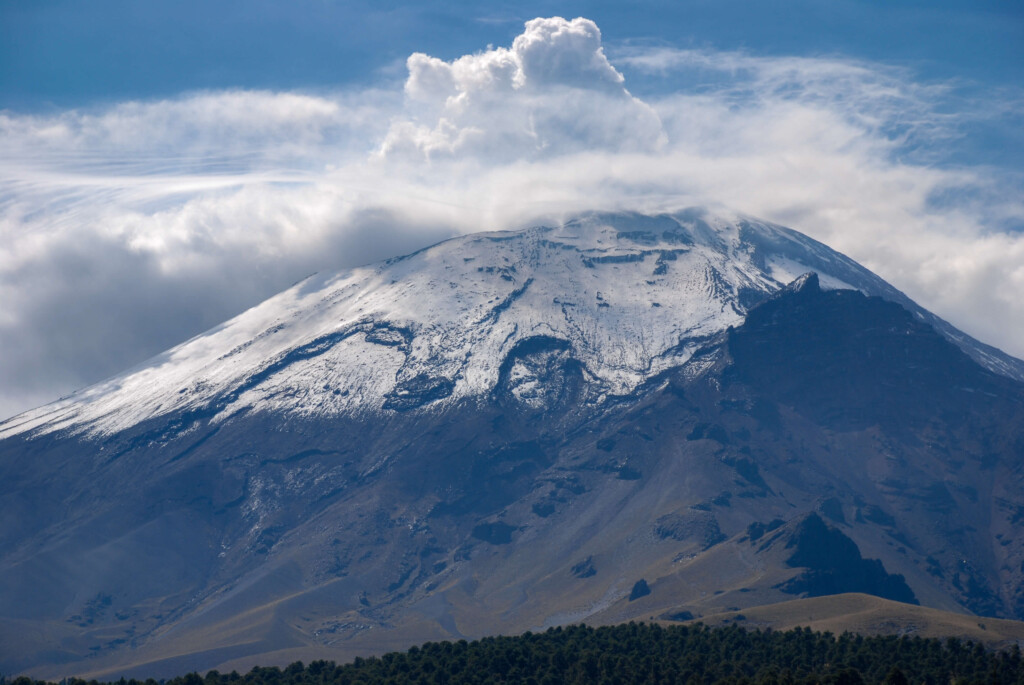
Ask a guide

Dates & Prices

Volcanoes of Mexico Expedition · 10 Days · Three Volcanoes · Maximum Six Climbers

Everything you need to book: the departures, the price, what it covers, and the terms. If you’re still deciding, start with Is This for Me? or talk to a guide first. Every climber speaks with us before booking.

Expedition price$4,500

USD per person.

Deposit to book20%

Of the expedition price. Includes a $350 non-refundable booking fee.

Balance120 days

Due 120 days before departure. Inside 120 days, you pay in full at booking.

Each departure takes a maximum of six climbers.

2026–27 Departures

December 27, 2026 – January 5, 2027Scheduled departure

A holiday departure, with the summit attempt planned for January 4.

January 9 – 18, 2027Scheduled departure

2027–28 Departures

November 20 – 29, 2027Scheduled departure

Early season, often with less snow and more bare ice on the glacier.

December 18 – 27, 2027Scheduled departure

Each departure takes a maximum of six climbers. A departure is confirmed when we tell you so in writing, and when one is full, it closes. Day 1 is arrival in Mexico City and Day 10 is departure. The full itinerary is on Day by Day.

When to Climb

The climbing season runs from November through March. The dry season generally means more stable weather, but no month guarantees it. November is early season, when there’s often less snow on the Jamapa Glacier and more bare ice. December through February is the heart of the season.

What’s Included — and What Isn’t

Included in the price

Before you go
  • Preparation guidance and a gear review with your guide
In Mexico
  • Private airport transfers on Day 1 and Day 10
  • All ground transport, including four-wheel-drive transport to and from Piedra Grande
  • All nine nights of lodging: hotels in Mexico City and Puebla, two haciendas, Ciudad Serdán, our tented base camp at Piedra Grande, and the tented high camp
  • Shared rooms and tents
  • All meals from dinner on Day 1 through breakfast on Day 10, including at the mountain camps
  • All climbing permits and normal access fees
On the mountain
  • Professional lead guides certified by IFMGA, AMGA or an equivalent national body, working with experienced Mexican guides
  • A climbing ratio of one guide to two climbers on the glacier
  • Porters to carry all the gear: your duffel, the tents, the kitchen, the food and the fuel. You climb with a day pack.
  • Group technical equipment, high-camp tents, sleeping mats, the kitchen and fuel, and a portable camp toilet at high camp
  • A group medical kit and emergency communication equipment

Not included

  • International flights and baggage charges
  • Rescue and evacuation insurance (required) and trip insurance (strongly recommended)
  • Personal climbing clothing and equipment, and any rentals
  • Tips for guides, porters and local staff
  • Extra hotel nights, single-room upgrades and transfers outside the itinerary
  • Alcohol, soft drinks and other personal spending

What each of these typically costs is on What to Budget For.

Your Total Trip Cost

The expedition price is the biggest number, not the only one. Typical ranges per climber, in U.S. dollars:

Expedition price$4,500
Insurance (rescue plus trip cancellation)$250–700
Extra hotel nights, if needed$150–500
Personal spending$100–300
Tips$350–650
Typical total, before flights and gearabout $5,350–6,650

Not included in that total: flights, personal gear, medical or training preparation, and your emergency reserve. The full breakdown is on What to Budget For.

Payment & Cancellation

Deposit: $900 (20% of the trip price), due at booking. $350 of it is a nonrefundable booking fee.

Balance: $3,600, due 120 days before the start date. Booking within 120 days? Full payment is due at booking.

How to pay: bank transfer/ACH (no fee), wire transfer (you pay the bank fees) or credit card (3% surcharge). All prices are in U.S. dollars.

If you cancel:

  • 121 days or more before the start date: full refund, less the $350 booking fee
  • 90 to 120 days: 50% refund, after the $350 booking fee
  • 89 days or fewer: no refund

Can’t make it? Send a qualified climber in your place at no BBE fee.

Insurance: medical and rescue/evacuation coverage required. Trip cancellation insurance strongly recommended.

Once the trip begins, payments are nonrefundable.

Read the full Payment & Cancellation Policy →

Insurance

Rescue and evacuation insurance is required. Your policy must cover helicopter rescue, high-altitude mountaineering through 18,491 ft / 5,636 m, glacier travel and technical equipment, and international medical transport. Trip insurance is strongly recommended. In many situations it’s the only way to recover costs from disruptions outside anyone’s control. See Trip Insurance & Evacuation Coverage.

Looking for a Shorter Trip?

If your limit is time rather than the mountain, the seven-day Pico de Orizaba Express reaches the summit on Day 6 and flies you home on Day 7. It’s built for climbers who arrive fit and prepared, ideally with recent time at altitude. It costs more, not less, because you’re paying for the compressed schedule, not for days. For most climbers, we recommend this ten-day program: three summits, a full acclimatization progression and a true high camp.

Private Departures

A private expedition runs on your dates, with your team, at your pace. It can be personally led by Willie or Damian on request, and that’s confirmed only in your written trip terms. Every private expedition is priced individually. See Private & Custom Expeditions.

Why Book Early

The main reason is preparation time. The climbers who arrive most ready had months to build their fitness, break in their boots, and sort out insurance and flights.

Ready to Book?

Register for a departure, or ask a guide first. Ask a guide · climbing@benegasbrothers.com
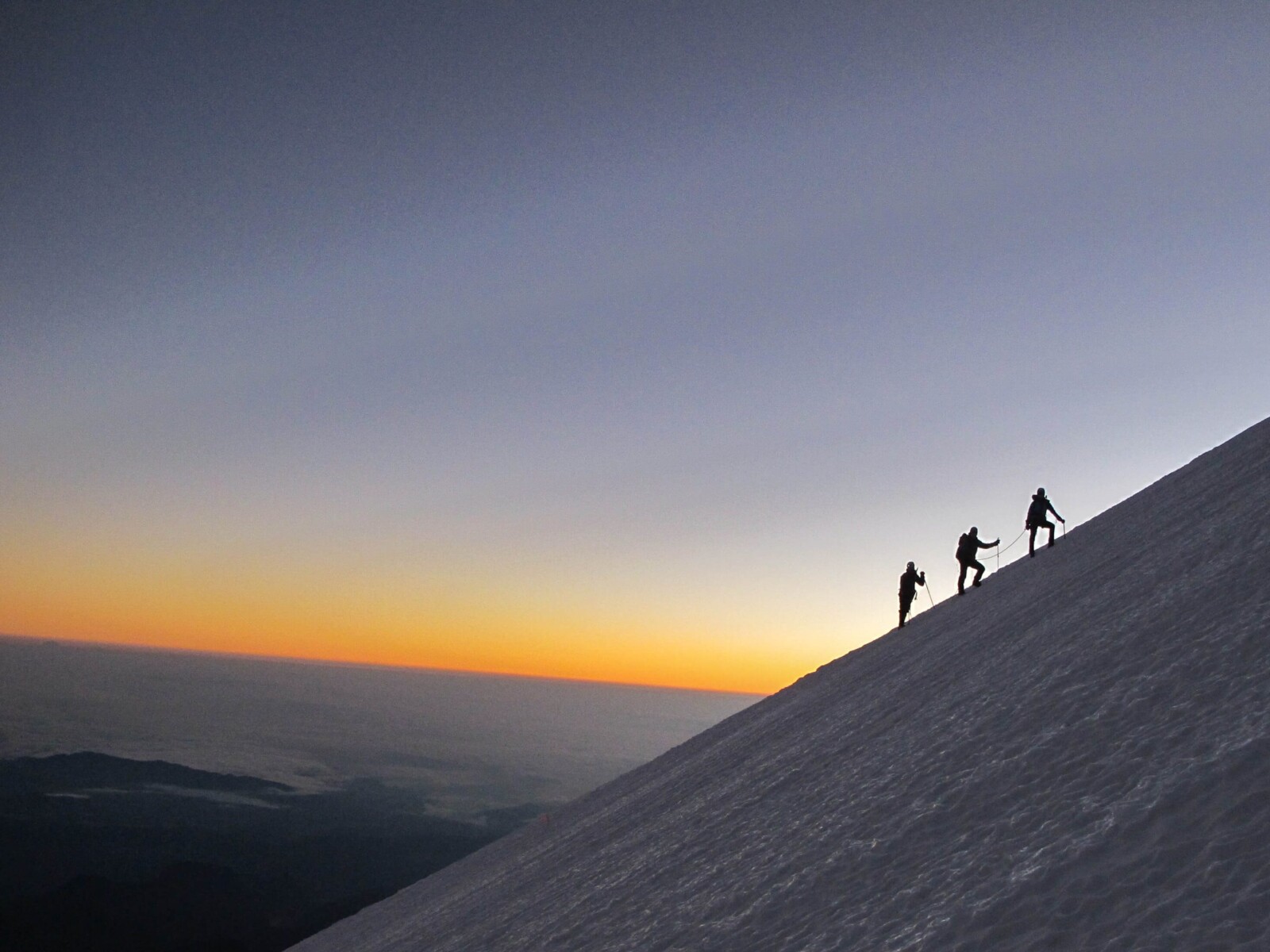
Register now

Your Questions

Volcanoes of Mexico Expedition · 10 Days · Three Summits · Straight Answers

If your question isn’t here, ask us. We’d rather answer it before you book than have you find out on the mountain.

Still have a question? Tell us what you’ve climbed, how you train, and what’s on your mind. We’ll give you a straight answer. Ask a guide · See dates & prices · climbing@benegasbrothers.com
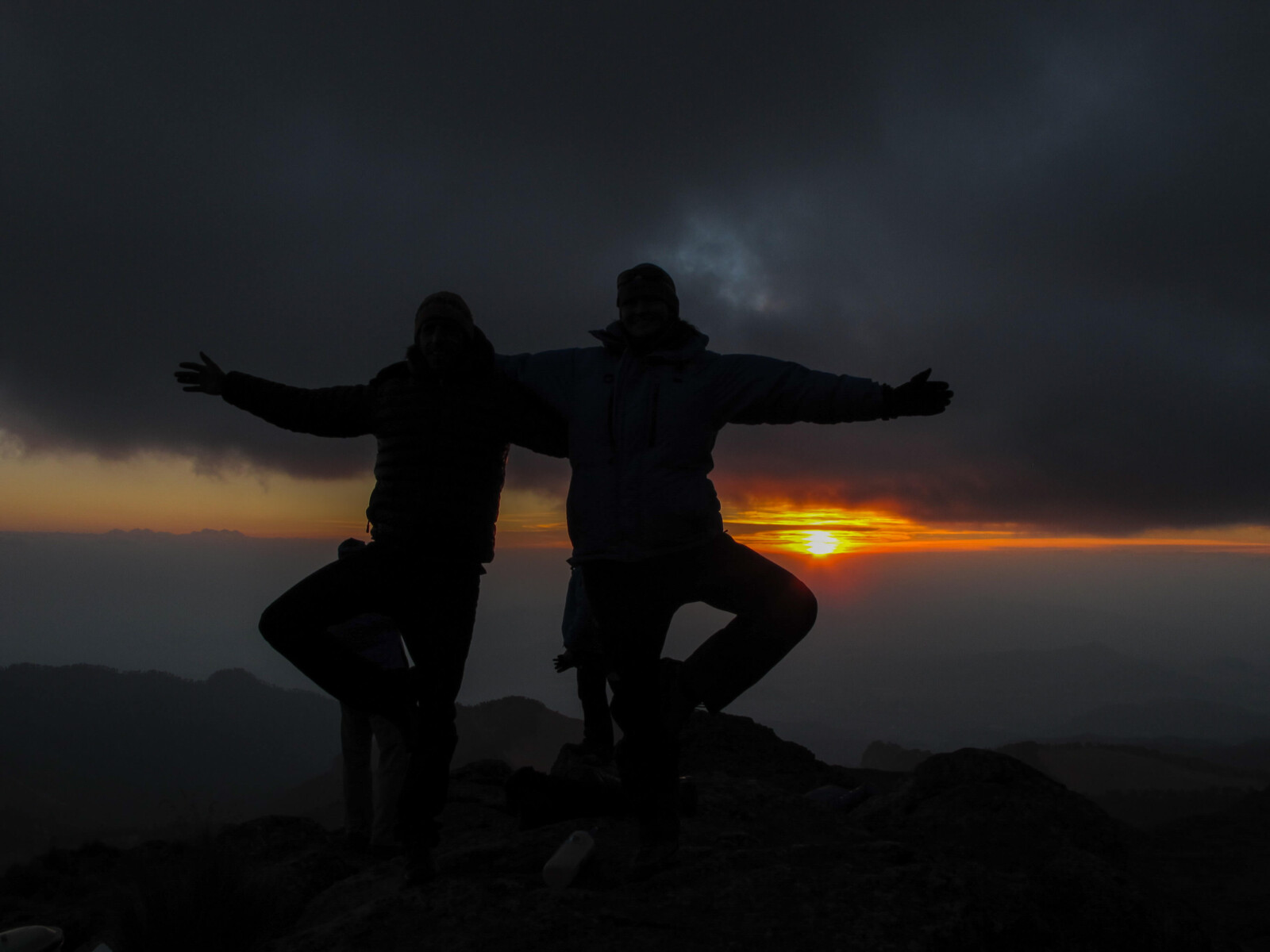
It’s harder than a trek and more accessible than a major technical expedition. You’ll climb above 5,000 meters, travel on a glacier, use crampons and an ice axe, start in the dark, and work in cold, possibly windy conditions. You don’t need to be an expert mountaineer. You do need strong cardiovascular fitness, experience with long mountain days, comfort with cold and basic camping, and honest communication about altitude symptoms. Orizaba is accessible, but don’t underestimate it. Is This for Me? →

Because that’s what makes Orizaba work. La Malinche and Sierra Negra aren’t warm-up hikes. They’re the acclimatization progression toward 18,491 ft, and they give your guides two full days to see your pace, recovery and response to altitude before it matters higher up.

Previous crampon, ice-axe or glacier experience is recommended but not required. This isn’t a complete introductory mountaineering course. If you have no technical experience at all, you may need an introductory course first, and our Ecuador Mountaineering School is a strong way to prepare. We assess every climber individually.

Plan on about 11 hours round trip. Most climbers take 10 to 12, and it can take longer. We leave high camp around 1 a.m., climb through the upper Labyrinth to the Jamapa Glacier, rope up, and continue to the crater rim. Then comes the whole descent and the drive to Puebla. The summit is only half the day.

Altitude affects everyone differently, and fitness doesn’t protect anyone from it. Mild symptoms are common and manageable. Report them anyway. Never hide symptoms to protect your chance at the summit. If your guide decides it’s unsafe to continue, you’ll be required to stop climbing or descend. Life on the Mountain →

No. No responsible guiding company can guarantee a summit. What we’re responsible for is strong preparation, a well-designed acclimatization plan, experienced guides and good decisions.

No. A percentage depends on which climbers an operator accepts, how they count a turnaround, and which seasons they include. Publishing one also treats the summit as the only thing worth measuring. We’d rather tell you honestly what the mountain asks of you, and what we do to give you the best chance.

Your guides monitor the forecasts, wind, snow, ice, visibility and glacier conditions. If conditions aren’t right, we don’t continue just because the itinerary says it’s summit day. Because our teams are small, the order of the climbs and the summit day can shift within the ten days toward the best window. The expedition has fixed dates, so we can’t guarantee more than one summit attempt.

Then you’ll have climbed two high volcanoes, slept at a real high camp, and learned how you perform at altitude, and that carries into your next mountain. There’s no refund for a missed summit, which is why we’re honest about readiness before you book.

It’s below the Labyrinth at 15,748 ft / 4,800 m: tents, cold, limited space, simple meals and hot drinks, no shower, probably poor sleep, and a wake-up around midnight. It gives you a much stronger start for summit day, and for many climbers it’s the night they remember most.

At high camp, we set up a basic portable camp toilet. At Piedra Grande, the park provides a latrine. We can’t vouch for its condition on any given day. Come self-sufficient with toilet paper, wet wipes, hand sanitizer and waste bags.

You can at the hotels, haciendas and towns. Not at Piedra Grande or high camp, so bring a power bank. Expect to be out of contact for about three days.

Just a day pack. Our porters carry all the gear: your duffel, the tents, the kitchen, the food and the fuel, including on the move to high camp.

Yes, and many climbers do. Solo climbers are the norm on our teams, not the exception.

A maximum of six climbers, with one guide for every two climbers on the glacier. The team also includes local guides, drivers, porters and cooks, depending on its size and needs.

Scheduled departures are led by certified BBE guides, working with experienced local guides and staff. A private expedition can be personally led by Willie or Damian on request. A founder takes part only when it’s confirmed in your written trip terms.

The minimum age is set by Mexico’s regulations and by insurance: climbers under 18 climb with a parent or guardian, and each climber’s insurance must cover their age. Families are welcome: younger climbers can join a scheduled team with a parent or guardian, or come on a private family expedition built around your family, and if a special permit is needed, we’ll help you apply.

The full list is on the Volcanoes of Mexico Gear List page, with a downloadable PDF. A harness, ice axe, crampons and helmet can usually be rented through our local partner. Tell us when you book, and confirm sizes at least three weeks before departure.

Mexico City International Airport (MEX), not NLU. Arrive by early afternoon on Day 1, and fly out in the afternoon or evening of Day 10. Flights & Getting to Mexico City →

Citizens of the United States, Canada and most European countries don’t need a tourist visa. Other nationalities should check with a Mexican consulate before booking.

Yes. Rescue and evacuation cover for guided mountaineering through 18,491 ft / 5,636 m, including glacier travel, is required. We recommend Global Rescue, with its High-Altitude Evacuation Package, or Ripcord. Trip insurance is strongly recommended. Trip Insurance & Evacuation Coverage →

We plan routes, timings and lodging with local partners and travel as a team with private transport throughout. Check your own government’s current travel advice for Mexico City, Tlaxcala and Puebla before you book, and ask us anything you’d like to talk through.

Ask a guide first. We’ll talk through your experience, training and goals. Then we send you a link to our online registration form. You complete the reservation form and pay your deposit by the invoice we send, followed by the Registration Form, your passport copy, the Terms & Conditions and the Release.

Yes. A departure is confirmed when we tell you so in writing. Please buy nonrefundable flights only after your departure is confirmed.

All cancellations must be in writing, and refunds depend on how much notice you give. The full schedule is on Dates & Prices. Our terms apply whatever the reason you can’t travel, which is why we recommend trip insurance.

The ten-day expedition builds acclimatization in with three summits, and it costs less. The seven-day Express suits climbers who are short on time and arrive fit and prepared, ideally with recent time at altitude. It costs more because you’re paying for the compressed schedule. If you can take ten days, we recommend the ten.

Yes: one-to-one guiding, couples, families, friends, clubs, and teams preparing for a bigger objective. Private & Custom Expeditions →

A true high camp, not a long push from the road.

Our tented camp below the Labyrinth takes hours off summit day. It also gives you a night sleeping high on the mountain, which many climbers say is what they remember most. Both of our Mexico programs climb Orizaba this way.

Price$4,500 per person
Private & Custom Your dates. Your team.

This trip can run privately, on the dates that work for you.

Scheduled departures
  • Sunday, Dec 27, 2026 - Tuesday, Jan 5, 2027Scheduled departure
  • Saturday, Jan 9 - Monday, Jan 18, 2027Scheduled departure
  • Saturday, Nov 20 - Monday, Nov 29, 2027Scheduled departure
  • Saturday, Dec 18 - Monday, Dec 27, 2027Scheduled departure

Questions first? Ask a guide

Location:
Mexico
Group:
Maximum 6 climbers
Duration:
10 Days
Skill:
Intermediate
Activities:
Expeditions
Pricing

All prices are in US dollars.

A true high camp, not a long push from the road.

Our tented camp below the Labyrinth takes hours off summit day. It also gives you a night sleeping high on the mountain, which many climbers say is what they remember most. Both of our Mexico programs climb Orizaba this way.

Book now

Private & Custom

Make Volcanoes of Mexico Expedition your own expedition

Every trip we run can also run privately: on your dates, with your people, built around your goal. Same guides, same safety standard as our scheduled departures.

Your dates

We set the departure around your calendar, not the other way round.

Your people

Family, friends, a company team, or just you and a guide.

Your goal

Training for a bigger peak, a winter or speed attempt, a film, or a route that runs from summit to ocean.

Your price

Private trips are quoted for your group size, dates and plan.

Volcanoes of Mexico Expedition

Scheduled Departure

Maximum 6 climbers · 10 days · 3 volcanoes
Price per Person $4,500

Ten days, Mexico City to Mexico City: permits, ground transport, hotels, haciendas and camps, all meals, porters for all the gear on the mountain, and one guide for every two climbers.

Private & Custom

Your dates · Your team · Your pace
Priced individually On request

Your dates, your team and your objective. A private trip isn't easier, and it isn't more advanced. It's an expedition built around your team.

The BBE Advantage

Pico de Orizaba Express — Mexico

Porters carry all the gear.

Your duffel, the tents, the kitchen, the food and the fuel all go up with porters, including on the move to high camp. You climb with a day pack. That makes a real difference at 15,748 feet.

Pico de Orizaba Express — Mexico

Six climbers, and a plan that can move.

Teams are capped at six climbers, with one guide for every two climbers on the glacier. If the best weather window on Orizaba falls a day either side of the schedule, a team of six can move to meet it. A large group usually can't.

Pico de Orizaba Express — Mexico

All in-country costs included.

Transportation, lodging, meals and permits are covered. You won't be paying for add-ons once you arrive.

Professional Mountain Standards

Our guide team includes internationally and nationally certified mountain professionals.

AMGA — American Mountain Guides Association logo
IFMGA / UIAGM — International Federation of Mountain Guides Associations logo
AAGM — Asociación Argentina de Guías de Montaña logo

Related Trips