The Program
Ecuador Mountaineering School · Core Program 8 Days · Optional Extension to 15 Days · Maximum Six Climbers
There’s no shortcut to becoming a competent mountaineer. You learn on real terrain, at real altitude, with guides who know how to teach. That’s what the Ecuador Mountaineering School is built to do.
The School at a Glance
- One major glaciated summit: Cayambe, 18,996 ft / 5,790 m
- No mountaineering experience required
- Maximum six climbers, one guide for every two
- Three glaciated summits: Cayambe, Cotopaxi (19,347 ft / 5,897 m) and Chimborazo (20,564 ft / 6,268 m)
- No mountaineering experience required
- Maximum six climbers, one guide for every two
Prices and departures are on Dates & Prices.
The Core Program
Eight days take you from your first crampon step to the summit of Cayambe. Cayambe is Ecuador’s third-highest mountain, and the equator crosses its southern slopes.
This is where you learn to move on a glacier, and where you build skills that stay with you for the rest of your climbing life.
What You Learn
The School is a progressive curriculum. Each day builds on the last, and every skill is practiced on real terrain before it’s tested higher up.
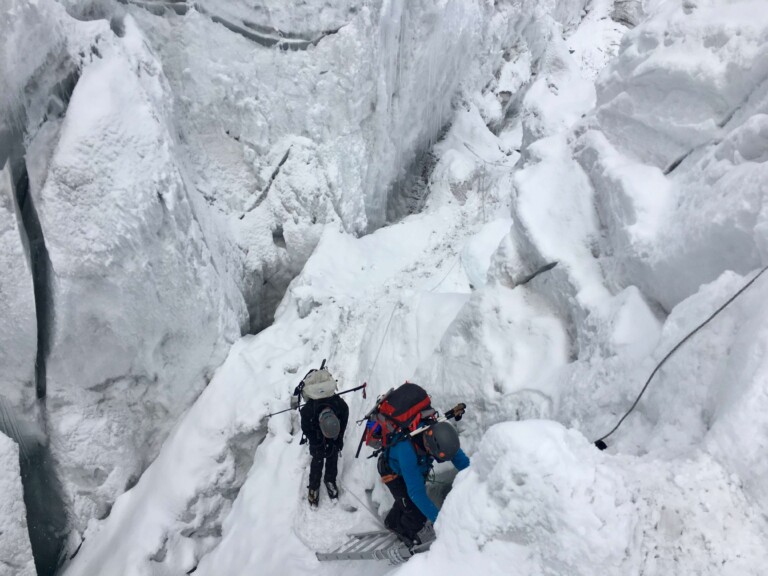
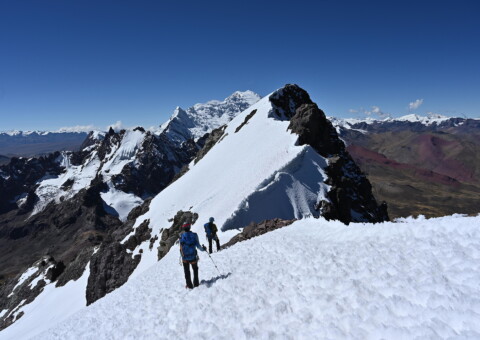
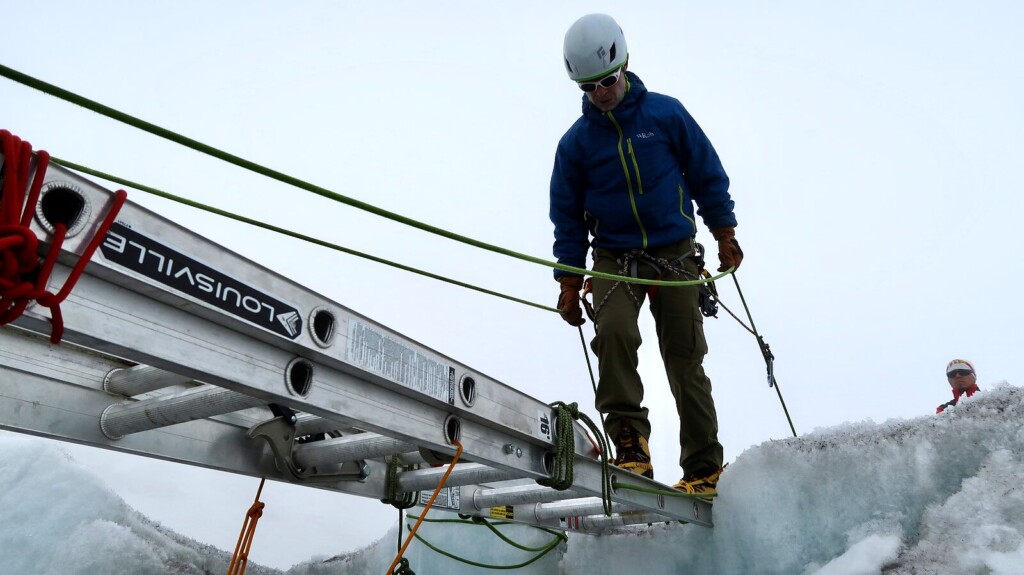
- Glacier movement. Crampon footwork, balance and rhythm on steep and varied ice. Moving efficiently is the foundation, so we start there.
- Ice axe technique. Balance, braking and self-arrest with the tool every alpine climber carries.
- Rope-team travel. How a team moves, communicates and decides together: spacing, pace and coiling.
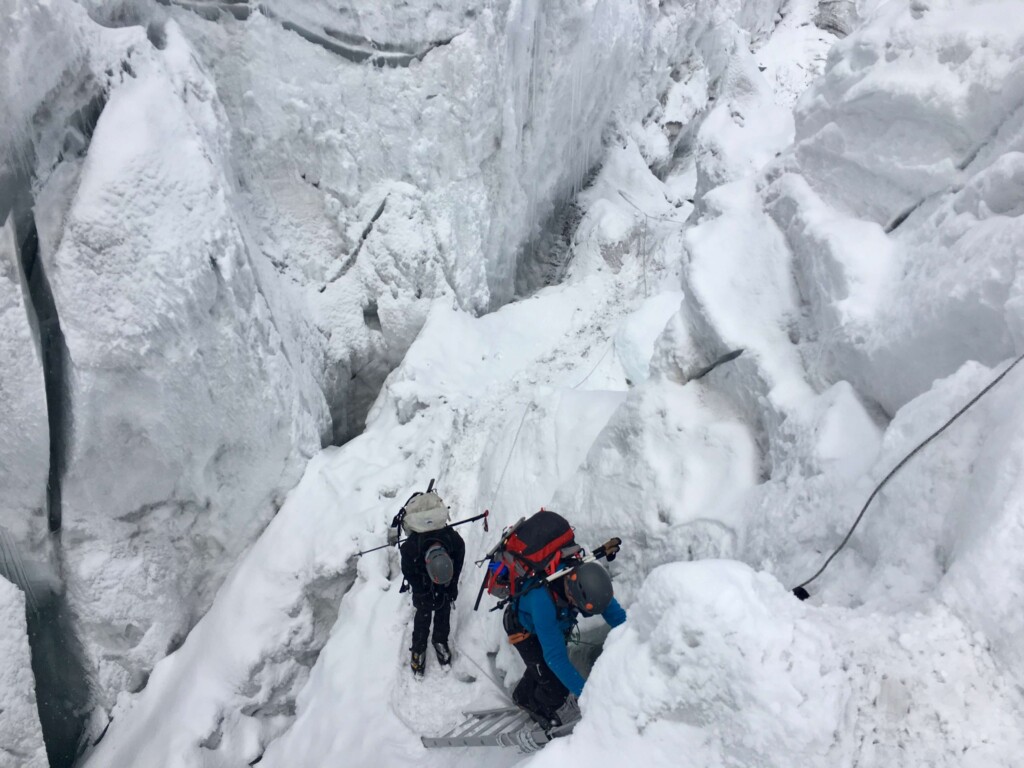
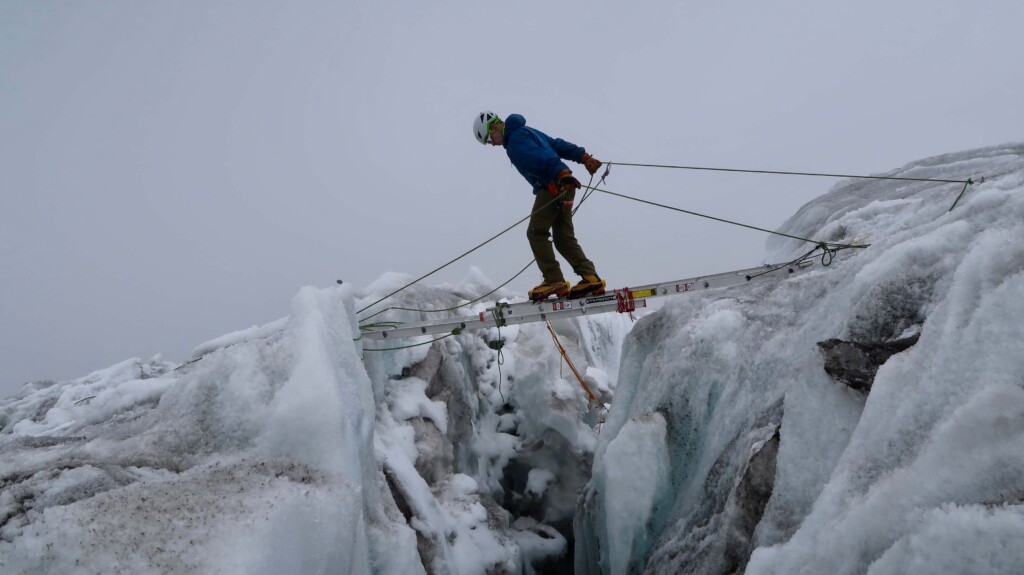
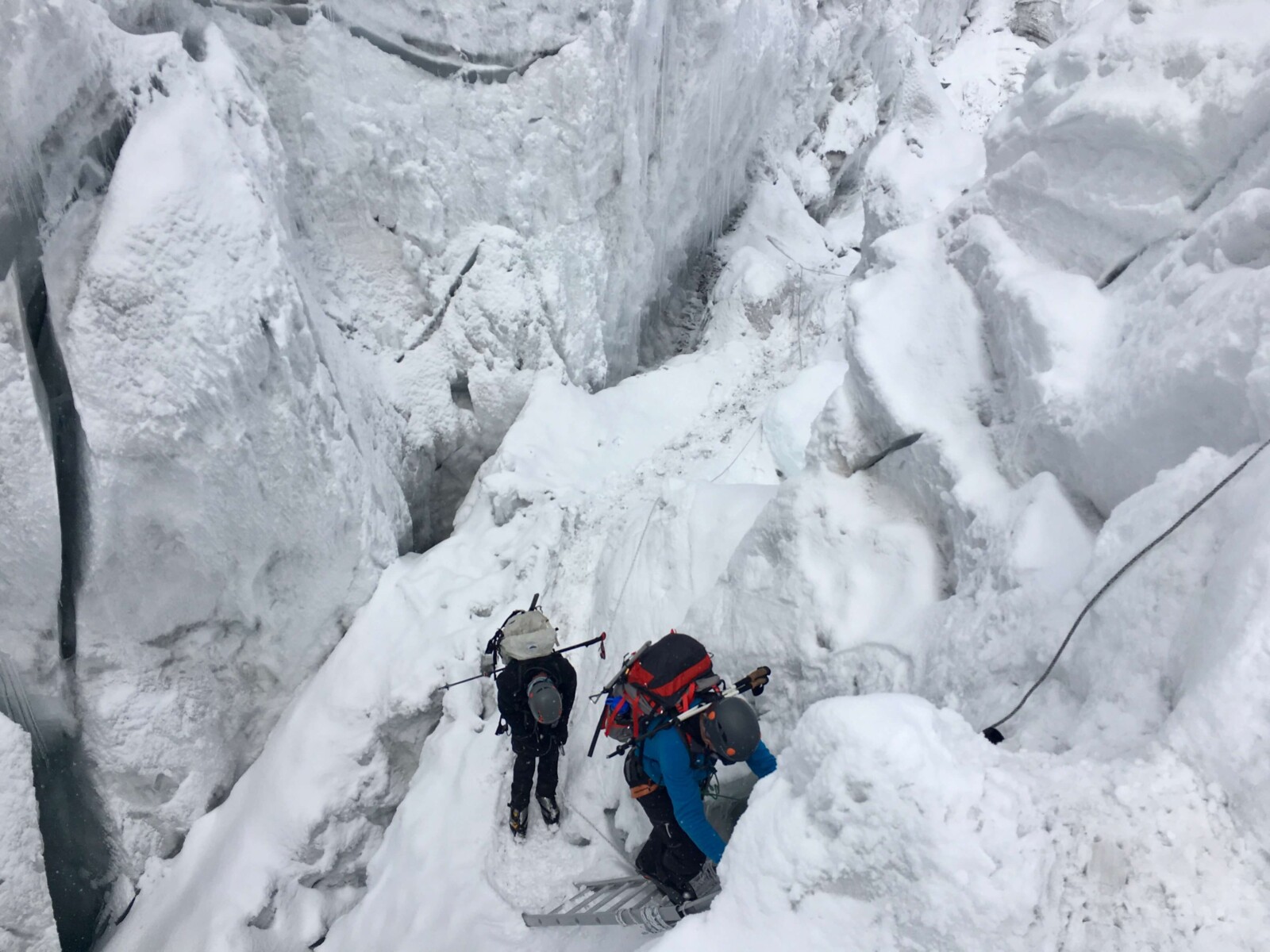
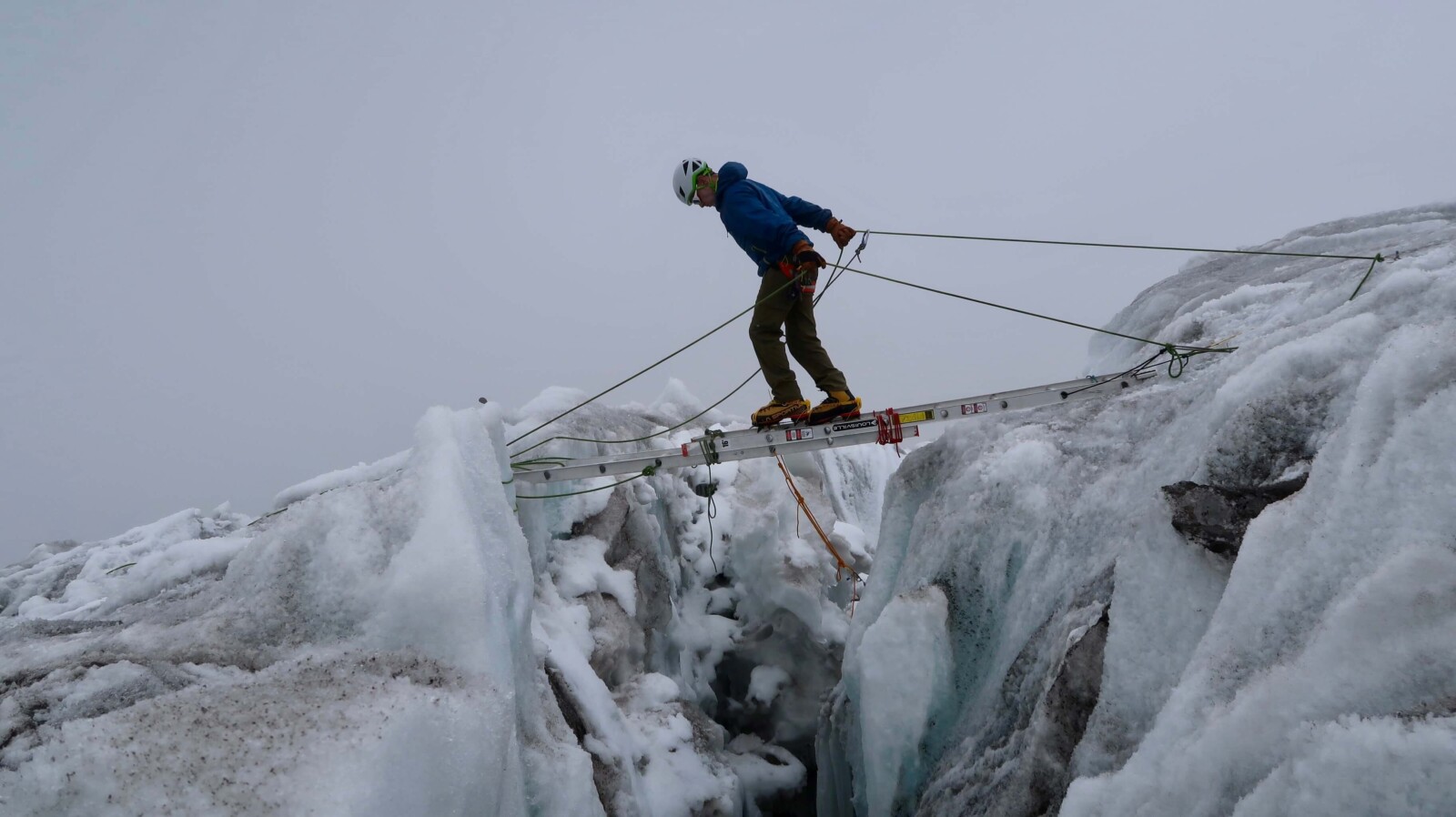
- Crevasse awareness. Reading glaciated terrain, recognizing hidden hazards, and the rope systems used for rescue. Ecuador’s glaciers are active, and we treat them that way.
- Snow anchors. Reliable protection on snow and ice, several systems, and the judgment of when to use each.
- Altitude management. Hydration, pacing, layering and reading your own body: the habits that decide a summit day above 17,000 feet.
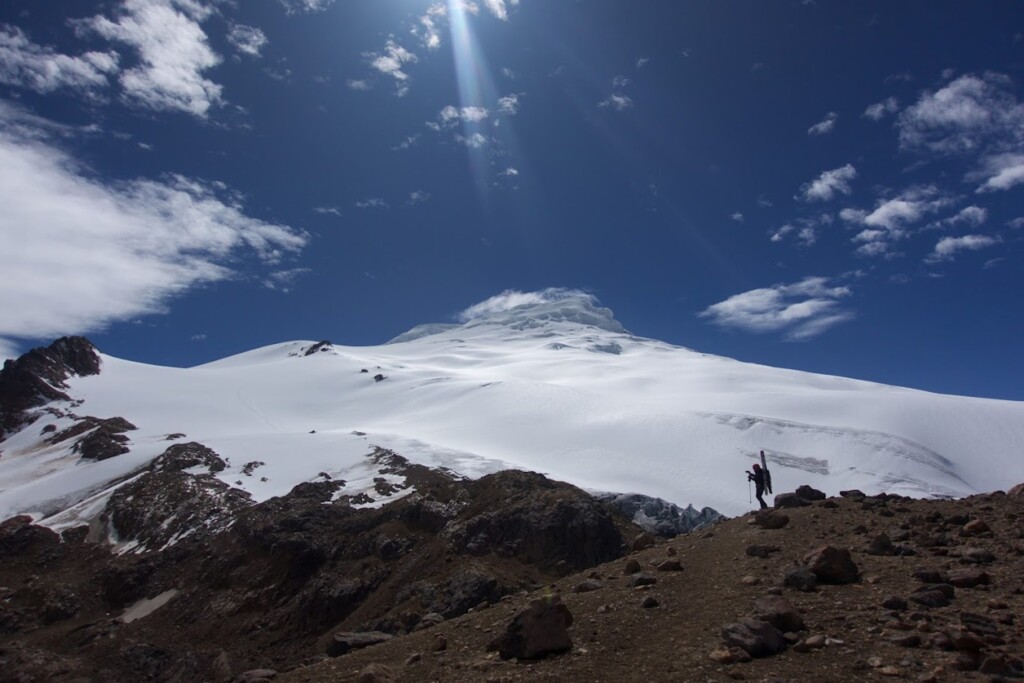
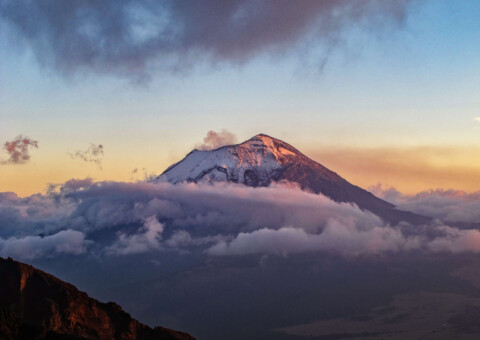
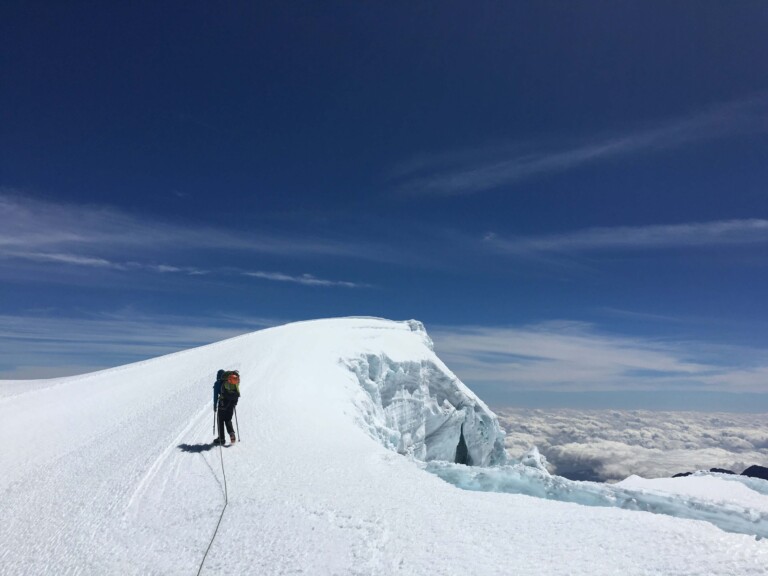
The Summit: Cayambe, 18,996 ft / 5,790 m
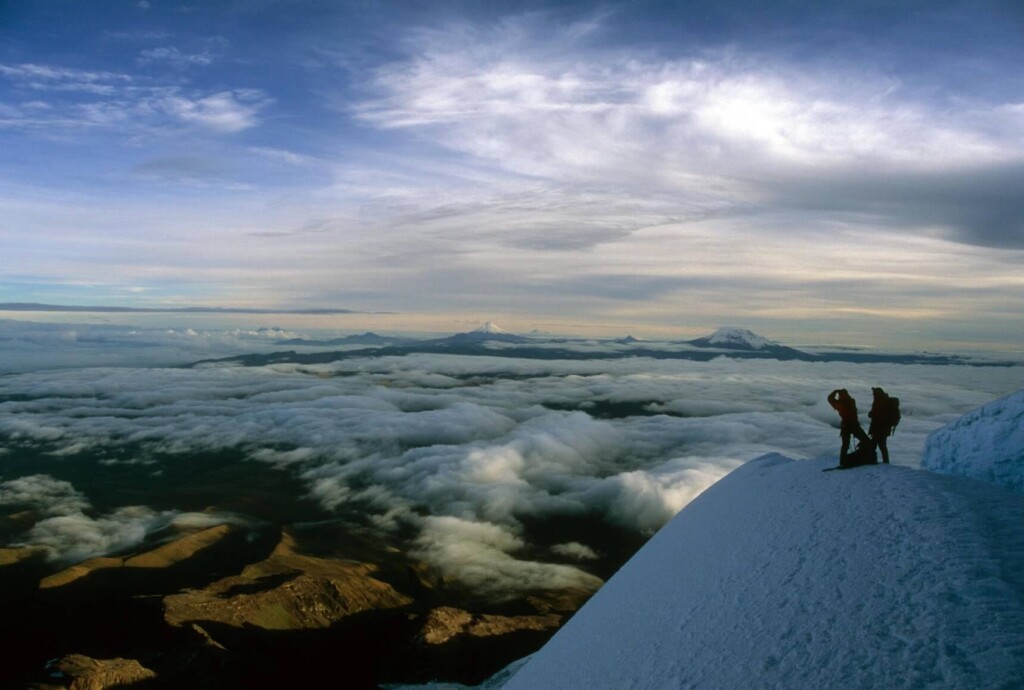
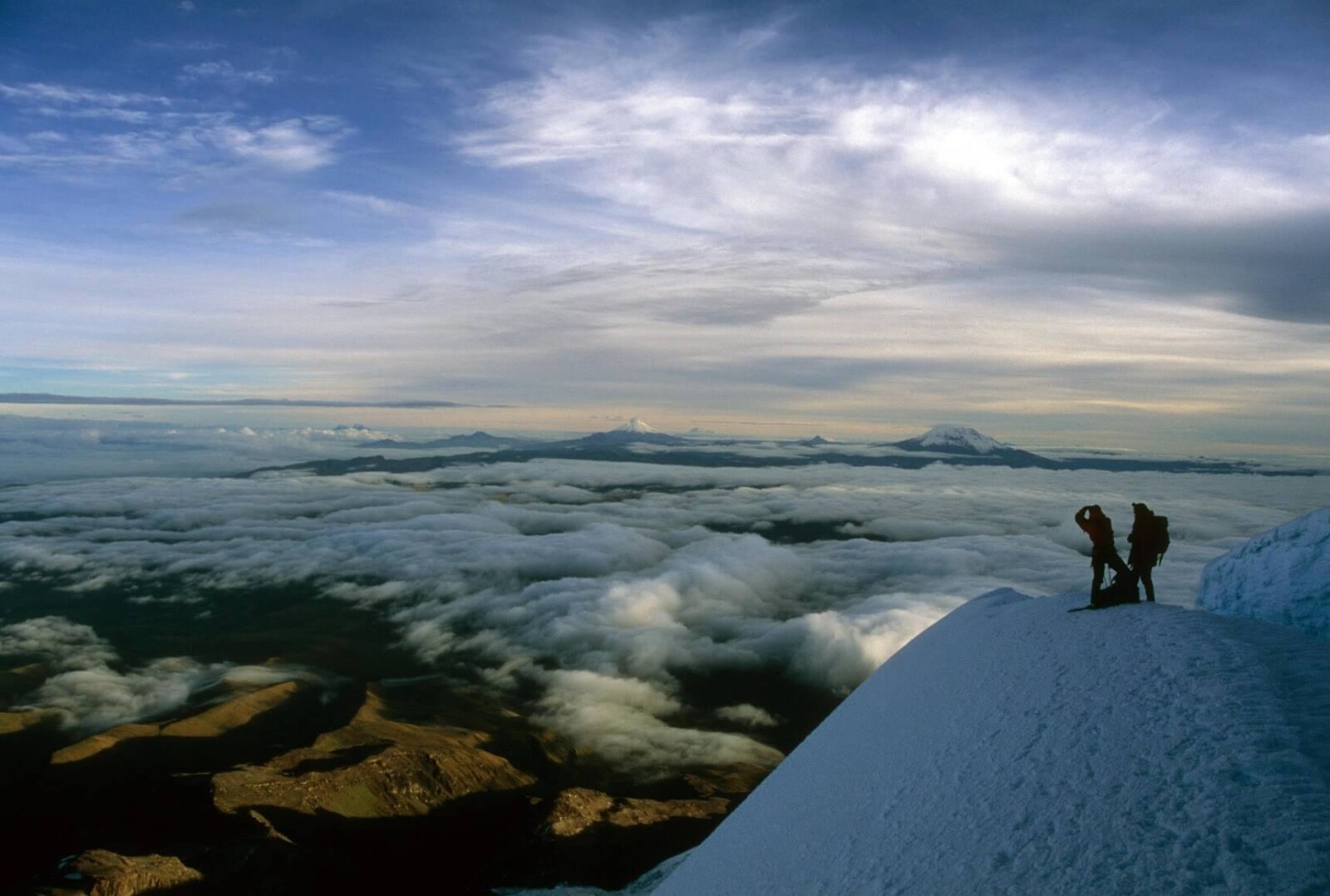
Everything builds toward one objective. The summit push begins at midnight by headlamp: a glaciated, crevassed route at serious altitude, where you apply everything you learned in the days before. Cayambe is a real alpine ascent, not a school exercise. On a clear morning, Cotopaxi, Antisana and Chimborazo rise across the Andes. For most climbers, this is the day the training becomes instinct.
The Optional Extension: Three Volcanoes in 15 Days
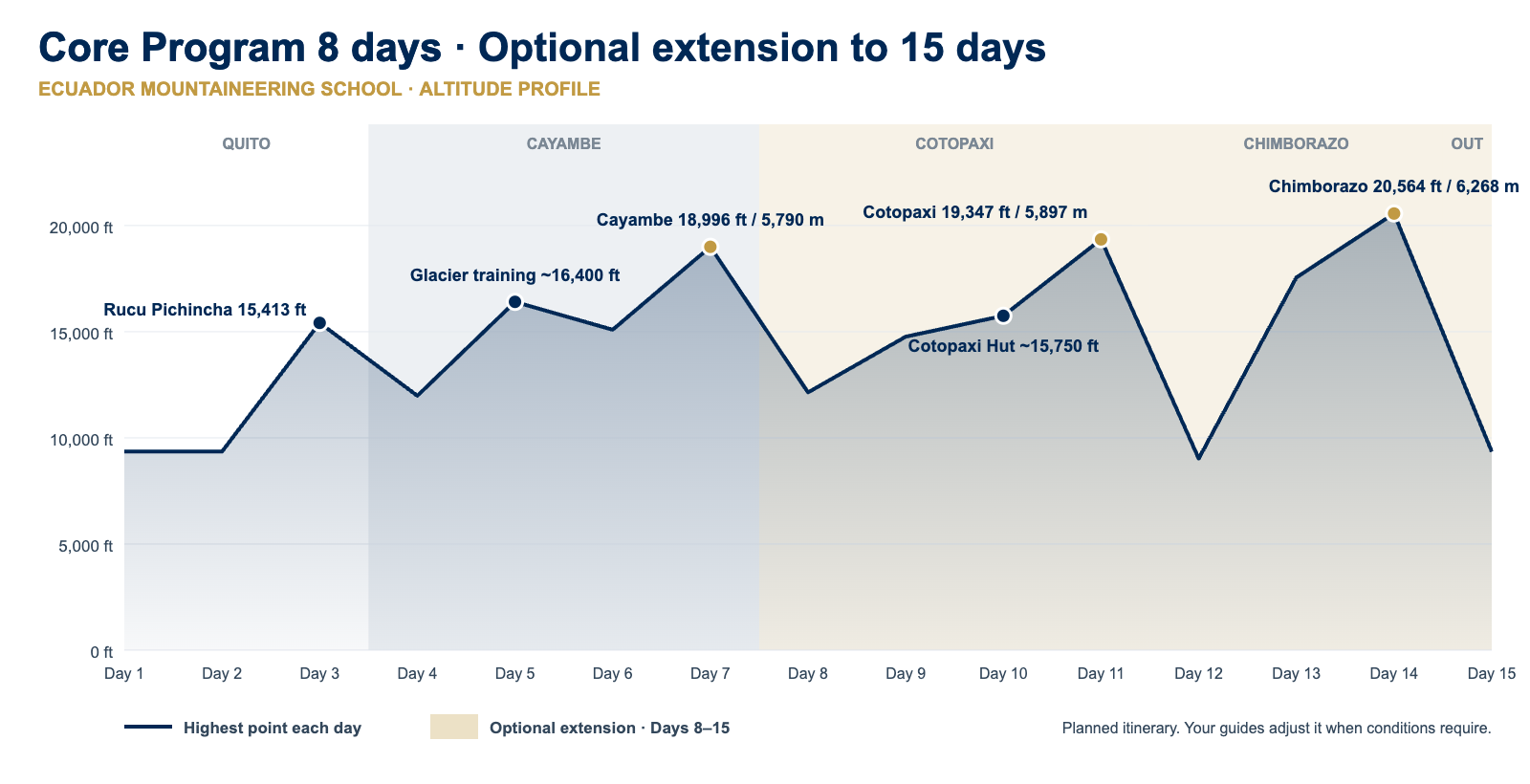
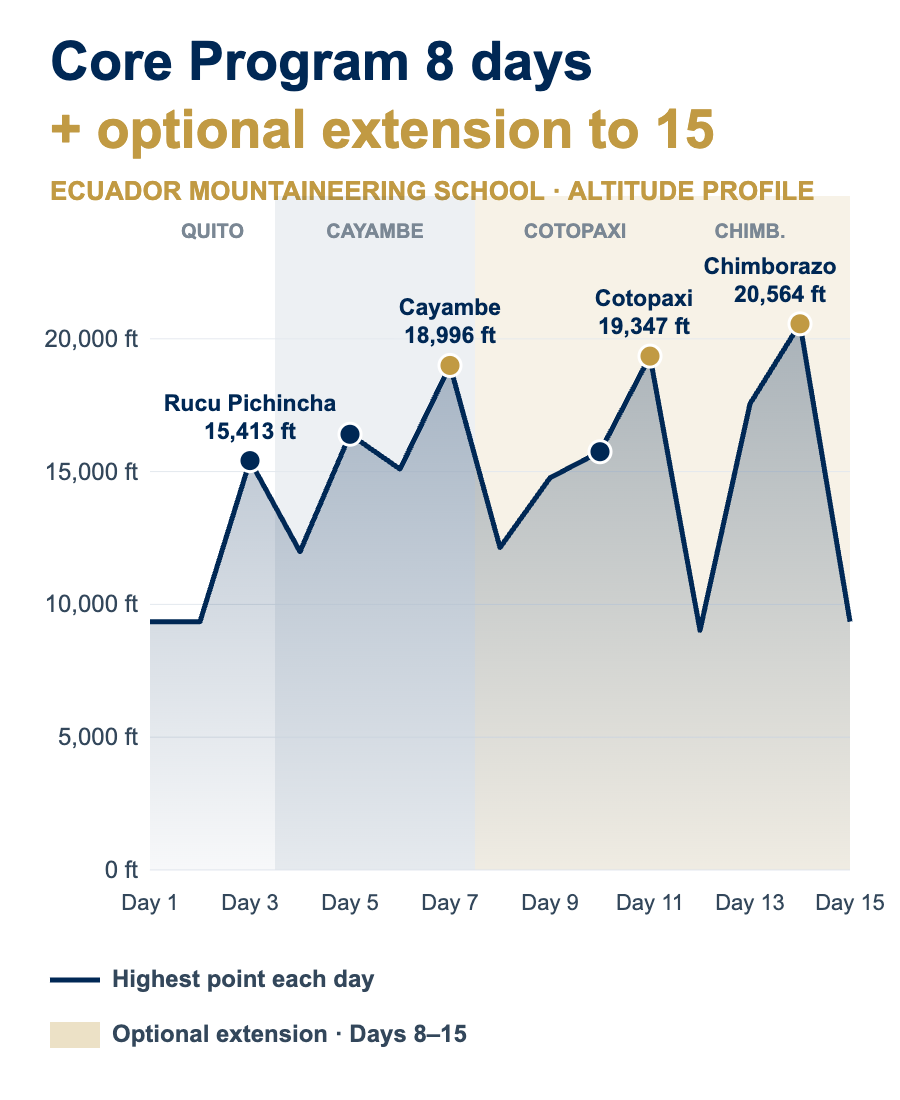
If you finish Cayambe and want more, the optional extension continues without a break: Cayambe, then Cotopaxi at 19,347 ft / 5,897 m, then Chimborazo at 20,564 ft / 6,268 m. Chimborazo is Ecuador’s highest summit and, because of the Earth’s equatorial bulge, the farthest point from the center of the Earth. You get continuous acclimatization, three summits, and an education no single peak can give you.
Acclimatization: Climb High, Sleep Low
Your body adapts while it rests, not while it works. The itinerary builds that in:
- Three nights in Quito at 9,350 ft / 2,850 m, with an acclimatization climb of Rucu Pichincha (15,413 ft / 4,698 m) before you sleep higher
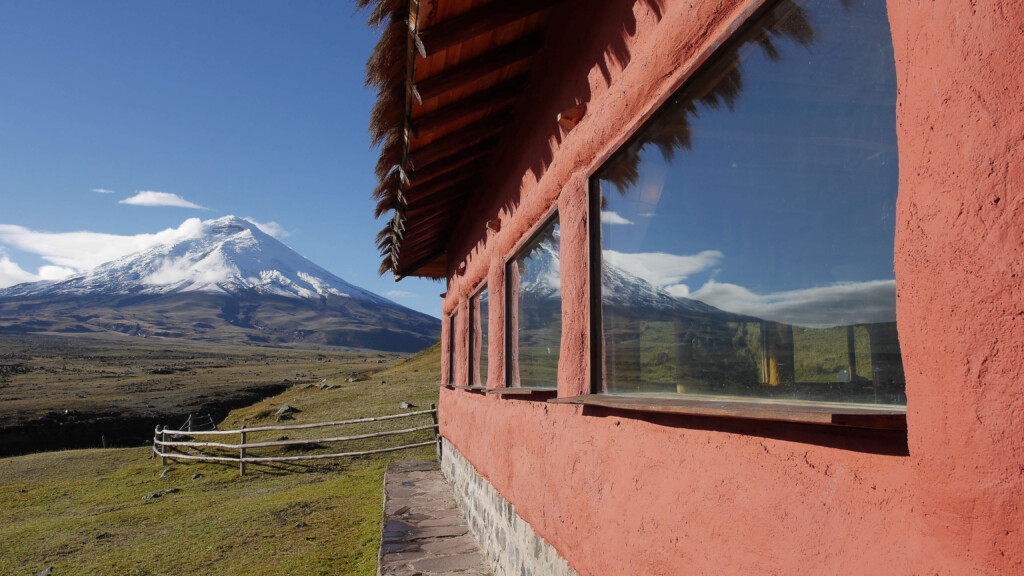
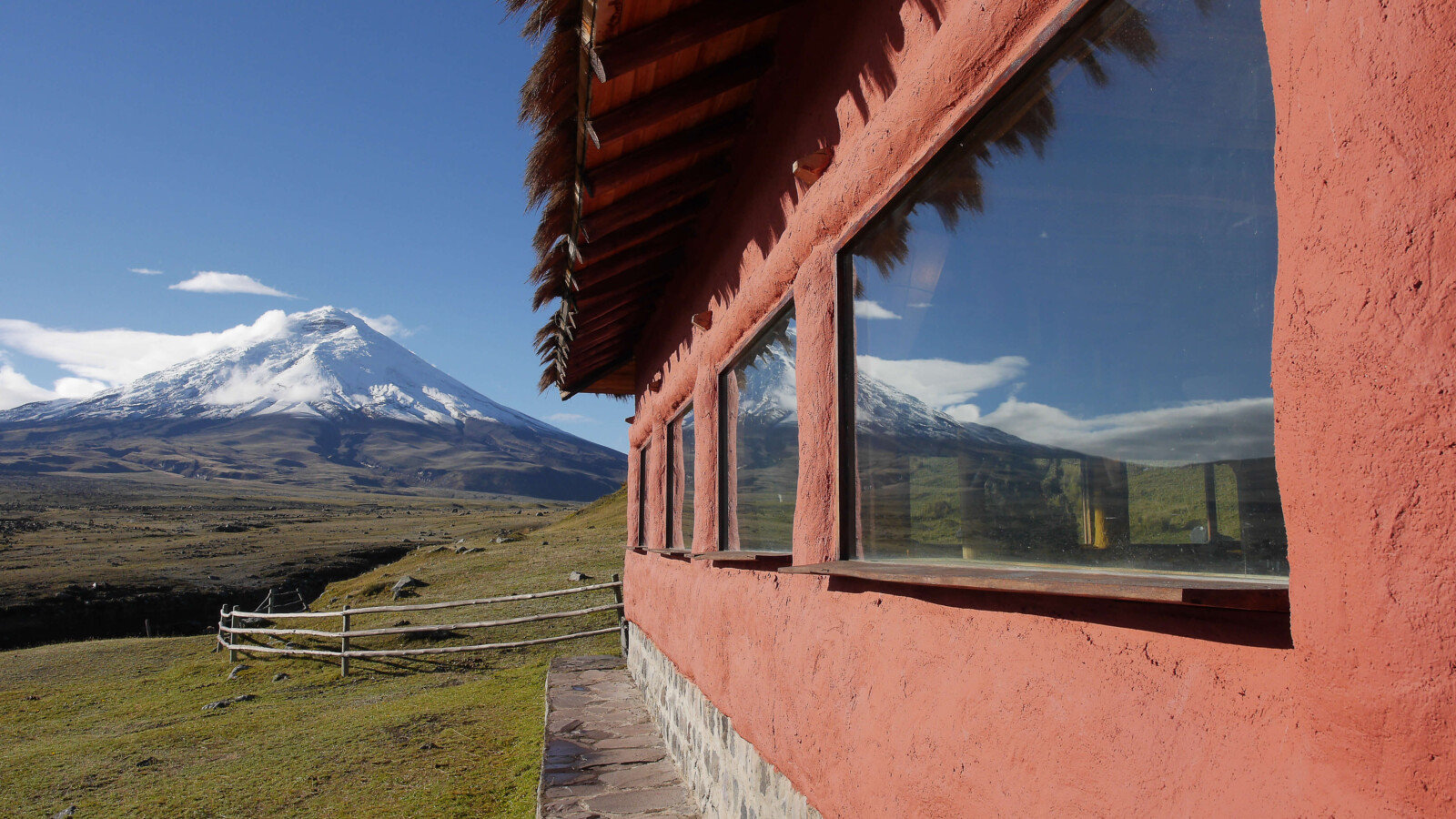
- Two nights at Yanacocha Lodge (11,982 ft / 3,652 m) during glacier training on Cayambe
- One night at the Cayambe Hut (15,100 ft / 4,600 m) before the summit
- With the extension, Cayambe acclimatizes you for Cotopaxi, and Cotopaxi for Chimborazo
A School, Not a Summit Tour
Many guided climbs in Ecuador are short summit tours: drive to the hut, sleep a few hours and push for the top, with little time to acclimatize or learn. The School is built differently. You acclimatize properly, train on real glacier terrain, then climb Cayambe with skills you actually own. You leave with a summit and an education.
A short summit tour
- Drive to the hut, sleep a few hours and push for the top
- Little time to acclimatize or learn
The Ecuador Mountaineering School
- Acclimatize properly
- Train on real glacier terrain
- Climb Cayambe with skills you actually own
- Leave with a summit and an education
Small Teams
Teams are capped at six climbers, with one guide for every two, so a full team travels with three guides. That ratio is how real coaching works: constant feedback, real supervision on the glacier, and a guide who knows exactly how you move before summit day. You will never disappear into the group.
The Guide Team
The School runs on the systems Benegas Brothers Expeditions has built since 1992 for turning motivated beginners into competent climbers. Every departure is led by an IFMGA- or ASEGUIM-certified guide, working with experienced BBE guides to the same standard. A private School departure can be personally led by Willie or Damian on request, confirmed in writing.
Safety
- One guide for every two climbers on the glacier
- Radio and satellite communication on every climbing day
- A comprehensive group medical kit on every climbing day
- Daily monitoring of every climber’s pace, hydration, appetite and response to altitude
- Starlink satellite internet, set up by BBE when needed: a limited connection, enough to message home
Turning around is sometimes the right decision. When it is, your guide makes it early and clearly.
Where the School Leads
The School is a natural first step in a progression we’ve guided since 1992: Ecuador, then Aconcagua, then Denali or the Himalaya. You leave with the skills our Aconcagua expedition assumes on Day 1: crampon technique, rope-team travel, self-arrest, and a summit above 18,000 feet. We’ll tell you honestly when you’re ready for the next step. If Everest is the long-term goal, The Road to Everest shows every step.
Already have glacier skills? The Cotopaxi Express and the Ecuador Volcanoes Expedition take you higher.
Who the School Is For
No prior mountaineering experience is required, because building it is what the School is for. What you do need is real fitness, a willingness to learn, and the commitment to follow through on a midnight summit push above 18,000 feet. For the honest standard, read Is This for Me?
Ready to Talk It Through?
Tell us what you’ve done and what you want to learn. Every climber speaks with us before booking, and we’ll tell you honestly whether the School fits. We don’t simply guide expeditions. We help people build a lifetime in the mountains. See dates & prices.